From Strait Tensions To West Coast Tightness: Refined Markets Under Pressure

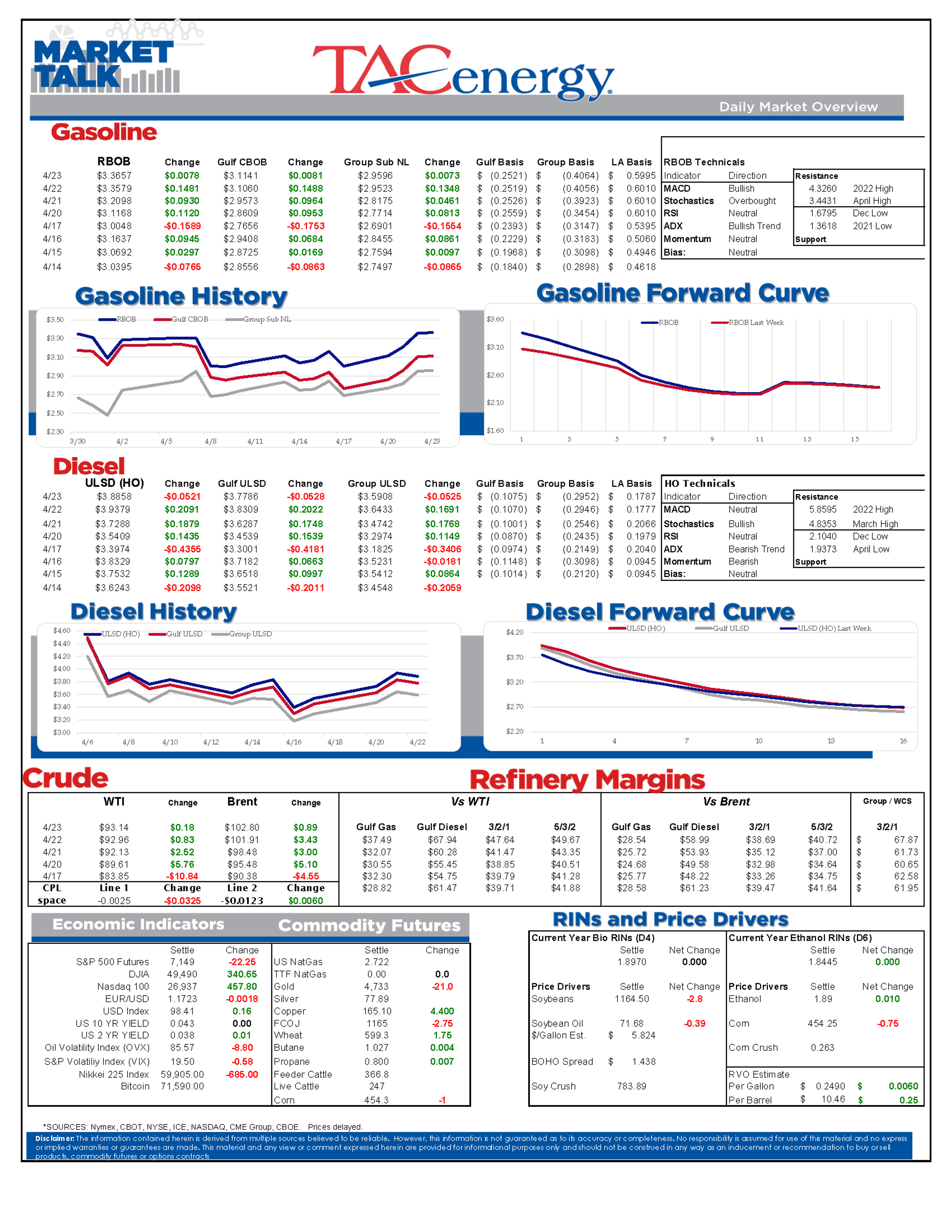
It was a busy back and forth overnight session for refined product futures following 3 straight days of double-digit gains to start the week that wiped out last week’s huge losses for diesel contracts, and pushed gasoline futures to a 4 year high. Diesel futures continue to be the most volatile with double digit gains and losses seen in the past 12 hours, with multiple 5 cent swings in the past hour alone.
The U.S. Military seized another Iranian oil tanker in the Indian Ocean Thursday, the 2nd ship in as many days that has been interdicted far hundreds of miles from the war’s front lines, showing that the U.S. is taking a very broad approach to its blockade. Iran’s still-not-destroyed Navy meanwhile took control of 2 ships that had attempted to transit the Strait earlier in the week suggesting that there is plenty more drama to come before traffic through the world’s most economically important choke point gets back to anything resembling normalcy.
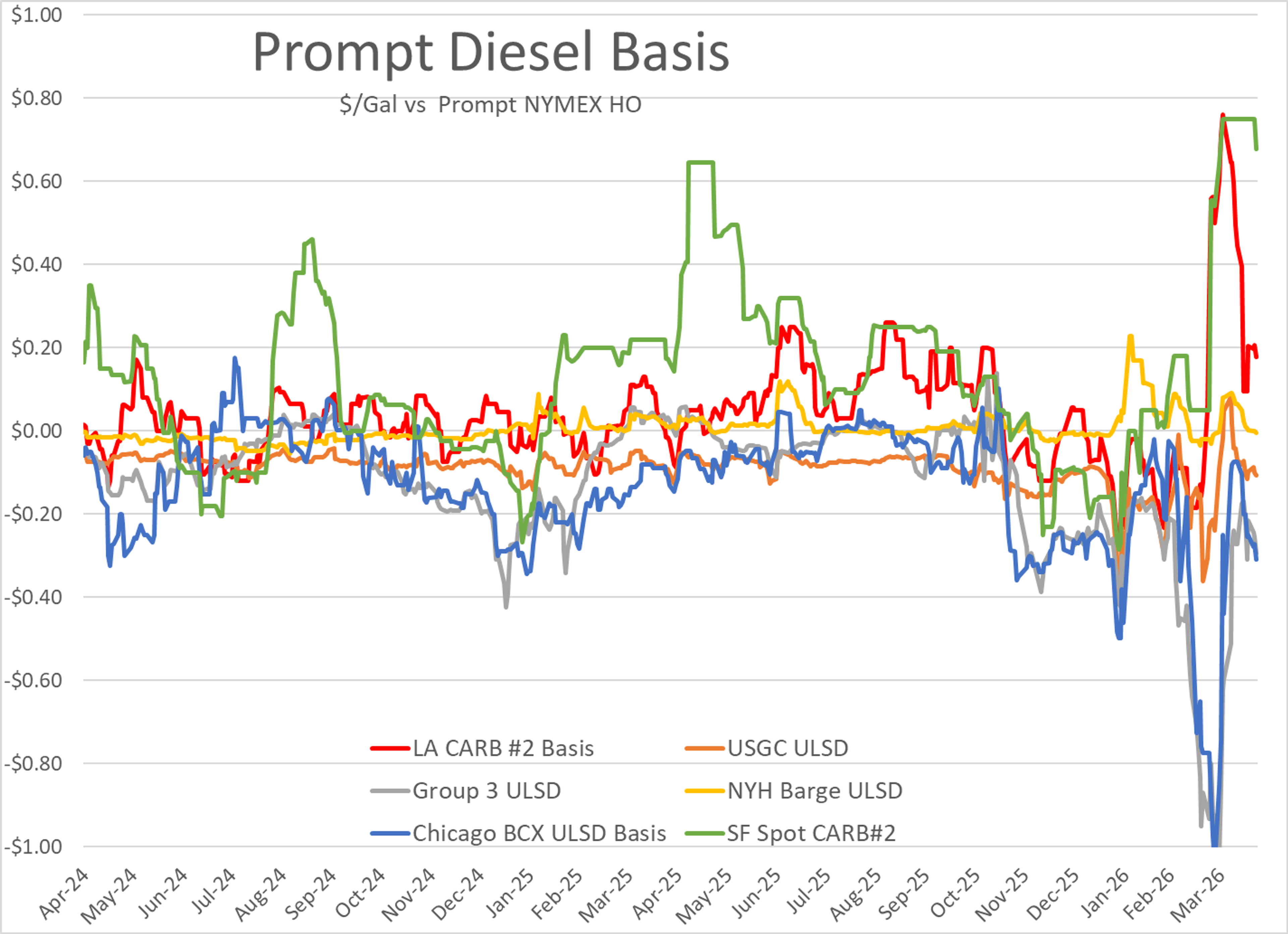
It’s alive! After 3 weeks of no bids and no offers in the San Francisco spot market for CARB or EPA diesel, the first day of prompt trading for May pipeline cycles saw a flurry of activity that pushed differentials vs June futures from a 55 cent offer earlier in the week to an 80 cent premium (that actually traded!) Wednesday. It’s worth noting that despite a notional 25 cent increase in the basis spread, when compared to May futures, that trade is STILL cheaper than where the pricing agencies had pegged values all month due to the lack of liquidity.
Chevron reported a 2nd emissions event in 3 days at its 125mb/day Pasadena TX refinery Wednesday. The latest issue was a crude oil leak at a tank farm that supports the facility, which was contained onsite and should not impact run rates.
Delek reported unplanned flaring at its 77mb/day Tyler TX refinery Wednesday at a boiler stack due to maintenance. The short duration of that event suggests other operations should not be impacted.
Notes from the DOE’s weekly status report:
U.S. Commercial crude stocks posted a 2 million barrel increase, despite a big drop in the EIA’s adjustment factor, which is their weekly admission that they’re not really sure how much oil we have. 4 million barrels were taken from the SPR, and imports ticked up, which helped to offset the 5+ million barrels that went missing in the adjustment, and another strong week of exports.
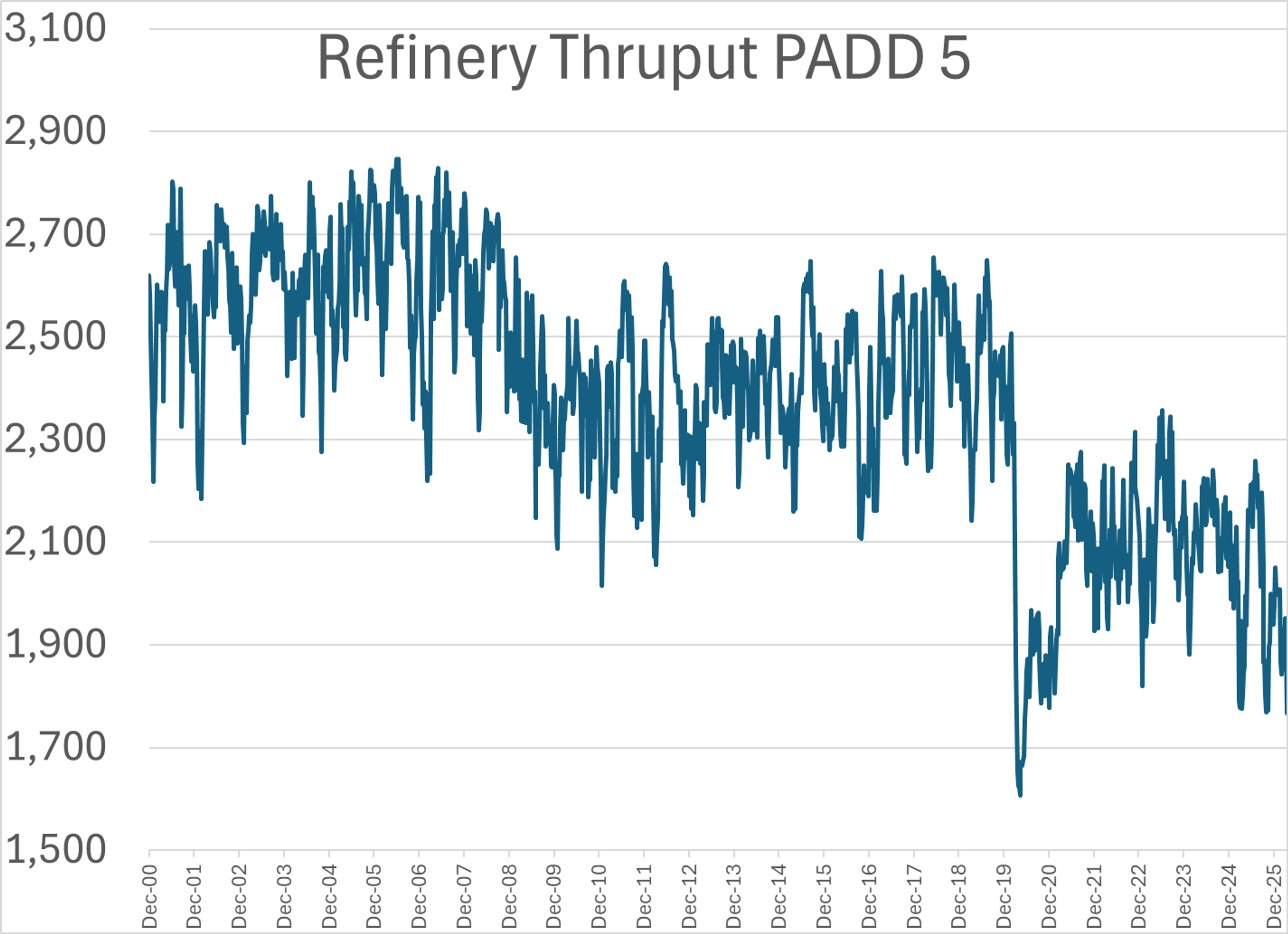
Refinery runs picked back up in PADD 3 as several plants returned from spring maintenance, but reductions in every other PADD led to a 4th straight week of lower U.S. run rates, although they remain ahead of year-ago levels. PADD 1 fell back into the 5-year range after a 9-week run of seasonal highs; no word yet on which plant is reporting the pullback. PADD 5 runs sank to a 6 year low (the Covid-level lows) partly due to recent reductions in capacity, in addition to ongoing maintenance issues at BP Cherry Point and unplanned repairs at a couple Chevron facilities.
While the drop in PADD 5 refining capacity has been major news over the past year, and will continue driving more imports into the region like we saw last week, the EIA is quietly reporting small capacity builds in PADDs 1, 2, 3 and 4 over the past 2 weeks totaling 140mb/day, which essentially matches the drop reported so far on the West Coast from last year’s closure of P66. Despite claims last month, this capacity increase isn’t due to a new refinery being built, but by facilities making small increases as they emerge from maintenance.
Diesel demand increased to a seasonal high, sending stock levels lower across all PADDs except 1. PADD 2 diesel stocks fell to a seasonal low, along with a 5th straight week of gasoline declines, with both Citgo Lemont and P66 Wood River delaying their expected returns from planned maintenance. Storage in most regions is well below 5-year averages, leaving the total U.S. a little over a million barrels above year-ago levels at the low end of the chart.
Total U.S. gas stocks dipped below the 5-year average for the first time this year, despite a big increase in imports and production ramping back up. PADD 2’s continued declines along with the two-week slide from a seasonal high to a seasonal low in PADD 3 were the main drivers for the total decline. PADD 1 saw a healthy increase in imports last week, but stock levels still slipped slightly, while PADDs 4 & 5 reported small builds. Ethanol production dropped back to year-ago levels, but inventories managed to climb to a seasonal 5-year high as exports were held below average last week.
Latest Posts
Diesel's Breakout Signals Renewed Pressure Across Energy Markets
Oil Opens Soft Despite Escalating Supply Threats
Bullish Diesel Fundamentals Overshadow Weakness In Gasoline Markets
Week 41 - US DOE Inventory Recap
Energy Markets Juggle Supply Risks, Inflation Pressures, And Geopolitical Conflict
Crude Climbs For A Fifth Day While Global Fuel Supplies Remain Under Pressure
Social Media
News & Views
View All
Diesel's Breakout Signals Renewed Pressure Across Energy Markets
Oil Opens Soft Despite Escalating Supply Threats