The Strait Isn't Open, Russian Refineries Keep Burning, And Crude Falls Anyway

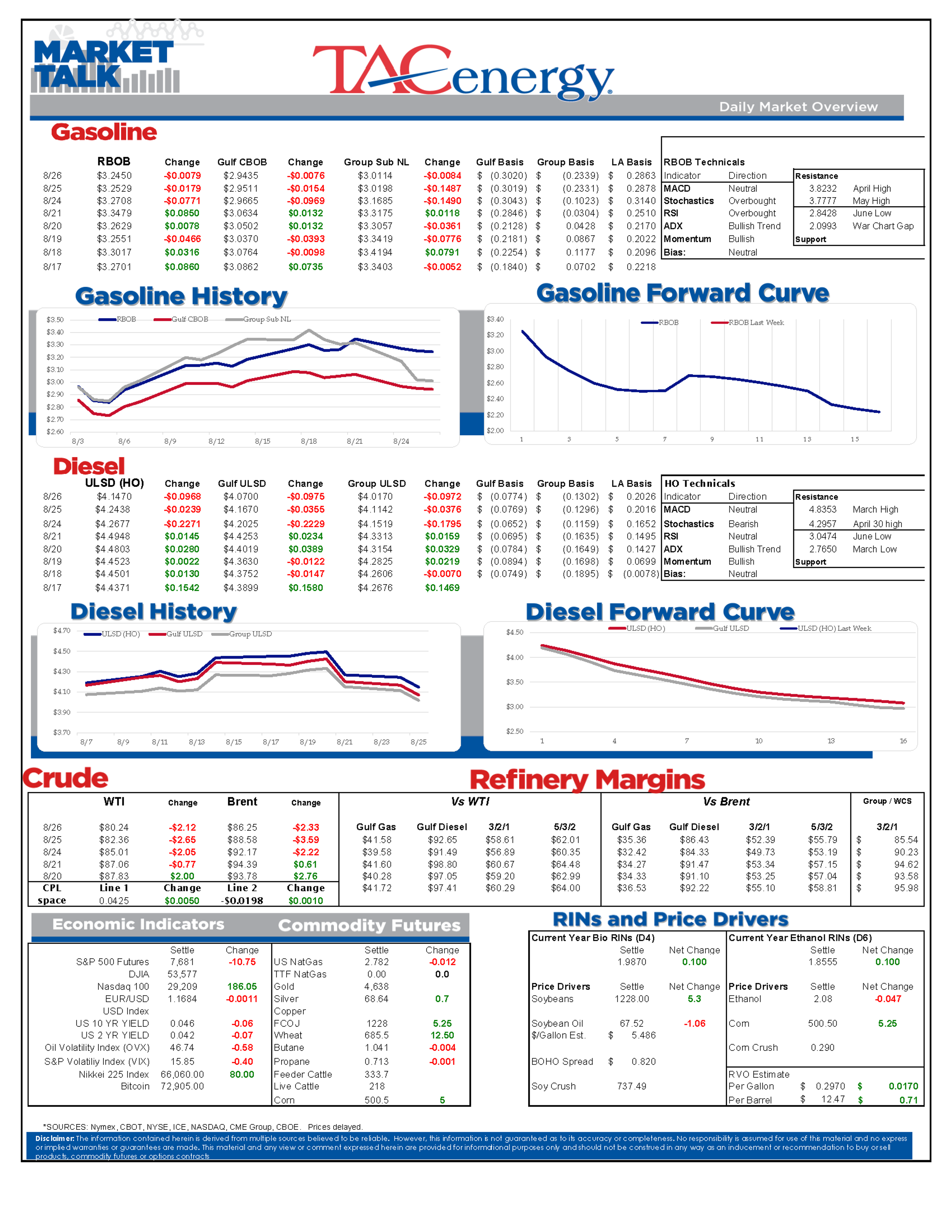
Energy markets are slipping into the red for a 3rd straight day after talks between Iran and Oman sent prices sharply lower Tuesday afternoon following the settle.
While we’re still seeing heavy losses for ULSD and crude oil futures this morning, prices have bounced notably off their overnight lows as doubts emerge over another “framework” agreement that provides little more than optimism.
The Statement from the two countries (which isn’t a formal agreement) highlights a new temporary 7 mile-wide path through the strait, moving primarily through Iran’s territorial waters. The two sides also highlighted a joint mine clearing project in the strait, which should be easy since the U.S. President says they’re gone already.
Here’s the detail that most headlines seem to be overlooking: The strait is not reopening. While a new route has been agreed to in theory, Iran is explicit that ships won’t be allowed safe passage until the U.S. fulfills its parts of the now defunct MOU. The route is also only agreed on a temporary basis.
Meanwhile, transponder-based estimates suggest traditional ship transits through the strait are nearly at a standstill once again, while data on increasing ship to ship transfers in the Gulf of Oman suggests that the U.S.-aided secret shuttle system continues to operate in the dark.
The new rum runners? More details continue to seep out on how the new dark fleet is managing to move through the straits, with reports that specific tankers with presumably very well paid crew members, make the run through the strait with transponders turned off, then drop their cargo onto a traditional cargo before returning to shuttle another load.
Total’s CEO shed an interesting light on those secret Hormuz transits at a conference in Norway this week. The CEO said that each secret shuttle costs $20 million or so in extra shipping costs which equates to about a $10/barrel freight premium in crude oil for a VLCC (2 million barrel capacity), but the premium for refined products is closer to $50/barrel due to the smaller tanker size. That phenomenon is a contributing factor in the strength in crack spreads recently as shippers may be willing to take the risk on an oil tanker, but won’t pay up for the refined product exports. The report also suggests that producers inside the straight are offering discounts of nearly $30/barrel to those willing to take the risk of getting their stranded production out to the world.
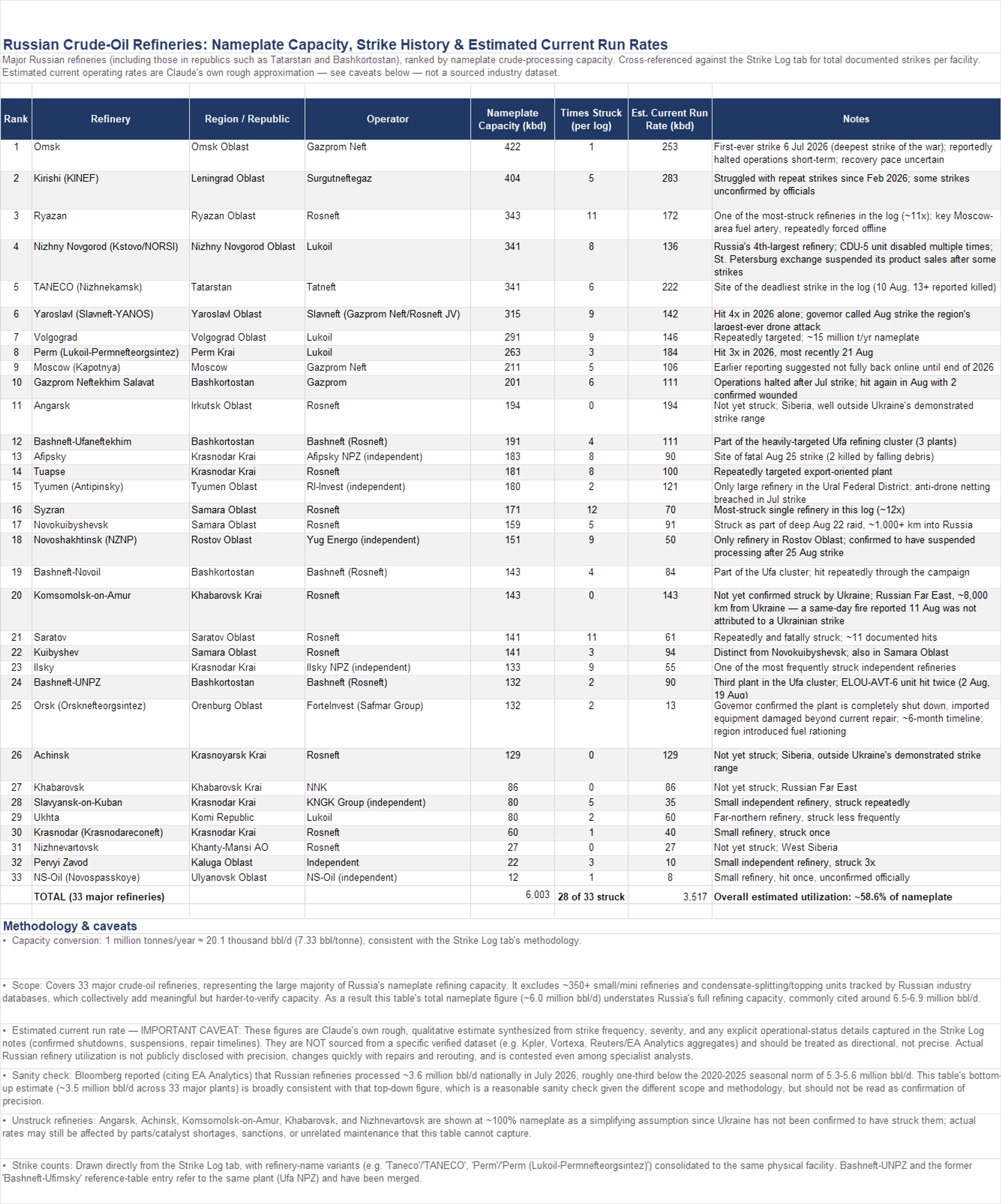
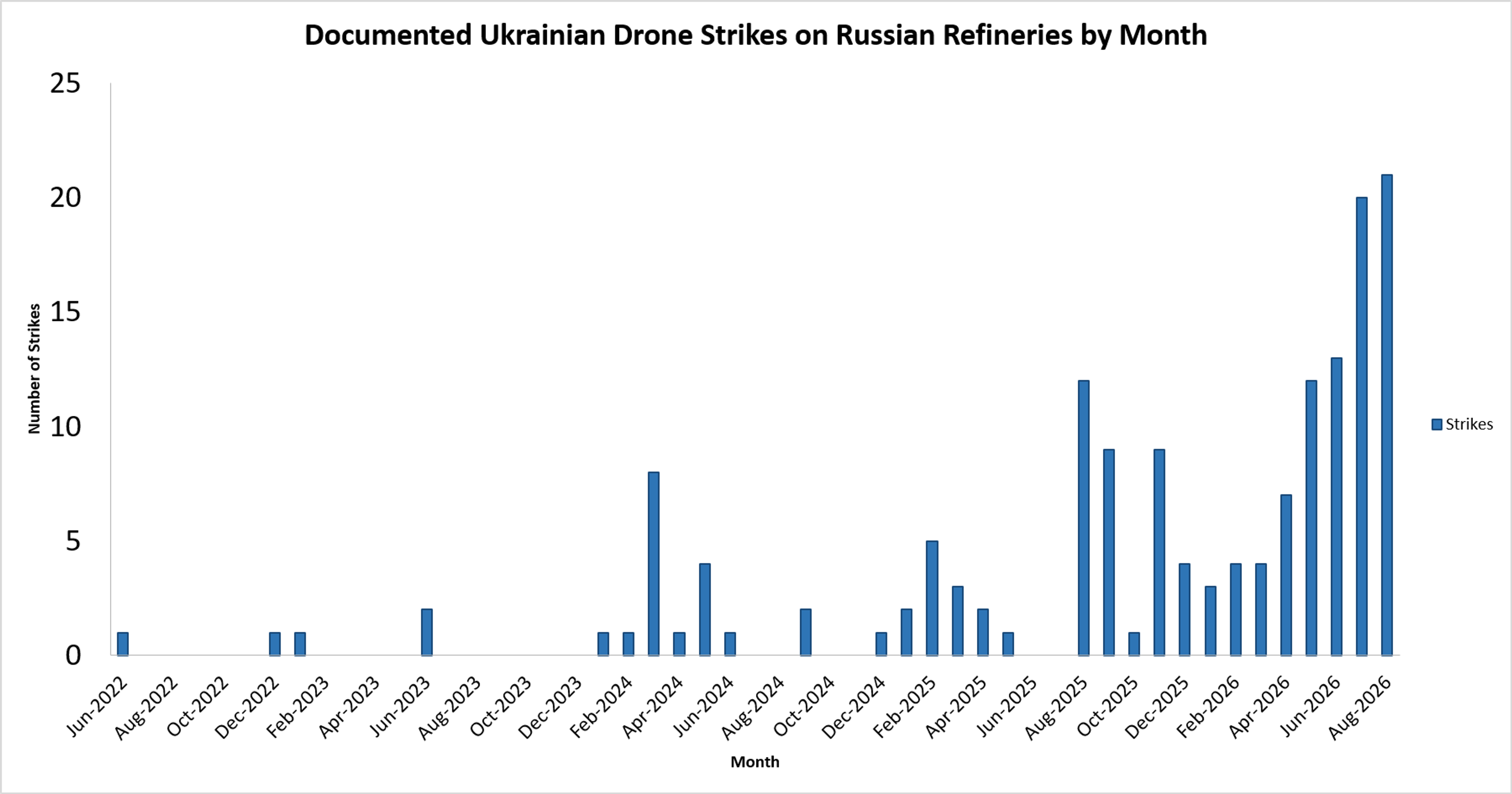
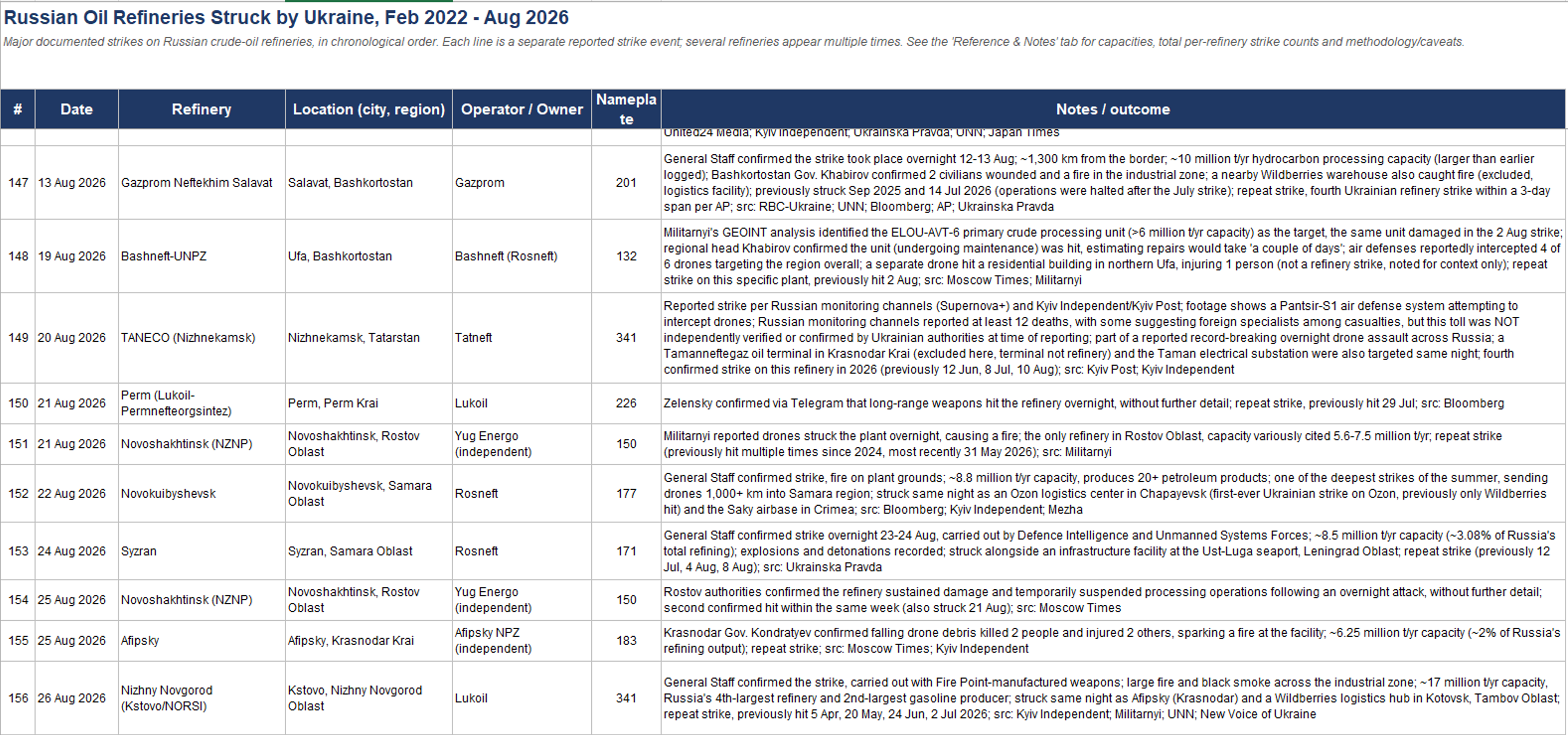
With 5 days to go in August, our informal count of Ukrainian drone strikes on Russian refineries has reached 21 for the month, already beating the July record of 20, which beat June’s record of 13. Russia’s 4th largest refinery, the 341mb/day Lukoil Nizhny Novgorod plant was struck overnight, marking the 5th time in as many months that this plant has been hit. Of the 33 major refineries in Russia, 28 have been struck by Ukraine’s campaign, with somewhere between 30 and 40% of the country’s refining capacity taken offline as a result. See the charts and tables below for more detail on the estimates. If you need something entertaining for the day, try saying the refinery names out loud.
The API reported a decrease in product inventories last week with gasoline stocks estimated to drop by 3.2 million barrels, while distillates dropped by 500,000 barrels. Commercial crude oil stocks were estimated to increase by 4.2 million barrels, while the SPR released another 3.7 million barrels, bringing the emergency stockpile to a fresh 43 low that some believe is pushing the operational minimums of the facilities. The DOE’s weekly status report is due out at its normal time this morning.
Latest Posts
Volatility Returns As Traders Weigh Storm Risk And Global Supply Threats
Crude, Diesel, And Storm Risks: Key Drivers Behind Today's Rally
Refinery Outages, Storm Risks, And Export Constraints Lift Distillates
Week 40 - US DOE Inventory Recap
Diesel Leads Energy Markets Lower Despite Mounting Geopolitical Risks
Energy Markets Mixed As Diesel Rallies And Supply Concerns Persist
Social Media
News & Views
View All
Volatility Returns As Traders Weigh Storm Risk And Global Supply Threats
Crude, Diesel, And Storm Risks: Key Drivers Behind Today's Rally