Refinery Outages, Storm Risks, And Export Constraints Lift Distillates

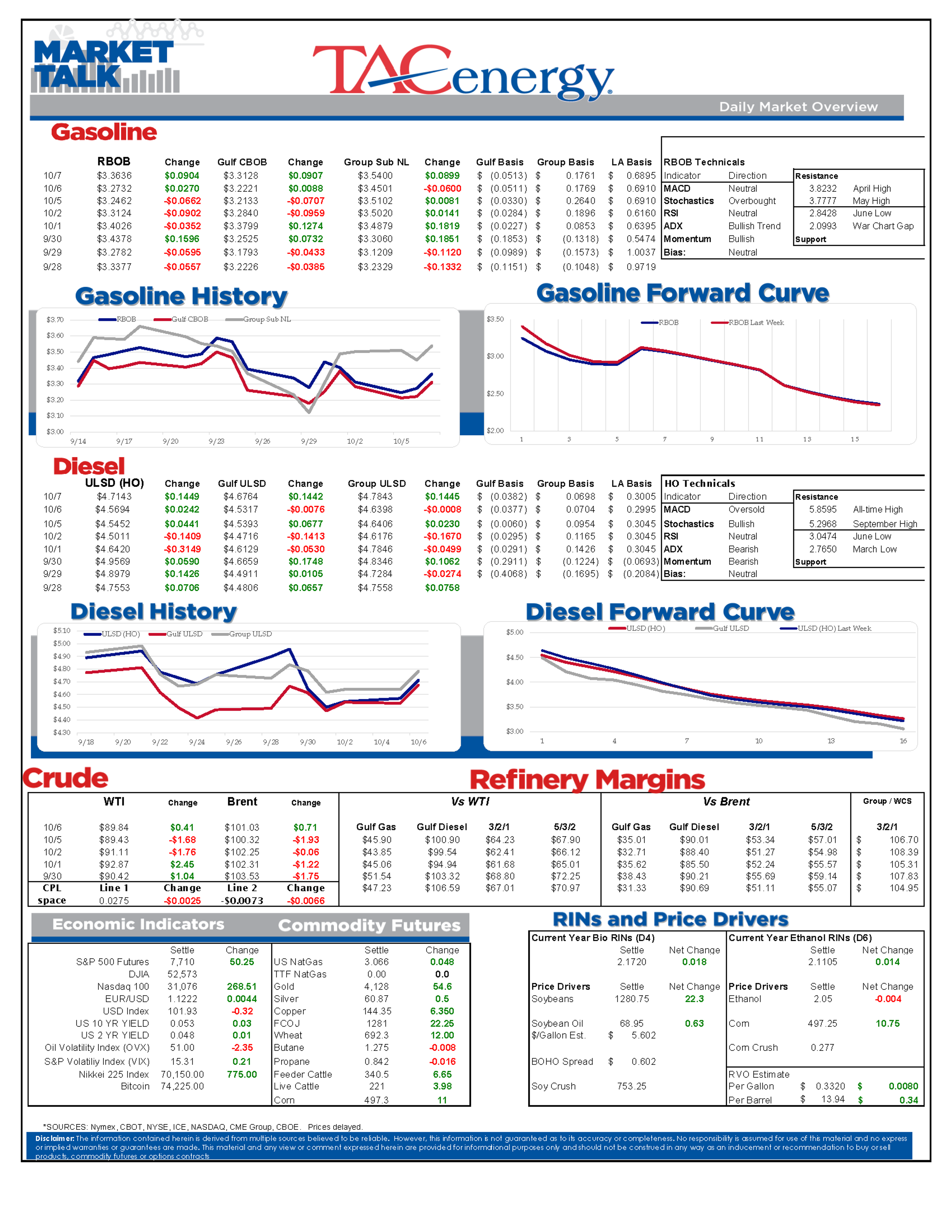
ULSD futures are leading the energy complex in a rally Wednesday, trading roughly 36 cents higher than they were yesterday morning as the reality of the dyed diesel farce that had contributed to some selling earlier in the week set in, while the first hurricane of the season takes aim at the U.S. Gulf Coast.
There were no shortage of calls asking about what the Executive Order to allow dyed diesel for highway use meant yesterday, but as the details came to light, it was clear that not only was the plan a tax deferment, not a waiver, but in fact it doesn’t even yet make it legal to drive on the highways with dyed diesel until the treasury finalizes its guidance. For those not in the industry, it’s important to understand that the order will not make a single gallon more supply available.
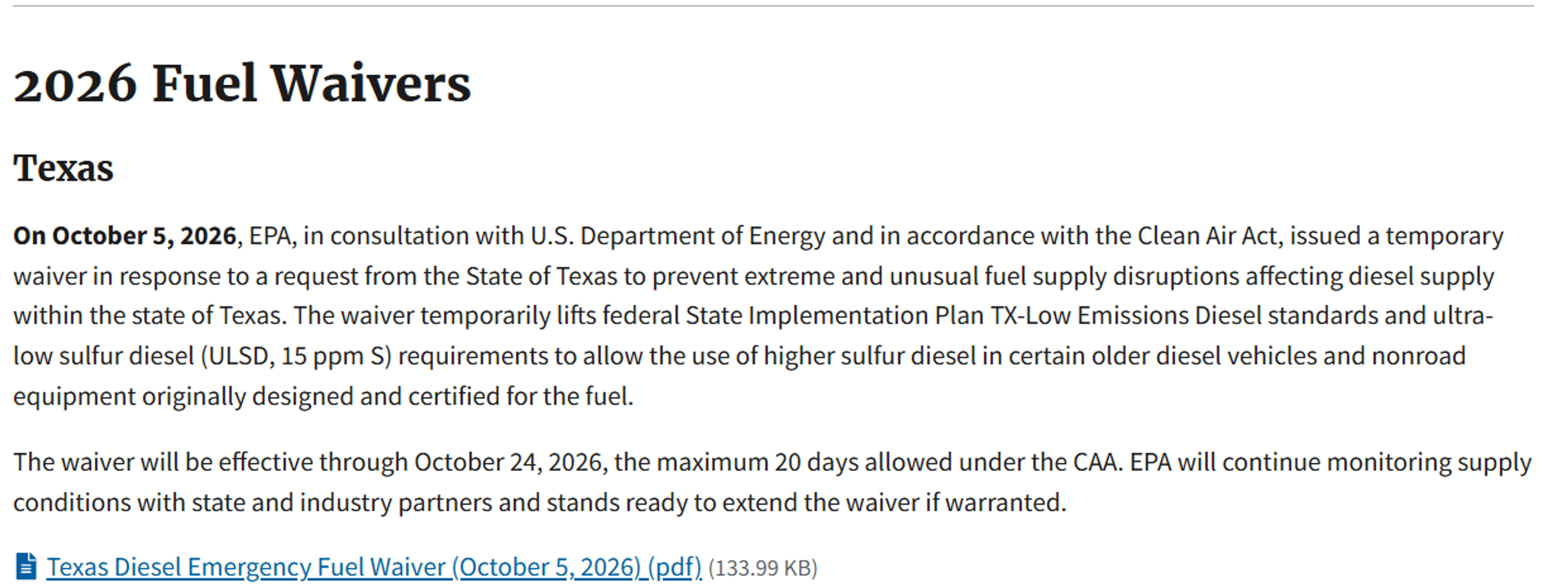
Meanwhile, the EPA did approve the Texas Governor’s request for a waiver on Sulfur limits and TXLED additives this week. The Sulfur limits are complicated as only vehicles produced prior to 2007 (as they were built to run on 500ppm diesel vs 15ppm that’s been in place the past 20 years) and non-road equipment is authorized so the availability will be limited. For many suppliers, the desire and ability to change tanks and terminal racks to 500ppm for unknown demand may be a non-starter. As for the TXLED additive required on the eastern half of the state, suppliers are already offering fuel without the additive this week, which saves a whopping 75-100 points (not cents) per gallon. See the details of that waiver attached.
Reports continue to estimate oil exports from the Middle East (excluding Iran) are now holding near pre-war levels despite the recent uptick in Iranian attacks, but refined product exports are still only about half of what they were before the war. The reason products aren’t keeping pace comes down to 2 major reasons: First, the Saudi and UAE pipeline “safety valves” bypassing Hormuz carry crude, not products, and Second, the “clean” tanker size for refined products is just a fraction of the capacity for the “dirty” crude oil tankers, making the $20 million/ship premium unacceptable for most. There’s also the unknown of how much damage was done to refineries in Kuwait, Saudi Arabia and Bahrain during recent attacks.
U.S. leaders met quietly at Camp David Friday to discuss next steps with Iran, and as a 3rd air craft carrier and 10,000 more troops head to the region, there are plenty of guesses that another escalation in the war is coming.
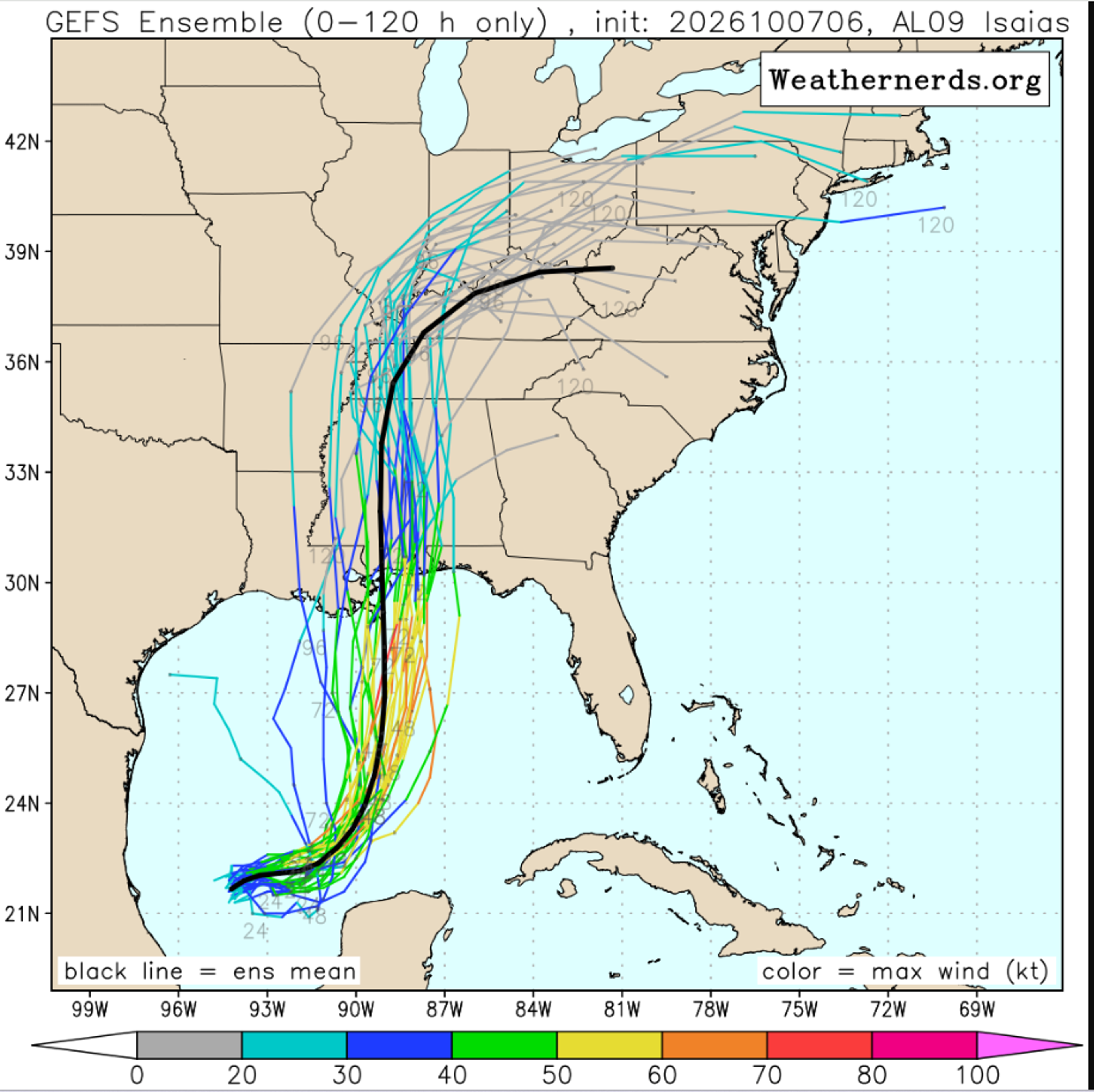
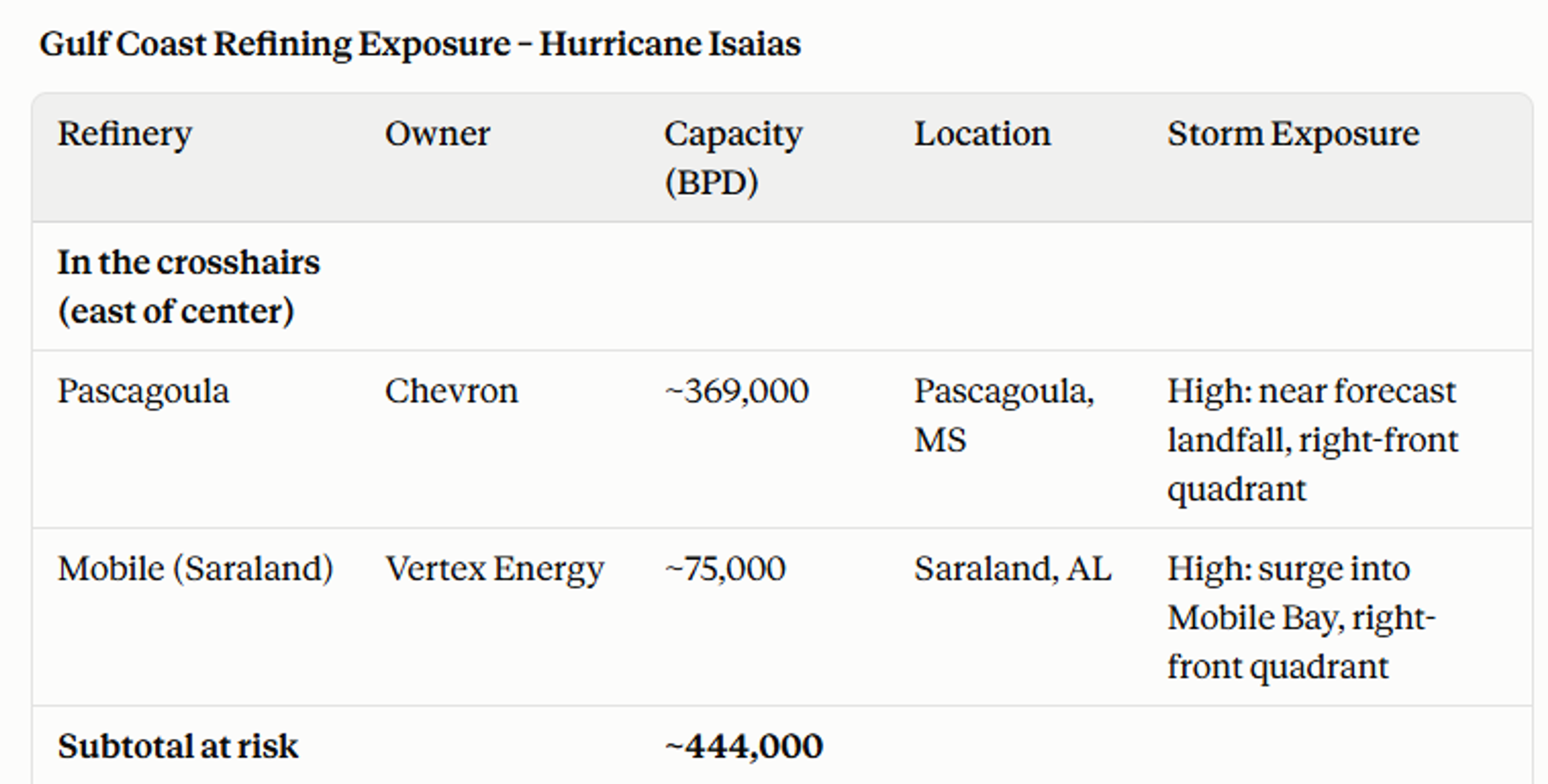
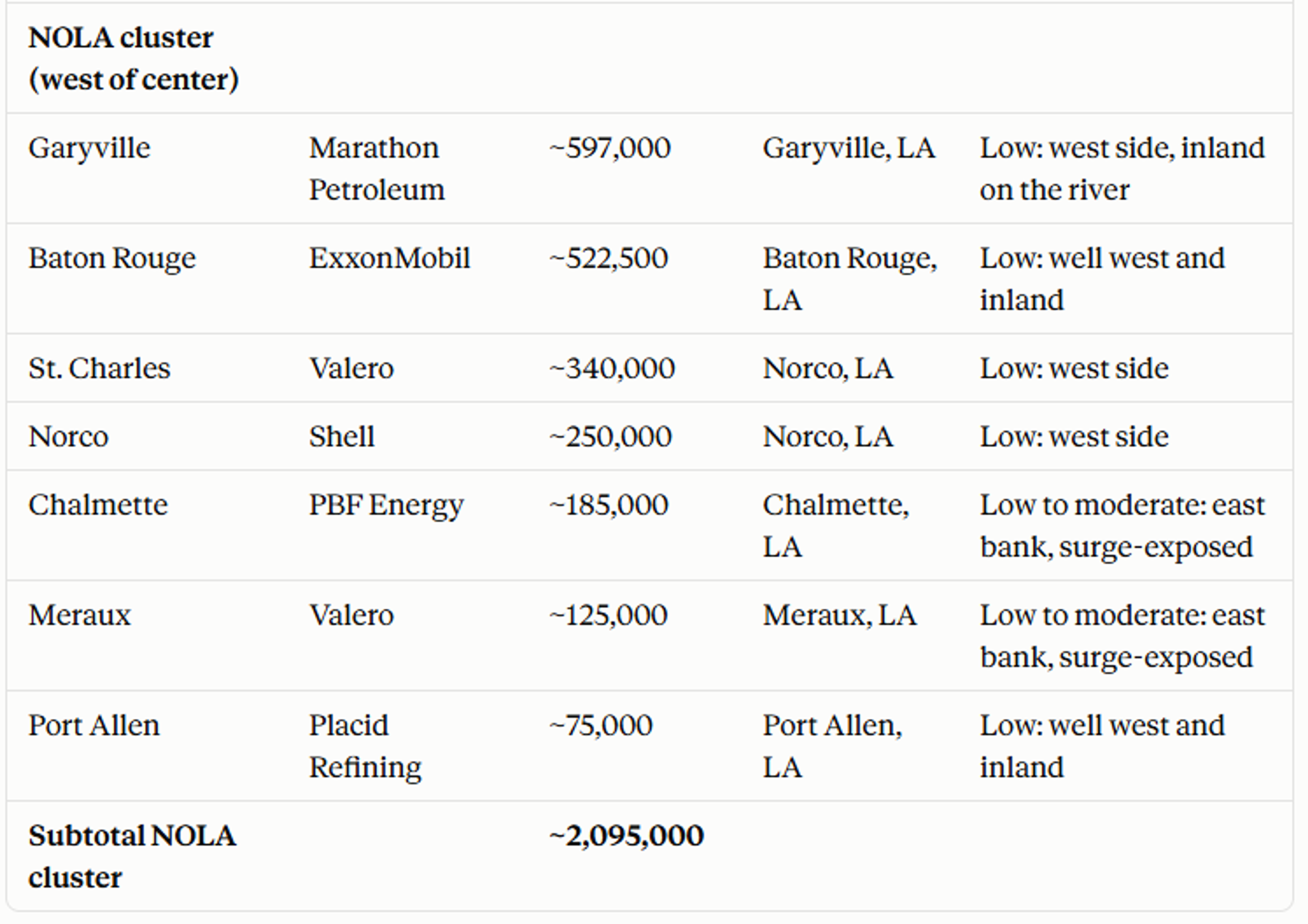
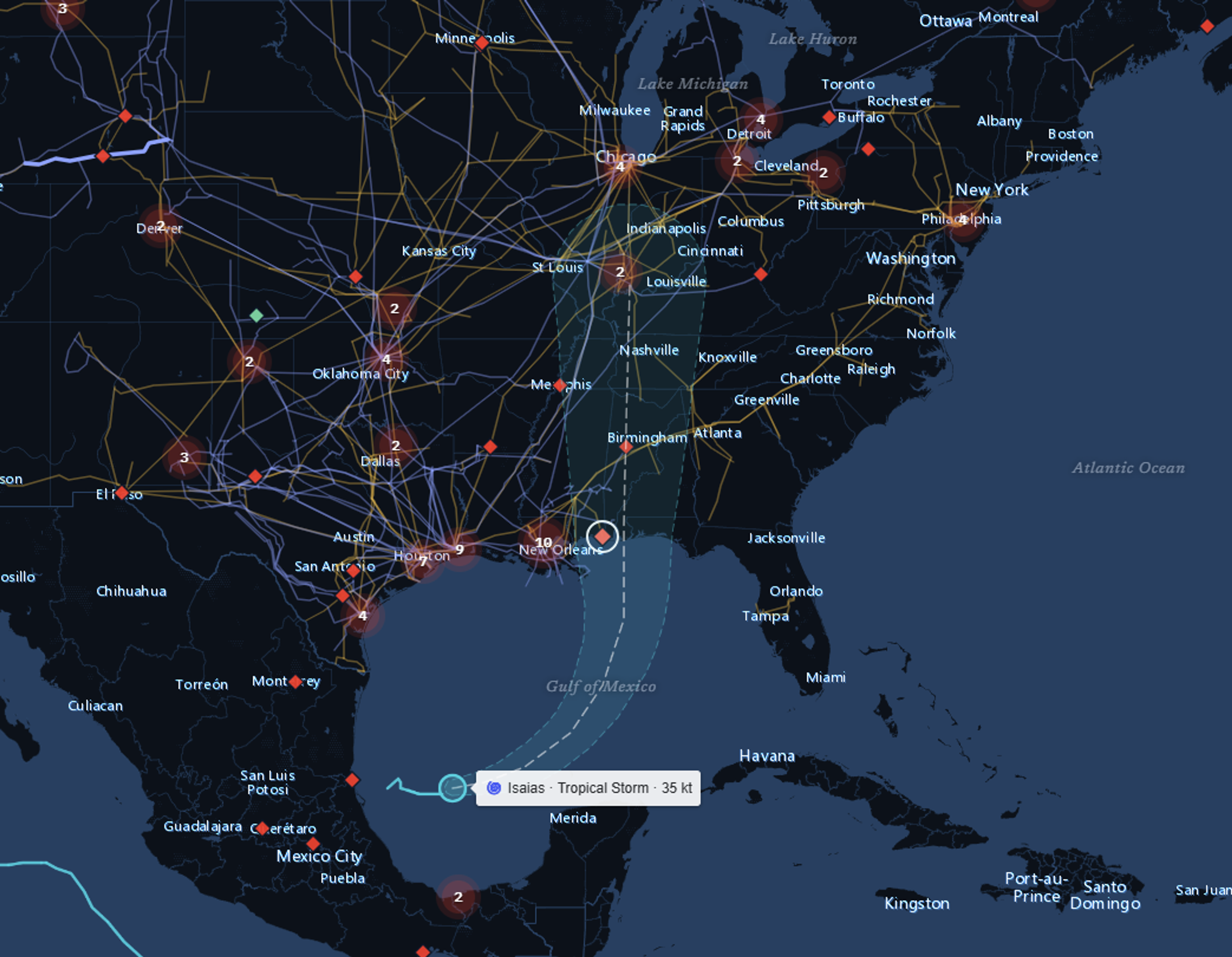
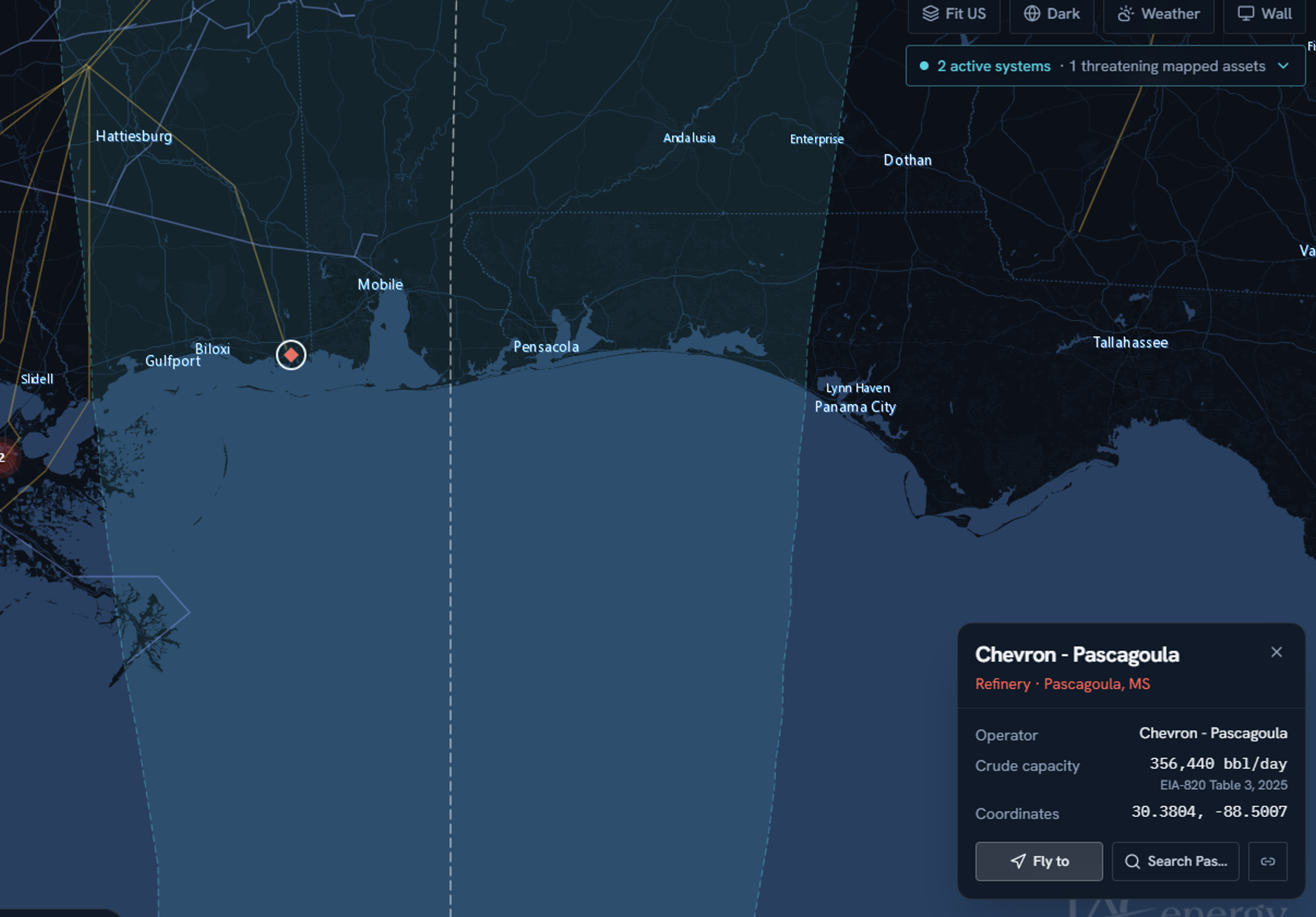
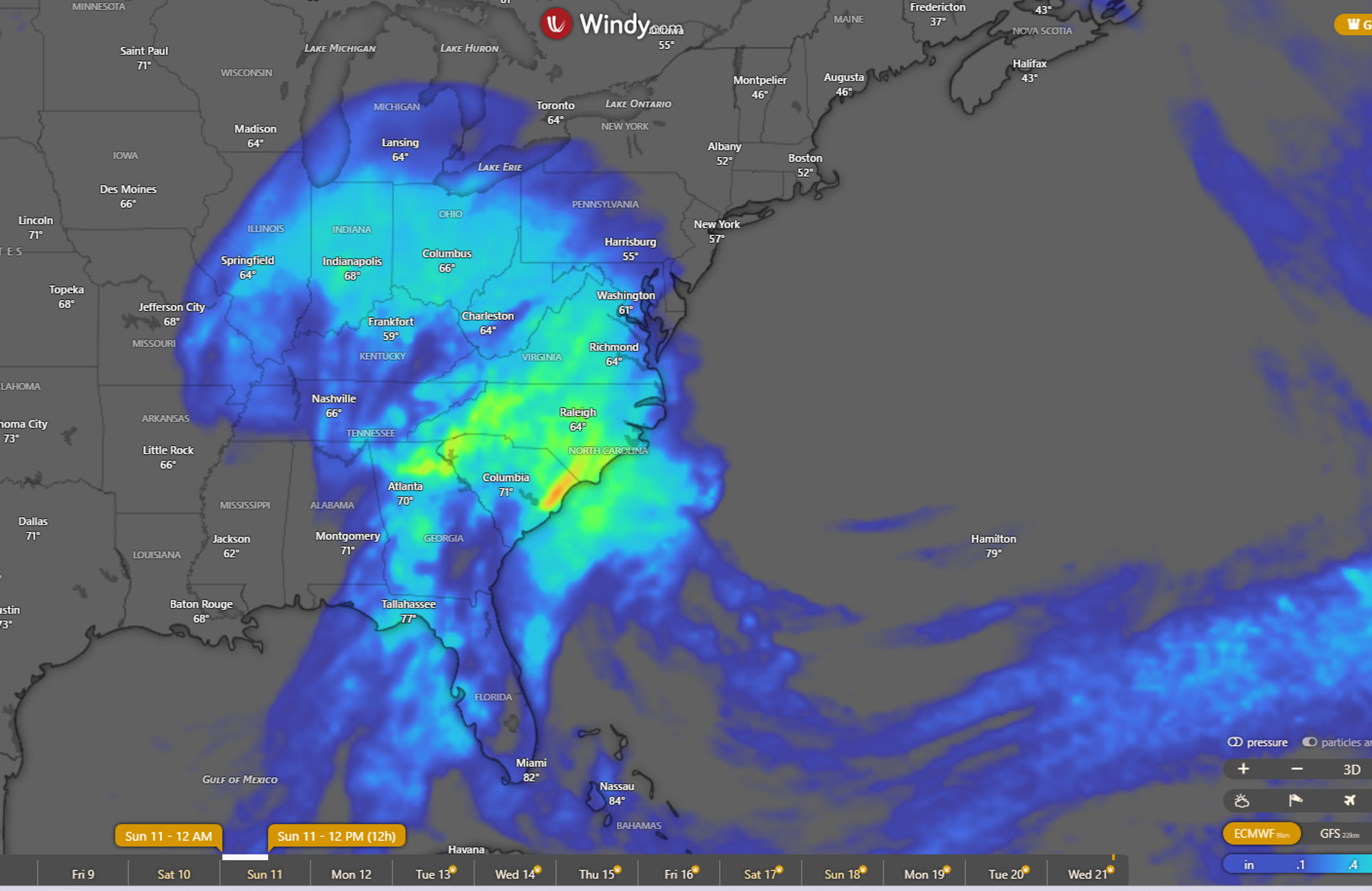
Tropical storm Isaias was named overnight, and is poised to become the first hurricane of the Atlantic season after the longest drought for hurricanes on this side of the world in more than 100 years. The current path keeps the storm just to the east of the refinery cluster near New Orleans (keeping them on the “clean” side of the storm) but puts the 360mb/day Chevron Pascagoula and 75mb/day Vertex Mobile plants in its sights.
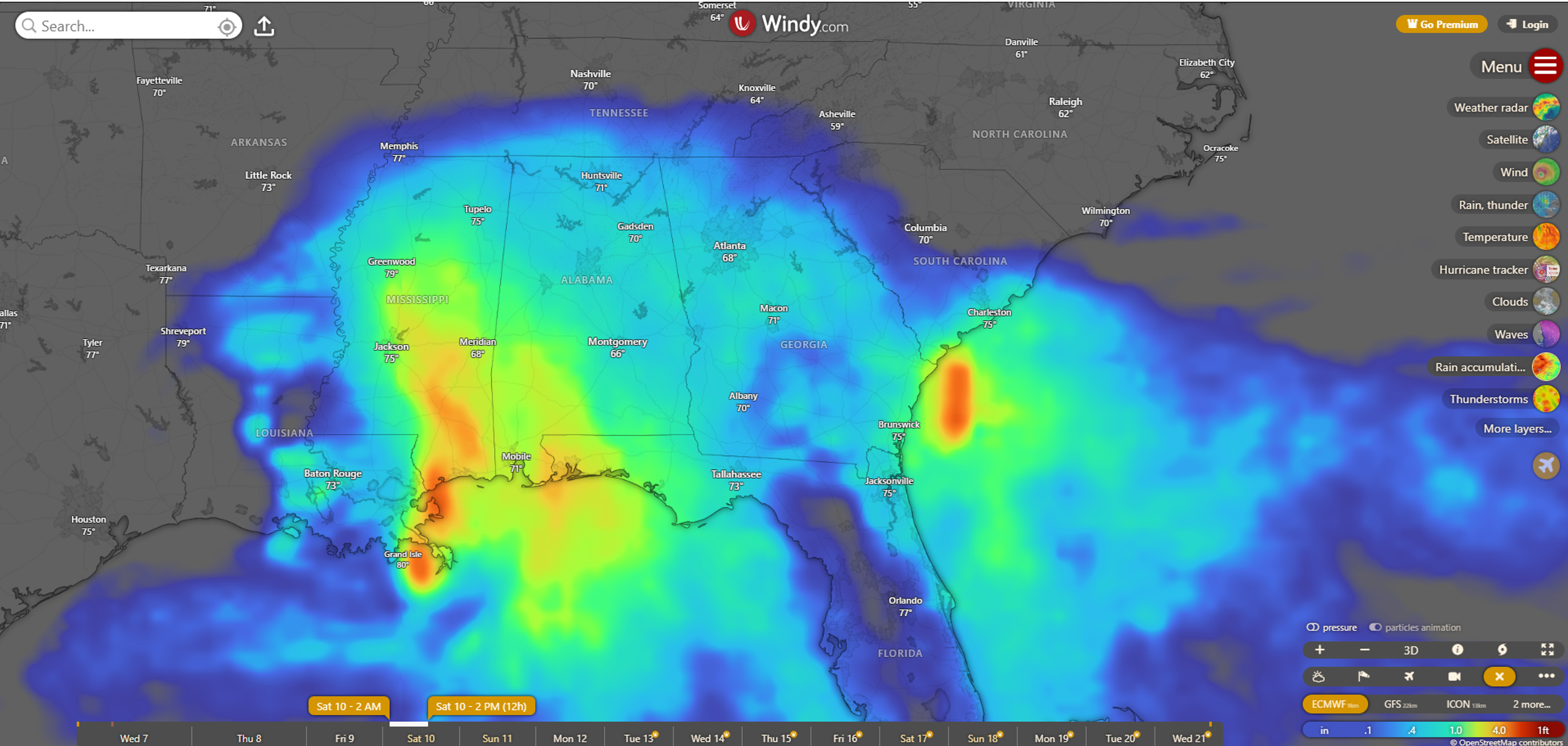
The El Nino-induced wind shear that’s kept several storms from developing already this year is expected to prevent this system from becoming a major hurricane, despite very warm waters in the gulf, which should limit the damage done on the coast, while inland flooding will be a concern as heavy rains move across the SE and across the Ohio River Valley this weekend.
Offshore oil and gas producers are already shutting in production to protect their people and rigs while the storm passes, but at this point it doesn’t appear the storm will create a long term disruption to supply unless it damages one of the refineries in its path.
Venezuela’s 2nd largest refinery was shut due to a fire Tuesday. The Cardon facility has a nameplate capacity of 310mb/day, but like all of the country’s refineries, has only operated at a small fraction of that level (somewhere around 20-30%) for years due to a lack of investment and maintenance.
Ukraine hasn’t struck a Russian refinery so far this week, but the 290mb/day Volgograd plant hit last Friday was confirmed to be taken fully offline for repairs.
The API estimated small changes in inventory levels last week with gasoline stocks said to decrease by 1.37 million barrels while distillates increased by 461,000 barrels. Crude oil stocks dropped by 2 million barrels, while another 800,000 barrels were taken out of the SPR on the week. The DOE’s weekly report is due out at its normal time.
Valero reported a crude oil leak at its 225mb/day Texas City refinery Monday, but it appears the facility was able to continue operating during the cleanup efforts. The company also reported that it was making another attempt at restarting an FCC unit at its 195mb/day Mckee facility in the TX Panhandle which has been struggling to reach full run rates for weeks.
Latest Posts
Week 40 - US DOE Inventory Recap
Diesel Leads Energy Markets Lower Despite Mounting Geopolitical Risks
Energy Markets Mixed As Diesel Rallies And Supply Concerns Persist
Supply Disruptions Persist As Markets Focus Elsewhere
Geopolitics, Diesel Shortages, And Refinery Cuts Shape Energy Markets
Geopolitics, Diesel Shortages, And Refinery Cuts Shape Energy Markets
Social Media
News & Views
View All
Week 40 - US DOE Inventory Recap
Diesel Leads Energy Markets Lower Despite Mounting Geopolitical Risks