Geopolitics, Diesel Shortages, And Refinery Cuts Shape Energy Markets

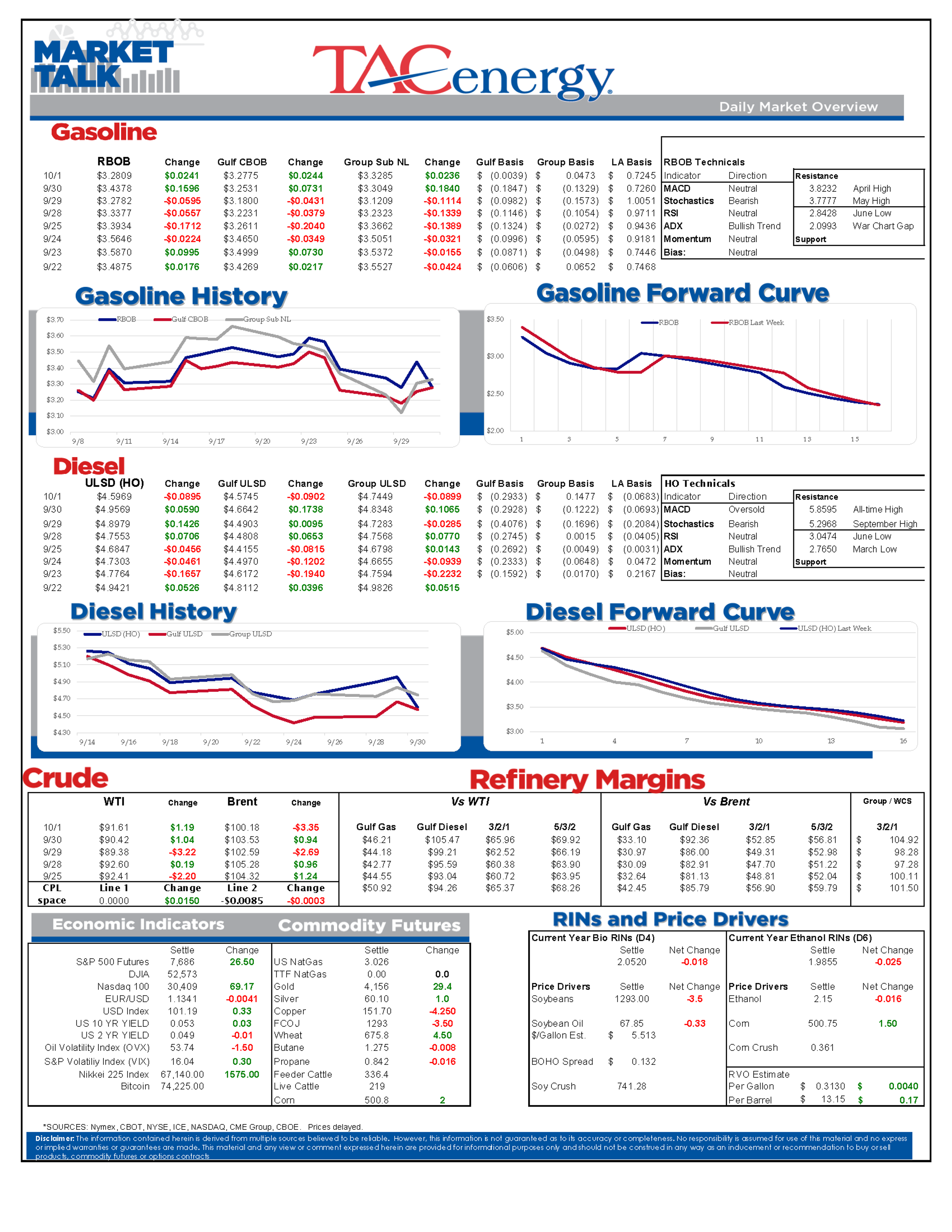
Energy markets are mixed to start October trading, after a strong finish to a wild September. ULSD futures are seeing a wave of selling this morning after a big Wednesday rally, as the politics of the diesel market stay in the forefront of the global conversation, while RBOB and crude oil futures are seeing modest gains.
U.S. Energy Secretary is urging European nations to release diesel from their strategic reserves, calling them out to “fulfill their commitments” on the “coordinated” release agreed to earlier in the year that’s driven the U.S. SPR down to record lows. The statements come with a hint that the U.S. is using the threat of a diesel export ban to force Europe to follow through.
In addition to the 3 tankers attacked yesterday near the Strait of Hormuz, there were also reports that the Saudi Abqaiq oil processing facility which is the largest crude stabilization plant in the world was attacked by Houthi forces, and a UAE onshore oil field was attacked by Iran. So far there has not been any mention of these attacks, or signs of retaliation, from the U.S. military.
Reports that the U.S. Secretary of State ordered Iranian officials to leave the country earlier this week threw cold water on the hopes for a diplomatic solution to the war.
California’s gasoline prices started their inevitable tumble Thursday, as the state’s RVP waivers (which were confirmed by another EPA waiver announcement Tuesday) allowed for refiners and shippers to start using winter grades immediately. LA Spot CARBOB differentials dropped 40 cents on the day, with even lower offers coming in late in the day as the instant switch from 6lb RVP to 10lb RVP settled in.
Reminder on dyed diesel waivers: Even though Texas has relaxed enforcement of dyed diesel use on the highways, the EPA has not yet responded to its request for a waiver, so the tax law hasn’t changed and distributers are still on the hook to collect taxes so this isn’t yet the “big savings” some have claimed.
Notes from the DOE’s weekly status report below. Charts and AI (or is it SI?) analysis attached.
The SPR drew to a 44-year low but an increase in commercial stocks led to a small net build for total U.S. crude. The impact of import/export flows was offset by a second straight week of 500+ Mb/day reductions in refinery runs and production reaching a new all-time high of 13,955 Mb/day. Total stocks are about 17% below their 5-year average but commercial inventories alone are sitting at the high-end of the seasonal range.
Refinery runs declined everywhere except PADD 4 with large drops in PADDs 1-3 making up the bulk of the change. Exxon Joliet resumed operations but not until after the cutoff to report to the EIA and Valero Port Arthur had an extended shut down for repairs. PADD 1 fell back into range following a seasonal high last week. PADD 2 had huge back-to-back drops, slipping from an all-time high a month ago to the low end of the 5-year range, while PADD 3 is holding seasonal high run rates despite a 3 week stretch of declines. Total utilization and run rates are both still running above their 5-year ranges.
Diesel stocks posted the largest product draw of the week with increased export activity outweighing an 80% bump in imports while production slipped for the third week in a row, falling back into the 5-year range but staying just ahead of year-ago levels. PADD 1 has been on a 13-week run of seasonal lows and PADD 2 joined with inventories dropping sharply over the past two weeks. PADDs 4 & 5 are at 15 and 26-year seasonal lows, respectively, while PADD 3 remains the only region holding above average stocks. Total U.S. diesel has posted seasonal low readings for the past 6 weeks and is now sitting about 13% below the 5-year average.
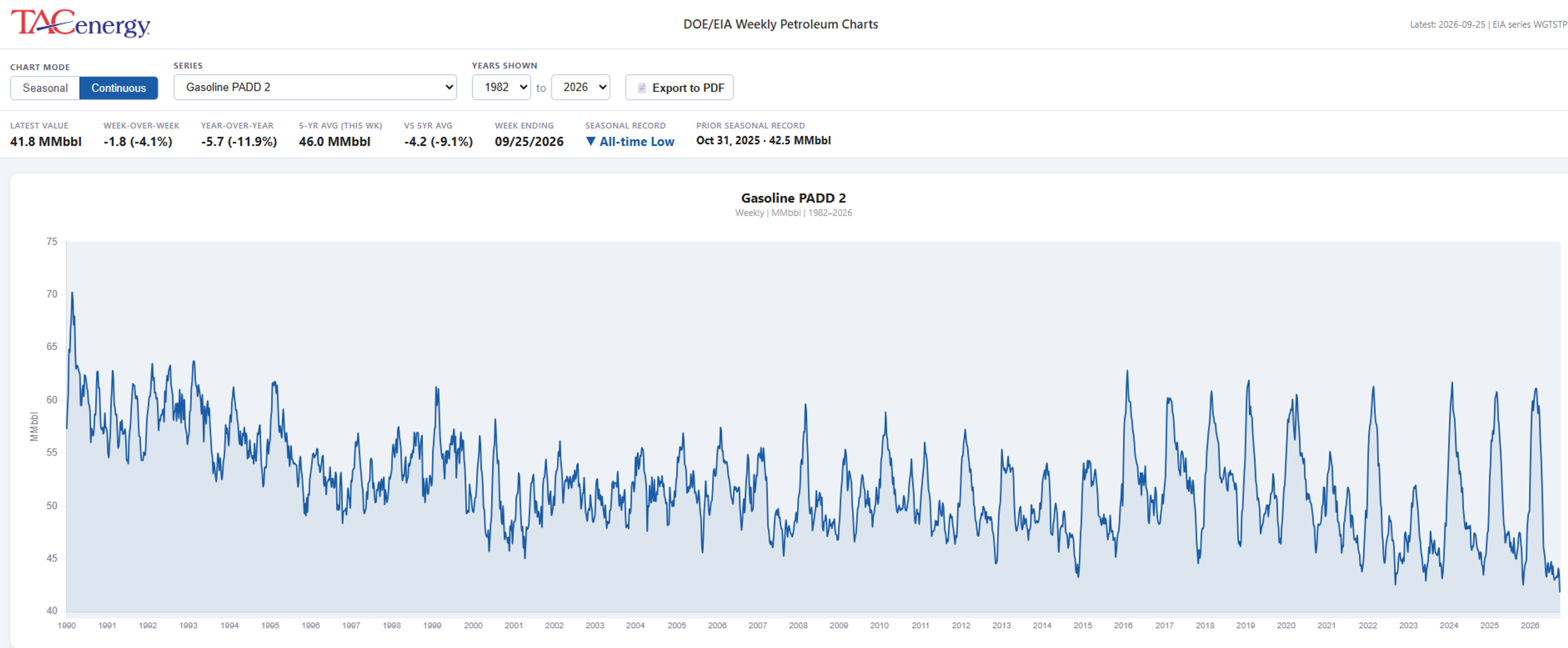
Despite softer demand, gasoline stocks fell to a fresh 2026 low last week as exports picked back up while production declined. All PADDs are holding below average inventories with PADDs 4 & 5 being the only two within their 5-year ranges. PADD 1 was mostly unchanged and still sitting at a 14-year seasonal low while PADD 3 maintained a 9-year seasonal low for the third straight week. PADD 2 is the main story this week though, as stocks slipped to an all-time low with the region has seen nearly 600 Mb/day of refinery throughput taken offline over the past couple weeks.
Jet fuel stocks fell below year-ago levels for the first time since March with all factors lending to the draw. Imports declined while exports shot back to a seasonal high. Demand increased while production dipped but maintained a seasonal high. Inventories are still well above average in PADDs 2, 3, & 5, particularly in PADD 2, but the big slide in PADD 1 sent stocks below average to join PADD 4 where that’s been the case for the past 8 weeks.
Latest Posts
Week 39 - US DOE Inventory Recap
Volatility Returns As Diesel Surges And Global Supply Chains Tighten
Governors Take Action As Energy Markets Navigate Volatility
Refinery Outages And Global Conflicts Keep Distillates In The Driver's Seat
Storms, Drones And A Walked-Back Export Ban: Why This Week's Selloff Might Not Last
Diesel Rally Resumes Amid Growing Debate Over US Export Limits
Social Media
News & Views
View All
Week 39 - US DOE Inventory Recap
Volatility Returns As Diesel Surges And Global Supply Chains Tighten