Volatility Returns As Diesel Surges And Global Supply Chains Tighten

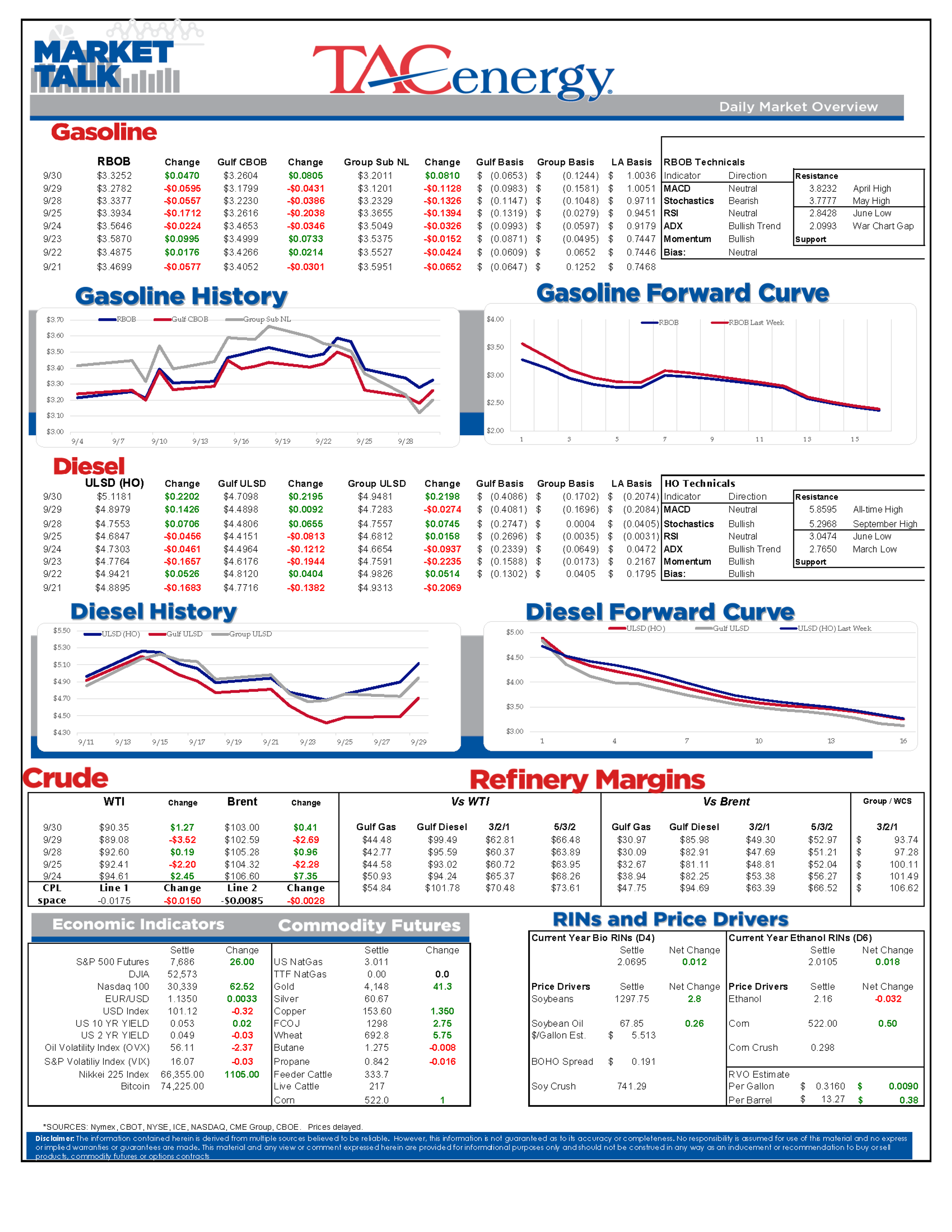
Energy markets are ending a wild September with more big volatility as the diesel market once again leads futures on a surge higher. November ULSD is trading up more than 21 cents on the day, while the expiring October contract surged back above the $5 mark overnight. November RBOB is “only” up around 8 cents so far this morning and oil prices are up around a bit more than $1/barrel.
The UKMTO reported 3 different tankers were attacked near the Strait of Hormuz today, suggesting Iran either doesn’t like the U.S. response to its recent proposal to re-open the waterway, or has lost control of its military.
Do you believe the banksters? Analysts at JP Morgan and Goldman Sachs are suggesting that oil flows from the Middle East are approaching pre-war levels as Saudi Arabia’s safety valve on the East West pipeline to the Red Sea re-opened after Houthi attacks, and the U.S.-backed covert shipments through Hormuz ramp up. Based on the markets reaction today, you may think that traders either aren’t buying that theory from two of the banks that became big oil traders before being kicked out of the market in the wake of their financial crisis bailouts, or (more likely) they’re recognizing that while the oil may be moving, the diesel still is not.
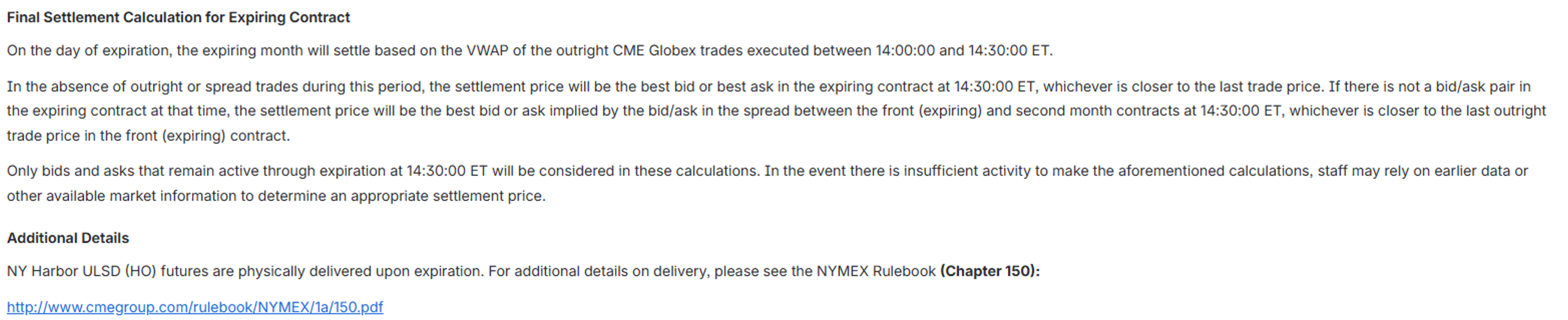
It’s expiration day for October RBOB and ULSD futures which is already leading to some huge price swings as liquidity evaporates. Don’t get fooled like the 4 letter PRA who charges money for their market expertise did last month when they wrote that the contract that expired at 1:30 central was rallying at 4pm. You can read the CME’s full description of how settlements work here, but the simple story is expiring contracts use a 30 minute window for the settlement vs the standard 2 minute window. Once the contract expires, it stops trading, which seems pretty easy to understand. The other non-expired contracts meanwhile continue trading without any interruption even while the settlement is posted, and continue until the daily halt at 4pm central.
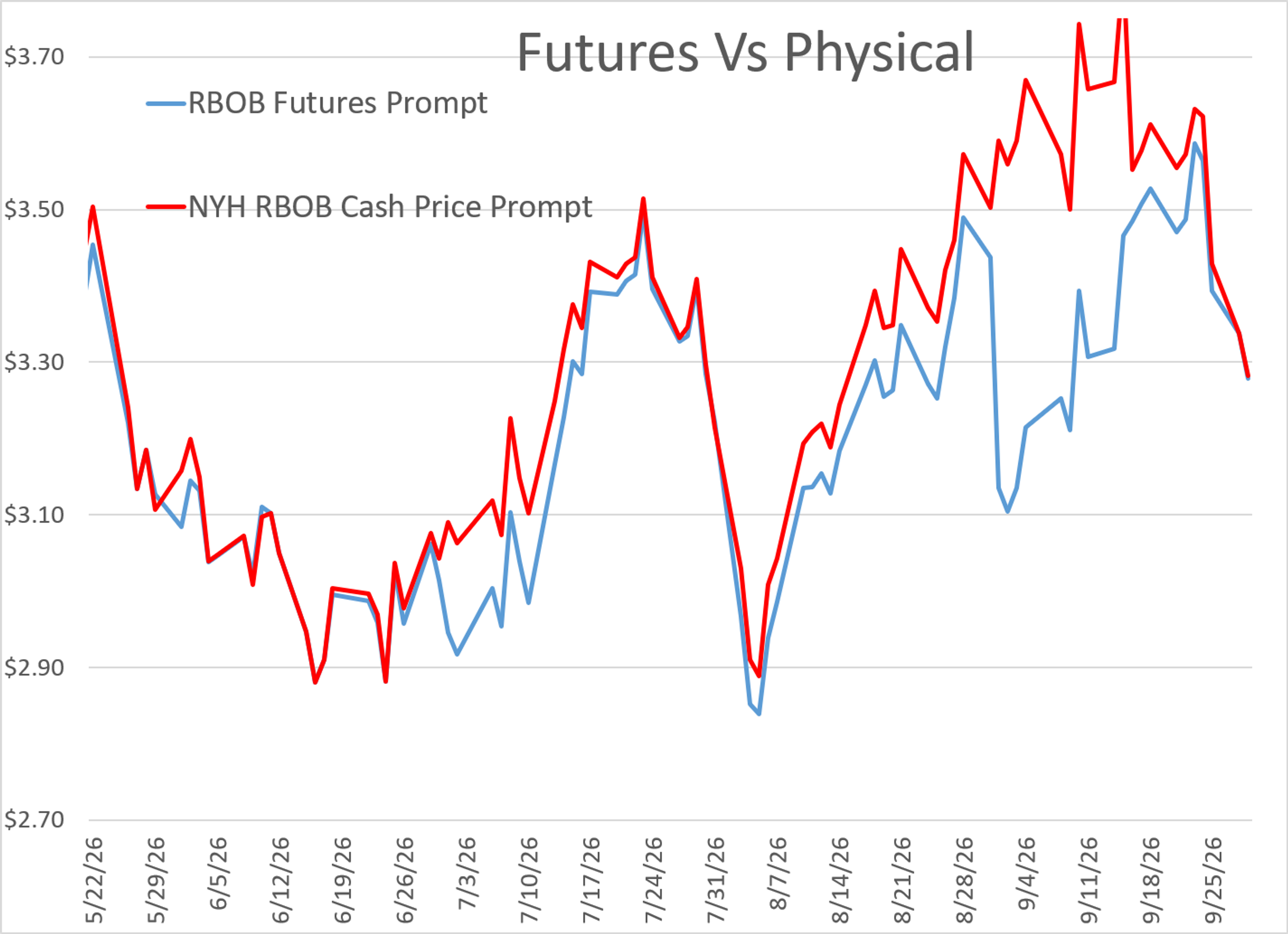
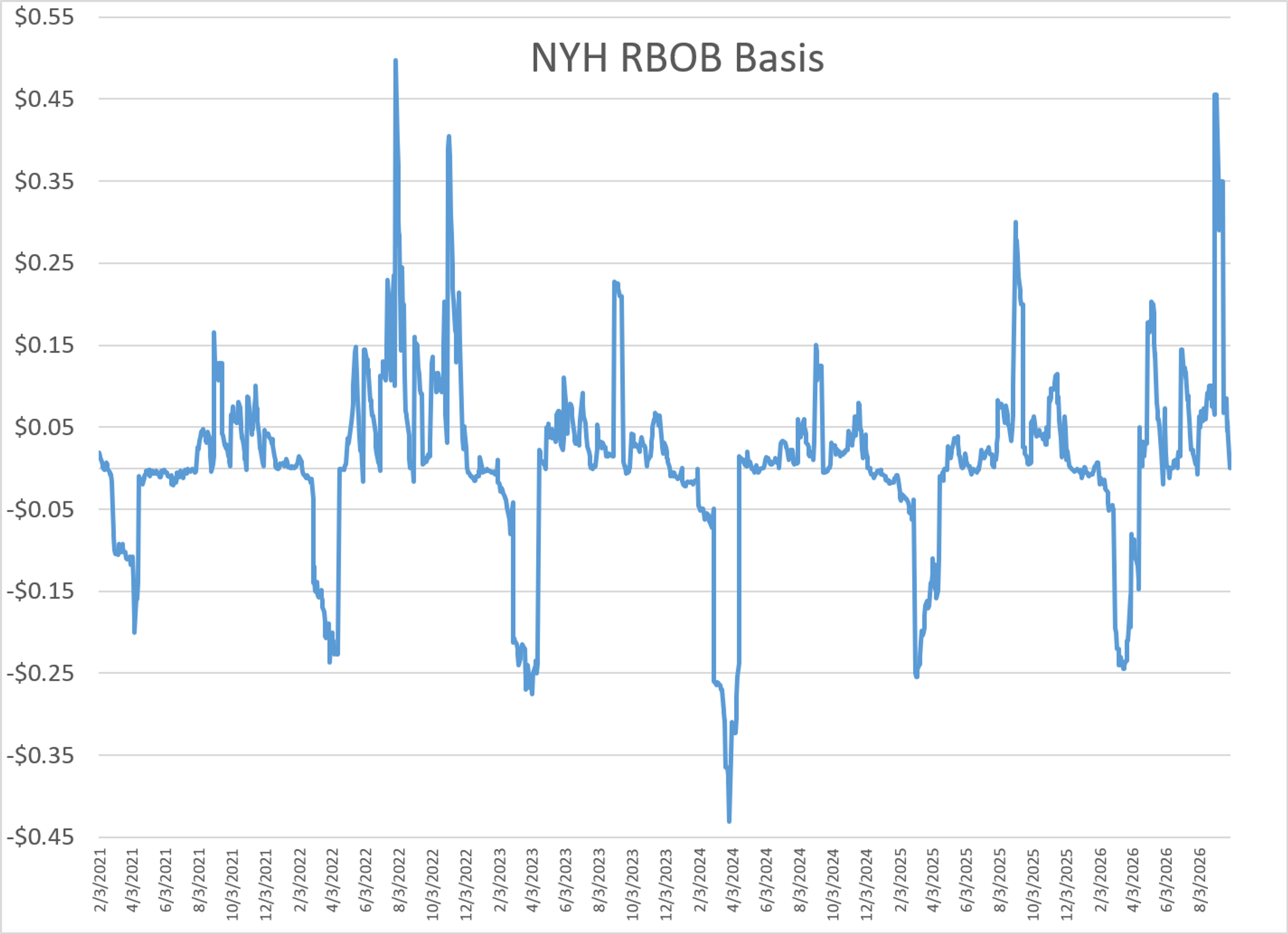
What’s even more confusing than the basics of how the futures contracts work is how the extreme backwardation we’re dealing with impacts physical prices. Essentially all cash markets see a big jump in basis values as their reference month changes from October to November, which largely offsets the big drop in value between the two futures contracts. For markets like the NYH and Group 3 cash markets which have not yet rolled to the November reference month, you will see that phenomenon in tomorrow’s values. See the charts below for how the prompt NYH RBOB physical market has moved in relation to futures lately.
Russia extended its diesel export ban for another month, through Oct 31, as Ukraine’s drone campaign took multiple refineries offline in September, even though the pace of the strikes slowed from the record set in July and August. Jet Fuel exports are banned through November, and gasoline exports are banned through January.
Kinder Morgan announced it would begin accepting winter gasoline grades in California effective immediately following the Governor’s orders to CARB to end the summer season a month early. Northern California will start shipping 12.5 pound product and Southern California will accept 10.5 pound product (both are 1 pound higher after blending with ethanol) after requiring 6lb RVP just a day earlier.
Citgo announced this morning it will ship gasoline from its Lemont IL (Chicago area) refinery to New York in early October as part of the first movement on Buckeye’s newly reversed pipeline segment in PA. That bi-directional service had been delayed by court battles for more than a year, but will finally allow for somewhere around 80mb/day of products to flow east for the first time, offering a much needed relief valve for the often long Chicago spot market, while putting more pressure on the often long North East. The squeeze on NE refiners and blenders isn’t likely to be too strong given the very tight inventory environment in the U.S. and throughout the Atlantic basin, but once things normalize, that new pipeline access could be a nail in the coffin of one of the few remaining East Coast refineries.
We’re wrapping up September without a single hurricane in the Atlantic basin, with a record-setting stretch of no storm activity in part of the world while the other side is experiencing a huge influx of storm activity, all thanks to the building “Super El Nino”. While refinery row along the U.S. Gulf Coast is enjoying the lack of storm activity this year, the SW U.S. is about to feel the wrath of Polo’s remnants over the next few days, with flooding expected across several markets.
There are a handful of refineries in W. Texas and New Mexico that could face upsets from the stormy weather in the day ahead, which could further complicate tight supply situations in the region, but none of these facilities feed a major U.S. spot market, so don’t expect to see their impact in regional cash values, though you might see some stronger rack prices, particularly given the recent upsets at Valero Mckee and HFS Artesia already keeping the area on edge.
The API estimated a build of just under 3 million barrels of gasoline last week, while diesel stocks had a small draw of 286,000 barrels. Commercial crude stocks were estimated to build by 1 million barrels as only 800,000 barrels moved out of the SPR. The DOE’s weekly update is due out at its normal time this morning.


Latest Posts
Week 39 - US DOE Inventory Recap
Governors Take Action As Energy Markets Navigate Volatility
Refinery Outages And Global Conflicts Keep Distillates In The Driver's Seat
Storms, Drones And A Walked-Back Export Ban: Why This Week's Selloff Might Not Last
Diesel Rally Resumes Amid Growing Debate Over US Export Limits
Week 38 - US DOE Inventory Recap
Social Media
News & Views
View All
Week 39 - US DOE Inventory Recap
Governors Take Action As Energy Markets Navigate Volatility