Crude, Diesel, And Storm Risks: Key Drivers Behind Today's Rally

Energy markets are off to the races once again Thursday, with signs that the war impacts on supply may get worse before they get better and the first Hurricane threat to the U.S. Gulf Coast both getting credit for the rally this morning.
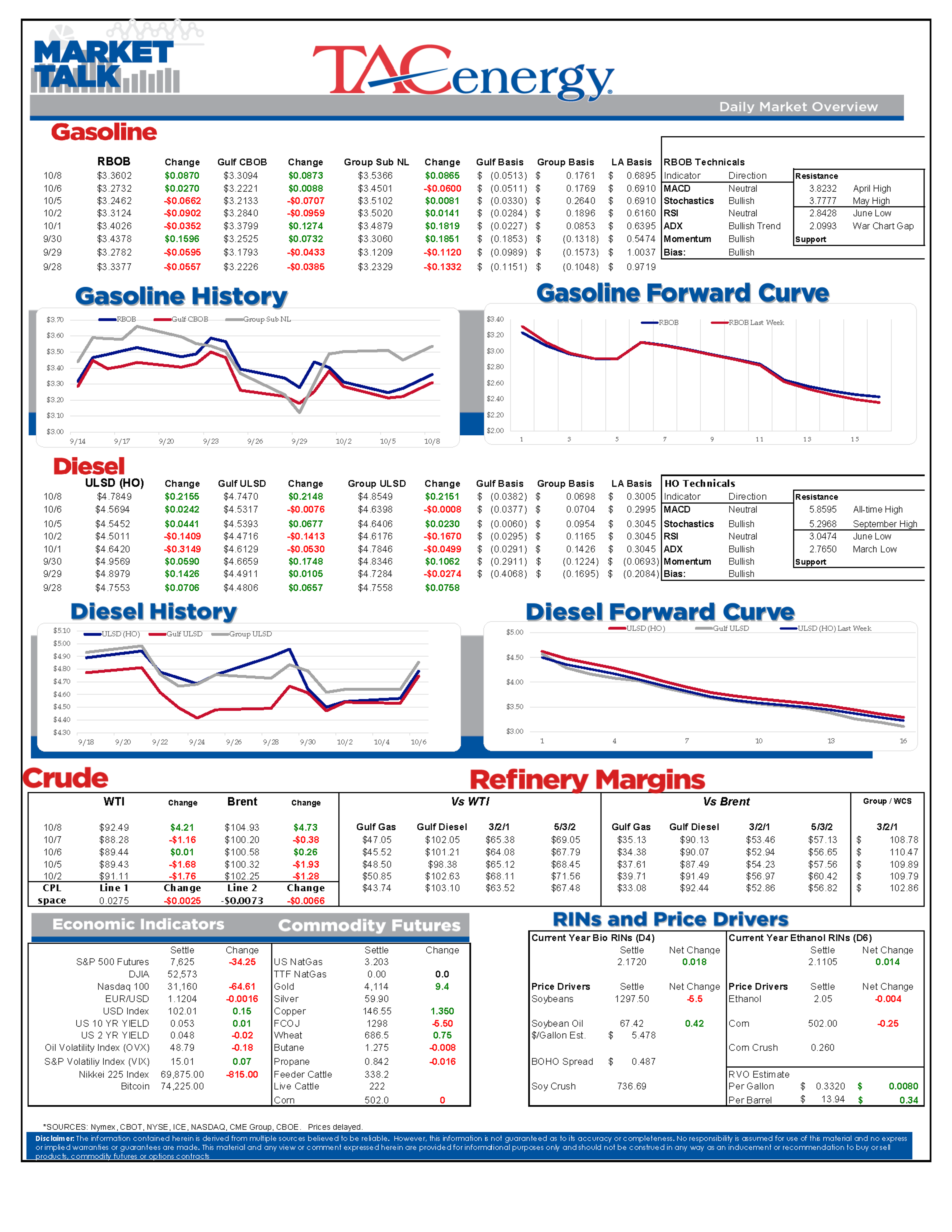
Diesel prices are once again leading the rally, with November ULSD futures up more than 18 cents on the day, and have rallied nearly 50 cents from Tuesday’s low trade, nearly closing the chart gap left behind on the continuous charts from the October contract roll .
The UKMTO reported another tanker was hit Wednesday by “multiple projectiles” while attempting to transit Hormuz, marking the 12th attack reported by the agency so far in October.
KPLER is reporting that Hormuz transits have dropped to their lowest levels of the past 2 months in recent days following the up tick in Iranian attacks, so anyone who thinks the recent “return to pre-war” oil exports levels (that have been highly touted but don’t include Iran’s 2 million barrels/day or 1 million barrels/day of refined products) are sustainable might want to re-think things.
Vitol’s CEO said the supply crisis has entered a new stage where ships, not fuel, are the bottleneck. While the U.S. Navy aided shuttle system had temporarily allowed Middle East oil exports to get back to pre-war levels, a lack of ships to handle the convoluted ship to ship transfer work around means this method is unsustainable, and if those flows drop he predicts we could see $200 oil given that the supply cushions have been used up.
Trafigura reportedly paid $76 million ($38/barrel) to charter a single crude tanker to haul a load of oil from the U.S. Gulf Coast to China, confirming that the runaway freight rates may well offset any progress of more barrels temporarily getting through Hormuz.
Ukraine’s drones reportedly struck a 168mb/day Gazprom refinery near Ufa in one of the Russian republics we can’t pronounce.
The latest example of why you shouldn’t believe the headlines:
The IEA issued a statement on their efforts to coordinate strategic inventory releases Wednesday that contributed to a quick pullback in prices mid-day. The problem with that is the statement confirmed the 100 million barrel agreement announced by the G7 last Friday didn’t actually include any new supply, they were restating barrels that had previously been committed in March, but still have not been released.
“The full release of all the stocks that had been pledged but have not yet been released from the March 2026 Collective Action would bring approximately 100 million barrels to the market.”
Don’t worry though, the IEA says member countries still have emergency oil reserves of 1.1 billion barrels, including 200 million barrels of diesel, they just didn’t say where they are and we know the U.S. reserves are close to their functional minimums. France is the first country to provide something resembling details, announcing plans to release 10 million barrels of diesel from its reserves over the next 2-3 months, which they claim may help lower prices by around 50-75 cents/gallon (12-18 euro cents/liter) which seems to be about as realistic as the claims earlier this week that dyed diesel tax deferrals would save $100/fill up in the U.S..
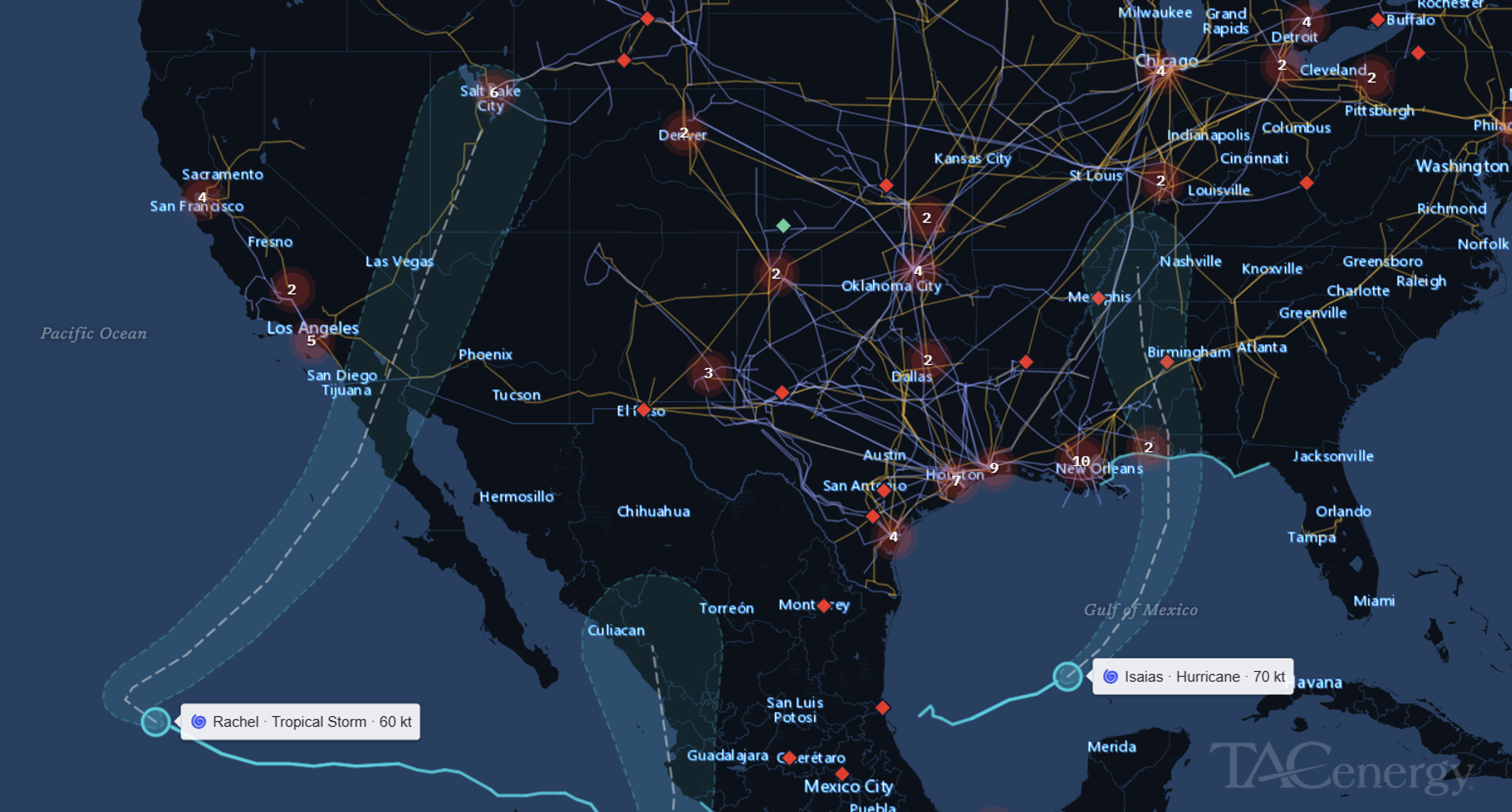
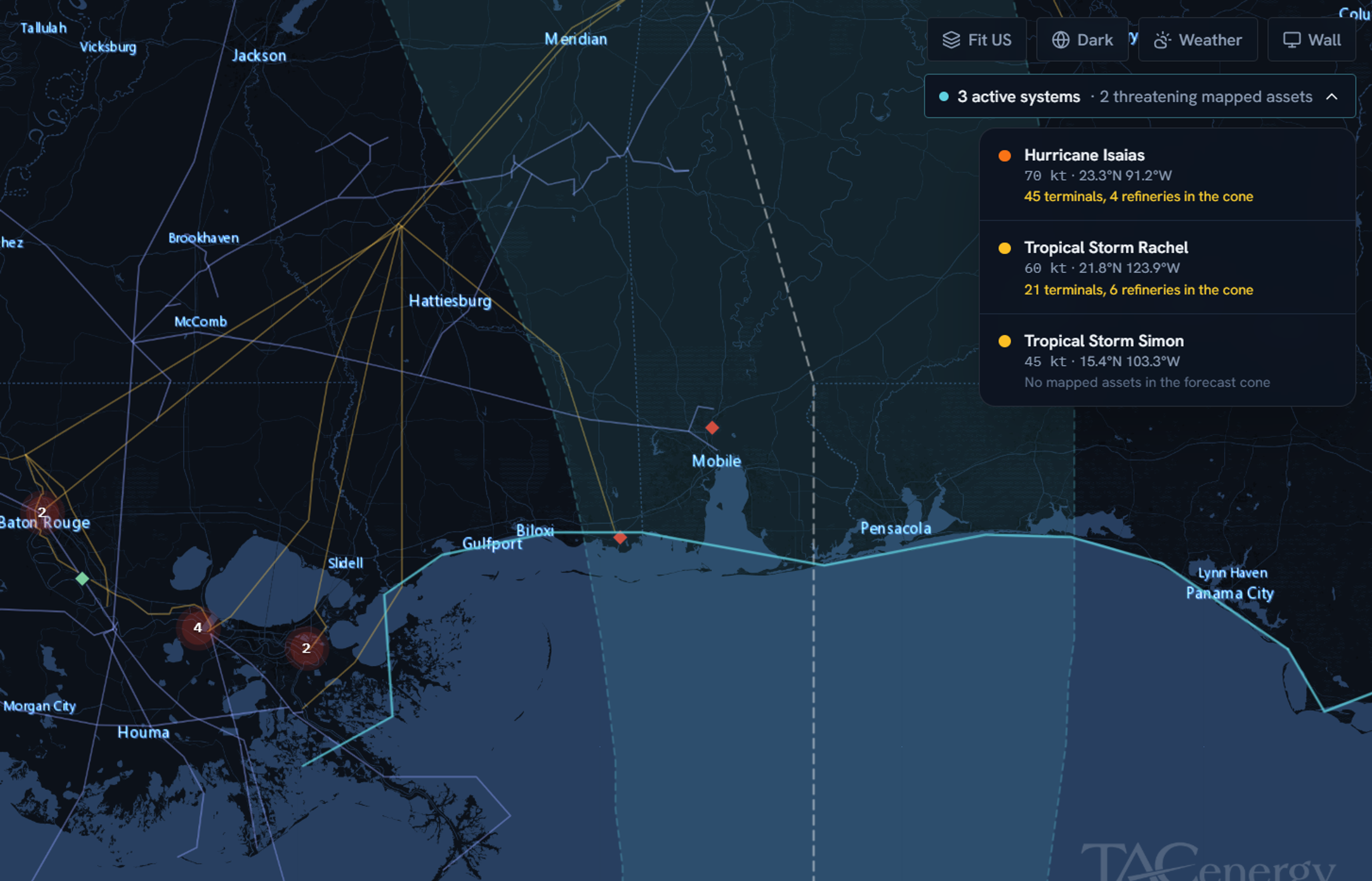
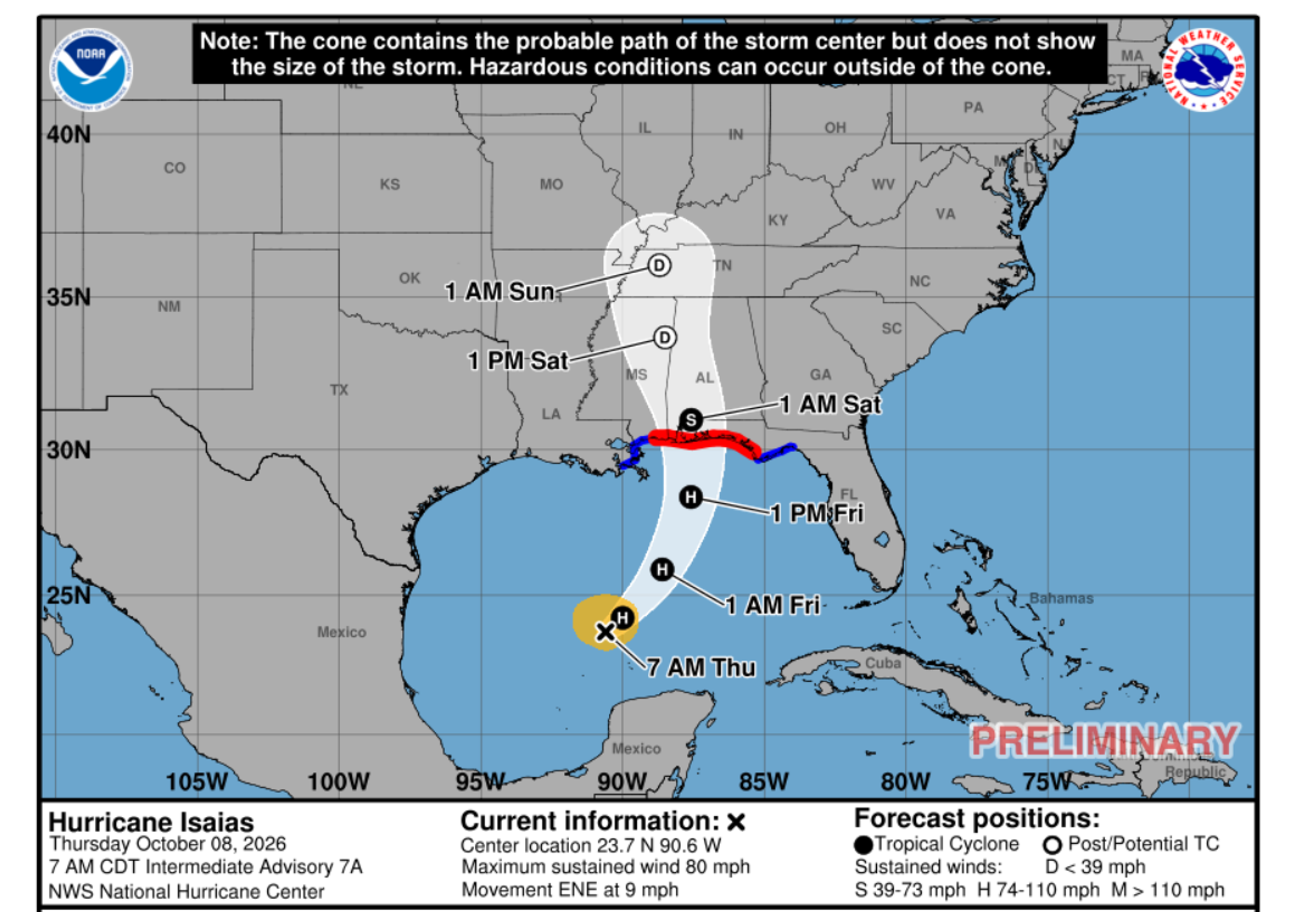
Hurricane Isaias – the first hurricane of the season in the Atlantic, and the latest first hurricane in over 100 years - is expected to make landfall on the northern Gulf Coast late Friday or early Saturday. The storm’s path has shifted east in the past 24 hours, putting all of the refineries clustered along the coast and most of the offshore oil production, on the West side of the forecast path, which is good news for the supply network that’s already stretched thin. Chevron’s 356mb/day Pascagoula refinery and the 75mb/day Vertex Mobile facility are still in the forecast cone, so they can’t rest easy yet, but the cluster of refineries near New Orleans and Baton Rouge should be far enough west based on the latest forecasts that they should avoid damage from the storm. Roughly 25% of offshore oil production (around 500mb/day) has been shut in ahead of the storm, but should quickly recover once it passes.
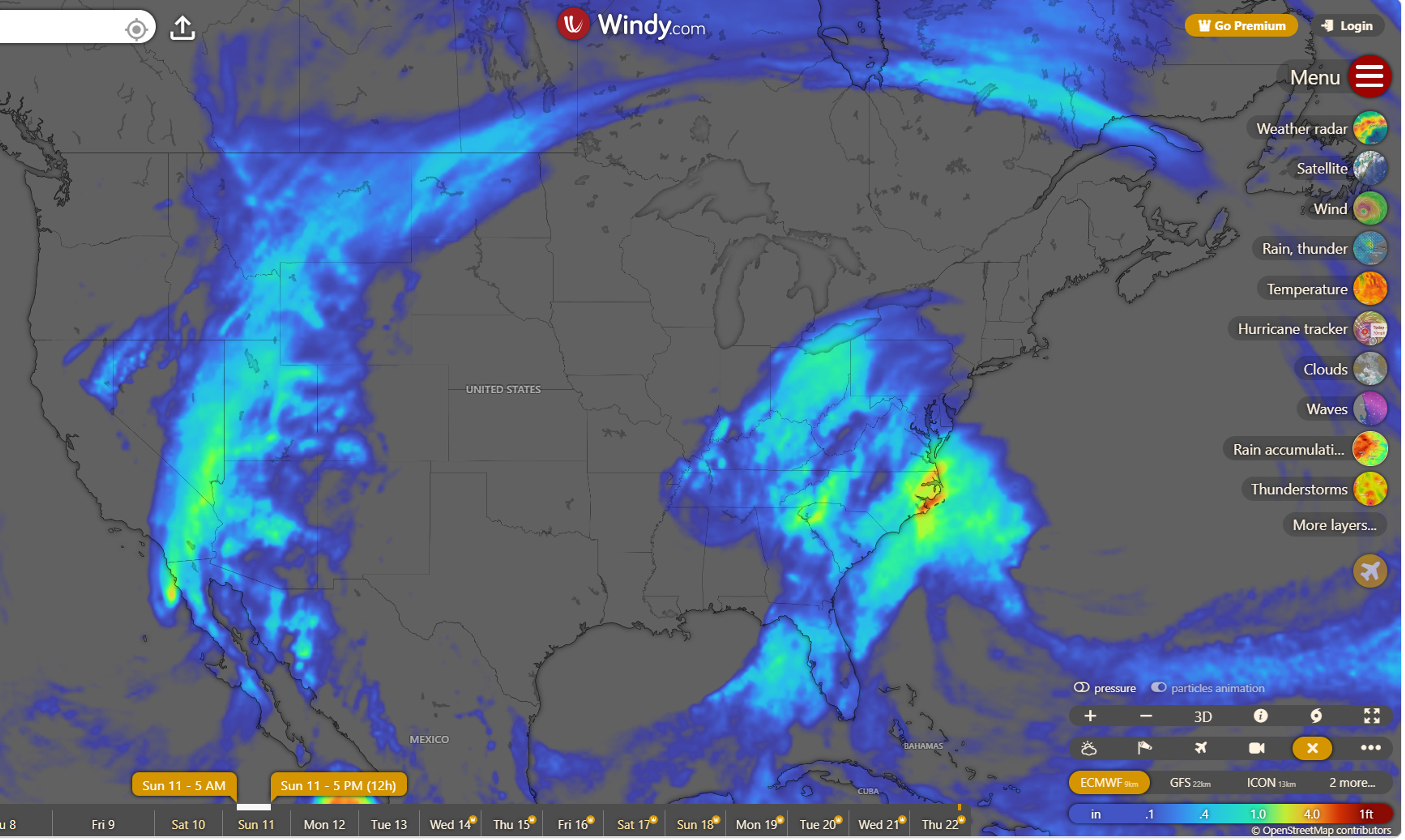
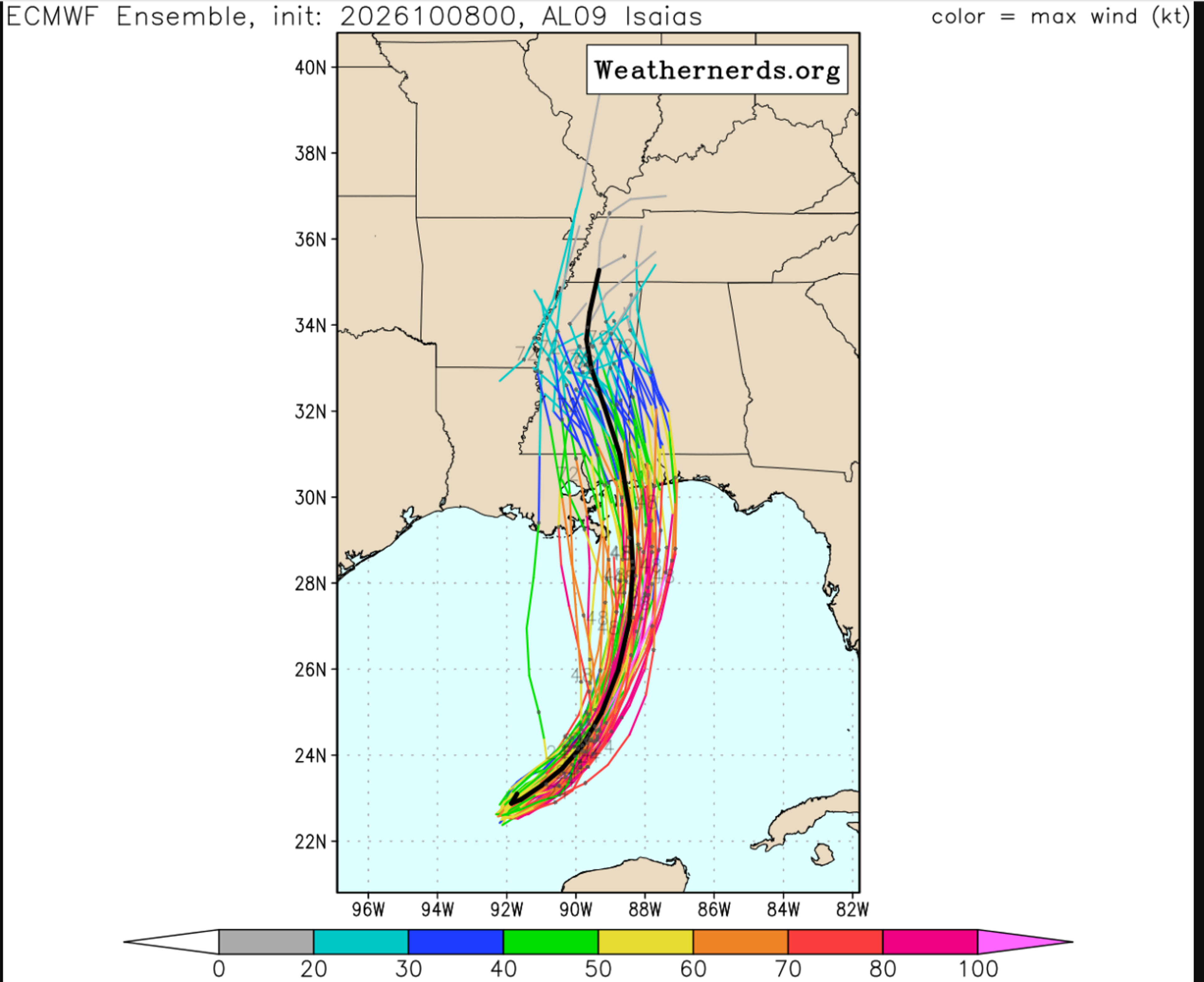
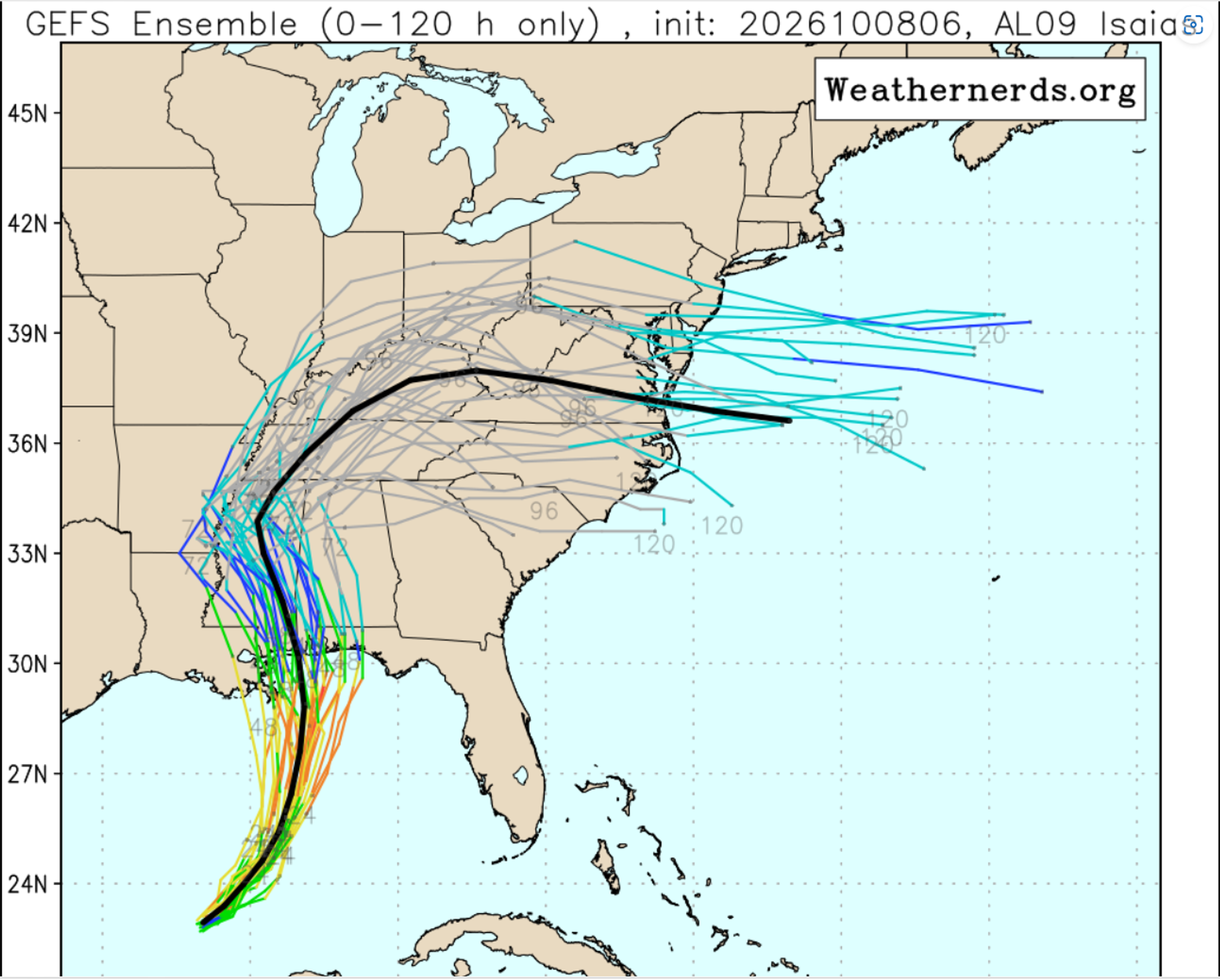
One thing to watch out for is that the European forecast model (shown in the weathernerds map below) shows a stronger storm developing than the official U.S. model and a track moving slightly more to the west which would create more potential for supply disruptions. Once the storm moves inland it’s expected to bring heavy rain to a widespread portion of the country stretching from Louisiana to Ohio and all along the Atlantic coast so it could have a significant dampening effect on demand for a couple of days as well.
While Isaias will justifiably get the attention this week, Tropical storm Rachael is expected to make landfall just south of the San Diego/Tijuana border, another extremely rare event, and will bring rain inland to parts of CA, AZ, NV and UT over the weekend, which hopefully will prove to be more than a drop in the bucket to help the Colorado river basin and the tens of millions that depend on it.
Human analysis of the DOE’s weekly status report below. Charts of the data and AI analysis is attached.
Reserve barrels were released alongside a commercial crude draw to drop total U.S. crude stocks to a new low for the year, a 42-year continuous record low. Commercial stocks shed 3.2 million barrels as increased imports were outweighed by stronger exports, both of which hit seasonal highs last week. A third straight decline in the crude adjustment and increased refinery runs accounted for the bulk of the move lower. The lone increase in PADD 2 pushed stocks above the 5-year average for the first time since November 2024 while PADD 5 sank to a 22-year seasonal low.
U.S. refinery runs stayed at seasonal highs with increased rates in every PADD except 1. PADD 2 led the way with Exxon Joliet fully recovering from the 9/13 power outage and sending rates back above average. Valero Port Arthur returned a little earlier than expected in PADD 3 and helped keep Gulf Coast run rates at seasonal highs. PADD 4 kicked up for a third straight week, hitting an 8-year seasonal high, while PADD 5 moved to just 11 Mb/day below average despite having two fewer refineries in operation this year.
Diesel stocks posted a negligible draw as net negative import/export flows were limited by lowered demand alongside increased production. Exports have ramped back up over the past couple of weeks, returning to record seasonal highs (as did production), while demand dropped just below the 5-year range. Small changes across the board held PADD-level stocks in similar positions with PADD 3 still being the only region holding above average storage. PADD 4’s increase pushed stocks from below the range to about 25k barrels off the 5-year average while PADDs 1 & 5 continue to hold seasonal lows. Renewable diesel stocks from the EIA’s monthly release (as of July) show a large decline in PADD 5 negated builds in PADDs 1-3. Total U.S. RD fell to a 2026 low, staying below the previous two years but still well above average.
Gasoline stocks posted a small build as exports fell, despite a third straight decline in production and slightly higher demand. PADD 1 was the lone build on the week, but inventories remain below the 5-year range despite the large increase. PADD 2 fell to an all-time low, PADD 3 dropped to its lowest level since September 2017, while PADDs 4 & 5 held relatively steady, both slightly below their 5-year averages. Total U.S. gas stocks are still holding at 14-year seasonal lows.
Jet stocks drew as imports dropped 98% while exports and demand stayed elevated. Exports declined but held a seasonal high, and demand fell but stayed in line with the past two years at the top of the range, while production improved on seasonal highs. Only PADDs 2 & 5 are still running above average, though PADD 2 has posted draws for three straight weeks with each larger than the last. Total U.S. jet inventories are now below the prior two years and within a million barrels of the 5-year average.

Latest Posts
Refinery Outages, Storm Risks, And Export Constraints Lift Distillates
Week 40 - US DOE Inventory Recap
Diesel Leads Energy Markets Lower Despite Mounting Geopolitical Risks
Energy Markets Mixed As Diesel Rallies And Supply Concerns Persist
Supply Disruptions Persist As Markets Focus Elsewhere
Geopolitics, Diesel Shortages, And Refinery Cuts Shape Energy Markets
Social Media
News & Views
View All
Refinery Outages, Storm Risks, And Export Constraints Lift Distillates
Week 40 - US DOE Inventory Recap