Oil Rebounds, Refinery Issues Mount, Diesel Stocks Tighten

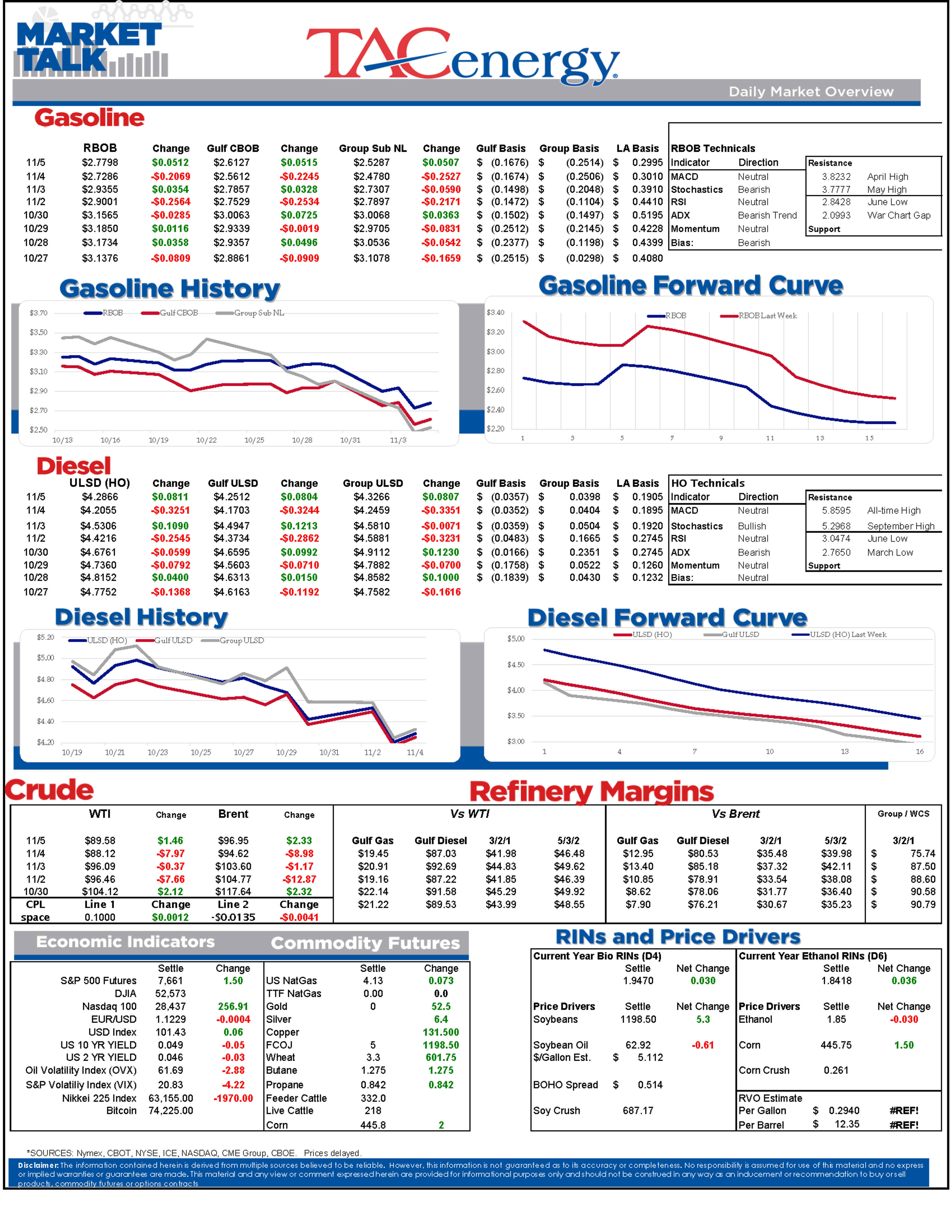
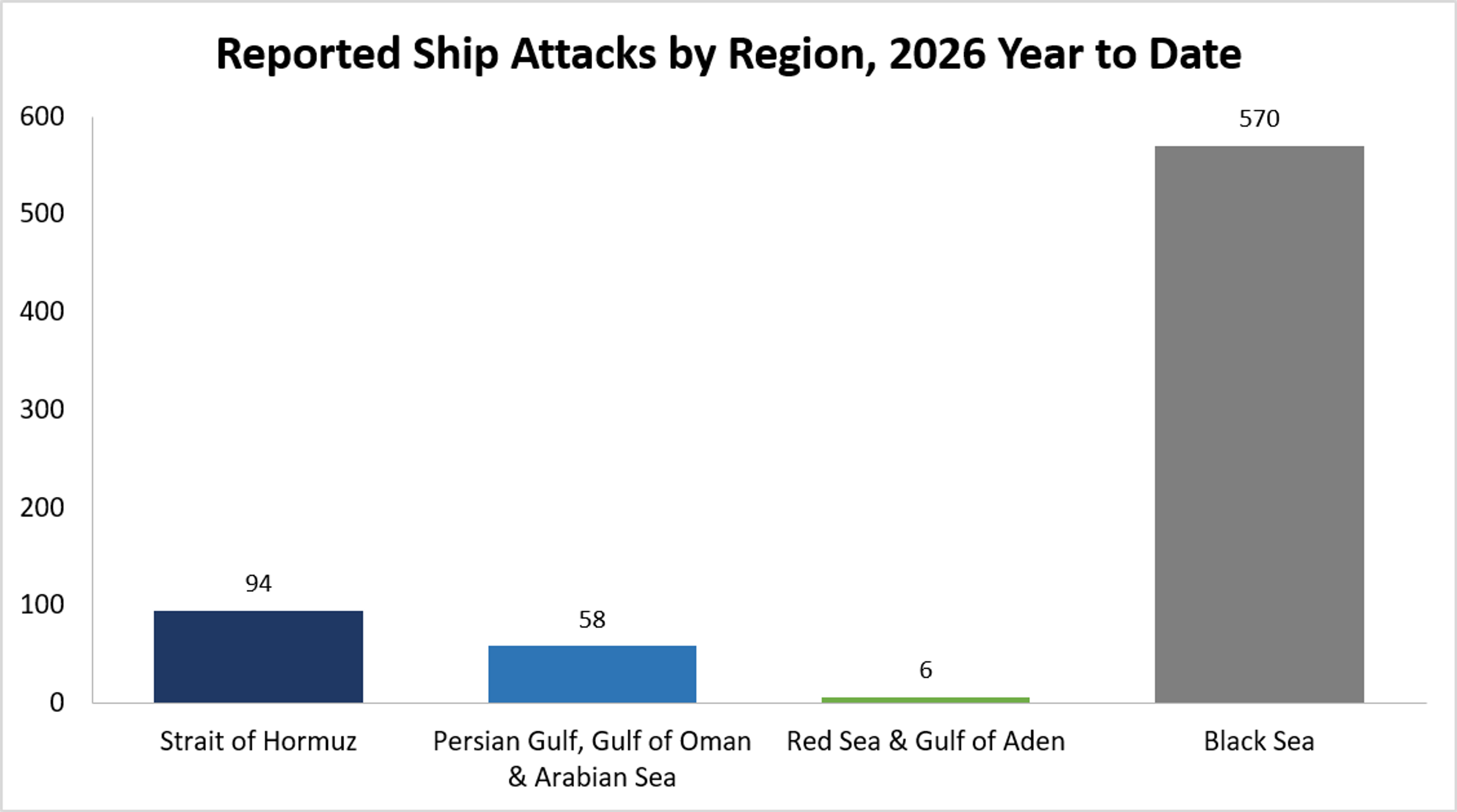
Energy markets are bouncing Thursday with oil and refined futures up 1.5-2% after a huge Wednesday selloff that marked the biggest 1 day drop in oil prices since April’s ceasefire, as a fresh round of attacks in both of the wars disrupting energy supplies dashed yesterday’s hopes that peace may be coming soon.
The U.S. Vice President wasted no time laying the groundwork for his 2028 Presidential campaign, blaming the mid-term losses on the Iran war and pushing for its end Wednesday. That news helped contribute to the optimism that recent efforts to mediate an agreement to stop the fighting with Iran may bear fruit, even though no real progress has been made.
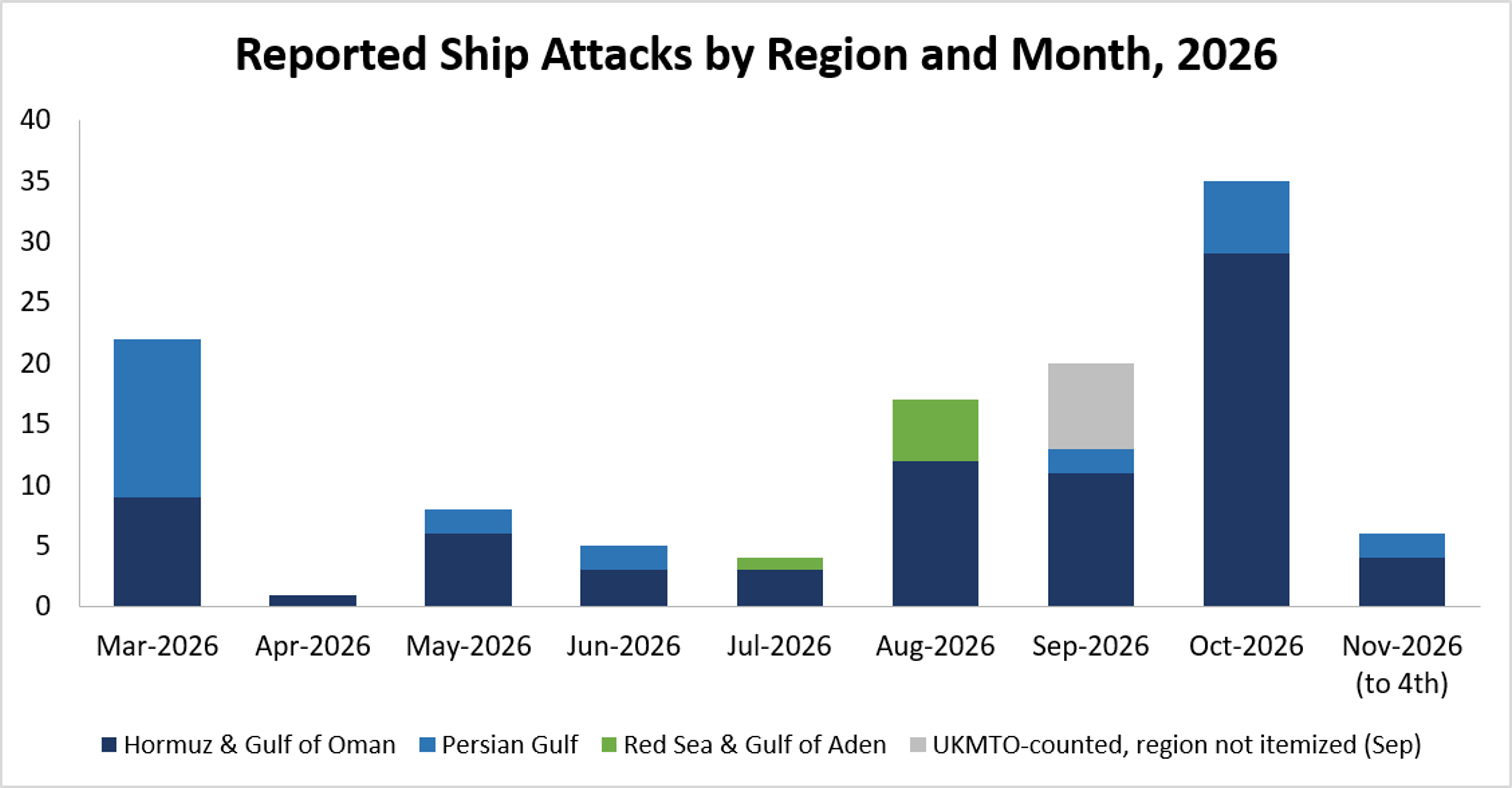
The UKMTO reported another tanker attack Thursday, this one off the coast of Qatar. The IRGC is also claiming 4 tankers hit mines while “illegally” attempting to transit the strait, although those incidents have not been confirmed.
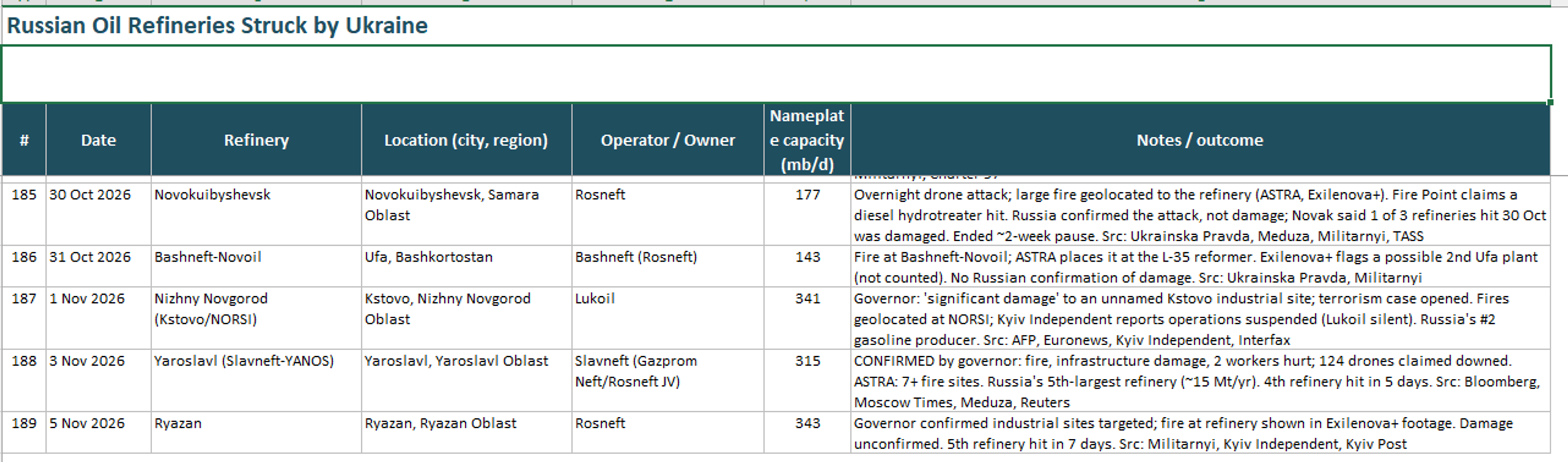
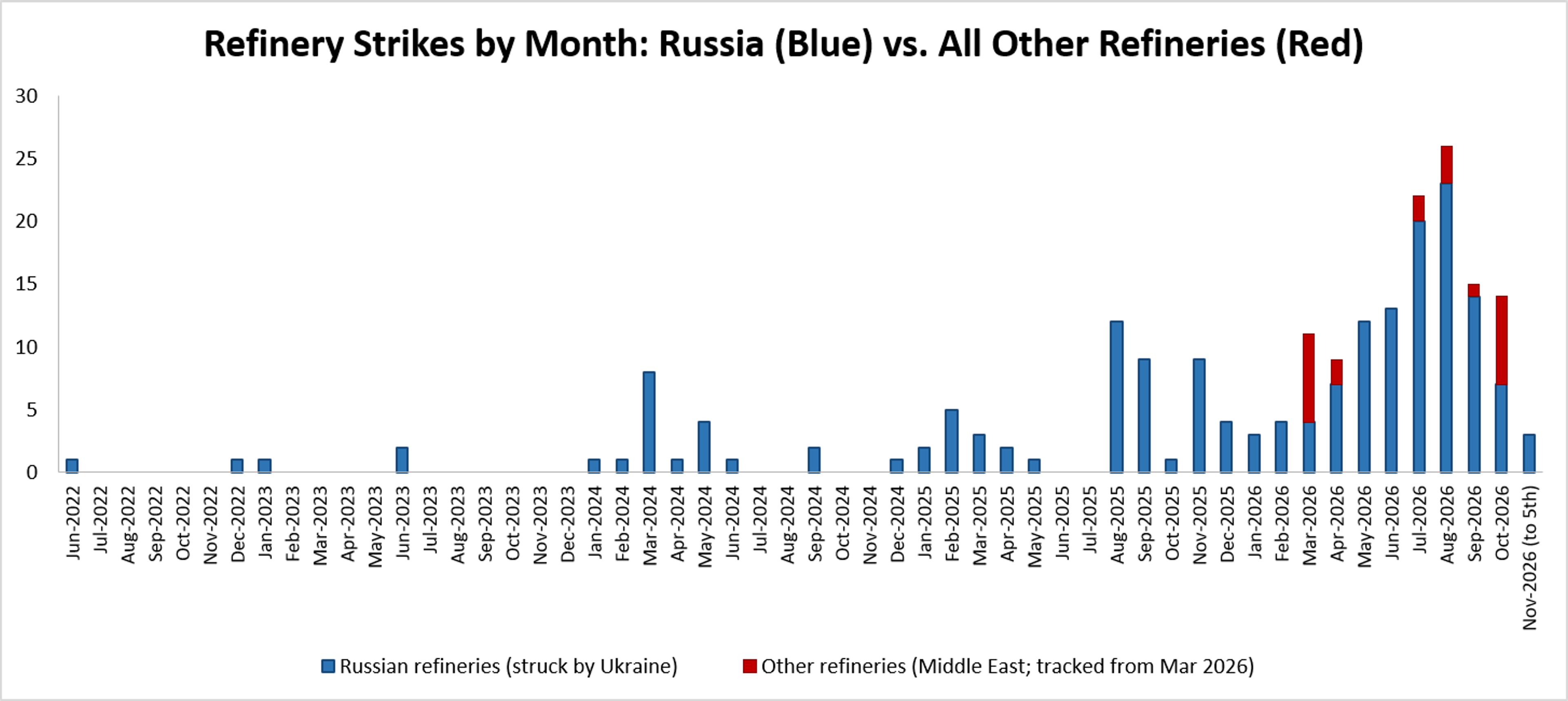
Ukraine’s drones hit their 5th Russian refinery in the past week overnight, this time targeting the 343mb/day Ryazan plant, which is Russia’s 3rd largest facility.
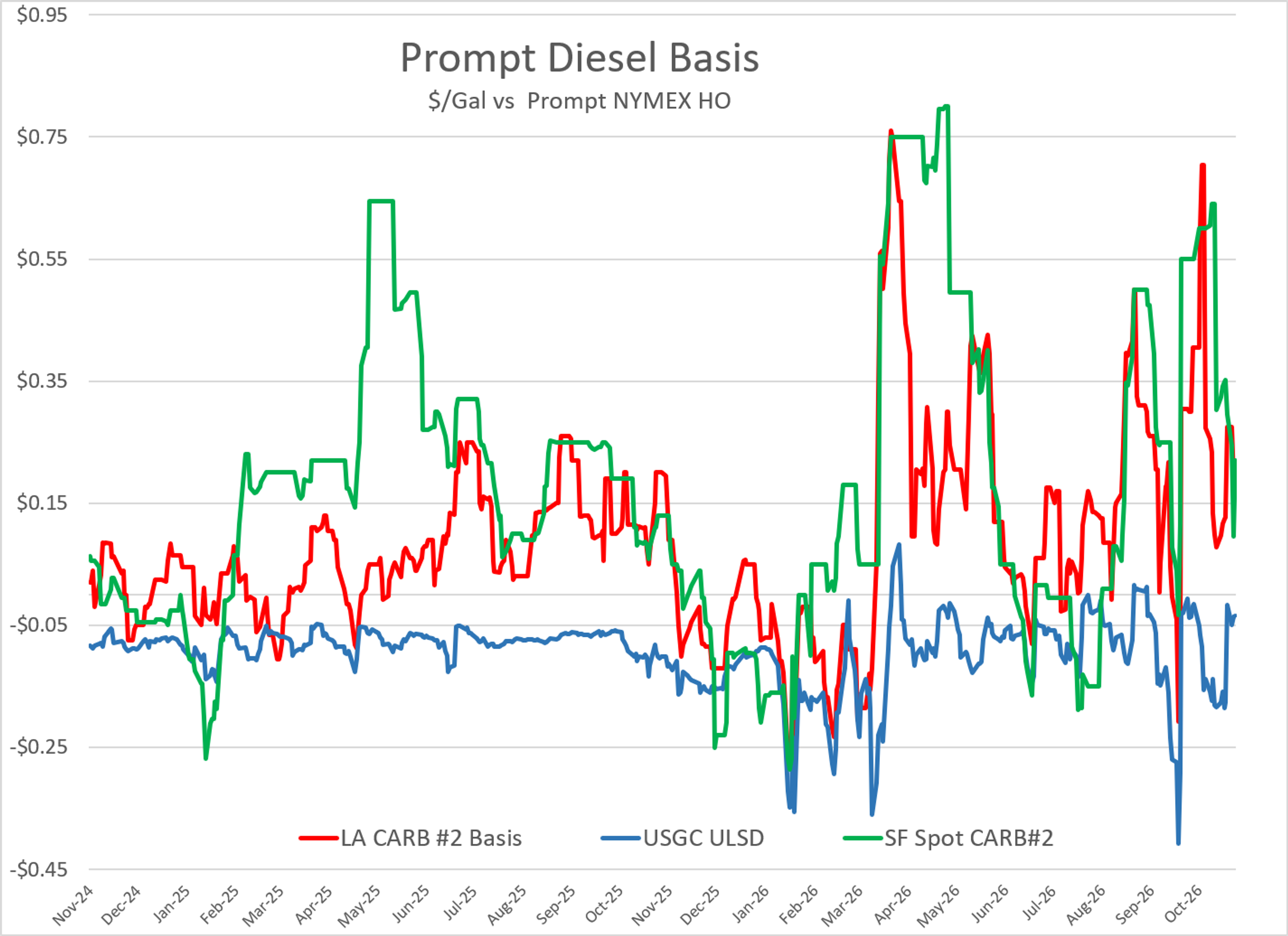
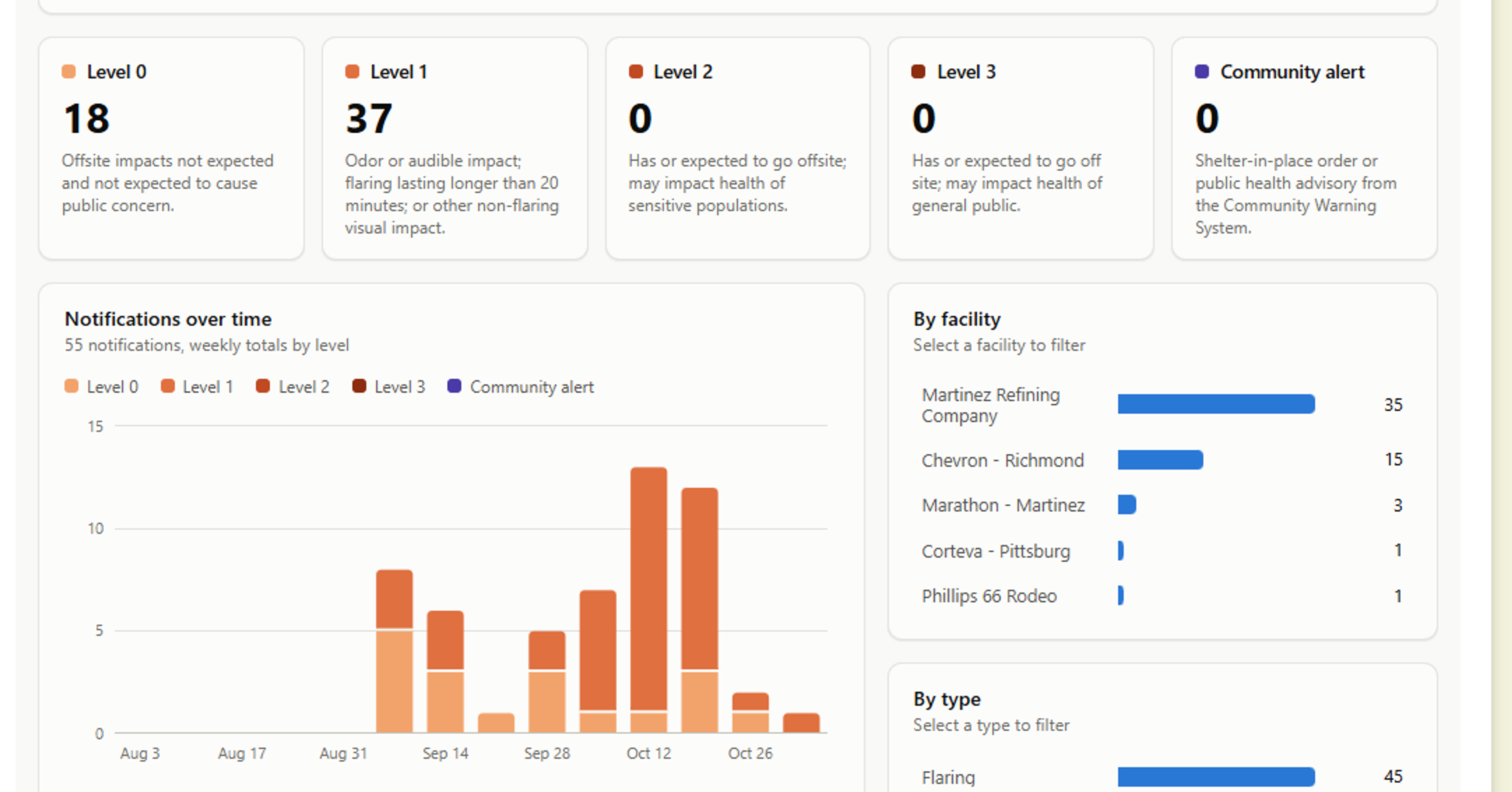
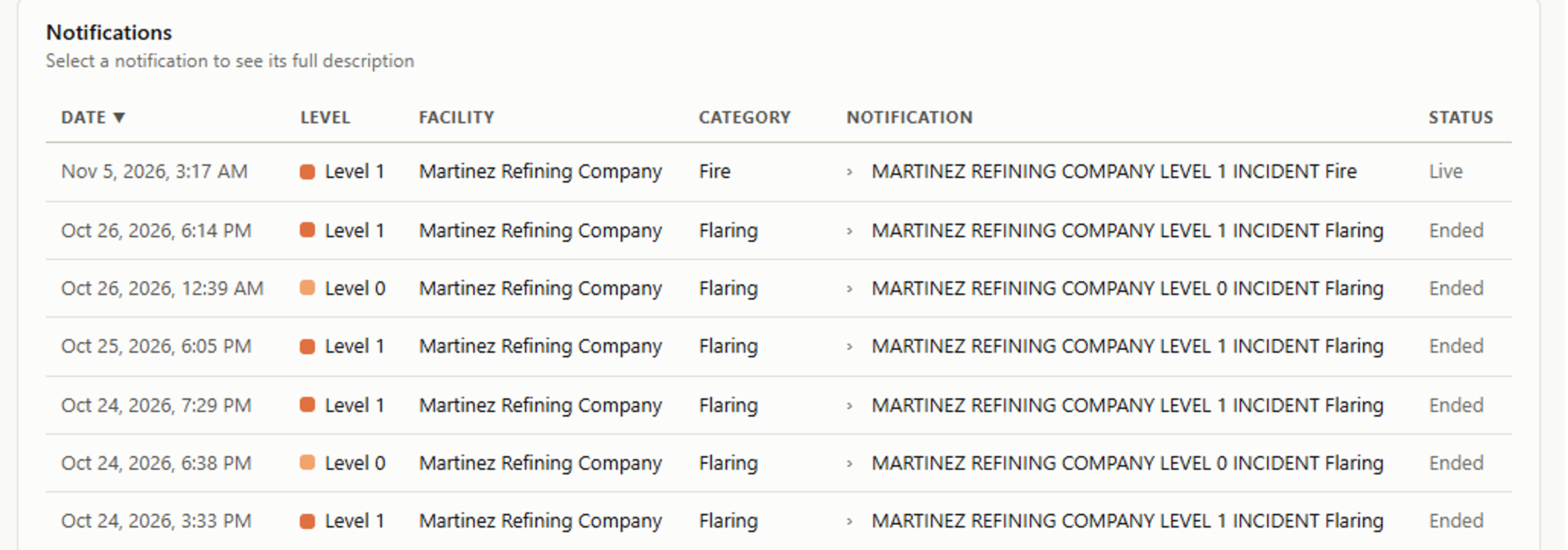
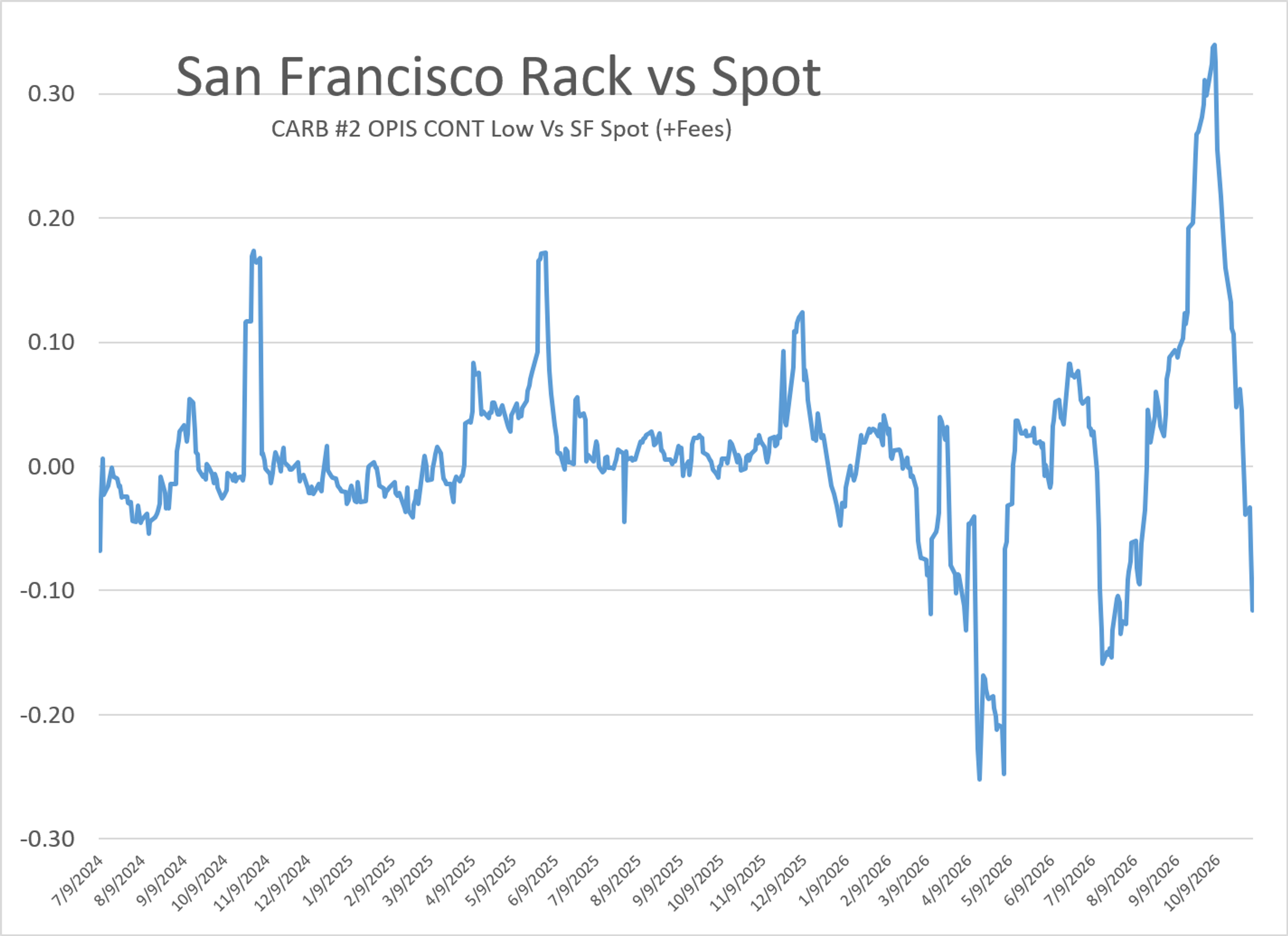
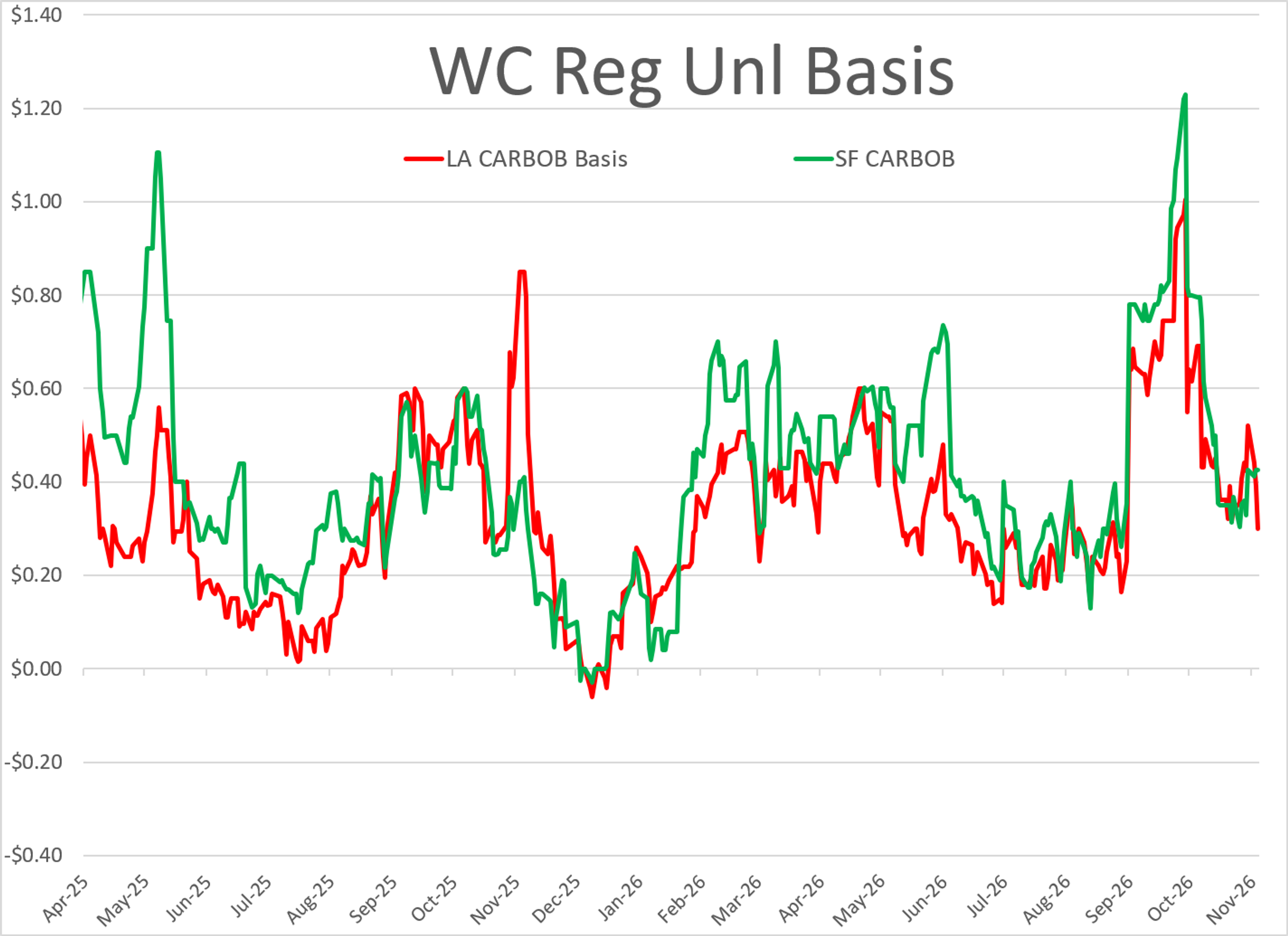
PBF’s Martinez CA refinery reported a fire this morning if a filing with Contra Costa county officials. The fire was listed as a “Level 1” emergency, suggesting it won’t have a major impact on operations, but it’s still ongoing as of 7am central (after starting around 3:17am local time, so it could become a bigger problem. Spot & Rack prices in the San Francisco market had fallen sharply lately as the seasonal demand slowdown took hold, but CARB Diesel values were already rallying Wednesday, so if this upset does hit production at the facility we may be in for another big rally.
The 340mb/day Pemex Deer Park TX refinery (that Shell no doubt would like back after fire selling a few years ago) reported an upset that occurred Tuesday afternoon after a 3rd party breaker tripped, causing multiple units to lose power. A coker and 3 different sulfur recovery units were named in the TCEQ filing.
Human analysis of the DOE’s weekly status report below. Charts and AI analysis attached.
The big number was U.S. Crude Production setting a new all time high, for any country ever, topping 14 million barrels/day for the first time ever. Commercial crude stocks posted a slight draw last week. Slower export activity and record crude production were outweighed by increased refinery runs and a big negative swing in the adjustment factor. PADD level stocks are above average in only PADDs 2 & 4 with 3 & 5 holding well below their seasonal ranges. Another 400k barrels were released from the reserve, marking another all-time seasonal low and dropping total U.S. crude + SPR about 20% below the 5-year average.
Refinery runs slowed in PADDs 4 & 5 but picked up significantly in PADDs 1-3 for an overall increase as several plants returned from maintenance related shutdowns. PBF Paulsboro came back online in PADD 1 following plantwide maintenance for most of October to send run rates back to seasonal highs. PADDs 2 & 3 both increased by 127 Mb/day to maintain seasonal highs along with PADD 4 despite its +3% decrease. PADD 5’s decline moved run rates back below the 5-year average after bouncing above the week prior. In total, U.S. refineries set fresh seasonal high run rates every week in October.
Diesel stocks posted a big draw as demand climbed to a 9-year seasonal high following back-to-back increases. PADD 3 spent the past 6 weeks above average but slipped below the chart range with the latest draw to join every other PADD outside of 4 at seasonal lows. With PADD 4 in the 5-year range but still below average, total U.S. diesel stocks have dropped to a 23.5 year continuous low. Renewable diesel stats released for the month of August showing declines everywhere except PADDs 1 & 5. The total U.S. decline drops RD inventories further below the previous two years but still around 16% above average.
Gasoline stocks drew slightly as exports picked up and increased demand was met with increased production, although both remain below the 5-year range at levels not seen since October 2020. PADD-level changes were mixed with all moving or staying below average except PADD 3, where the 1.9-million-barrel build pushed inventories about as far above their 5-year average. The limited decline in total kept U.S. gas stocks in the 5-year range at nearly 3 million barrels over year-ago levels, but still below average.
Jet fuel stocks declined despite increased production as exports also increased to 144 Mb/day over the top band of the 5-year range. The increase in PADD 3 puts inventories at a 16-year seasonal high but declines in every other PADD held levels below average everywhere except PADD 5. Total U.S. stocks have fallen for 3 weeks straight but are still a little over 2 million barrels above the 5-year average.
Latest Posts
Week 44 - US DOE Inventory Recap
Markets, Midterms, And Missiles: Navigating Energy's Biggest Risks
Refinery Trouble And Global Conflict Keep Energy Markets Guessing
Energy Markets Caught Between Diplomacy And Disruption
Refinery Attacks And Shipping Risks Support Fuel Prices
Markets Weigh Middle East Diplomacy Against Persistent Fuel Tightness
Social Media
News & Views
View All
Week 44 - US DOE Inventory Recap
Markets, Midterms, And Missiles: Navigating Energy's Biggest Risks