Markets Weigh Middle East Diplomacy Against Persistent Fuel Tightness

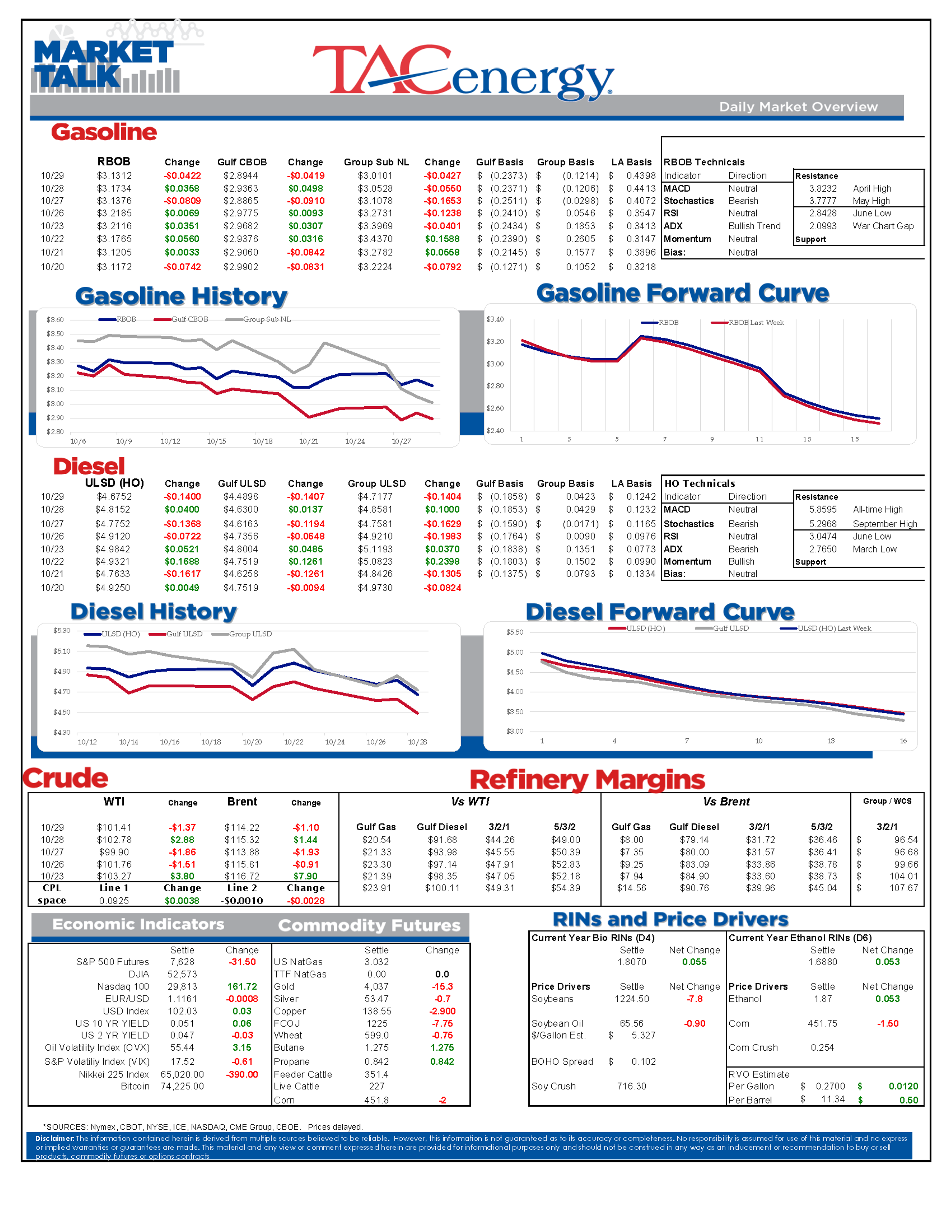
Energy markets are seeing another wave of selling with hopes for a new peace agreement getting credit for the push lower to start the day.
The “concept of a plan” between Gulf states has emerged that would lift sanctions, halt Houthi attacks and re-open Hormuz. Separately, the U.S. Vice President has sent a letter to Iran’s national security chief with what may be seen by some as an olive branch, and by others a threat to restart the war.
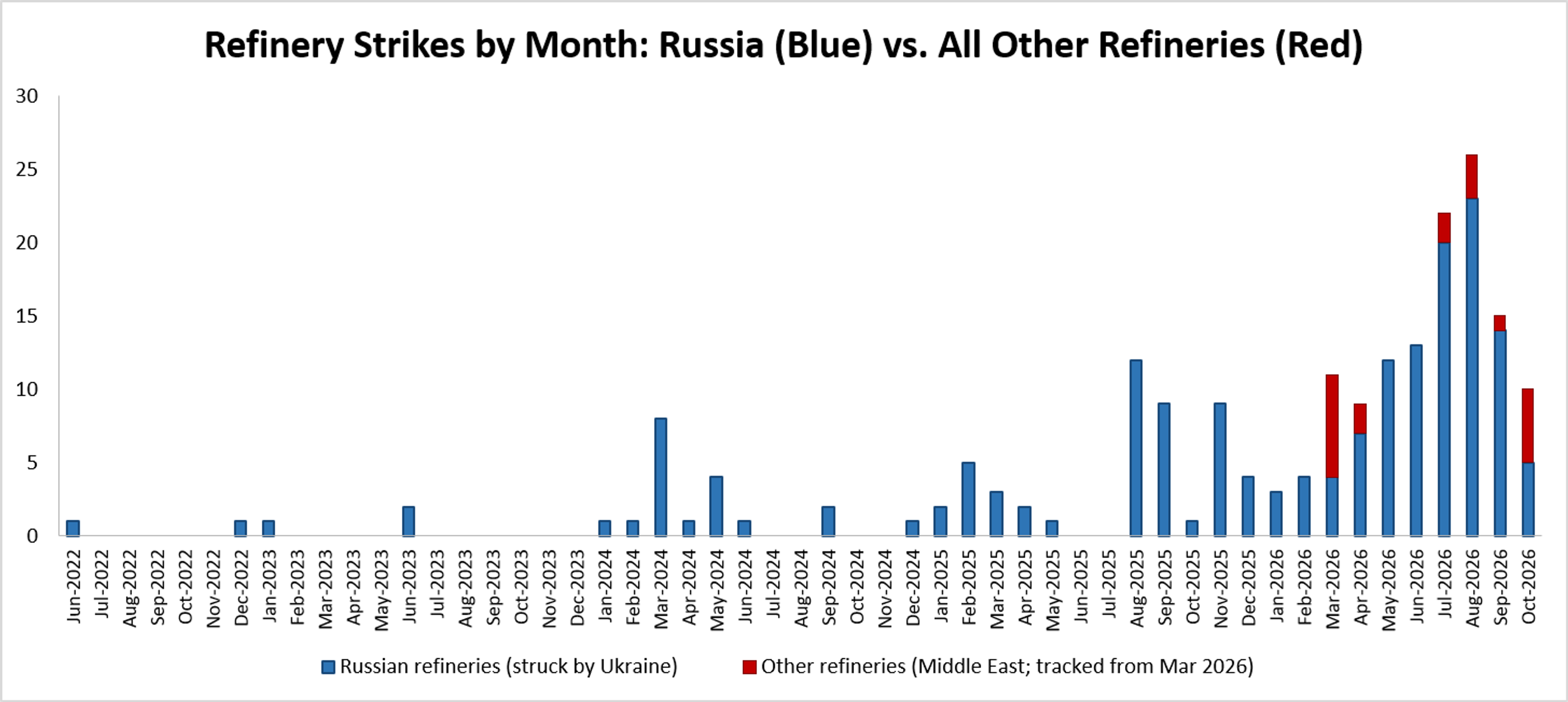
Ukraine has not struck a Russian refinery for 2 full weeks, the longest stretch in 6 months, as negotiations with the U.S. continue behind closed doors.
Saudi Arabia did finally confirm the Houthi attacks on its largest refinery and oil export facility from earlier in the week, but said the attack only hit a terminal at the facility and didn’t impact operations.
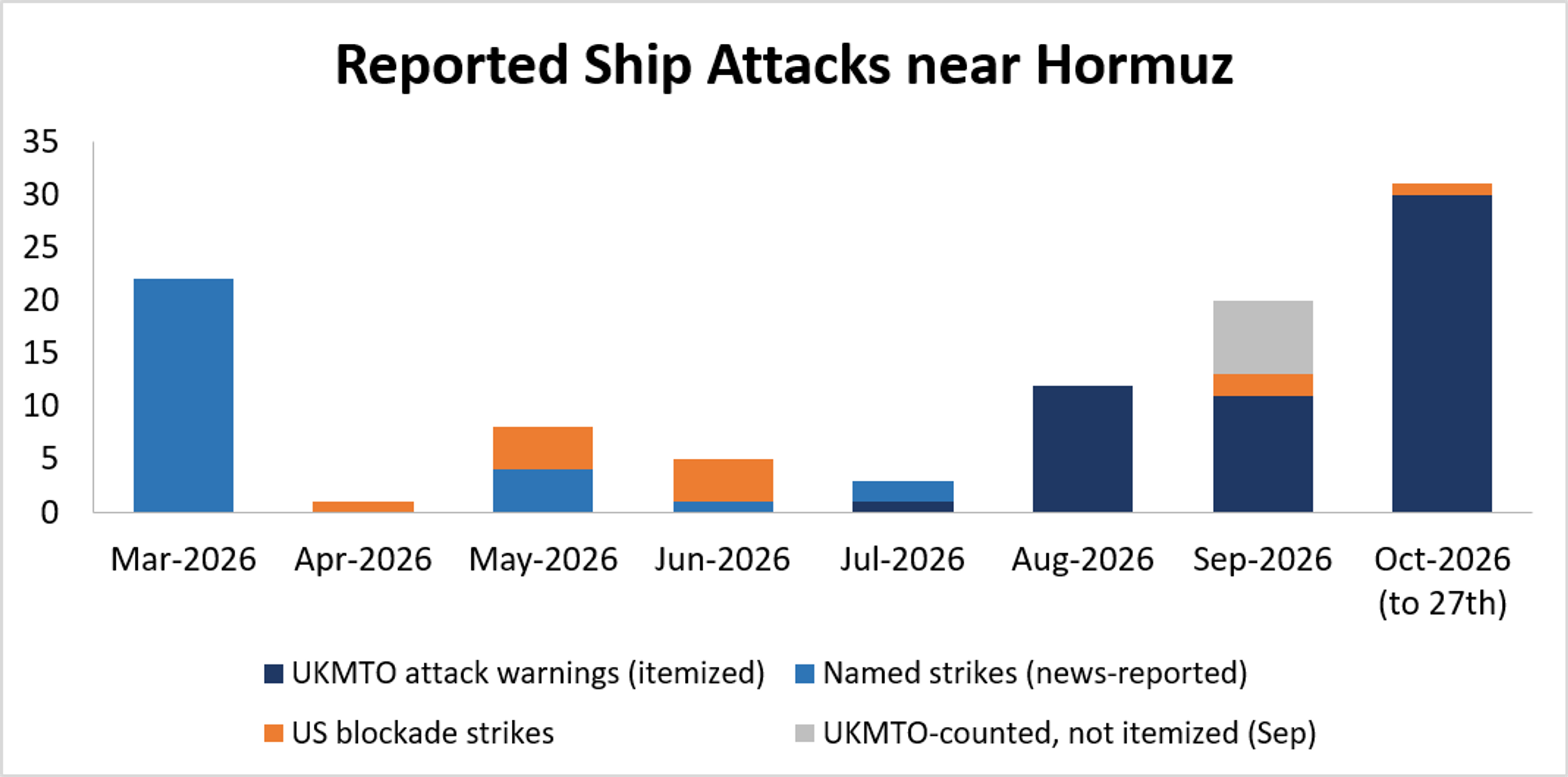
The UKMTO is reporting a ship on fire off the coast of Oman, while other reports suggest a ship may have sunk in the area. While it’s not yet clear if these reports are covering the same ship, it is clear that Iran’s attacks on vessels aren’t slowing down after already setting a record this month. The UKMTO is also reporting probable pirate activity in the Gulf of Aden as ships steering clear of the chaos in Yemen are now once again becoming targets for the Somali pirates who earned infamy nearly 2 decades ago.
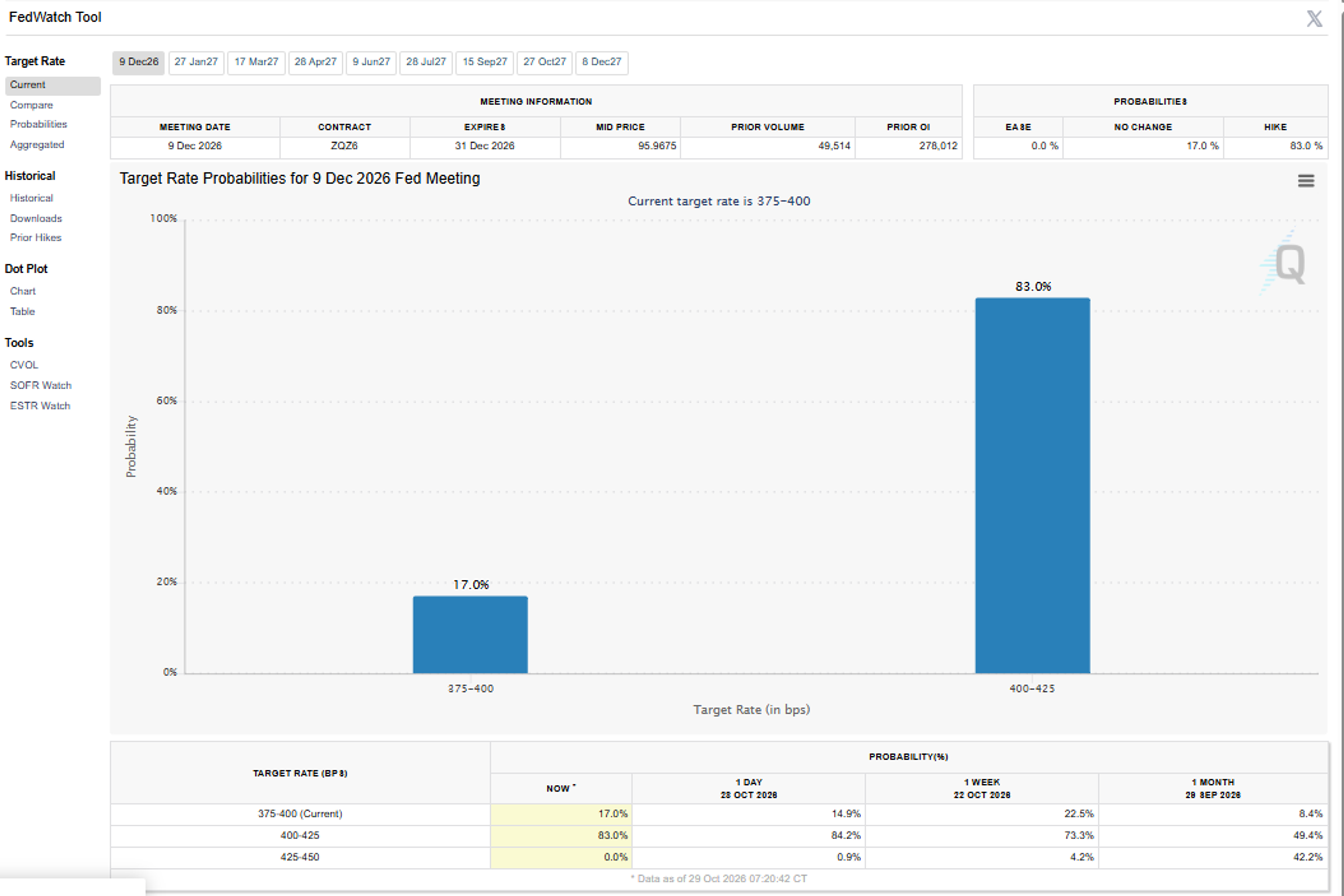
The FOMC held rates steady Wednesday, but 2 dissentions amongst voters send a strong signal that another rate hike is coming at their last meeting of the year set for December 9. The CME’s FedWatch tool shows the odds of another 25 point increase at 83% for the December meeting, compared to 73% last week and just 49% a month ago.
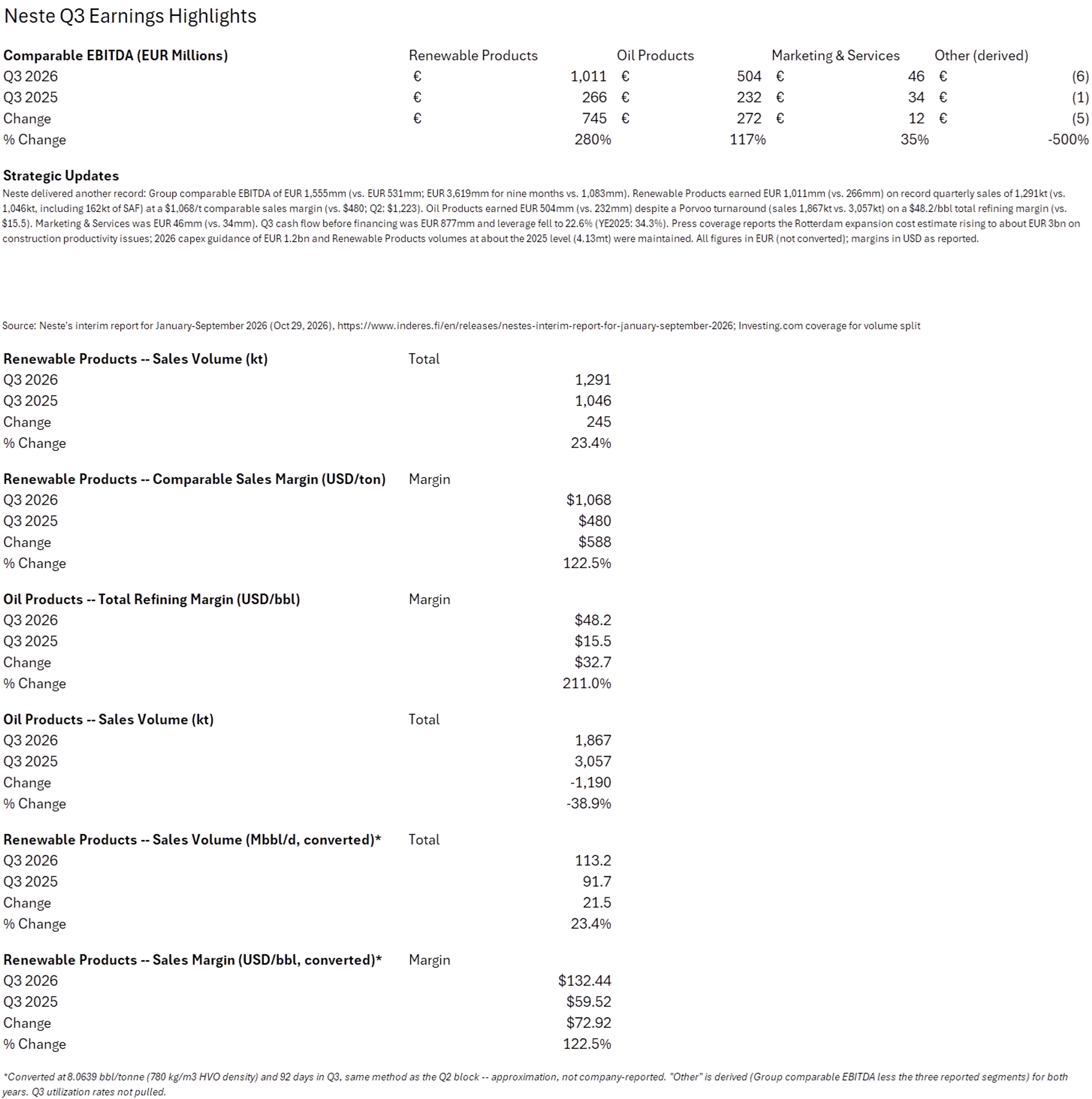
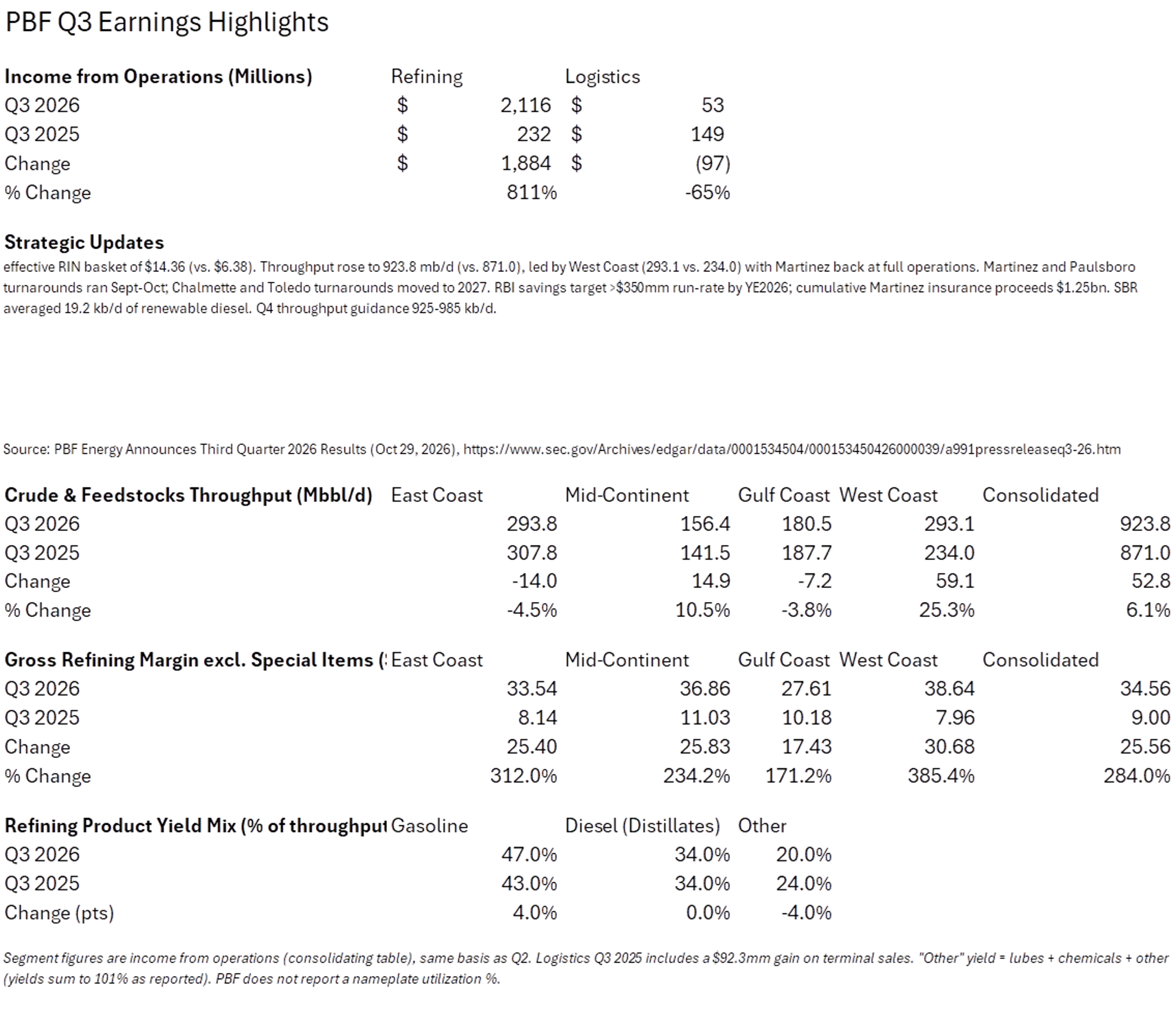
Neste and PBF reported their Q3 earnings this morning, and both companies continued the trend of blowout earnings in both their renewable and traditional refining segments.
PBF also followed the pattern of delaying maintenance at 2 of its refineries with work at Chalmette and Toledo pushed back into 2027. This pattern has been discussed here for months, and is being confirmed on the Q3 earnings calls, with several refinery executives using this as a reason why they think the refined product markets will stay tight into 2028.
Neste offered a glimpse of how the U.S. is benefitting from its crude oil supply as its European refinery earnings “only” doubled compared to the year-ago quarter, compared to U.S. facilities that saw earnings jump 5-10X what they were a year ago. The company’s primary renewable products segment saw earnings jump 280% thanks to high diesel and credit values pushing the total company to have its 2nd consecutive “Best Quarter Ever”.
Trouble in Corpus Christi: Even though the water crisis concerns from earlier this year have faded thanks to some well timed tropical moisture, all 3 of the major refineries in Corpus have reported upsets this week.
Flint Hills reported that it was forced to shut a DDS unit (diesel desulfurizer, which is AKA hydrotreater at other facilities) at its 265mb/way Corpus Christi West refinery on Tuesday due to a “release”. The TCEQ filing did not mention plans for restart. The Flint Hills East & West Corpus facilities combined have capacity of around 340mb/day.
Citgo reported (5 days after the fact) that it was forced to shut down multiple units at its Corpus Christi East refinery (their East & West plants combine for around 167mb/day) due to a loss of steam from a 3rd party supplier.
Valero reported an upset last Friday (3 days after the fact) at the 100mb/day East Section of its Corpus refining complex (Their East West combination runs around 340mb total) due to a leak in a Sulfolane unit. That upset lasted just 15 minutes and no other units appear to be impacted.
The cluster of corpus refineries serves both as a major export market, and as the primary supply option for San Antonio, Austin and DFW, so while the upsets there don’t typically impact USGC basis values, they certainly can create supply shortages in the major metro areas in a hurry if they last long.
Human analysis of the DOE’s weekly report below. Charts and AI analysis attached.
U.S. crude production surged back from its brief Hurricane Isaias disruption and hit a new all-time high last week (for any country, ever) and yet U.S. crude stocks drew for a 4th straight week, as exports climbed back to the top of the range. The draw was limited by imports also moving to the top of the range and slower refinery runs. Another 100,000 barrels left the reserve, and the balance now sits at a 44-year low with future releases still planned. Total U.S. crude stocks (Commercial + SPR) are now at a 43-year continuous low and about 165 million barrels below the 5-year average.
Refinery runs slowed in PADDs 2 & 3 last week for an overall decrease despite increased run rates in the other three PADDs. Exxon had to shut a reformer at its Joliet, IL facility just a few weeks removed from its restart at end of September. In PADD 5, Marathon restarted its coker at the 109 Mb/day Wilmington facility, a little over 3 weeks past plan, to help push run rates above their 5-year average for the first time since mid-February. PADD 1 improved on above average rates while PADDs 2, 3, & 4 held onto seasonal highs regardless of change direction last week. Total U.S. run rates maintained seasonal highs as well and is currently about 7% over the 5-year average.
Diesel stocks drew across all PADDs except 1 as demand swung from a seasonal low to the top of the 5-year range. PADDs 1, 2, & 5 are all at seasonal lows with PADD 4 in range, but below average. PADD 3 is the only region holding above average diesel inventories, leaving the total US under its 5-year range for a 13th straight week, about 10% below the 5-year average.
Gasoline stocks increased everywhere but PADD 2 and pushed total U.S. stocks back into the 5-year range after a 24-week run below. Most of the import increase hit PADD 1 with a slight bump in PADD 2 keeping gas imports at 3 weeks of increasing seasonal highs. Demand slipped from above average to a seasonal low last seen in 1998, alongside a similar but less steep decline in production. PADD-level stocks moved just above average in PADDs 1 & 5 but remain below in 3 & 4, while PADD 2 dropped to an all-time low of 41.043 million barrels.
Jet fuel inventories fell as import/export flows and production losses were cut into by a drop in demand. Despite the decline, jet fuel production is still running above the 5-year range and exports increased back to seasonal highs. Builds in PADDs 3 & 4 were offset by declines elsewhere with PADD 4’s big swing still holding inventories at a 7-year seasonal low. PADD 2’s decrease dropped stocks below average after spending the past 14 weeks above. PADDs 3 & 5 are the only regions left with above average inventories and are helping keep the total U.S. balance about 2 million barrels above its 5-year average.

Latest Posts
Week 43 - US DOE Inventory Recap
Rising Crude, Expanding Margins, And The Evolving Global Supply Picture
Energy Markets Retreat On Diplomatic Optimism As Supply Risks Evolve
Mixed Start To October's Final Trading Week As Crude Retreats
Crude Strength, Refinery Disruptions, And Export Bottlenecks Support Fuel Prices
Global Supply Risks And Strong Refining Margins Drive Energy Market Rally
Social Media
News & Views
View All
Week 43 - US DOE Inventory Recap
Rising Crude, Expanding Margins, And The Evolving Global Supply Picture