Crude Strength, Refinery Disruptions, And Export Bottlenecks Support Fuel Prices

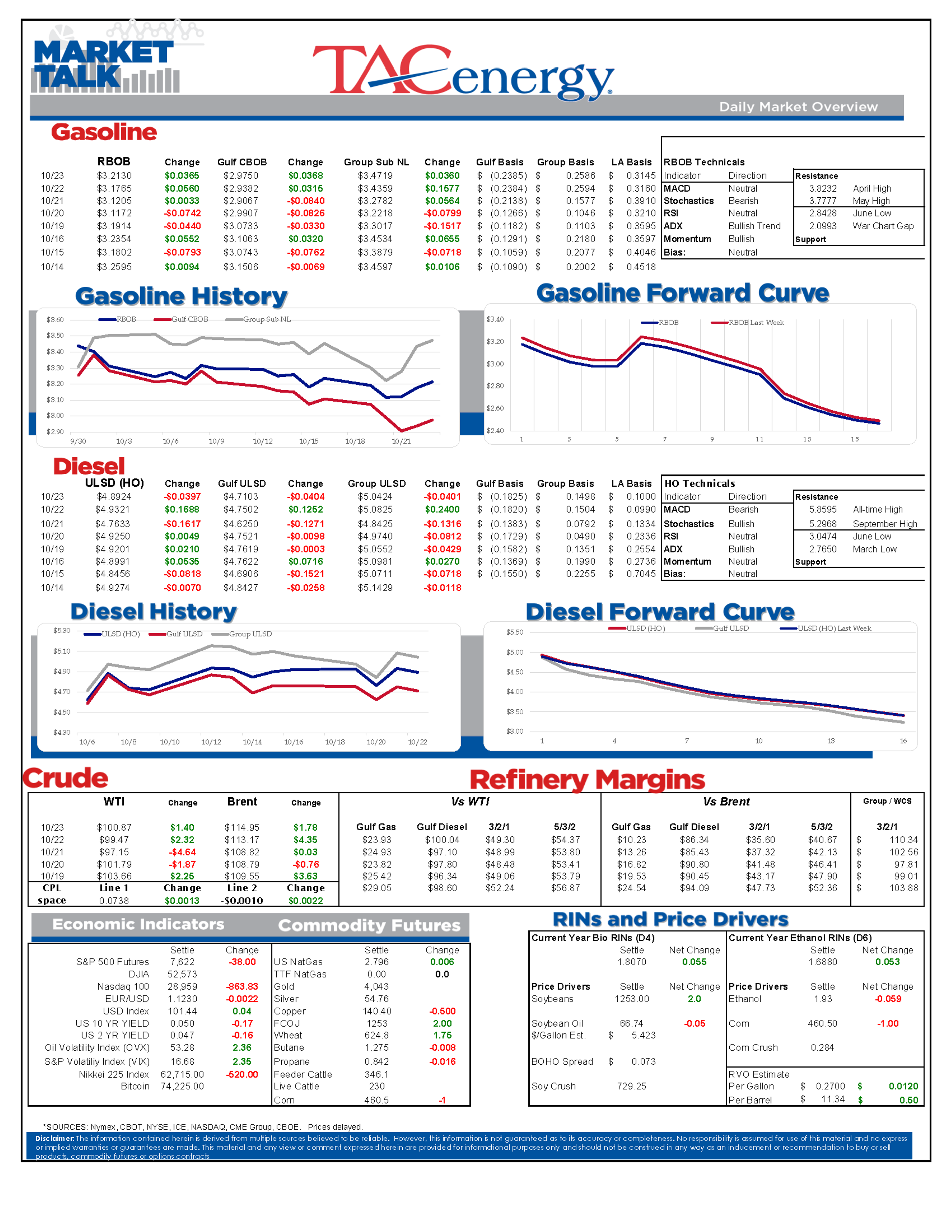
It was another strong overnight session for energy markets with WTI trading back above $101/barrel and Brent crude hitting $115 for the first time in nearly 6 months. Most contracts are continuing to hold gains this morning, but diesel futures are seeing a modest pullback for the moment. Based on the recent pattern, don’t expect ULSD to hold still for long.
November ULSD futures made their third trip north of the $5 mark overnight, but like the first two tires it has failed to hold above that level and has since dropped 12 cents from its highs to trade down 3 cents for the day. The charts suggest if the contract can settle north of $5 there’s a big rally in store ahead of expiration next Friday, but continued failures could lead to another wave of selling. There’s a similar layer of chart resistance for the December contract around the $4.80 mark, with another run at $5 in store if it can settle north of that resistance.
A Russian tanker is signaling that it’s hauling diesel to the U.S. East Coast for the first time in 4 years, with an expected arrival around November 7. That marks the first shipment under the deal announced 2 weeks ago where the U.S. will relax sanctions on Russian fuel supply in exchange for Russia relaxing its export restrictions in an effort to lower diesel prices. Diesel prices are up around 20 cents/gallon cents since the deal was announced.
Speaking of failed attempts to tame prices, the DOE’s plan to release 1/3 of the Northeast home heating oil reserves seems to be the latest bit of government straw grasping to fall flat with prices back above where they were before the loan program was announced last week. Like all of the other desperate measures, the details continue to get in the way, with very few buyers of heating oil (not ULSD) physically capable of taking possession of the reserve barrels and the mandatory pricing mechanism making the deal look like a non-starter for most.
Give them credit for persistence though, yesterday the DOE announced plans to use the Defense Production act to Restart American Refinery and Expand Refining Capacity. No word yet if the singular use of “Refinery” in the headline means they intend to only restart 1 facility, or if it’s just poor editing. Meanwhile, the details shockingly don’t exist with the statement saying “The selection process is ongoing and will be announced in the near future.”
Chicago basis values continued spiking Thursday following Tuesday’s upset at Exxon’s 275mb/day Joliet refinery with gasoline premiums now commanding a 90+ cent premium to futures while ULSD is getting around 60 cents more than October ULSD. The corresponding spike in midwestern retail prices is getting more attention than normal ahead of the mid-term elections.
An Argus note Thursday quoted Kuwait’s state oil company CEO noting that the country’s oil output was back to “basically” where it was before the war broke out, with output north of 2 million barrels per day, but refined products are strained by shipping capacity limits forcing them to restrain some of their refining capacity. Sheikh Nawaf said. "You're seeing the result of that in international diesel and jet fuel prices." Kuwait’s export focused 615mb/day Al Zour refinery came online in late 2022 when Europe was desperate for alternate import options as countries tried to wean themselves off of Russian supplies, and not being able to rely on those barrels this year is a big factor keeping diesel prices near record highs.
The Nor’easter turned sub-tropical storm Josephine is expected to reach hurricane strength later today. Fortunately the storm is accelerating away from the coast as is strengthens which is limiting the coastal flooding and other damage as it passes. There’s another storm system being monitored near the Bahamas, but it’s currently given low odds of developing into a named storm next week, but could still bring coastal flooding to parts of Florida and South Carolina.
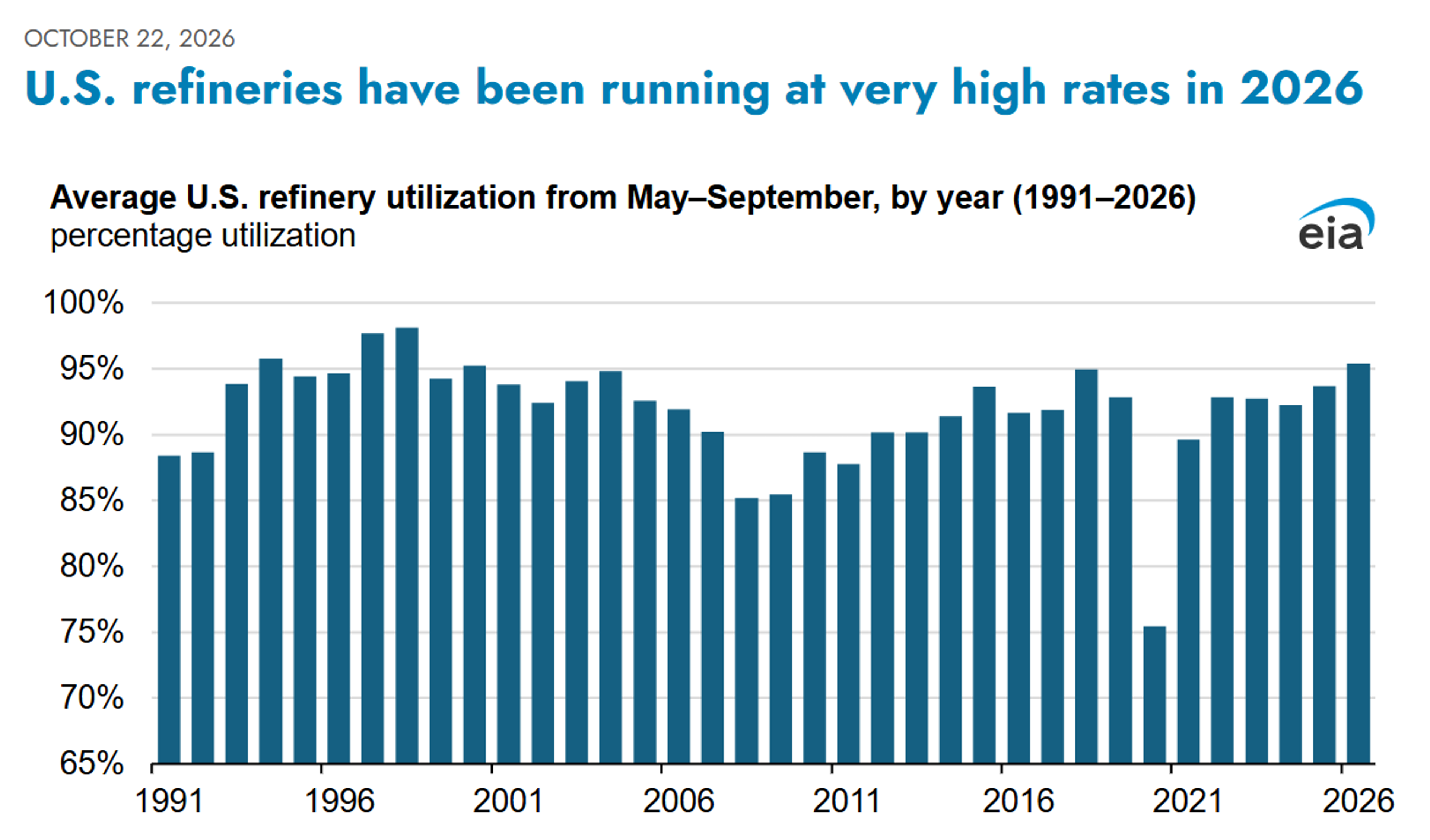
The EIA Thursday published a captain obvious note saying that U.S. refiners have been running at “very high rates in 2026”. Glad they figured that out. On a utilization % basis, U.S. runs are the highest since 1998 (coincidentally that was the last “Super El Nino” year) but on a total throughput basis, runs are still below 2019 levels since the country has lost about 4% of its capacity since then.

Latest Posts
Global Supply Risks And Strong Refining Margins Drive Energy Market Rally
Week 42 - US DOE Inventory Recap
Diesel Prices Swing Wildly Amid Tanker Attacks And Supply Concerns
Diesel's Breakout Signals Renewed Pressure Across Energy Markets
Oil Opens Soft Despite Escalating Supply Threats
Bullish Diesel Fundamentals Overshadow Weakness In Gasoline Markets
Social Media
News & Views
View All
Global Supply Risks And Strong Refining Margins Drive Energy Market Rally
Week 42 - US DOE Inventory Recap