Bullish Diesel Fundamentals Overshadow Weakness In Gasoline Markets

Energy futures are seeing small losses to start Friday’s sessions, wrapping up another volatile week. There have not been any new attacks reported on ships or refineries in the past 24 hours offering a brief respite after a very busy few days.
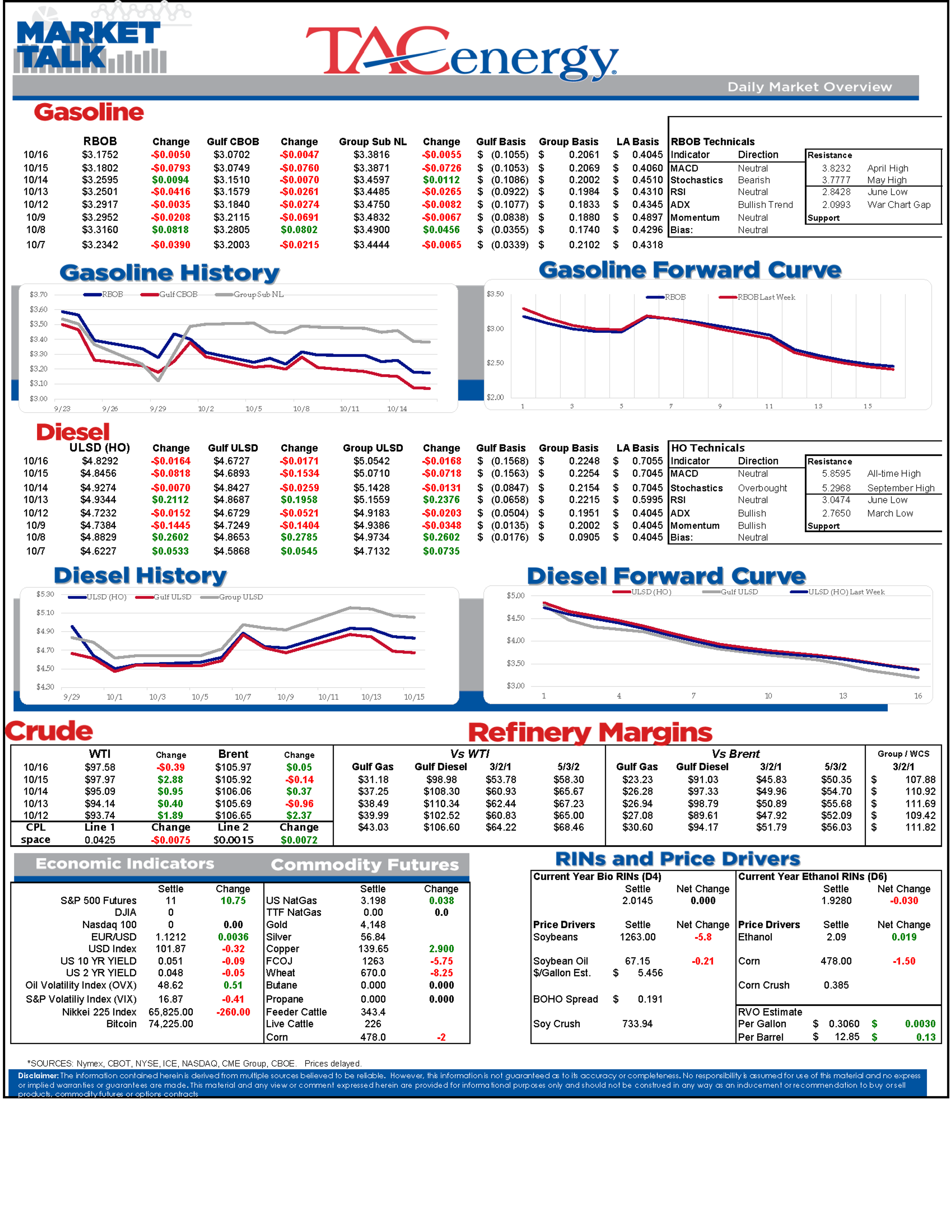
ULSD futures are ticking lower for a 3rd straight day, but are still up more than 9 cents for the week following Tuesday’s huge rally that erased any notion that the Trump/Putin diesel deal announced last Friday would actually lower prices. RBOB gasoline futures meanwhile are trading lower for a 5th out of the last 6 sessions and are down 12 cents on the week at the moment, but have bounced more than 10 cents from their overnight lows.
The IRS announced Thursday that it would not enforce any penalties for vehicles using dyed diesel on highways through the end of the year while the federal taxes are deferred (not waived). Most retailers are not offering dyed diesel as the costs of contaminated their tanks with dyed fuel more than offset any perceived benefit of deferring the tax payments by 2.5 months.
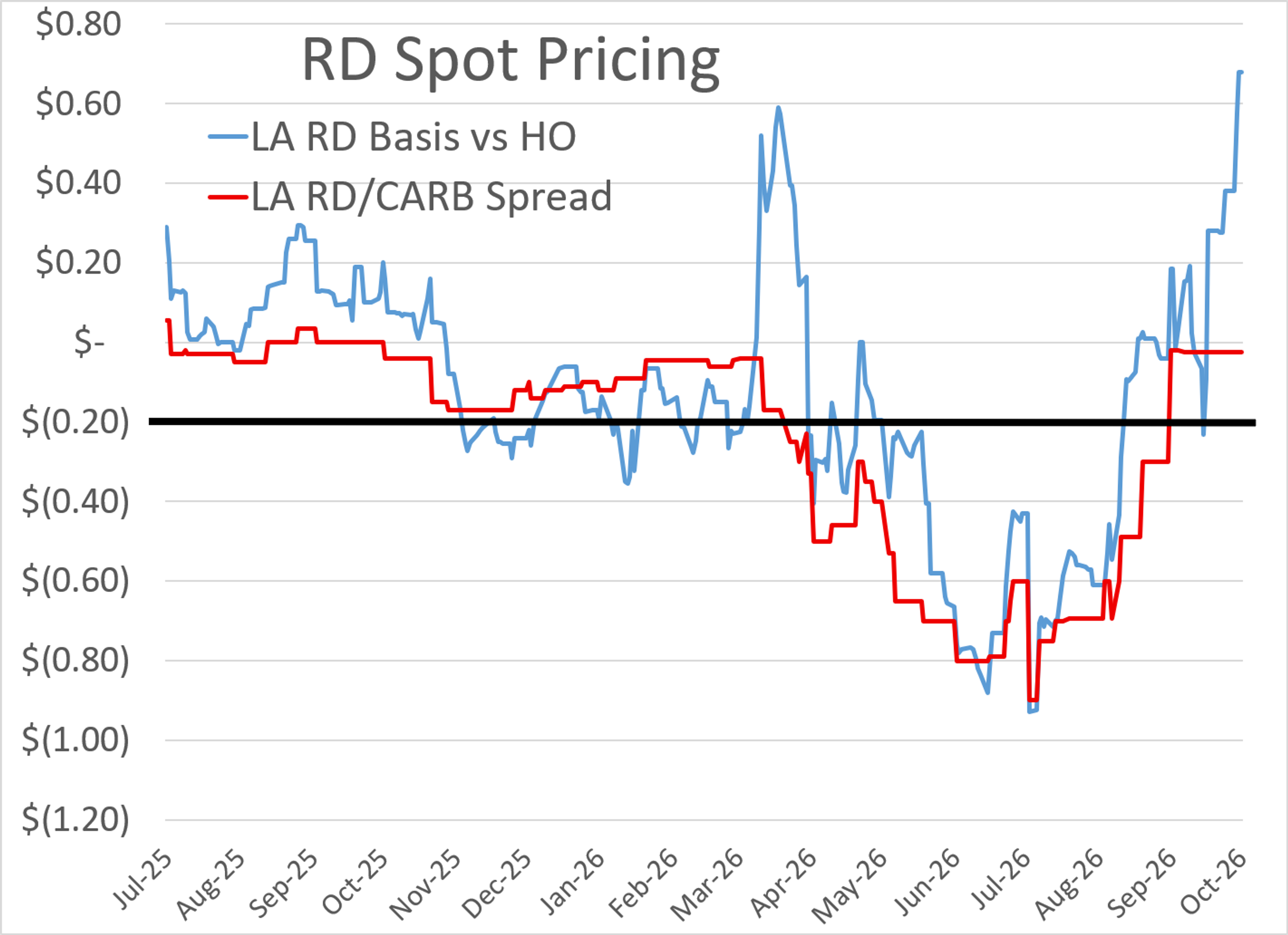
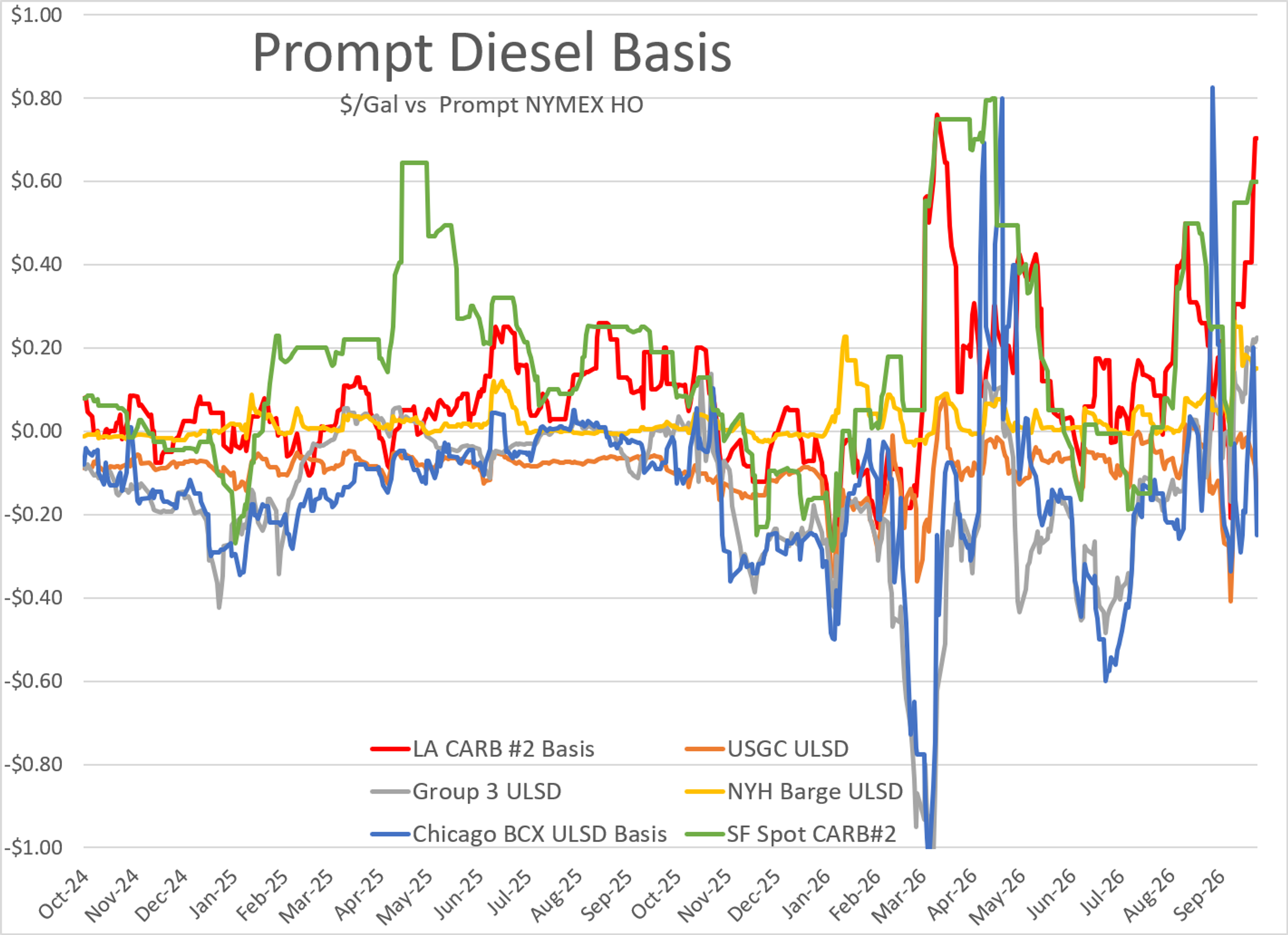
Marathon reported unplanned flaring at the Wilmington section of its 375mb/day Los Angeles area refining complex Thursday afternoon, due to unknown causes. LA spot diesel had already been rallying ahead of the news that the largest refinery on the West Coast was having issues, and we could see more strength if this upset causes any units to be taken offline.
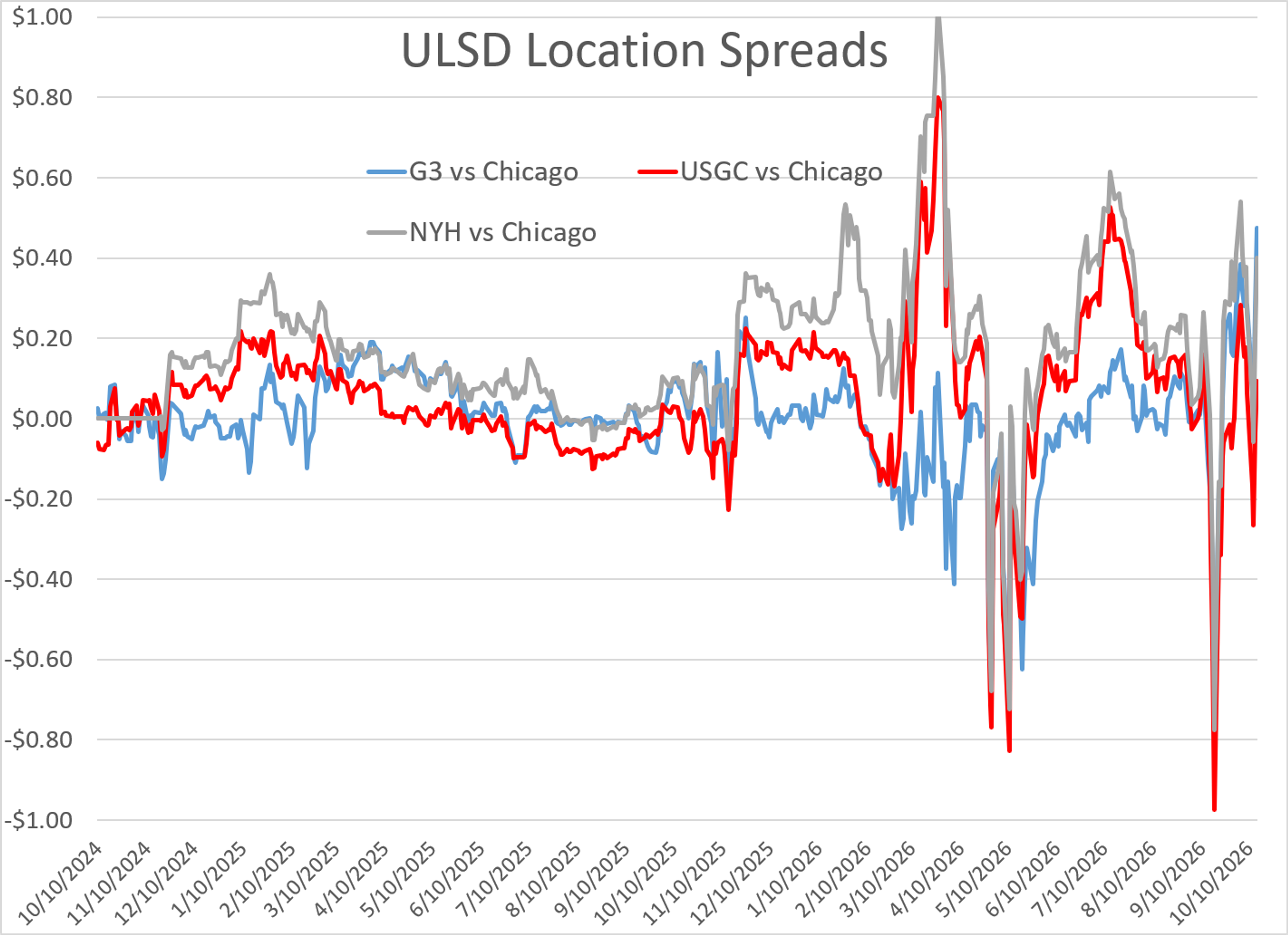
On the flip side of the coin, Chicago diesel basis plummeted Thursday as the peak harvest demand season has failed to inspire buyers in the area, unlike the strength we’re seeing in neighboring Group 3 spots, opening up an arb window to long haul west.
Valero reported retroactive emissions from an FCC unit at its 430mb/day Pt Arthur refinery, but it appears the unit will continue to operate so the issue should not impact production going forward.
Valero also reported it had hit another snag in an FCC unit that’s been undergoing maintenance for several weeks at its 200mb/day Mckee TX refinery.
Flint Hills reported flaring at its Corpus Christi refining complex, with a cause under investigation at the time of the report to the TCEQ.
Human analysis of the DOE’s weekly status report below, charts and AI analysis attached.
Commercial crude stocks drew on significantly lowered imports and production, alongside an uptick in refinery runs. Both imports and production maintained seasonal highs despite their declines. Every PADD except 2 has below average crude storage with all but 4 sitting below their 5-year range. The SPR didn’t release barrels for the first time in 29 consecutive weeks but the big draw on commercial stocks drops total U.S. crude to a new low for 2026, a 44-year seasonal record low.
Refinery runs picked up in PADDs 1-3 and slowed in 4 & 5. Each PADD aside from 5 is running at above average rates with PADD 3 holding seasonal highs week to week. Both PADD 3 & 5 also reported slight increases in capacity. In total, U.S. refineries continue operating at seasonal highs.
Diesel stocks drew on a sharp increase in demand as production slowed even as exports cooled off, although they’re still at a 13-year seasonal high. Every PADD has below average stocks, except PADD 3 where inventories fell to just ahead of the 5-year average. PADD 1 is sitting at a fresh seasonal low while PADD 5 is at a 29-year seasonal low after the small increase. Total U.S. diesel inventories are at a seasonal low as well, about 13 million barrels below the 5-year average.
Gasoline stocks built with demand dropping below the 5-year range as exports declined in back-to-back weeks to stay below average. PADDs 2 & 3 accounted for the build, although the Midwest stayed at seasonal lows and the Gulf Coast jumped back into range but is still nearly 2 million barrels below average. The other PADDs posted small declines and held below average as well, leaving the total U.S. about a million barrels under the 5-year range.
Jet fuel stocks built as imports increased, all of which landed in PADD 5, while exports dropped and demand slid. Production increased slightly to stay at seasonal highs. The bulk of the build was PADD 3 moving from below average to a seasonal high. PADDs 1 & 4 remain well below average while PADDs 2 & 5 held above, although PADD 2 is on a 4th straight week of declines. Total US jet fuel inventories are in line with 2024 levels, about 1.3 million barrels above the 5-year average.
Latest Posts
Week 41 - US DOE Inventory Recap
Energy Markets Juggle Supply Risks, Inflation Pressures, And Geopolitical Conflict
Crude Climbs For A Fifth Day While Global Fuel Supplies Remain Under Pressure
Refining Margins, Tanker Attacks, And OPEC Growth Shape Energy Outlook
Oil Rises As Political Chaos And Supply Risks Shake Markets
Volatility Returns As Traders Weigh Storm Risk And Global Supply Threats
Social Media
News & Views
View All
Week 41 - US DOE Inventory Recap
Energy Markets Juggle Supply Risks, Inflation Pressures, And Geopolitical Conflict