Global Supply Risks And Strong Refining Margins Drive Energy Market Rally

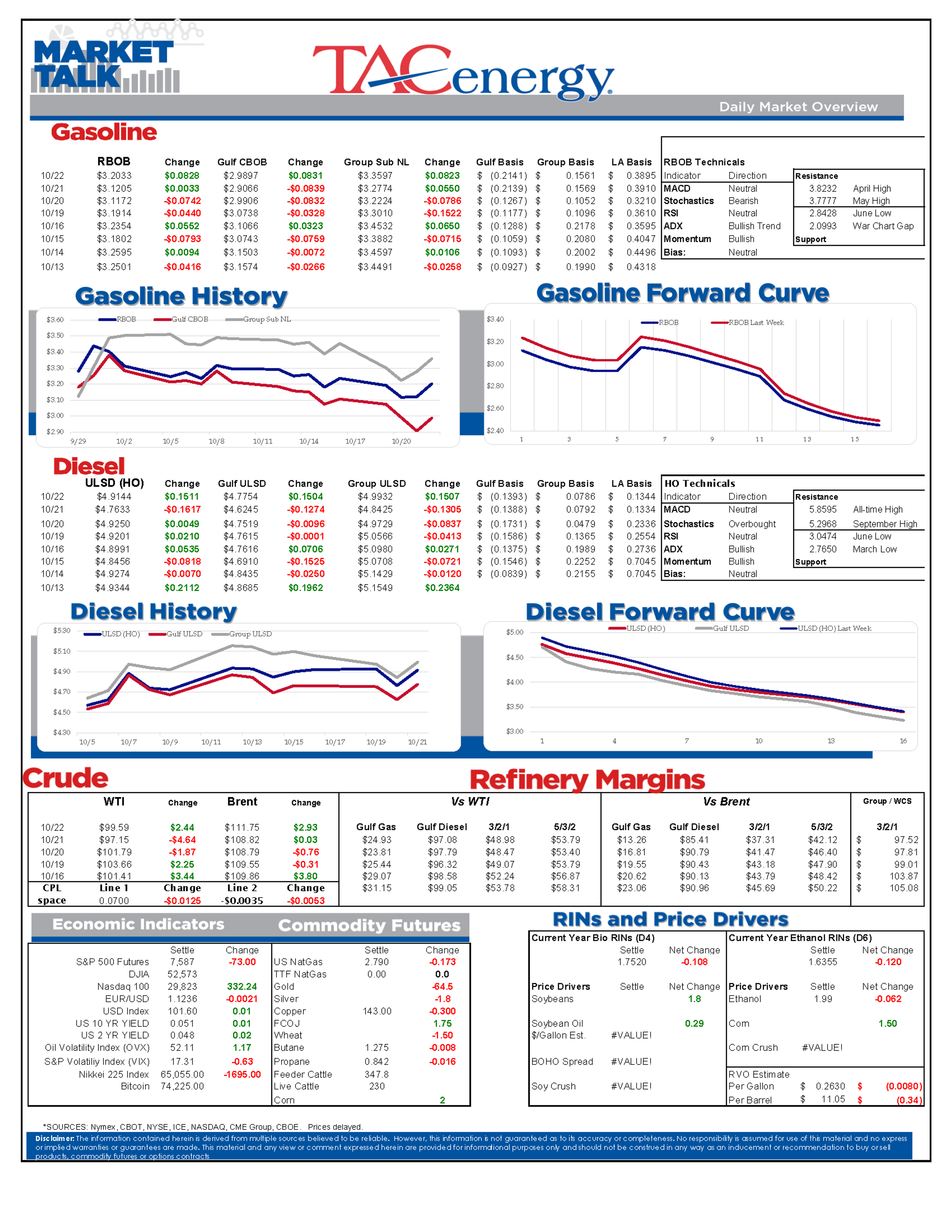
Energy markets are off to the races again Thursday, moving sharply higher after a wave of selling gripped futures Wednesday, as the likelihood of more war continues to grow on multiple fronts.
Multiple reports suggest the U.S. and Israel are planning new strikes against Iran following the November 3rd election, which creates a high likelihood we see another “buy the rumor, sell the news” phenomenon over the next 11 days as has happened with numerous other conflicts over the years.
Iran meanwhile is not letting its window of opportunity pass and has made big increases on its ship attacks while the U.S. has promised not to make new strikes prior to the election. Iran’s Navy claims 7 new vessels were hit in its latest propaganda campaign, but the UKMTO did not report any new ship attacks in the past 24 hours.
Ukraine launched another huge drone swarm at Russia overnight, but does not appear to have targeted any energy facilities this time. A CNBC article Wednesday offers a nice summary of this situation and explains why the deal to relax Russian sanctions is unlikely to make a big change in diesel supply, even though some exports are already flowing.
The U.S. has ordered some of its diplomats and their families to leave Saudi Arabia as the fighting with the Houthis continues to escalate, and the Kingdom’s missile shield looks more like a sieve with daily attacks on airports and oil facilities.
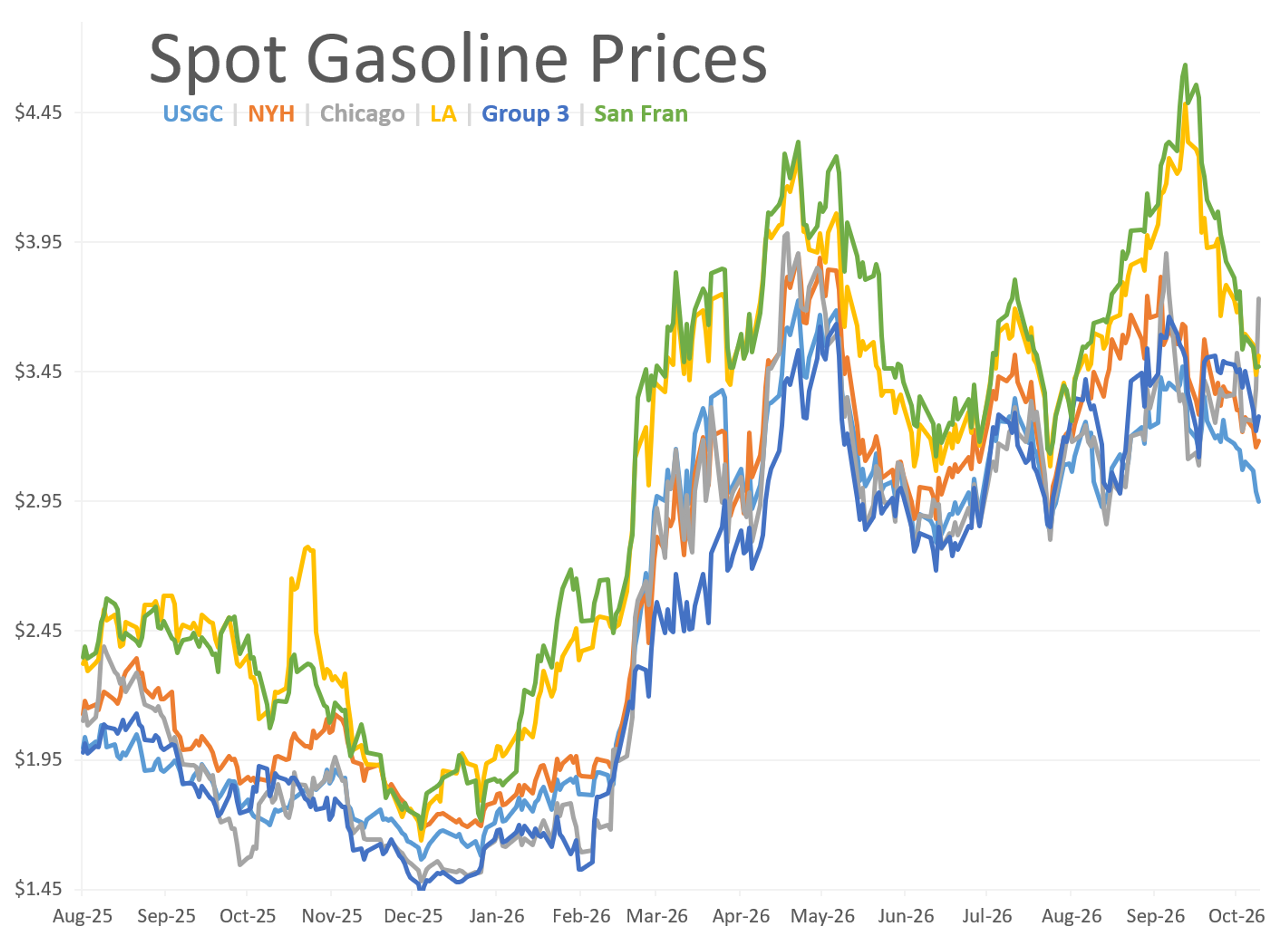
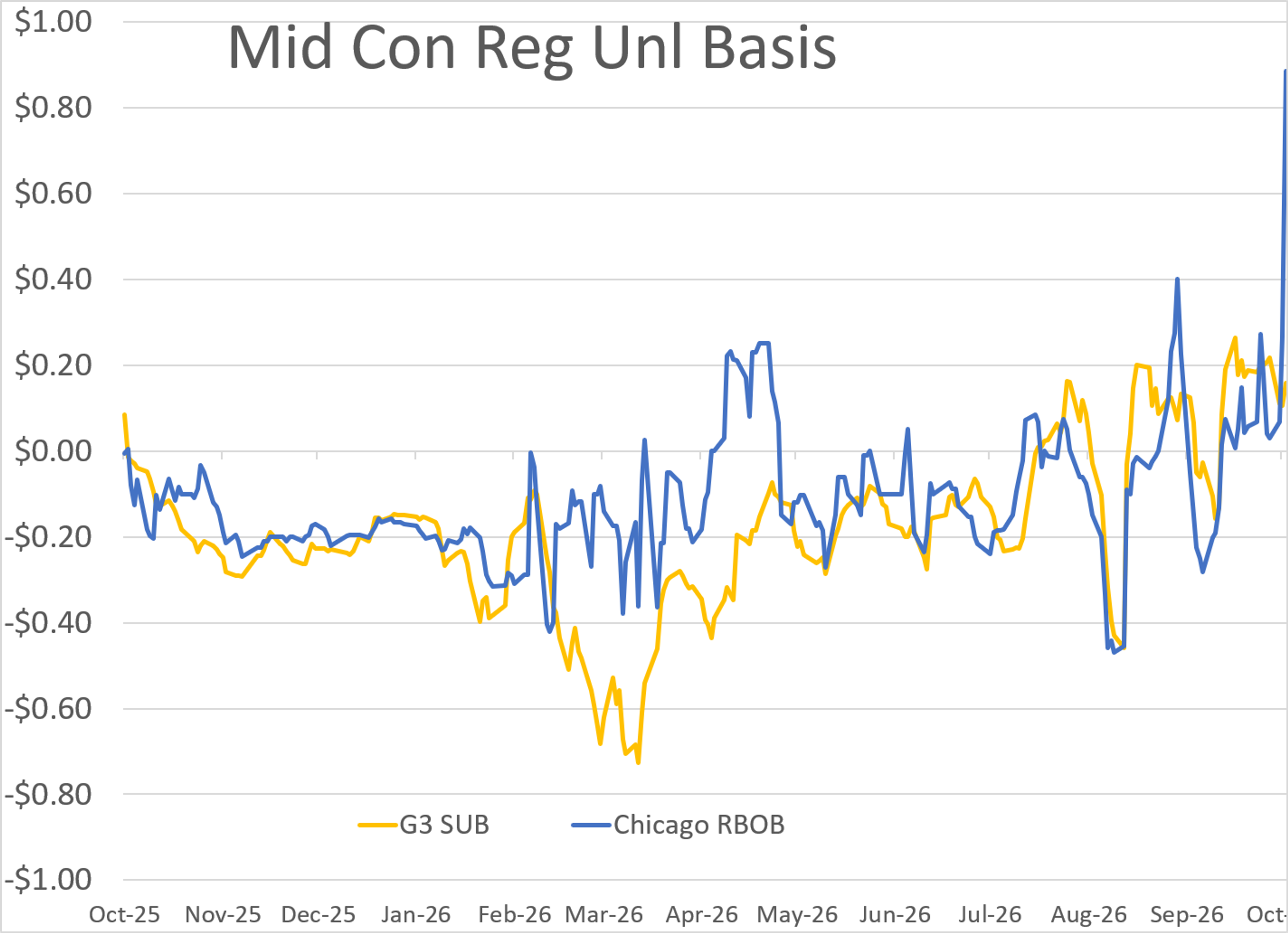
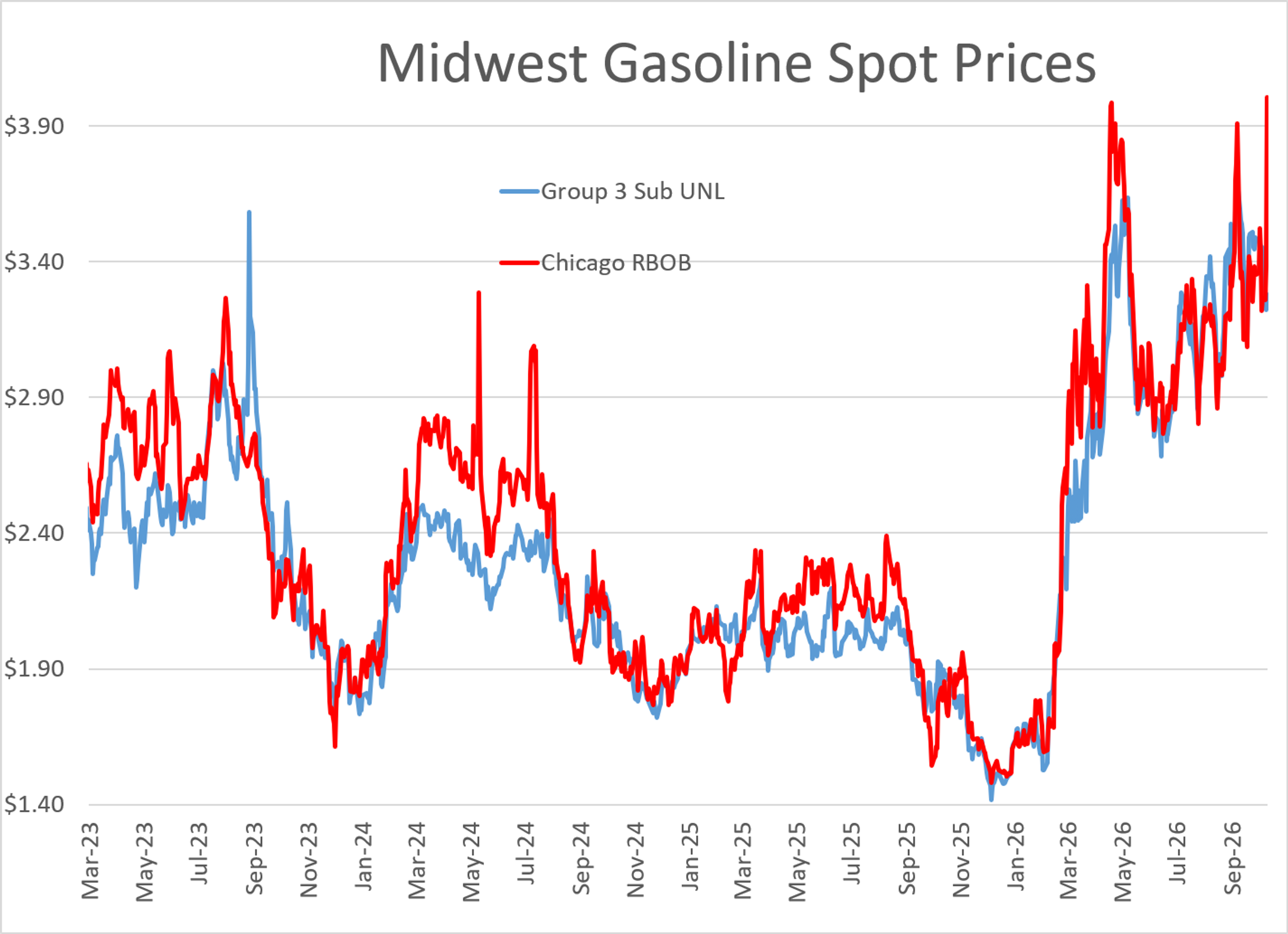
Chicago spot gasoline surged to be the most expensive in the country Wednesday, commanding an 82 cent premium over November RBOB futures, putting notional values north of $4 this morning, after Exxon was reportedly forced to shut a Catalytic Reformer at its 275mb/day Joliet IL refinery. A filing with the IEMA early Wednesday morning suggested that the flaring from the upset should have ended yesterday, but it’s so far unclear whether or not the unit is still offline.
The Nor’easter got a name, but Josephine has taken another a favorable shift East, keeping it further off-shore of both the U.S. and Canadian coast lines. The storm will still bring big waves to the coast line, and has already slowed some vessel movement, but “should” not be a major disrupter. One thing to watch going forward, the “Super El Nino” forecast suggests warmer than average temps for the North Eastern quarter of the U.S., which means a spike in heating demand like we saw during last winter’s cold snap is less likely, but the chance of more disruptive blizzards and Nor’easters has increased, and the fact that we’ve seen 2 already this fall suggests those forecasts have merit.
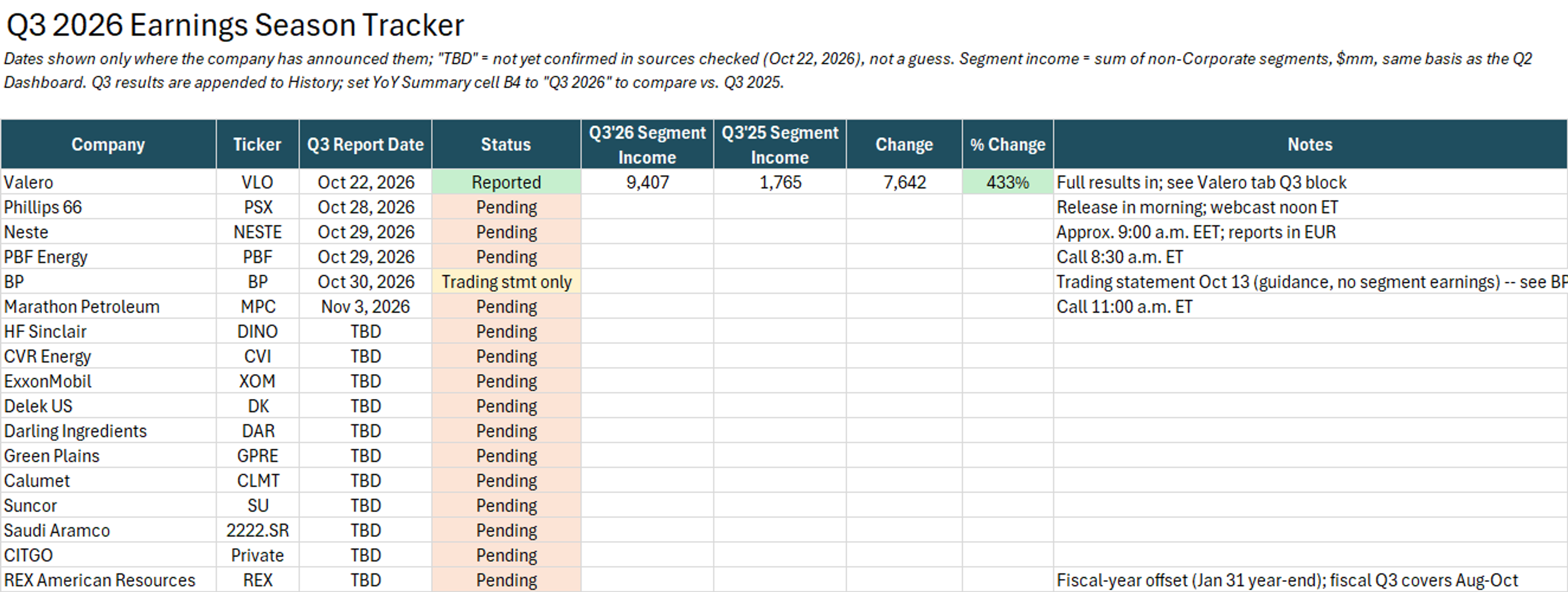
Valero kicked off the Q3 earnings season with the expected bang, with its refining segment earning $8.8 billion during the quarter while running at a record 99% utilization, compared to $1.6 billion and 96% utilization a year ago. The RD group saw the expected move from worst to first as well, moving from a loss of $28 million in Q3 2025 to a gain of $353 million this year. Valero did note the permanent closure of its Benecia CA refinery in the report, and since multiple attempts by state officials to prevent that closure were unsuccessful already, it seems the Energy Secretary’s claims this week that the feds are working to reopen recently shuttered plants will fall on deaf ears at Valero.
See the table below for more detail and expect this trend to continue as the rest of the reports start coming out over the next week.
Human analysis of the DOE’s weekly status report attached, charts of that data and AI analysis are attached.
Crude stocks less the SPR drew for a third straight week despite exports falling well below the 5-year average. Production dipped into the 5-year range for only the second time this year with large back-to-back declines off the all-time high set 3-weeks prior. PADDs 3 & 5 both declined and continue to hold seasonal lows. The other three built inventories, with PADD 1 moving from a seasonal low to a seasonal high after a 15% week over week increase. Another 300,000 barrels were released from the SPR, marking a new all-time low for this week of the year at 282.683 million barrels. Total U.S. crude stocks set another fresh low for the year and are about 165 million barrels below the 5-year average.
Refinery runs increased with only PADDs 3 & 5 limiting rates. However, PADD 3 is holding onto seasonal highs along with PADDs 2 & 4 while PADD 1 is holding steady at just above average. The total utilization rate is at a 29-year seasonal high and run rates continue to set new seasonal highs. Note that the recently announced union employee lockout of PADD 1’s largest refinery, the 275mb/day P66 Bayway NJ plant, “should” not impact run rates as the company is prepared to operate with replacement workers, similar to what BP has been doing in Whiting for months.
Diesel stocks built as demand fell from the high end of the range to a 6-year seasonal low as production continued at seasonal highs. Most of that increase was in PADD 3 where inventories jumped closer to year ago levels which set the high end of the range for most of the back half of the year. All other PADDs are below average leaving total U.S. diesel stocks a little over 10 million barrels below the 5-year range.
Gasoline stocks drew with imports dropping to a 2026 low while exports picked up. Production also climbed, but not enough to offset the leap in demand. All PADDs continue holding below average inventories with 2 & 3 at seasonal lows. Total U.S. gas stocks remain below the 5-year range for a 24th consecutive week and are about 215 million barrels below average.
Jet stocks declined with demand moving to a 7-year seasonal high last week. Production improved on seasonal highs to offset some of that decline and exports have fallen well into range after 3 straight weeks of reductions. PADD-level stocks are above average everywhere but PADD 1, which is only about 80k barrels below, and PADD 4 where inventories declined sharply last week. Total U.S. jet fuel is still trending behind the past two years but holding about 1.5 million barrels above the 5-year average.
Latest Posts
Week 42 - US DOE Inventory Recap
Diesel Prices Swing Wildly Amid Tanker Attacks And Supply Concerns
Diesel's Breakout Signals Renewed Pressure Across Energy Markets
Oil Opens Soft Despite Escalating Supply Threats
Bullish Diesel Fundamentals Overshadow Weakness In Gasoline Markets
Week 41 - US DOE Inventory Recap
Social Media
News & Views
View All
Week 42 - US DOE Inventory Recap
Diesel Prices Swing Wildly Amid Tanker Attacks And Supply Concerns