Markets, Midterms, And Missiles: Navigating Energy's Biggest Risks

Energy markets are seeing a red wave Wednesday with losses of 2-3% across the petroleum futures complex as markets digest the blue wave in the U.S. midterms.
Poll watching: While Russia & Ukraine continue to launch around a thousand drones per day at each other, Ukraine took a day off of targeting Russian refineries after striking 4 of Russia’s biggest plants in the past 5 days. The UKMTO didn’t report any new vessel attacks around Hormuz in the past 24 hours, and nothing was reported in the Houthi’s bombardment of Saudi Arabia so we get more time to guess as to what the election results might mean.
Here are some initial thoughts on potential short and long term impacts on energy markets.
Next 60 days:
The Iran war has created the biggest disruption in history and remains the biggest variable during the lame duck window. Whether or not the President decides to re-start attacks on Iran before the new congress takes over is likely to remain the single biggest variable on fuel supply and prices near term.
Fuel Laws: Republicans have incentive to move unfinished items before losing the gavel. Year-round E15 is the one to watch for RINs. The House split E15 from the farm bill, and both are pending in the Senate, where leaders have looked at a standalone E15 bill that would need 60 votes.
Knowing that new legislative and oversight pressure is coming in January, the EPA and DOE are likely to try and rush decisions now. That could include RVO and small refinery exemption (SRE) rulings, leasing actions, and sanctions waivers.
Perhaps nowhere was the changing of political leadership more stark than in the state of TX which saw democrats win roles they haven’t held for decades in the state. For energy markets, the TX Railroad commission – which the governor has no power over – remains the key authority, and while having the first democrat win a spot since 1990 is certainly newsworthy, it is a 3 person commission, so the new voter will be in the minority – for the next 2 years at least - which makes it less likely the state will see much change in terms of energy policy. What will likely change however is the commissions decisions will make more headlines which could bring some more pressure from ESG lobbies if anyone listens to them anymore.
Next 2 years:
The Iran war is still the biggest market variable. Control of war funding and war-powers fights could shorten the conflict and normalize Hormuz flows, which would be bearish for crude and cracks. The risk runs both ways if the administration escalates unilaterally. If a peace deal is found, the next war will be oil prices with Saudi Arabia, the UAE, Iran and others all battling for market share.
Russia/Ukraine remains the 2nd biggest variable and sanctions are likely tighten on Russian barrels. Democrats have opposed waivers. Stricter enforcement would support distillate cracks and widen sour and product differentials, unless of course peace breaks out and then it would have the opposite effect.
Gridlock on major energy legislation. With no veto-proof majority, big repeals or new mandates are unlikely. Energy policy moves through appropriations riders, must-pass bills, and oversight hearings and subpoenas.
Better odds for biofuels and the RFS. Several flipped seats are corn and bean states (IA, KS, OH). That likely strengthens a bipartisan ag coalition for year-round E15, closer scrutiny of SREs, and support for robust RVOs.
In other news:
Syria says it foiled plans by groups affiliated with Hezbollah and ISIS to attack its largest refinery, the 100mb/day Homs facility. While that plant is relatively small, and the attack was avoided, it’s yet another reminder – on top of what we saw earlier in the week in Sudan – that the vulnerabilities of refineries have been laid bare over the past year and copy cat attacks anywhere in the world – including the U.S. – may be a real threat going forward.
Interestingly enough, the AFPM (the primary U.S. Refining lobbying group) has provided a “Drone Tool Kit” to help facilities improve their safety and security, and in many cases use drones to protect themselves.
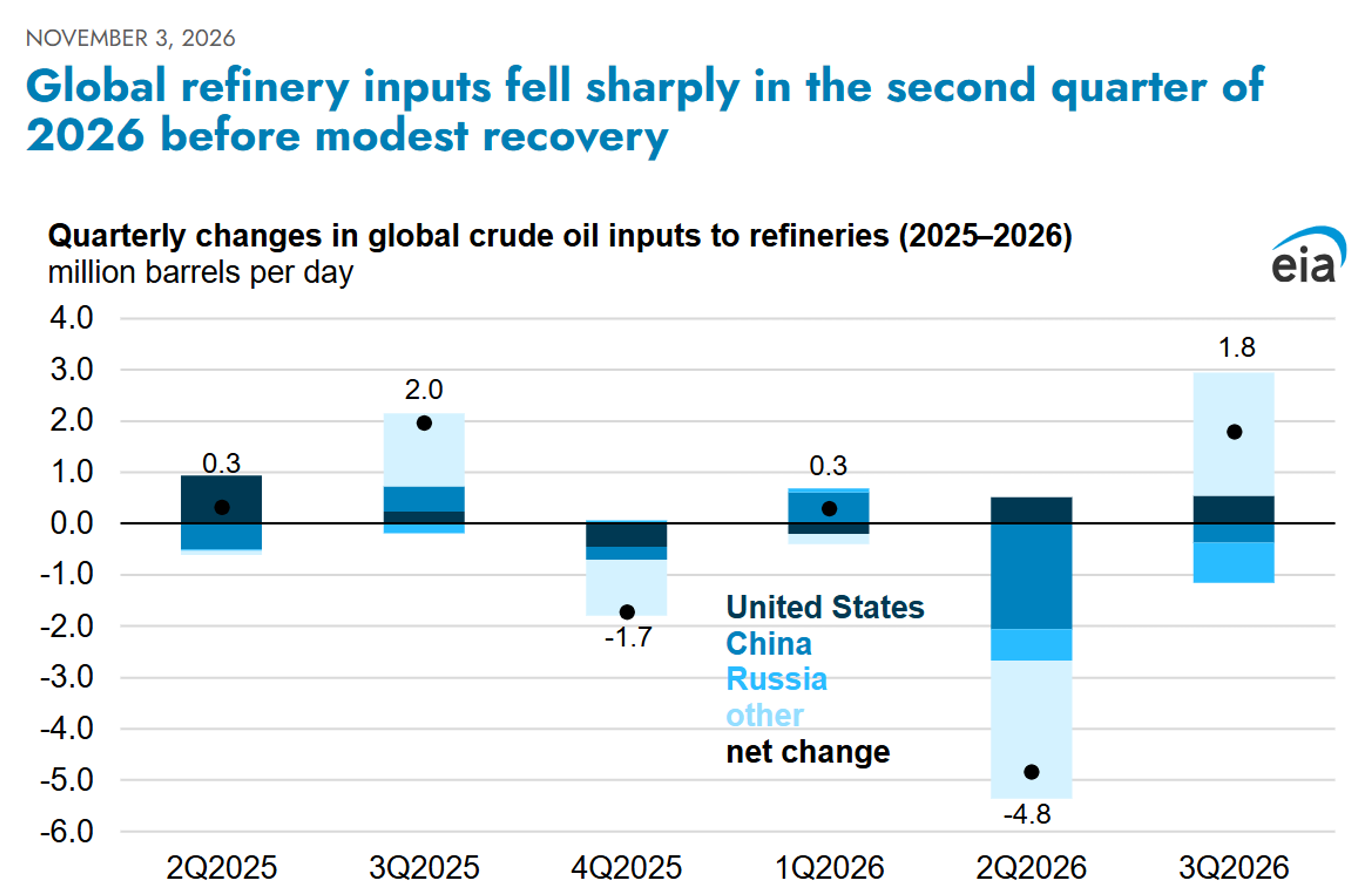
The EIA Tuesday highlighted the global drop in refinery runs in the 2nd quarter with impacts from drones attacks on refineries and disruptions to crude oil flows both weighing heavily on run rates. While things improved in Q3, there is still somewhere around 3 million barrels/day of global refining capacity (4%) still not operating due to the conflicts.
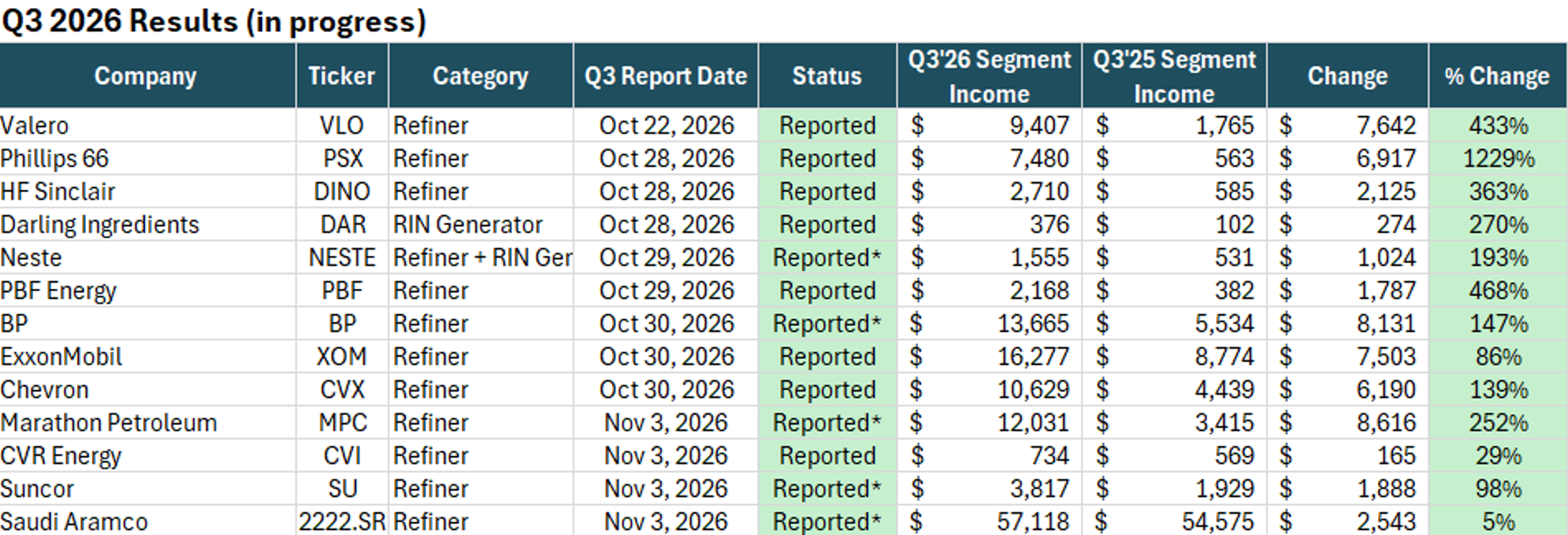
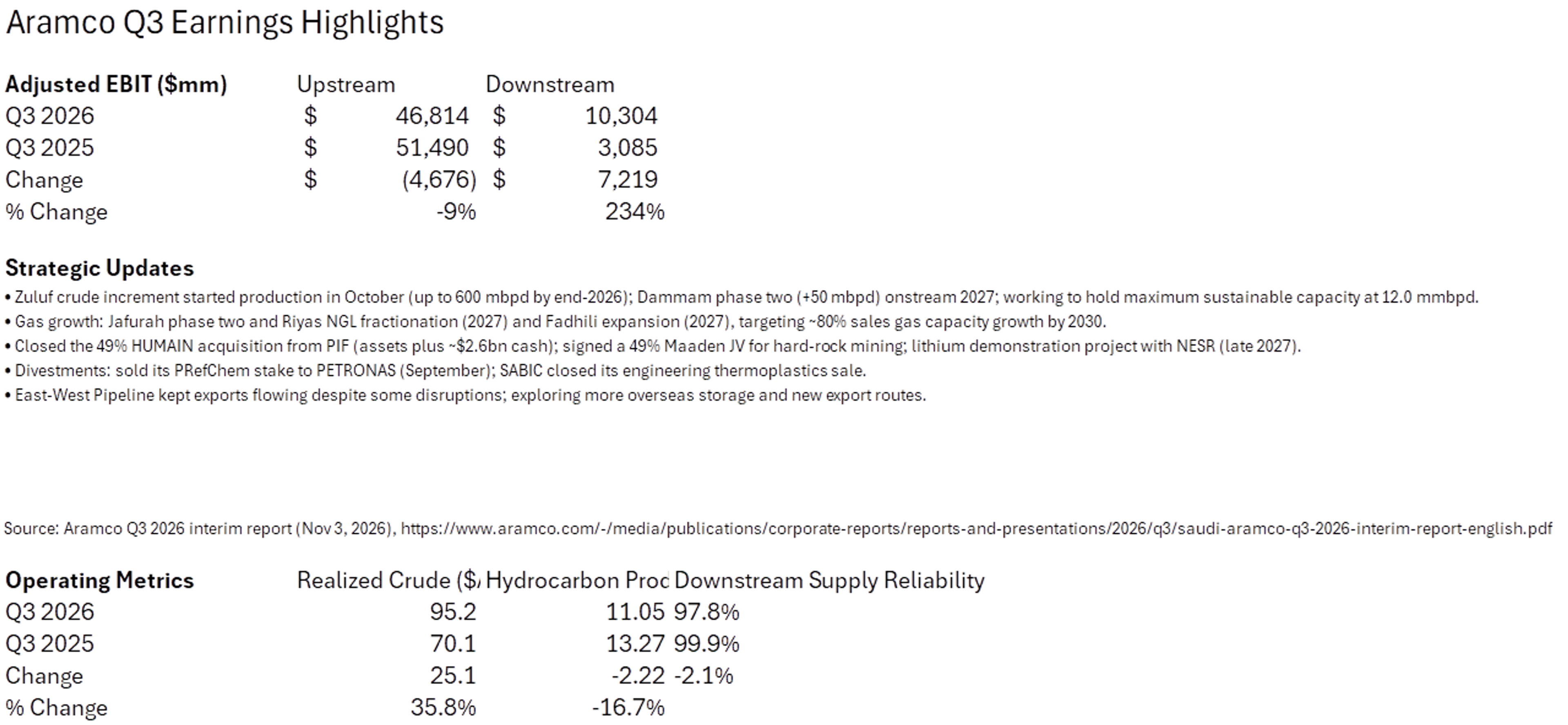
Aramco’s Q3 earnings reports showed a 5% increase in profits from a year ago as surging refining margins (including Motiva Pt Arthur) helped offset lost production from its upstream assets. The report highlighted how the company continues to rely on the East/West pipeline to bypass Hormuz and is looking at alternate storage options in Asia for the future.
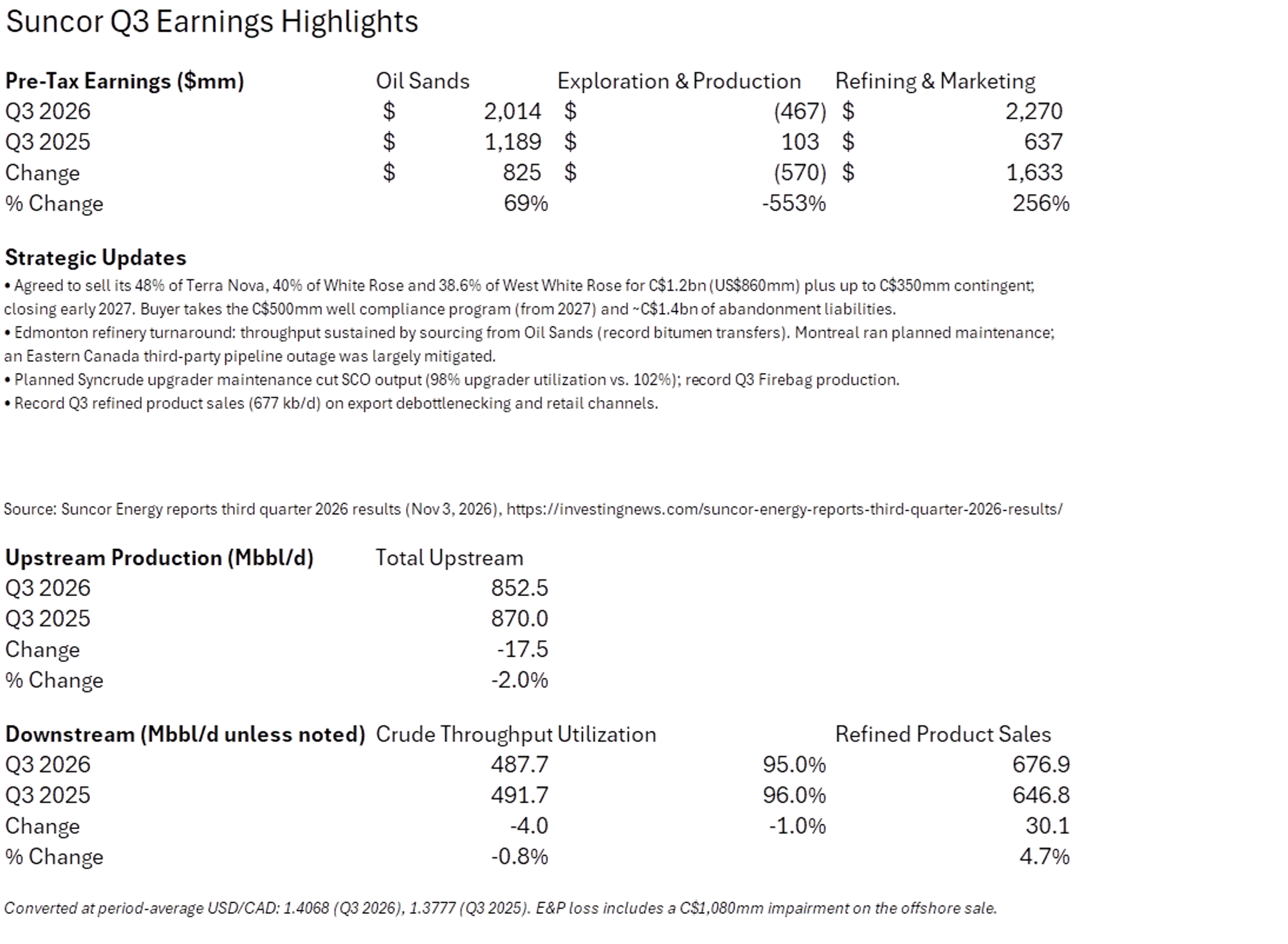
Suncor’s earnings followed a similar (much smaller) pattern as its blowout refining margins helped to offset losses in its exploration and production group. See tables below for more detail.
Latest Posts
Week 44 - US DOE Inventory Recap
Refinery Trouble And Global Conflict Keep Energy Markets Guessing
Energy Markets Caught Between Diplomacy And Disruption
Refinery Attacks And Shipping Risks Support Fuel Prices
Markets Weigh Middle East Diplomacy Against Persistent Fuel Tightness
Week 43 - US DOE Inventory Recap
Social Media
News & Views
View All
Week 44 - US DOE Inventory Recap
Refinery Trouble And Global Conflict Keep Energy Markets Guessing