Energy Markets Caught Between Diplomacy And Disruption

Energy markets are seeing a wave of heavy selling to start what’s expected to be another volatile week, as 3 days of marathon mediation efforts wrapping up with a draft agreement to try and end the war(s) in the Middle East. Meanwhile, other reports suggest that the U.S. and Israeli leaders are clashing over whether or not to resume attacks, just a few days after the resumption of strikes appeared to be imminent.
While hopes for peace are getting credit for the big pullback in prices to start the day, there’s no shortage of actual violence impacting energy supply infrastructure around the world.
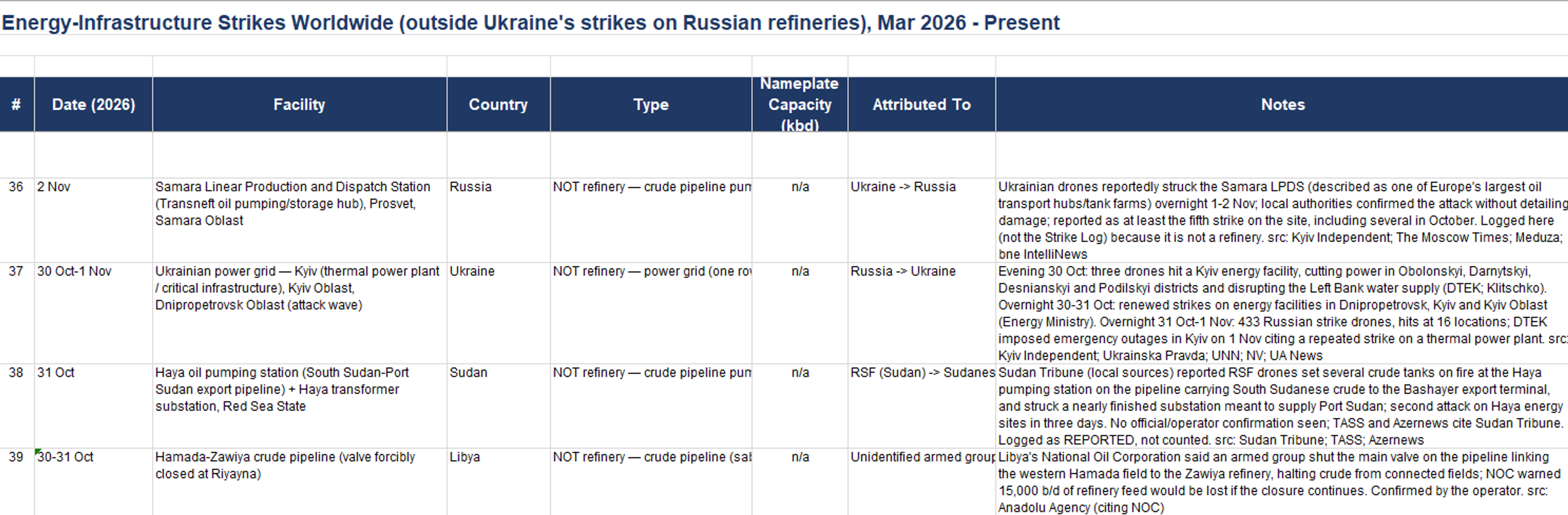
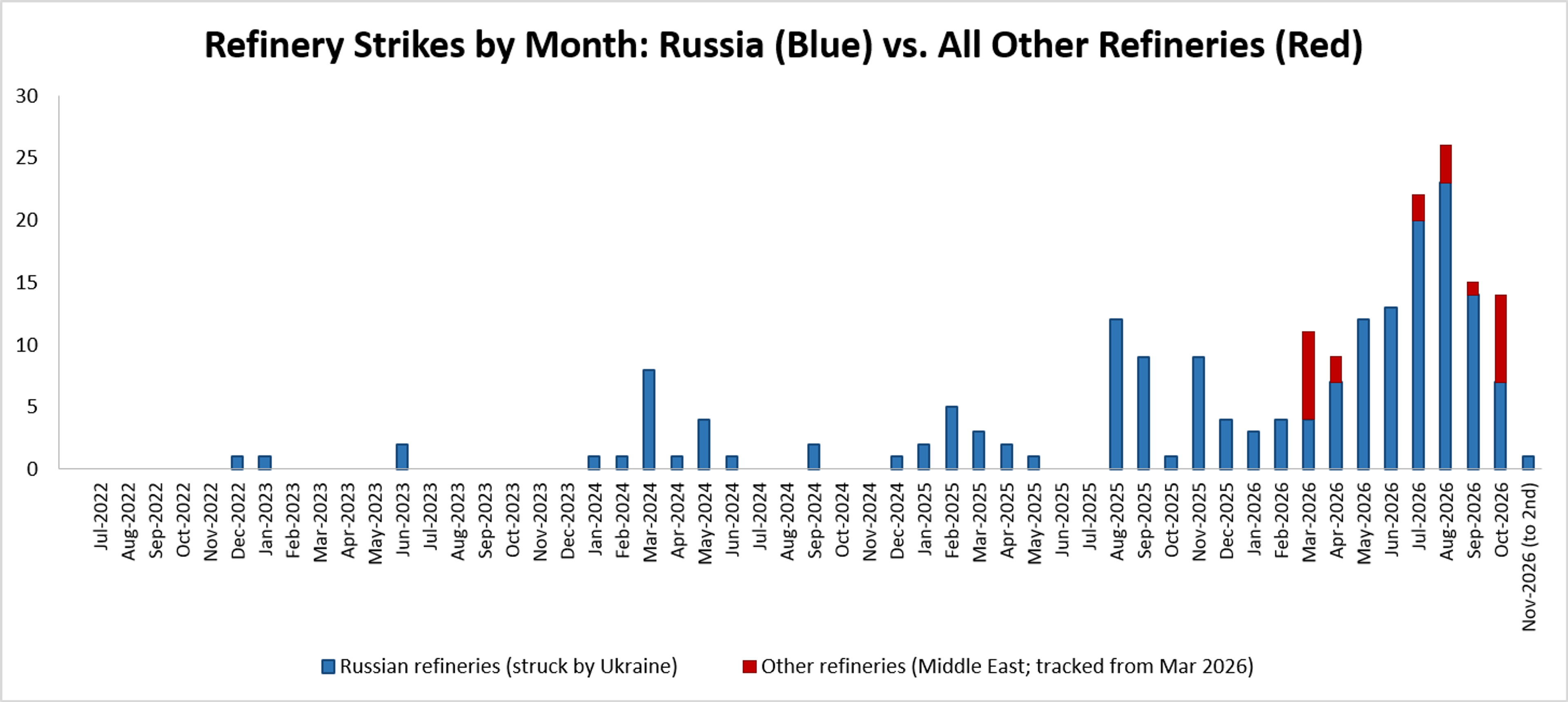
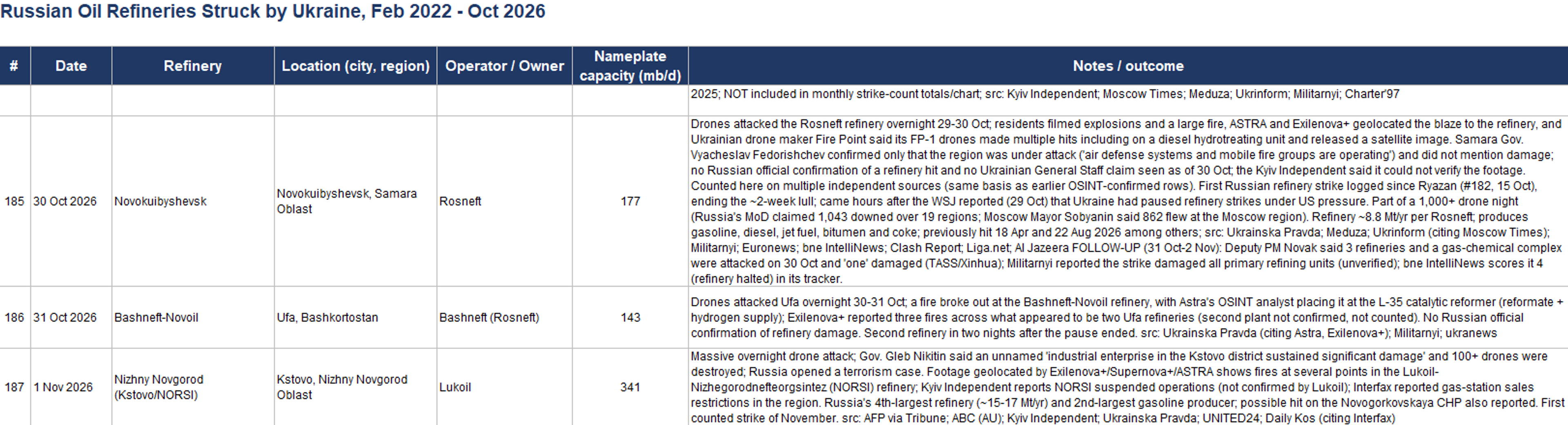
After taking a 2 week break, Ukraine’s drones hit 3 Russian refineries in 3 days, with the facilities combining for around 660mb/day of nameplate capacity, or more than 10% of Russia’s total. As always, it’s hard to say what impact these latest attacks will have on operations, but 2 out of the 3 came with evidence of apparent damage on operating units. Ukraine also struck the Samara Linear Production and Dispatch station, which is also known as Europe’s biggest tank farm. The facility gathers crude from 4 different pipelines, blends, stores and then ships Ural’s grade oil for export, in addition to feeding multiple nearby refineries. That tank farm was also struck on October 2nd. See the tables and charts below for more detail.
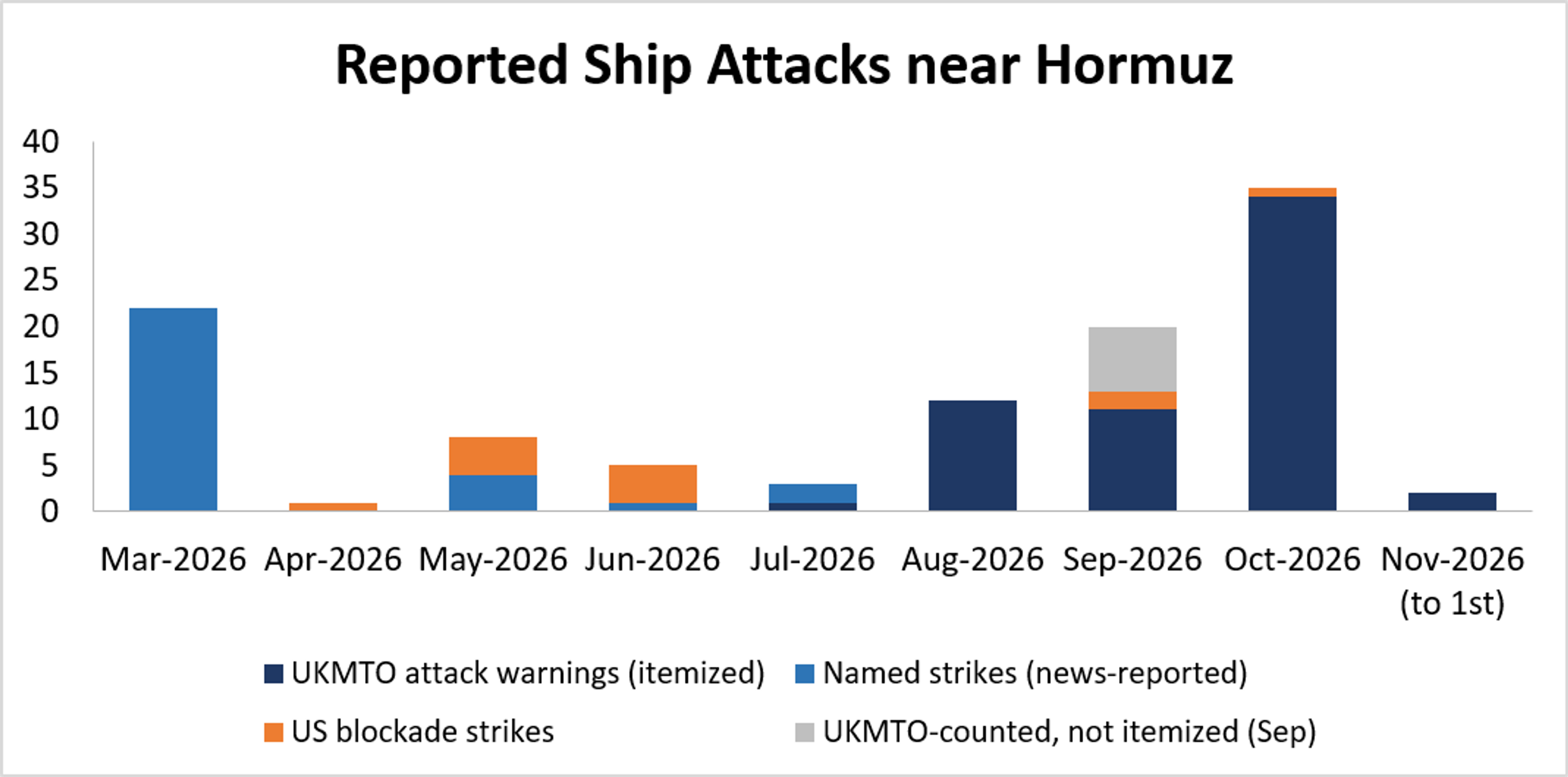
The UKMTO reported 2 more ship attacks Sunday, one off the Saudia Arabian Gulf coastline, and the other in the Strait of Hormuz. The agency also reported a fishing trawler was hijacked off the coast of Somalia, adding to the growing list of shipping hazards keeping mariners on edge across the region. The UKMTO also updated several notes from attacks in October highlighting how Iran is using a combination of missiles, drones, sea mines, limpet mines and RPGs to try and disrupt the flow of vessels through the area.
A Sudanese oil pumping station was attacked by drones this weekend. Sudan is not a major oil exporter so this shouldn’t much if any on the global supply picture, but it’s another reminder that the new relatively cheap drone war-fighting technology can easily spread to new areas of the world.
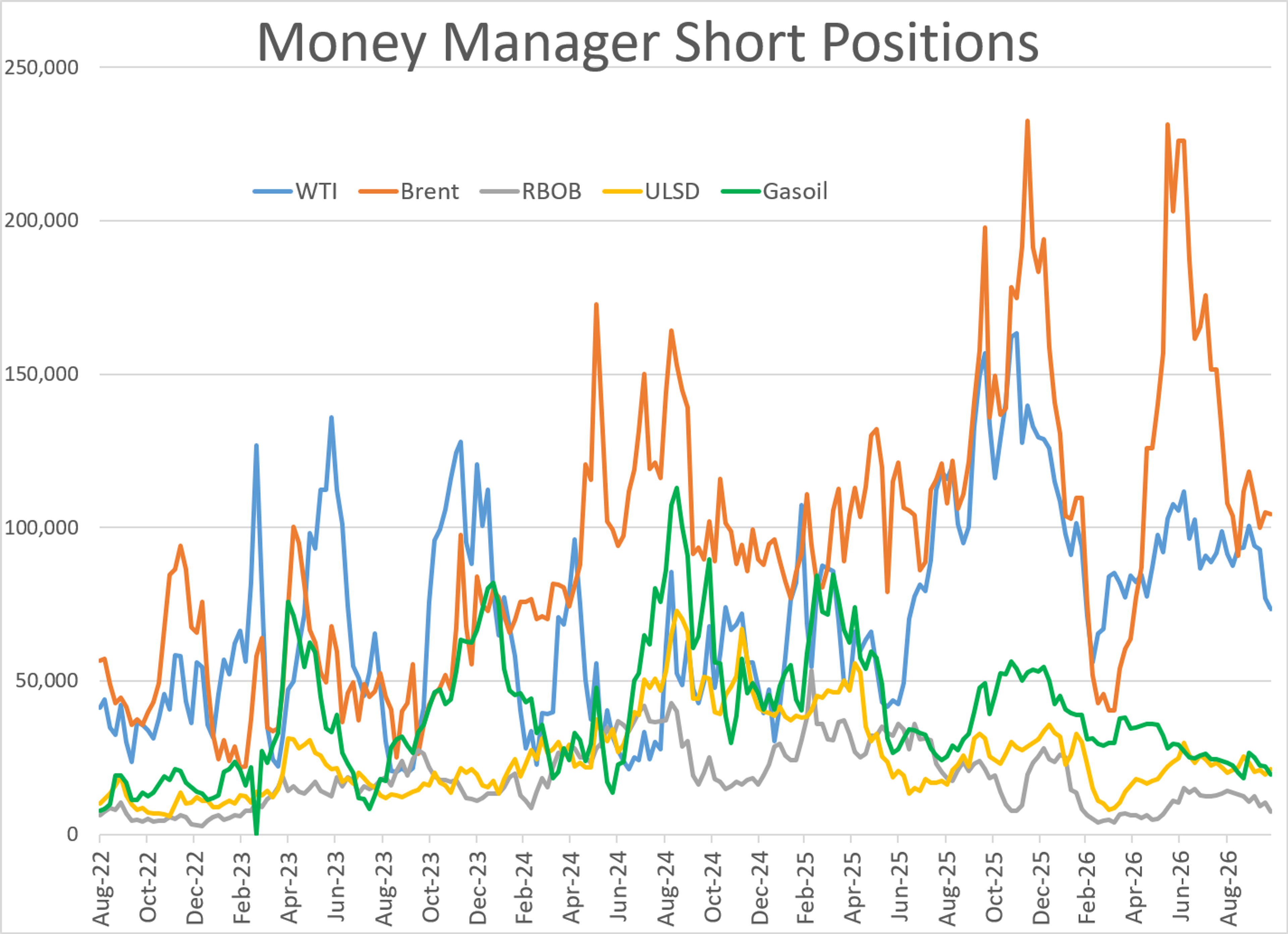
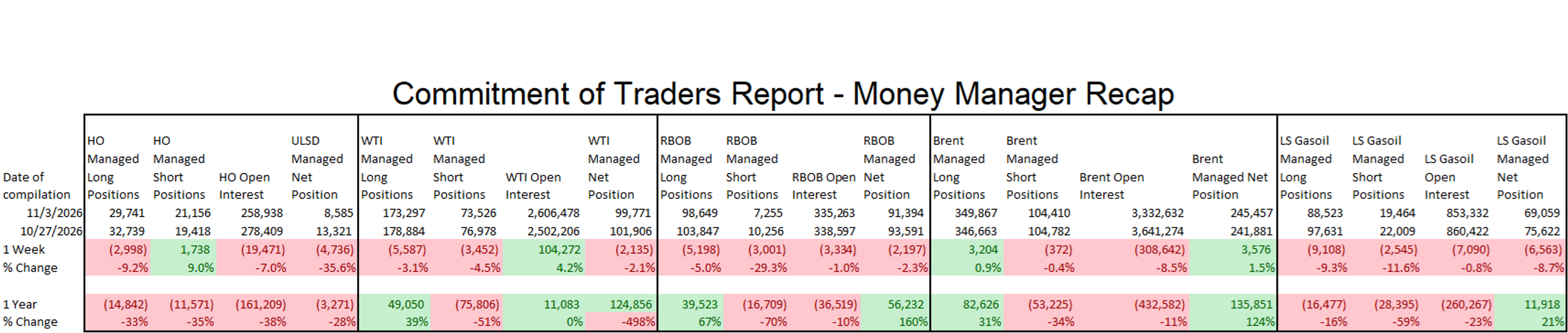
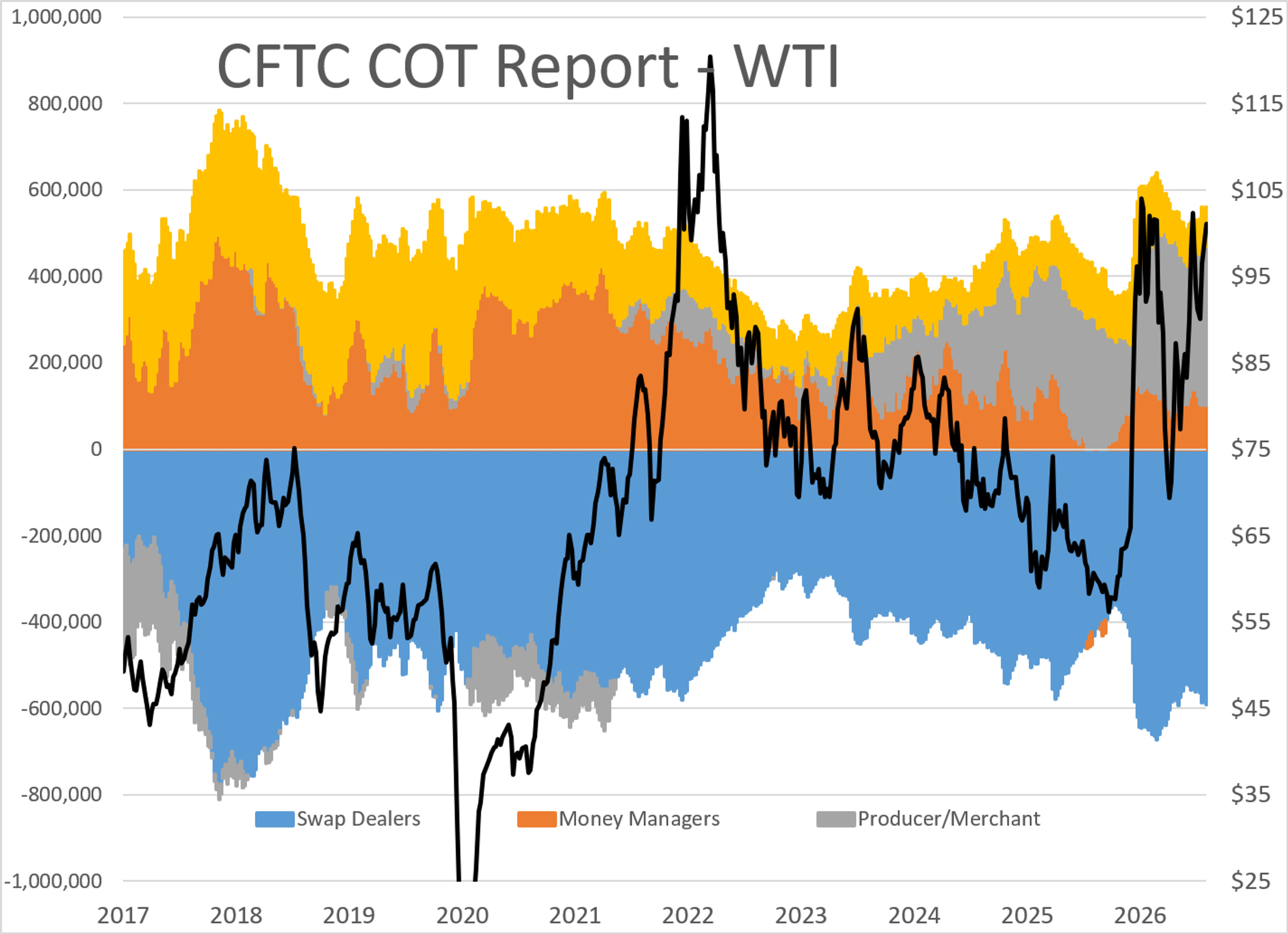
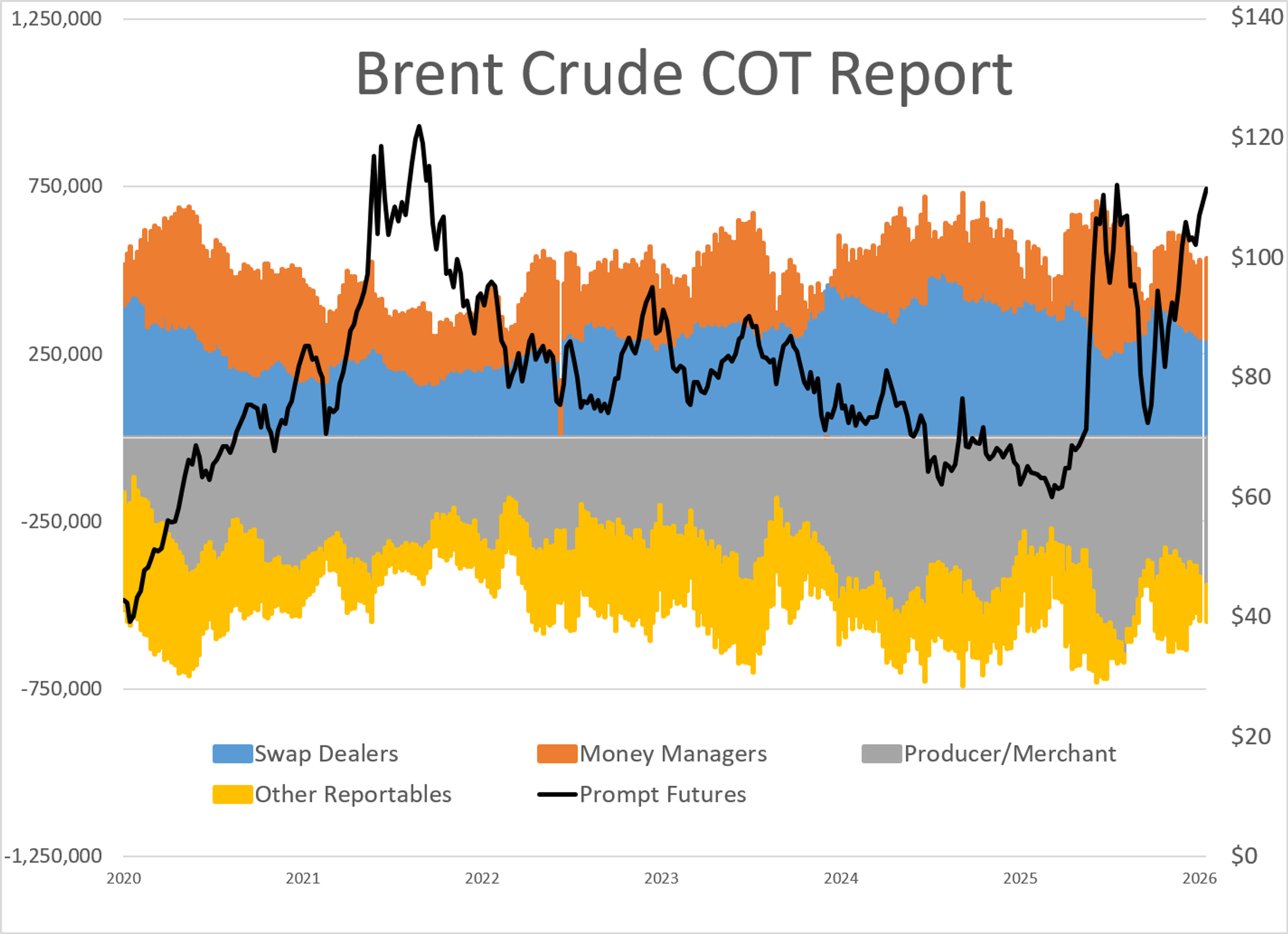
Money managers were making small reductions in their bets on higher energy prices last week with 4 of the big 5 petroleum contracts all seeing modest reductions in net length held by the large speculative trading category. Brent crude was the exception to the rule with 3,200 new long positions added and a few hundred short contracts covered last week.
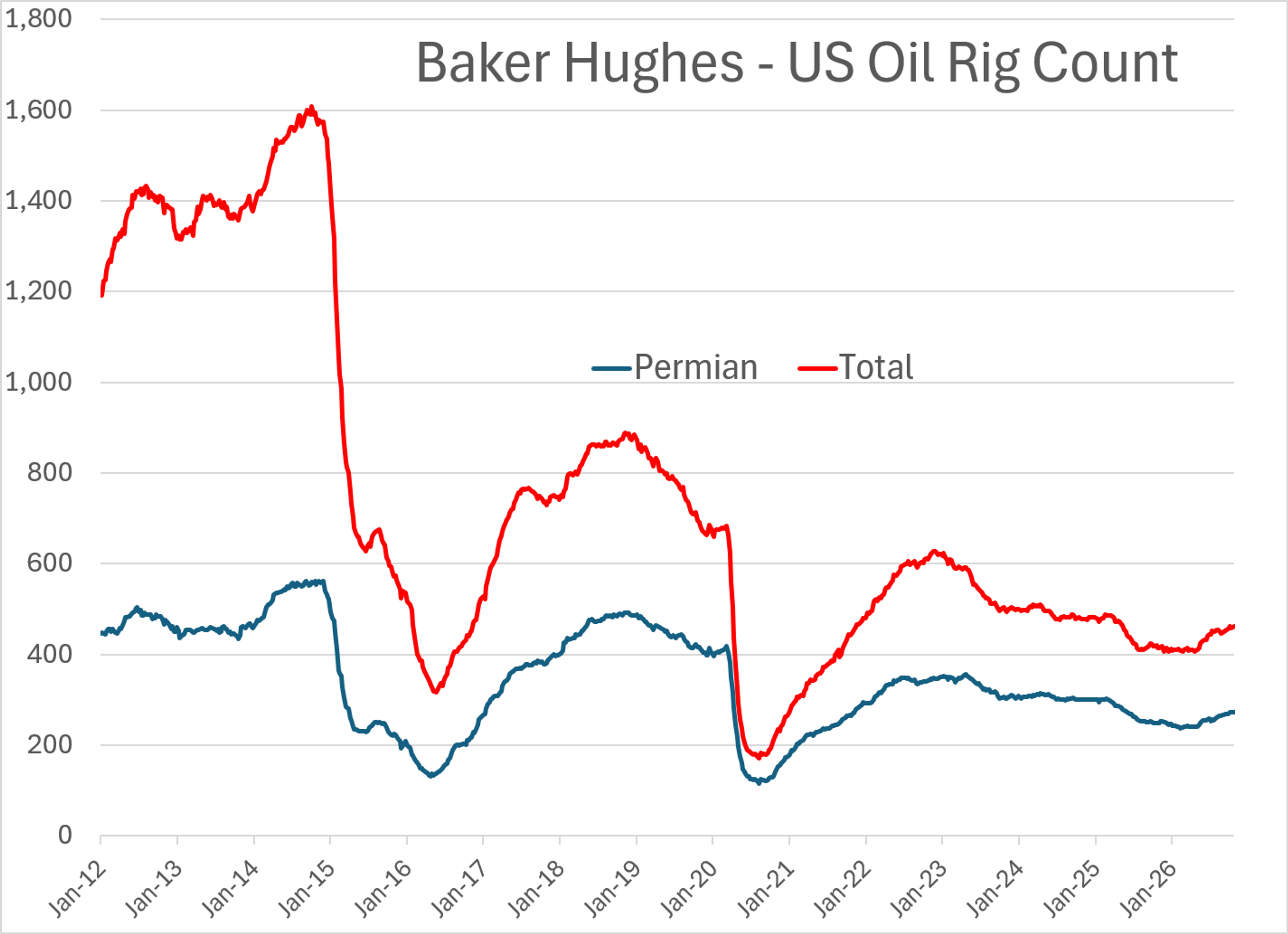
Baker Hughes reported a net increase of 2 oil rigs drilling in the U.S. last week, while the natural gas rig count dropped by 2.
The Primary Vision count of fracking crews fell by 3 on the week, marking a 3rd straight week of declines. One worthwhile note from the record setting Q3 earnings reports: Even though the good times are rolling for refiners and oil producers not trapped behind Hormuz, the investment outlook for most of those companies is modest, with several noting that they’ll use their windfall profits to pay down debt and buy back stock prices, which suggests they do see lower prices on the long term horizon.
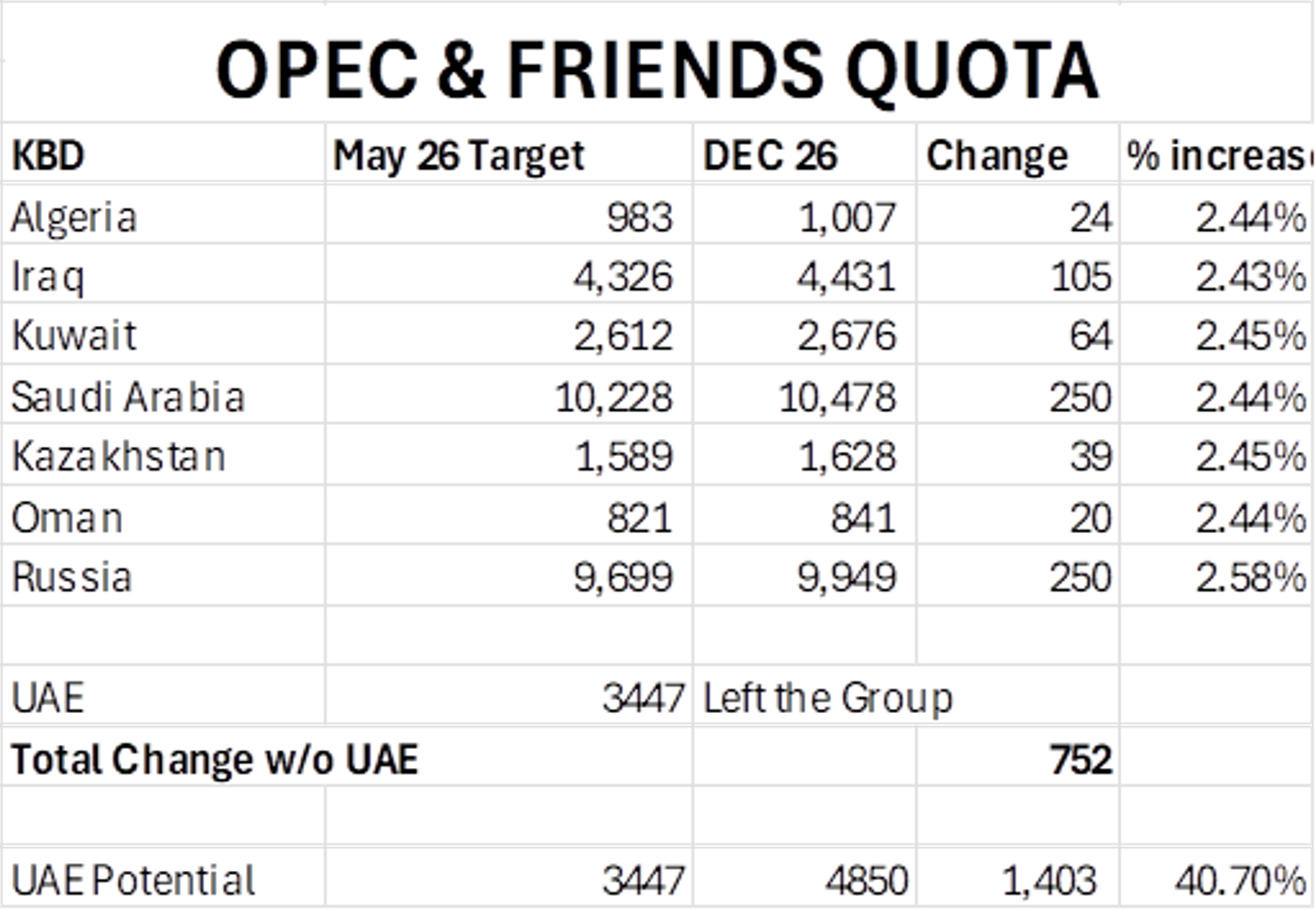
OPEC and Friends agreed Sunday to hold their production targets steady for December. The 7 remaining participants in the “Declaration of Cooperation” (DoC) quota system have increased their output targets by around 2.4% since May, adding 750mb/day to the total quota. The bigger factor is that the UAE, who was the 8th member before leaving the cartel shortly after the war broke out, has the capacity to increase its output by around 1.4 million barrels/day from its quota levels, doubling the increase of all other members, so long as those barrels can get past the Iranian attacks. That may be the biggest single factor in why we could see prices drop once the shooting stops.
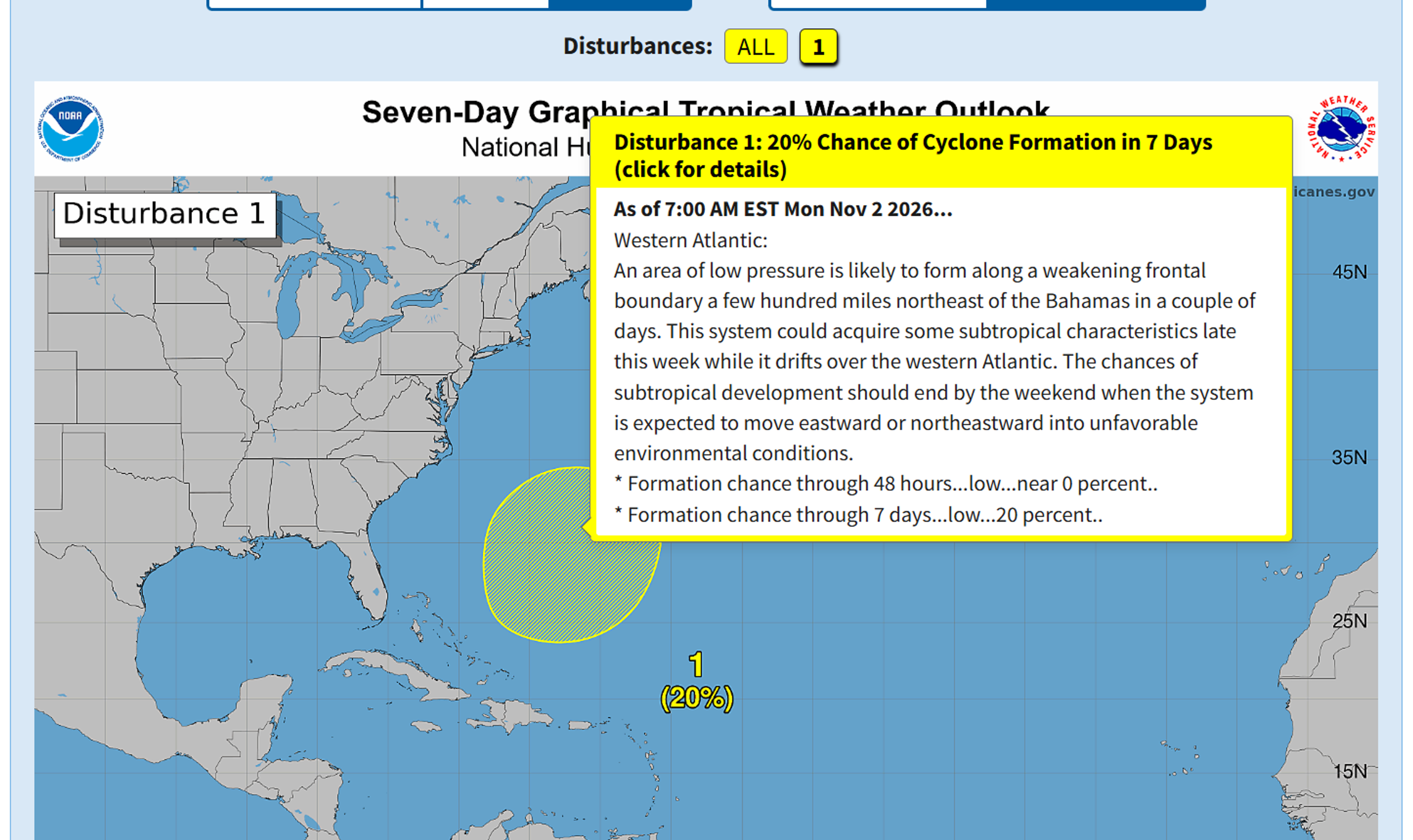
The NHC is tracking a storm system off the SE U.S. coast this morning, but only gives it 20% odds of being named. The agency predicts the storm should move north and east in the coming days, pulling it away from the coast.
Latest Posts
Refinery Attacks And Shipping Risks Support Fuel Prices
Markets Weigh Middle East Diplomacy Against Persistent Fuel Tightness
Week 43 - US DOE Inventory Recap
Rising Crude, Expanding Margins, And The Evolving Global Supply Picture
Energy Markets Retreat On Diplomatic Optimism As Supply Risks Evolve
Mixed Start To October's Final Trading Week As Crude Retreats
Social Media
News & Views
View All
Refinery Attacks And Shipping Risks Support Fuel Prices
Markets Weigh Middle East Diplomacy Against Persistent Fuel Tightness