Refinery Attacks And Shipping Risks Support Fuel Prices

War on?
Energy markets are rallying again to end October as more refineries and ships were attacked overnight, dashing hopes for diplomacy that contributed to a pullback in prices earlier in the week.
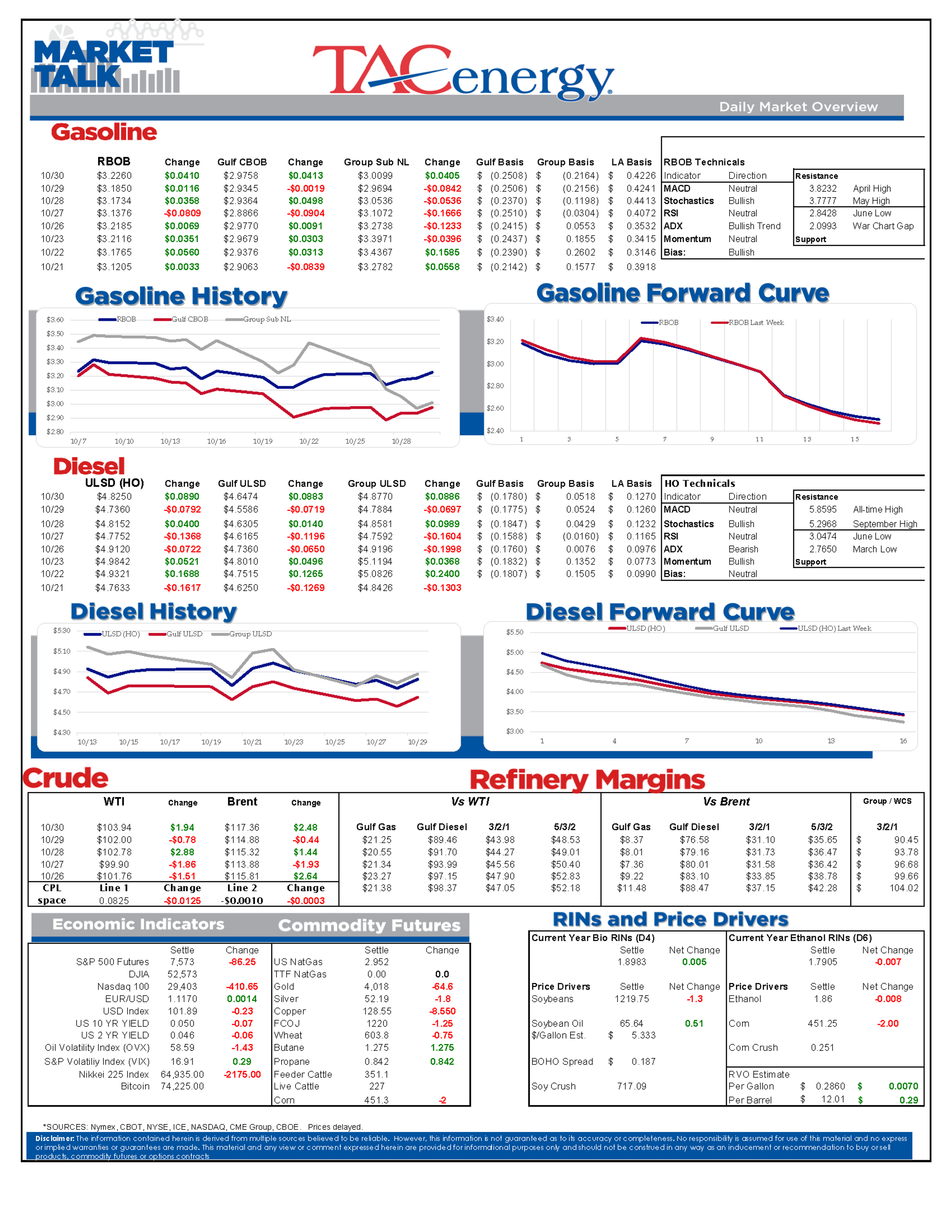
Today is expiration day for November RBOB and ULSD. The screenshot below offers a good example of why you can get tricked by the lack of liquidity in those contracts if you’re not paying attention. In this example, the November RBOB contract hasn’t traded since 4am, so it looks like the contract is only up a penny on the day, while in reality the live bid is 2 cents higher.
Also note the backwardation between the November and December Contracts, as we’ll start out trading next week at lower values because of that steep curve.
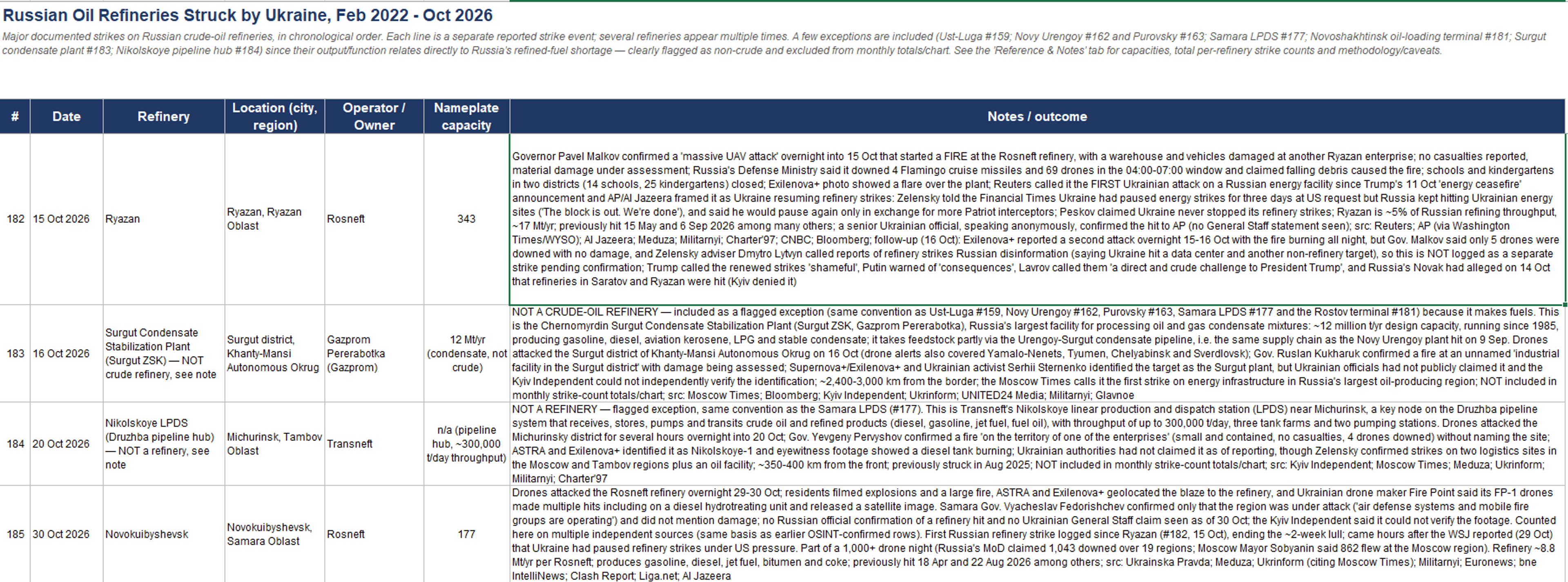
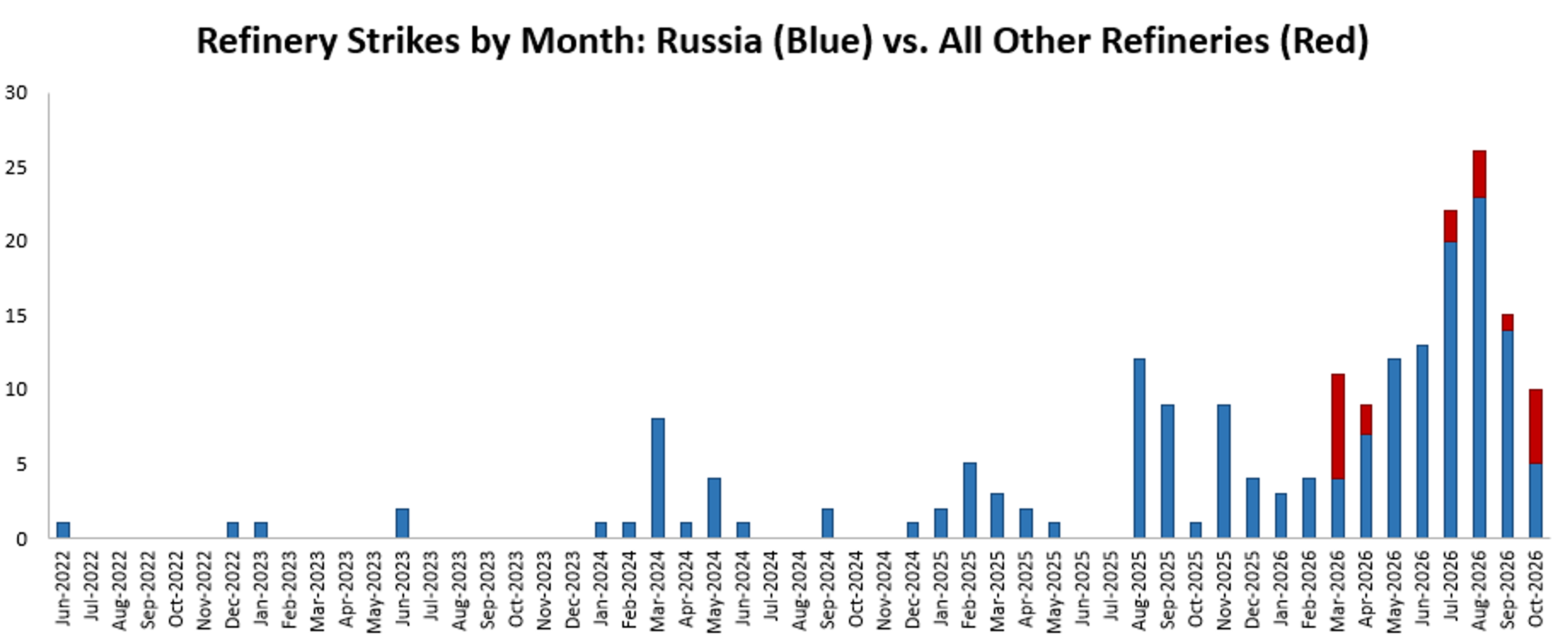
Ukraine ended its 2-week pause on Russian refinery strikes overnight, with a “major” attack on the 177mb/day Rosneft Novokuibyshevsk refinery reported overnight while satellite images from Ukraine’s Fire Point drone maker suggesting multiple hits on a diesel hydrotreating unit. Russia meanwhile is extending its diesel export restrictions, while leaving quotas in place to allow for the barrels agreed to with the U.S. President earlier in the month.
The UKMTO reported 3 different ship incidents near the strait of Hormuz Thursday, while other reports suggest that Iran’s forces are now employing limpet mines on the hulls of tankers to go along with the drone, missile, sea mines and RPGs that have been previously deployed to disrupt shippers. All of this seems to raise the odds that the U.S. (and likely Israel) will restart their attacks next week.
The Houthis claimed six different attacks on Thursday including a ballistic missile attack on the 550mb/day Ras Tanura refinery which was also targeted earlier in the week, a missile at an Aramco facility in Abqaiq, and a ballistic missile at the 400mb/day Rabigh refinery in addition to more airport attacks. Saudi Arabia has not confirmed any of these strikes.
Valero is reportedly buying the recently shuttered 268mb/day Houston Refinery from Lyondell Basell. While the 2 shuttered California refineries of the past year have been an easy target for political ads, it’s easy to forget that this facility, which is roughly the same size as the two California refineries combined, was shut down in the heart of the energy industry in early 2025. It’s not yet clear if Valero intends to take advantage of the recent announcement by the DOE to use the Defense Production Act to increase domestic refining capacity, or if the timing is coincidental. Valero could also use the facility to expand its RD and SAF production.
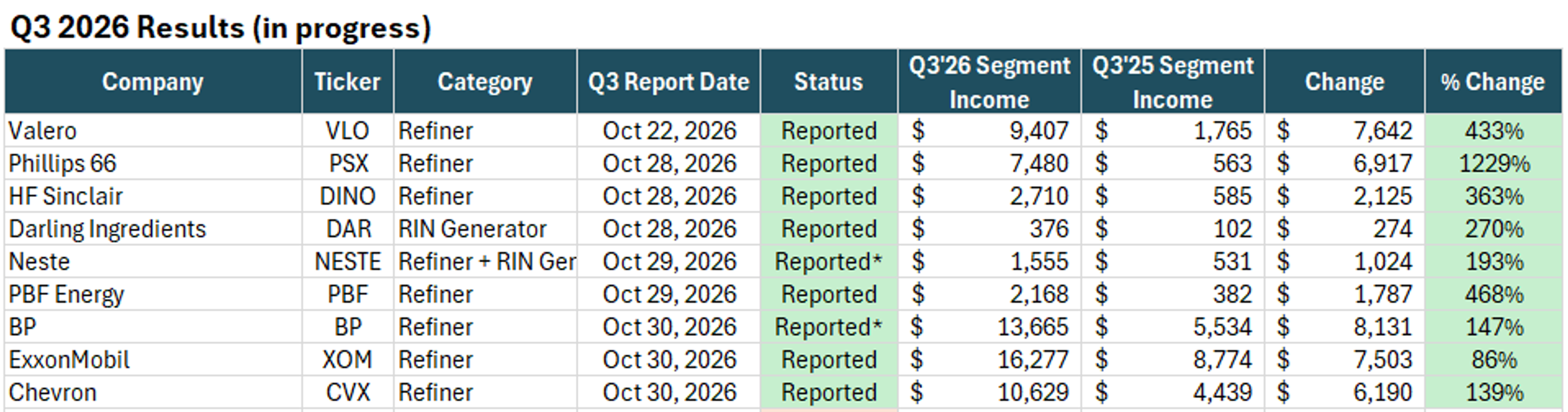
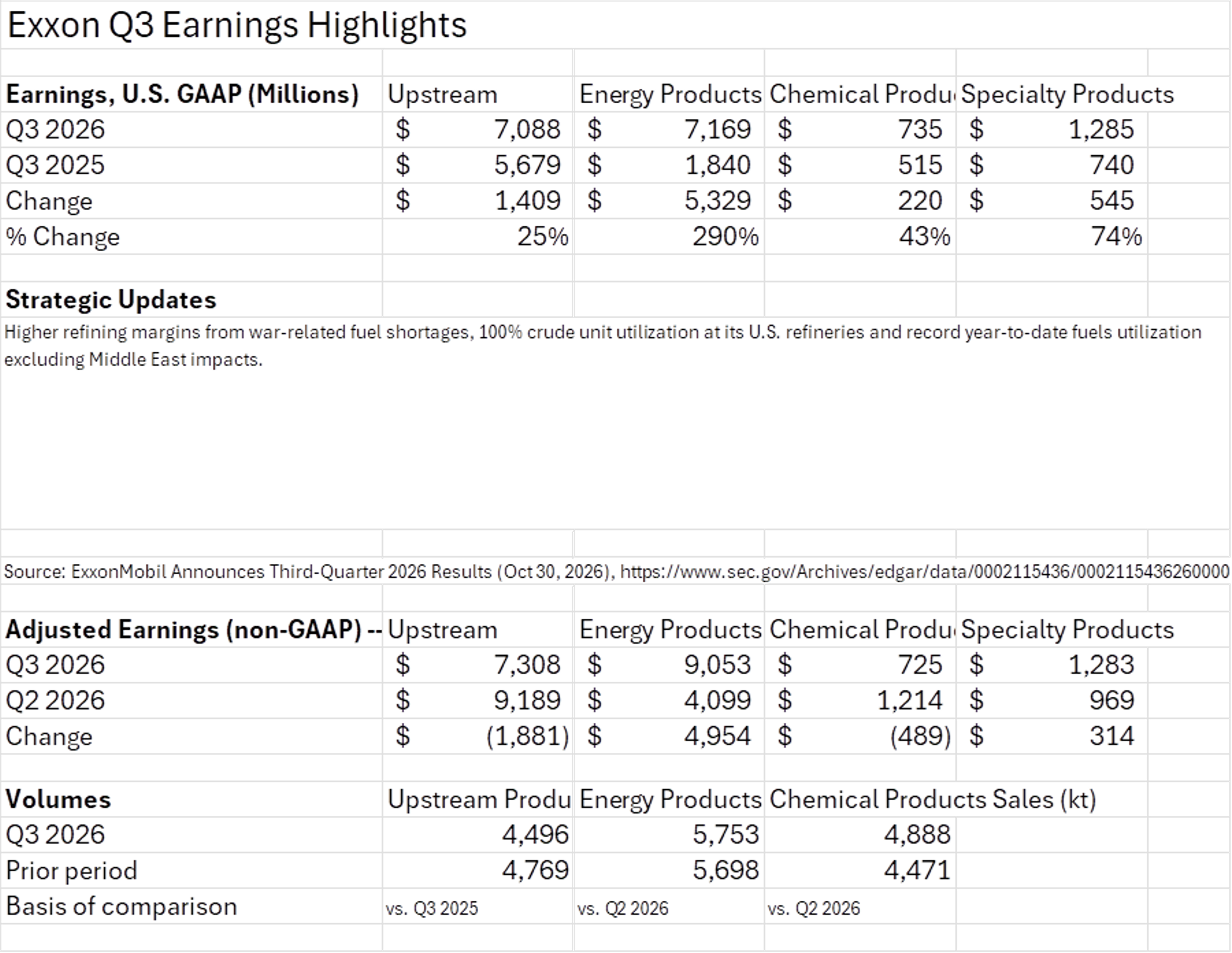
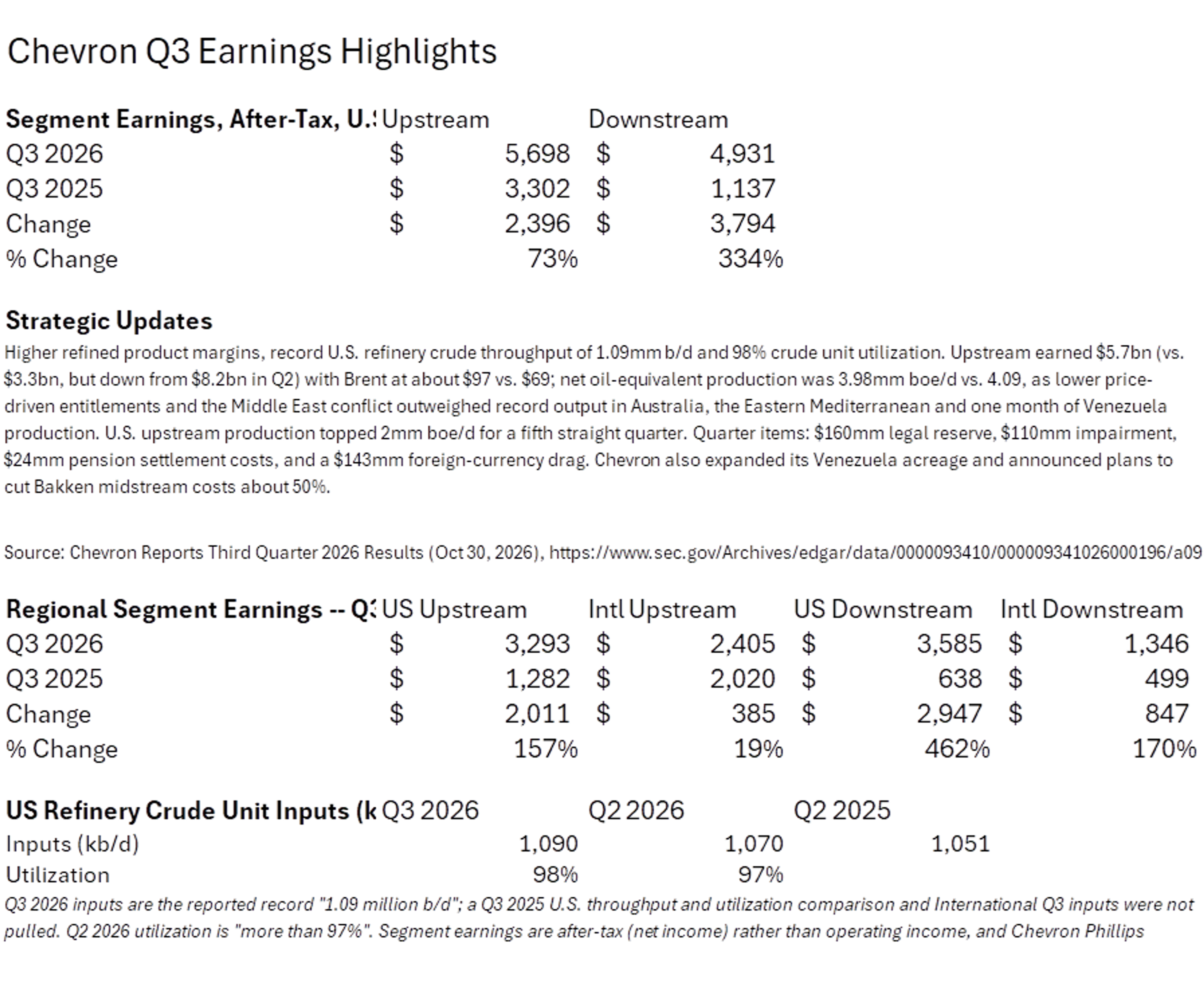
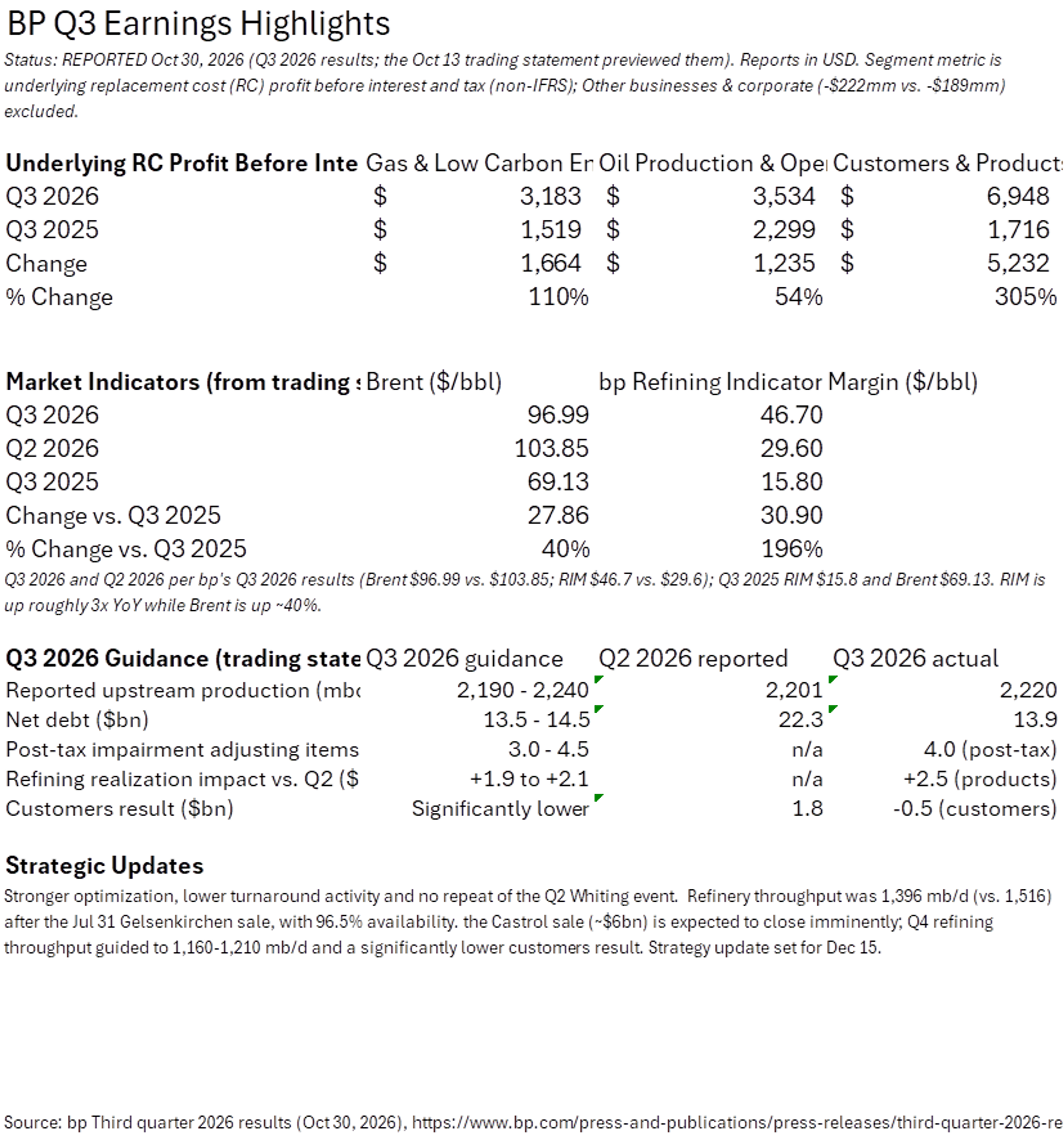
BP, Exxon and Chevron reported Q3 earnings this morning, combining for more than $40 billion in total profit.
Exxon earned more from its refineries than it did from its upstream oil and gas production for the first time in 6 years as the trend of blowout refining earnings continues. Exxon also announced plans to expand its distillate production capacity by another 100mb/day, but didn’t provide details about where or when that would happen. The company is already working on a multi-billion conversion project at its Baytown TX plant to produce more distillates and petrochemicals, and less gasoline as it sees writing on the wall about lower gasoline consumption as demand slows.
Chevron’s refineries ran at 98% of capacity during the quarter, setting a new record for both volumes and profit from those assets. The company is continuing to expand its acreage in Venezuela, but announced plans to reduce its Bakken costs by 50%.
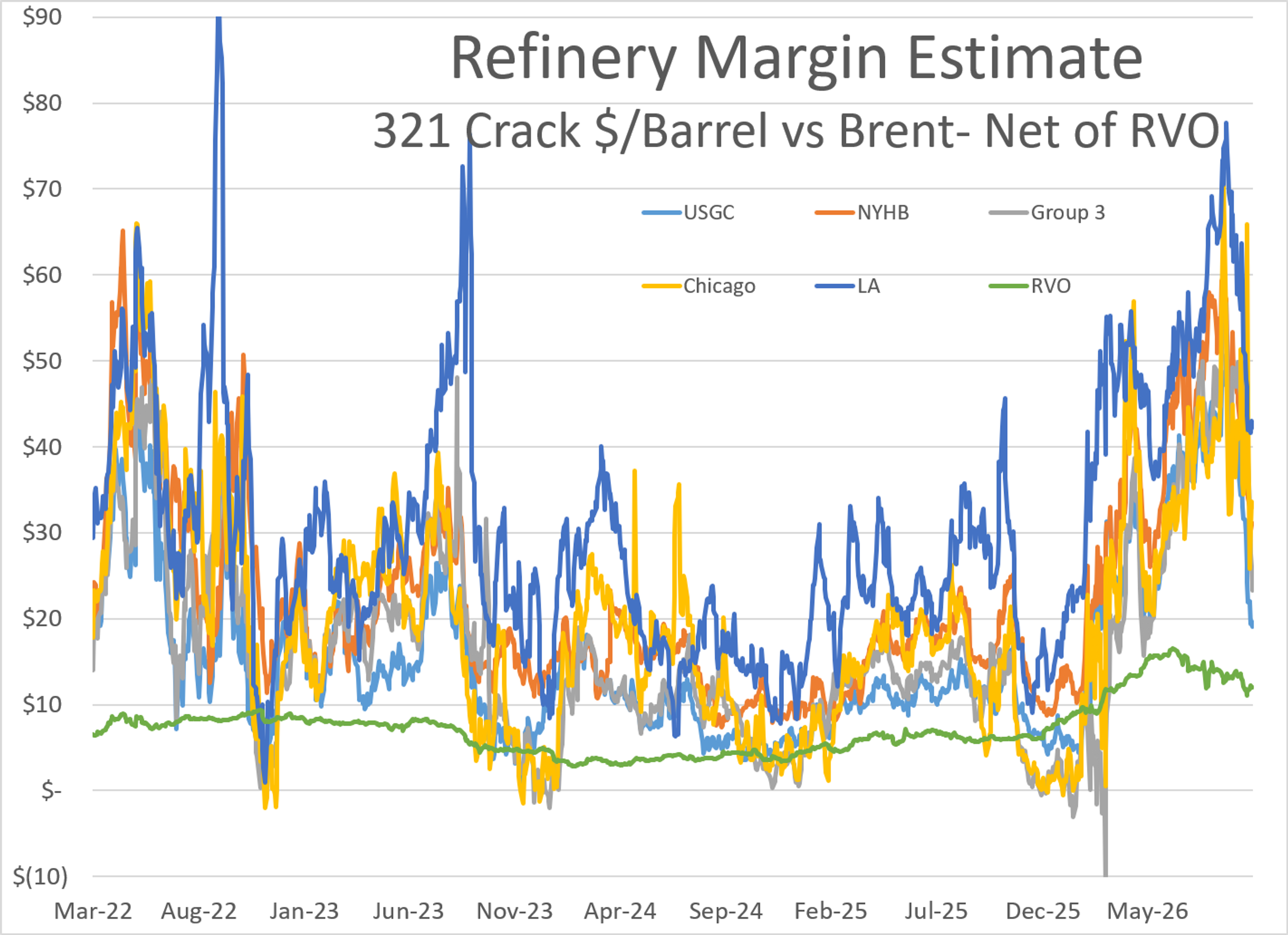
While BP had phenomenal earnings in Q3, its executives are already saying that Q4 is not nearly as strong, which is consistent with the big drop in crack spreads you can see in the chart below.

Latest Posts
Markets Weigh Middle East Diplomacy Against Persistent Fuel Tightness
Week 43 - US DOE Inventory Recap
Rising Crude, Expanding Margins, And The Evolving Global Supply Picture
Energy Markets Retreat On Diplomatic Optimism As Supply Risks Evolve
Mixed Start To October's Final Trading Week As Crude Retreats
Crude Strength, Refinery Disruptions, And Export Bottlenecks Support Fuel Prices
Social Media
News & Views
View All
Markets Weigh Middle East Diplomacy Against Persistent Fuel Tightness
Week 43 - US DOE Inventory Recap