Oil Markets Caught Between Paper Optimism And Physical Reality

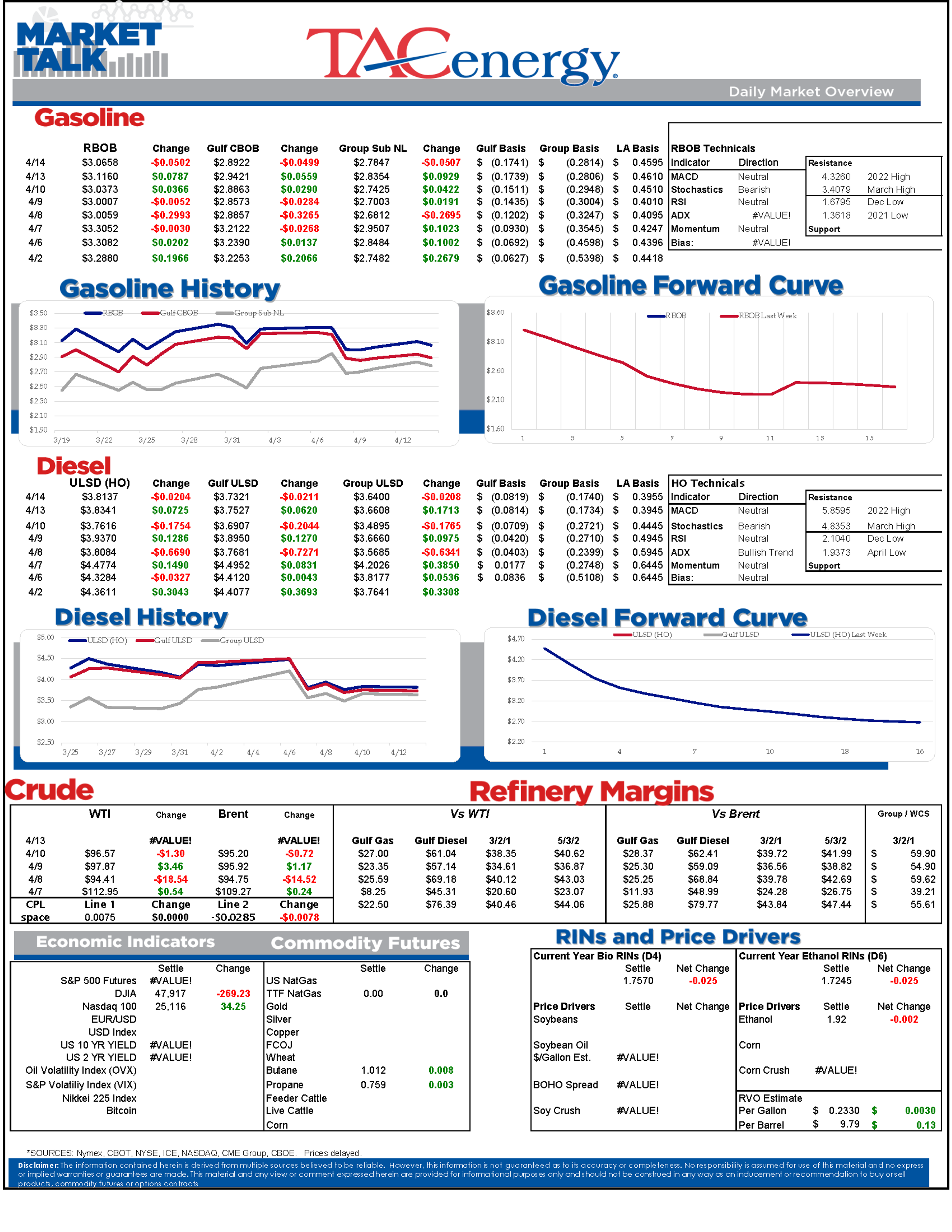
Refined products are ticking modestly lower Tuesday as optimism continues to hold in futures markets, even though physical markets continue to show signs of strain.
Conflicting reports on the status of the Strait continue to confound, with the U.S. President saying that 34 ships transited the strait Sunday (which would be the highest since the war started if true) while other monitoring sites show zero ships currently transiting after the new blockade went into effect yesterday morning. There are also conflicting reports on whether or not the U.S. and Iran may resume negotiations this week, while European countries are holding a summit Friday to discuss options to reopen the strait.
They won’t shoot us, right? There are reports that a sanctioned tanker with links to China has already tested the U.S. Blockade, exiting the strait, suggesting some shippers already see this recent shift to be less dangerous than the drone and missile attacks of the prior weeks. It’s worth noting that the U.S. blockade of Venezuela’s ports earlier in the year saw numerous cases of ships making a break for it, only to be interdicted weeks later. The volume in this situation is much higher however, making the logistics of intervention much more complex.
Bloomberg reported Monday that Saudi Arabia’s shipments to China will be cut in half, even though there were also reports that its East/West pipeline had resumed shipments at its full 7 million barrel/day capacity following a drone strike last week just after the cease fire was announced.
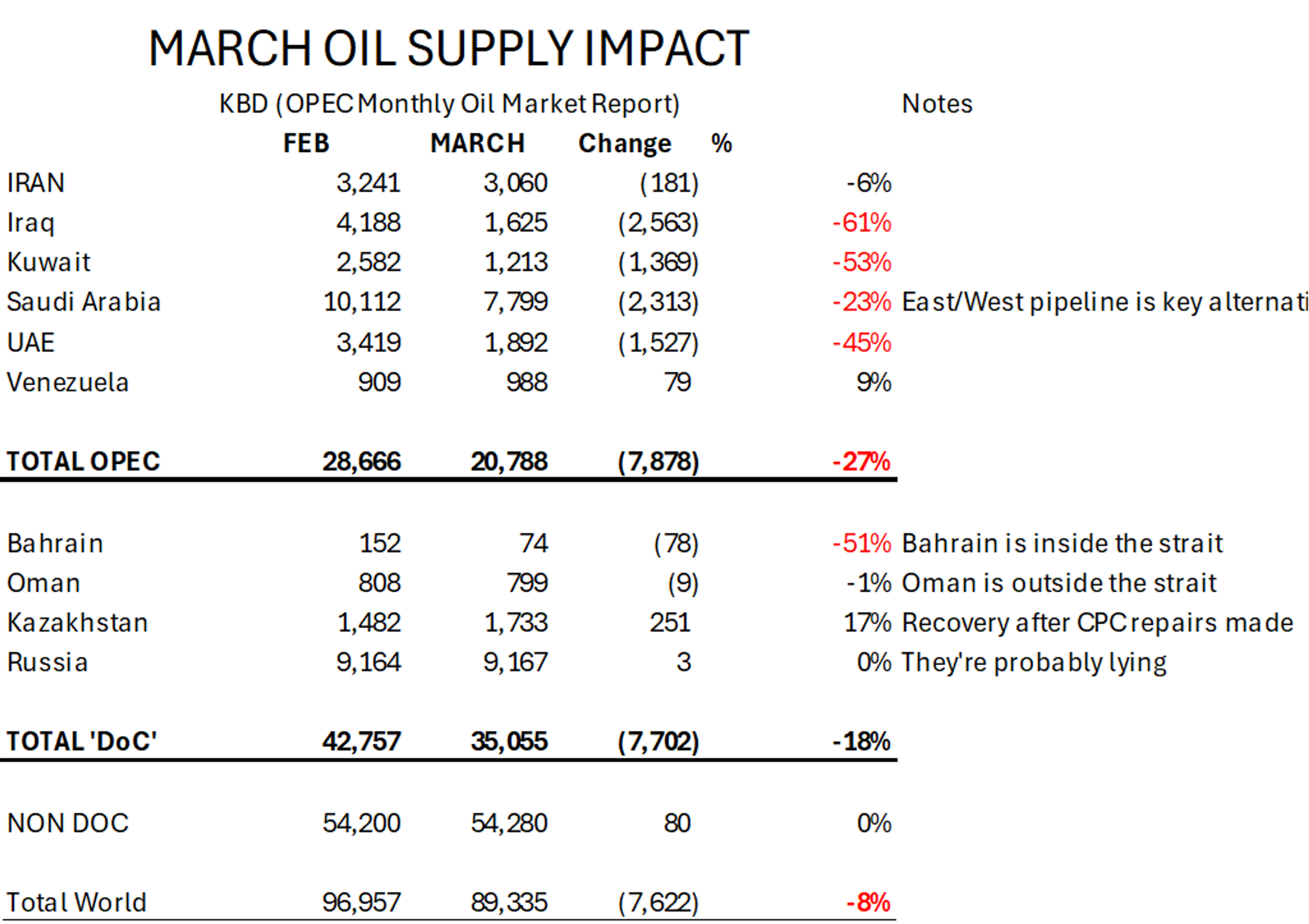
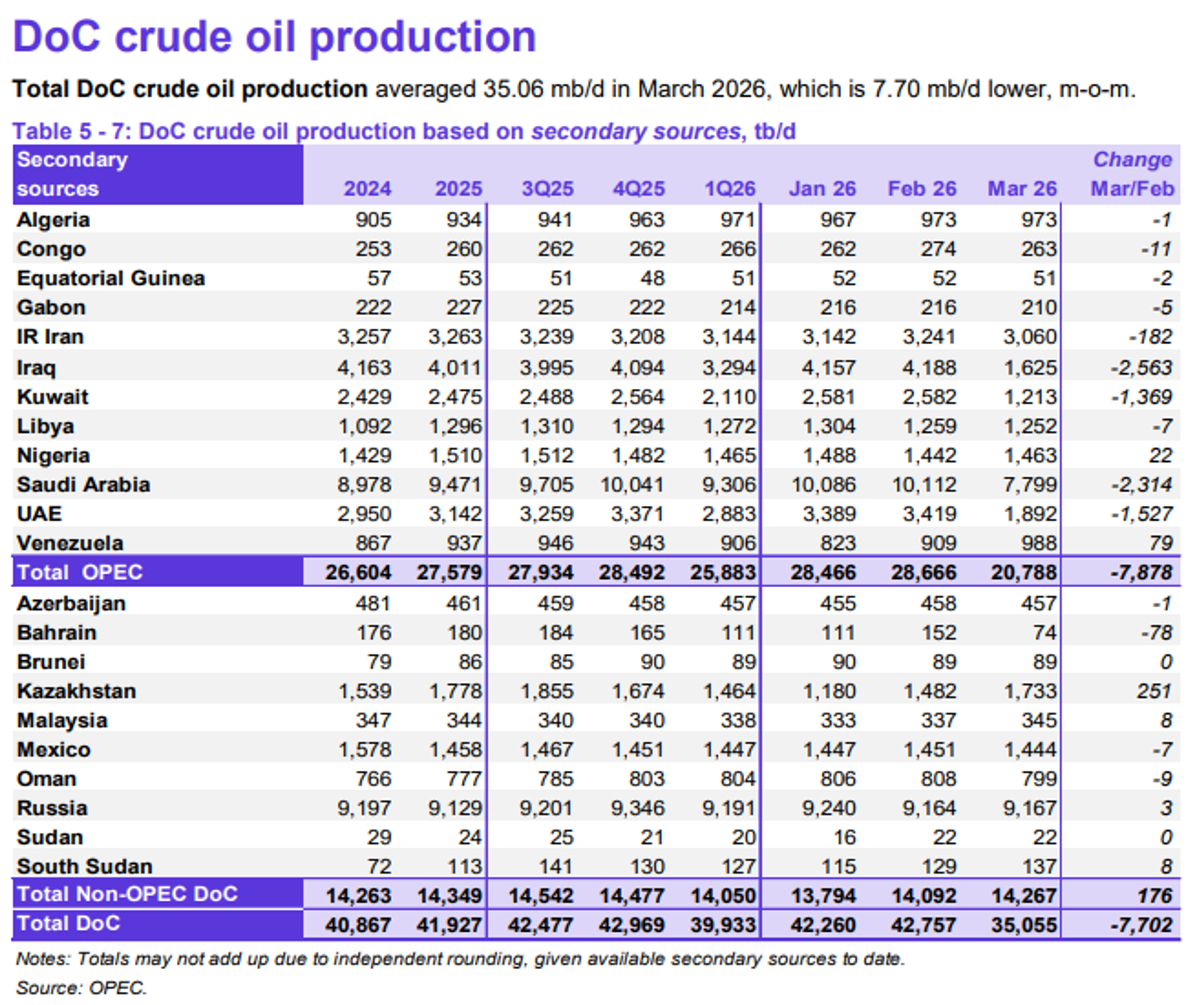
OPEC’s monthly report continued avoid mentioning the elephant in the room, with the 92 page document not once referencing a war, or the Strait of Hormuz even though output from member countries dropped by a record 7.9 million barrels/day during the month. To put that drop in perspective, 7.9 million barrels/day is equivalent to the oil demand of Japan, South Korea, and Germany, combined.
The cartel is certainly walking an awkward tightrope considering Iran is a member that’s been openly attacking other members since the war broke out. One key note considering the new U.S. Naval blockade of Iranian ports is that Iran was the only one of the Gulf nations in OPEC to not see a material decline in supplies during the month. If the new blockade has a similar impact to Iran that their blockade has had to its neighbors, we can expect somewhere around half of their output (1.5-1.6 million barrels) to be shut in in April, which would be roughly 90% of their current exported volumes.
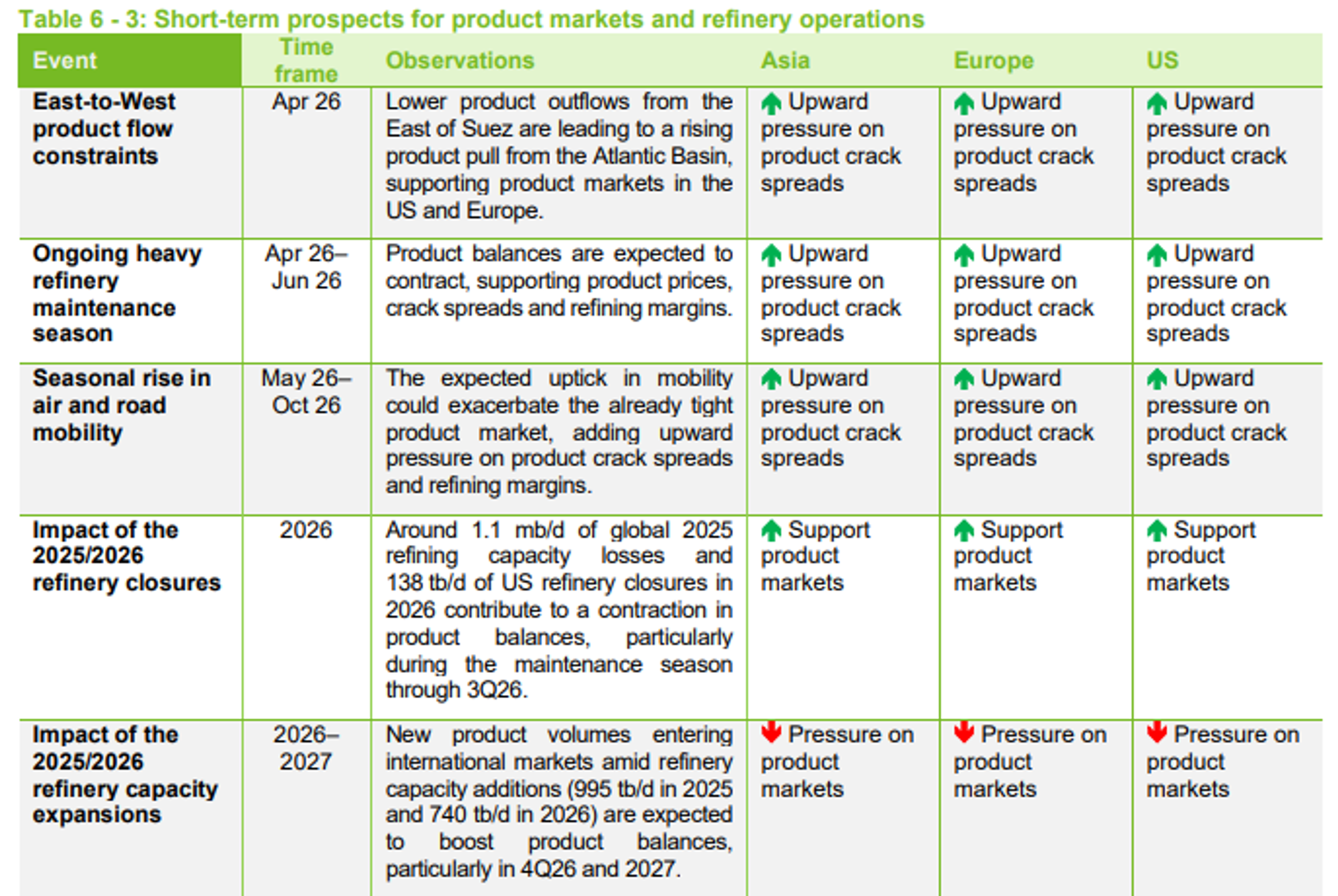
The report certainly referenced the war’s impact indirectly by highlighted the surge in refining margins and shipping rates in addition to the record-setting drop in output, but held its forecast for economic growth and oil demand steady for the year despite those shocks.
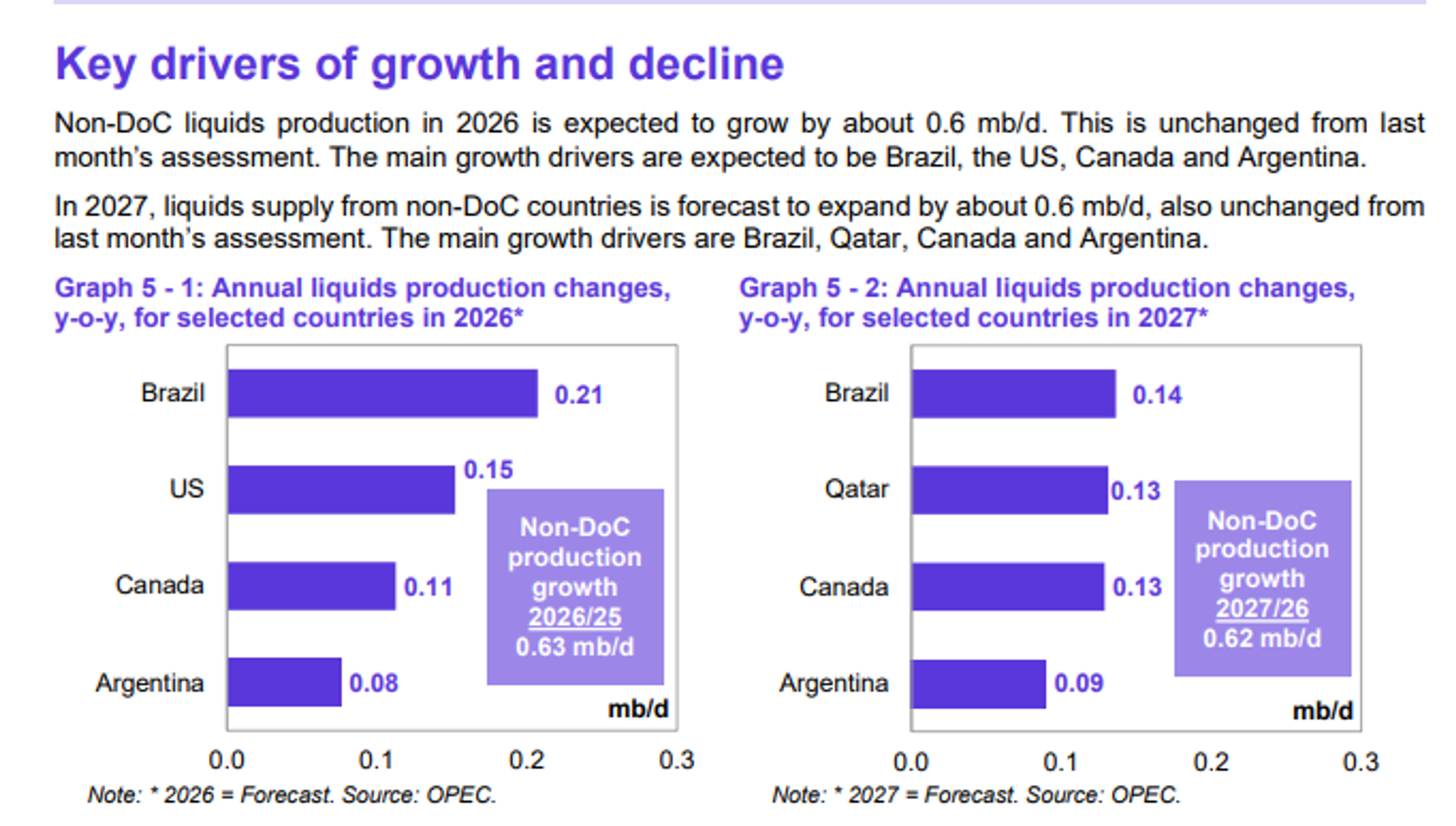
OPEC’s rivals at the IEA continue to take the exact opposite approach, highlighting the war early and often in their monthly oil market report. The agency (who was founded to counteract OPEC’s influence in 1974 after the Arab oil embargo) expects that oil demand will plummet by 1.5 million barrels/day in the 2nd quarter (the most since the COVID lockdowns) because of the war, which will wipe out the growth for the entire year they were forecasting just 1 month ago. The IEA puts the lost output at 10.1 million barrels/day for March, with OPEC & Friends accounting for 9.4 million barrels/day of that estimate, compared to the cartel’s 7.7 million barrel self-reported figure. The report also suggests that even if the war were to end today, the recovery may take 6 months or more.
Latest Posts
Week 41 - US DOE Inventory Recap
Energy Markets Juggle Supply Risks, Inflation Pressures, And Geopolitical Conflict
Crude Climbs For A Fifth Day While Global Fuel Supplies Remain Under Pressure
Refining Margins, Tanker Attacks, And OPEC Growth Shape Energy Outlook
Oil Rises As Political Chaos And Supply Risks Shake Markets
Volatility Returns As Traders Weigh Storm Risk And Global Supply Threats
Social Media
News & Views
View All
Week 41 - US DOE Inventory Recap
Energy Markets Juggle Supply Risks, Inflation Pressures, And Geopolitical Conflict