Oil Markets Search For Direction Amid Uncertainty Over Iran Talks And Supply Risks

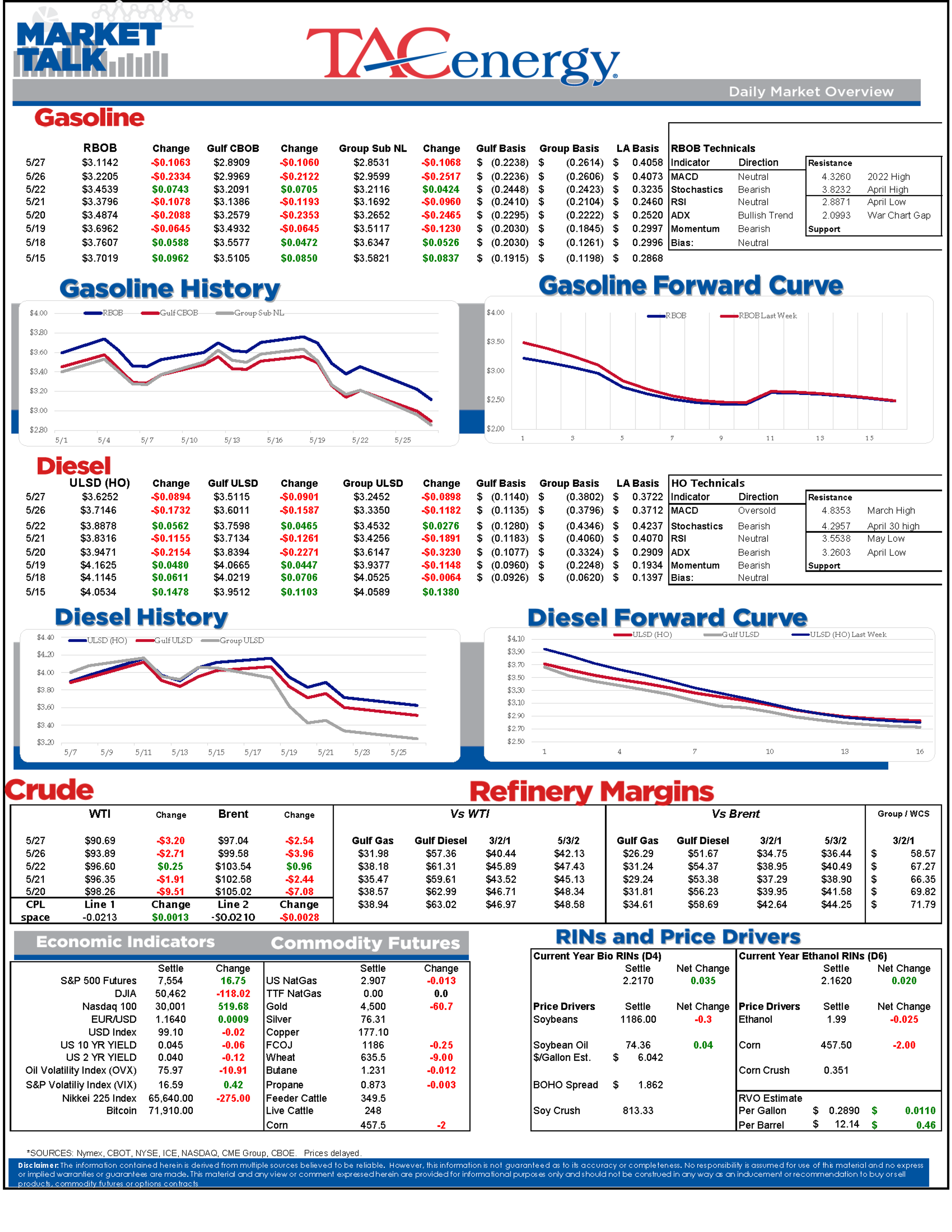
Energy futures are searching for footing Wednesday morning after Tuesday's drop left WTI and Brent trading around five-week lows. Prompt month WTI is hovering just over $88 per barrel and Brent is trading around $95 as traders try to figure out whether yesterday's selloff was the start of something bigger or just another stop on the headline rollercoaster we've been riding since late February.
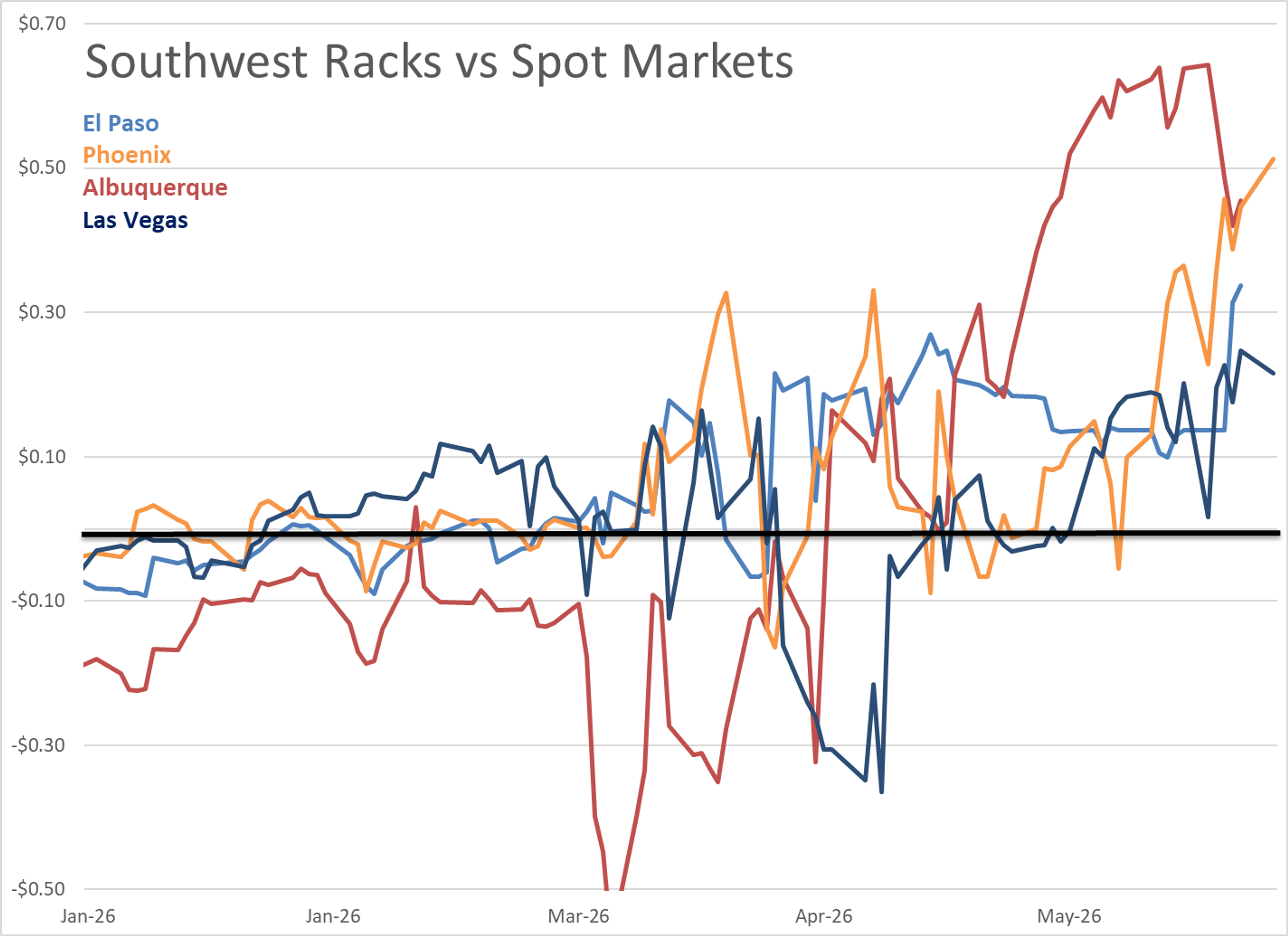
RBOB and ULSD are following WTI's lead, albeit with less conviction. Any meaningful relief at the rack is going to need futures to hold (or more ideally extend) yesterday's losses for at least another week. Distillate cracks remain elevated, particularly in the southwestern U.S., where the El Paso/Phoenix/Vegas/Albuquerque rack premiums show no sign of easing.
The big event on today's calendar was supposed to be a rare Cabinet meeting at Camp David, which the White House moved back to its usual venue late Tuesday, citing "possible bad weather." Whether the weather was the real reason or whether someone in the building decided a heavily-photographed cabinet huddle at the Maryland retreat sent the wrong signal during fragile negotiations, the meeting will now happen at the White House. Either way, oil markets are waiting to see what comes out of it, if anything. Secretary of State Rubio told reporters Tuesday that any deal could still take "several more days" to finalize, with sticking points coming down to disagreements "over a word, a sentence", not very comforting language for anyone who's been watching this thing get re-negotiated every 72 hours for two months.
Reports indicate Iran is asking for the release of roughly $24 billion in frozen assets as part of a 14-point framework, with about $12 billion potentially flowing in an initial phase. The President added a fresh wrinkle Monday by suggesting via Truth Social that several Middle Eastern nations should "mandatorily" sign the Abraham Accords as part of the package, a demand Pakistan has already rejected, and one that didn't appear to be on Iran's wishlist either.
In the Gulf, Iran's IRGC claimed 25 vessels passed through the Strait of Hormuz over the past 24 hours with their security coordination. That's down from the 35 they claimed Sunday, and still roughly 100 ships/day shy of pre-war norms. As we've noted in previously, with ships running dark and electronic jamming continuing, you can pick whatever number you want to believe, but tracking sites continue to suggest the actual count is well below Tehran's claims. Meanwhile, U.S. CENTCOM's "self-defense" strikes against Iranian mine-laying boats and missile sites continue overnight, which is the part of the story that keeps the Brent-WTI spread wider than the fundamentals alone would justify.
The American Petroleum Institute will publish its weekly inventory estimates this afternoon at its usual time. The DOE's Weekly Petroleum Status Report is pushed to Thursday at 11AM CDT due to the Monday holiday. Analysts’ consensus is calling for a modest crude draw and continued draws on both gasoline and distillates, which would extend the multi-week trend of inventories falling below their respective five-year averages.
Latest Posts
Volatility Returns As Traders Weigh Storm Risk And Global Supply Threats
Crude, Diesel, And Storm Risks: Key Drivers Behind Today's Rally
Refinery Outages, Storm Risks, And Export Constraints Lift Distillates
Week 40 - US DOE Inventory Recap
Diesel Leads Energy Markets Lower Despite Mounting Geopolitical Risks
Energy Markets Mixed As Diesel Rallies And Supply Concerns Persist
Social Media
News & Views
View All
Volatility Returns As Traders Weigh Storm Risk And Global Supply Threats
Crude, Diesel, And Storm Risks: Key Drivers Behind Today's Rally