Middle East Tensions And Russian Export Ban Rock Energy Markets

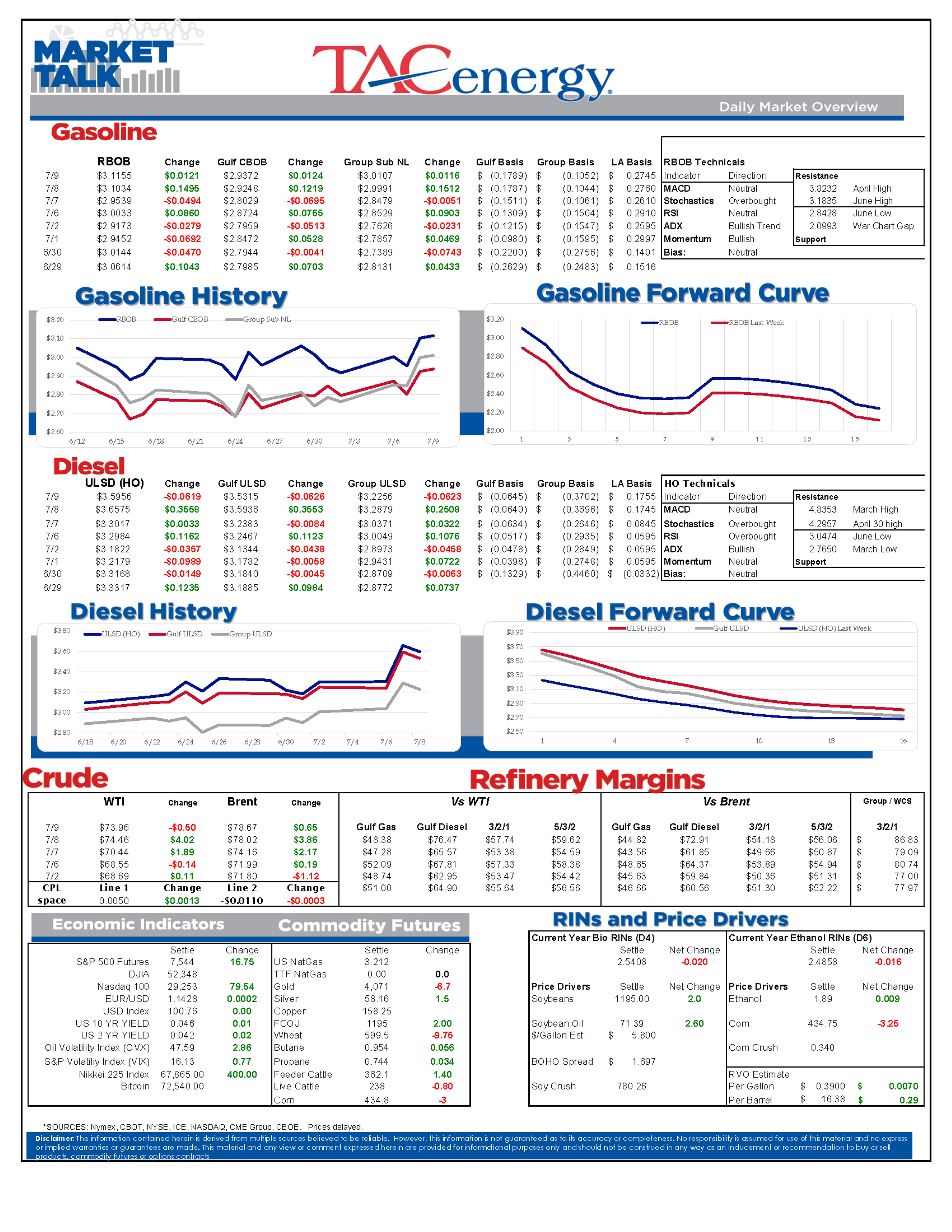
War on? Energy markets had their biggest daily rally in months Wednesday as the U.S. and Iran escalated their attacks across the region. The market is mixed so far this morning with relatively modest moves as both the U.S. and Israel are hinting that they don’t expect “All out” war to continue, and so far the Israelis have not re-joined the conflict.
Tanker traffic through the Strait of Hormuz is reportedly stopped again while the fighting flares up, with a Bloomberg report saying only 1 Iranian-linked vessel was making a run for it overnight while the Oman route was empty. That one Iranian ship will make for an interesting test of the latest flare up as its still unclear whether or not the U.S. will reinstate its blockade on Iranian ports.
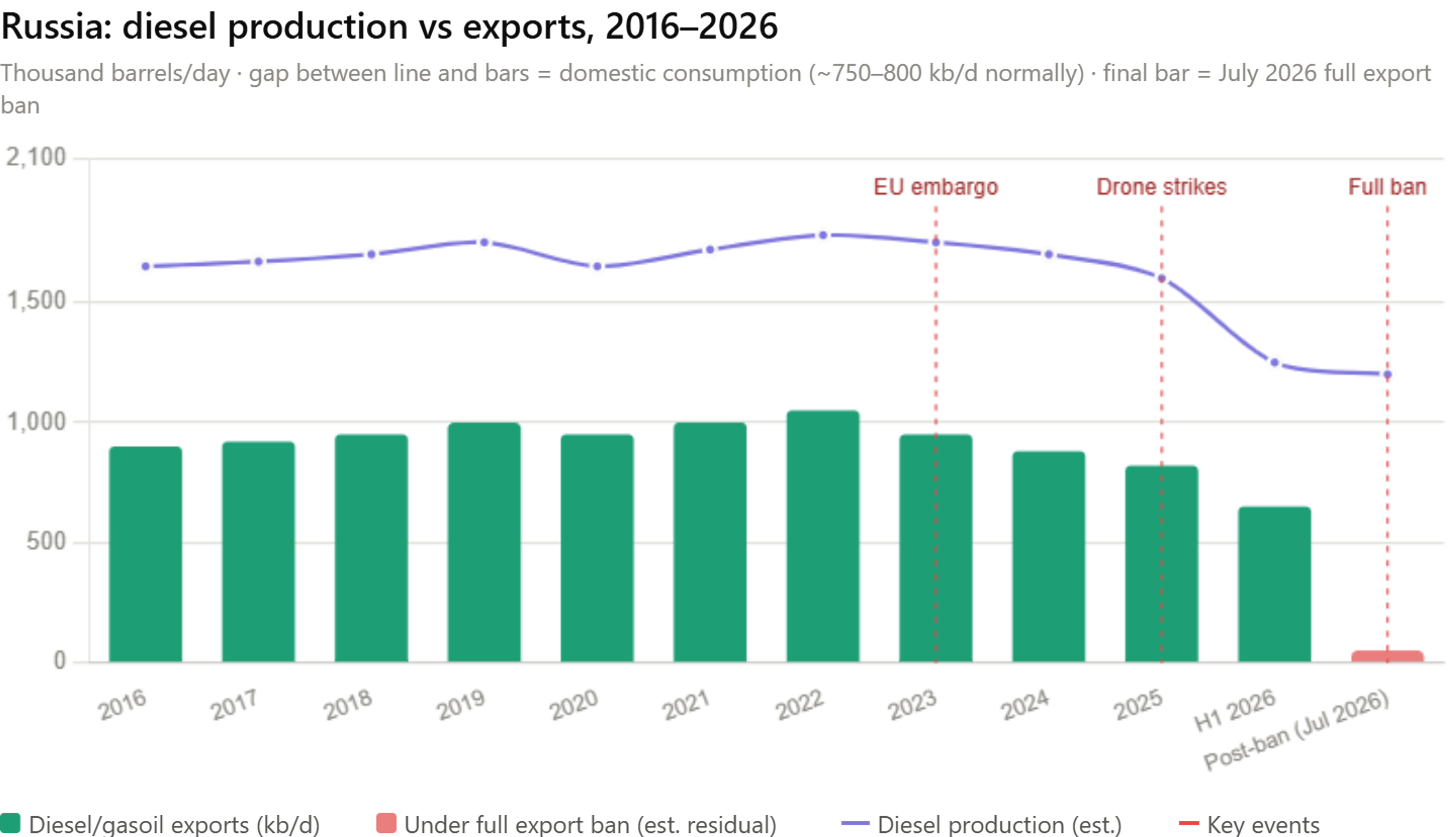
Diesel prices far outpaced the rest of the energy complex after Russia announced it was banning diesel exports Wednesday, after Ukraine’s increased frequency, accuracy and range of attacks has pummeled the country’s refining sector and created a domestic fuel crisis. Prior to the war, Russia was the world’s 2nd largest diesel exporter at around 1 million barrels/day, which accounted for nearly 20% of seaborne distillate globally. The ban on exports won’t mean a full million barrels/day will be gone from the market as the country’s exports have already dropped notably due to EU & U.S. sanctions, and the impact of previous attacks, but to see Russia suddenly needing to buy refined fuel from countries like India and China is certainly a notable role reversal that will serve to keep the global market tighter than normal as long as it lasts.
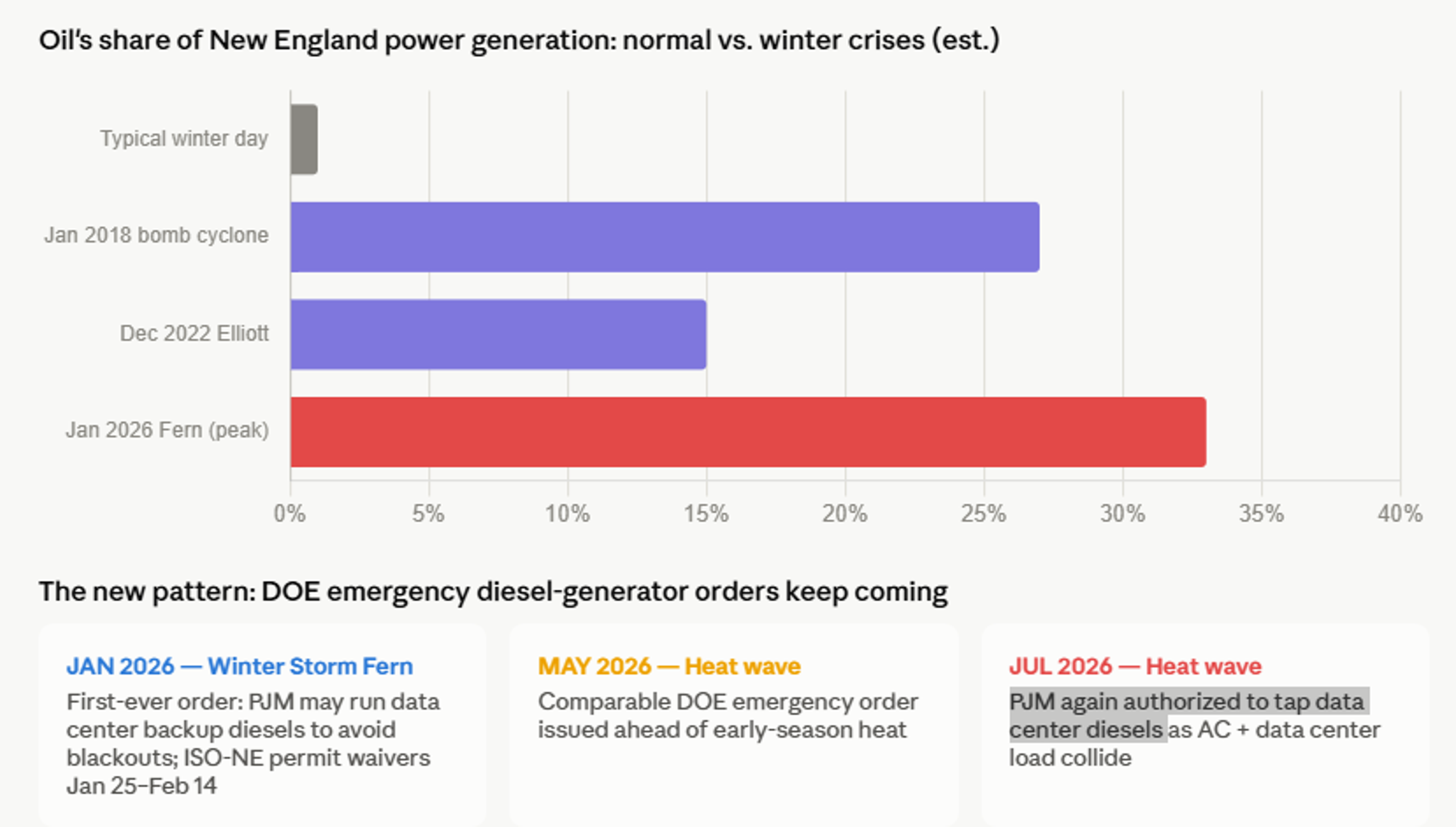
Last week the DOE authorized grid operator PJM to push users like data centers to power facilities with backup (diesel) generators (bypassing pollution controls to do so) during the heavy demand load caused by the heatwave. It’s so far unclear how much diesel was or is being used to supplement the power grid, but this issue is expected to continue growing – particularly anytime we see extreme heat or cold – as the rapid build out of data centers is often outpacing the ability of traditional power sources. Europe has also experiencing a major heatwave, and given their relatively weak supply options on natural gas, the supplemental pull on diesel is likely to be even greater.
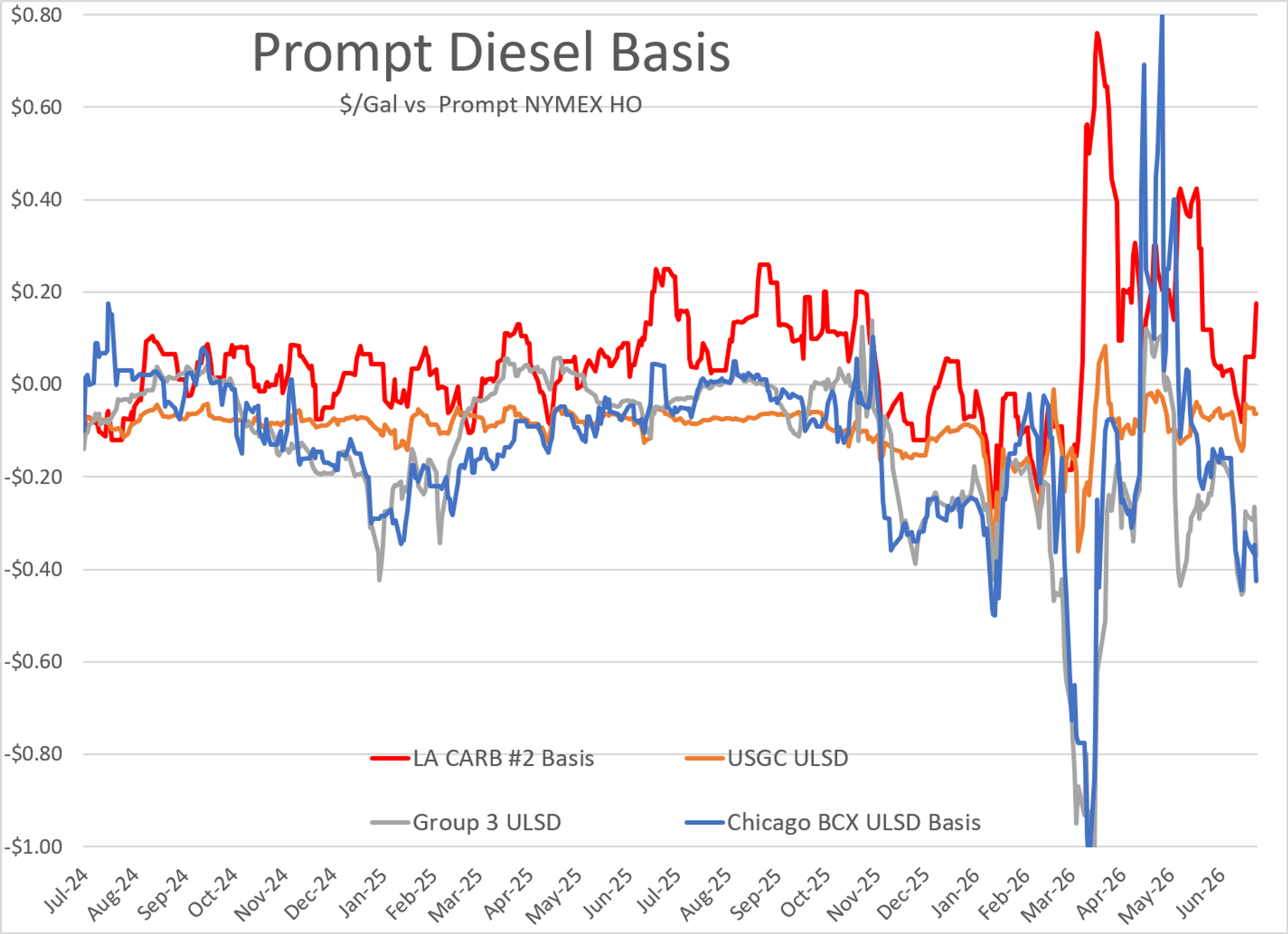
Los Angeles Diesel basis values continued climbing Wednesday following an unplanned issue at Marathon’s 365mb/day LA-area refinery. It’s still unclear what the cause and effects were of that upset, but the flaring event has ended. Chevron reported a level 1 liquid spill at its 240mb/day Richmond (SF Bay Area) refinery Wednesday afternoon, but it doesn’t appear that event is impacting the facilities operations.
Human analysis of the DOE’s weekly report below. Charts and AI analysis are attached.
Commercial crude stocks broke a 10-week streak of draws with imports increasing while export activity fell back to a pre-war range. However, the SPR releases continue to hit fresh seasonal lows, holding total U.S. crude inventories at 43-year lows. PADD 1 is sitting just above average, thanks to the slowdown in runs at Monroe, but every other region’s storage levels are running below their 5-year range with PADD 2 sitting at a seasonal 12-year low. U.S. Oil production is back up to all-time highs of 13.86 million barrels/day, matching the October 2025 peak, with expectations that production will continue increasing thanks to the recent tick higher in drilling and fracking activity.
Refinery runs pulled back last week with increases in PADDs 1 & 2 being overshadowed by declines in PADDs 3-5. PADD 1 bounced back with Monroe Trainer returning to about 70% of capacity while PADD 2’s small increase puts run rates within 40 mb/day of the all-time high set 3 weeks prior. PADD 5 run rates fell back below the 5-year range but the slowdowns in PADDs 3 & 4 weren’t enough to move from seasonal highs. Overall U.S. runs are holding at the high end of the chart and utilization is at an 8-year seasonal high.
Diesel stocks declined everywhere outside of PADD 2 as a surge in export activity coincided with a surge in demand, both moving from below average to seasonal highs week over week. Diesel production continues at 5-year highs, but elevated exports have held stocks below average across the country with PADDs 1, 3, & 4 sitting at seasonal lows.
Gasoline stocks also declined everywhere outside of PADD 2, but because imports dropped to a 13-year seasonal low rather than a pop in exports or demand. Inventories in PADDs 1 & 5 are at the bottom of their 5-year ranges while PADDs 2 & 3 hold seasonal lows, with PADD 3 slipping to a floor not seen since 2015. PADD 4 is the lone above average holdout but makes up less than 5% of total U.S. stocks, so its healthier supply position doesn’t have much impact on the country’s seasonal 14-year low storage levels.
Jet fuel stocks slipped a bit with demand jumping to its second highest mark of the year. Inventories in PADDs 3 & 5 are well above normal ranges and helping keep total U.S. levels at seasonal highs despite last week’s decline.

Latest Posts
Refinery Outages, Storm Risks, And Export Constraints Lift Distillates
Week 40 - US DOE Inventory Recap
Diesel Leads Energy Markets Lower Despite Mounting Geopolitical Risks
Energy Markets Mixed As Diesel Rallies And Supply Concerns Persist
Supply Disruptions Persist As Markets Focus Elsewhere
Geopolitics, Diesel Shortages, And Refinery Cuts Shape Energy Markets
Social Media
News & Views
View All
Refinery Outages, Storm Risks, And Export Constraints Lift Distillates
Week 40 - US DOE Inventory Recap