Gluts, Draws, And Disruptions: A Busy Start To July Energy Markets

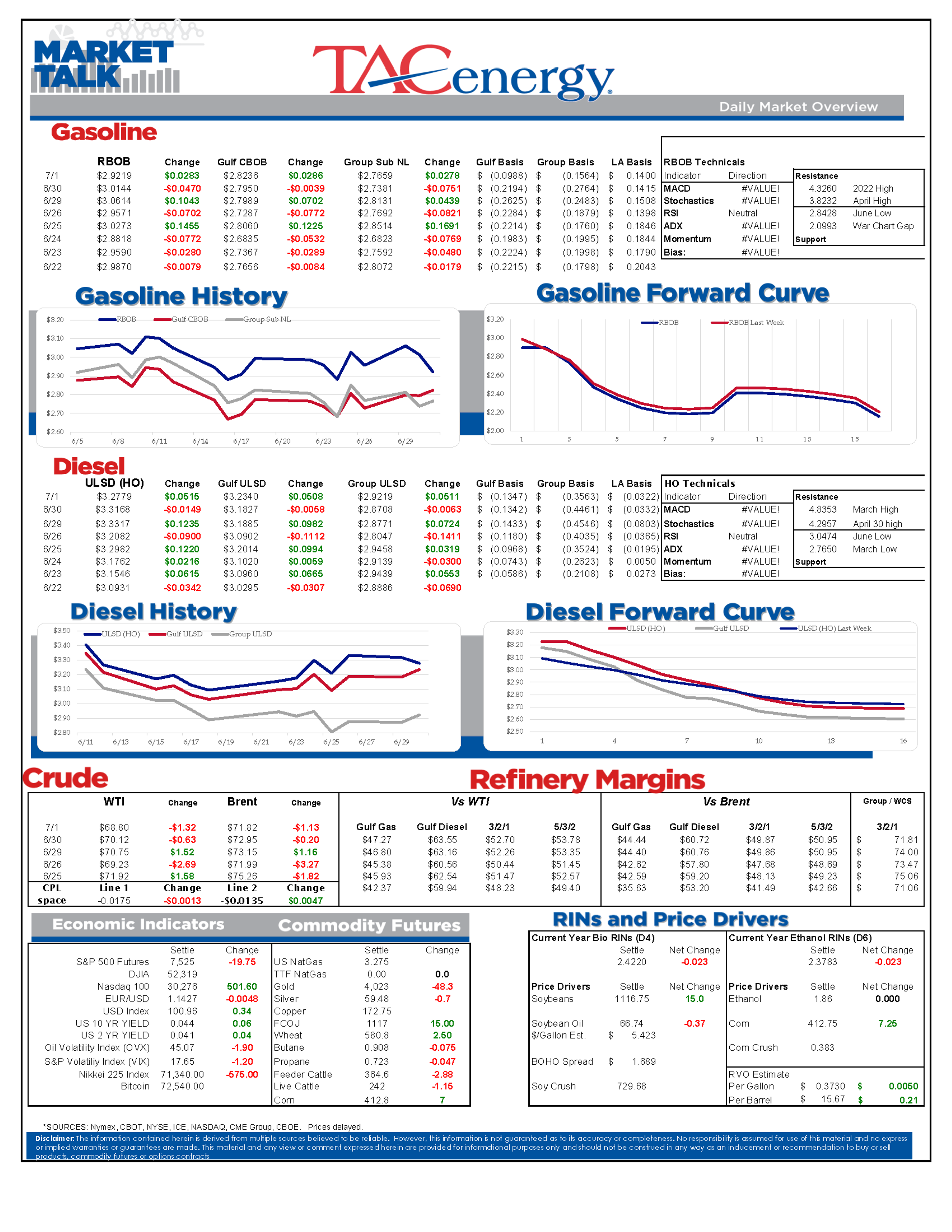
July trading is off to a mixed start for energy markets with oil prices ticking lower, while diesel futures are pulling products higher trading up nearly 8 cents overnight and by about a nickel heading as we approach 8am central. RBOB gasoline is seeing modest gains of just under 3 cents for the newly prompt August contract.
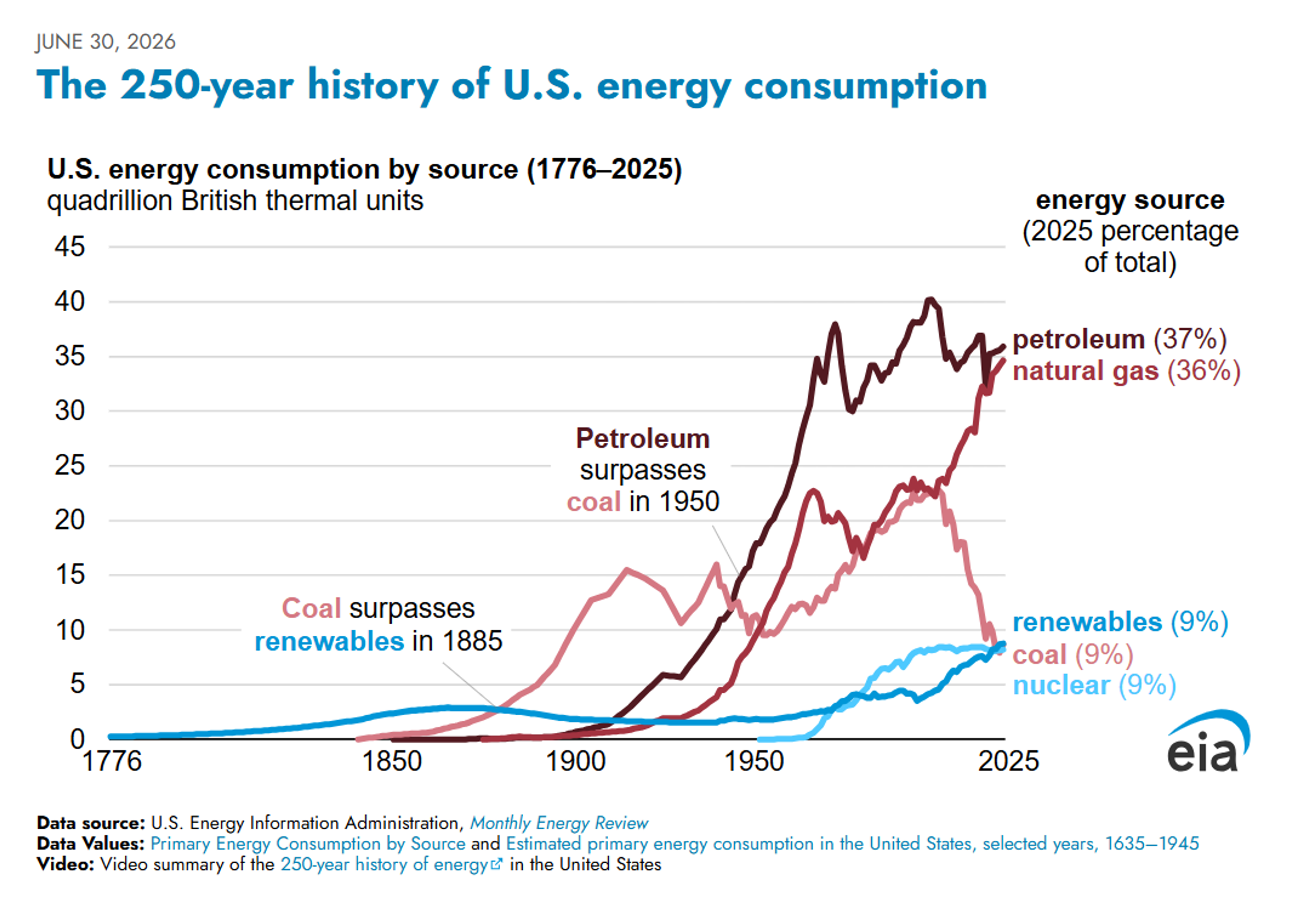
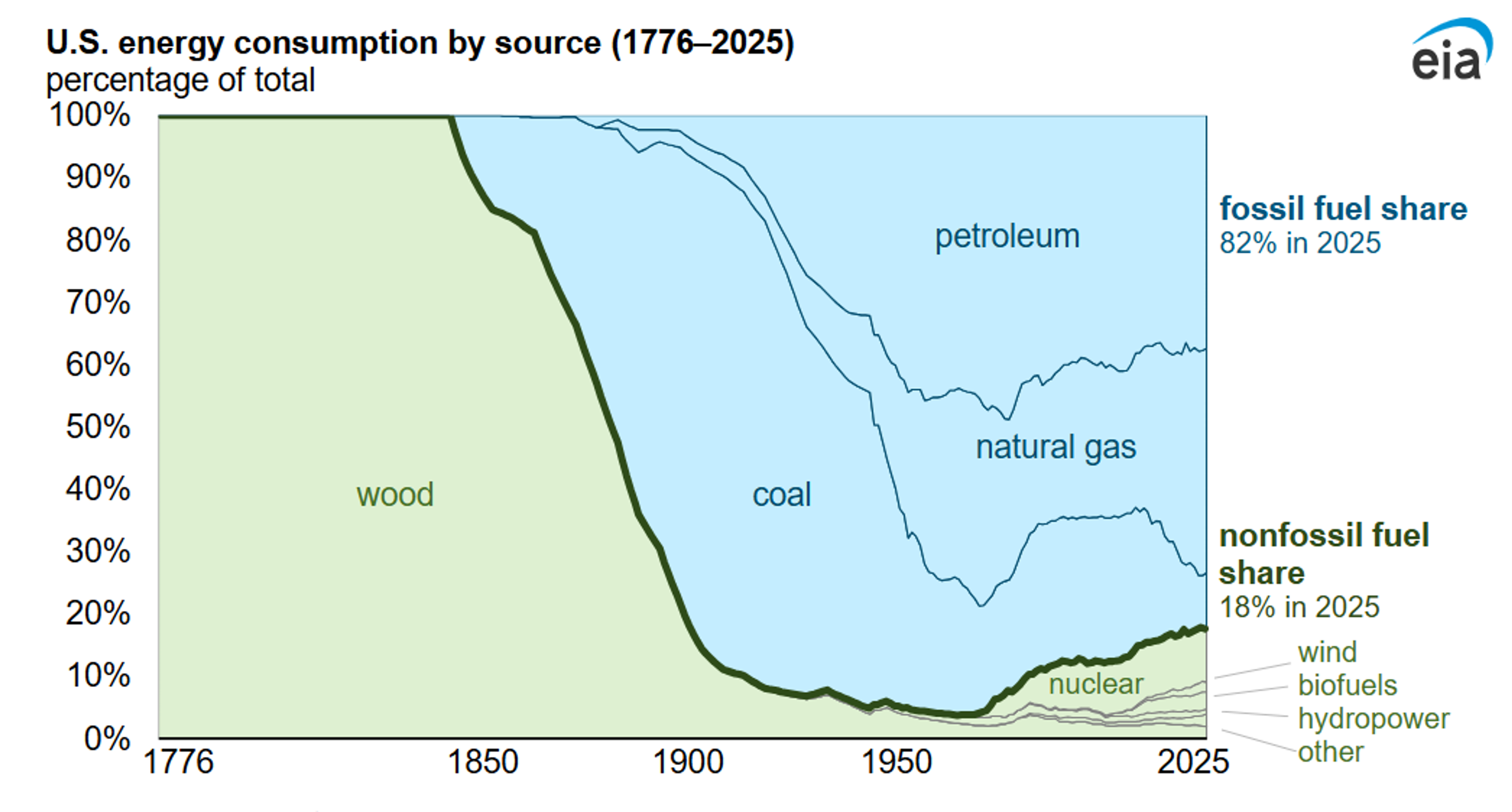
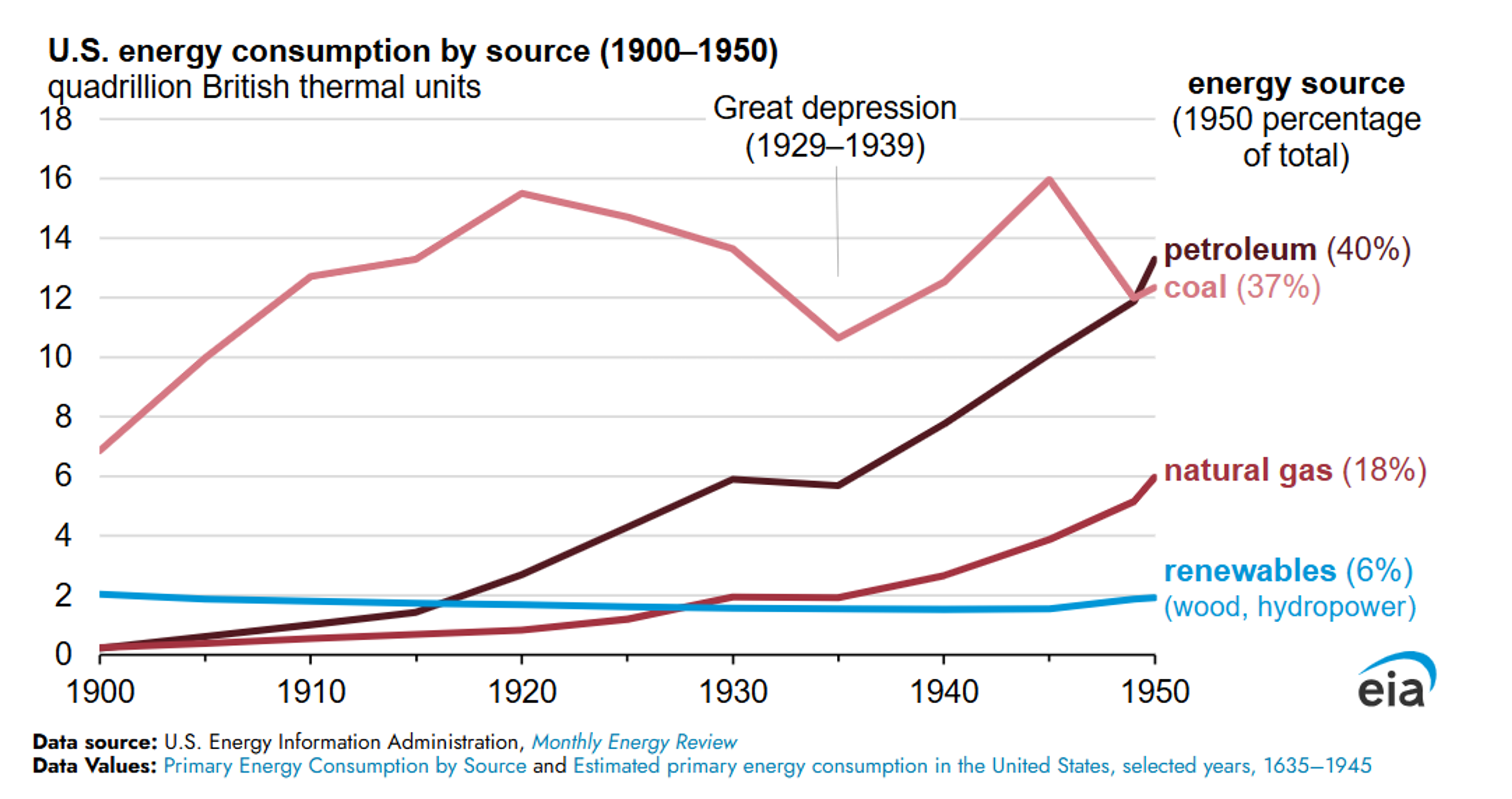
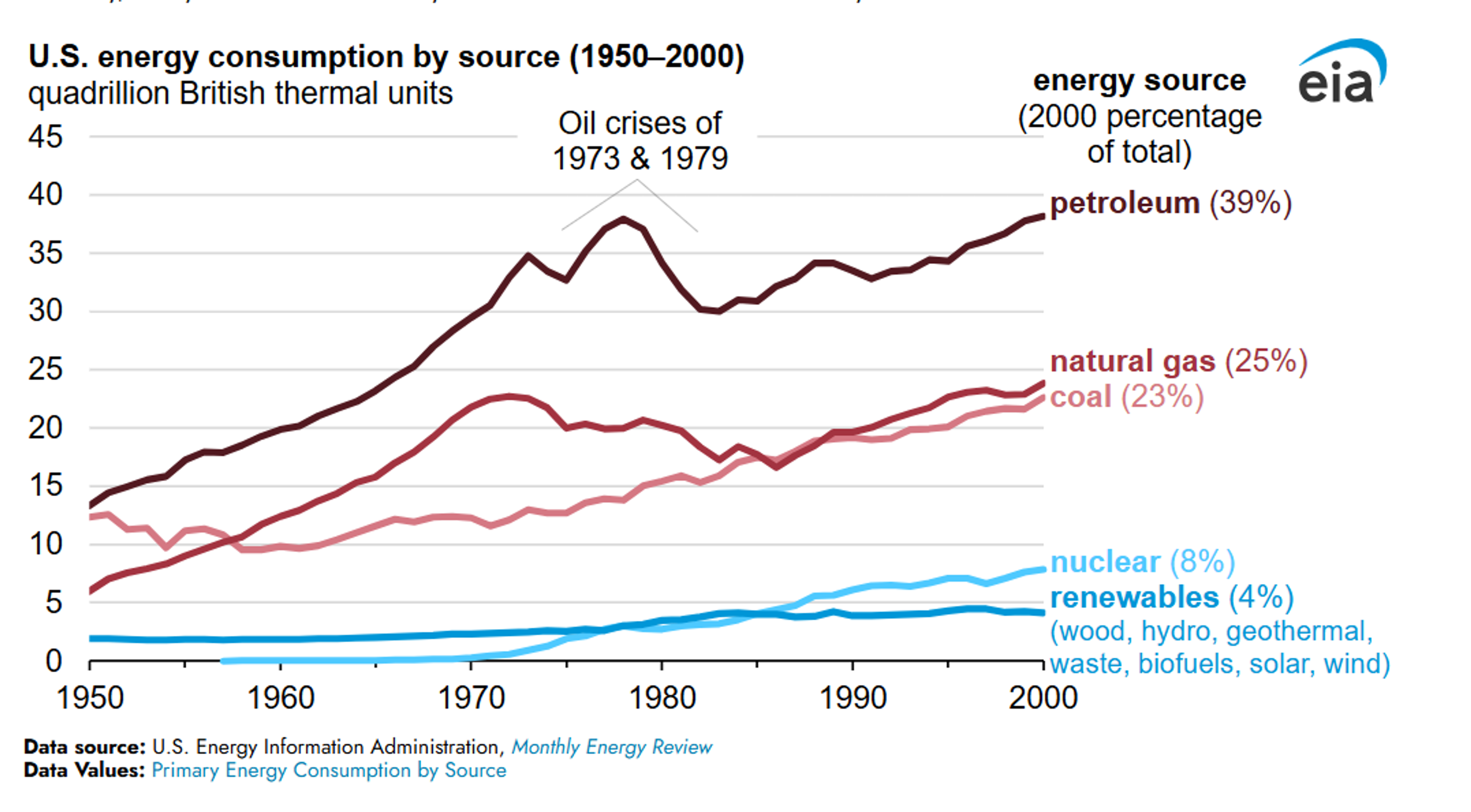
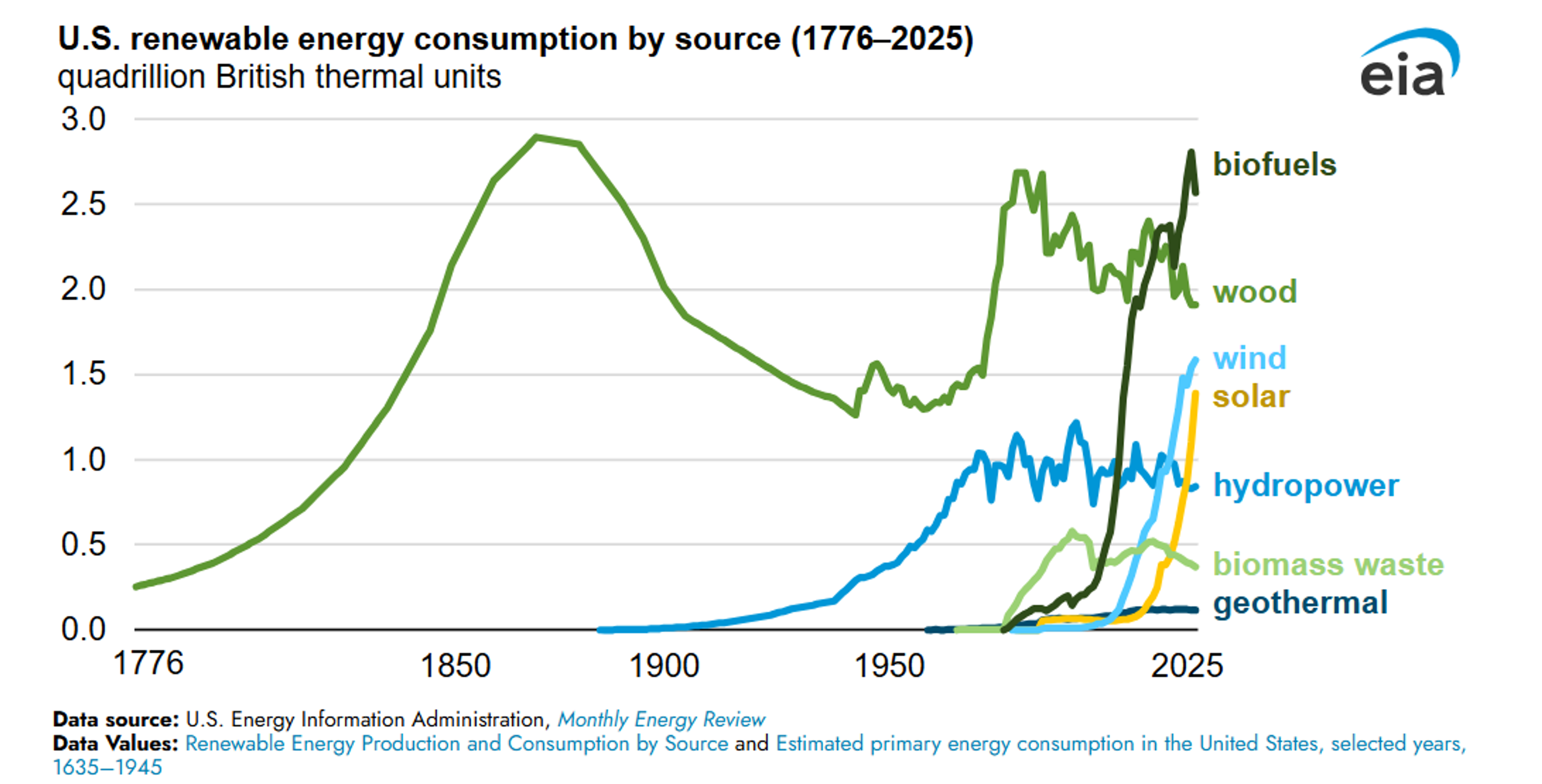
It’s a busy week in the U.S. as many try to cram 5 days of work into 4 days and fuel suppliers try to meet the pre-holiday demand rush. Reminder that Friday the 3rd is the federal holiday this year so banks will be closed, and spot markets won’t be assessed, but futures will trade in an abbreviated session. The EIA is celebrating the 250th birthday of the U.S. with an interesting look at how our energy consumption has changed during that time.
Reuters reported Tuesday that the UAE exported a record amount of crude oil in June as the country found work arounds to get ships out of the Strait, and was no longer restricted by its OPEC quota. Similar reports of a sudden “glut” of oil as tanker traffic resumes (albeit still well below pre-war levels) and sanctions on Iran’s oil are lifted certainly help explain the return to pre-war levels for oil futures, but there are still plenty of reasons to be skeptical that the supply pace can continue as ships return to more normal patterns and the future of passage through the strait is still very much up for debate.
Meanwhile, CNBC is reporting that the disruption to natural gas supplies may continue for several months after QatarEnergy was forced to extend its force majeure caused by damage to the world’s largest export facility during the war.
The API reported a 6 million barrel draw in U.S. commercial crude oil stocks last week, in addition to another 5.5 million barrels pulled from the SPR for the week. The industry group estimated a draw in gasoline inventories of 2.1 million barrels, while diesel stocks were said to increase by 2.9 million barrels. The DOE’s weekly update is due out at its normal 9:30 eastern time.
Energy News Today is reporting that Monroe Energy will be restarting most units at its 190mb/day Trainer PA refinery but the FCC unit damaged in a fire during a restart attempt last week may need 8 weeks for repairs, which will limit the total operating rates at the facility to roughly 75%.
Exxon reported a flaring event at its Beaumont TX chemical plant Monday that lasted 8 hours, but operations at its adjacent 630mb/day refinery were not impacted.
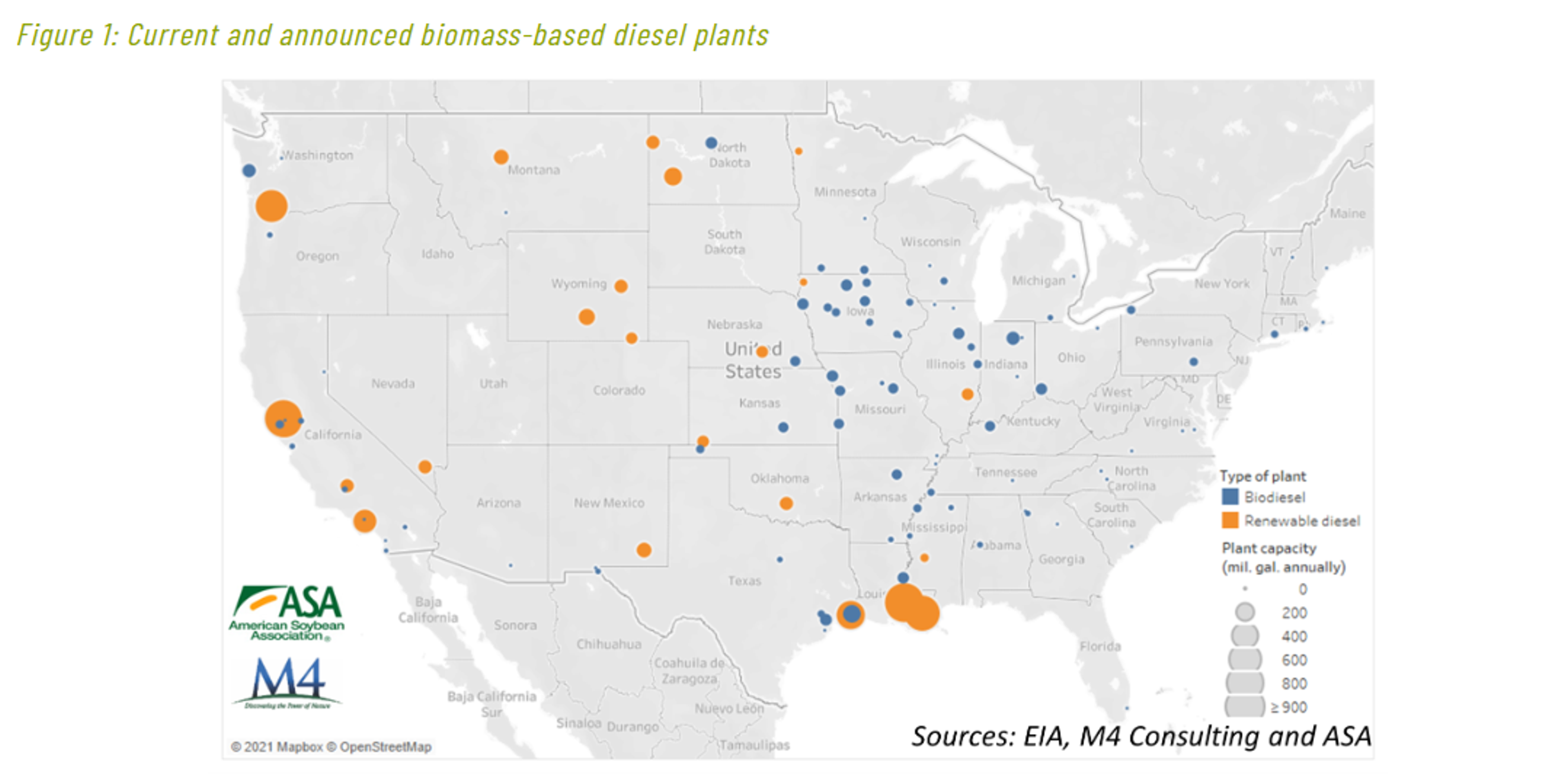
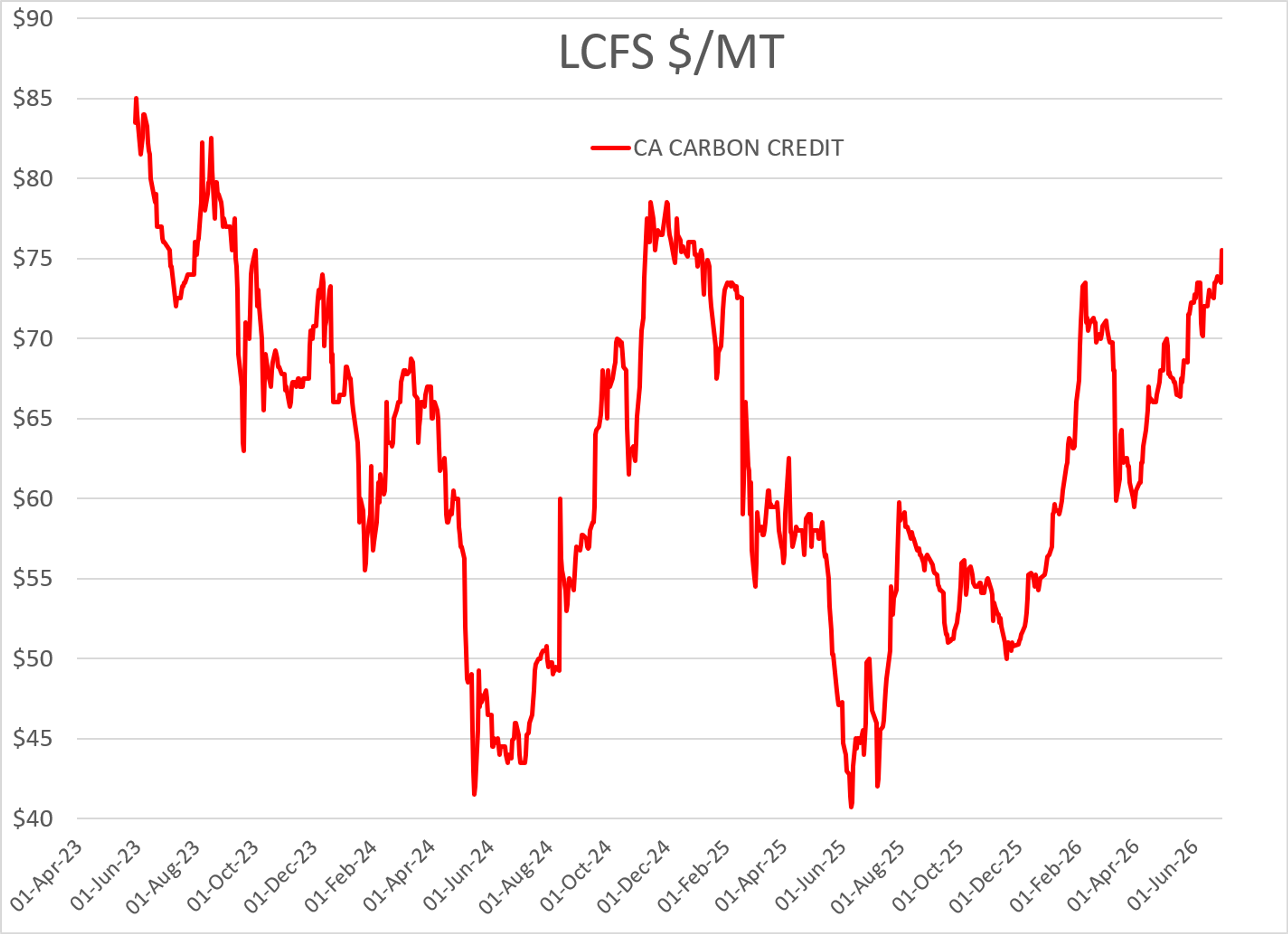
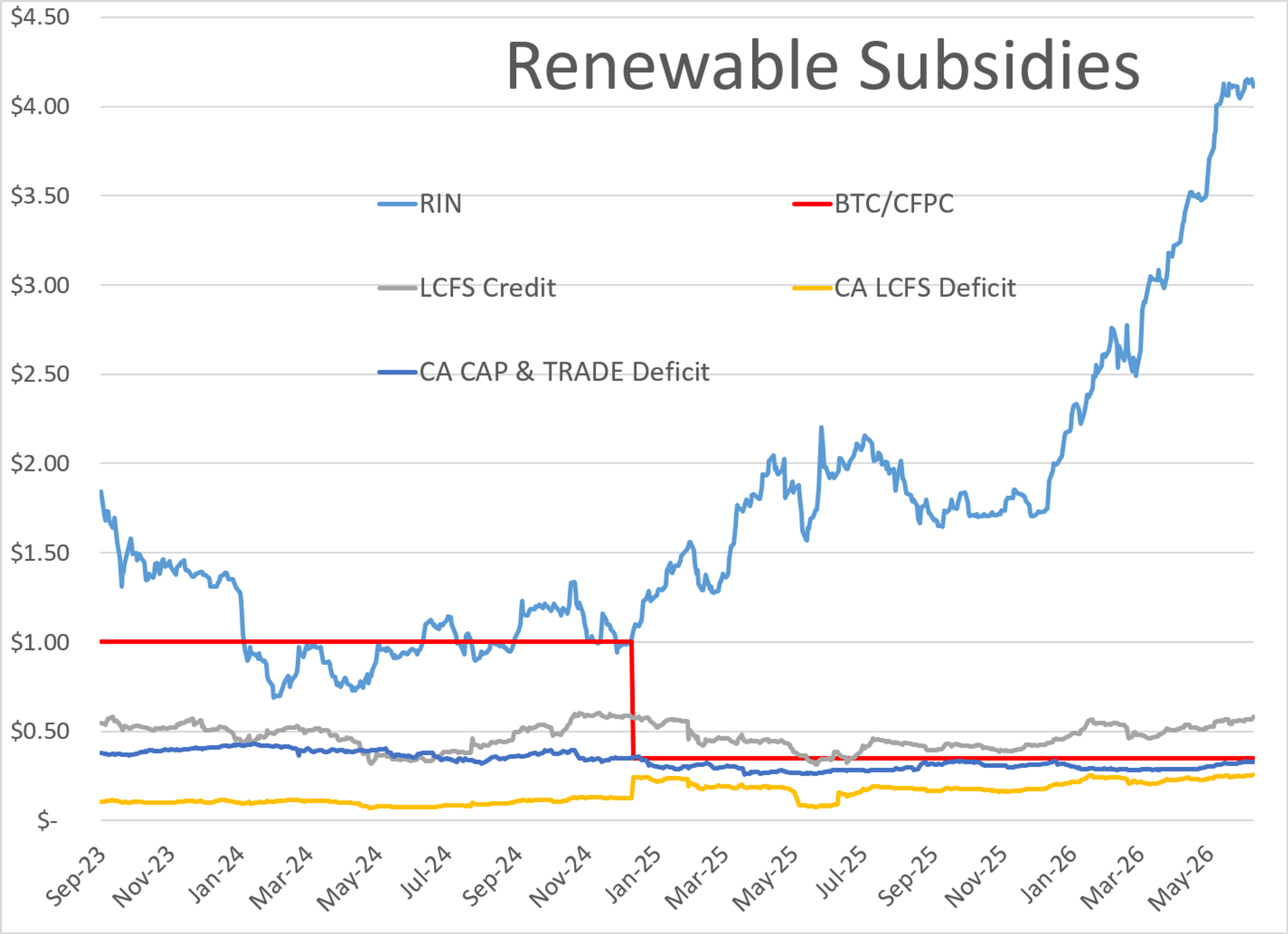
California’s LCFS credit values jumped to an 18 month high this week as the glut of RD in the state (thanks in large part to record setting RIN values) pushes more barrels to other states. TX is the primary target for RD suppliers searching for a new short, given its huge demand, proximity to RD production facilities and 19 cent tax incentive (avoiding state diesel excise tax) for R99. New Mexico will also see some pull of RD due to its new LCFS-style Clean Fuel program, while Illinois could also see some spill-over due to its tax incentives for higher blends of renewables, which have typically been biodiesel but now may seem some switching to RD given the favorable qualities of that product. Minnesota and New York have not yet been smart enough to change their mandates on biodiesel blending to allow for RD to take its place, but don’t be surprised if that changes in the coming years as the soybean lobby leans heavier into RD vs Bio.
Latest Posts
Governors Take Action As Energy Markets Navigate Volatility
Refinery Outages And Global Conflicts Keep Distillates In The Driver's Seat
Storms, Drones And A Walked-Back Export Ban: Why This Week's Selloff Might Not Last
Diesel Rally Resumes Amid Growing Debate Over US Export Limits
Week 38 - US DOE Inventory Recap
Refinery Economics Clash With Calls For A Diesel Export Ban
Social Media
News & Views
View All
Governors Take Action As Energy Markets Navigate Volatility
Refinery Outages And Global Conflicts Keep Distillates In The Driver's Seat