Oil And Fuel Markets Regain Ground Amid Rising Supply Threats

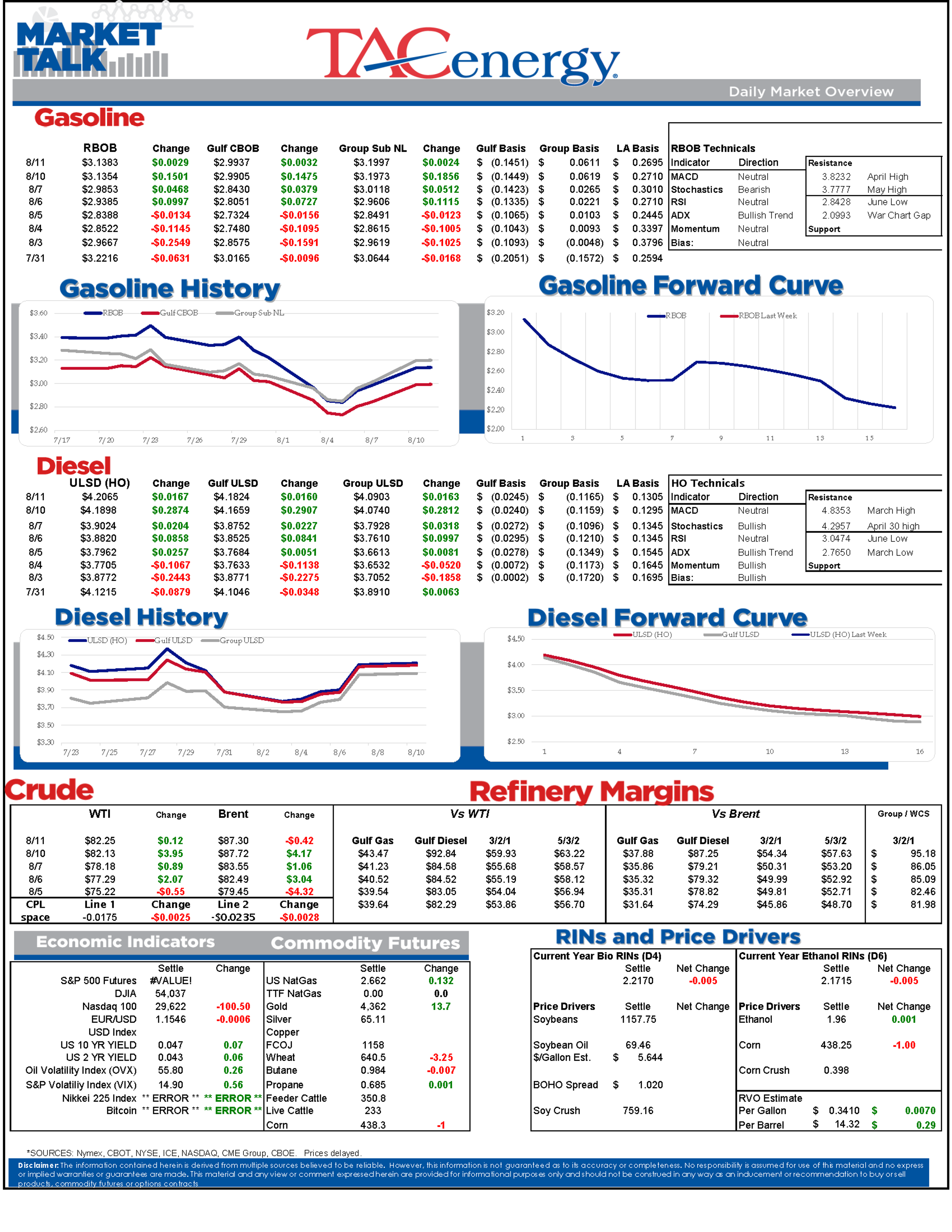
Energy markets are chopping around near break-even levels this morning after some big overnight swings, which followed a huge Monday rally as the U.S. & Iran move further away from a deal, and the attacks on refineries continue to spread around the world.
On the continuous charts, RBOB and ULSD have filled in most of the chart gap left behind by the steep backwardation when rolling from the August to September contracts to start the month, and have erased the “We may have a deal today or tomorrow” losses. The next target to the upside comes from the July highs roughly 20 cents above current values, and if that resistance fails to stop the recovery rally there, there’s plenty more room to the upside to run.
While there are still reports that Oman and Iran are working through a framework for safe passage through Hormuz, the U.S. and Iran seem to be digging in their heels, with playground style arguments of “No, you owe me money” without any formal negotiations being had. Iran meanwhile seems to be promoting more hard liners in their military, which suggests they’re preparing more for war than for peace.
Actual shipments through the strait continue to hold at minimal levels, with KPLER reporting just 6 ships transiting yesterday, despite claims that the U.S. Navy is in control of the waterway.
The Jones Act Waiver was extended for another 90 days, but came with a twist this time around. Foreign vessels looking to carry supplies between domestic ports will need to get approval on a case by case basis, whereas the initial 5 months were blanket waivers of the long-standing law that many believe to be un-American in its protections of a handful of American made, owned and crewed ships. Several refiners noted how the waivers had allowed them to ship crude and refined products to both the East and West coasts from the Gulf Coast, which has helped shippers optimize their operations. If you look closely at the shrinking spot to rack spreads on gasoline in Southern California, you may note that the extra supply coming from the Gulf Coast is in fact helping keep prices on the West Coast relatively in check, although that mostly gets lost in the noise of the states extra fees and taxes. Naturally, the maritime lobbies who benefit from the act said this new version doesn’t go far enough to restrict their competition from lower priced vessels.
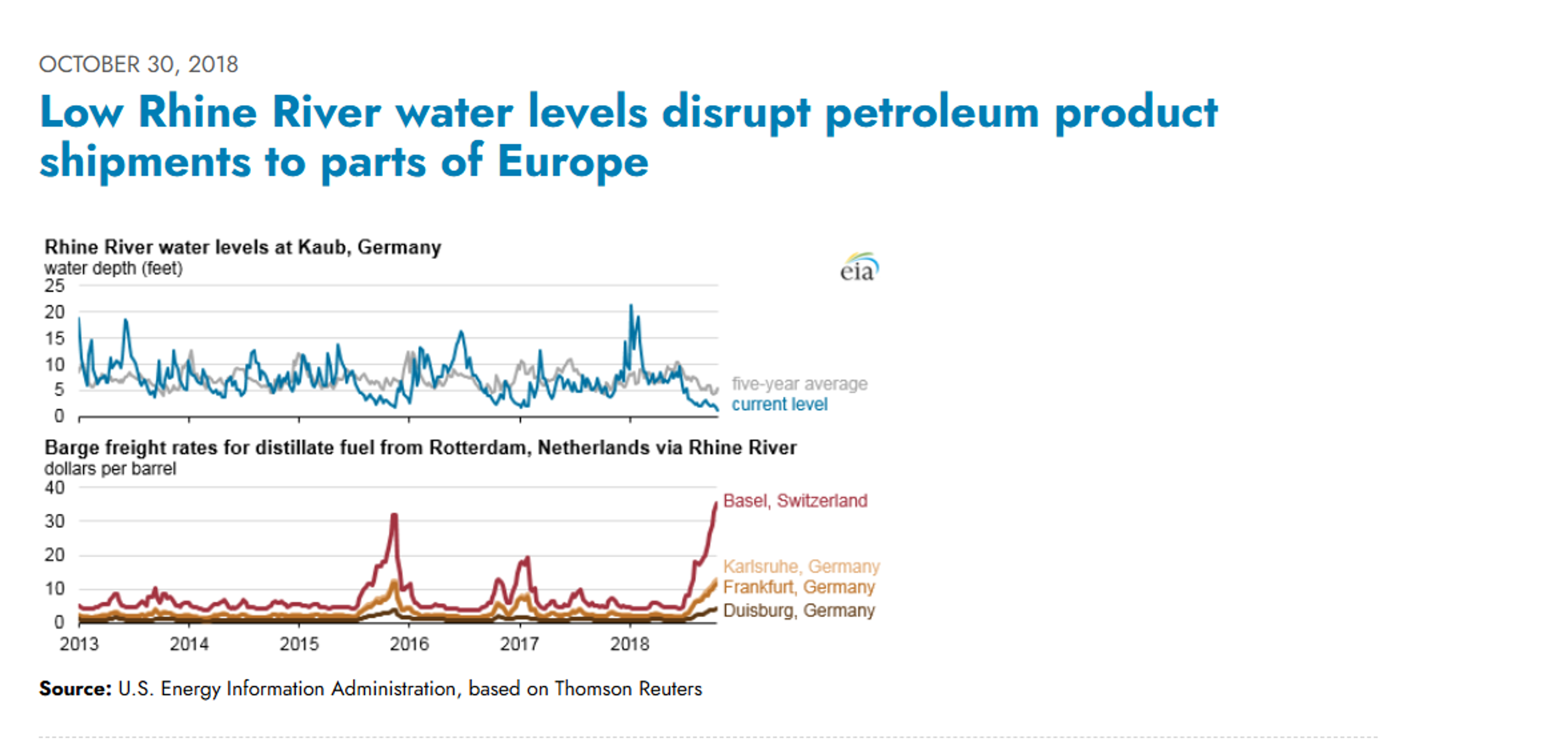
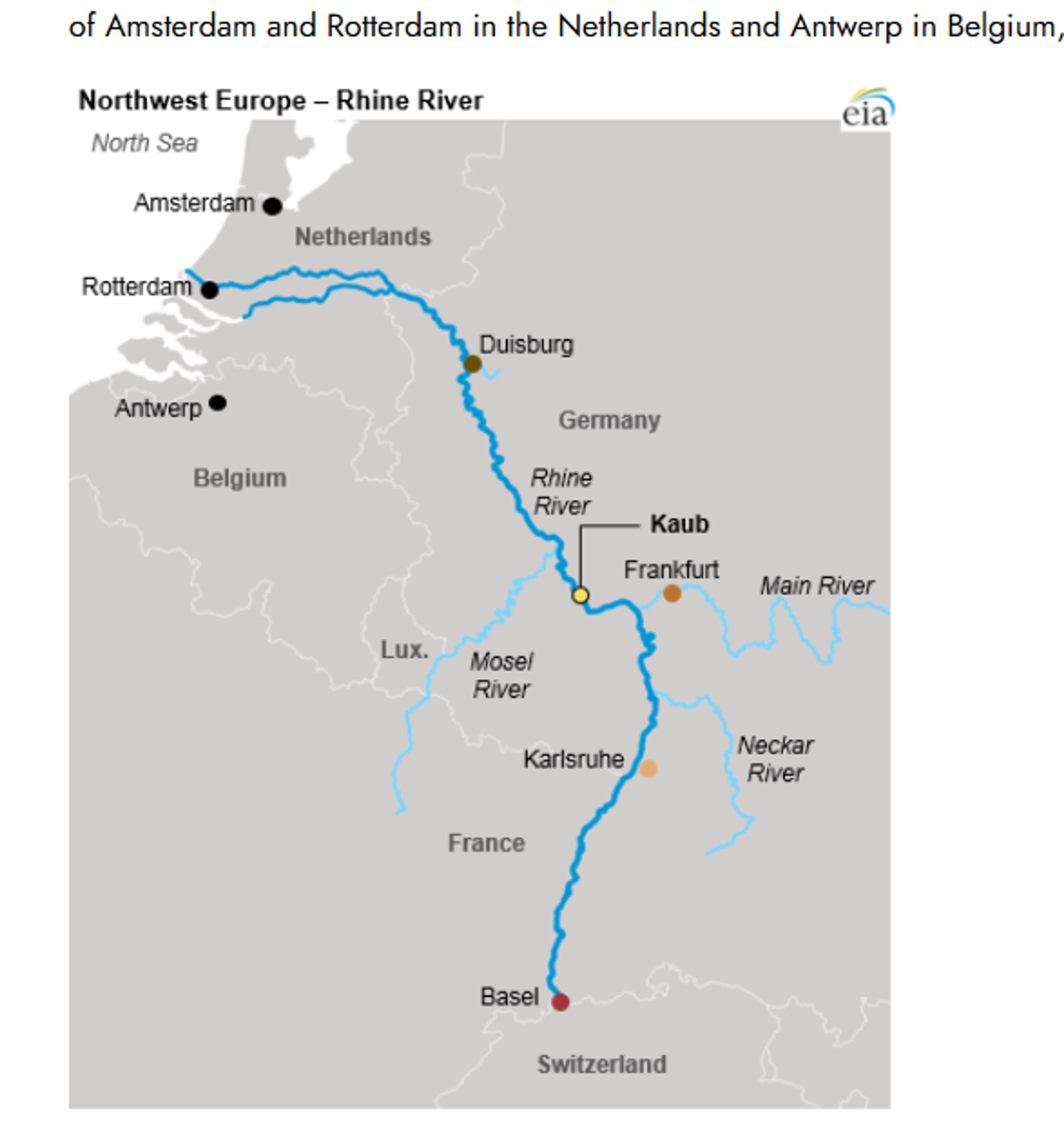
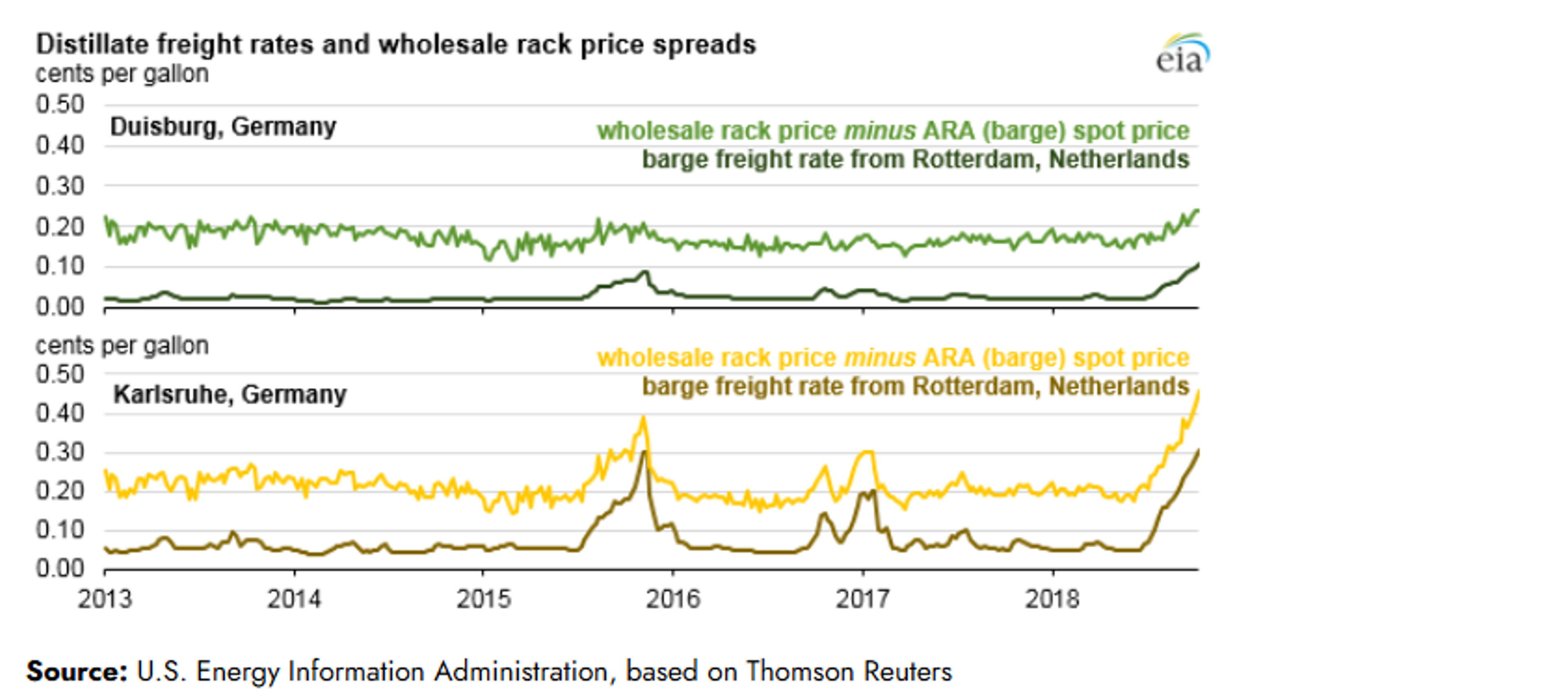
Record low water levels on the Rhine river are adding further complications to Europe’s already dicey fuel supply situation as barges that ship oil and products up and down the river have largely been halted. An EIA article from the previous record low back in 2018 offers a look at how transportation and fuel prices react to this type of event. Perhaps most concerning is that in typical years, the river reaches its low water levels in September or October, and with no rain in sight in August, things may get worse before they get better.
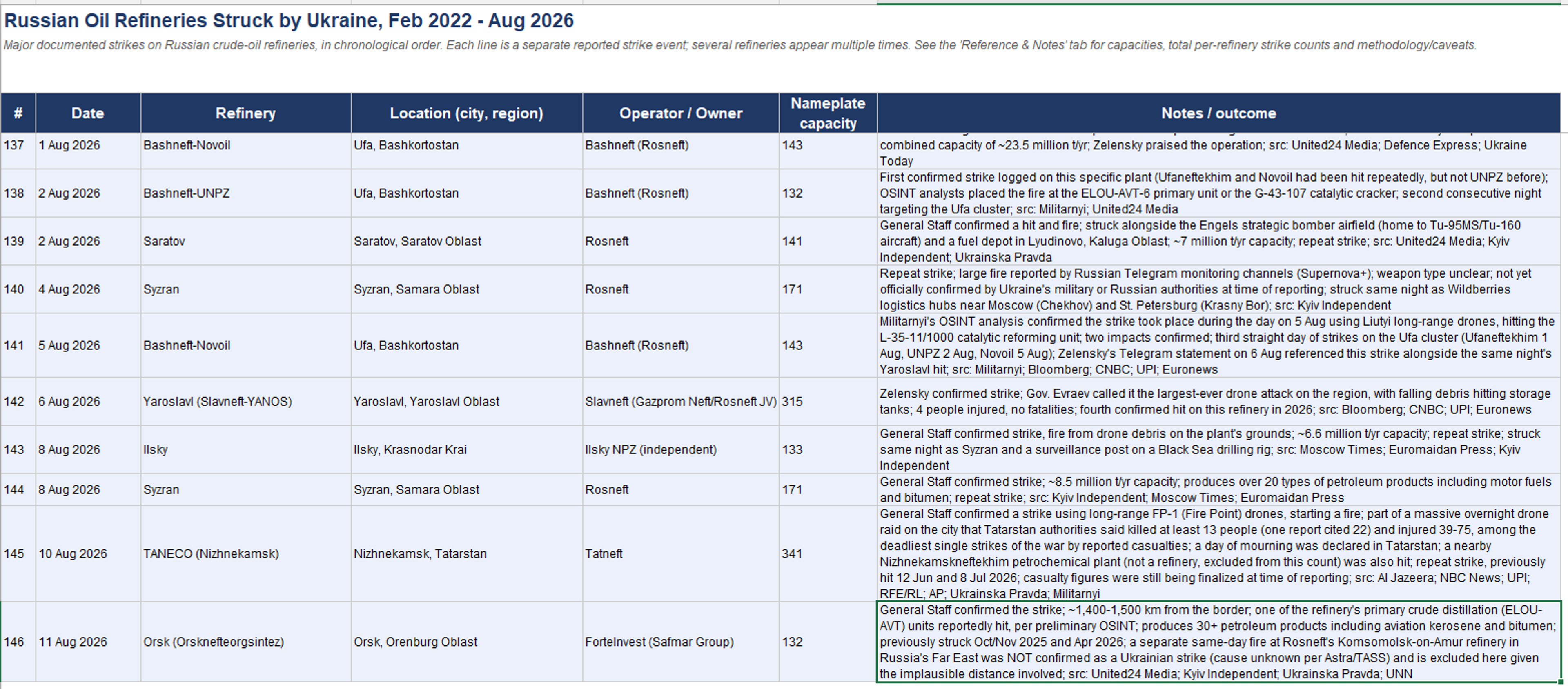
Ukraine is keeping up the record pace of drone attacks on Russian refineries, with an 11th strike recorded overnight in the first 11 days of August, this time on . Another Russian refinery in the far east on its Pacific Coast also reported a fire, but there are not yet any signs that this was due to an attack.
Reports this morning suggest Saudi Arabia will need 3 weeks to bring its 400mb/day Jazan refinery back online, following a 2nd drone strike of the past 2 weeks.
Everybody has exploding drones these days. Libya’s largest refinery – the 120mb/day Zawiya plant – was struck by a multiple drone attacks the past 2 days. So far it appears the attacks were more likely caused by internal combatants in the country’s longstanding civil war, rather than a new front in the Middle East war, but no one seems to be totally sure.
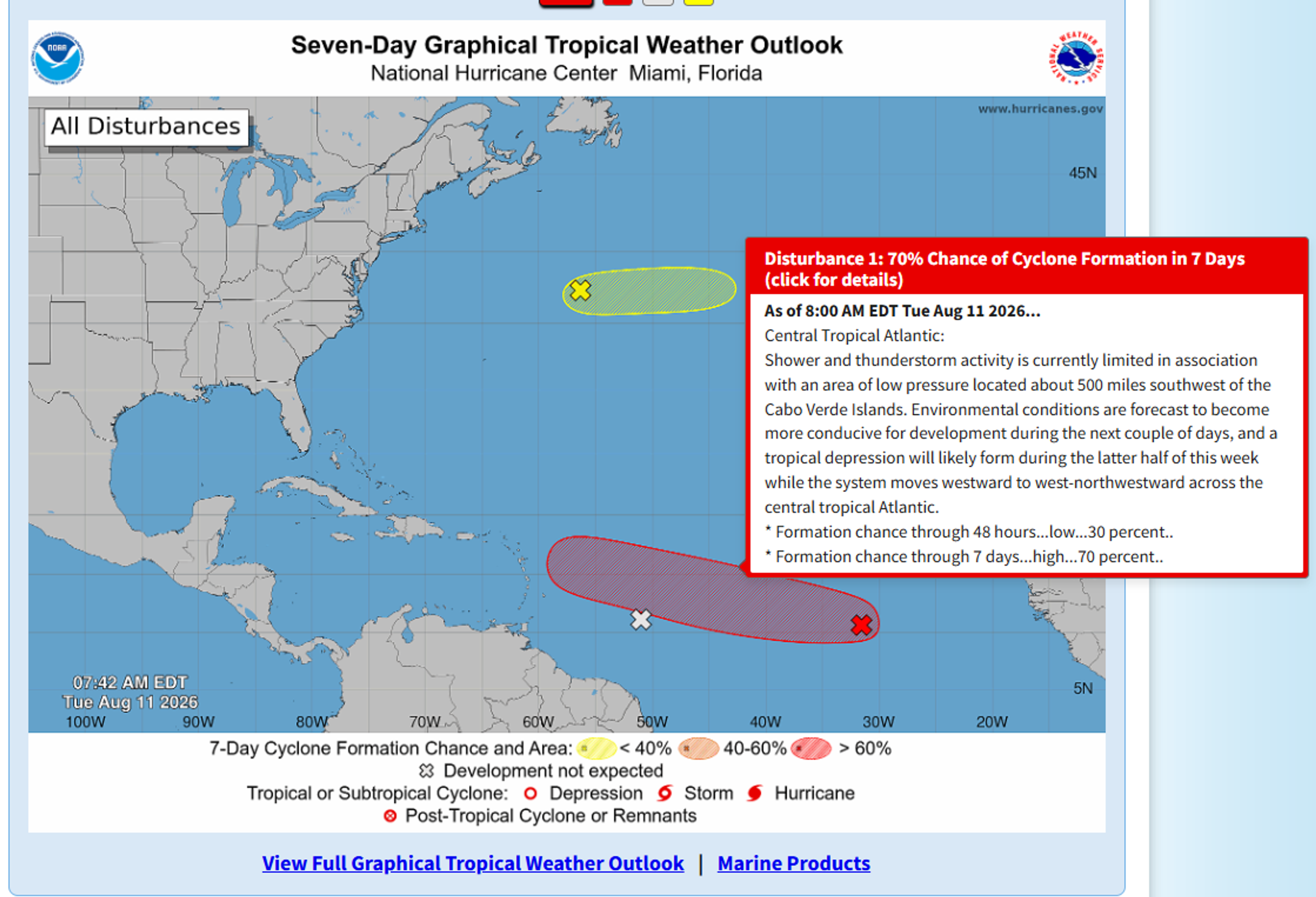
The National Hurricane Center now gives 70% odds of a named storm developing in the Atlantic over the next week. Although that system is currently on a path towards the Caribbean, forecasters are saying a strong steering current will force it north and out to sea before it becomes a threat to the U.S. coastline.
Latest Posts
Storms, Drones And A Walked-Back Export Ban: Why This Week's Selloff Might Not Last
Diesel Rally Resumes Amid Growing Debate Over US Export Limits
Week 38 - US DOE Inventory Recap
Refinery Economics Clash With Calls For A Diesel Export Ban
Diplomacy Knocks Crude Lower, But Diesel Bulls Aren’t Done Yet
Diesel Pullback Tests Market Nerves Amid Supply Risks
Social Media
News & Views
View All
Storms, Drones And A Walked-Back Export Ban: Why This Week's Selloff Might Not Last
Diesel Rally Resumes Amid Growing Debate Over US Export Limits