Distillates Take The Lead As Refiners Adapt To Global Supply Challenges

It’s a mixed start to wrap up another wild week for energy markets. ULSD futures are clinging to small gains after a big Thursday recovery bounce, while RBOB and crude futures are seeing small losses.
Another Russian refinery was reportedly struck overnight, which would mark the 6th refinery hit in the past 8 days, following a 2 week pause in attacks. The latest attack has not been confirmed by a 2nd source however so take that news with a grain of salt for now.
The UKMTO reported another tanker was attacked this morning off the coast of Oman.
There haven’t been reported attacks on Saudi oil infrastructure the past two days, which follows reports that the Kingdom has offered to pay the Houthis in exchange for stopping the attacks. So far there is no confirmation that these payments are why the attacks have slowed, or why the LIV tour ran out of money.
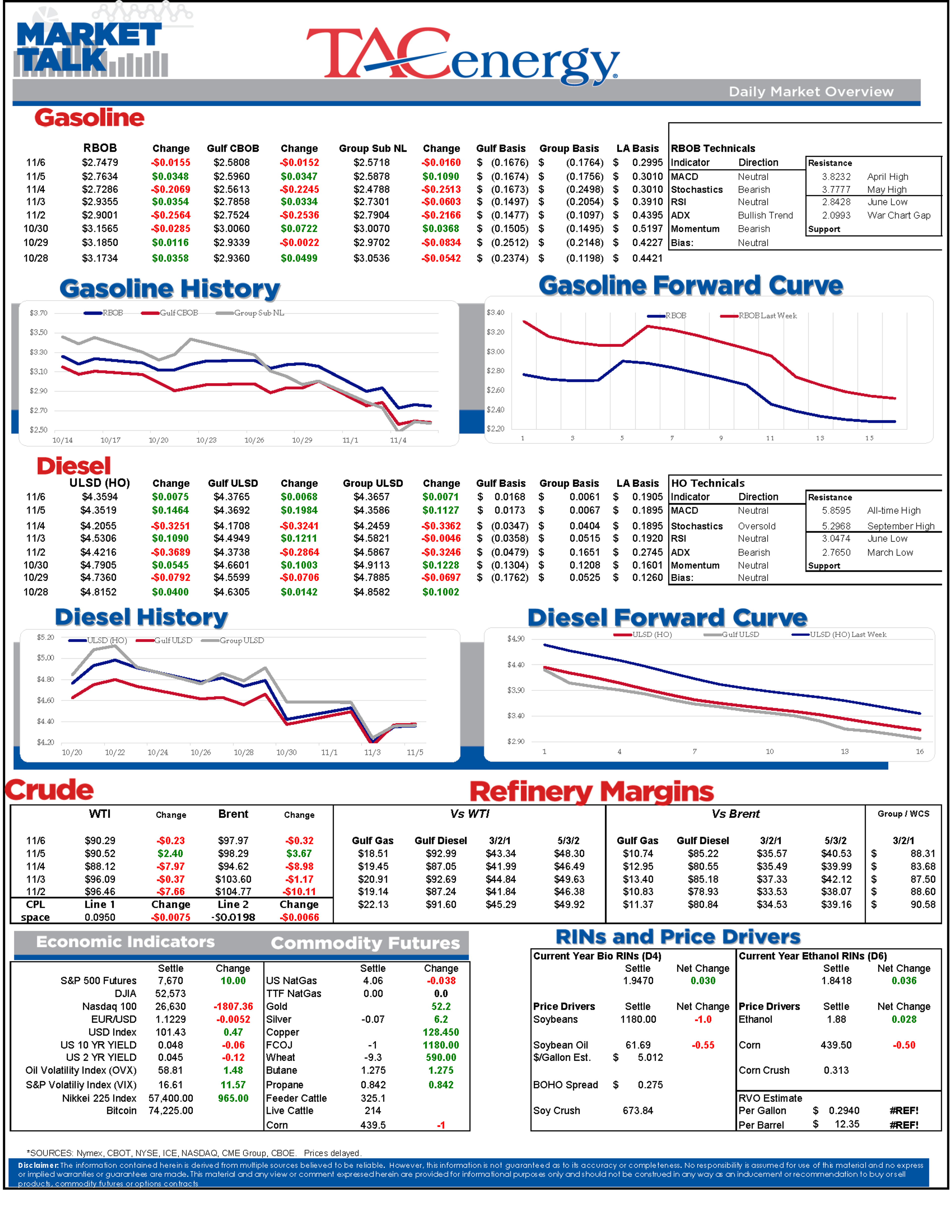
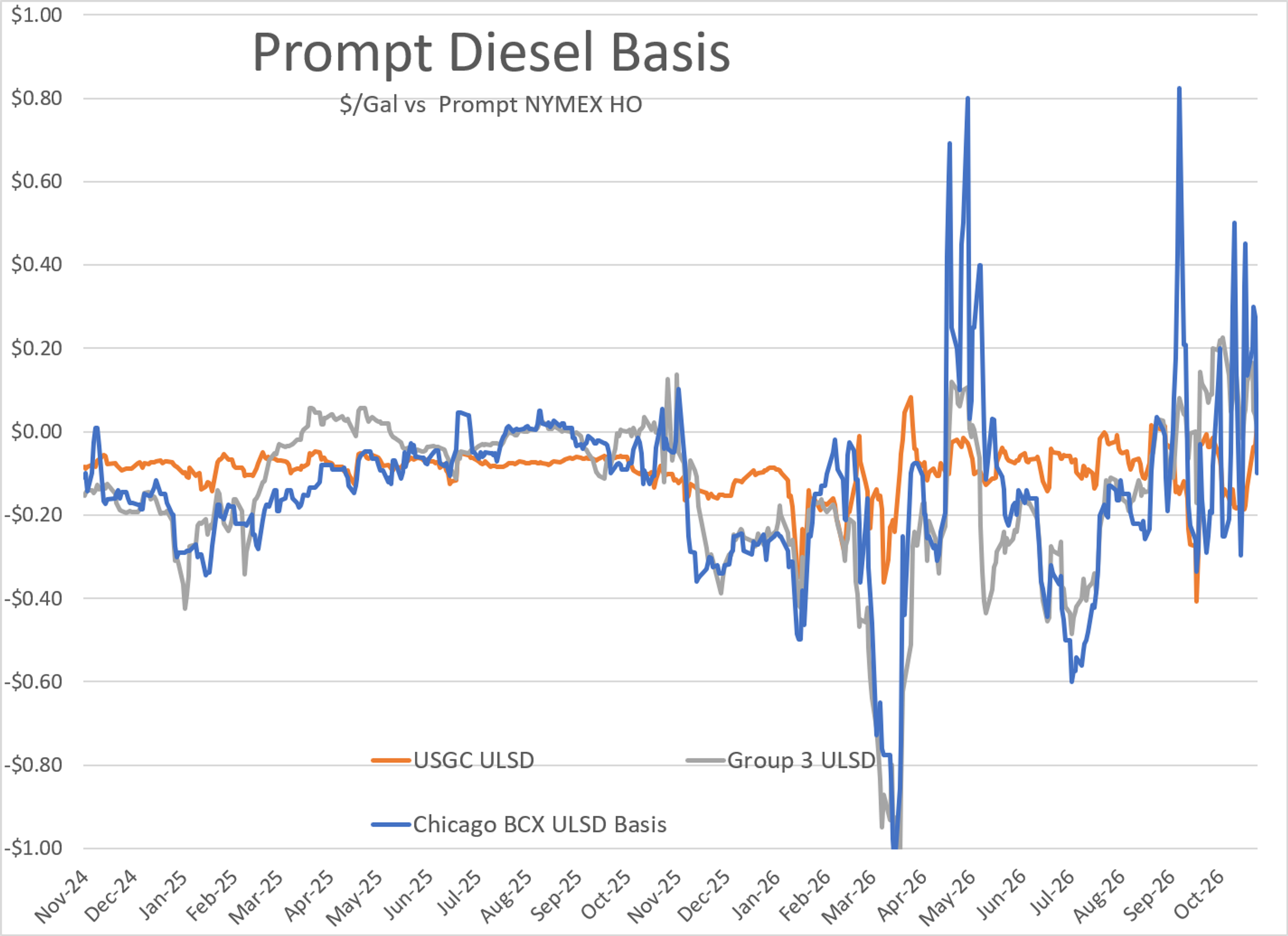
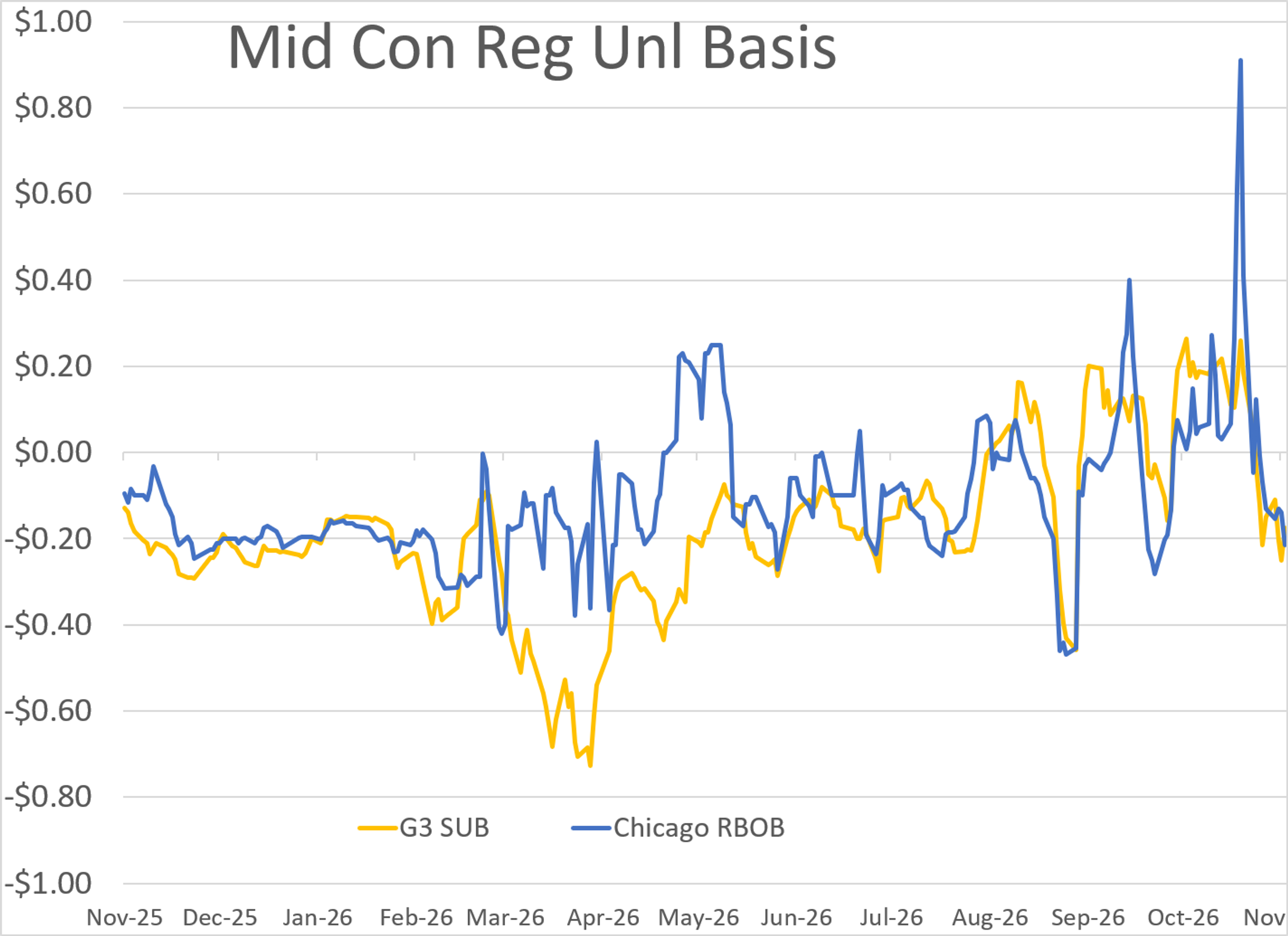
The big mover Thursday was Chicago ULSD basis, which plummeted following reports earlier in the week that Exxon’s 275mb/day Joliet refinery was fully back online, and as the seasonal harvest demand (which pushed the DOE’s weekly estimate for distillate demand to a 9 year high for this time of year) wraps up for the year.
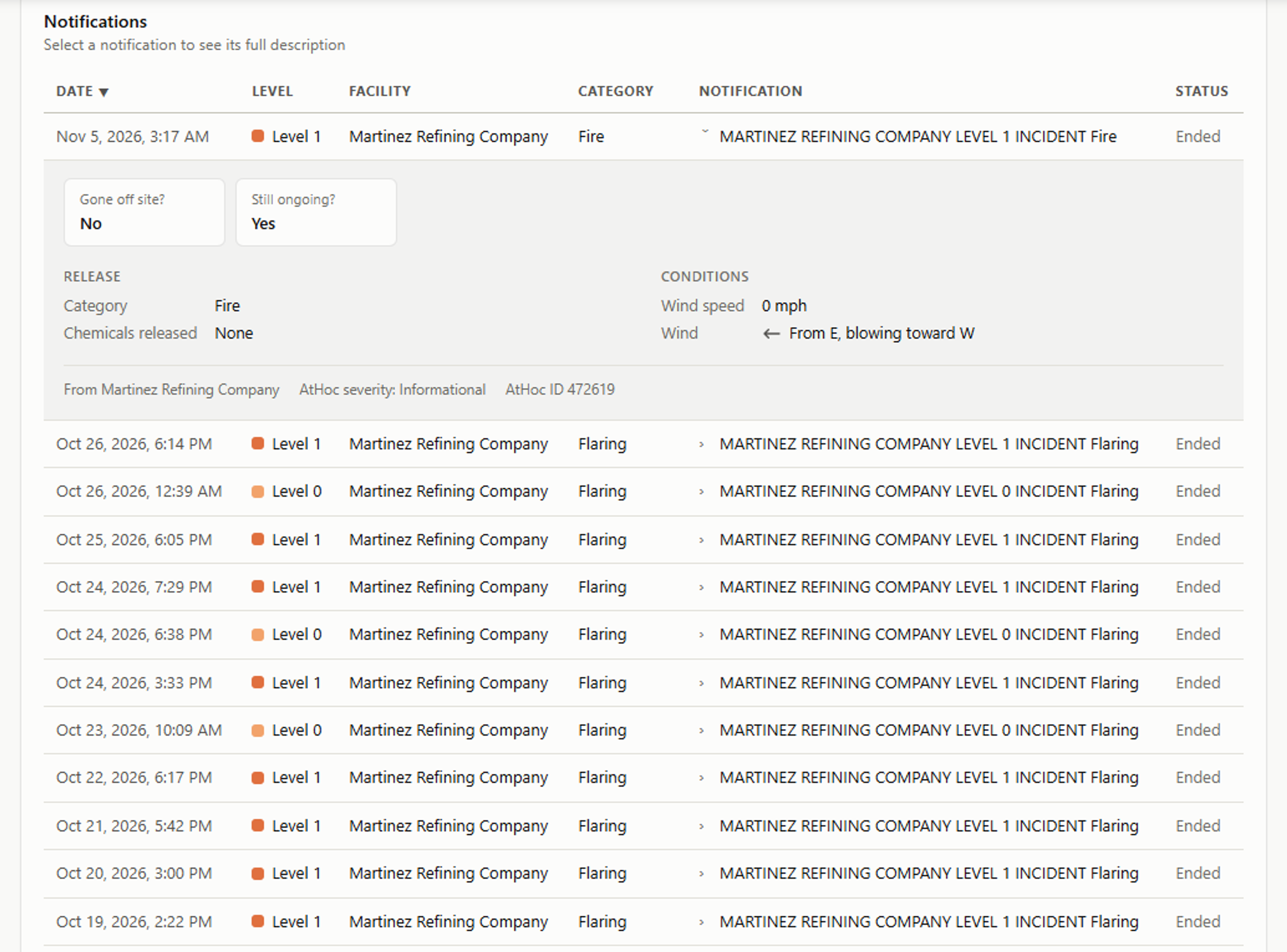
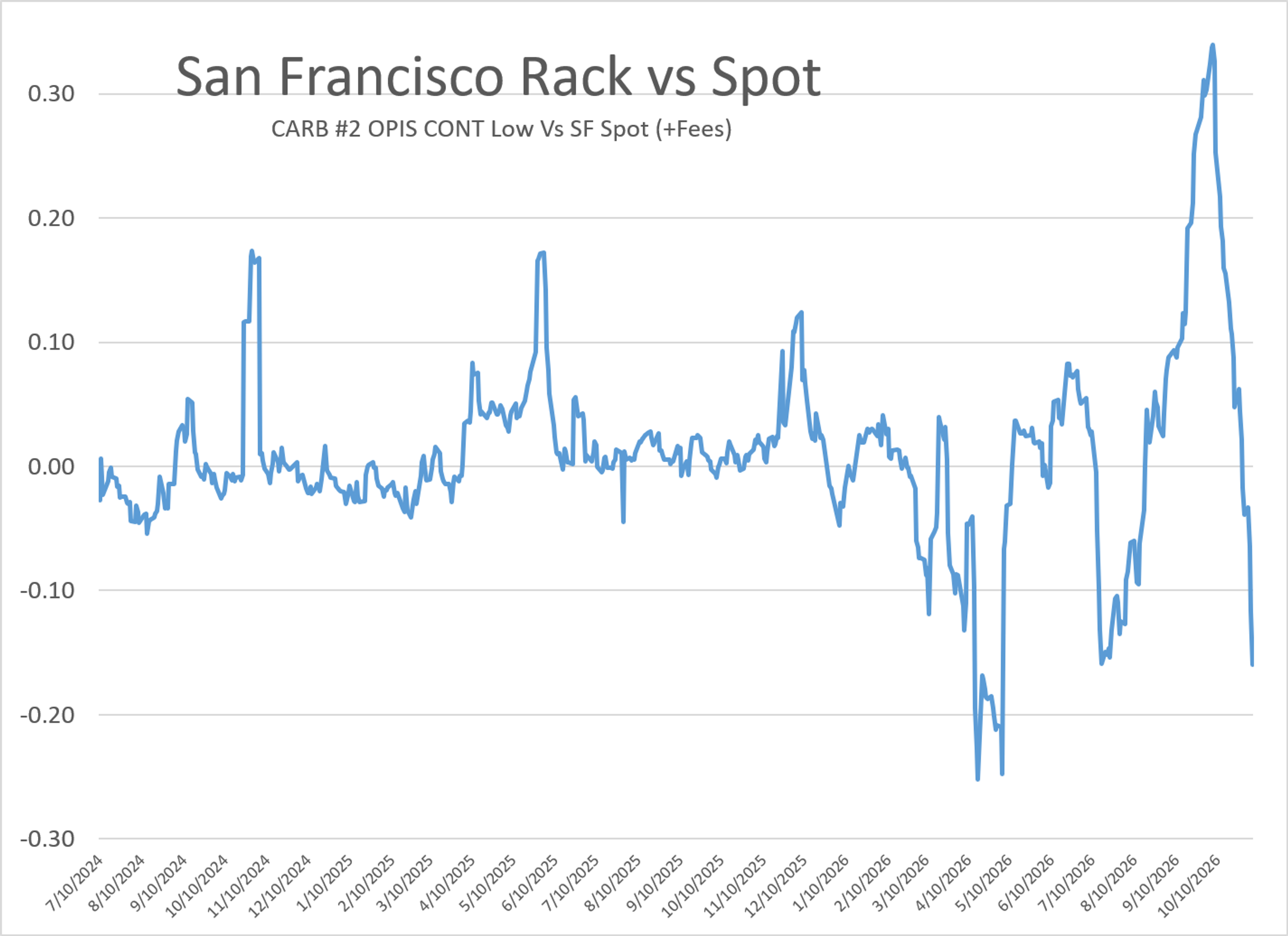
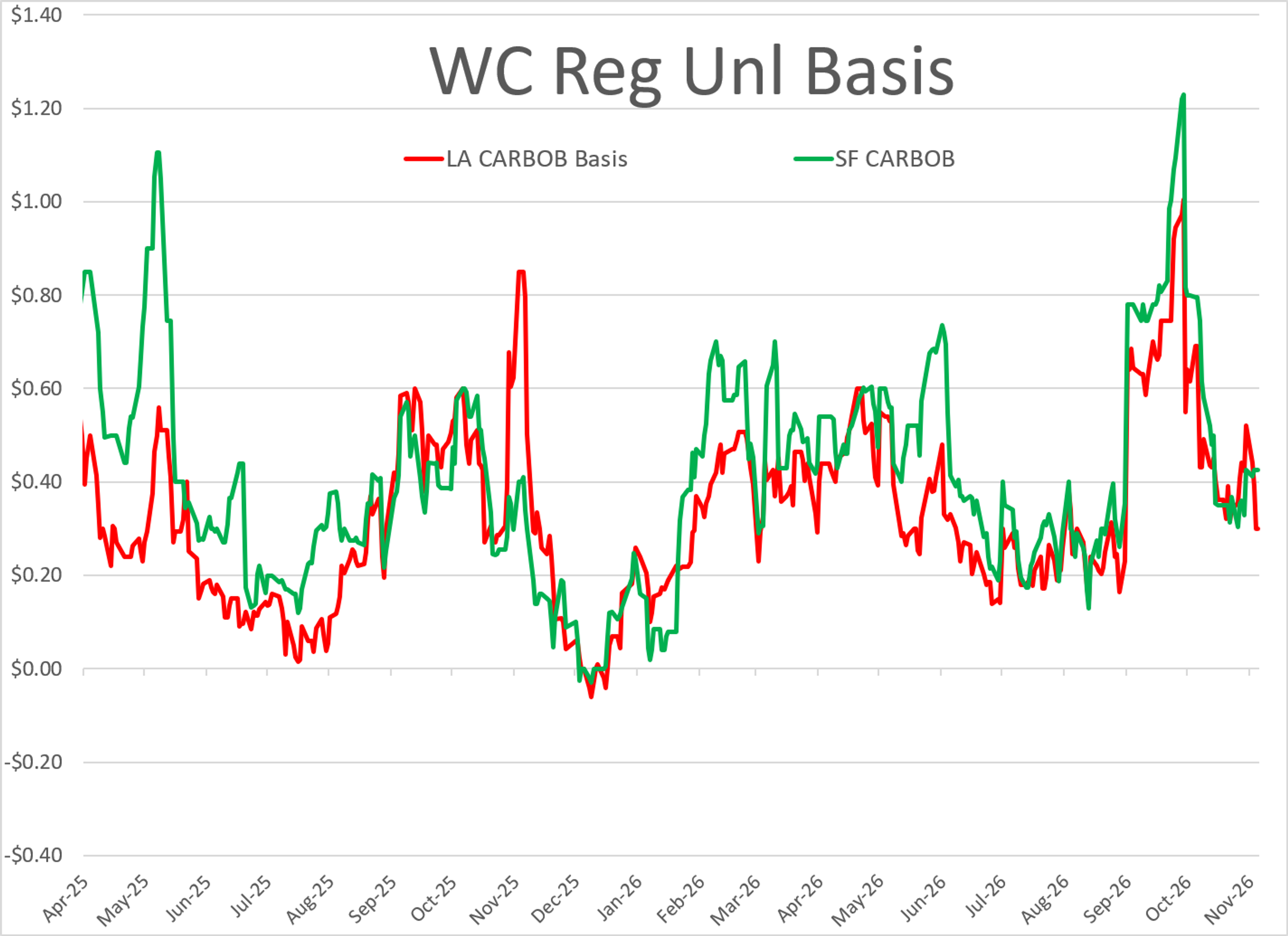
The San Francisco market shrugged off yesterday’s report of a “level 1” fire at PBF Martinez, with basis differentials and rack spreads both sliding on the day. No further details were provided by the company, but that upset seems to not be impacting operations, similar to the 2 dozen flaring filings they made in October.
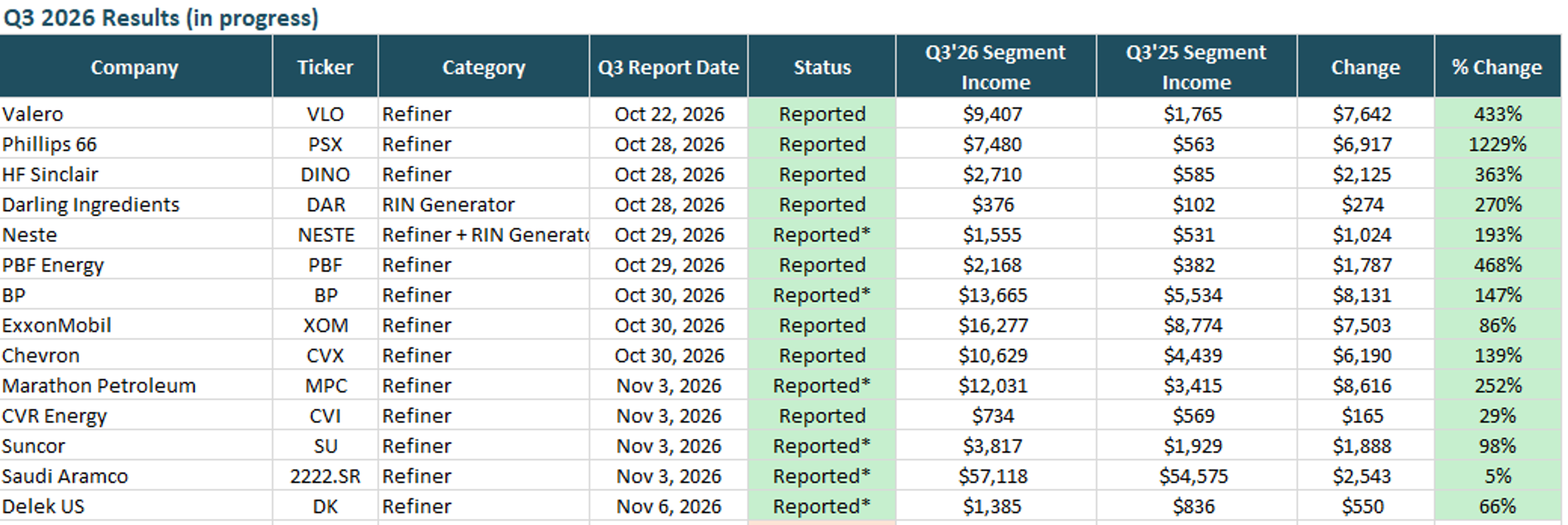
Delek’s 3rd quarter earnings showed a $334 million benefit from its Small Refinery Waivers (SREs) from the Renewable Fuel Standard (RFS) granted by the EPA. That benefit is one reason why the recent campaign stumping from the U.S. Vice President touting an expansion at Delek’s Tyler plant is unlikely to change its total volume by much, as they’re not likely to forego the SRE.
Between Delek, CVR and Par Pacific, SREs were worth around $775 million in Q3. The EPA has announced it will reallocate the waived RINs to “large” refiners in 2026 and 2027, but we’re still waiting to hear how much will be applied to each year.
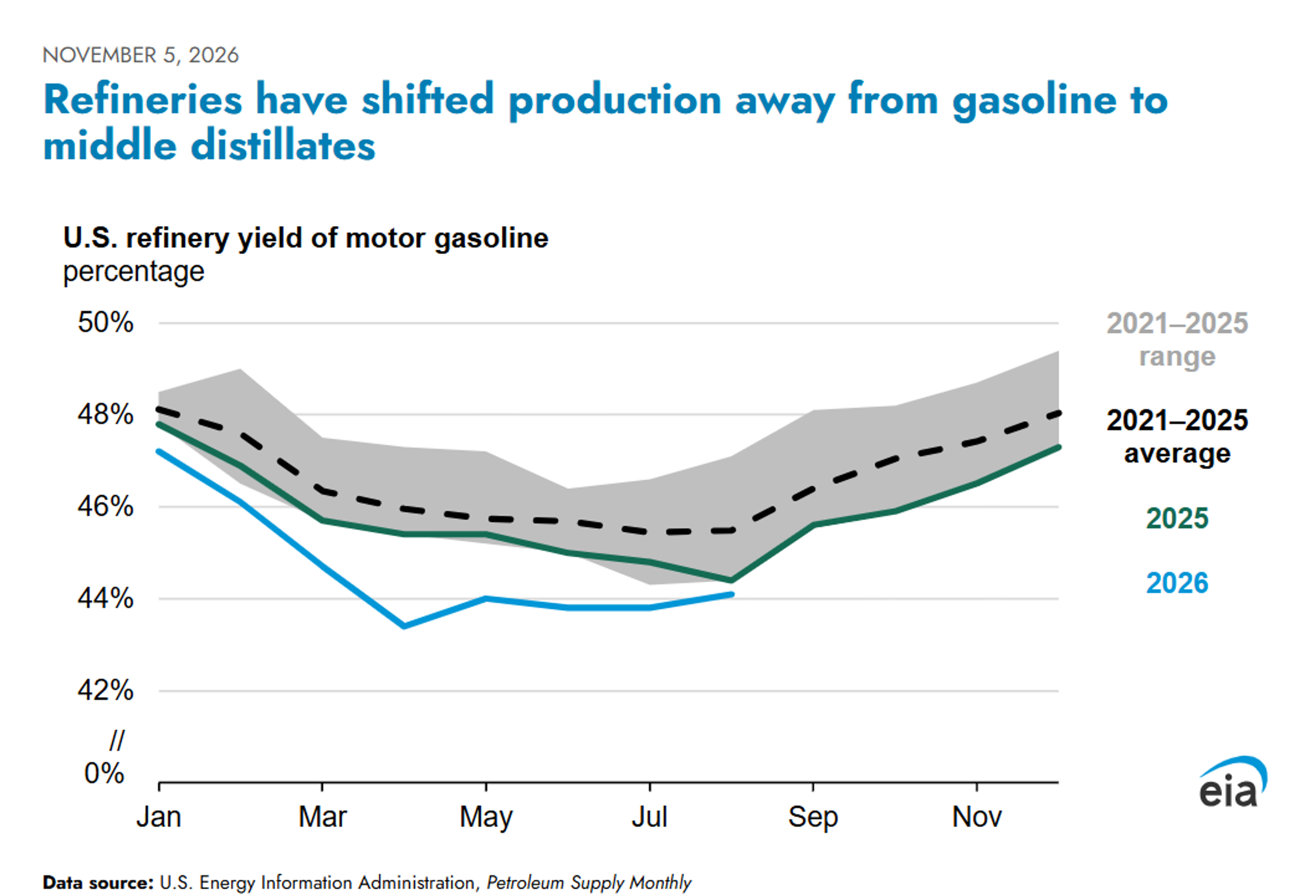
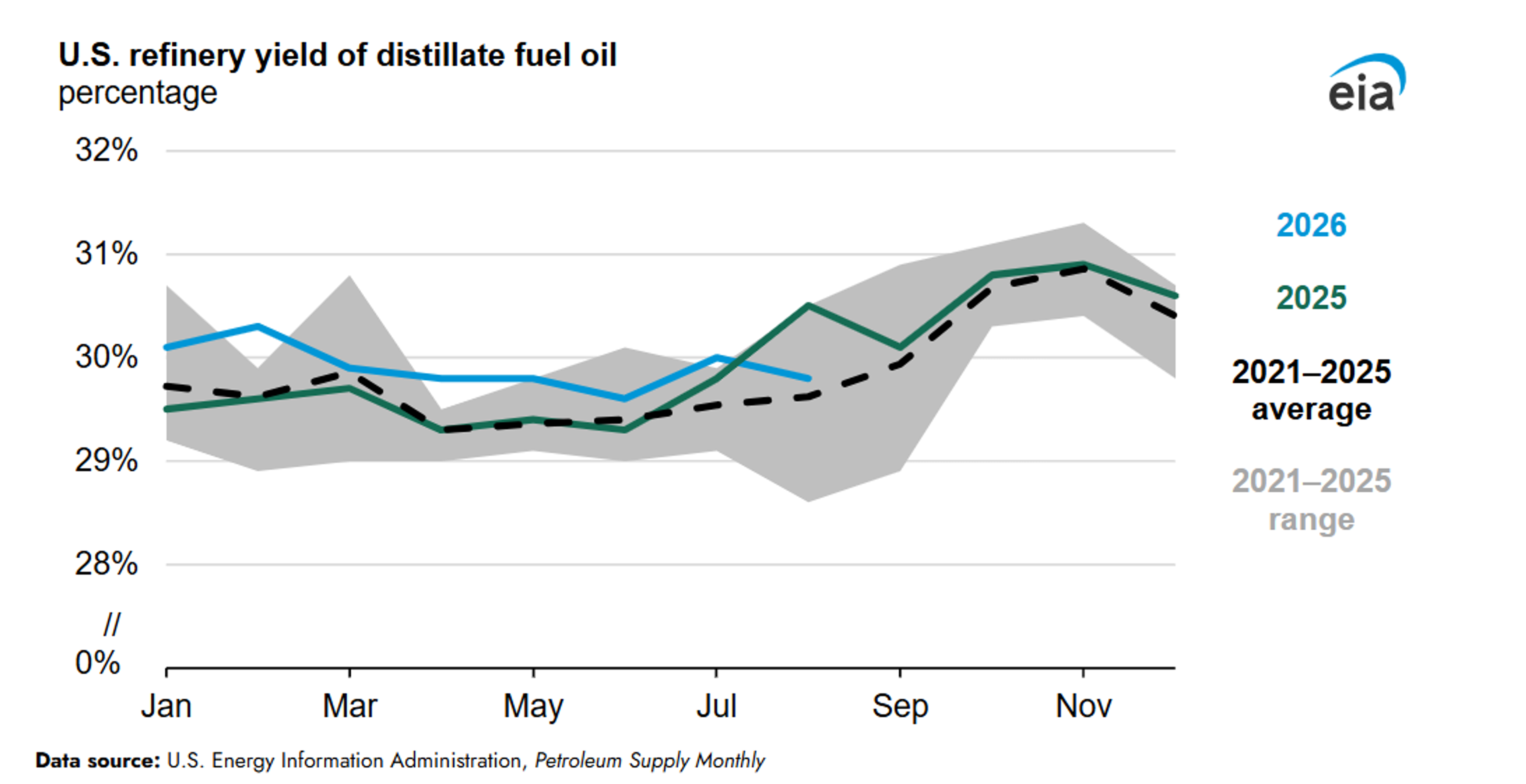
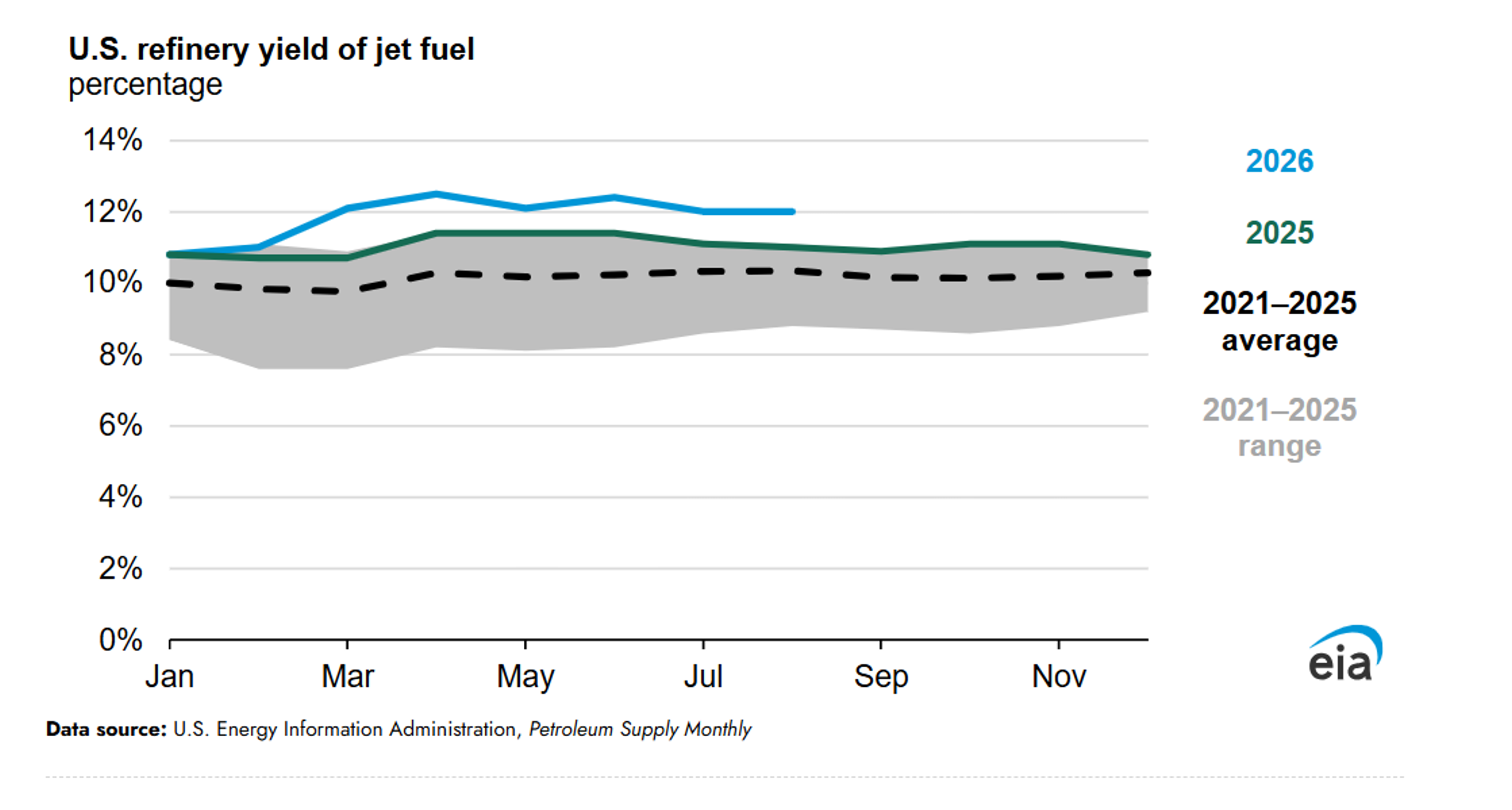
The EIA Thursday highlighted how U.S. refiners have been maximizing distillate and jet fuel yields this year as the world clamors for replacement supply as roughly 4% of the world’s capacity has been taken offline by the wars. This phenomenon isn’t just a short term item either as Exxon is already in the midst of a multi-billion dollar overhaul of its Baytown TX refinery to focus on distillate and plastic components in the years ahead as they see gasoline demand eroding over time. The company also noted it’s considering similar projects elsewhere in the coming years that may increase their distillate output by around 100mb/day.
Latest Posts
Oil Rebounds, Refinery Issues Mount, Diesel Stocks Tighten
Week 44 - US DOE Inventory Recap
Markets, Midterms, And Missiles: Navigating Energy's Biggest Risks
Refinery Trouble And Global Conflict Keep Energy Markets Guessing
Energy Markets Caught Between Diplomacy And Disruption
Refinery Attacks And Shipping Risks Support Fuel Prices
Social Media
News & Views
View All
Oil Rebounds, Refinery Issues Mount, Diesel Stocks Tighten
Week 44 - US DOE Inventory Recap