Distillate Markets Tighten Amid Escalating Global Conflicts

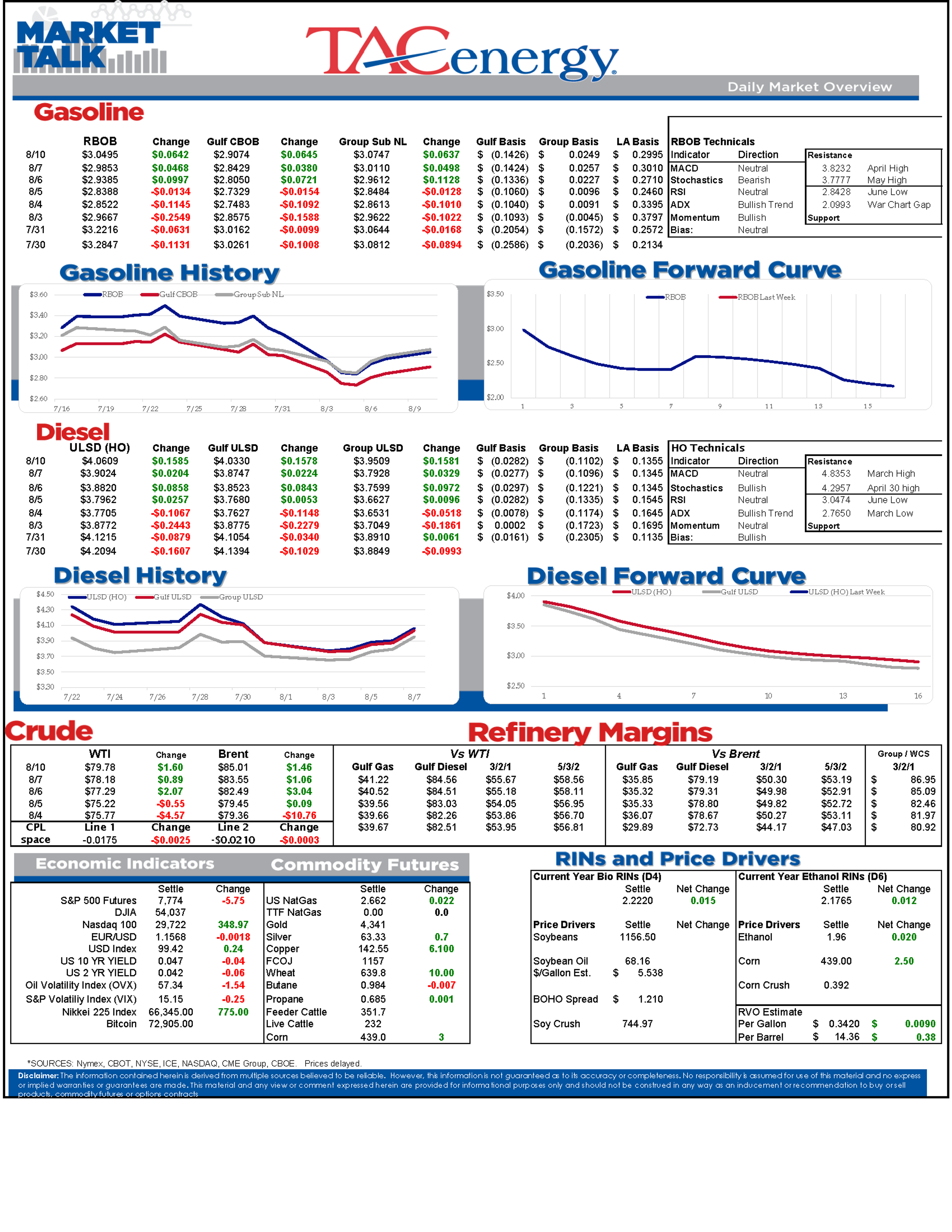
Diesel futures are charging higher to start the week, trading up more than 16 cents/gallon on the day, and have added almost 40 cents since bottoming out a week ago when a new “deal” to open Hormuz was promised. That deal remains elusive as Iran demands more concessions from the U.S. in order to open the strait and continues to attack ships not following orders from the IRGC. The U.S. meanwhile continues to blockade Iranian ports, which is keeping Iran’s oil from reaching global markets.
RBOB and Crude futures are also seeing healthy gains of around 2% this morning, but continue to lag behind the strength of ULSD futures which are reflecting the loss of somewhere between 20-30% of global distillate exports caused by the spreading violence.
A tanker from the UAE was hit by an Iranian missile near the strait on Saturday, while multiple other ships reported being harassed or followed by drones during transit in a sign that the IRGC is not changing its behavior despite so many headlines discussing a way to reopen the
The Houthi’s claimed multiple new attacks against Saudi Arabia over the weekend, including another strike on the 400mb/day Jizan refinery on the Red Sea coast that was forced to shut in late July after a different drone attack on the facility.
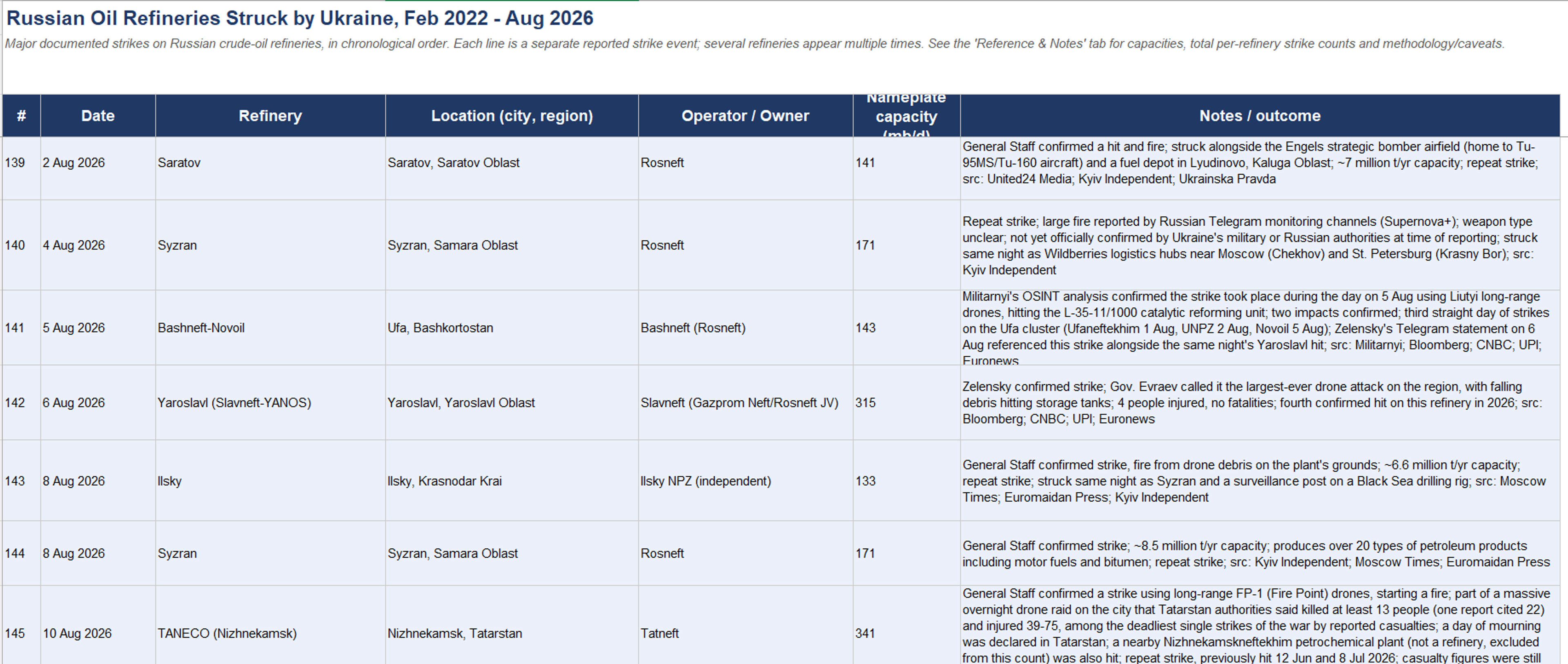
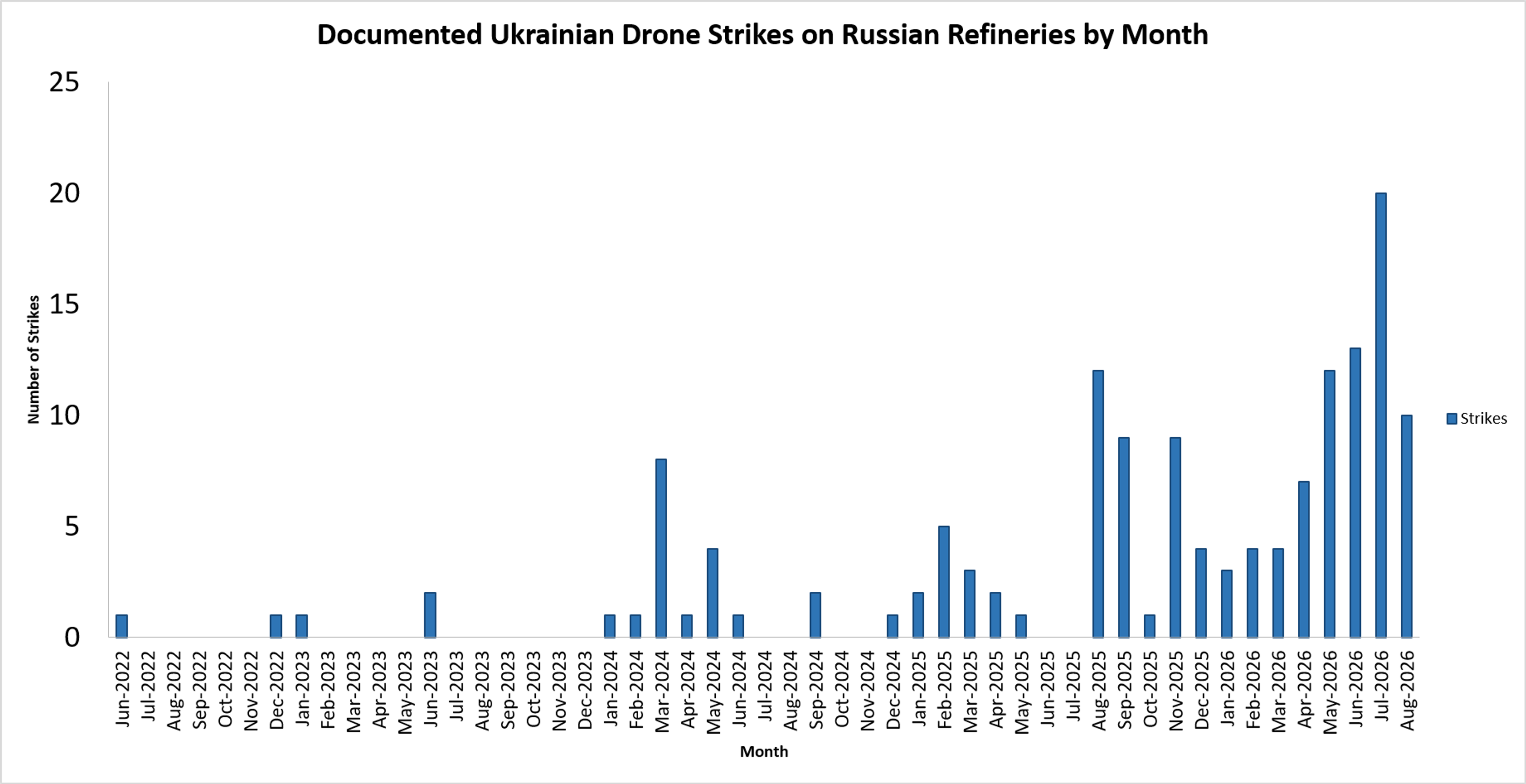
Ukraine continues the record setting pace of attacks on Russia’s energy infrastructure, with 3 more refinery strikes in the past 3 days making 10 so far in the first 10 days of August. In addition to the refinery strikes, Ukraine’s drones are also taking aim at Russia’s fleet of shadow fleet tankers, with more than a dozen ships hit already in August in the Black Sea and Sea of Azov.
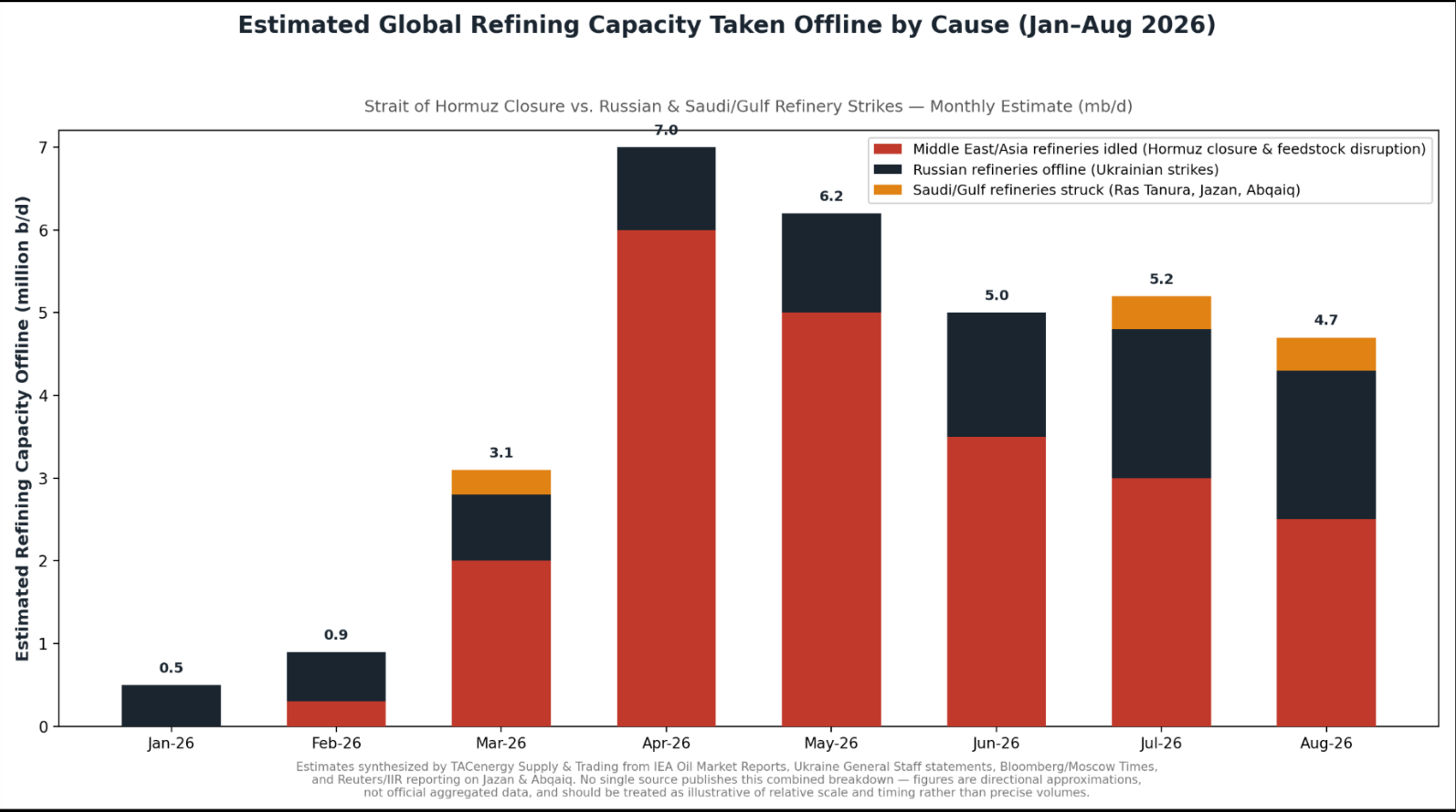
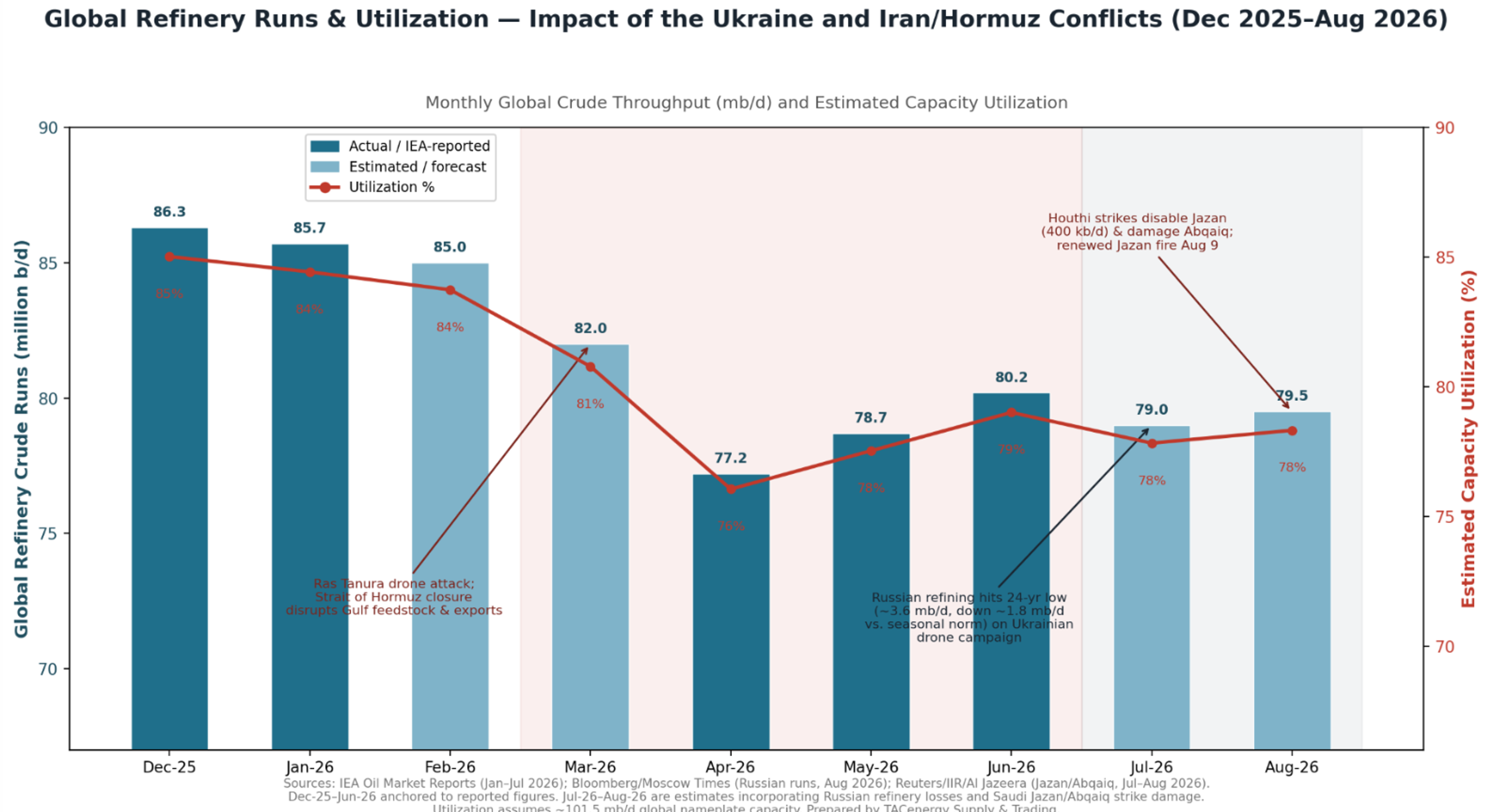
The latest attacks on Russian and Saudi refineries has pushed the total refinery capacity offline due to the various conflicts close to 5 million barrels/day, or roughly 6% of the total global operating rates at the start of the year, which helps explain most of why margins for those refineries still able to operate are holding near record high levels.
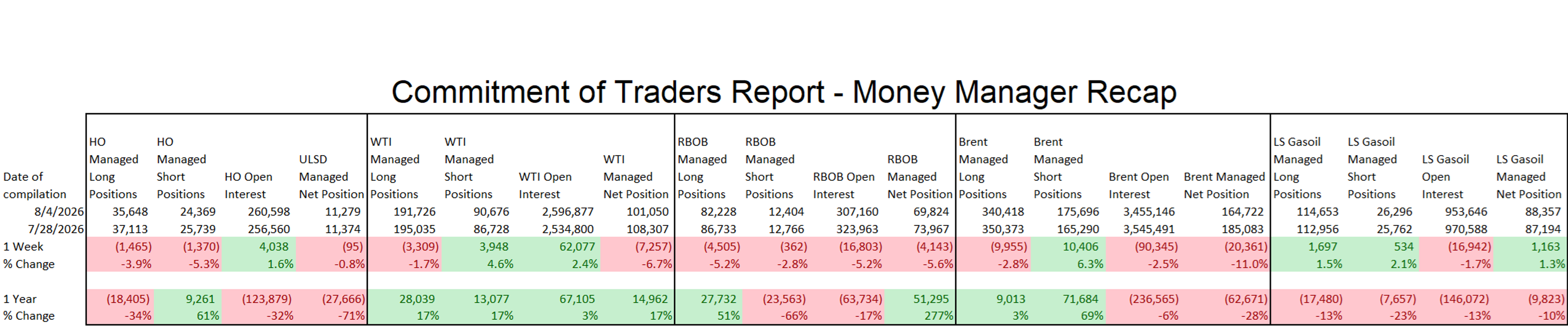
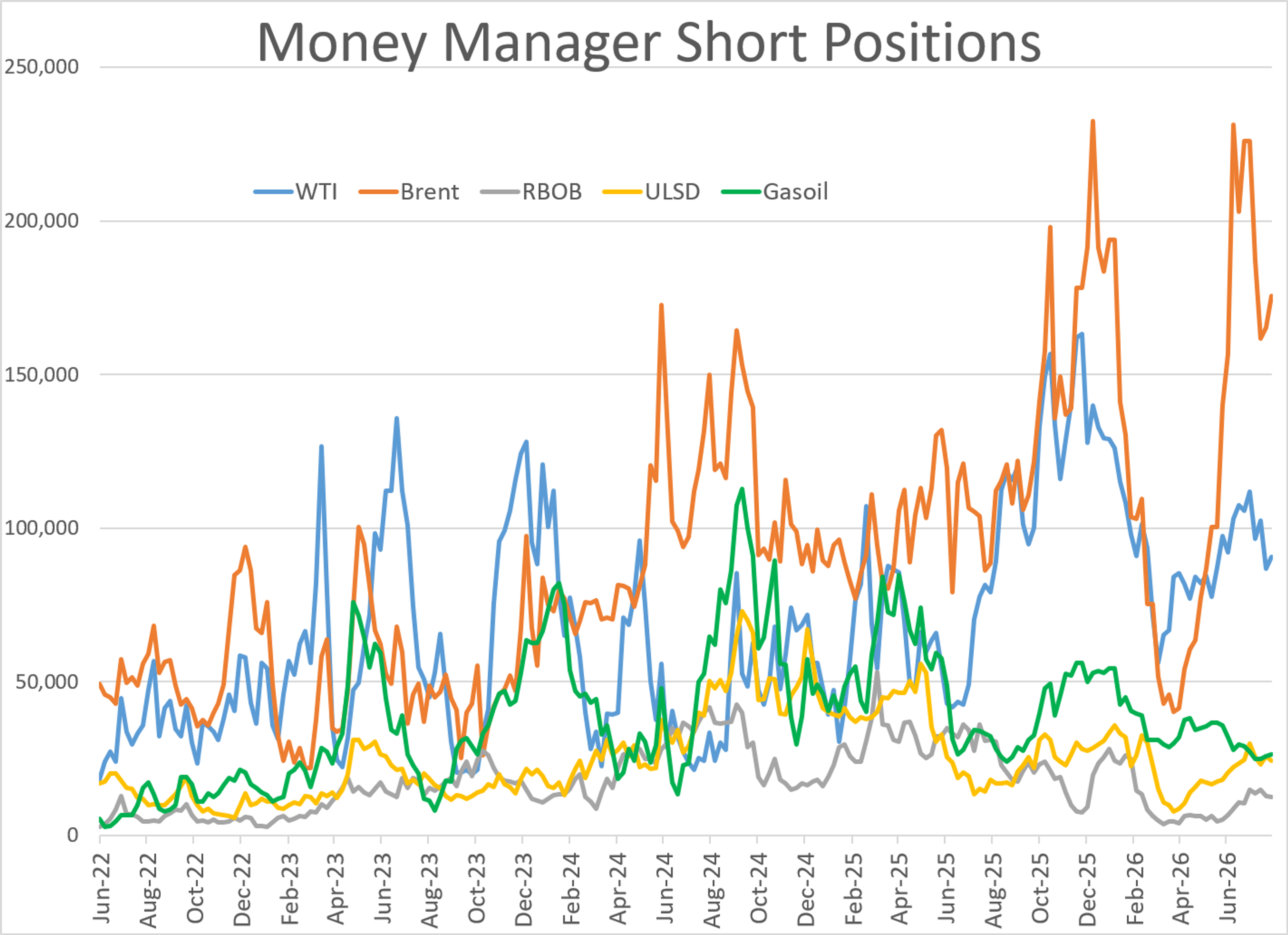
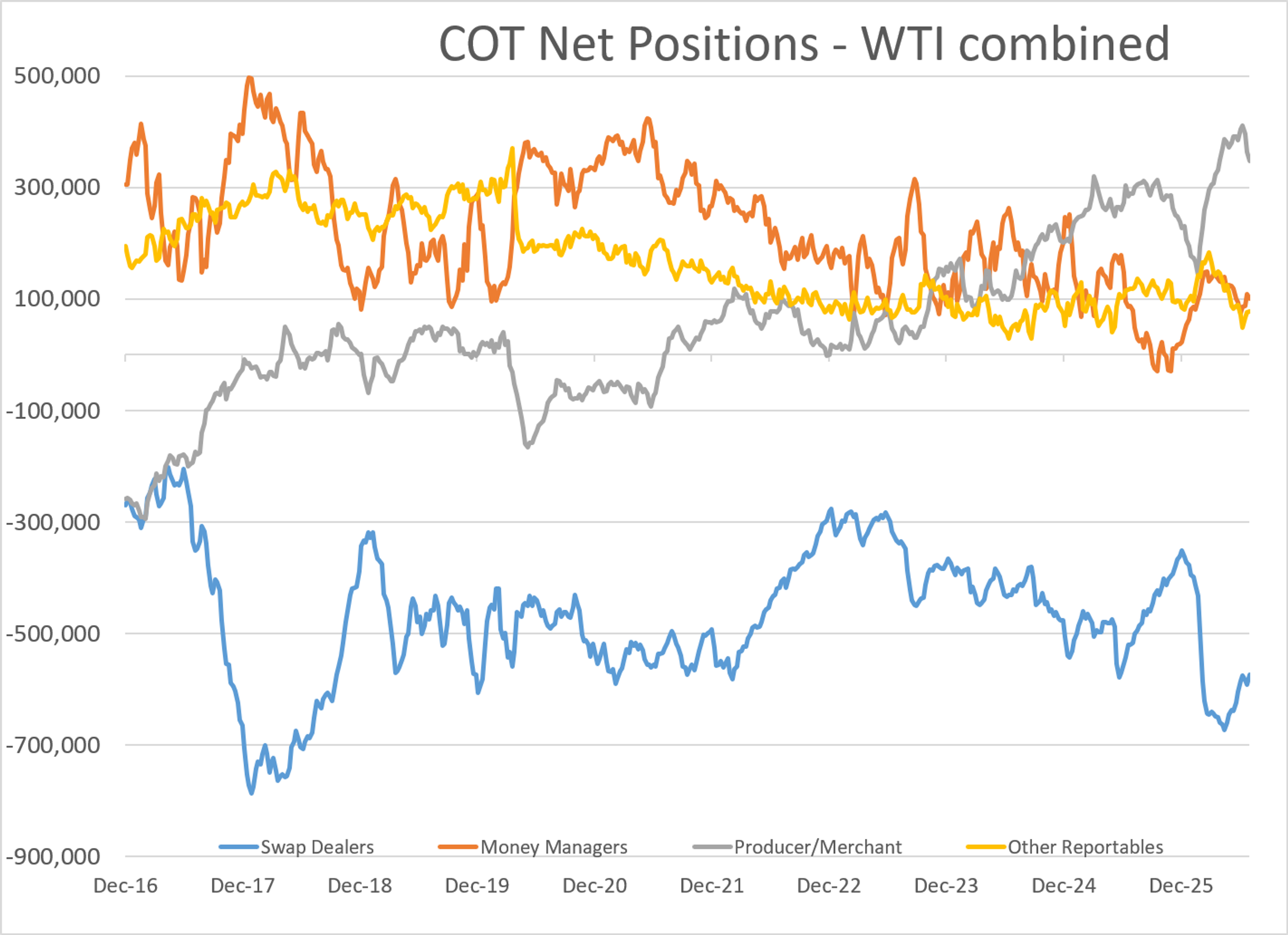
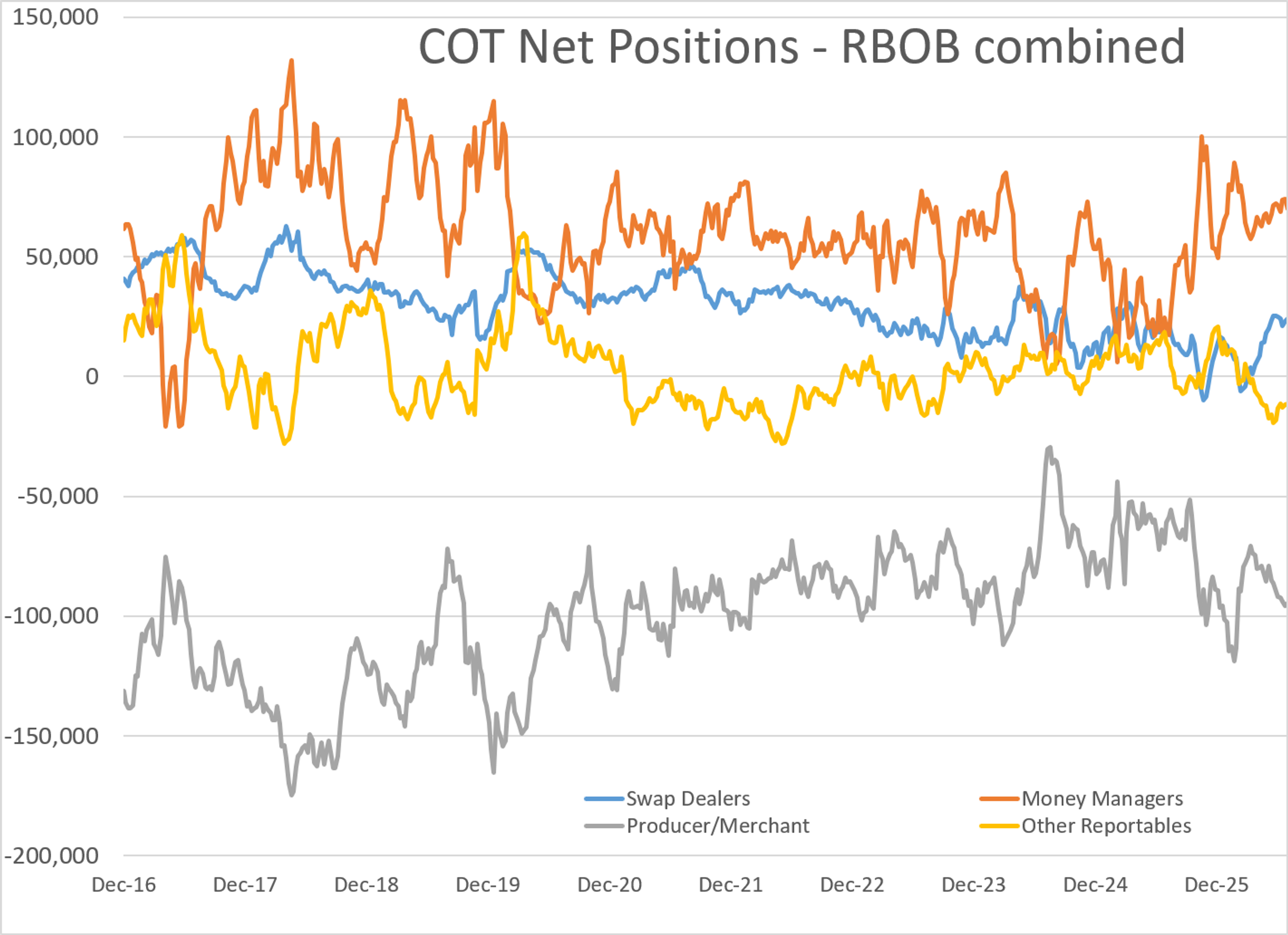
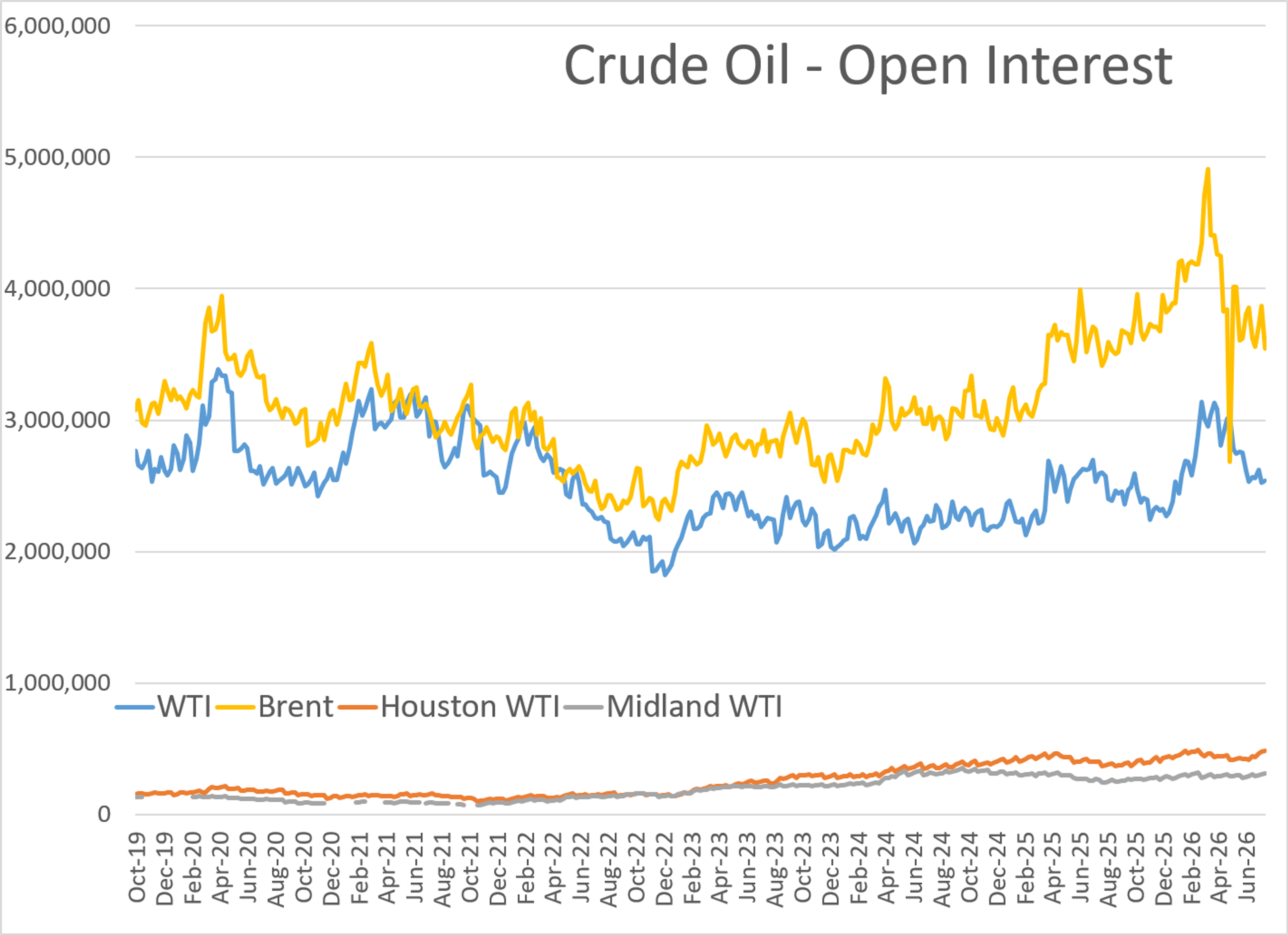
Money managers appeared to be figuratively buying and literally selling the “new deal” that failed to materialize last week, liquidating more long positions and adding new shorts in both WTI and Brent crude oil, while refined products saw liquidations of both long and short positions leading to a net decrease in large speculative length in RBOB and ULSD.
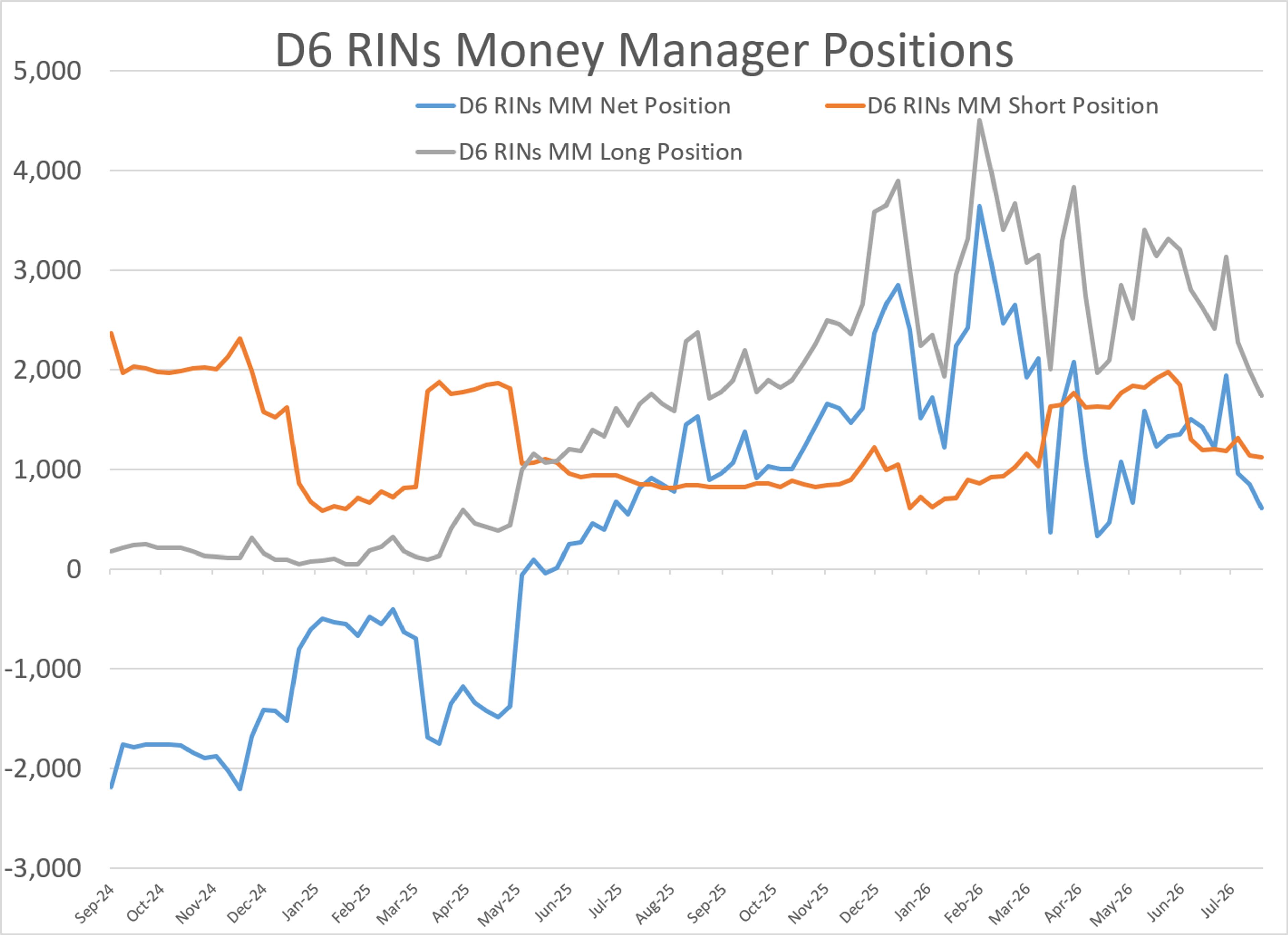
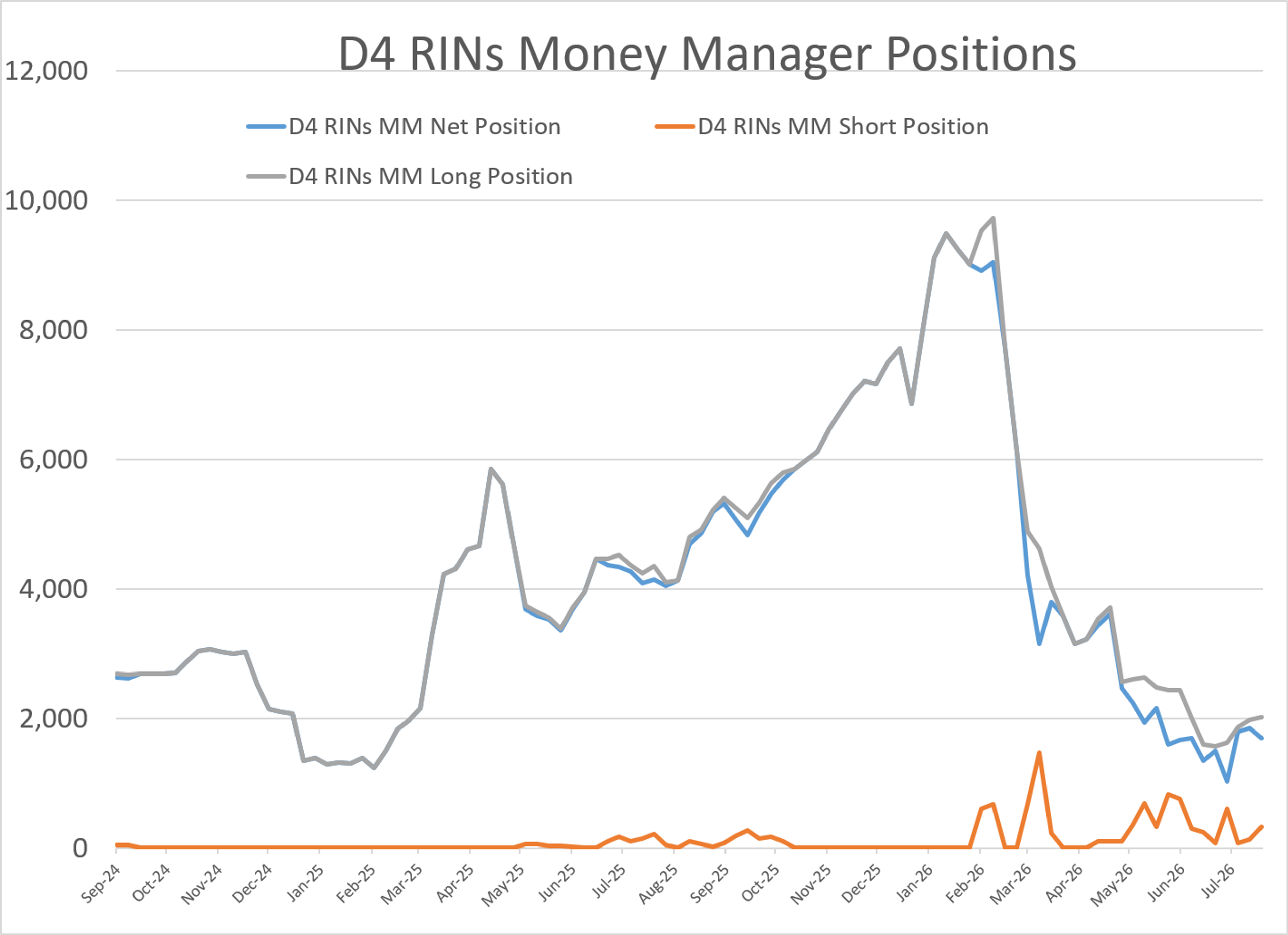
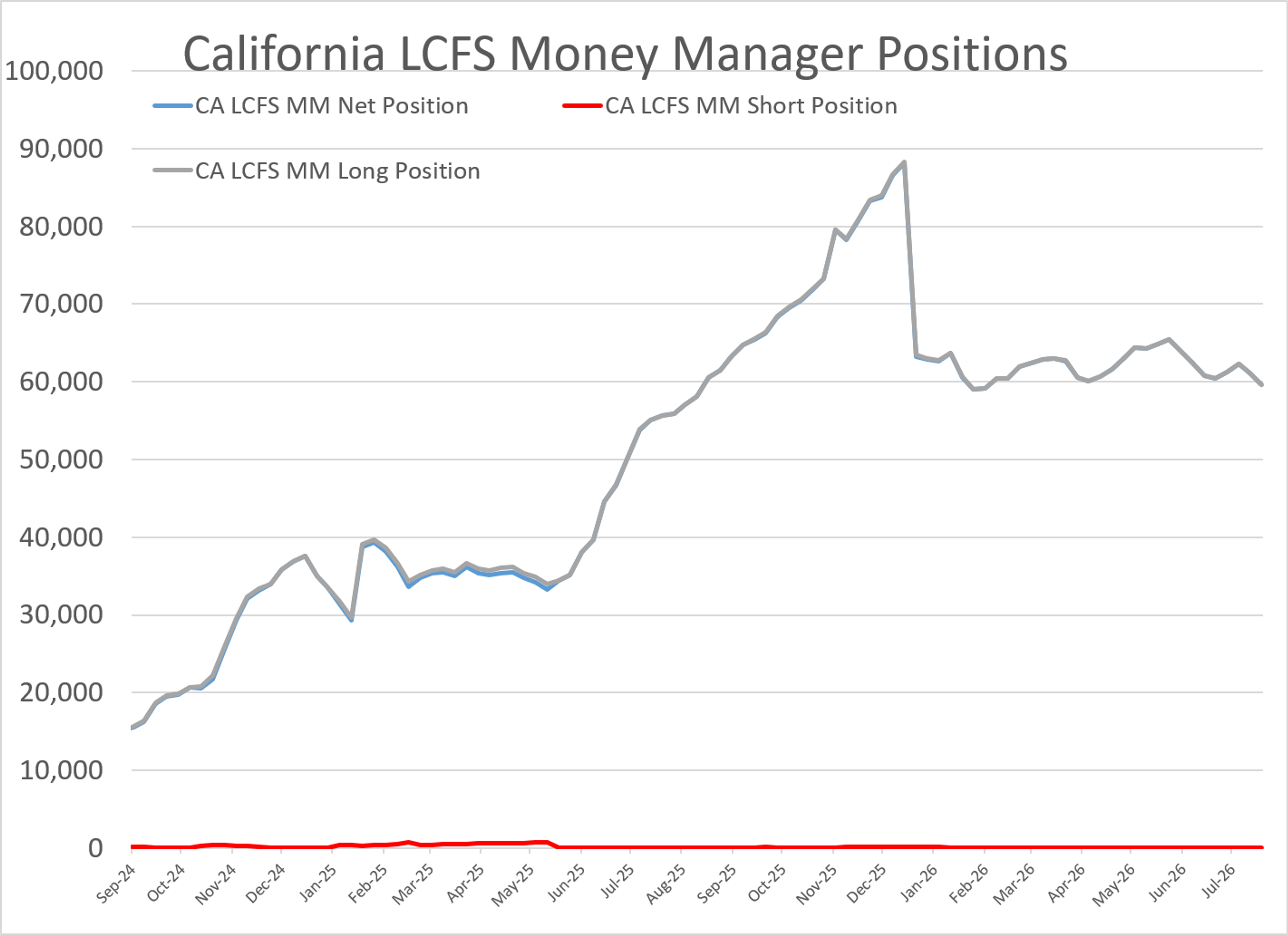
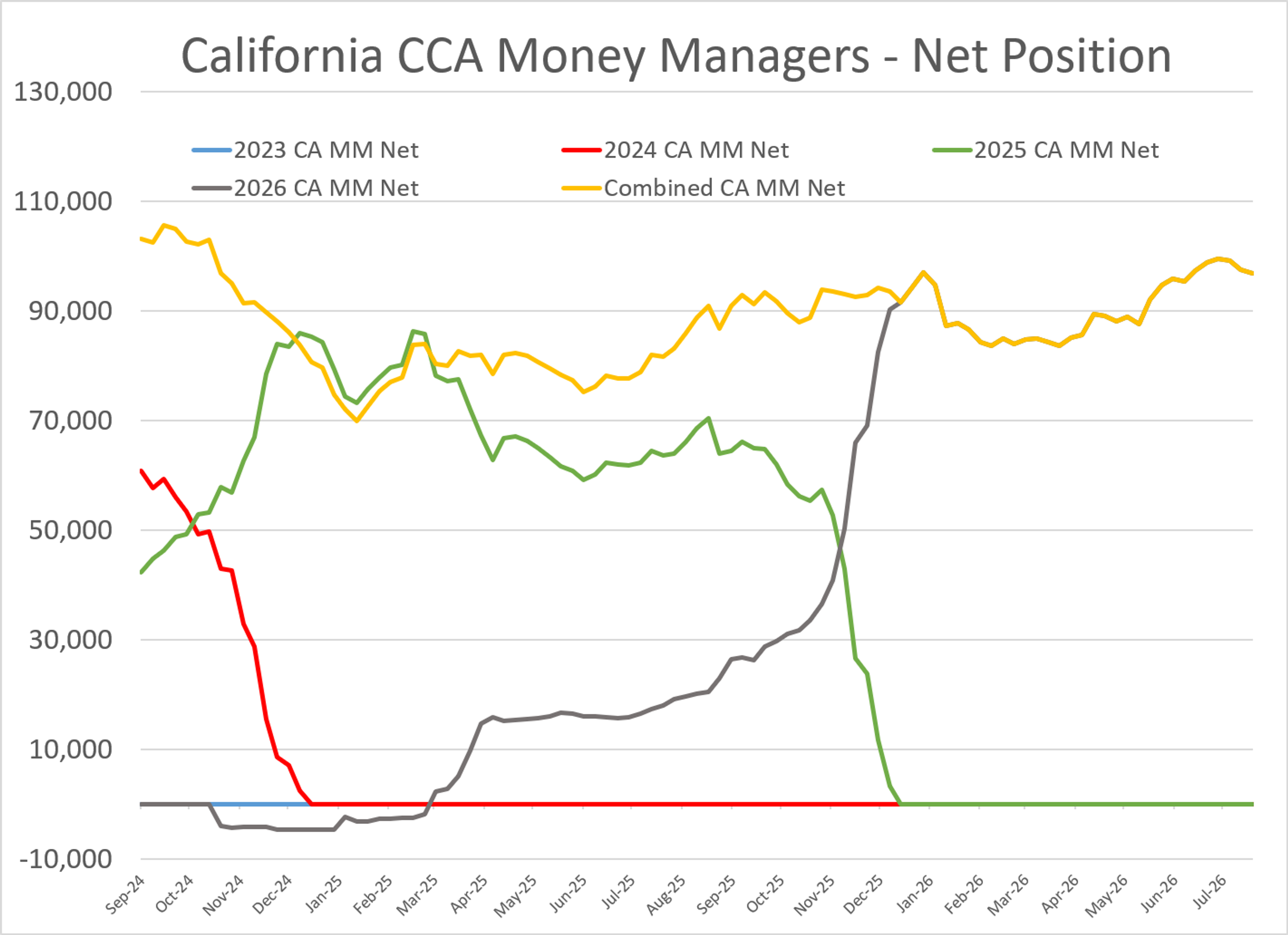
Hedge funds continue to show little enthusiasm for environmental credits, despite their lofty values, with small reductions in net length in D4 & D6 RINs, along with CA LCFS and CCA contracts last week.
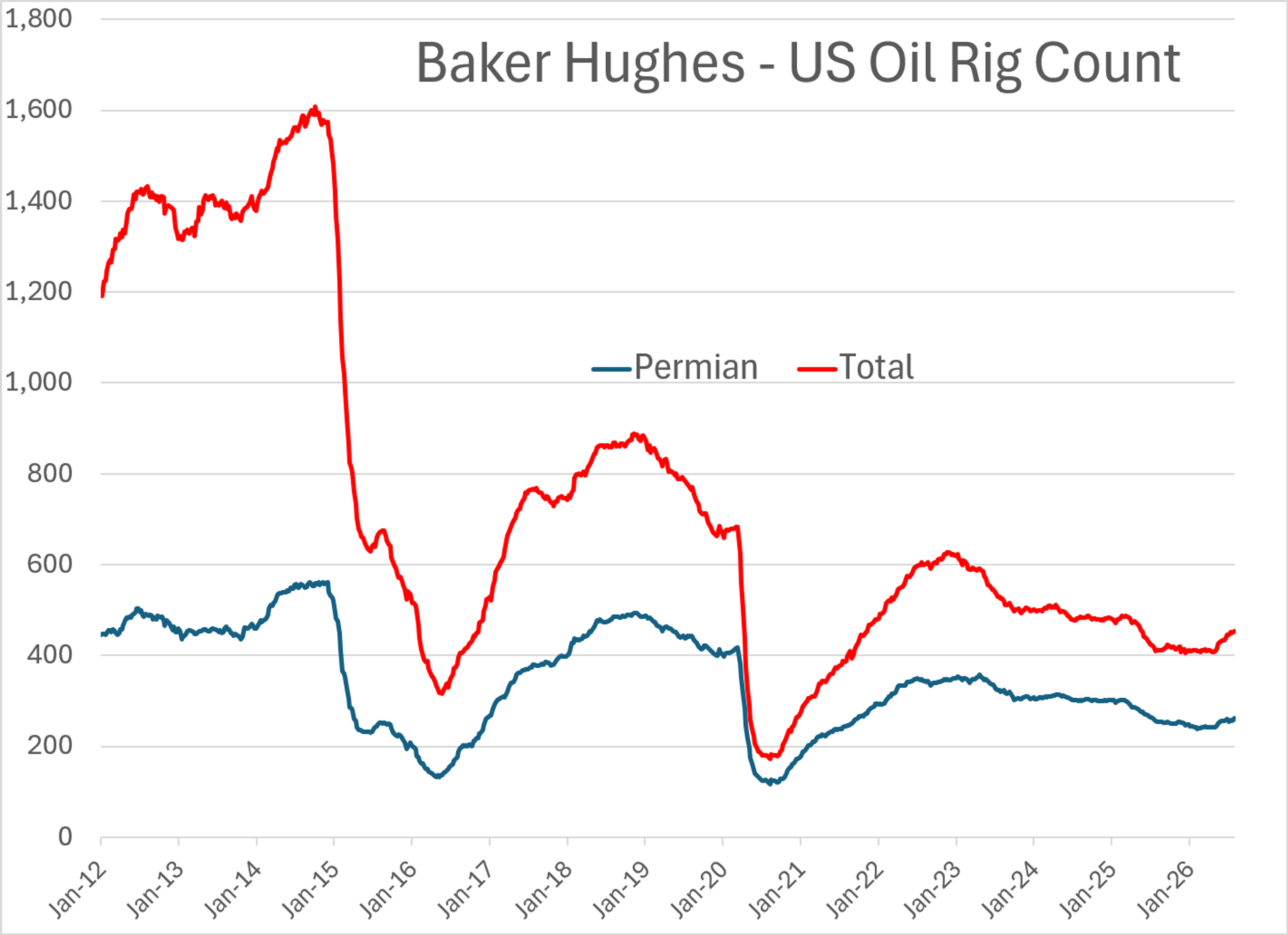
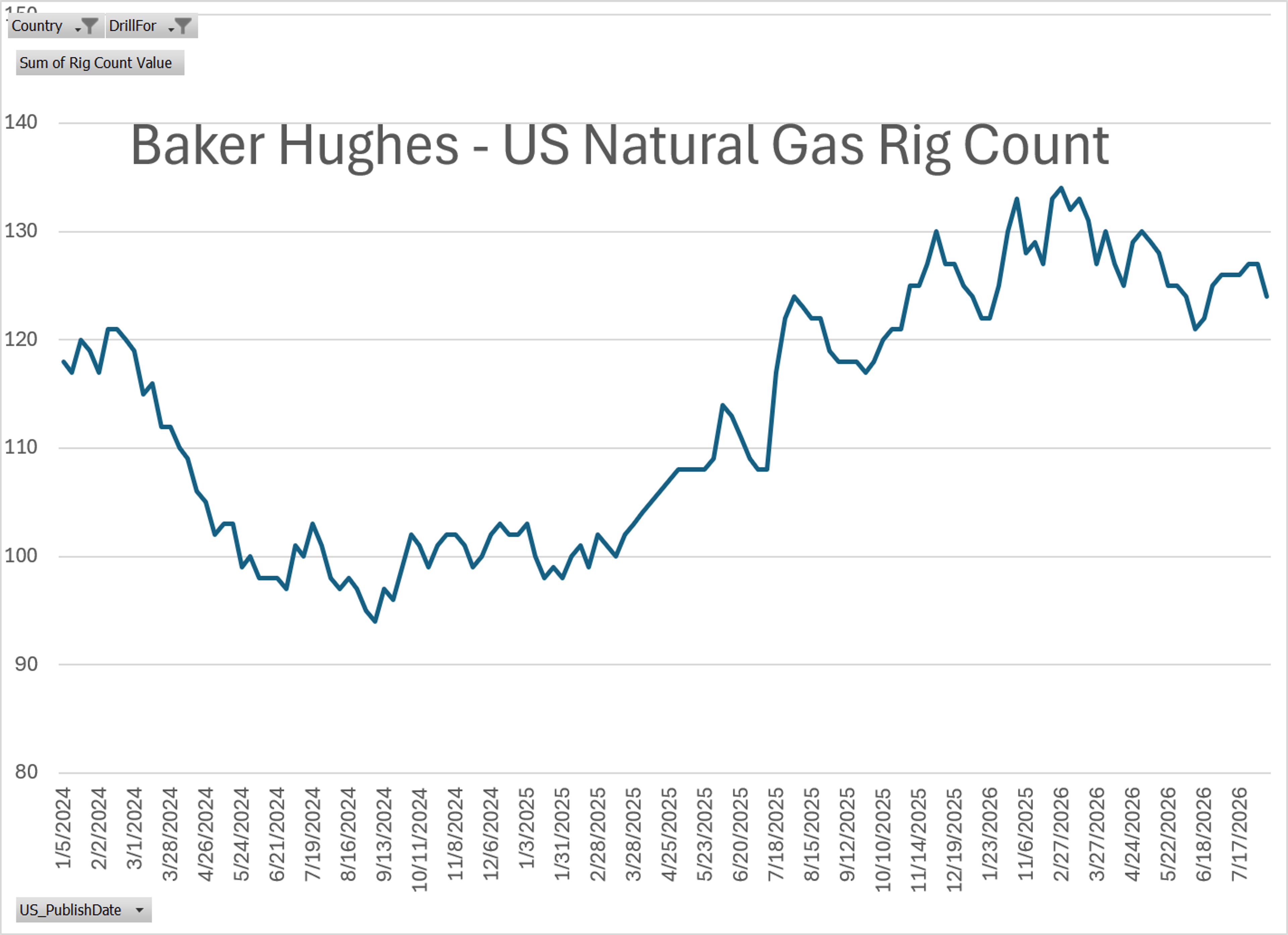
Baker Hughes reported an increase of 3 oil rigs and a decrease of 3 natural gas rigs active in the U.S. last week. All 3 of the oil rigs added to the count came from the Permian basin last week, bringing its total count to a 1 year high of 261, while the total U.S. oil rig count also hit a 1 year high of 454. The slow but steady build in rig count as producers react to the reality that Hormuz is unlikely to get back to the old normal anytime soon has many analysts (and the EIA) projecting that we’ll see new record setting oil production (for any country, ever) in the U.S. in the next 6-12 months.
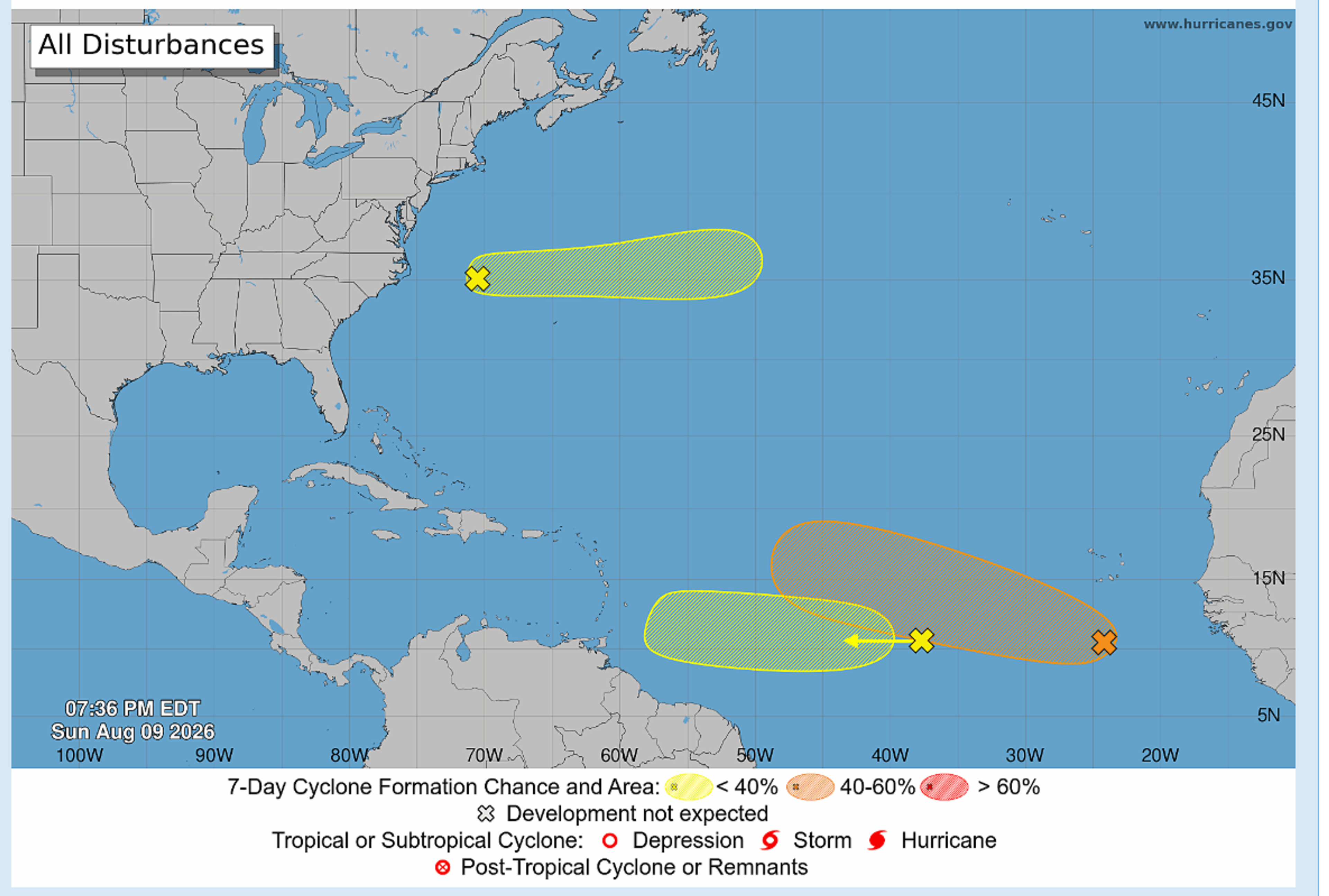
The NHC is tracking 3 potential storm systems in the Atlantic basin, after an unusually long stretch of no activity. 2 of the systems are given very low odds of developing, but the 3rd that’s forming south of Cape Verde is given 60% odds of being named. Thanks to their impressive world cup performance, fewer people will be asking AI where Cape Verde is today. Accuweather forecasters suggest that even if either of the systems heading towards the Caribbean develop into a named storm, heavy wind shear thanks to the El Nino pattern makes it less likely they’ll be able to sustain their strength, lowering the threat potential for the U.S..
Adding to the shipping headaches: The Panama Canal is making additional draft restrictions on vessels as a lack of rain as the record setting El Nino settles in reduces the capacity of water to operate the locks. While things aren’t yet as bad as what we saw during the drought of 2023, this is another challenge for the global supply chain as buyers in Asia (and California) have been leaning more heavily on supplies from the USGC that need to transit the canal.
Latest Posts
Diesel Rally Resumes Amid Growing Debate Over US Export Limits
Week 38 - US DOE Inventory Recap
Refinery Economics Clash With Calls For A Diesel Export Ban
Diplomacy Knocks Crude Lower, But Diesel Bulls Aren’t Done Yet
Diesel Pullback Tests Market Nerves Amid Supply Risks
Diesel Strength Offsets Gasoline Weakness As Supply Concerns Mount
Social Media
News & Views
View All
Diesel Rally Resumes Amid Growing Debate Over US Export Limits
Week 38 - US DOE Inventory Recap