Diplomacy Knocks Crude Lower, But Diesel Bulls Aren’t Done Yet

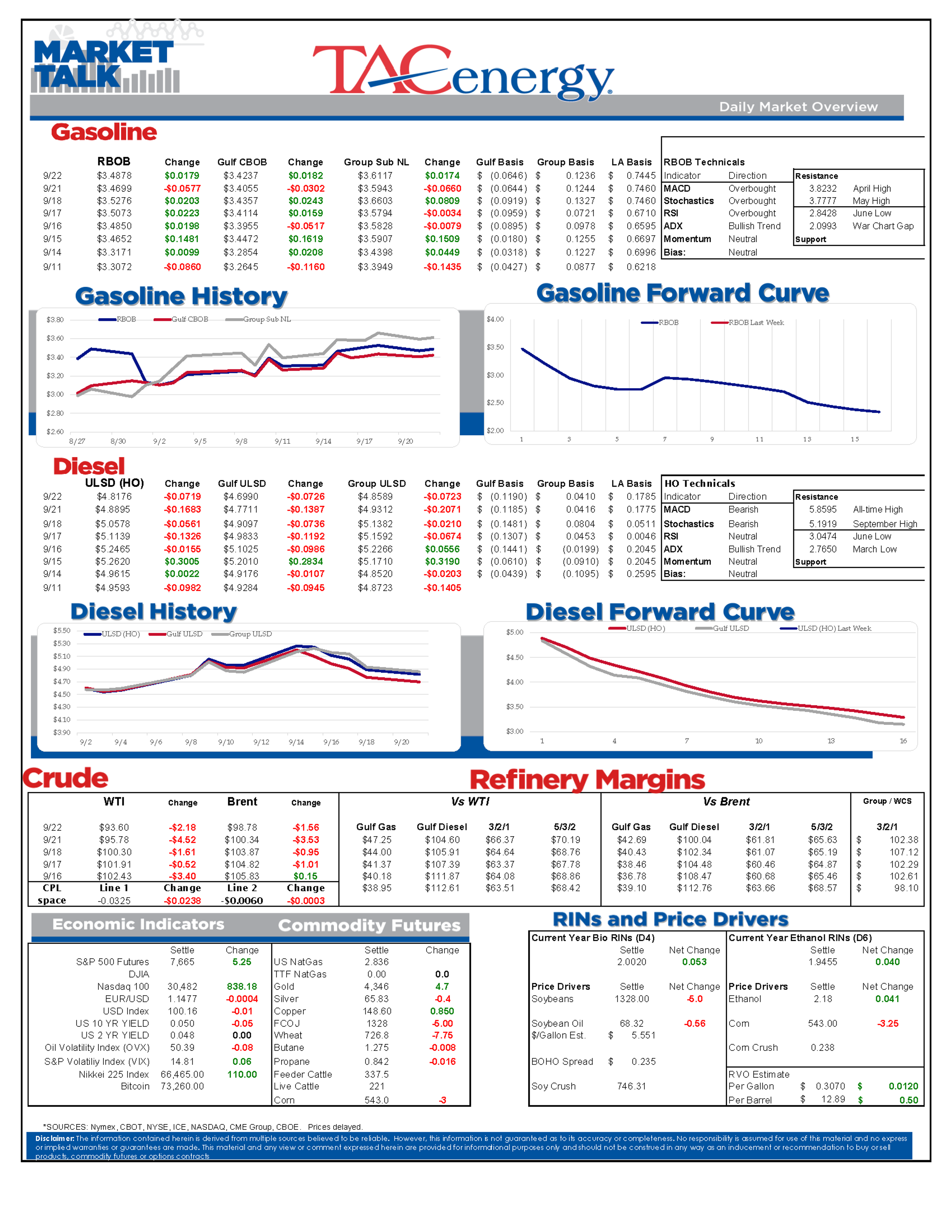
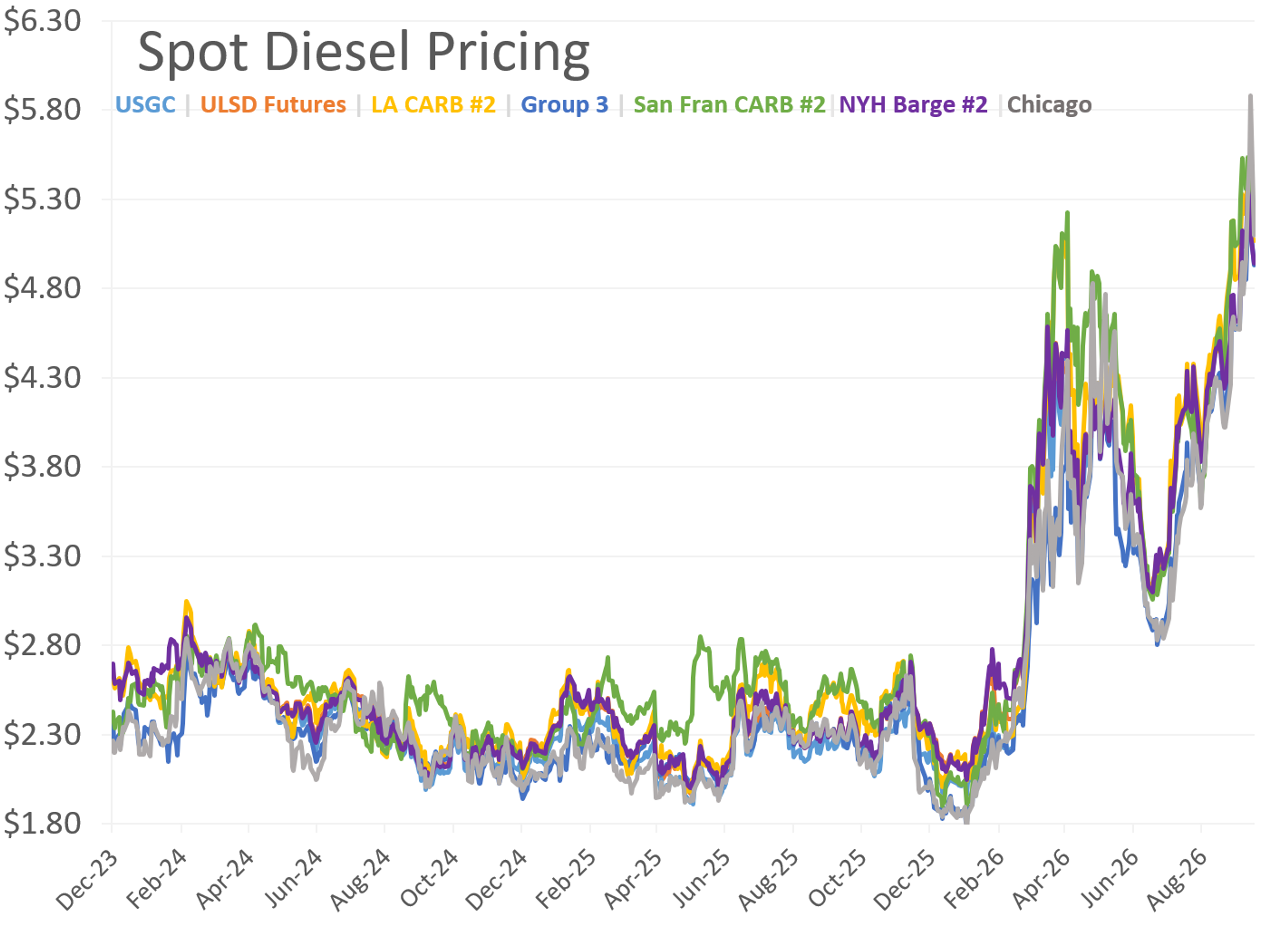
Oil and diesel prices are seeing a wave of selling for a 2nd straight day, with both contracts down around 5% to start the week with hopes for diplomacy apparently contributing to the pullback. RBOB gasoline futures are resisting the pull lower so far, holding modest gains of around 1.5 cents in the early going.
Today’s selling is getting blamed on a Reuters report citing a Senior Iranian official who said they will re-open the Strait of Hormuz in 7 days IF the U.S. lifts its Naval blockade. U.S. officials have signaled a willingness to “potentially” meet with Iranian officials on the sidelines of UN meetings this week.
There are also signs that Saudi Arabia is increasing oil exports through Hormuz, and restarting the East West pipeline that was shut after an attack attack 2 weeks ago, easing the immediate supply squeeze for crude oil despite the ongoing war with the Houthis.
2 more ships were struck (apparently by Iran) as they transited Hormuz on Monday according to the UKMTO. KPLER continues to show a huge decrease in documented crossings, while U.S. military officials continue to suggest the real volume is much higher.
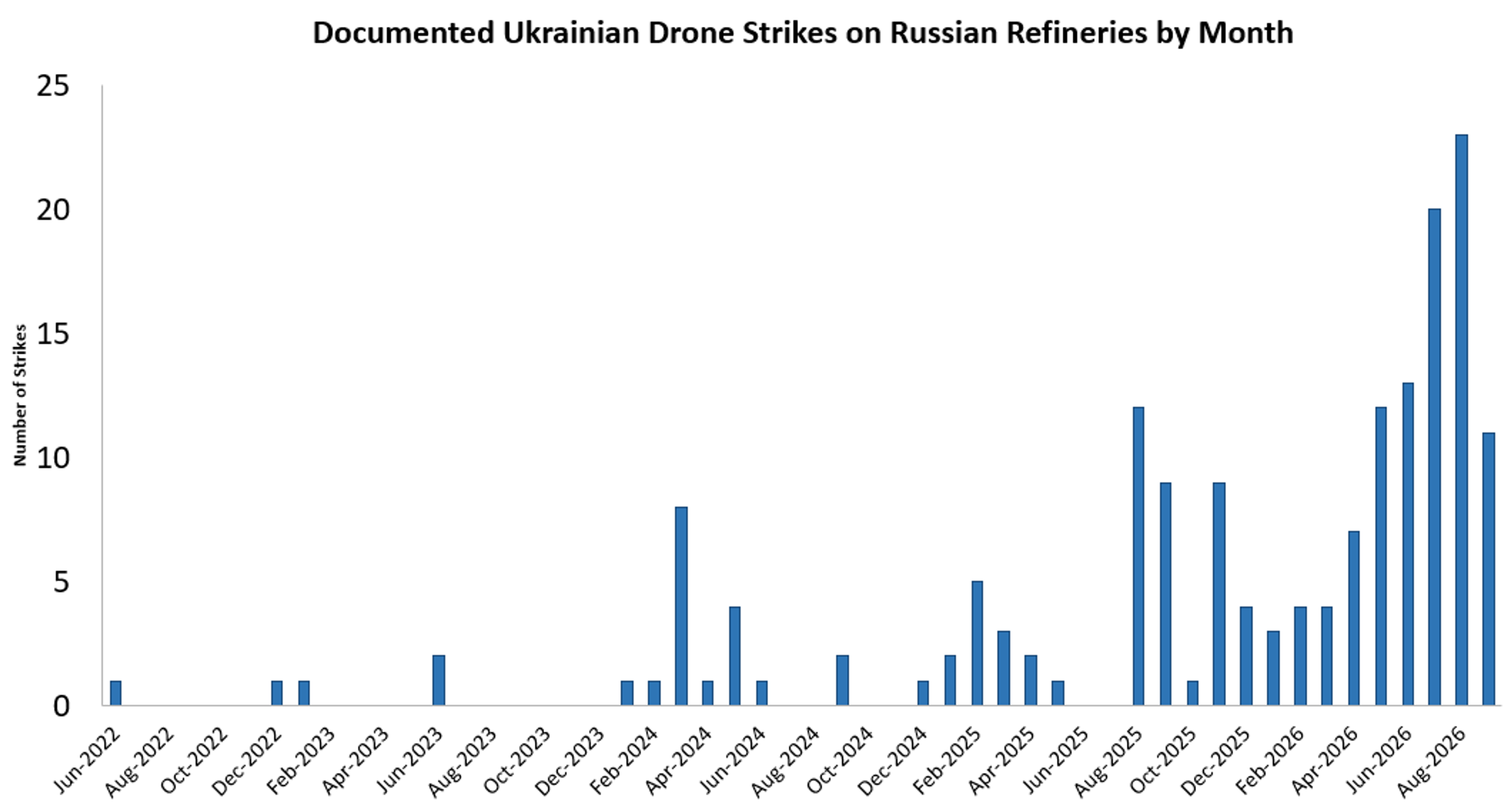
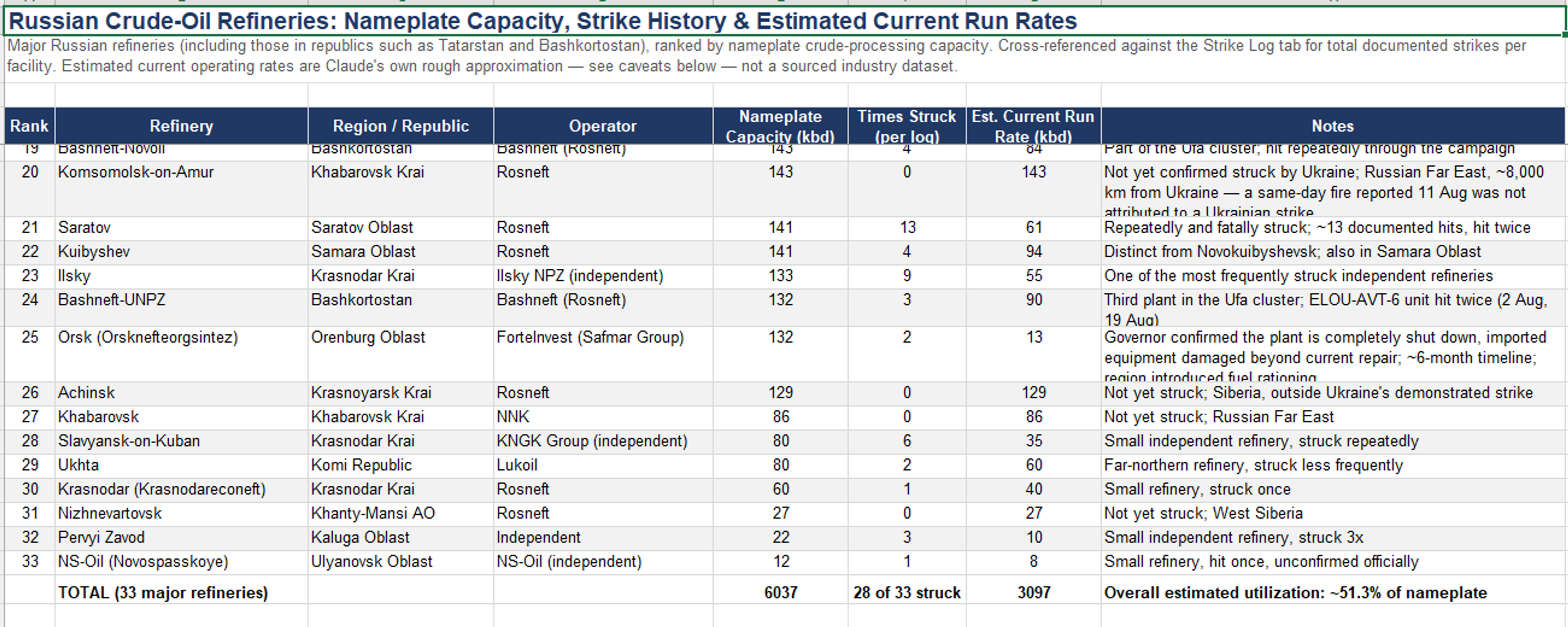
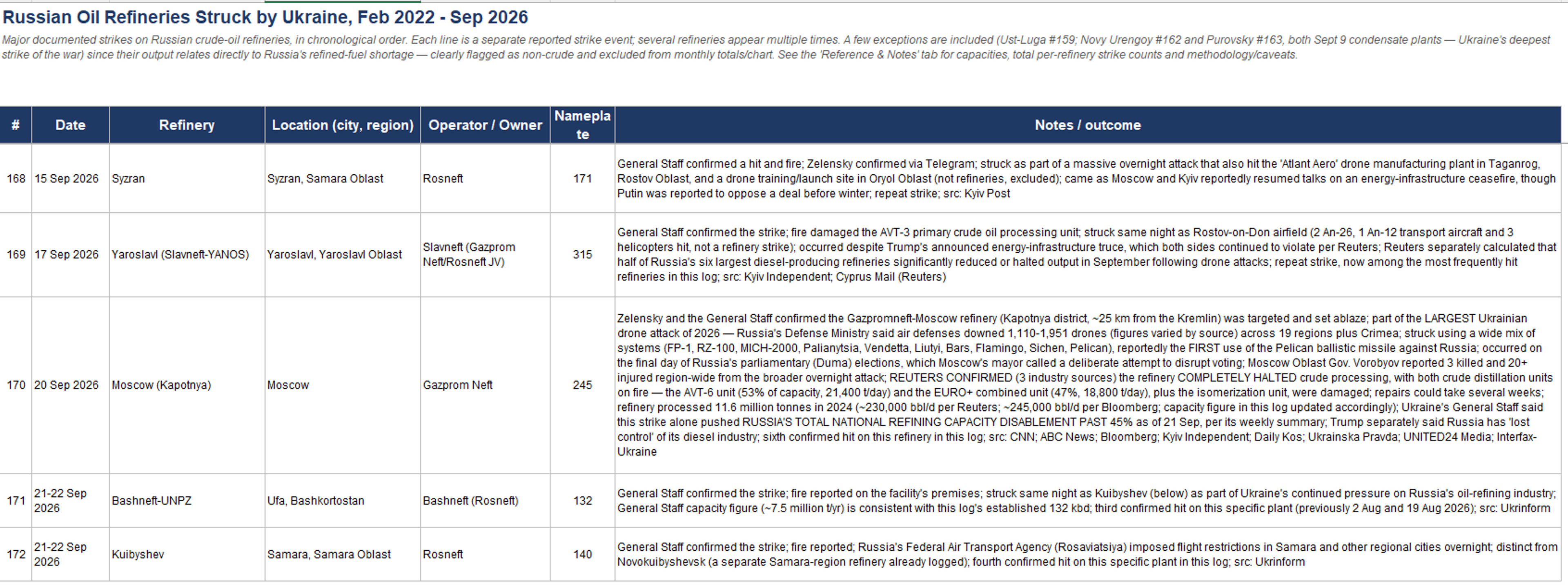
Show me the Patriots: Ukraine hit 2 more Russian refineries overnight, with both the 132mb/day Rosneft UFA plant and 140mb/day Rosneft Samara facilities reportedly hit, despite the U.S. President’s request to stop targeting Russian diesel production. In addition, the 245mb/day Moscow refinery that was hit over the weekend was reported to have completely halted production for several weeks to perform repairs. Ukraine’s military estimates that 45% of Russia’s refining capacity is currently offline, while our back of the envelope estimate comes in slightly higher at 49%. While the exact figure is impossible to know, and is changing daily, Bloomberg reports that Russia is set to extend its diesel export ban beyond September due to the attacks, which will serve to keep the global market tighter for longer.
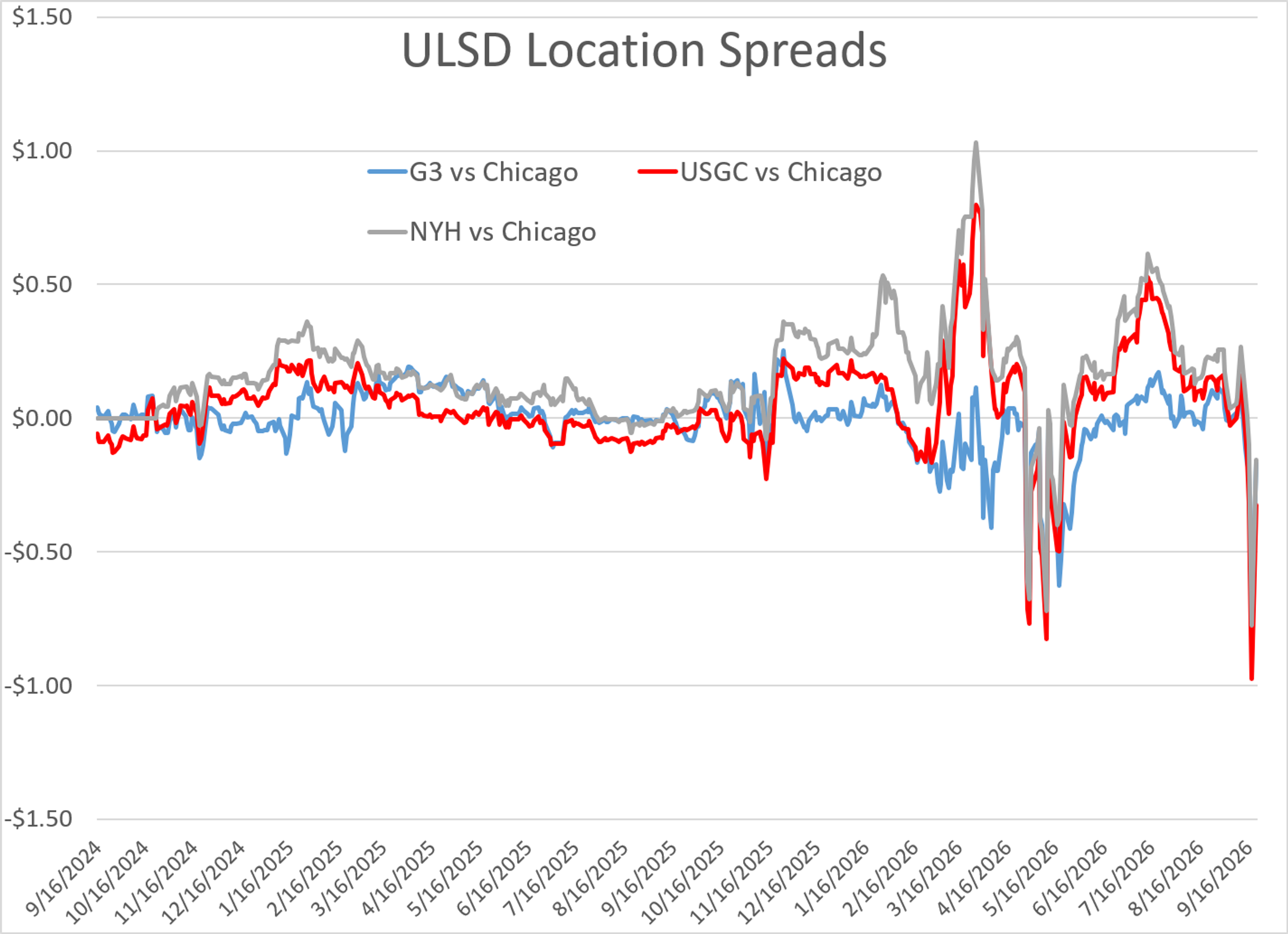
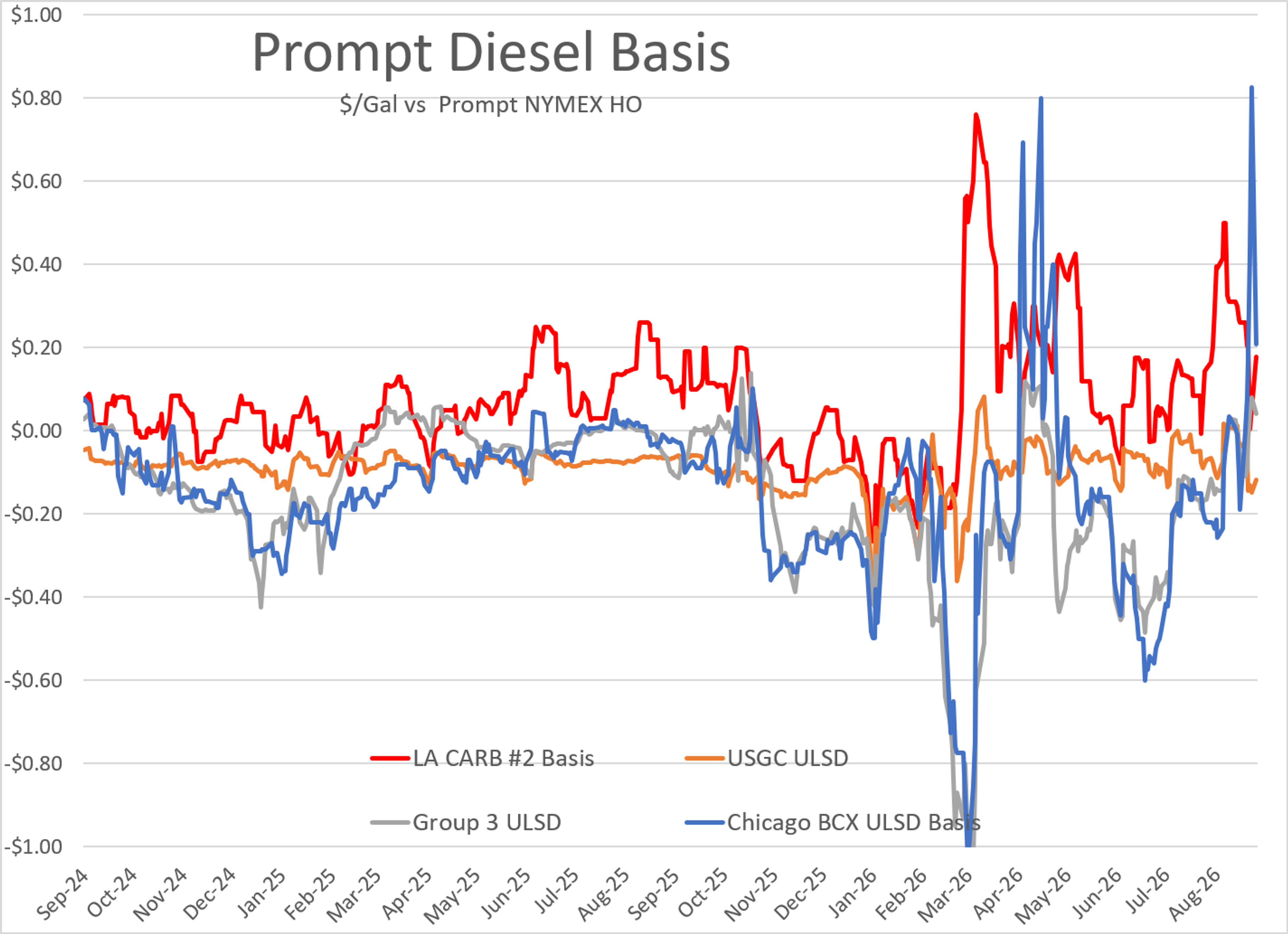
And just like that: Chicago basis values crumbled Monday after reports that Exxon Joliet was restarting after a power outage a week earlier. A post from the plant this morning suggests those restart efforts continue. While the worst is apparently behind us from a price perspective, that downtime, coupled with planned maintenance at BP Whiting, and the start of harvest demand will keep pressure on regional inventory levels in the weeks ahead.
While the Atlantic Hurricane season has been incredibly inactive as we pass the peak of the season (thanks to the Super El Nino forming in the Pacific) there is an early Nor’easter staring down the U.S. coast this week. The Euro model has the storm staying offshore as it passes the North East U.S. coastline over the next 3 days, while the U.S. GFS model has the storm hugging the coast, which would bring more damage. Either way, the system will likely disrupt vessel traffic that will create supply headaches in and around New York Harbor and waterborne terminals in the area.
In addition to the storm, the U.S. Coast Guard will be restricting vessel traffic in and around NY Harbor for safety reasons today through Friday, so waterborne terminals around NY and New England may see more delays than normal, even before the storm hits.
P66 reported flaring at its 277mb/day Sweeny TX refinery Monday, but the filing says that was caused by restarting an FCC unit after maintenance, not an upset that might negatively impact supplies.
Latest Posts
Diesel Pullback Tests Market Nerves Amid Supply Risks
Diesel Strength Offsets Gasoline Weakness As Supply Concerns Mount
Diesel Under Pressure As Traders Discount Supply Disruptions
Week 37 - US DOE Inventory Recap
Oil Pulls Back After Rally While Distillates Extend Gains
Refinery Disruptions And Strait Closures Fuel Diesel Rally
Social Media
News & Views
View All
Diesel Pullback Tests Market Nerves Amid Supply Risks
Diesel Strength Offsets Gasoline Weakness As Supply Concerns Mount