Diesel Under Pressure As Traders Discount Supply Disruptions

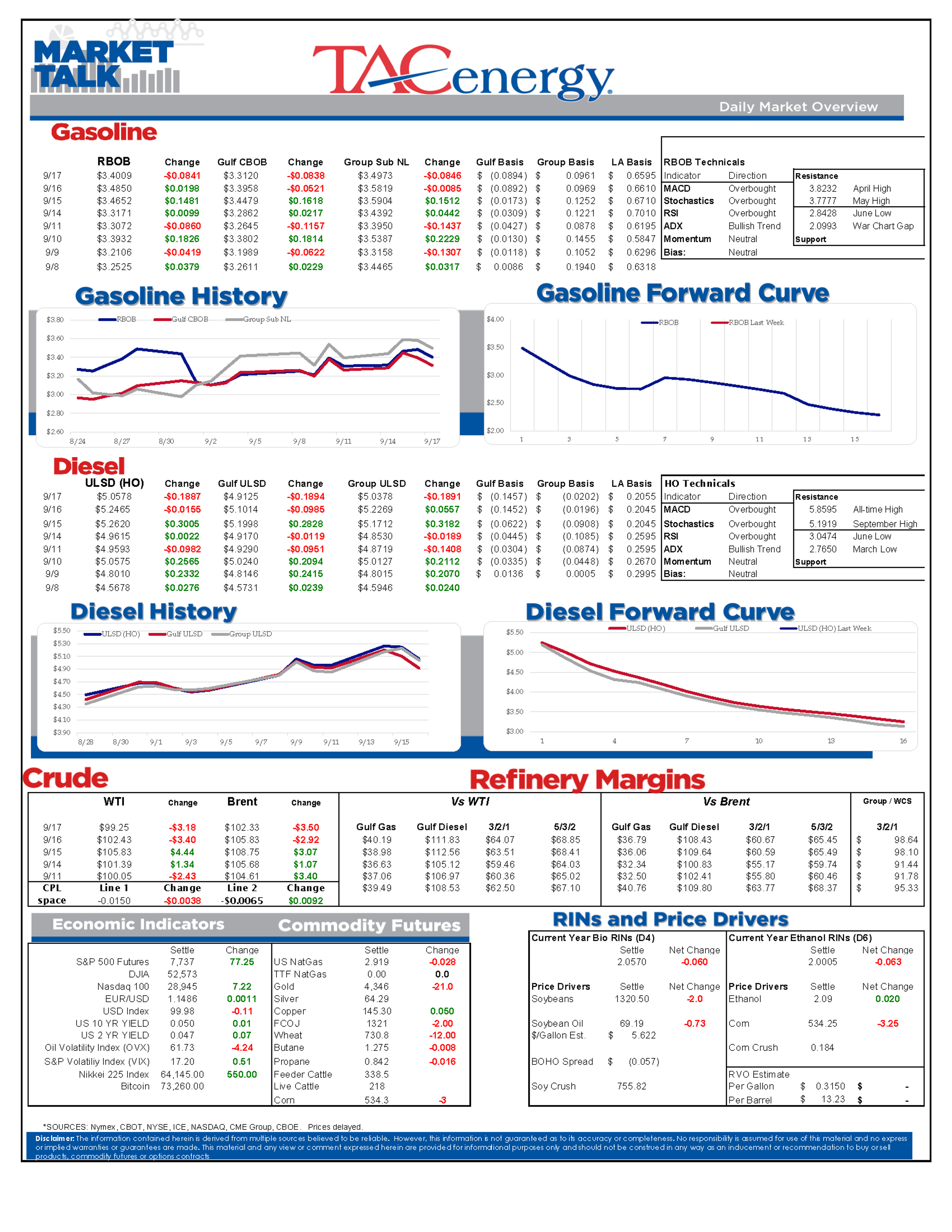
Diesel futures are getting hit hard this morning, dropping 19 cents so far in pre-market trading. Gasoline and WTI crude oil futures are trailing behind their distillate counterpart, with the former shedding 7 cents per gallon and the latter dropping ~$3 per barrel (.0715 per gallon equivalent). Updated estimates that the crude oil shipment delays from the attacks on the Saudi’s East-West pipeline could merely take days to resume, rather than weeks, is being cited for this morning’s selling action.
Bullish headlines that are seemingly being ignored:
Only three ships transited the Strait of Hormuz yesterday.
Ukraine struck Slavneft’s 290mbd Yanos refinery.
Russia extended its diesel export ban through the end of October.
China pushes refiners to ramp production in preparation for a partial or full export ban.
Speaking of export bans, the U.S. Senate Majority Leader has publicly stated that he is “open to exploring” national diesel export restrictions from the United States. Time will tell if this is political bluster ahead of a very competitive mid-term election (seeking to sway voters by attempting to assuage a surging inflation driver) or if the U.S. legislature is seriously considering restricting refined product exports for the first time in 45 years.
Adding to the Midwest pain: BP reported maintenance on a unit at its Whiting refinery, the largest refinery in the region feeding the Chicago physical market hub. That, combined with the lack of a restart time for XOM Joliet, has pushed diesel prices in Chicago to ~19 cent premiums over the NYMEX, nearly 40 cents more expensive than they were last week.
Notes on the DOE report below, clanker notes attached.
Crude stocks fell with heavier export activity, but the draw was tempered by reduced refinery runs and a big positive swing in the adjustment. Import activity improved to a seasonal high and production dipped from last week’s all-time high but remains at historic levels. The SPR balance fell to just 14.5 million barrels above its initial 1982 weekly tracking level, now sitting at 285 million barrels. That brings total U.S. crude to a fresh low for 2026 and a 42-year low continuously.
Refinery runs slowed in all PADDs except 1 as several plants entered turnaround but continue at seasonal highs in total. The PADD 1 increase puts run rates at a seasonal high alongside PADDs 2 & 3 even after their declines as both are coming off all-time highs 2 weeks and 1 week prior, respectively. In PADD 2, HF Sinclair’s El Dorado facility is working through a planned 40–45-day plantwide overhaul . PADD 3 saw Marathon Galveston Bay and P66 Sweeny both begin planned maintenance as a few other Gulf Coast refineries returned from storm-related issues. Marathon’s Wilmington, CA refinery is also working through a planned turnaround in PADD 5, expected to complete around 9/25.
Diesel stocks increased off a drop in demand while exports held at the high end of the chart and imports followed the 5-year average. Production slowed alongside domestic demand but is still at seasonal highs due to export demand. PADD 3 led the build, making up about 80% of the total increase, but inventories remain just behind the 5-year average. The other PADDs are all well below seasonal norms, leaving the total U.S. about 10 million barrels below the 5-year range and 15 million below average.
Gasoline stocks built with increased demand being offset a larger increase in production, both sitting just ahead of average. The decline in PADD 1 was offset by builds in every other PADD, all of which sit near the low end or below their 5-year ranges. Total U.S. gas inventories are still hung at 14-year seasonal lows, a little over 11 million barrels below average.
Jet fuel stocks declined due to a large drop in production which fell into the 5-year range for the first time since the end of February. U.S. demand increased slightly but the output reduction coincides with a sharp drop in export activity. PADD 3 led the decline, but inventories there are in line with 2024 levels and still running above average. PADD 4 is the only region holding a below average jet fuel balance, but total U.S. inventories are trending closer to year-ago levels rather than the seasonal highs we saw through spring and summer.
Latest Posts
Week 37 - US DOE Inventory Recap
Oil Pulls Back After Rally While Distillates Extend Gains
Refinery Disruptions And Strait Closures Fuel Diesel Rally
Oil And Diesel Rally On Escalating Infrastructure Attacks
Energy Markets Pause After Historic Rally As Supply Risks Persist
$5 Diesel Now Feels Inevitable: ULSD Blasts Past March Highs, No Resistance in Sight
Social Media
News & Views
View All
Week 37 - US DOE Inventory Recap
Oil Pulls Back After Rally While Distillates Extend Gains