Diesel Pullback Tests Market Nerves Amid Supply Risks

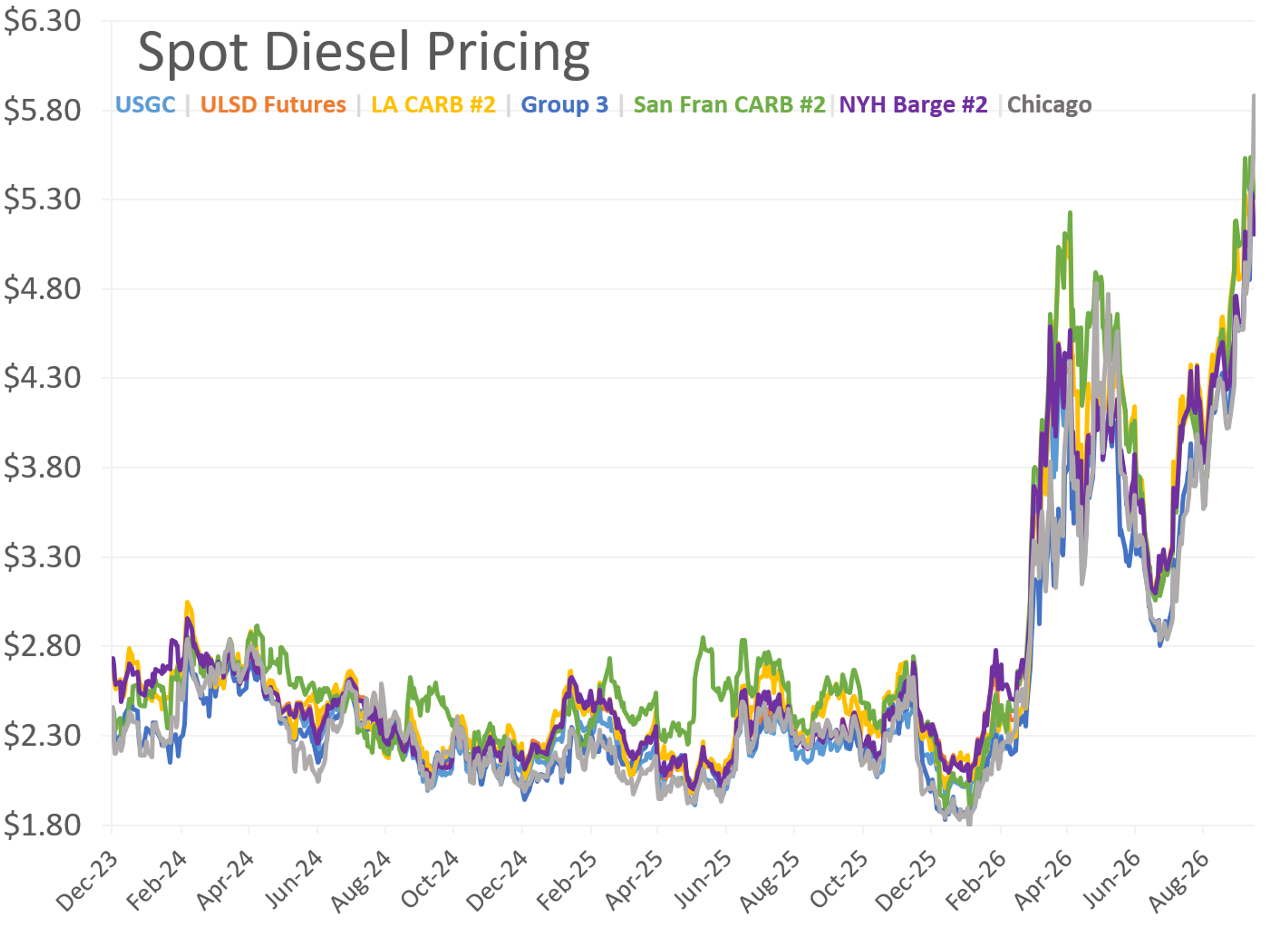
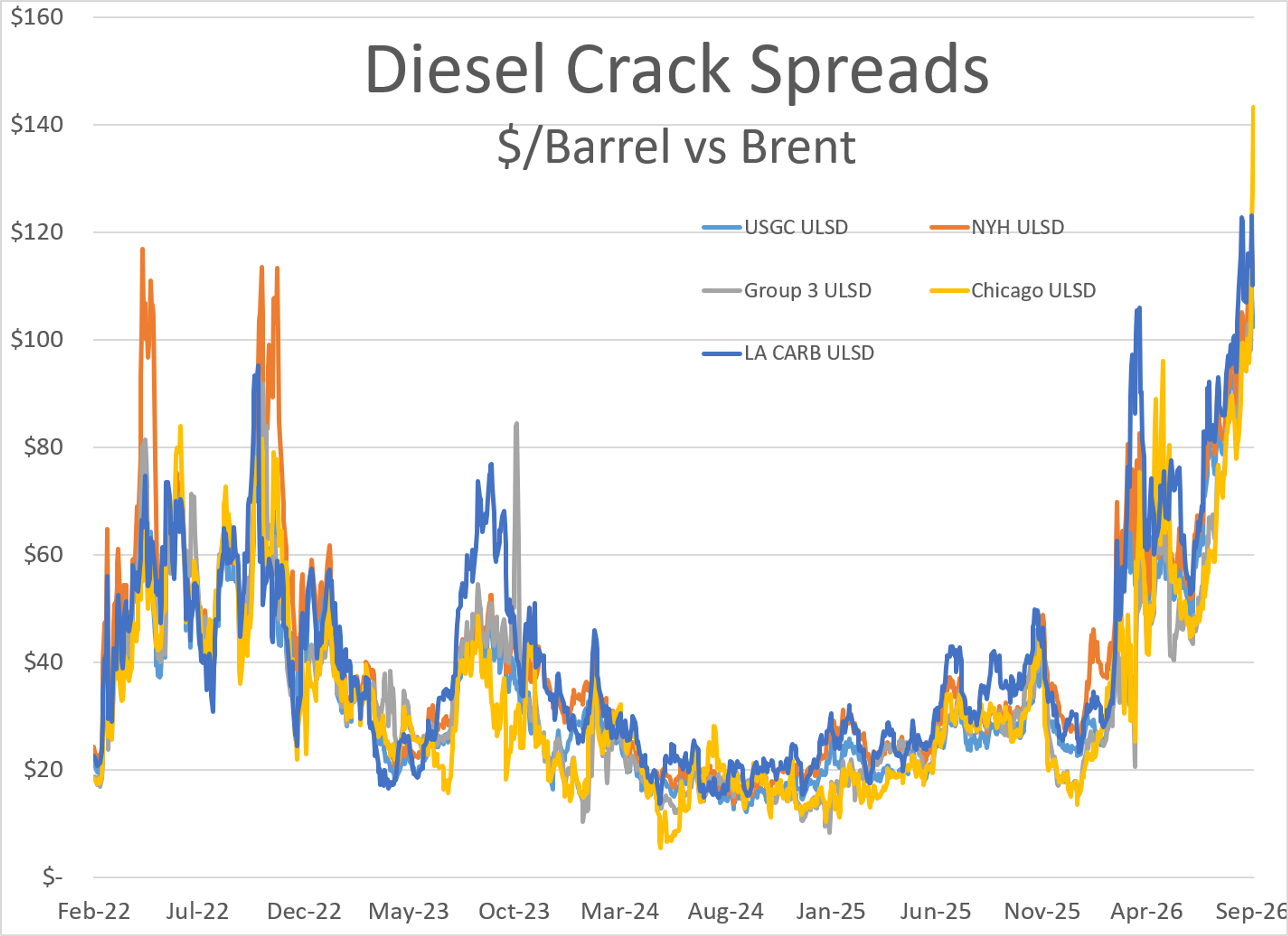
“Diesel, Diesel, Diesel.” From the headlines, to Presidential phone calls, diesel prices have been front and center of the global energy conversation since breaking record highs over the past week. So, as long time traders would tell you should be expected, now that everyone is talking about them, they’re selling off heavily this morning.
It was another busy overnight session for the ULSD contract, starting out with 12 cent gains following reports that Saudi Arabia’s capital had been struck by Houthi attacks, promising further escalation in the war. Values have since dropped more than 31 cents from those overnight highs, despite the fact that another tanker was struck in the Strait of Hormuz overnight.
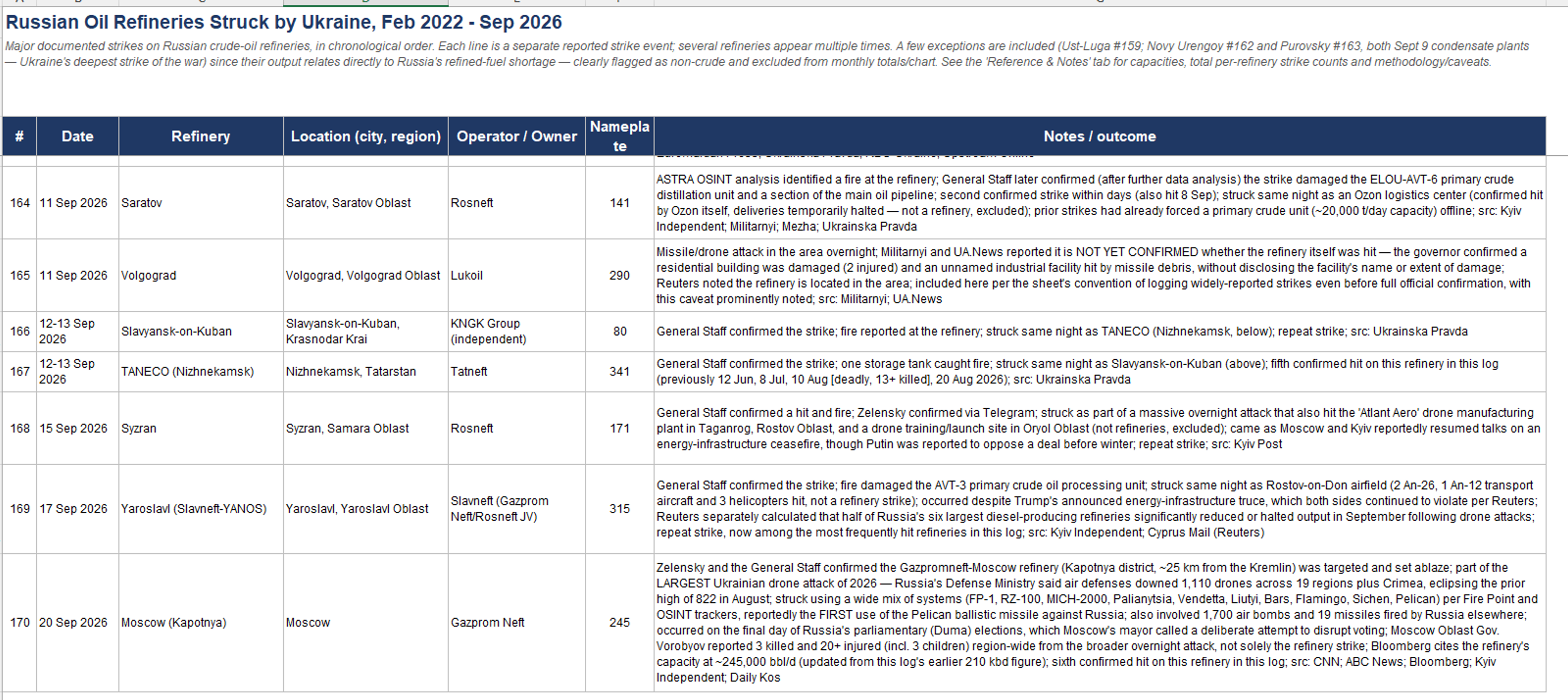
The Financial Times reports that the U.S. President appealed to Ukraine’s President Sunday to stop targeting Russian refineries, with his emphasis on halting the rise of diesel prices. The call came after Ukraine launched its largest drone attack of the war on Sunday, with more than 1,100 drones reportedly launched across 19 regions, that hit the 245mb/day Gazprom refinery in Moscow, which is at least the 6th time that facility has been hit. At this point, there has been no agreement announced, but it wouldn’t be too much of a stretch to think that a trade of pausing refinery strikes in exchange for more air defenses or other military needs may be on the table.
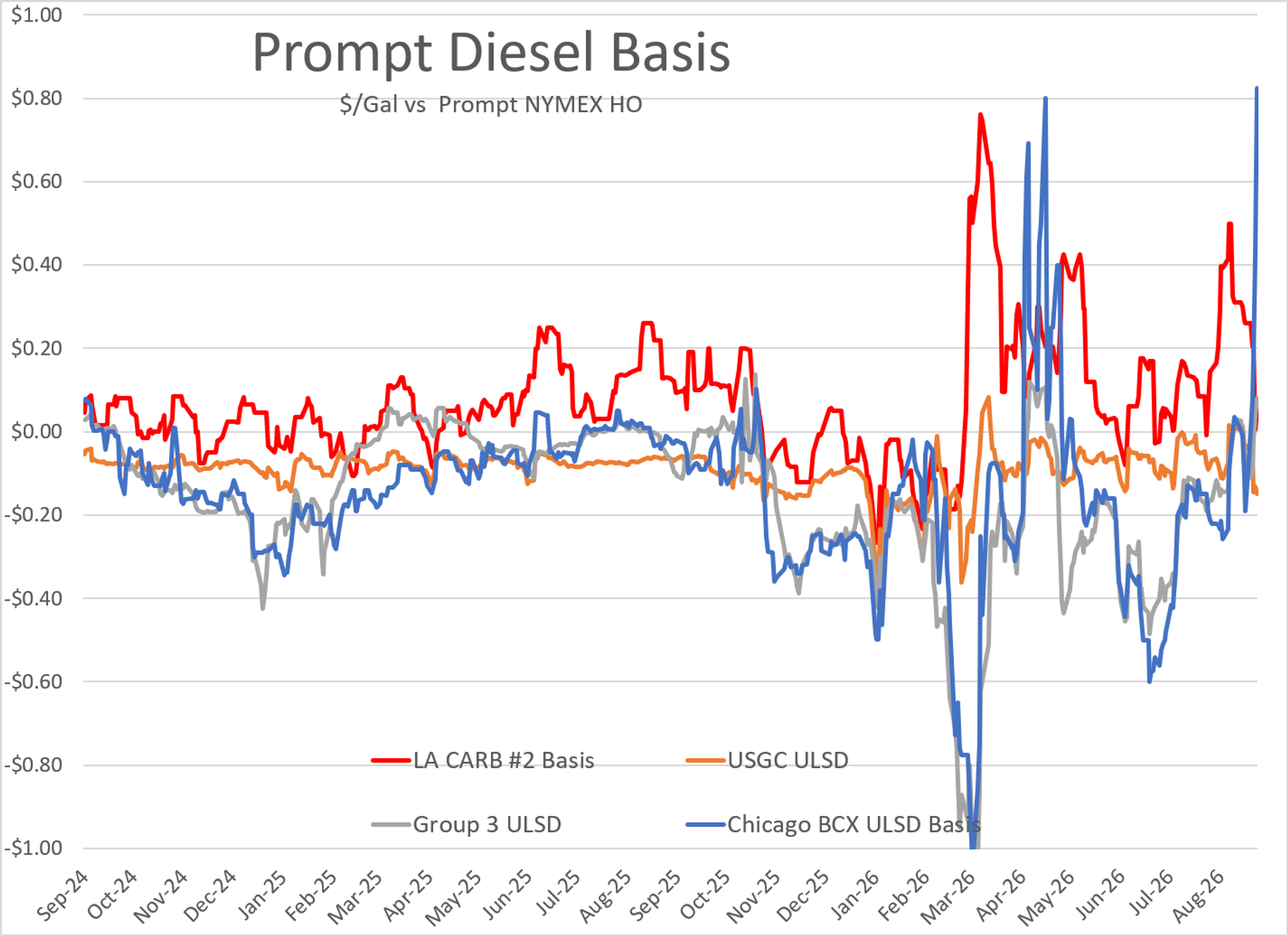
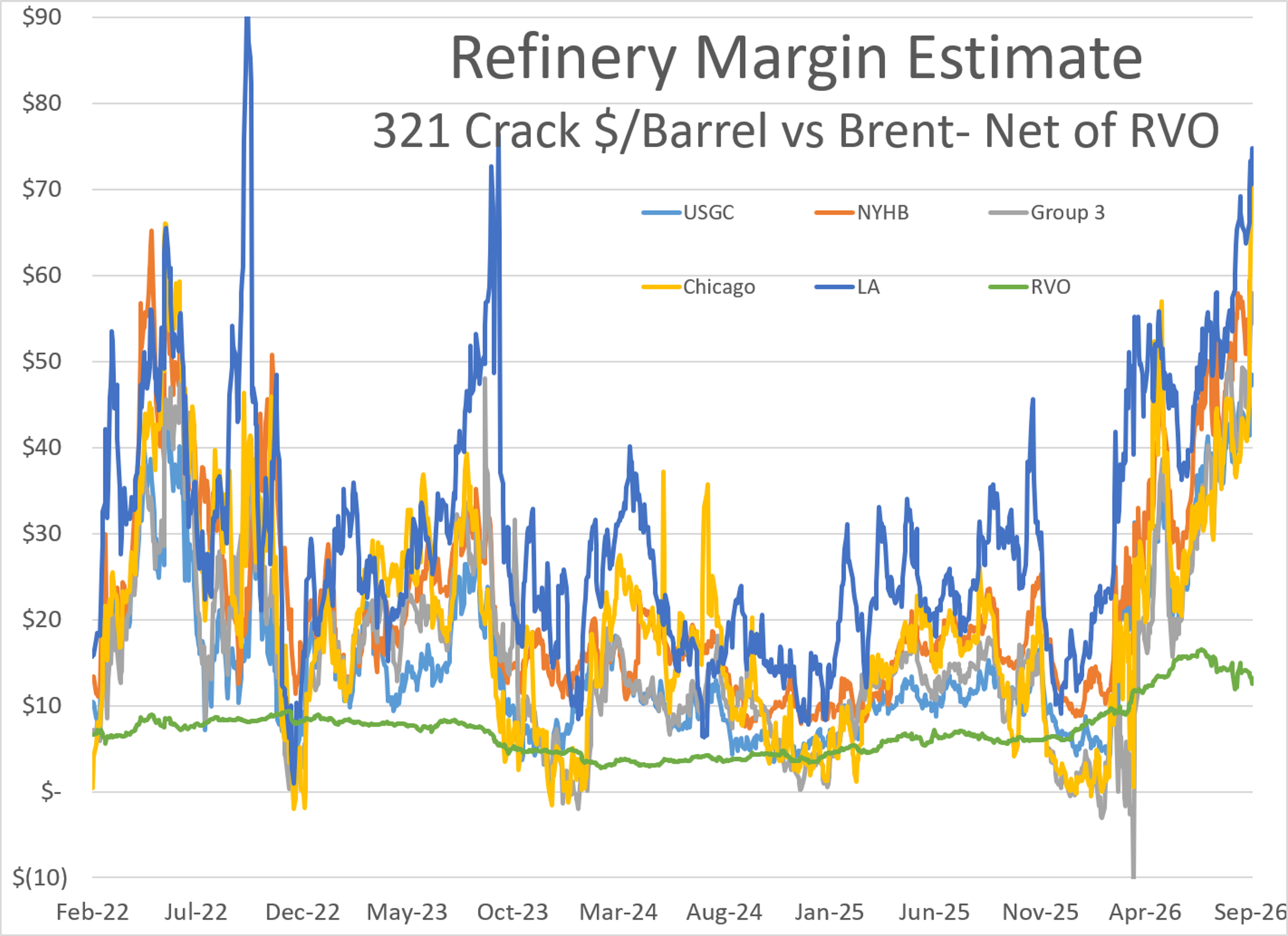
The Chicago diesel market continues to hold the most expensive in the country title after Exxon’s Joliet refinery was knocked offline by a power outage a week ago. A note on the plants social media page Friday suggest the cause was isolated and the facility is beginning restart efforts which will likely burst the basis bubble if successful.
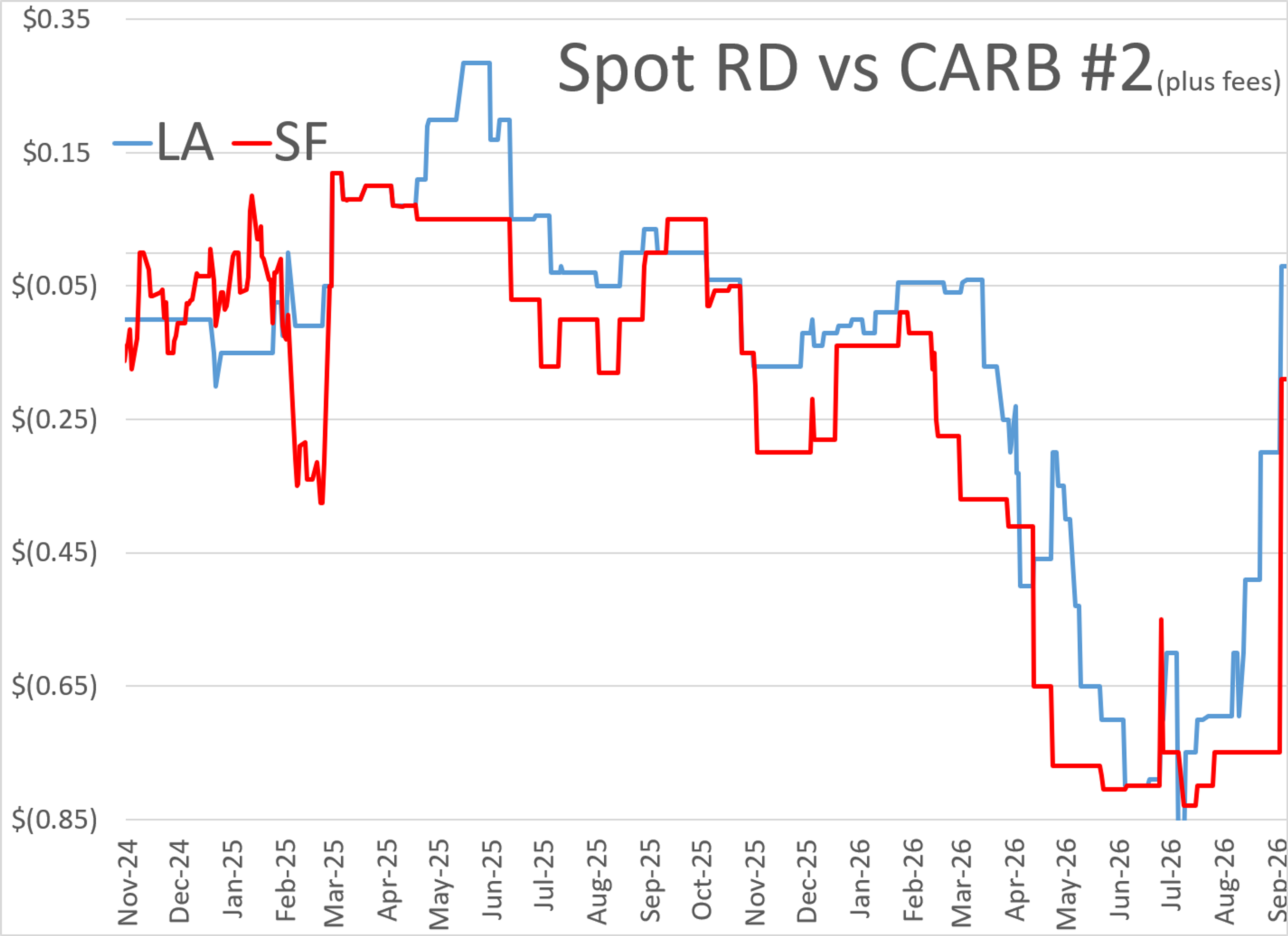
Meanwhile, RD values in California are trading near parity with their CARB diesel counterparts (after adding on the environmental fees associated with traditional diesel grades) after trading at 70-80 cent discounts just 2 months ago. Production hiccups at a handful of facilities on the Gulf and West Coasts and fewer transits through the Panama canal are contributing to the tightness in RD supply.
Watch out Huachicoleros: Mexican officials seized 59 million liters (roughly 15 million gallons or 371,000 barrels) of gasoline and diesel fuel along with 10 storage tanks from a rail-fed terminal in Guanajuato, suspecting that the facility was being used to process stolen and illegally imported fuels. That facility was originally built to take imports from Exxon’s U.S. refineries to support their local retail station network, and Exxon, Marathon and Shell are listed as shippers at the facility, but none of those companies have been accused of any wrongdoing based on a report from Argus.
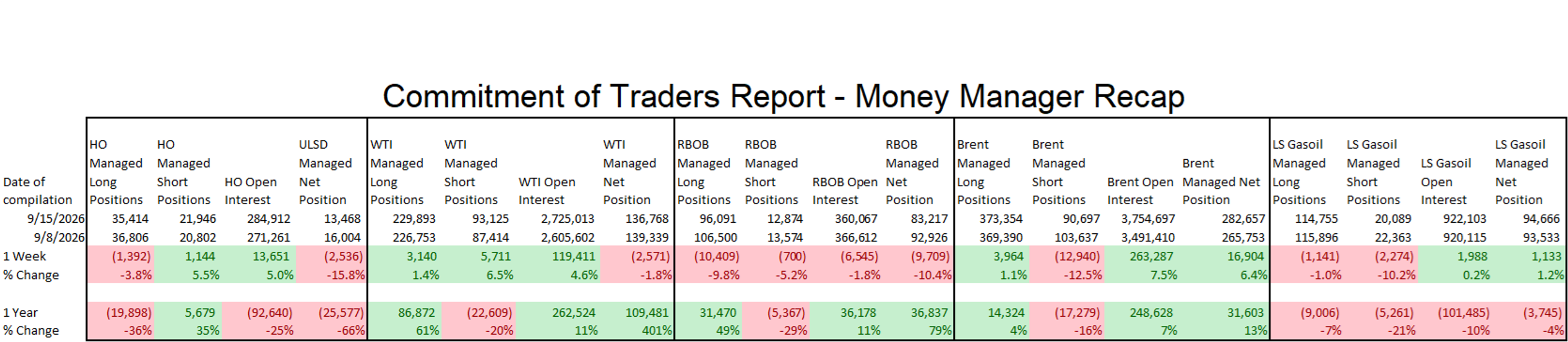
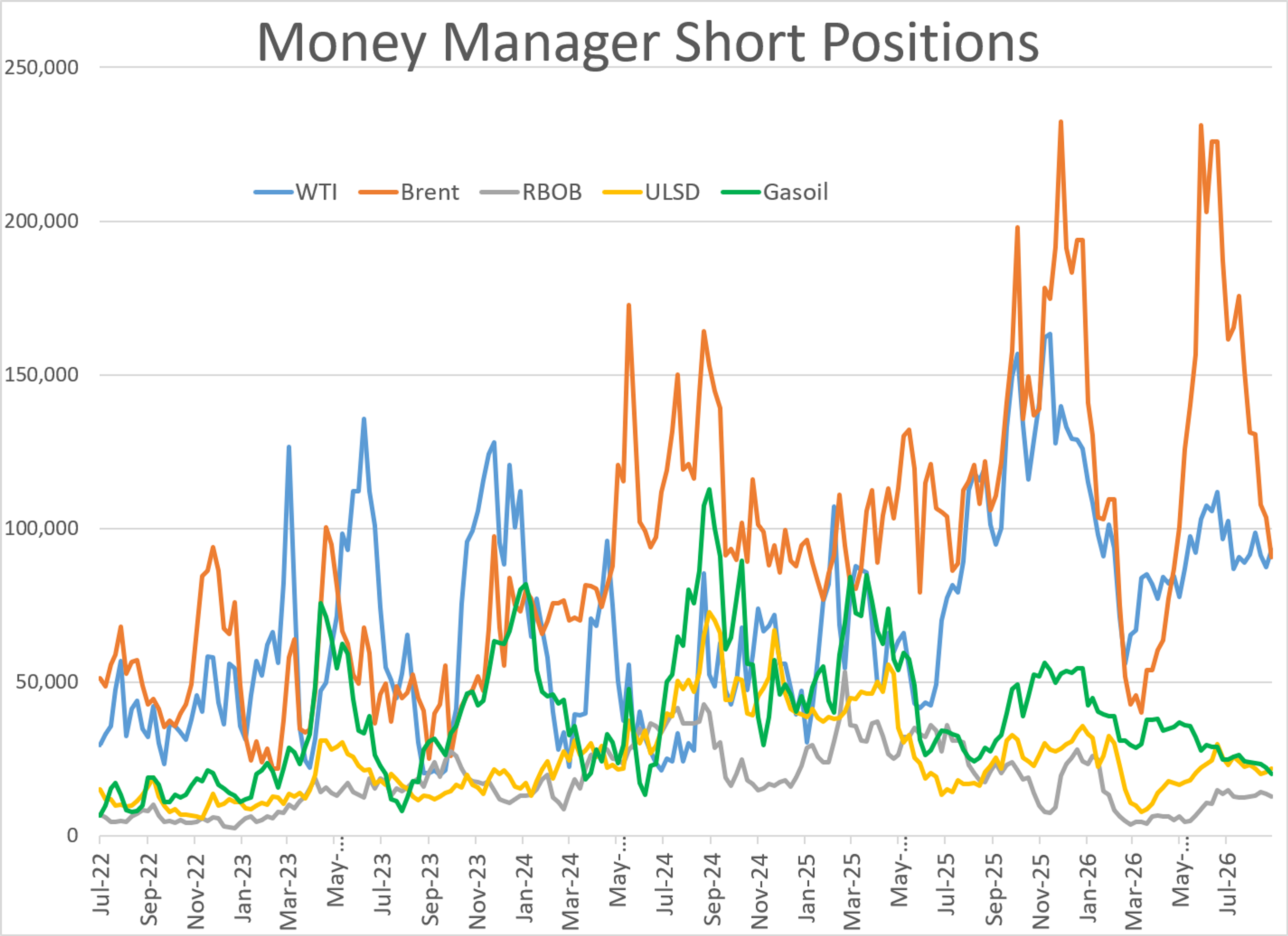
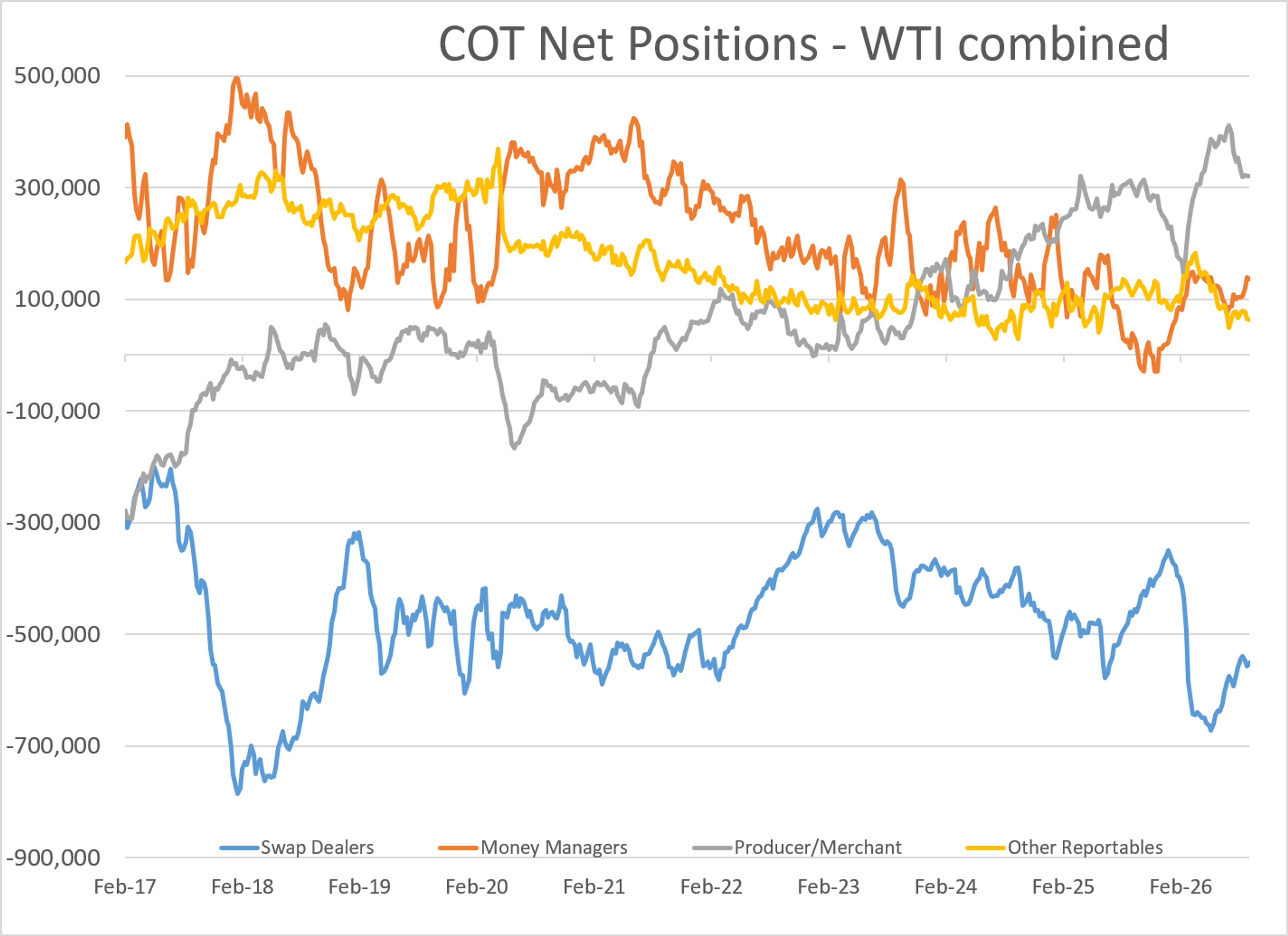
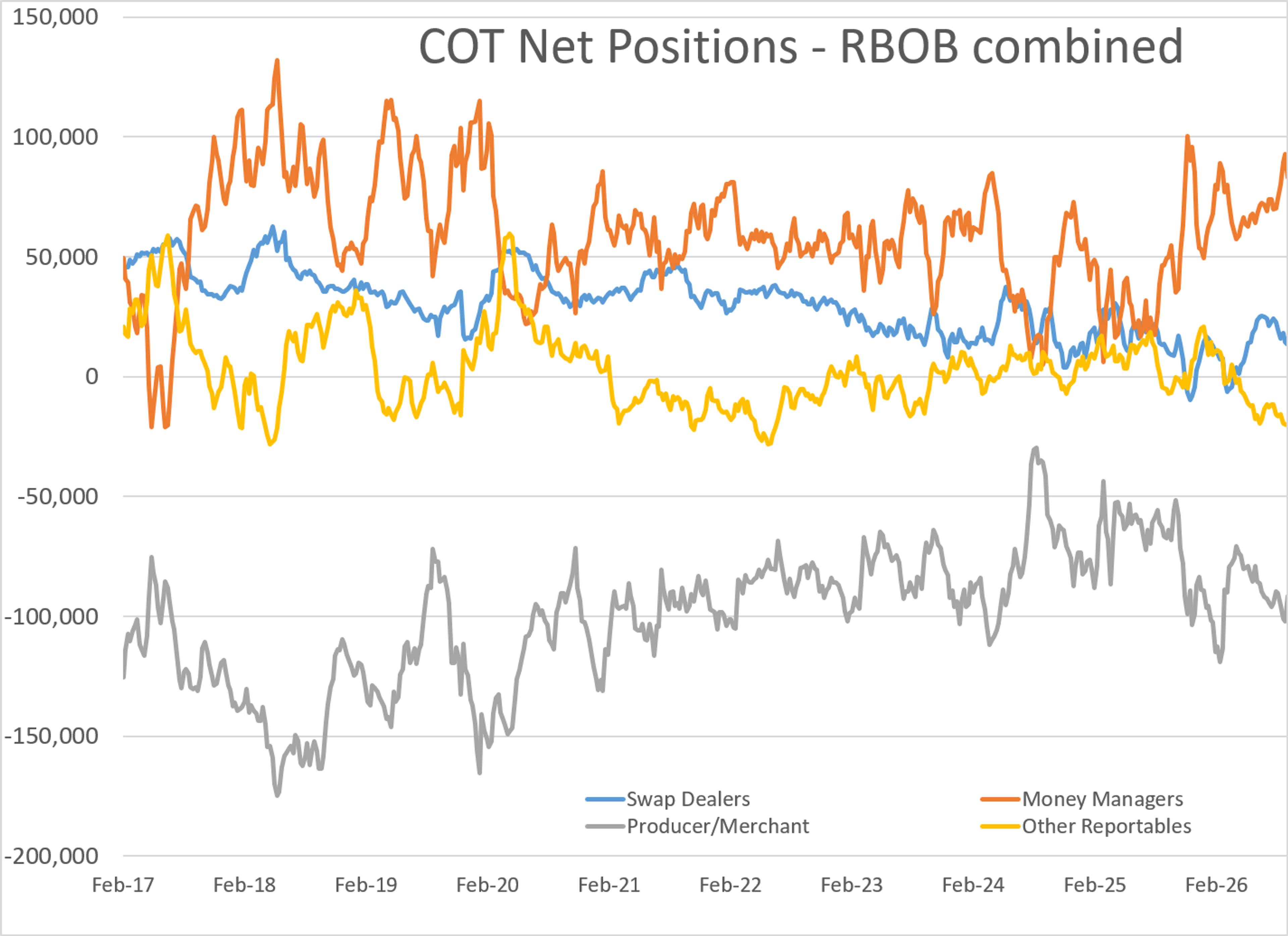
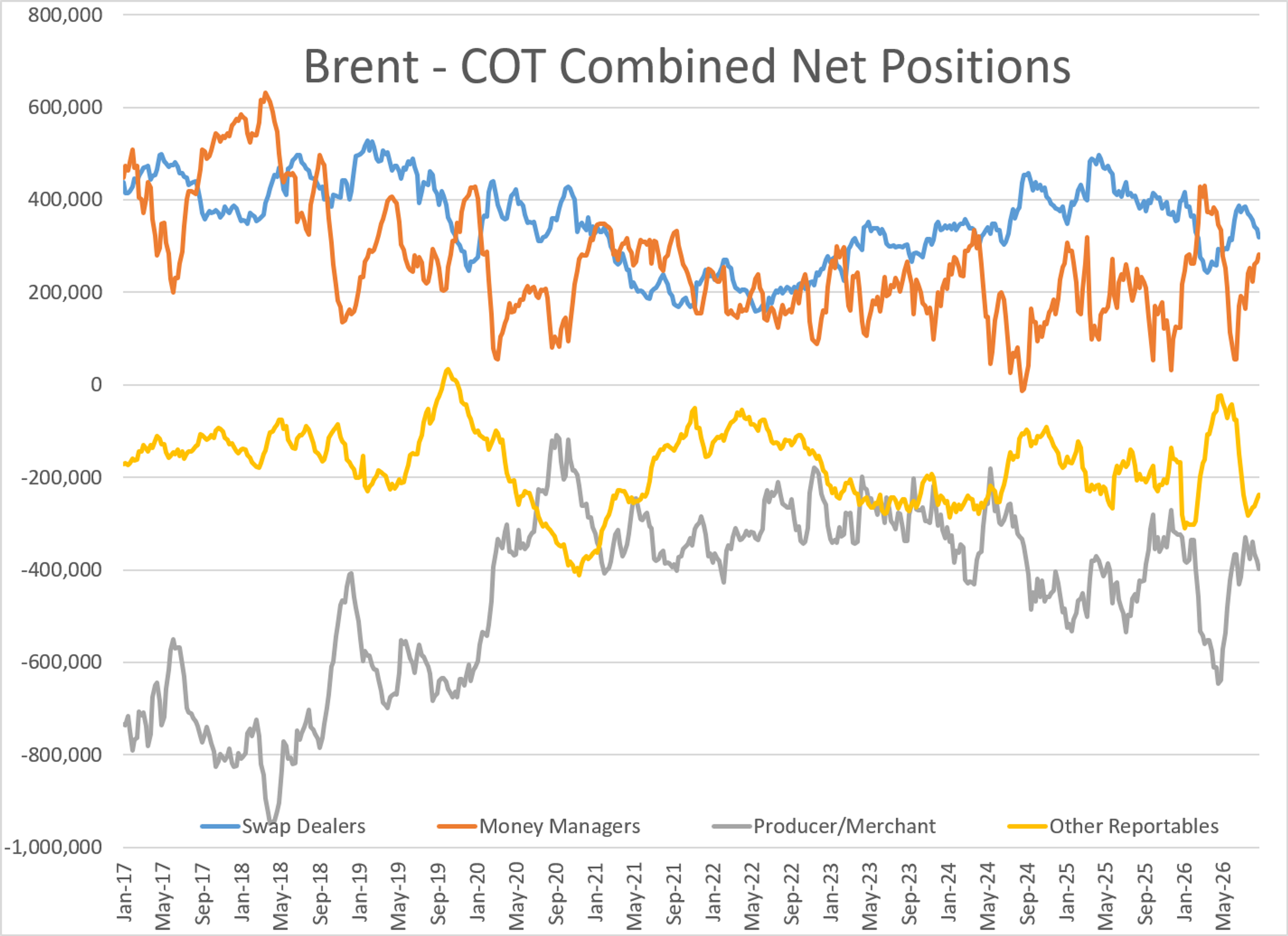
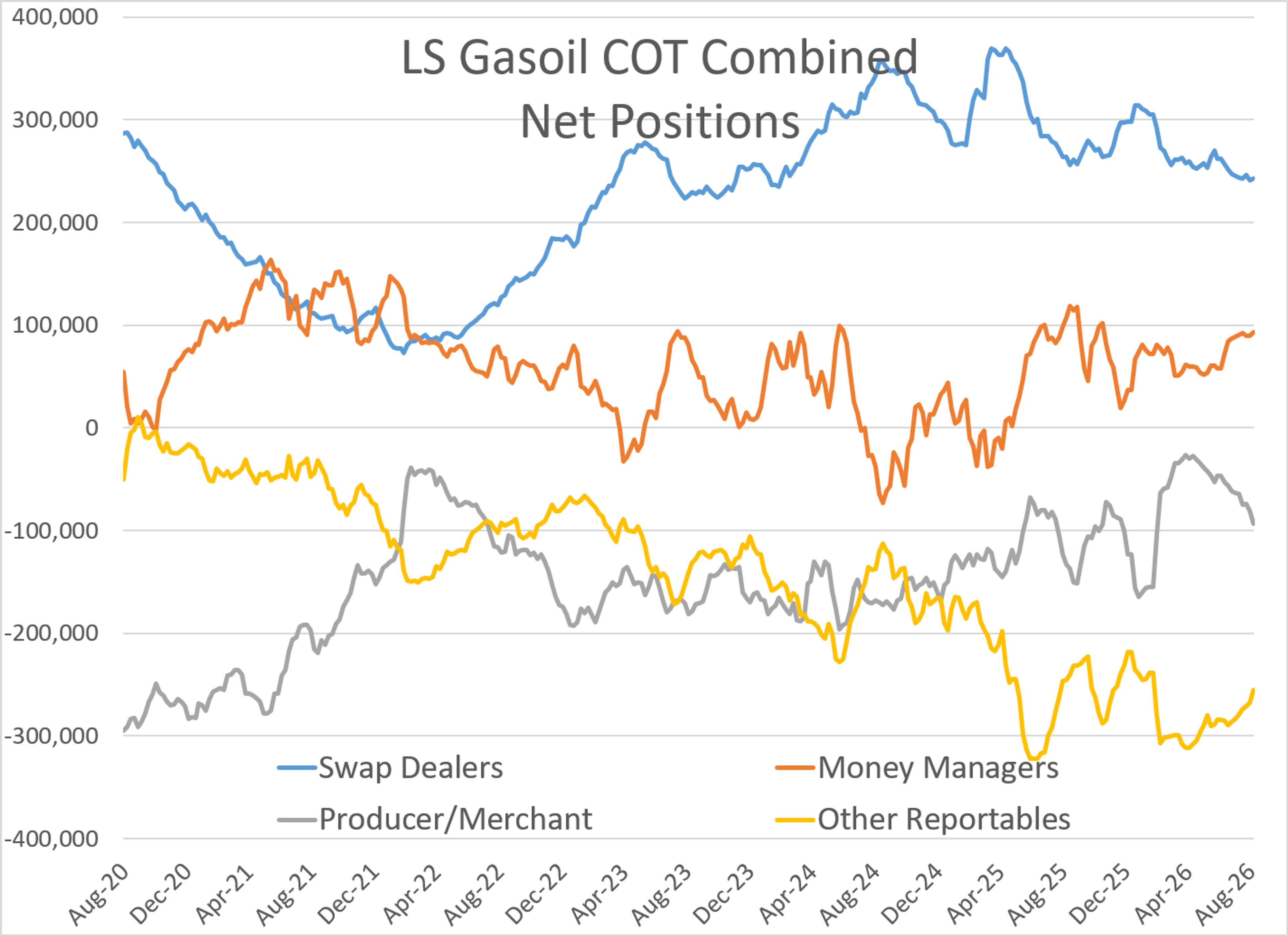
Money managers were trimming their net length in NYMEX contracts in the latest CFTC report, with WTI, ULSD and RBOB contracts all seeing small reductions in the large speculative trade category bets on higher prices. ICE contracts saw more increases for both Brent crude and Gasoil (Europe’s ULSD equivalent) primarily due to short covering, as the big money bettors continue to unwind the huge short position they amassed this summer when prices dipped into he $70s, which looks so foolish in hindsight.
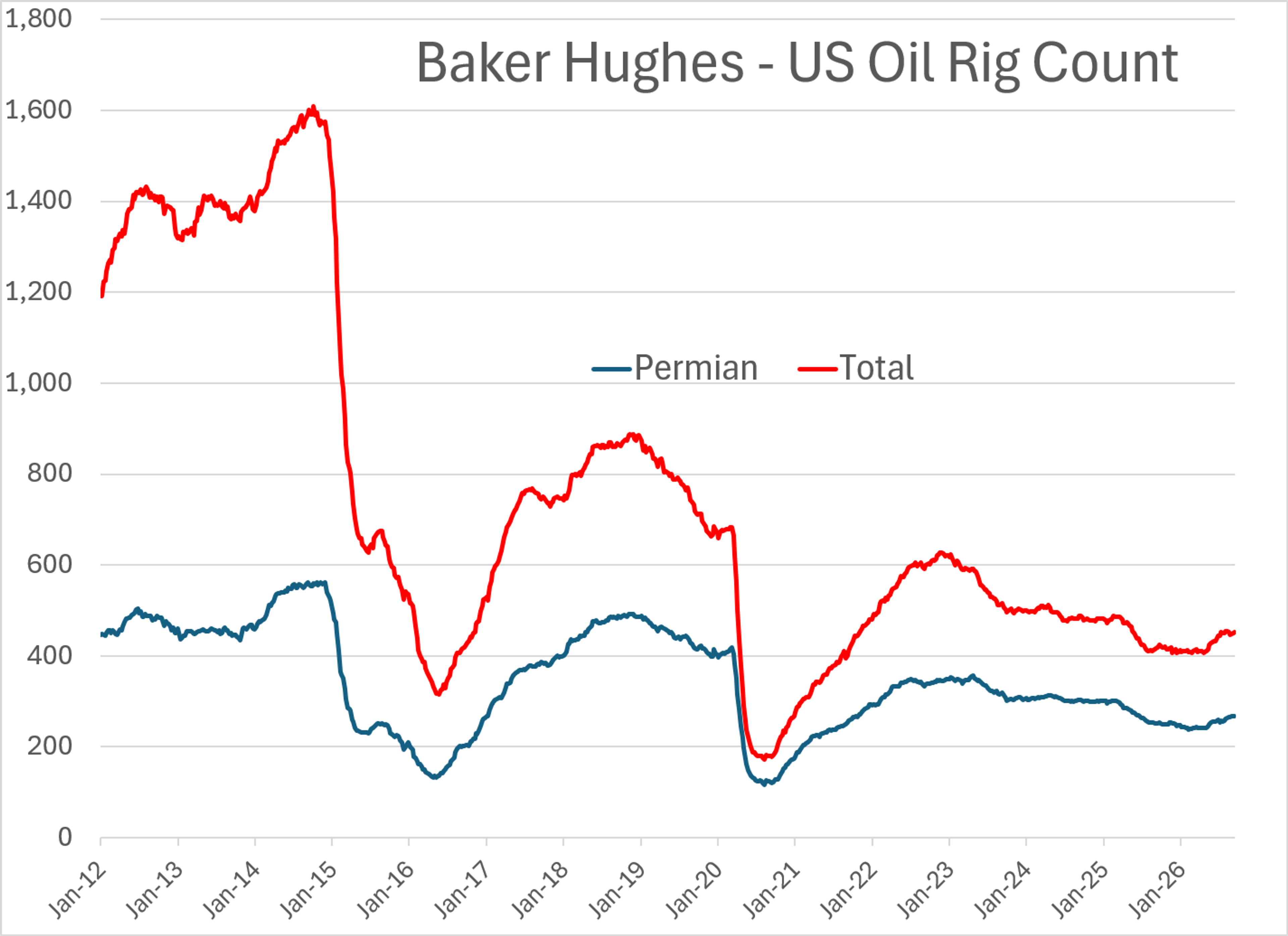
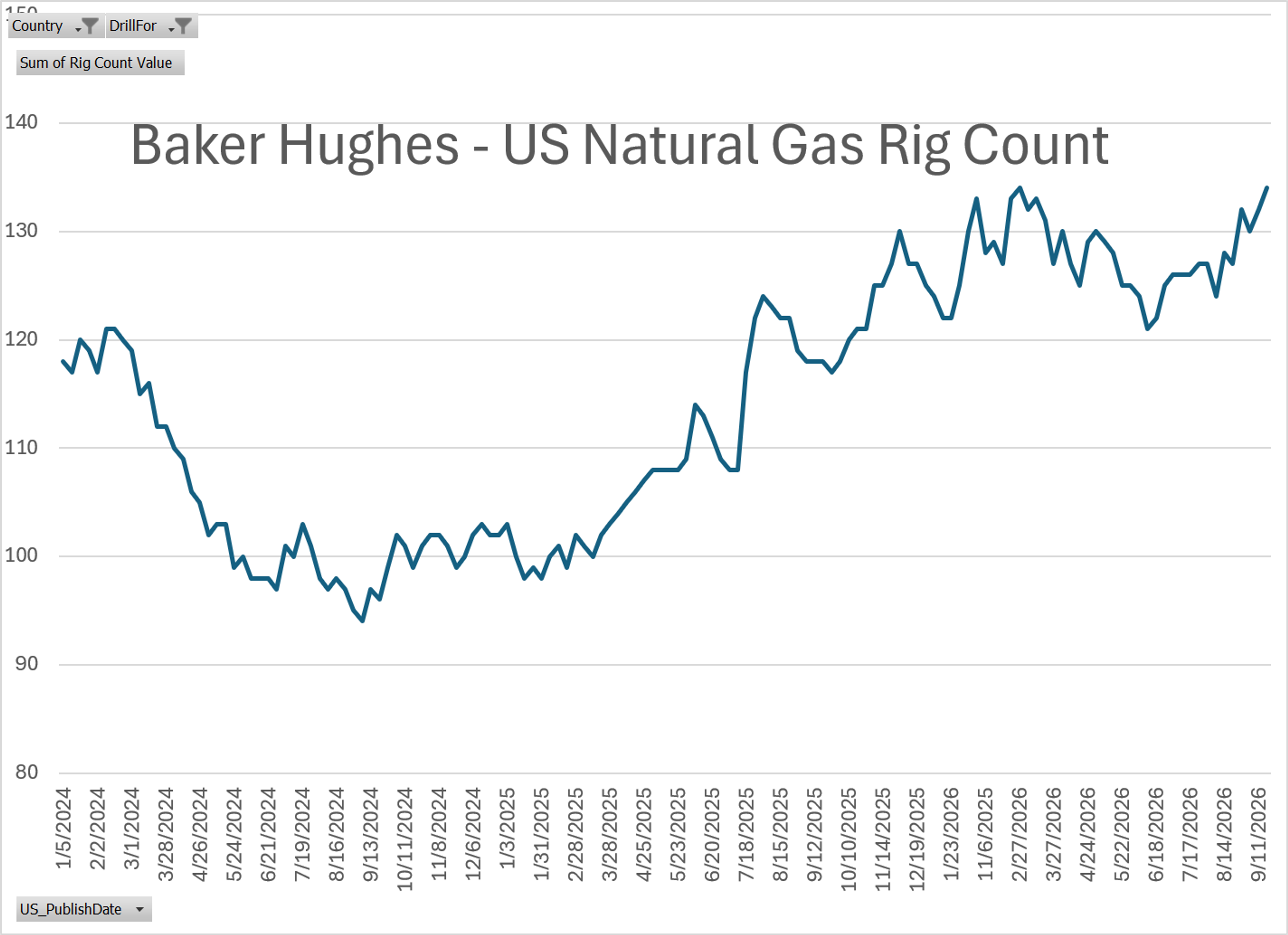
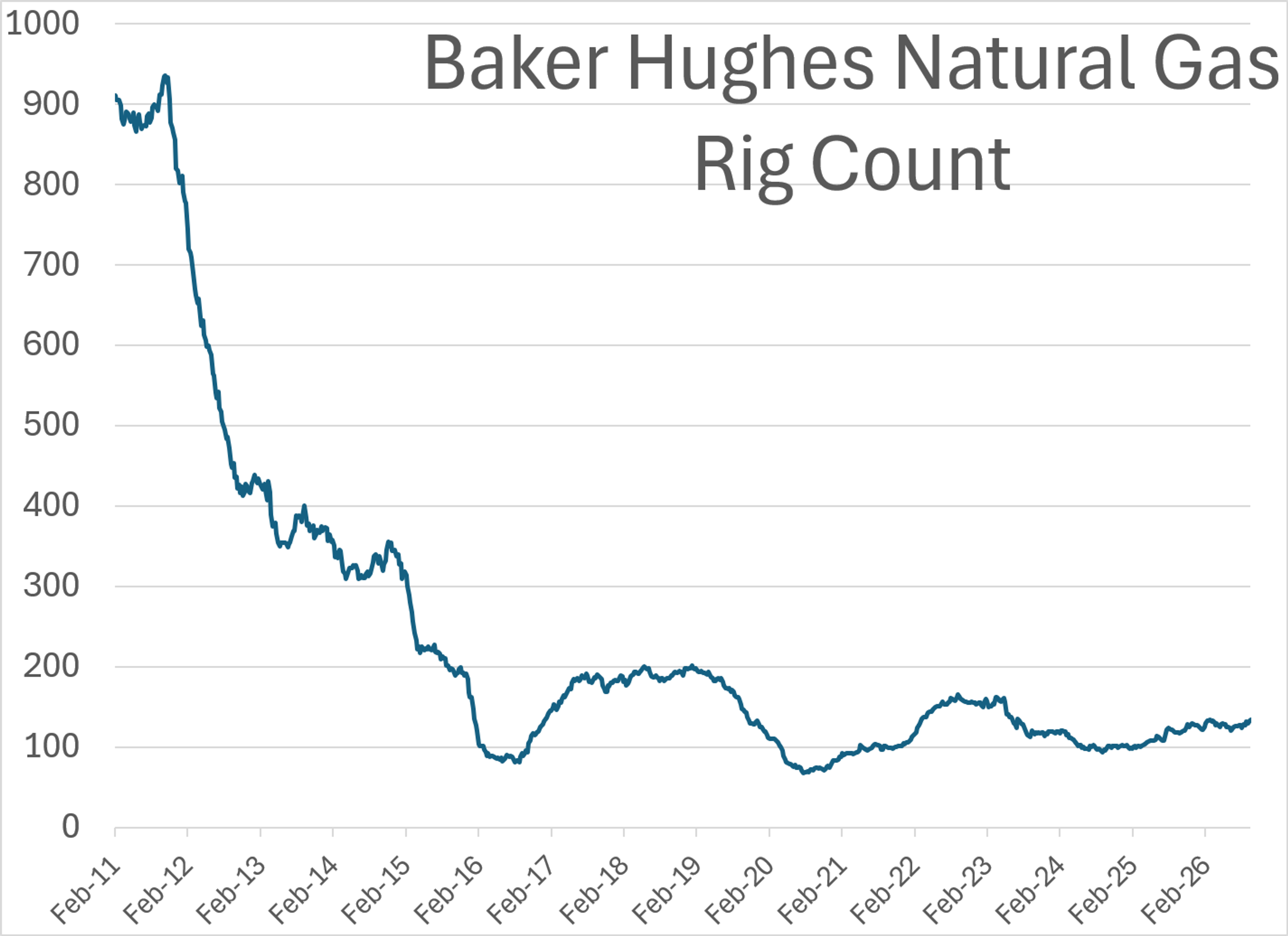
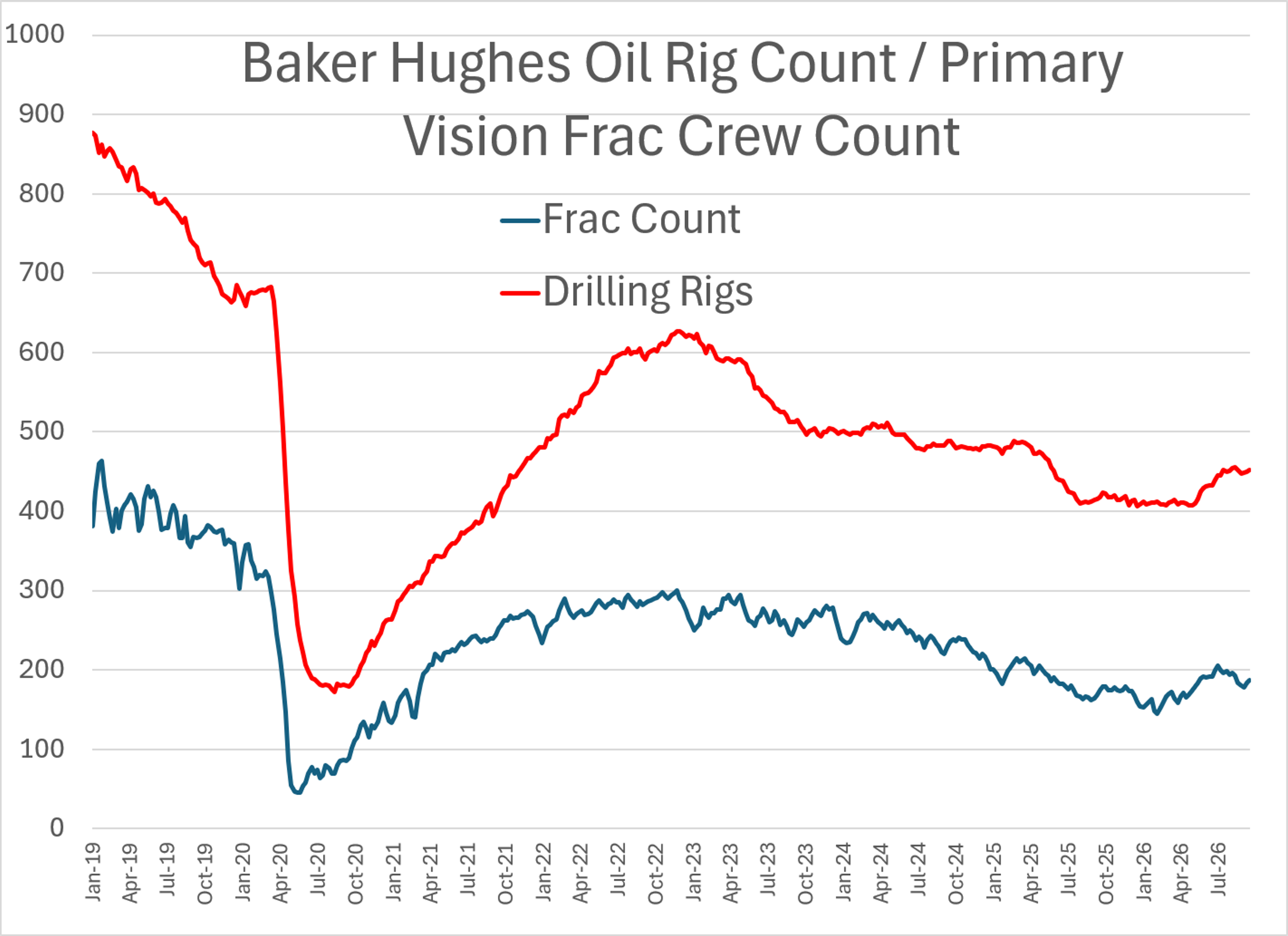
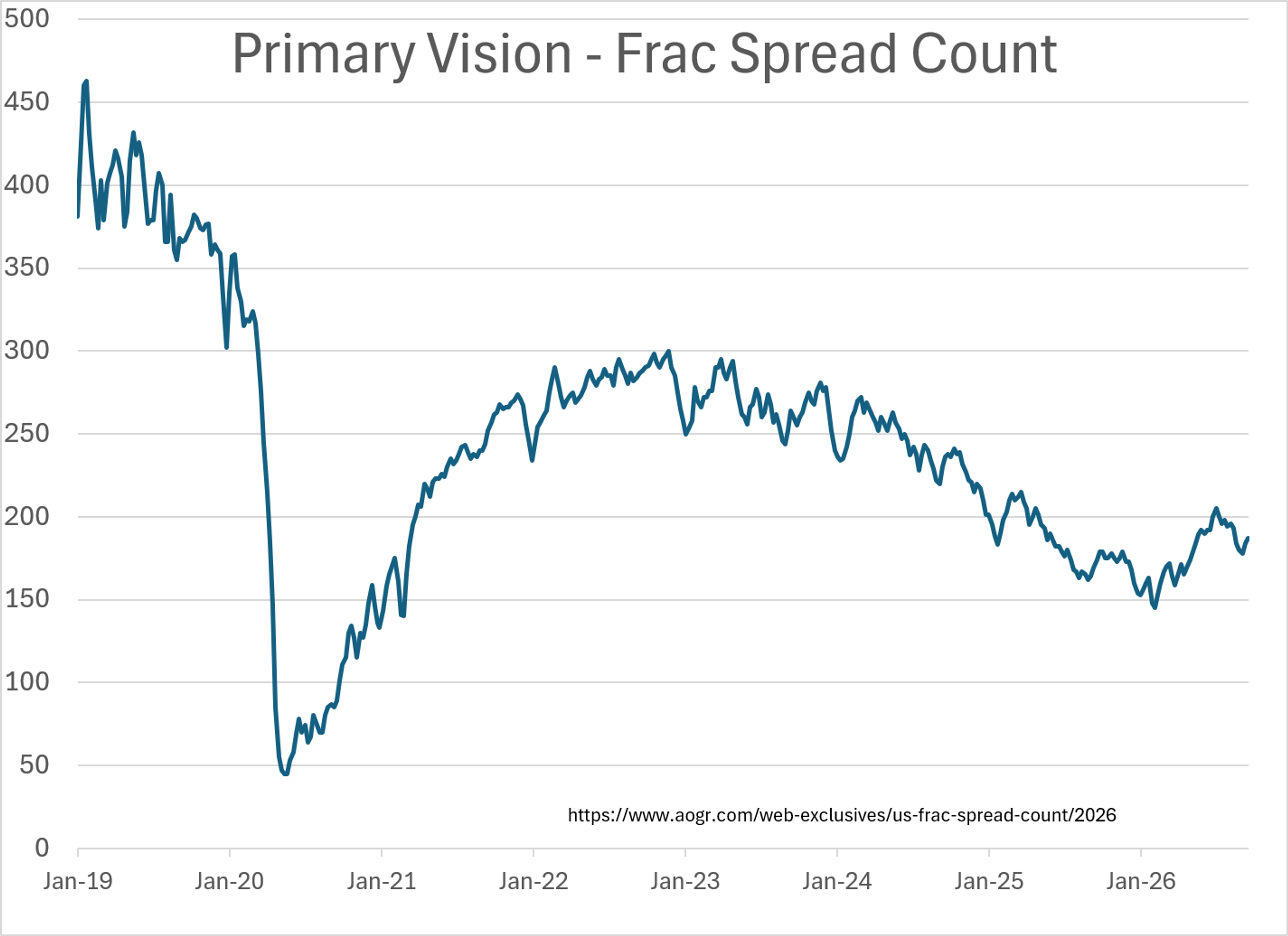
Baker Hughes reported an increase of 2 oil rigs, and 2 natural gas drilling rigs active in the U.S. last week. The natural gas rig count tied its 3-year high set back in February at 134, but remains a small fraction of the activity we saw 12-15 years ago, proving the rapid efficiency gains and importance of gas production from oil wells in the current record high production values. The Primary Vision count of fracking crews increased by 3 on the week to 187 total.
Latest Posts
Diesel Strength Offsets Gasoline Weakness As Supply Concerns Mount
Diesel Under Pressure As Traders Discount Supply Disruptions
Week 37 - US DOE Inventory Recap
Oil Pulls Back After Rally While Distillates Extend Gains
Refinery Disruptions And Strait Closures Fuel Diesel Rally
Oil And Diesel Rally On Escalating Infrastructure Attacks
Social Media
News & Views
View All
Diesel Strength Offsets Gasoline Weakness As Supply Concerns Mount
Diesel Under Pressure As Traders Discount Supply Disruptions