Refinery Economics Clash With Calls For A Diesel Export Ban

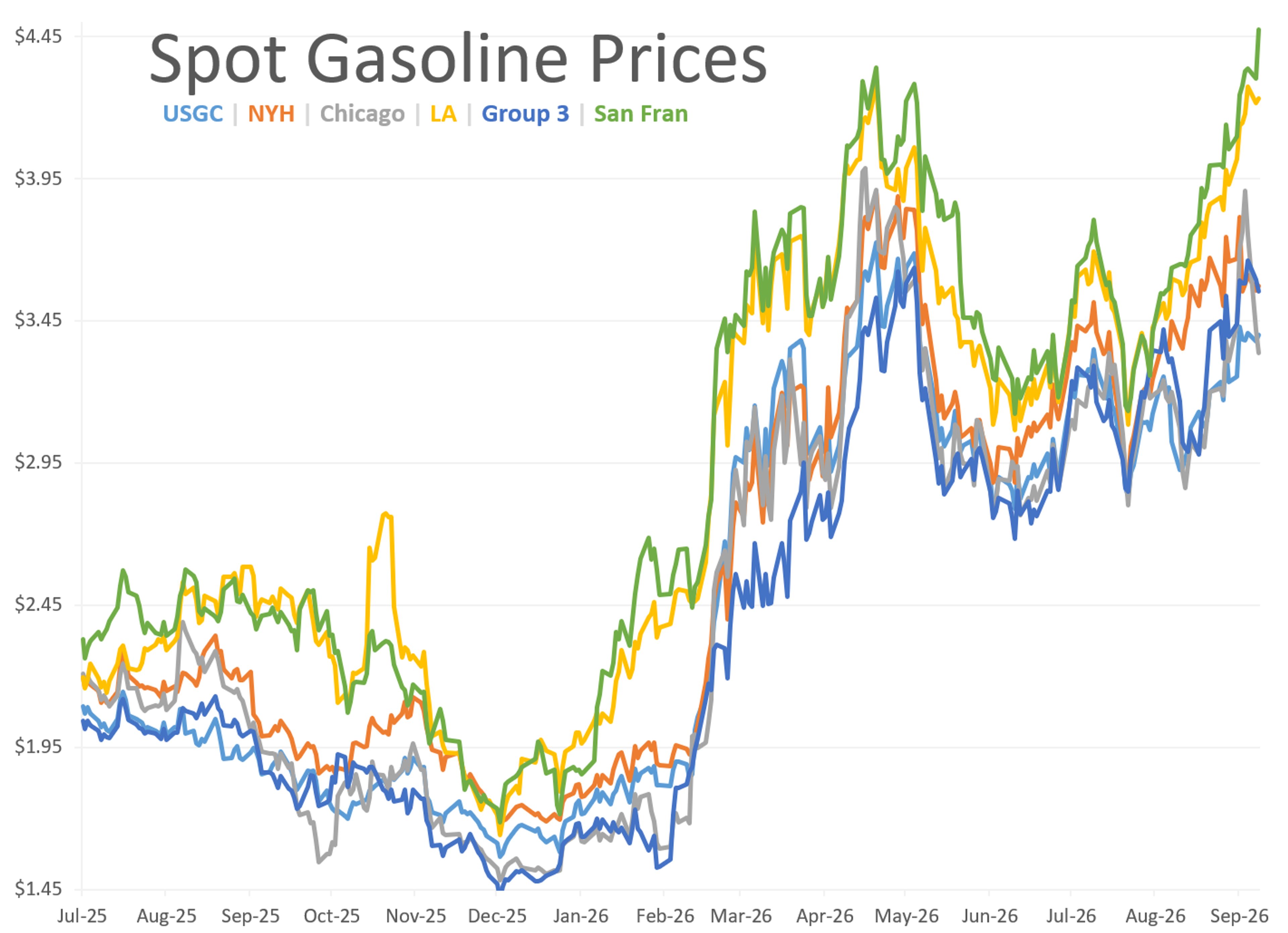
Gasoline prices are rallying for a 2nd day, reaching a fresh 4 month high overnight, while diesel prices come under another wave of selling pressure, both of which seem to be largely driven by a reaction to the US President saying he supports a diesel export ban, and the U.S. treasury secretary indicating they’re studying the feasibility of that concept.
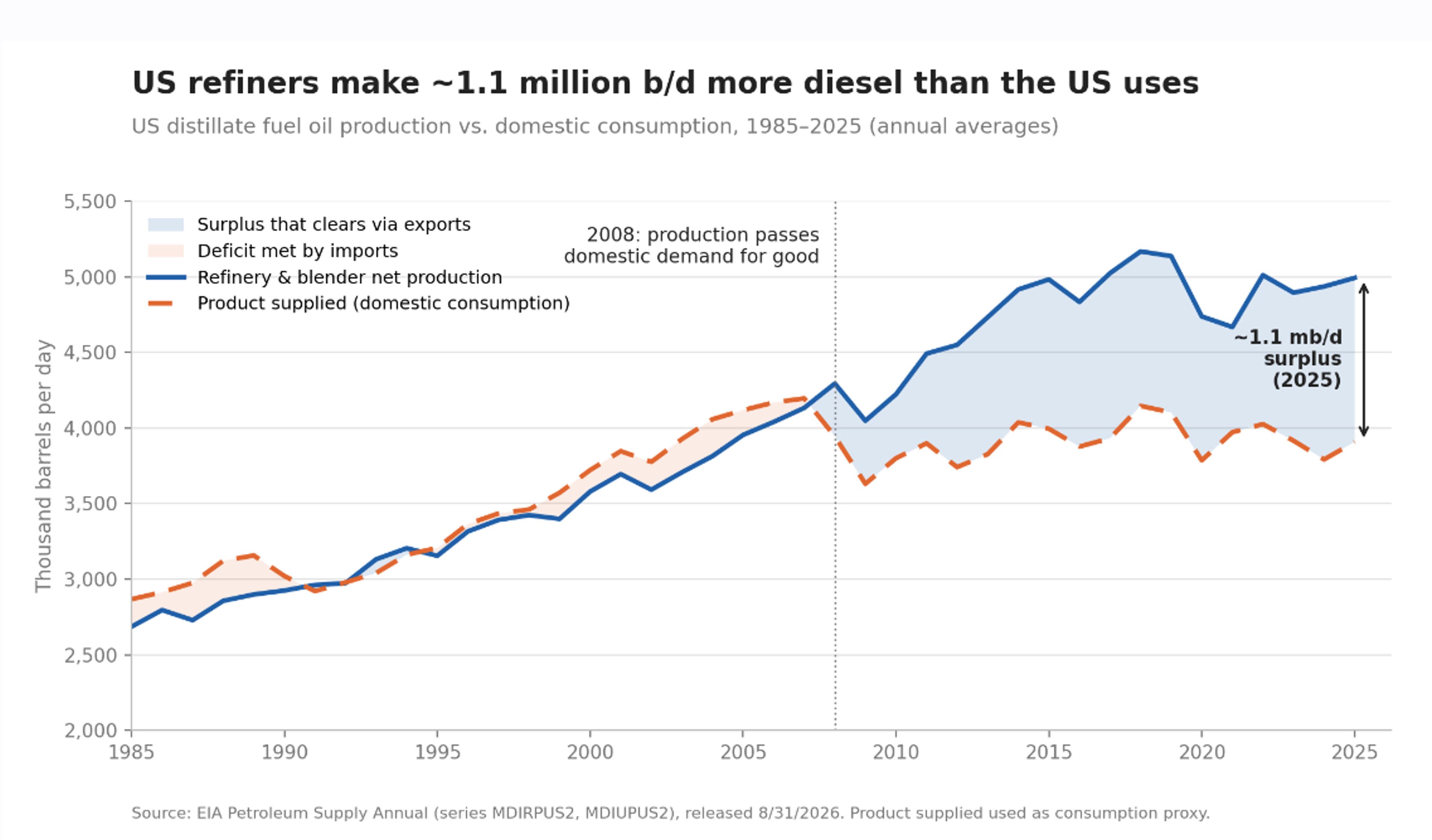
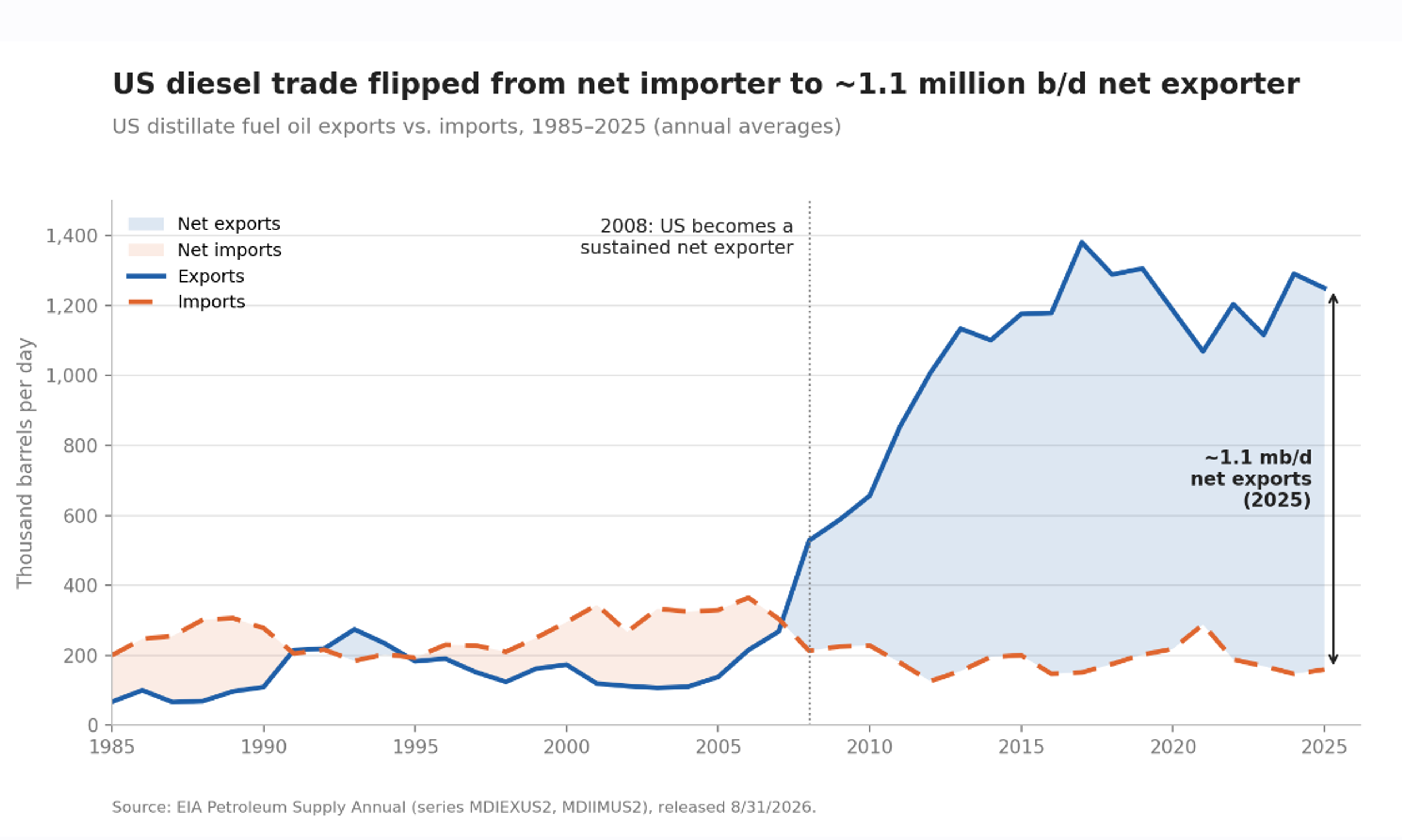
Today’s dichotomous reaction seems tied to the reality that oil refineries can’t just produce diesel and since the U.S. produces 25% more diesel than it consumes, the loss of export abilities would force many plants to cut run rates, and reduce their output of gasoline (and numerous other products) as well, which becomes counterproductive. See the chart below for a comparison of U.S. diesel production vs consumption over the years.
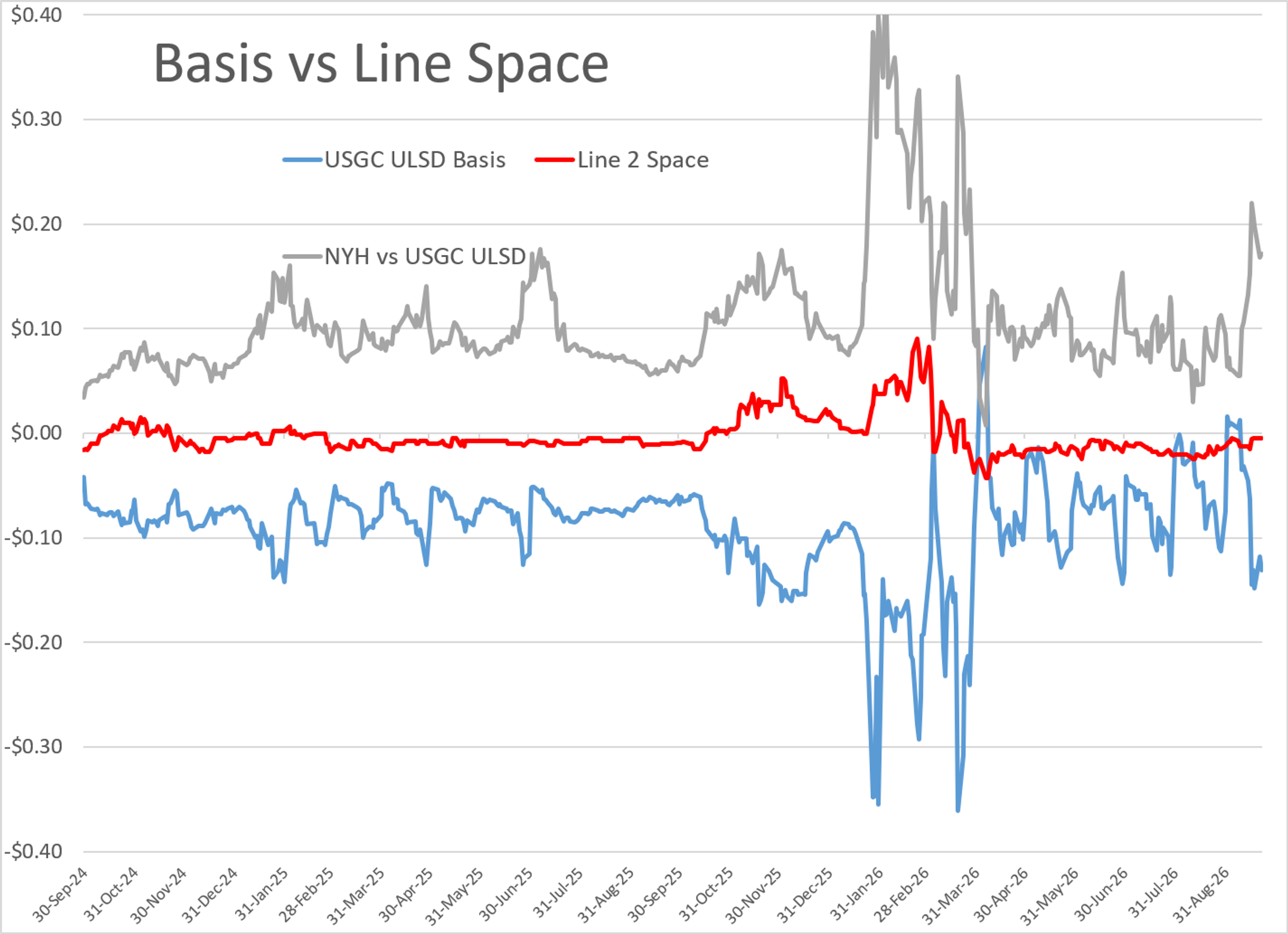
While unintended consequences are the rule in government intervention, rather than the exception, and the political winds are blowing hotter than normal with record high diesel prices creating a bit of panic heading into the mid-terms, hopefully cooler heads will prevail on this one and we’ll avoid an outright ban. It’s worth noting that while futures are obviously reacting to the potential news, values for diesel space on Colonial’s line 2 – its main diesel line that’s been unallocated for months as more distillates are pushed overseas – haven’t moved much from last week’s levels, suggesting the big shippers aren’t yet buying into the idea that their outlets may soon be cut off.
Tuesday’s trading session was also highlighted by political stumping creating big price swings as the U.S. President’s speech at the UN throwing cold water on the idea that a new truce in the strait could allow a more normal shipping environment anytime soon.
The U.S. and Ukrainian presidents are also set to meet on the sidelines of the UN meetings this week, which could certainly create more price swings based on declarations that may or may not be rooted in any reality.
The UKMTO reported that another cargo ship was struck trying to transit Hormuz this morning, and Iranian officials have sent another warning that the strait would remain “closed” until the U.S. blockade is lifted.
The Nor’easter is starting to impact the Atlantic coast with heavy rain, and flooding potential will grow over the next couple of days. While vessel traffic around NY Harbor will be slowed by both the UN security restrictions and the storm, unless any of the remaining refineries on the East Coast are knocked offline from power outages it’s likely that this storm will do more damage to demand than it will supply.
The API estimates showed more inventory draws for refined products last week, with both gasoline and distillate stocks showing a 2.16 million barrel draw for the week, while commercial inventories built by 1.78 million barrels, and the SPR saw another 400,000 barrel draw. The DOE’s weekly report is due out at its normal time this morning.
With refineries taking center stage lately, and many wondering why on earth the U.S. is losing refining capacity in this environment, a Forbes note this morning offers a good summary on why each of the facilities has closed since 2019, helping to explain why (as usual) reality is much more complicated than the headlines.
There is also a growing challenge with trucking capacity as regulatory crackdowns on looser permitting options that helped relieve the great trucker shortage from earlier in the decade start to bite into availability, while the data center craze also pulls qualified drivers to new arenas. That tightening of capacity is one reason why an analysis from Freightwaves suggests freight carriers are doing better on average this year than they have the previous 2, even while high fuel prices are set to bankrupt some smaller transportation companies. The U.S. DOT has already waived the normal hours of service limits to try and deal with shortages, allowing qualified drivers to operate 16 out of 24 hours daily.
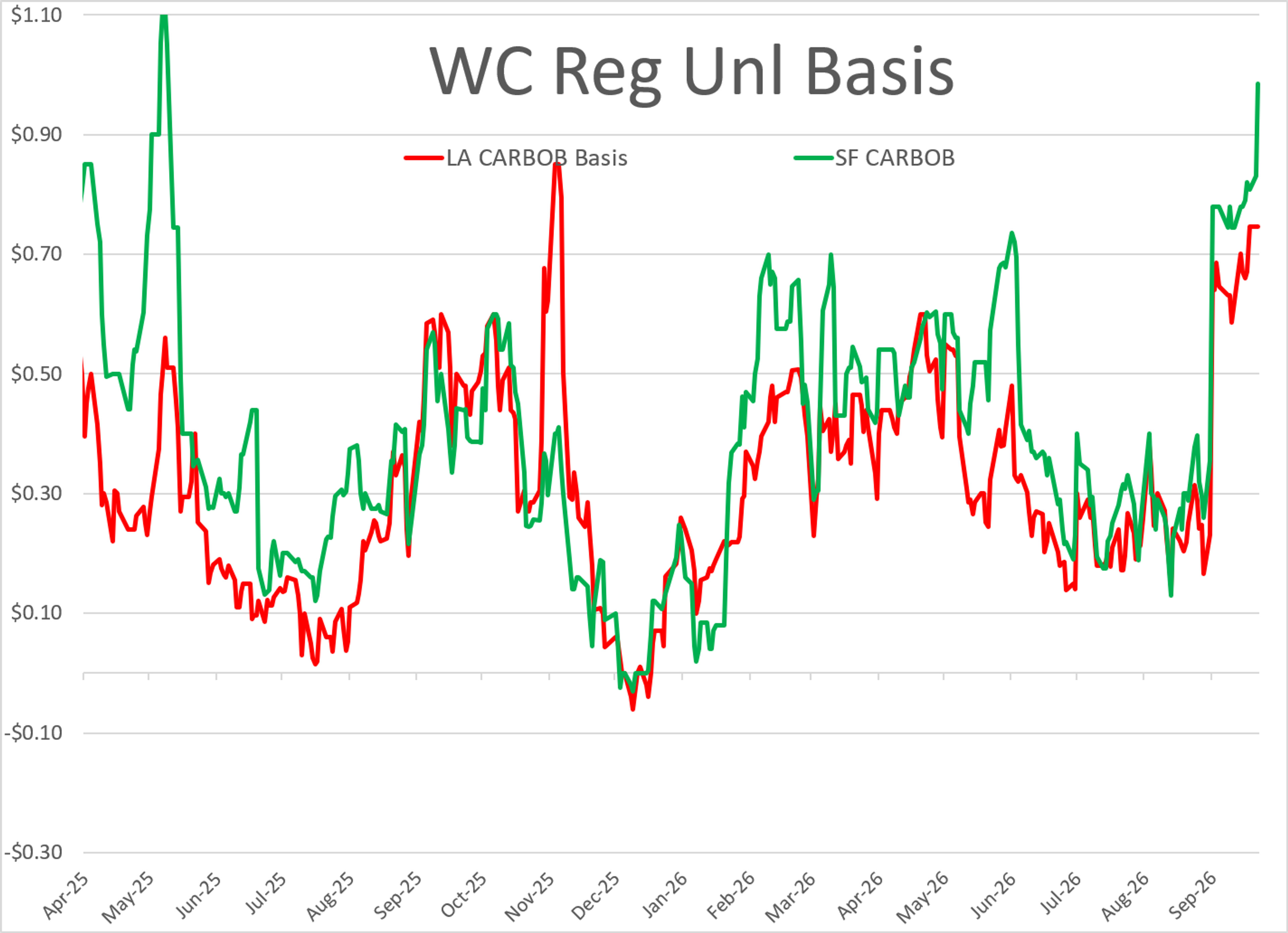
Speaking of waivers, spiking premiums for summer-grade gasoline in California – with Bay-Area CARBOB now trading well above a $1/gallon premium to November RBOB futures – it feels like just a matter of time before state officials jump on the bandwagon and allow winter grades to be shipped earlier than normal to alleviate that pressure. That unknown could push prompt values even higher as shippers will avoid bringing more high-prices summer barrels to market to avoid the chance of taking a huge loss if CARB decides to make that move as they’ve done in recent years to combat late season price spikes.
Latest Posts
Diplomacy Knocks Crude Lower, But Diesel Bulls Aren’t Done Yet
Diesel Pullback Tests Market Nerves Amid Supply Risks
Diesel Strength Offsets Gasoline Weakness As Supply Concerns Mount
Diesel Under Pressure As Traders Discount Supply Disruptions
Week 37 - US DOE Inventory Recap
Oil Pulls Back After Rally While Distillates Extend Gains
Social Media
News & Views
View All
Diplomacy Knocks Crude Lower, But Diesel Bulls Aren’t Done Yet
Diesel Pullback Tests Market Nerves Amid Supply Risks