Global Energy Markets Whipsaw As Hormuz Shutdown Continues

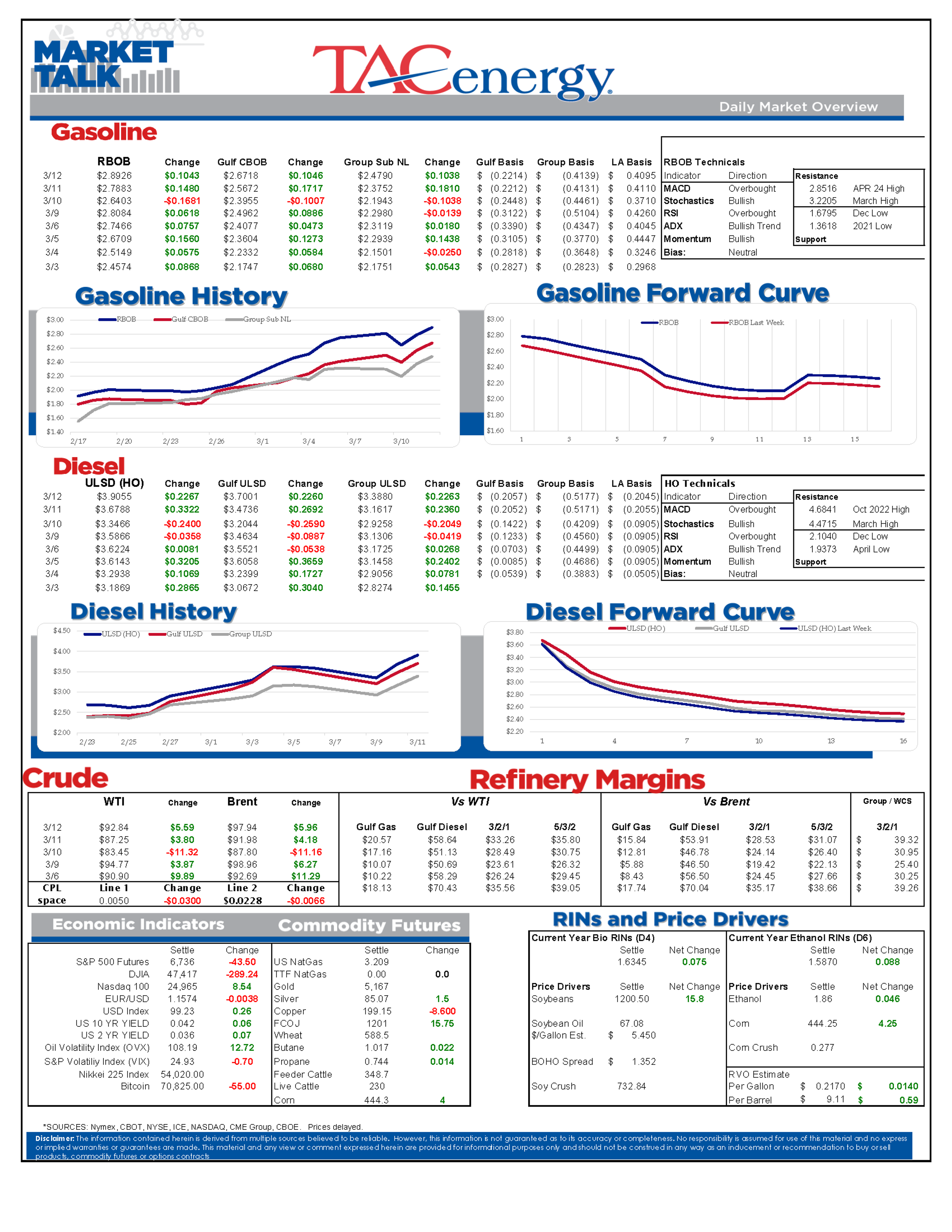
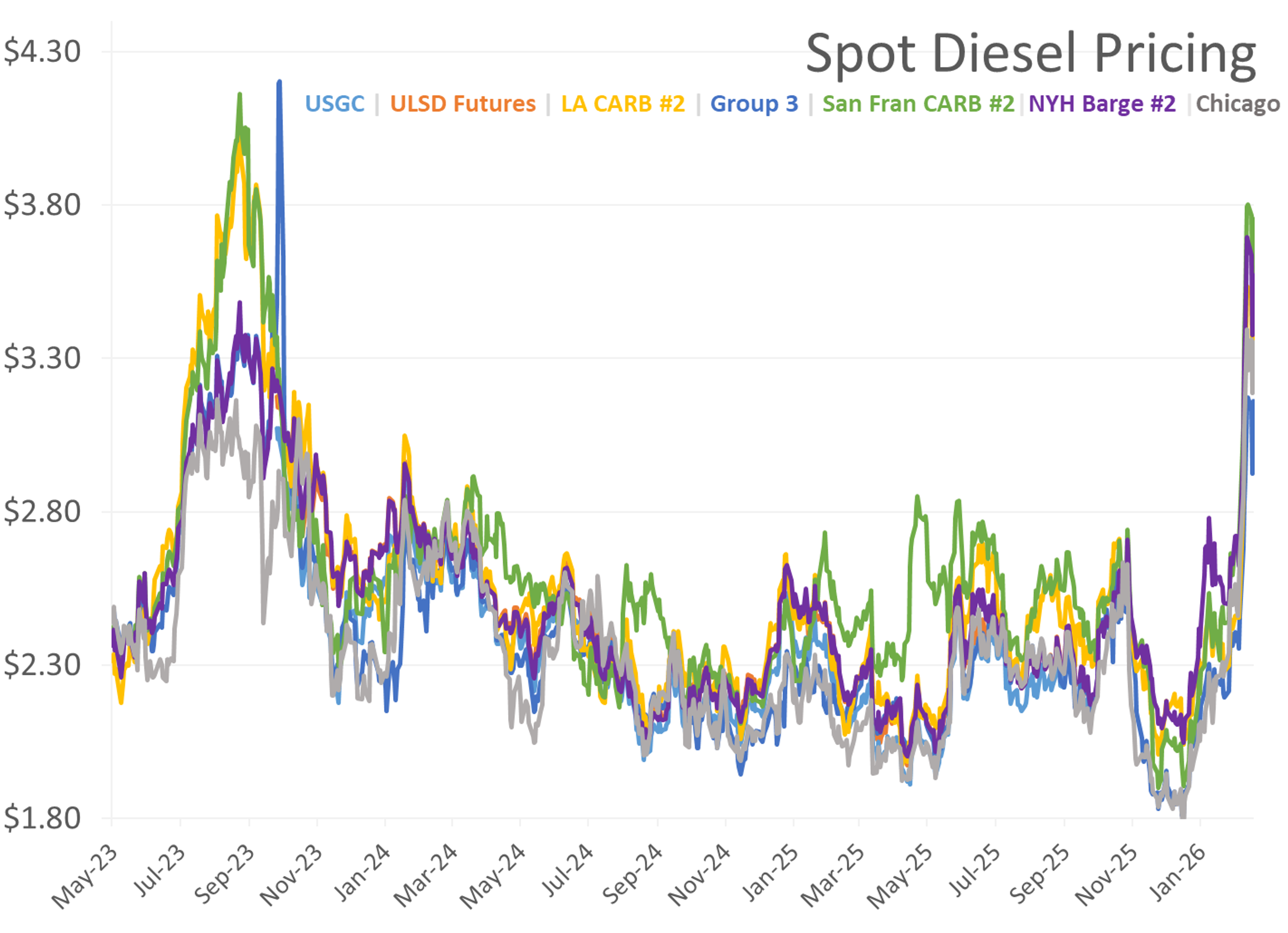
Dire Straits: Brent crude jumped back above the $100 mark overnight after hitting a low of $81 on Tuesday as reality sets in that not only is the Strait of Hormuz still closed for business (despite so many lofty claims earlier this week) but in fact the attacks on ports and shipping assets seem to be increasing. ULSD futures came within a whisker of the $4 mark overnight and are up more than 87 cents from Tuesday’s make believe lows, while RBOB futures are up a dime on the day and 45 cents from their lows less than 48 hours ago.
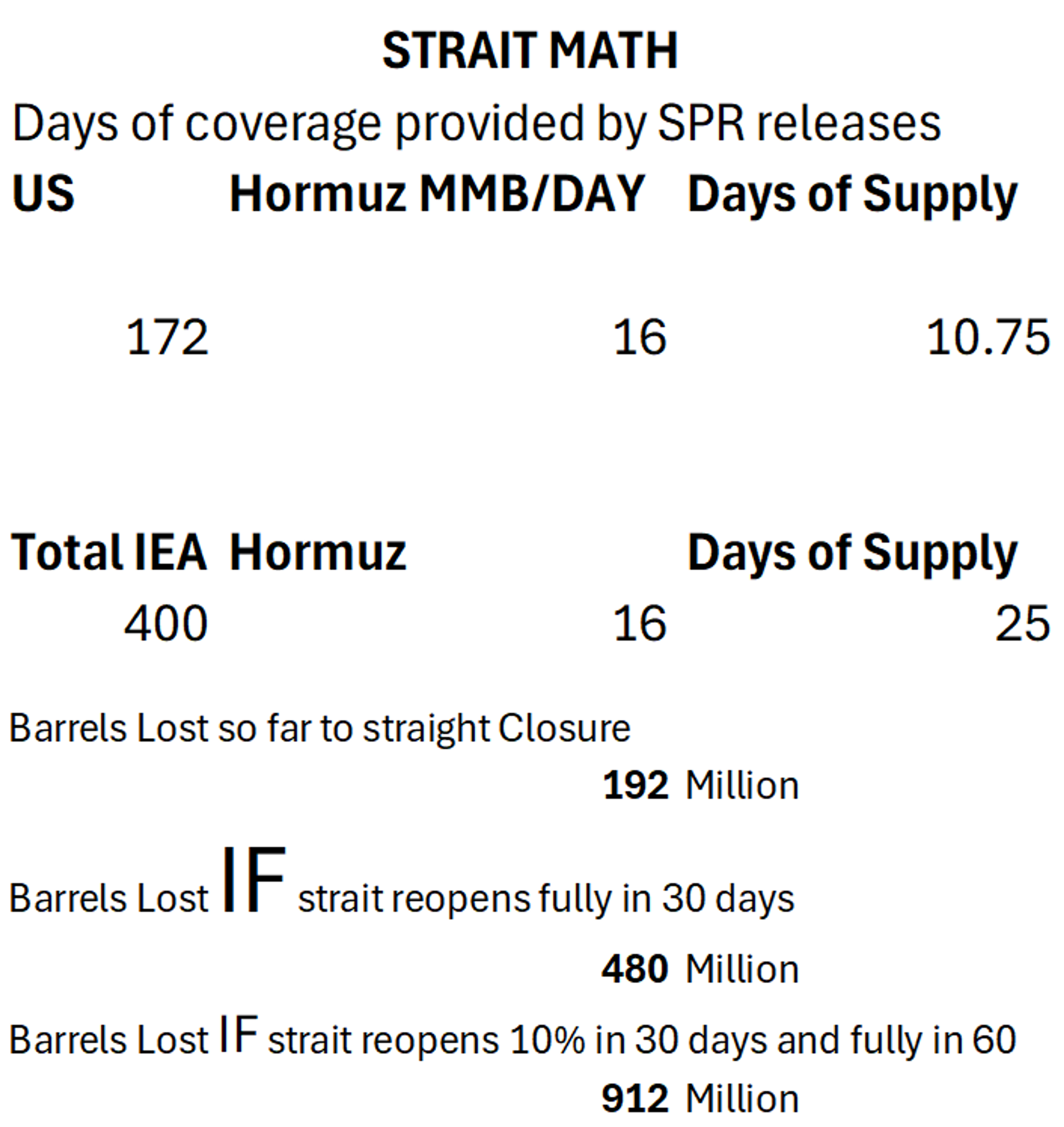
Even plans for the largest release of strategic petroleum reserves in history aren’t calming markets as those able to divide by 16 (the rough estimate for millions of barrels/day trapped behind the strait) realize that the releases won’t be enough to offset a conflict lasting more than a few weeks.
But what’s a few weeks between friends? The U.S. Energy Secretary suggested in an interview this morning that the U.S. would be ready to give tanker escorts through the Strait by the end of March, after infamously claiming it had already happened earlier this week.
Both Iraq and Oman have been forced to shut down ports in the past two days following Iranian attacks, while a new threat on the water from naval drones is emerging as reports of multiple ship attacks from the sea, not the air, are emerging.
Russia won’t let a crisis go to waste, using this opportunity to both squeeze European neighbors on gas shipments while also looking to increase oil exports while the U.S. loosens up sanctions. Meanwhile, the OG’s of drone attacks on energy infrastructure continue their kinetic sanctions with an attack on a major Russian oil export terminal overnight.
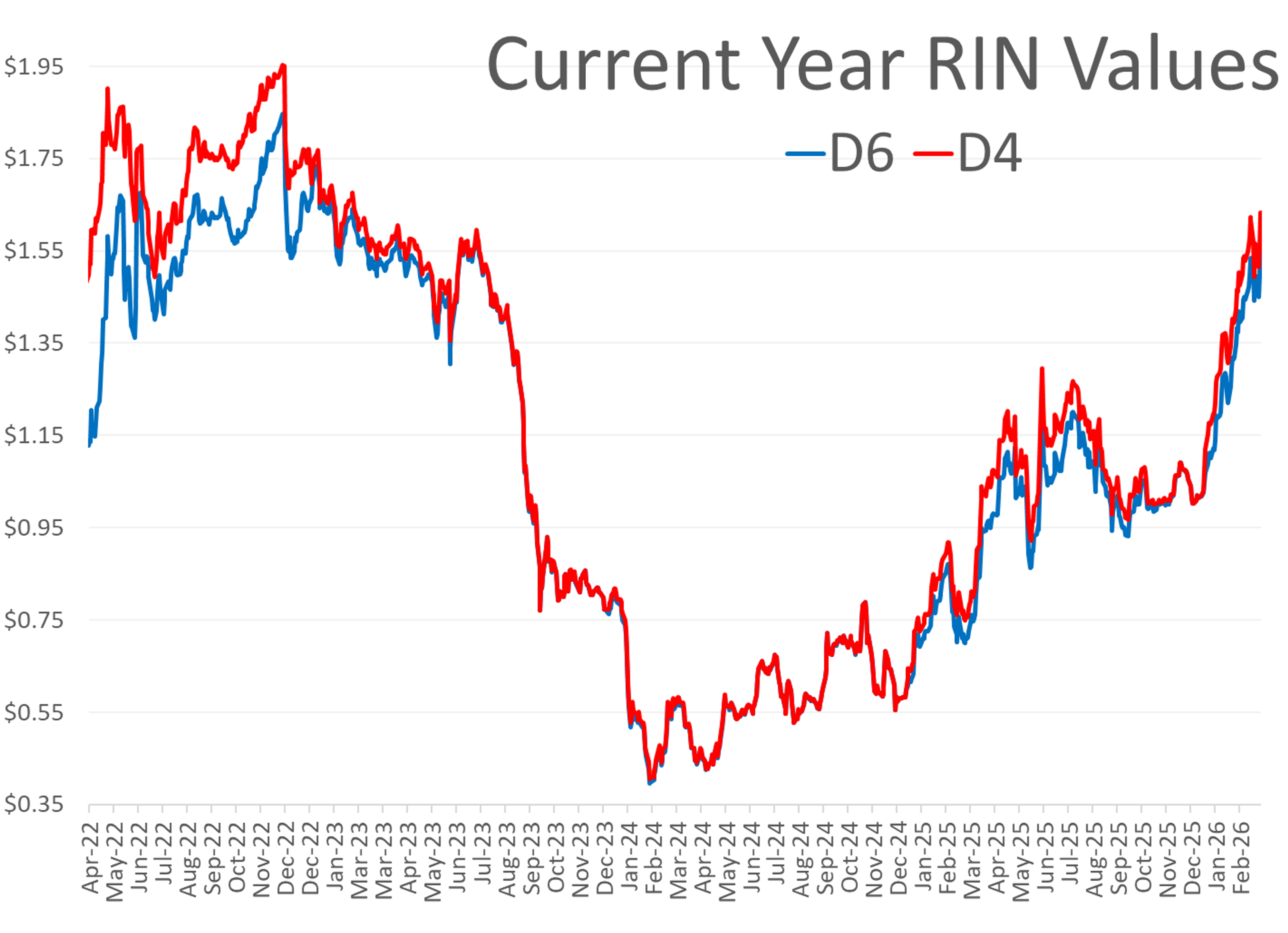
RIN values surged to a 3 year high north of $1.60 for D4 and D6 values Wednesday morning after a report that the EPA’s submission to the Federal Office of Management and Budget currently under review would include a 70% reallocation of small refinery exemptions, and drop the equivalent value of RD to 1.5 from its current 1.7 RIN/Gallon ratio, vs the earlier proposal of 1.6. The final rule still has not been published, with the Q1 deadline for that publication looming and the FEDs seeming to have their hands full at the moment.
Yesterday’s DOE report highlighted the impact on demand as the first wave of panic buying swept the U.S., with the gasoline and diesel weekly estimates both spiking more than 10% on the week. The rest of the supply figures were fairly pedestrian however as the expected rush to export more from the USGC will take longer to show up in the figures, and the U.S. remains relatively insulated from the supply shocks, unlike many other countries, and unlike when we were still a net importer just 15 years ago.
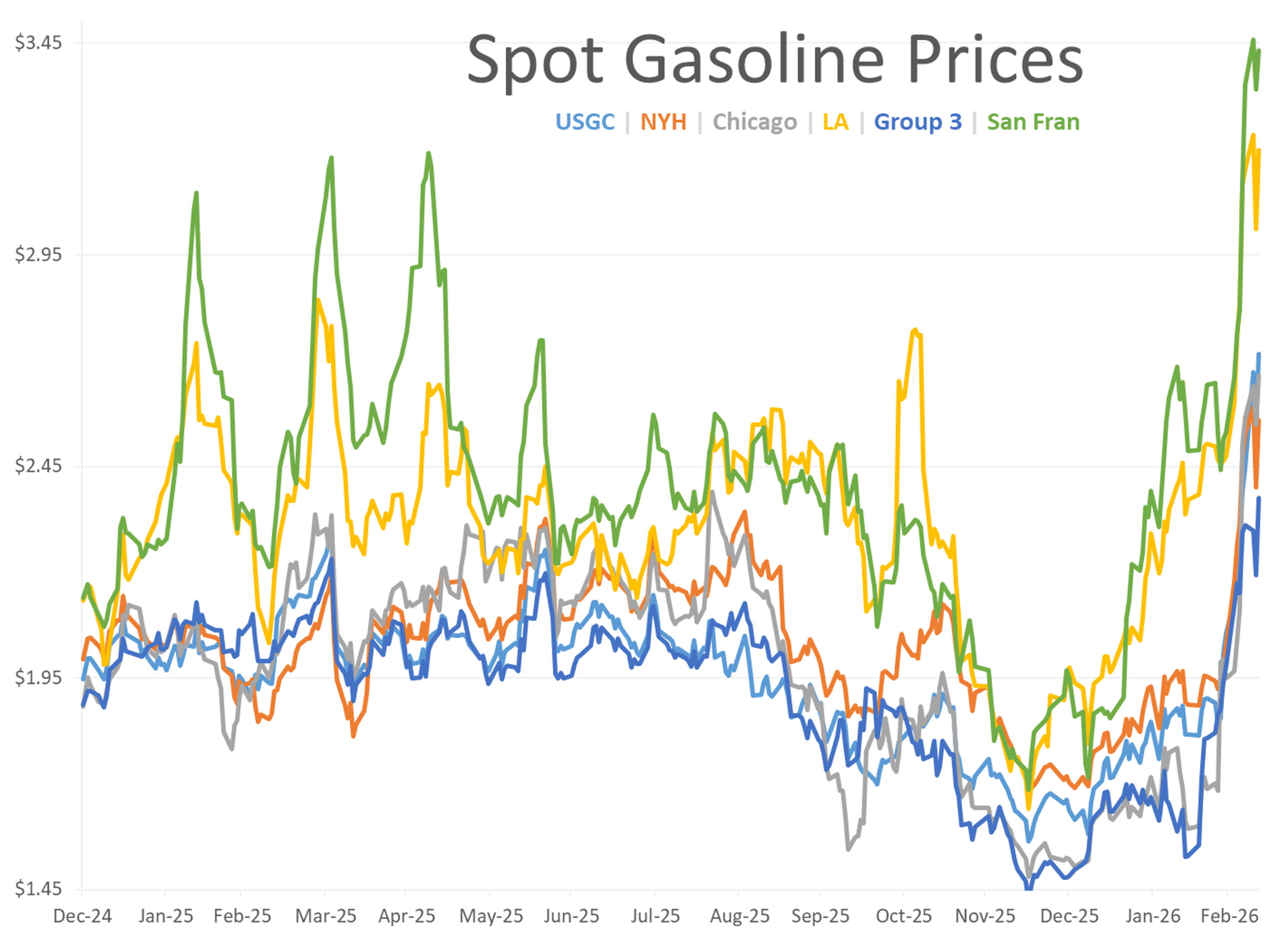
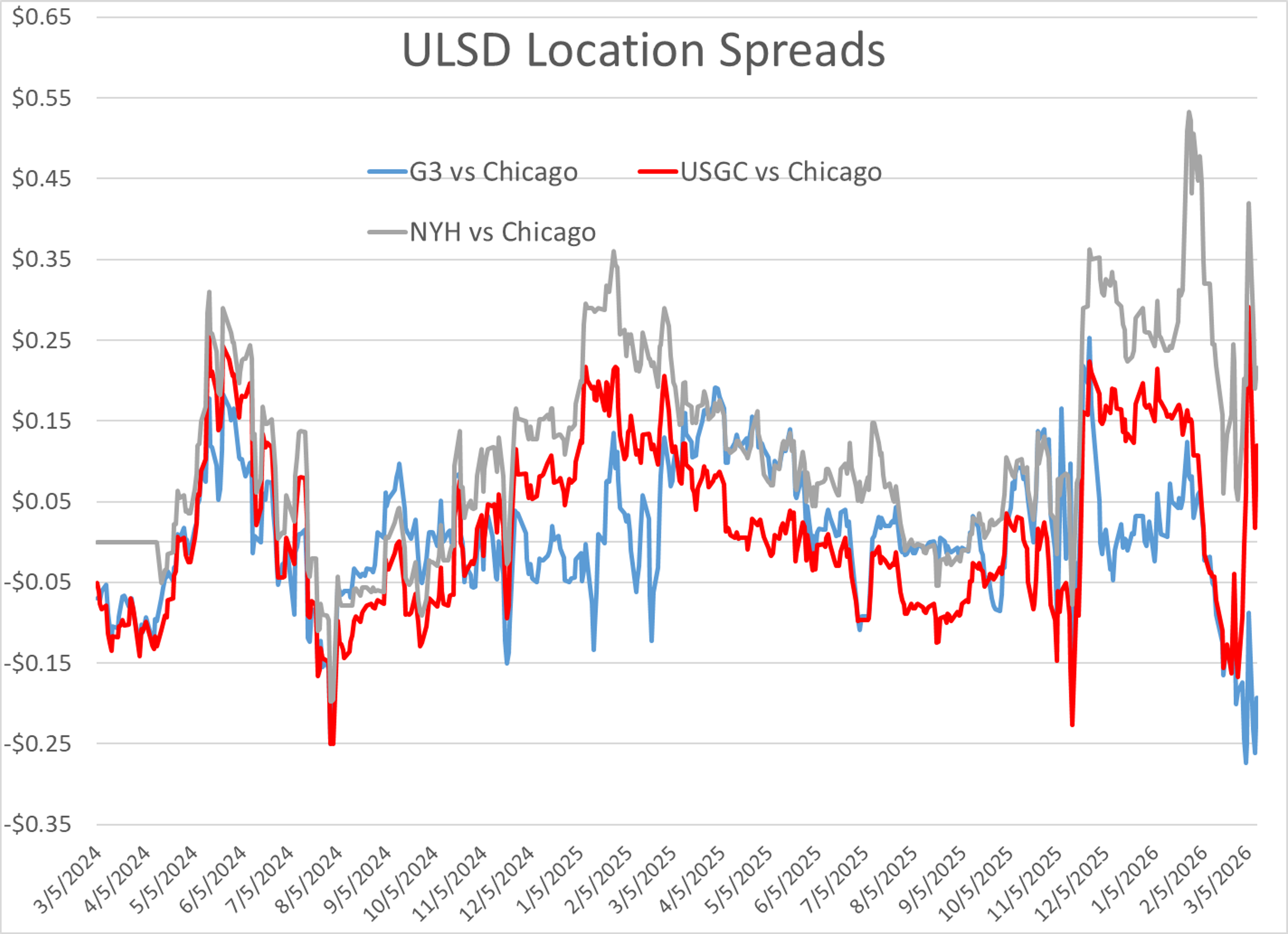
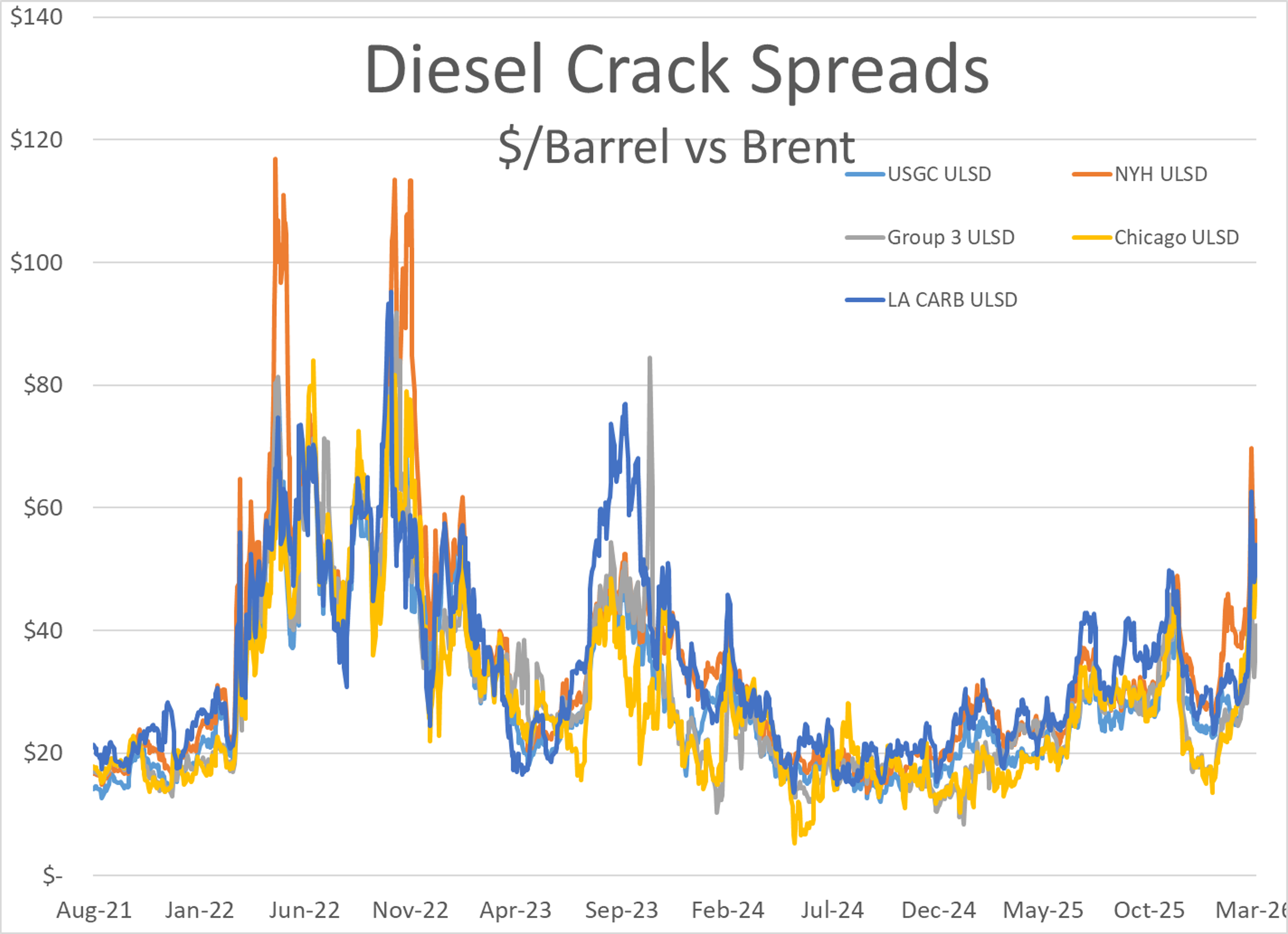
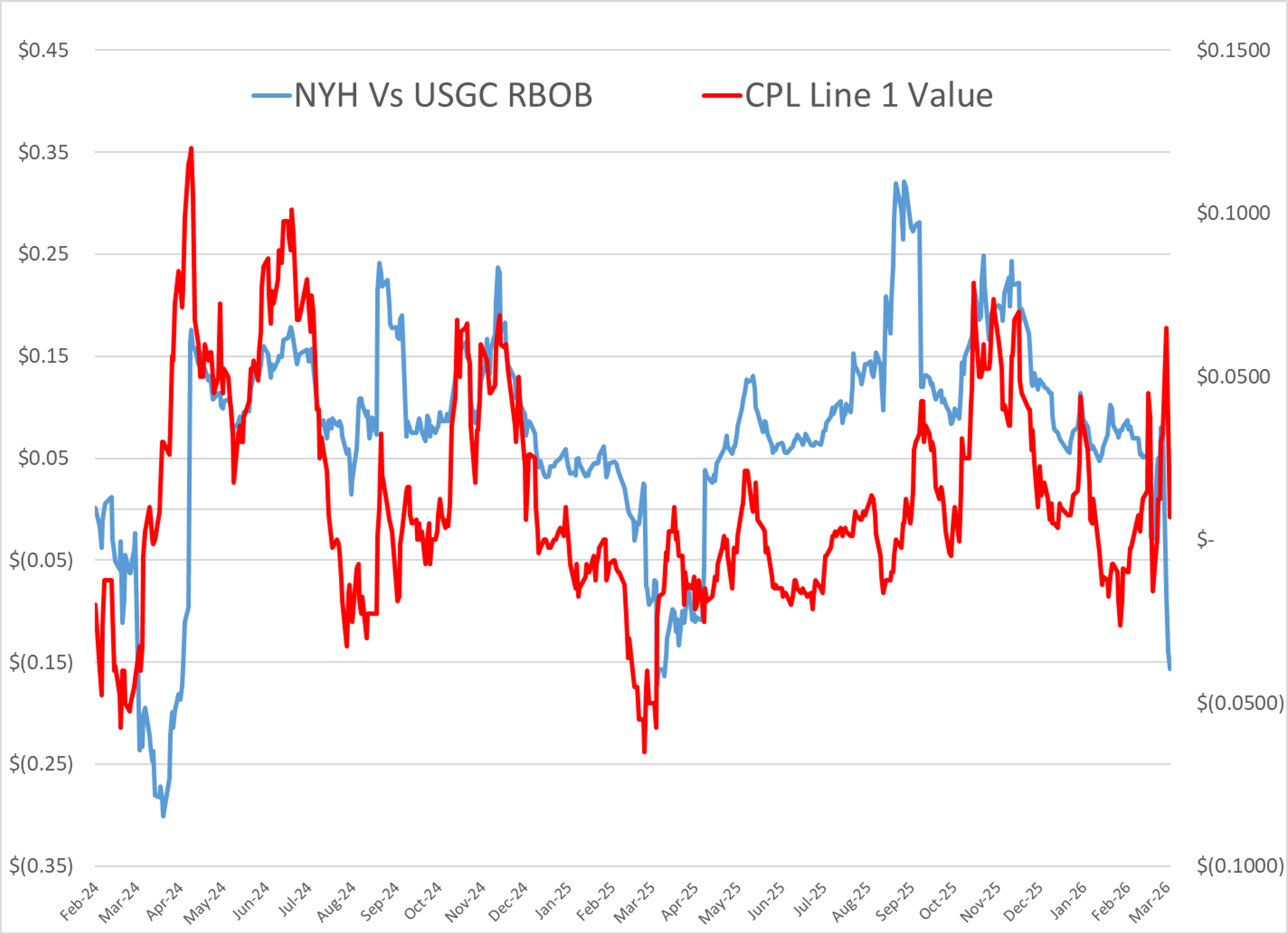
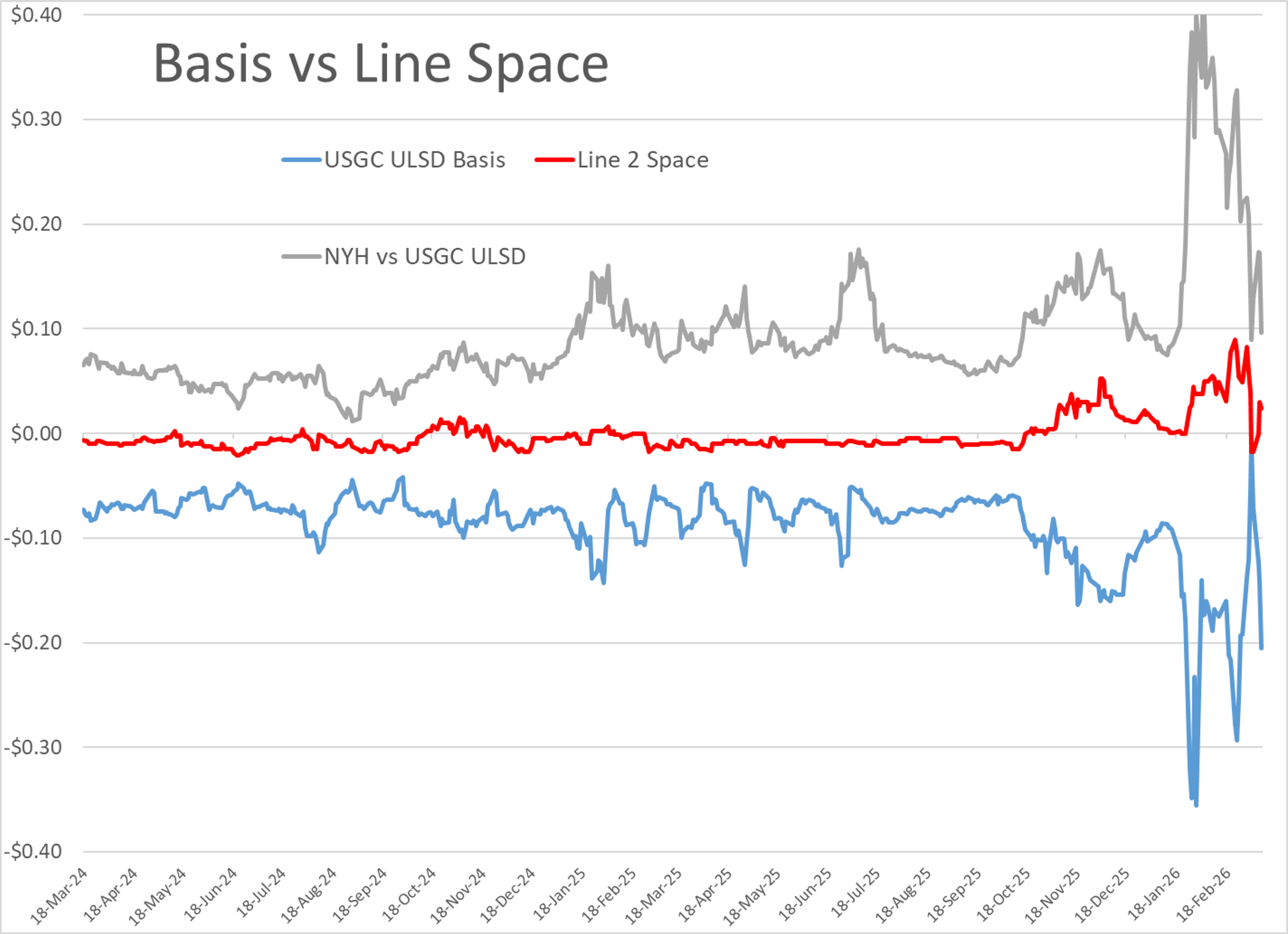
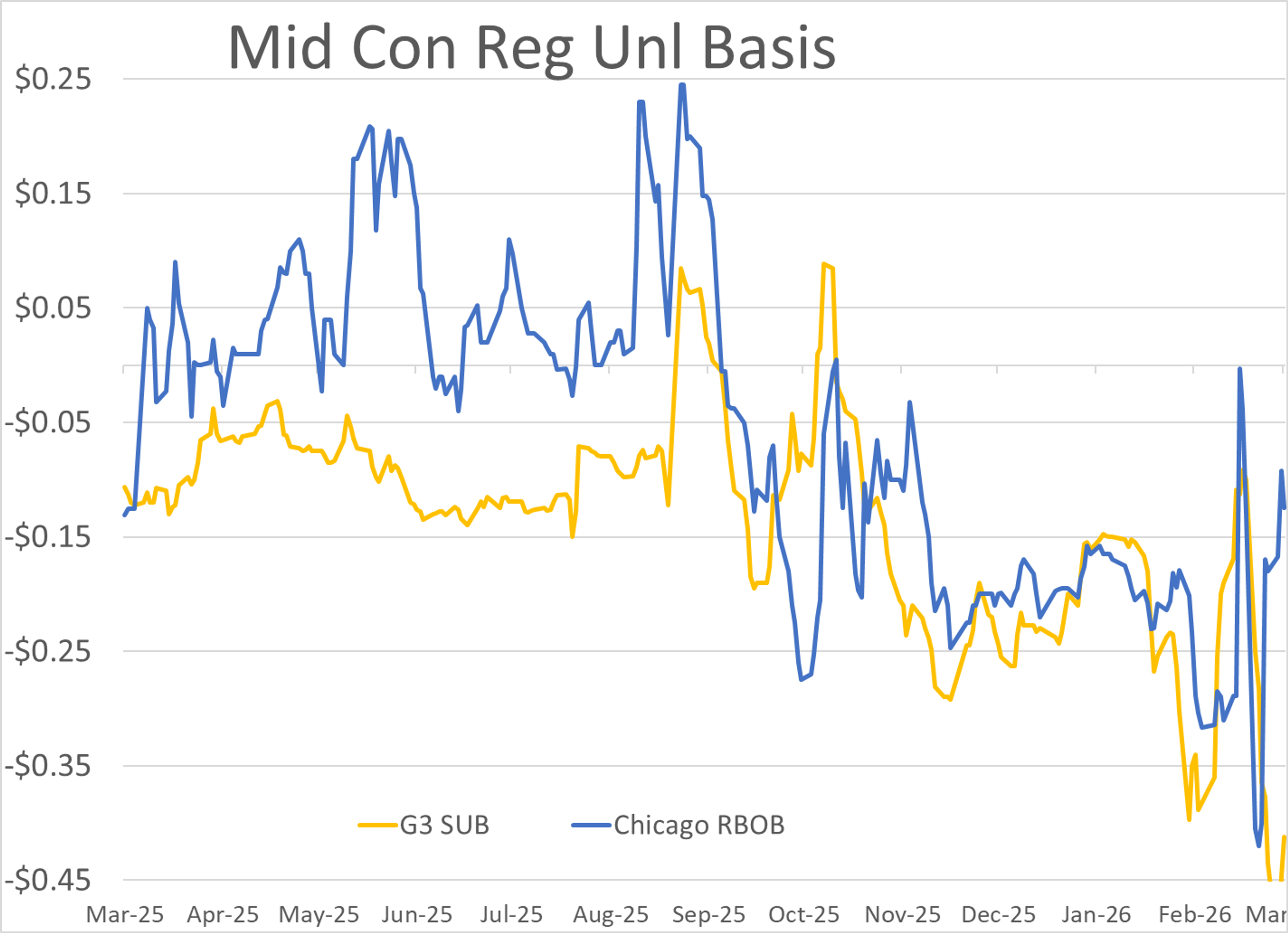
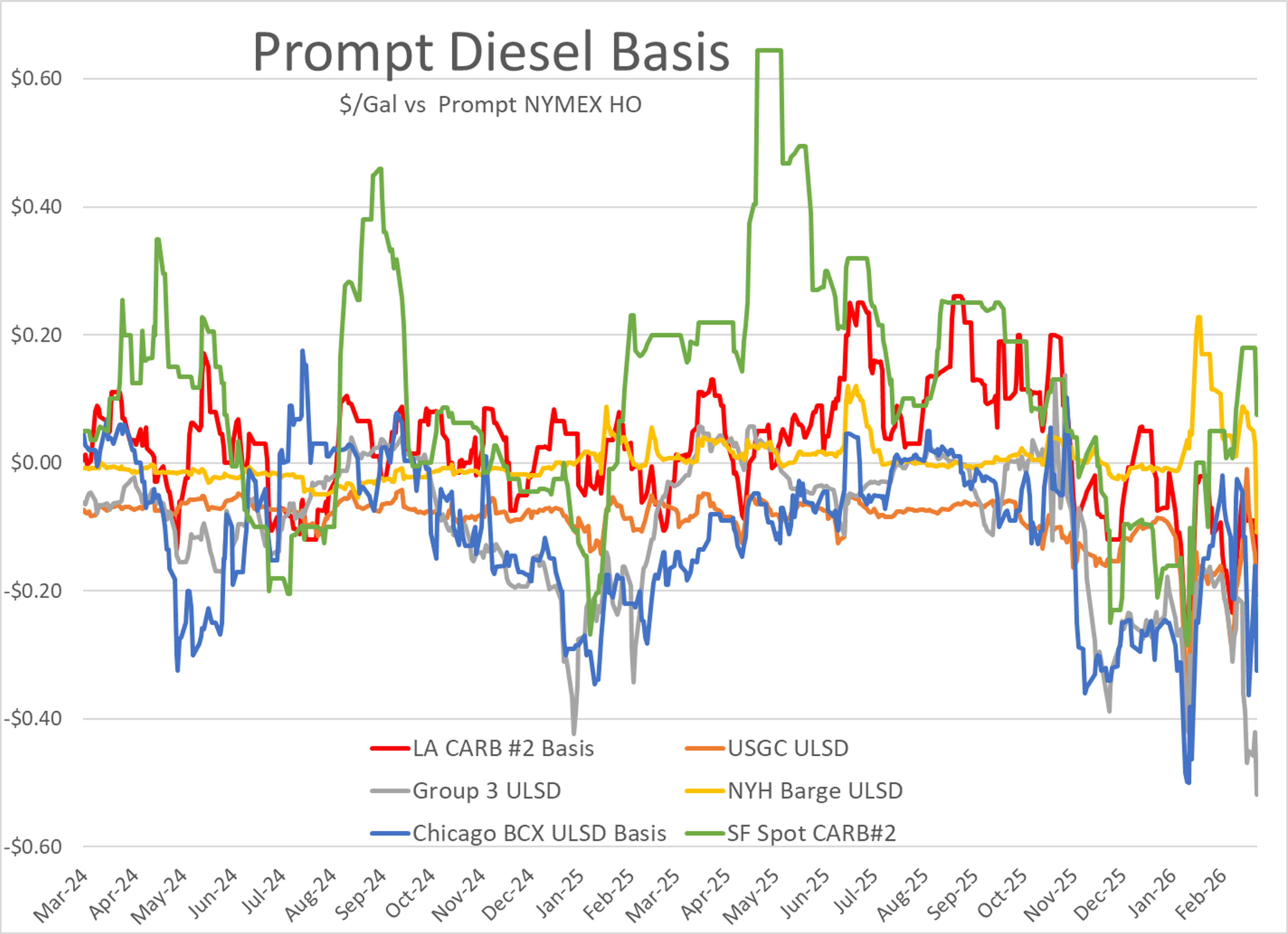
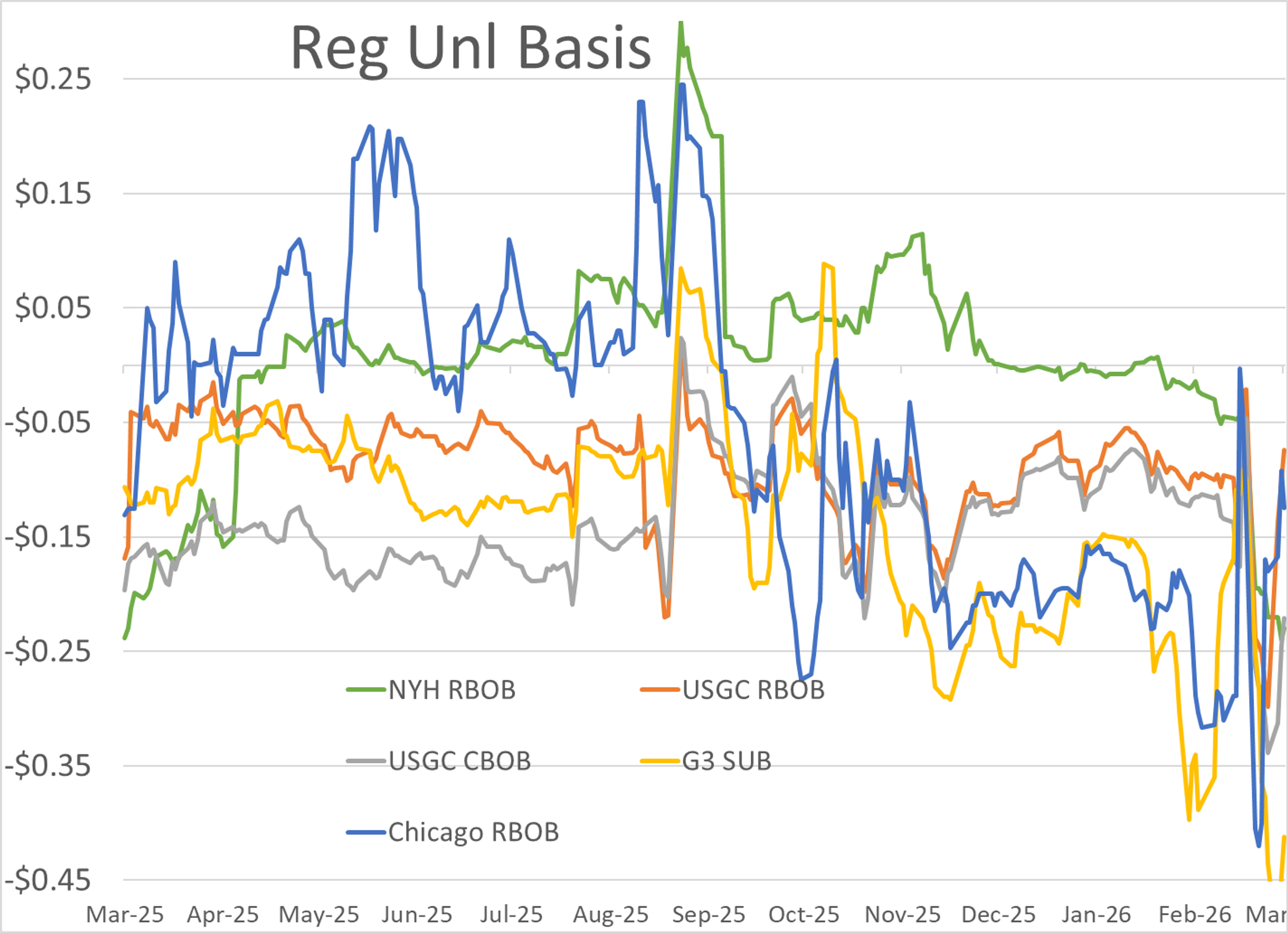
Charts on all sorts of spreads from time, location and crack spreads, basis differentials and line space values all look more like EKG readings this week as physical traders have scrambled to keep from getting their head taken off by the wild ride in the algo-driven futures markets. If you’re not prone to motion sickness, feel free to peruse a sample of those charts below.
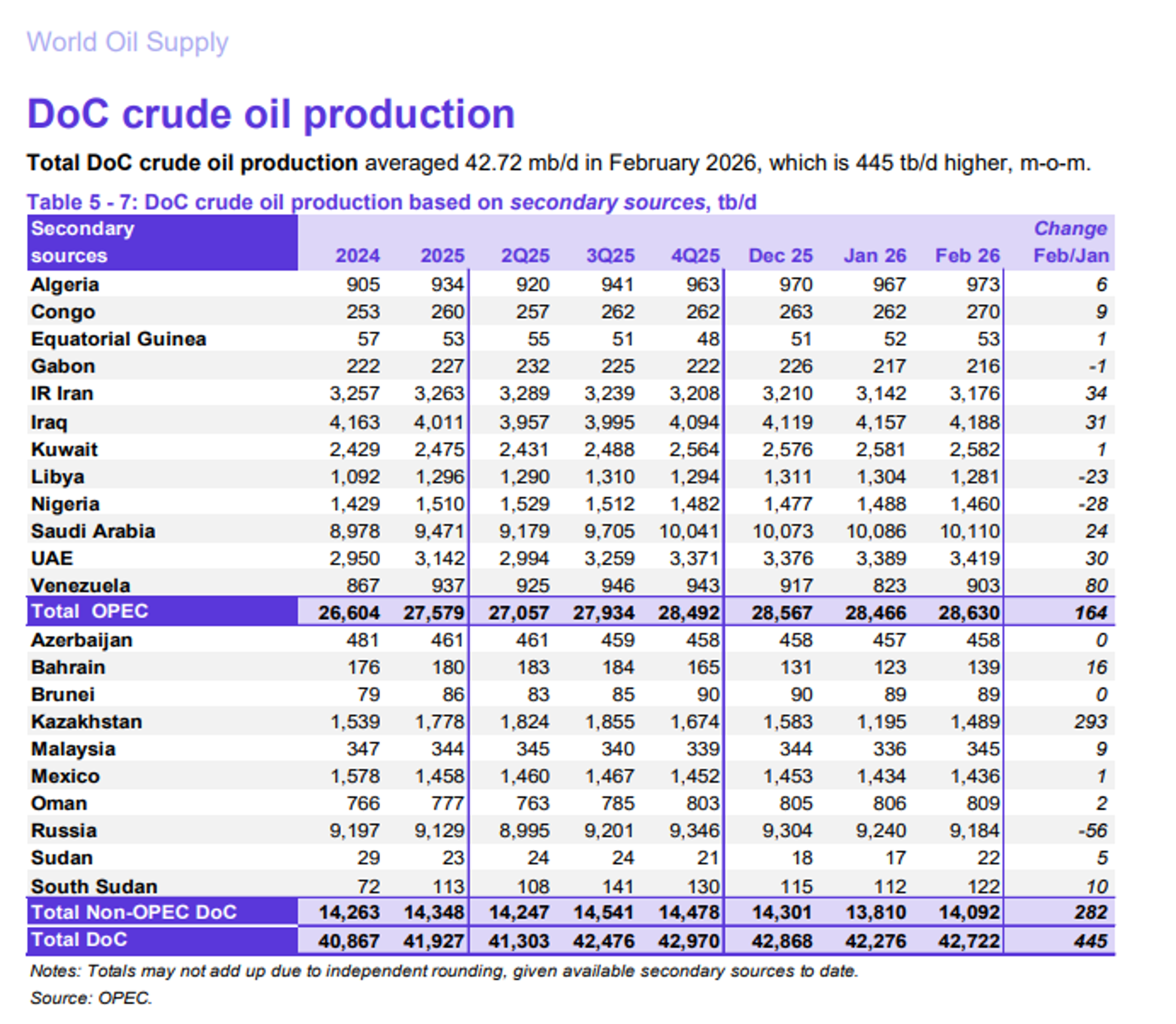
OPEC’s monthly oil market report essentially ignored the war impacts as it focused on actual results from February, leaving its outlook for the global supply and demand balances unchanged, which is obviously changing rapidly in March. Increases in supply from Kazakhstan, Venezuela, UAE, Saudi Arabia, Iraq and Iran in February pushed the “DoC” cartel’s output up by an otherwise impressive 445mb/day, but in today’s world that’s only 2.7% of the 16 million barrel/day losses we’re seeing in March.
The IEA took the opposite approach in its monthly oil market report, calling the war in the Middle East the largest supply disruption in the history of the global oil market. Enough said.
Notes from the DOE’s weekly status report: Charts are attached.
Total U.S. diesel inventory remains below its the 5-year average, with PADD 1 stockpiles, specifically, coming in under its 5-year range for the fifth week in a row. PADD 3 ULSD stocks remain healthy, but have dropped for the third consecutive week, and will likely do so again next week. Gasoline inventory remains above its 5-year range, but dropped last week as demand continues to recover from the previous two months’ winter slowdown.
Refinery throughput levels stayed at or above their respective 5-year ranges at all PADDs, except for PADD 5. Run rates in the West Coast refinery basket did pop back up into their seasonal range last week after PBF’s successful restart of its alkylation unit at its Torrance refinery after planned maintenance took it offline at the end of February.
Latest Posts
Crude Strength, Refinery Disruptions, And Export Bottlenecks Support Fuel Prices
Global Supply Risks And Strong Refining Margins Drive Energy Market Rally
Week 42 - US DOE Inventory Recap
Diesel Prices Swing Wildly Amid Tanker Attacks And Supply Concerns
Diesel's Breakout Signals Renewed Pressure Across Energy Markets
Oil Opens Soft Despite Escalating Supply Threats
Social Media
News & Views
View All
Crude Strength, Refinery Disruptions, And Export Bottlenecks Support Fuel Prices
Global Supply Risks And Strong Refining Margins Drive Energy Market Rally