Energy Prices Rebound As Peace Talks Stall And Physical Markets Tighten

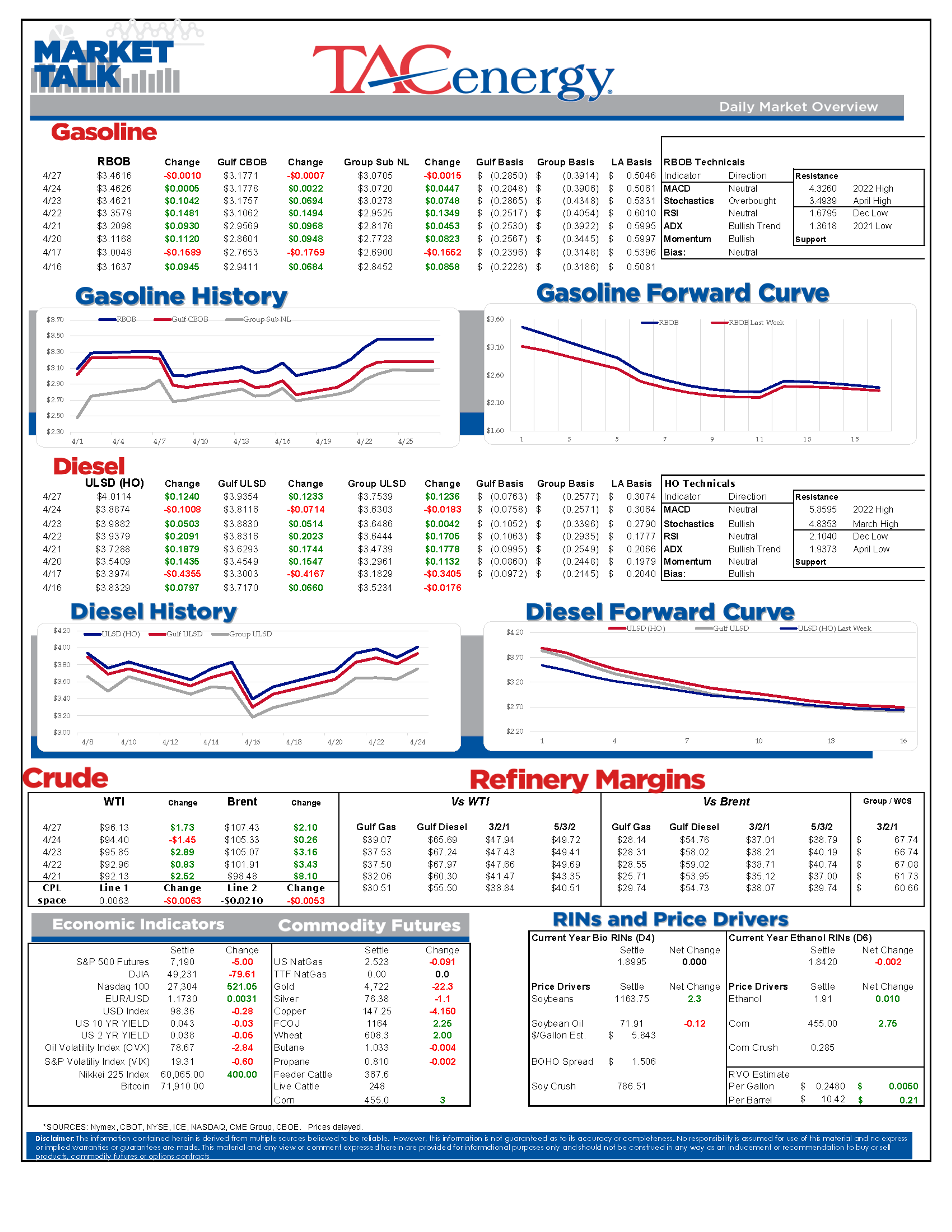
Most energy contracts are seeing a strong start to the week with prices opening sharply higher in the overnight session after the peace talks that helped push prices lower Friday failed to even get off the ground over the weekend. We have seen a pullback from the highs this morning which is pushing the soon-expiring May RBOB contract modestly into the red, following reports that Iran had made a proposal to re-open the strait, end the war, and pick up nuclear negotiations sometime down the road.
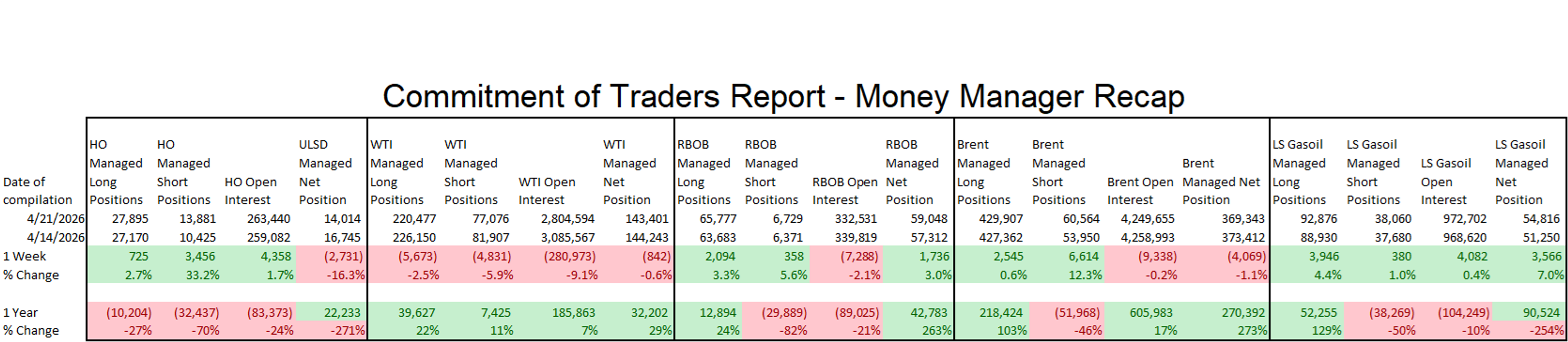
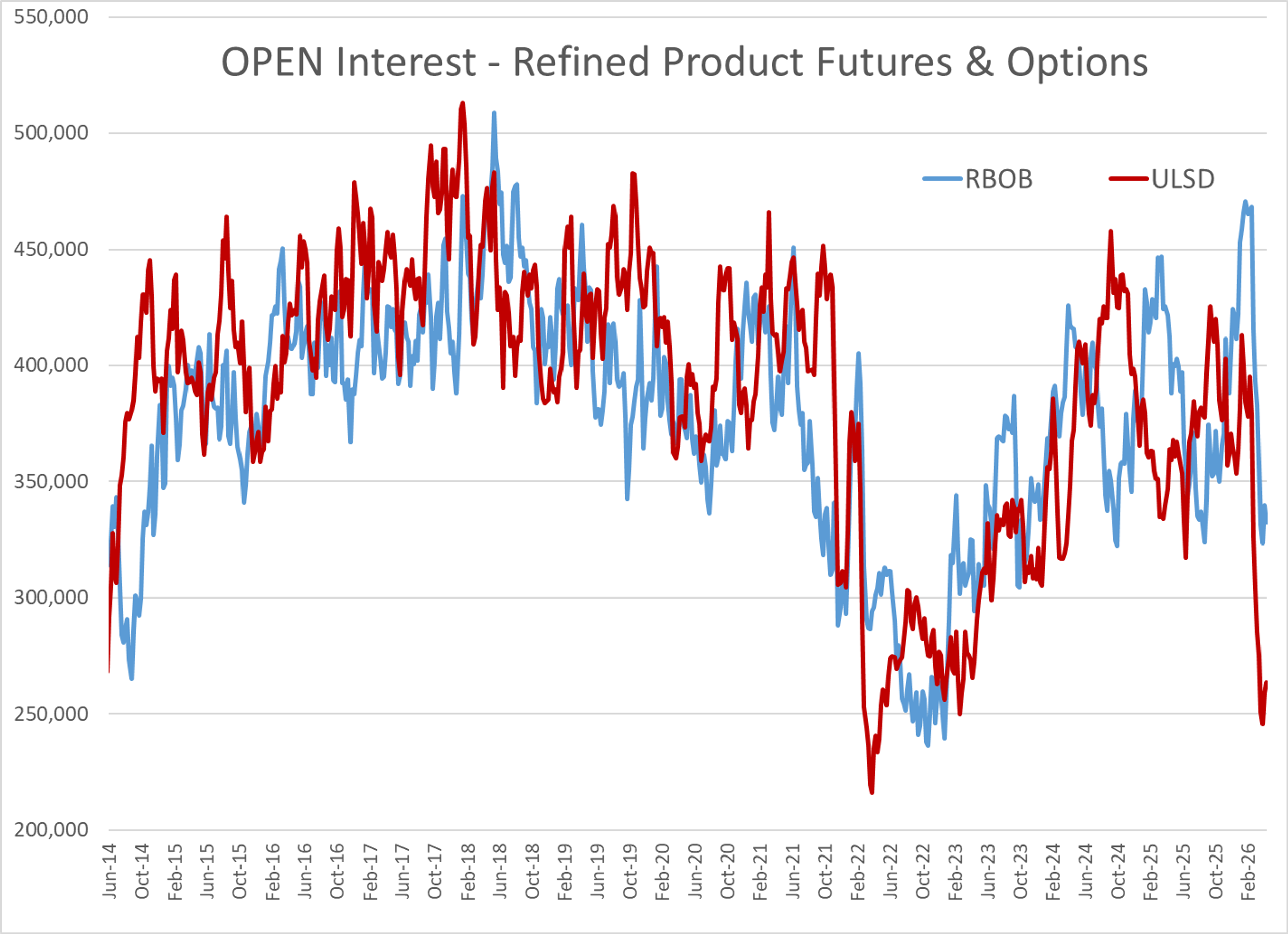
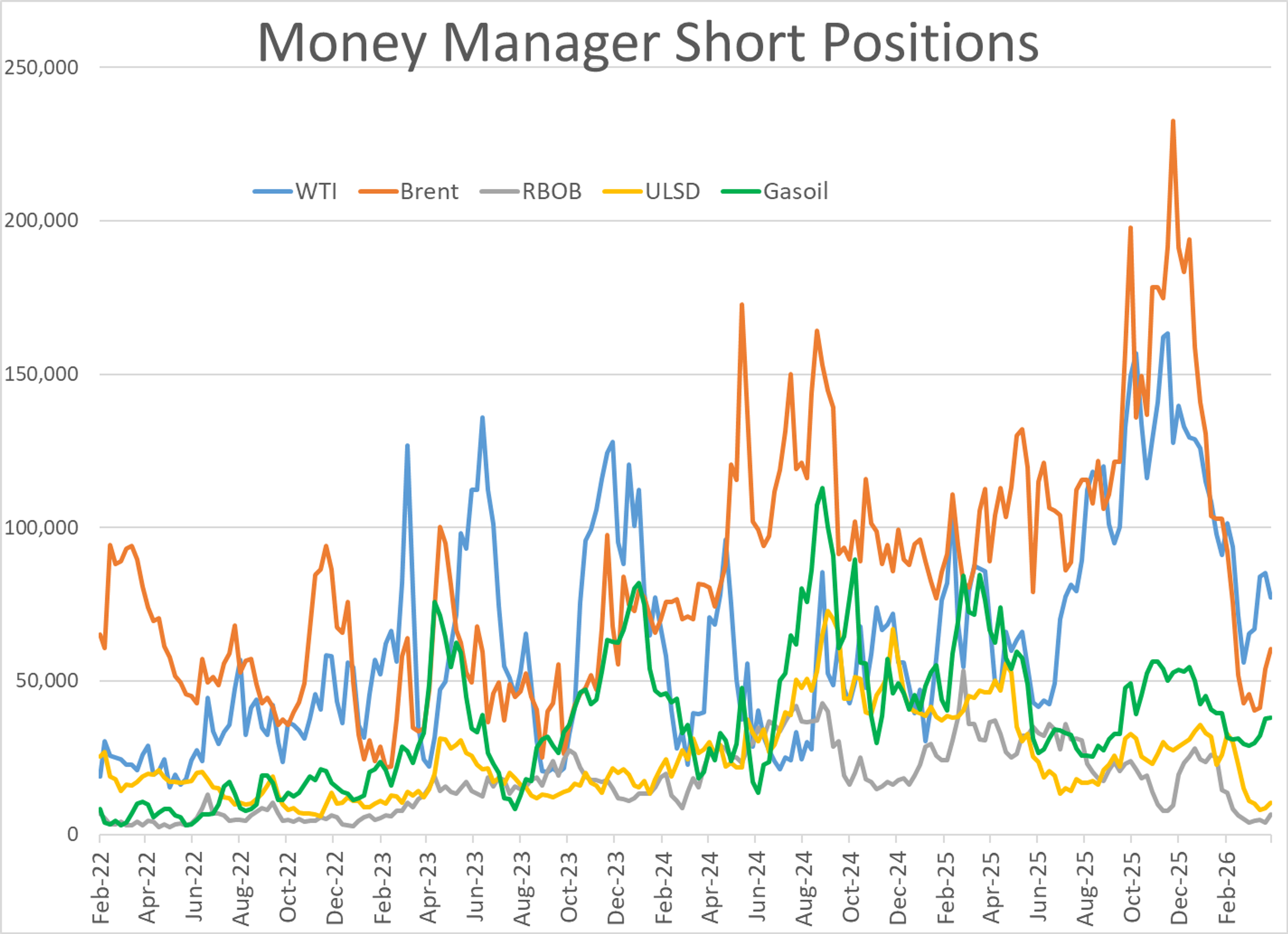
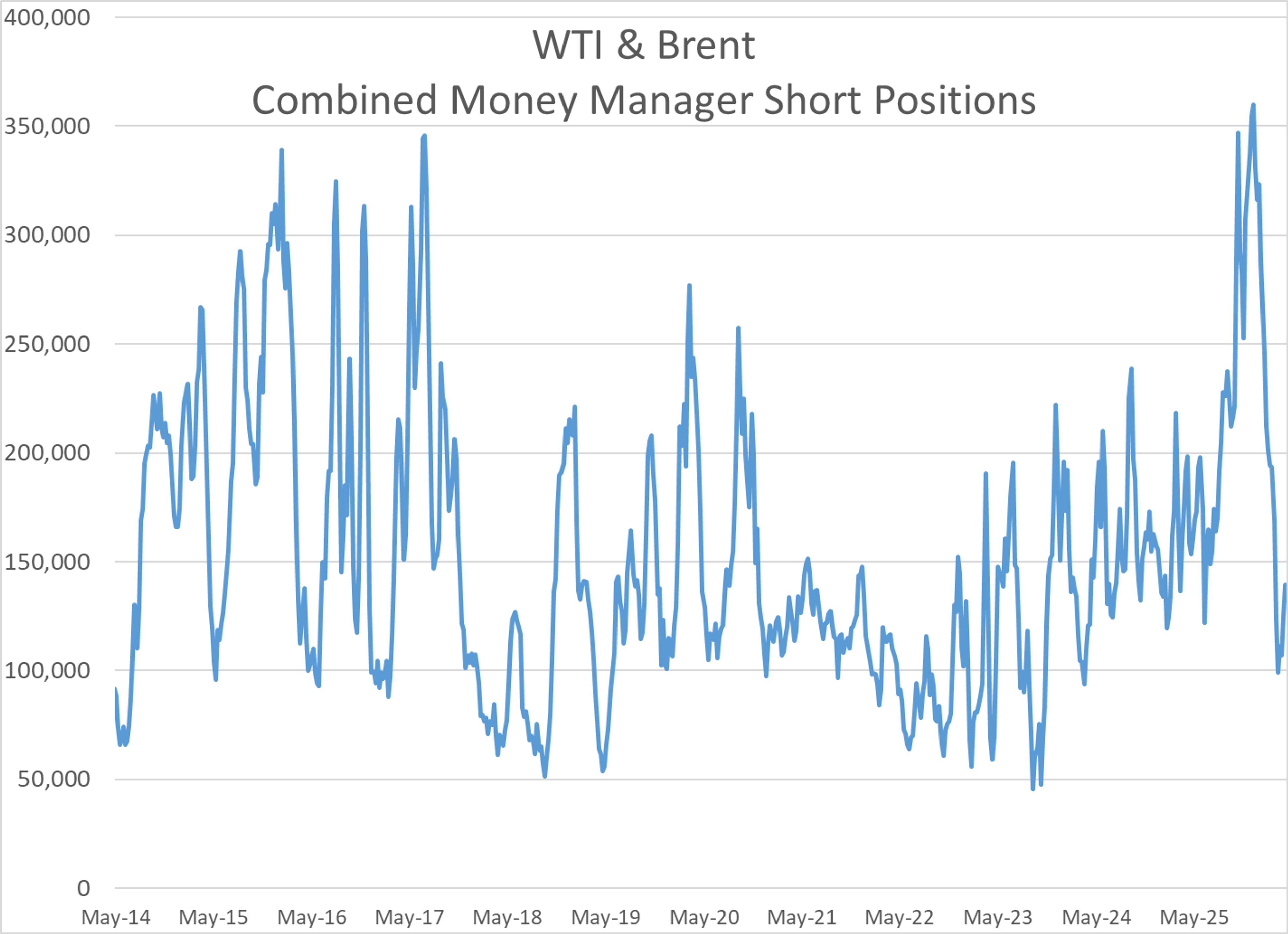
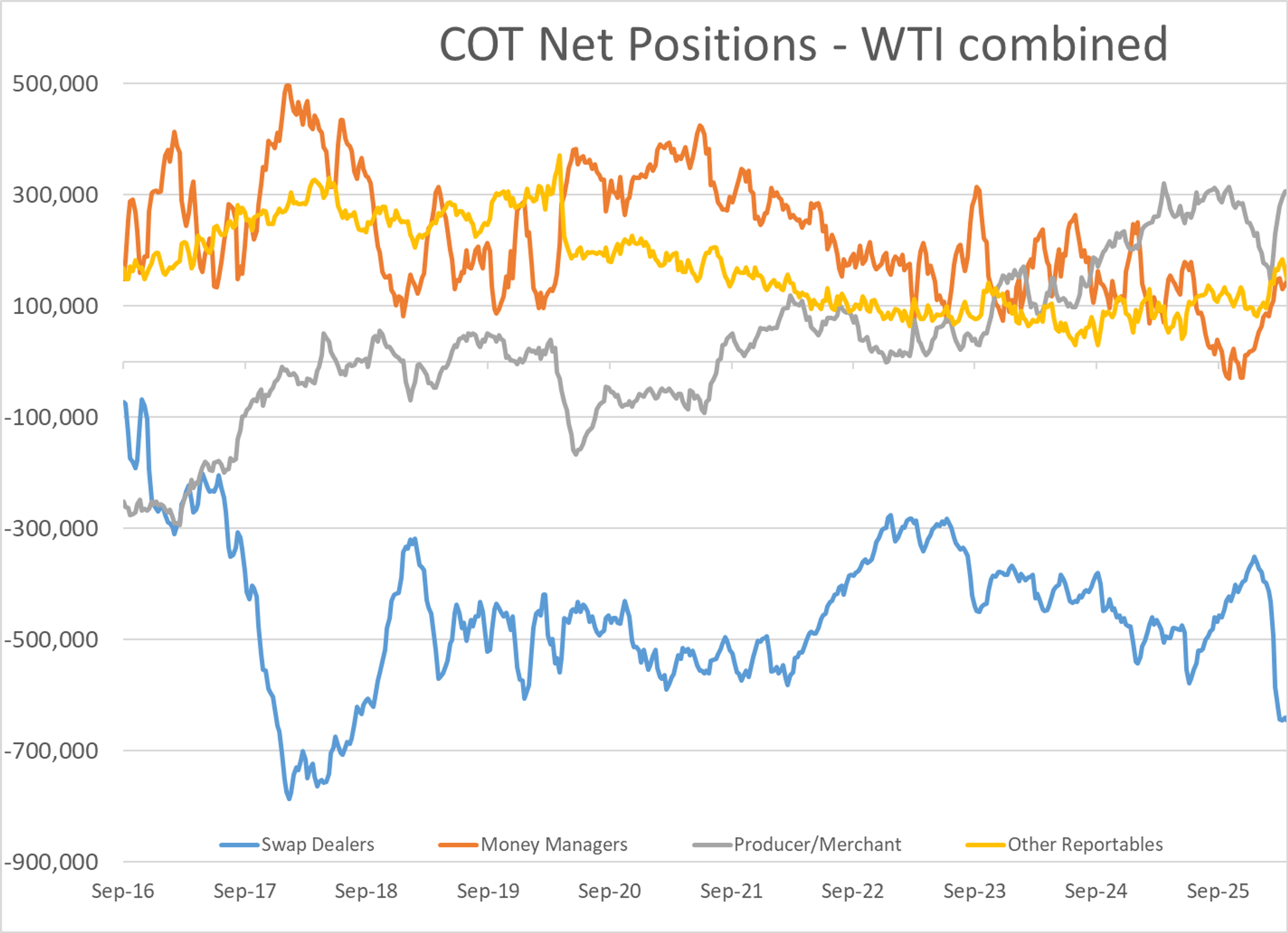
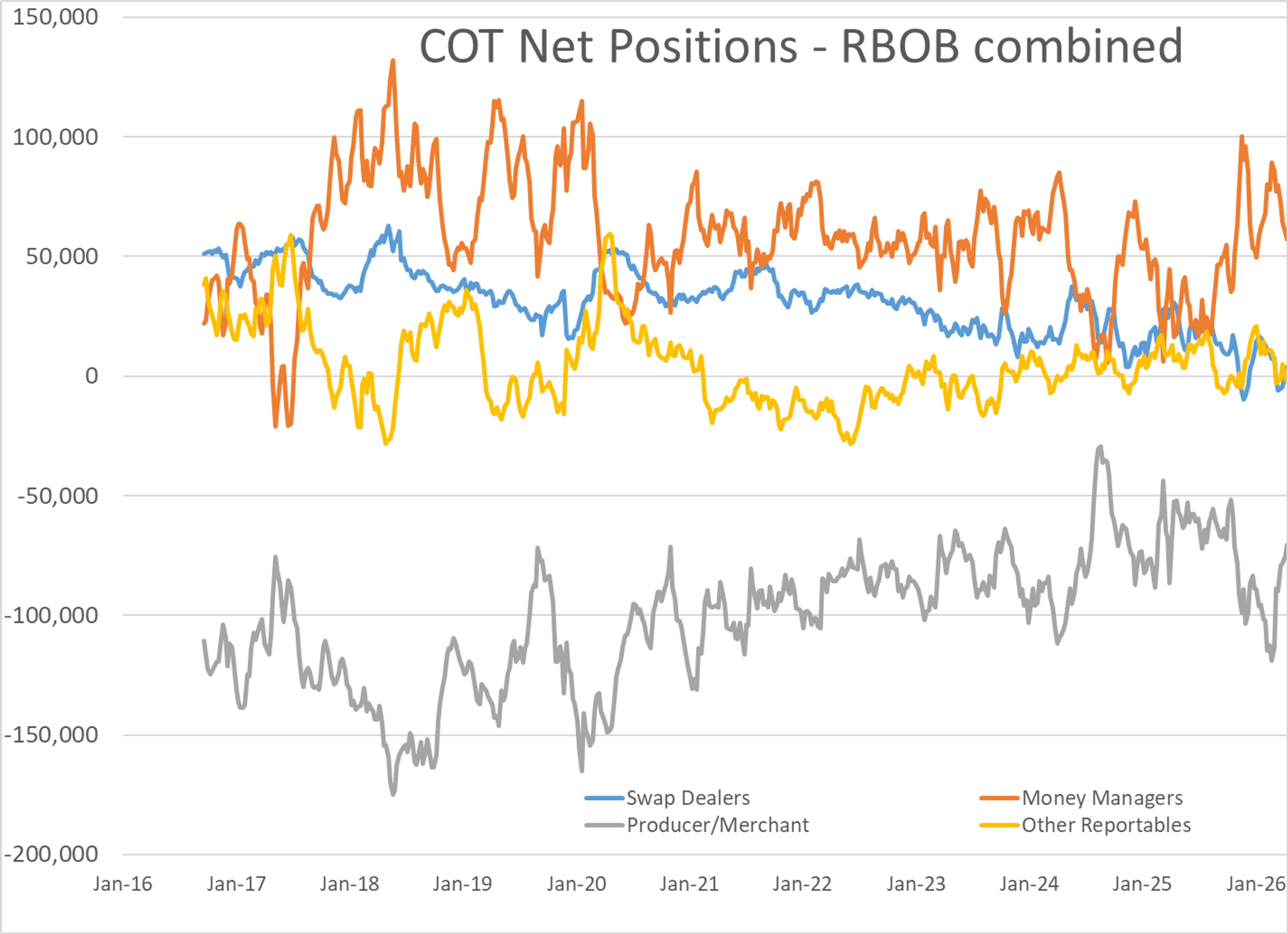
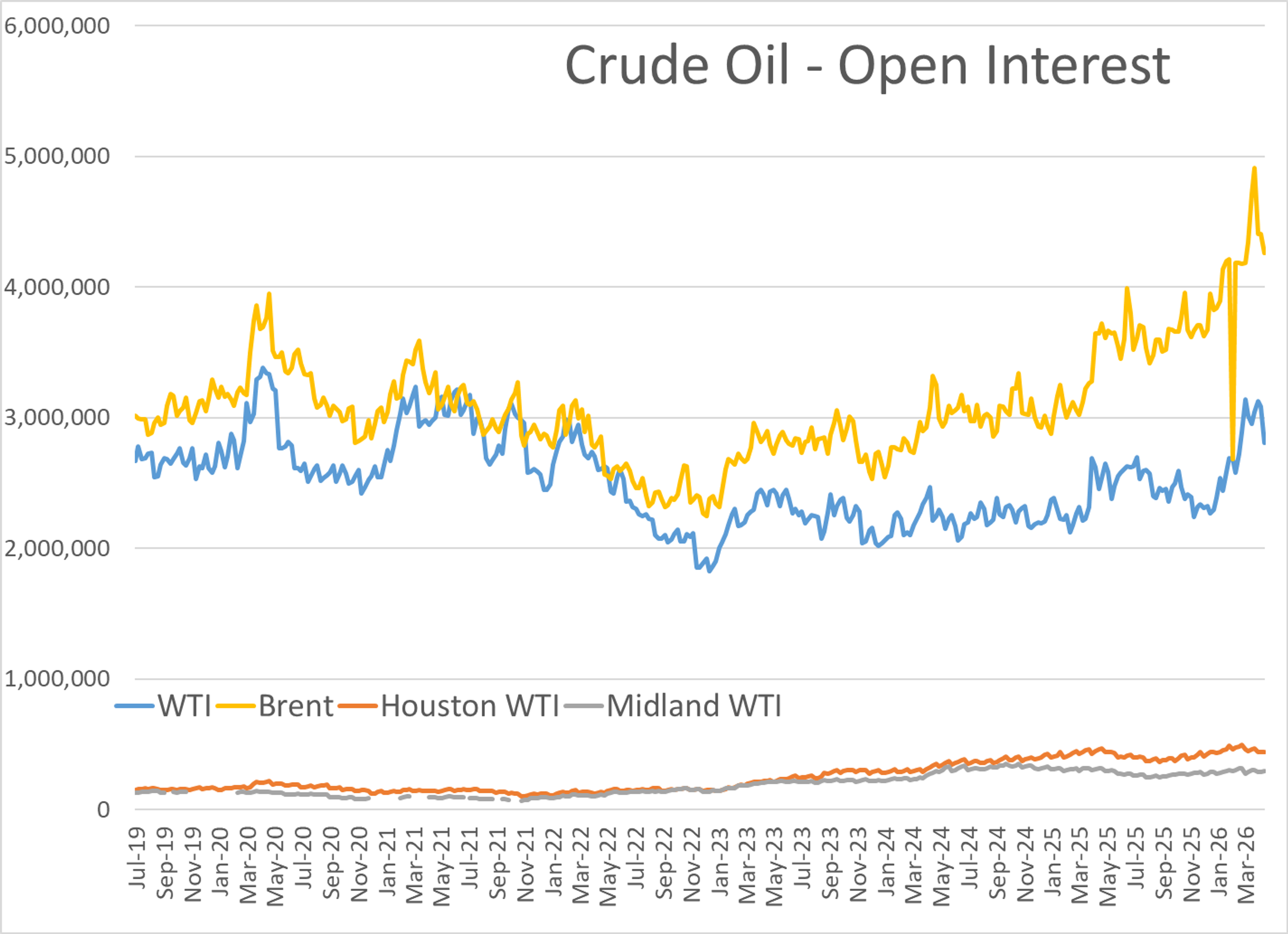
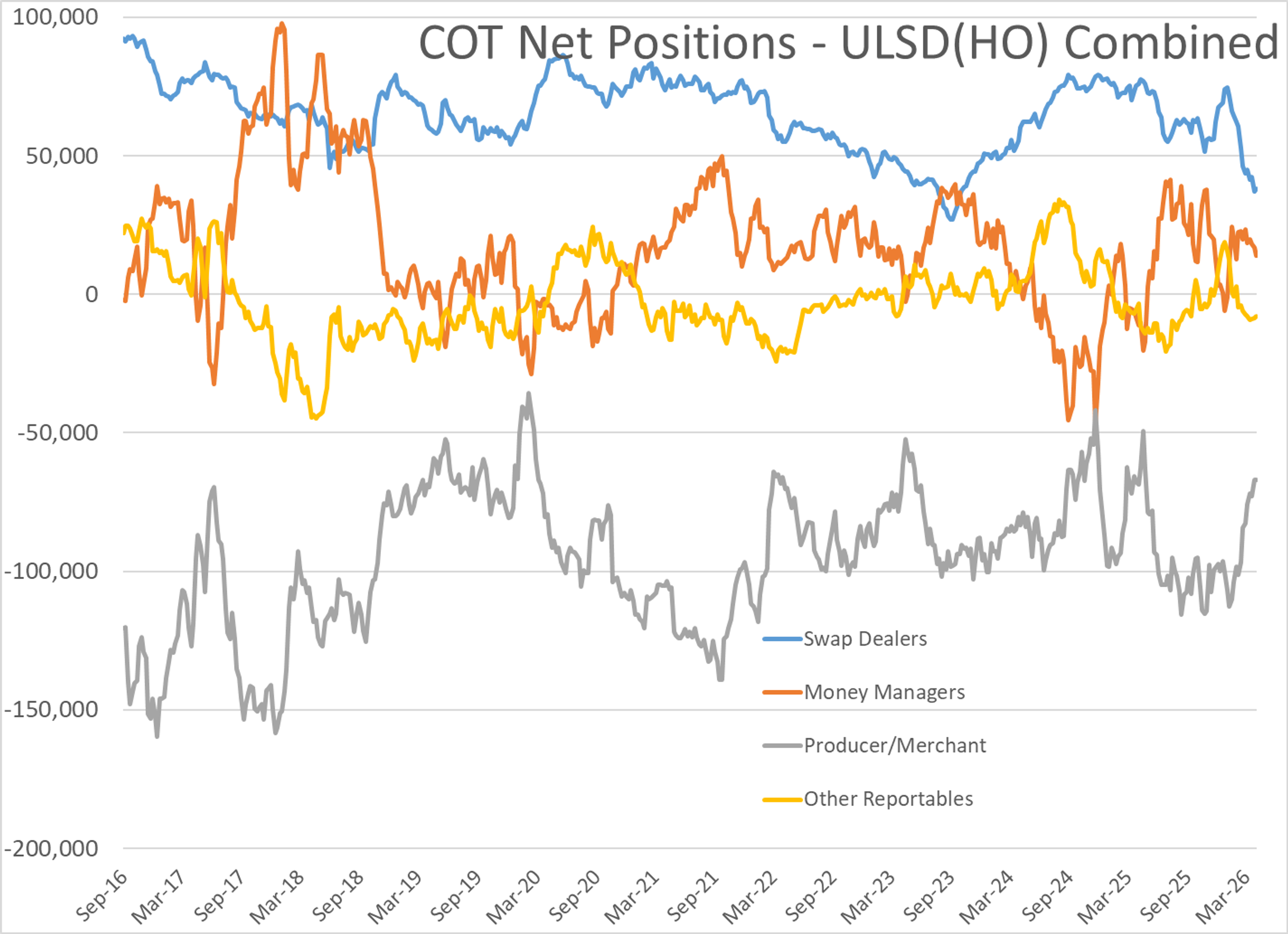
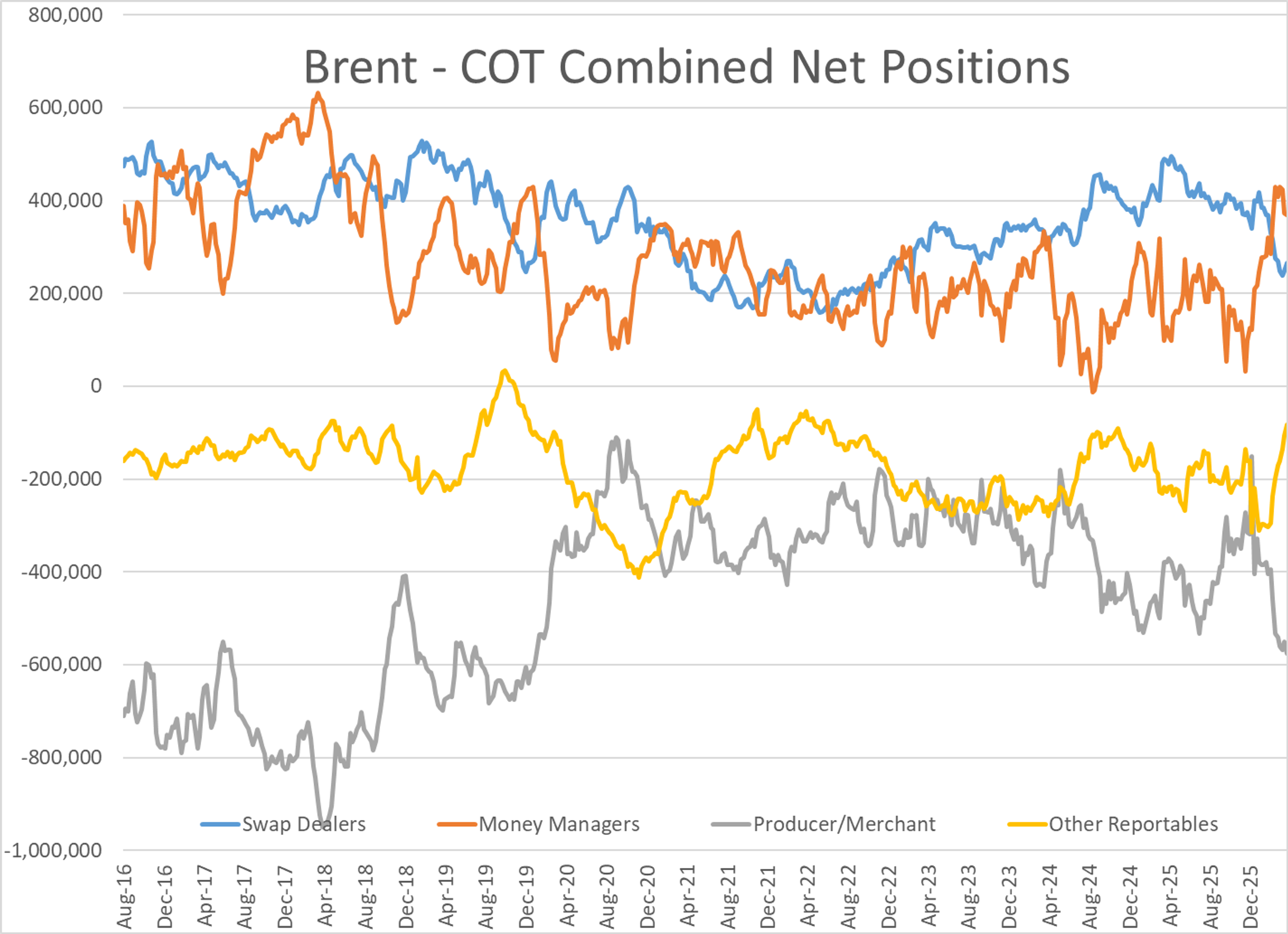
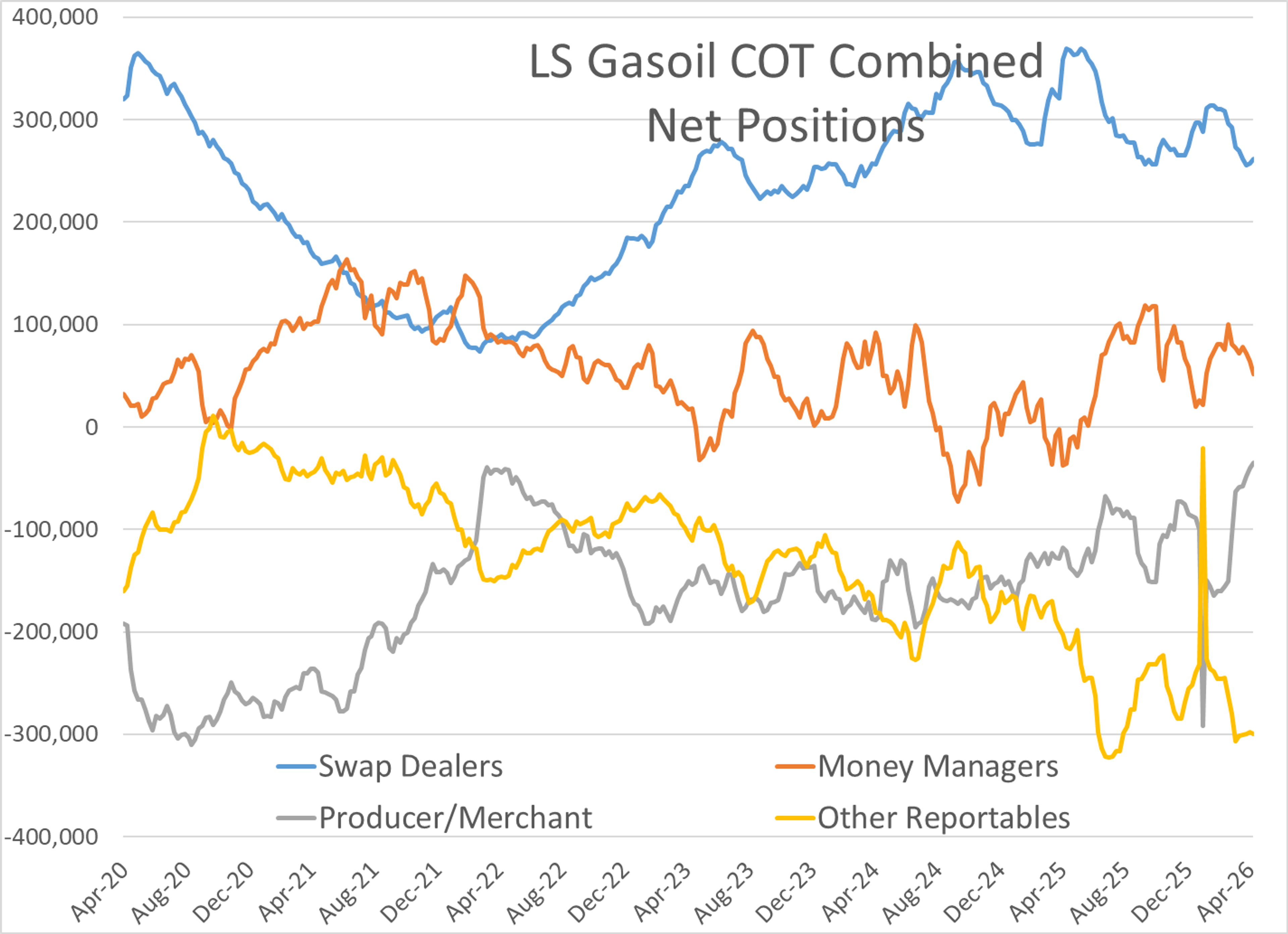
Signs of fatigue? Money managers were all over the map last week, making small increases to net length held in RBOB and Gasoil contracts and small reductions in Brent, WTI and ULSD. The action was a varying combination of new long and short additions, and liquidations consistent with the general state of inconsistency in the markets these days. The most notable figure of the week was a 9% drop in WTI open interest, following healthy decreases in the previous weeks for the Brent contract which suggests some players are growing weary of trying to ride out the chaos. Open interest in refined products seems to have stabilized the past few weeks after being slashed by 1/3 in the first 5 weeks of the war.
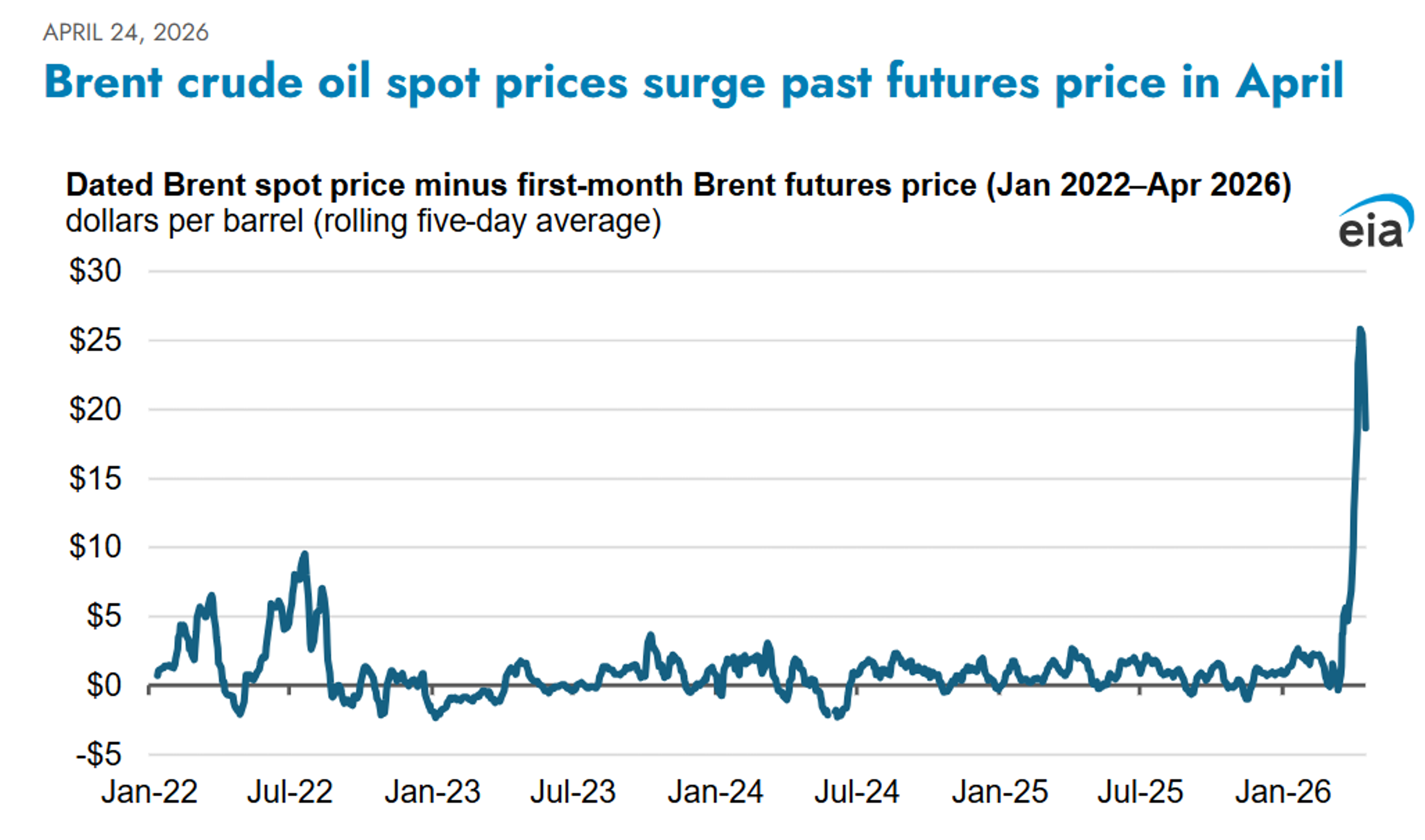
The EIA Friday highlighted the spike in physical crude premiums since the war broke out, showing Dated Brent spot pricing commanding a $25 premium to front-month Brent futures. Similar versions of this phenomenon have been playing out across crude and product markets around the world for the past 2 months as buyers are forced to pay up to find replacement barrels that used to come from the Persian Gulf region. We’ll start to see first quarter results from the industry this week with huge increases in earnings expected as the war push prices and crack spreads to near-record levels, but this physical phenomenon will make life challenging for refiners in Q2 as they have to play a dangerous game of paying up for prompt crude supplies and then sliding down the steep backwardation curve before selling the products they derive from it.
Chevron reported unplanned flaring at its 290mb/day El Segundo CA refinery Saturday morning, due to unknown causes according to a filing with the AQMD. The LA spot market was already trading at healthy premiums to futures and could see more buying if that upset proves material as the 2 largest facilities still standing in the region both reported upsets in less than 48 hours.
Meanwhile, the two TX Panhandle refineries (Valero Mckee & P66 Borger) are both undergoing planned maintenance on FCC units this week according to TCEQ filings.
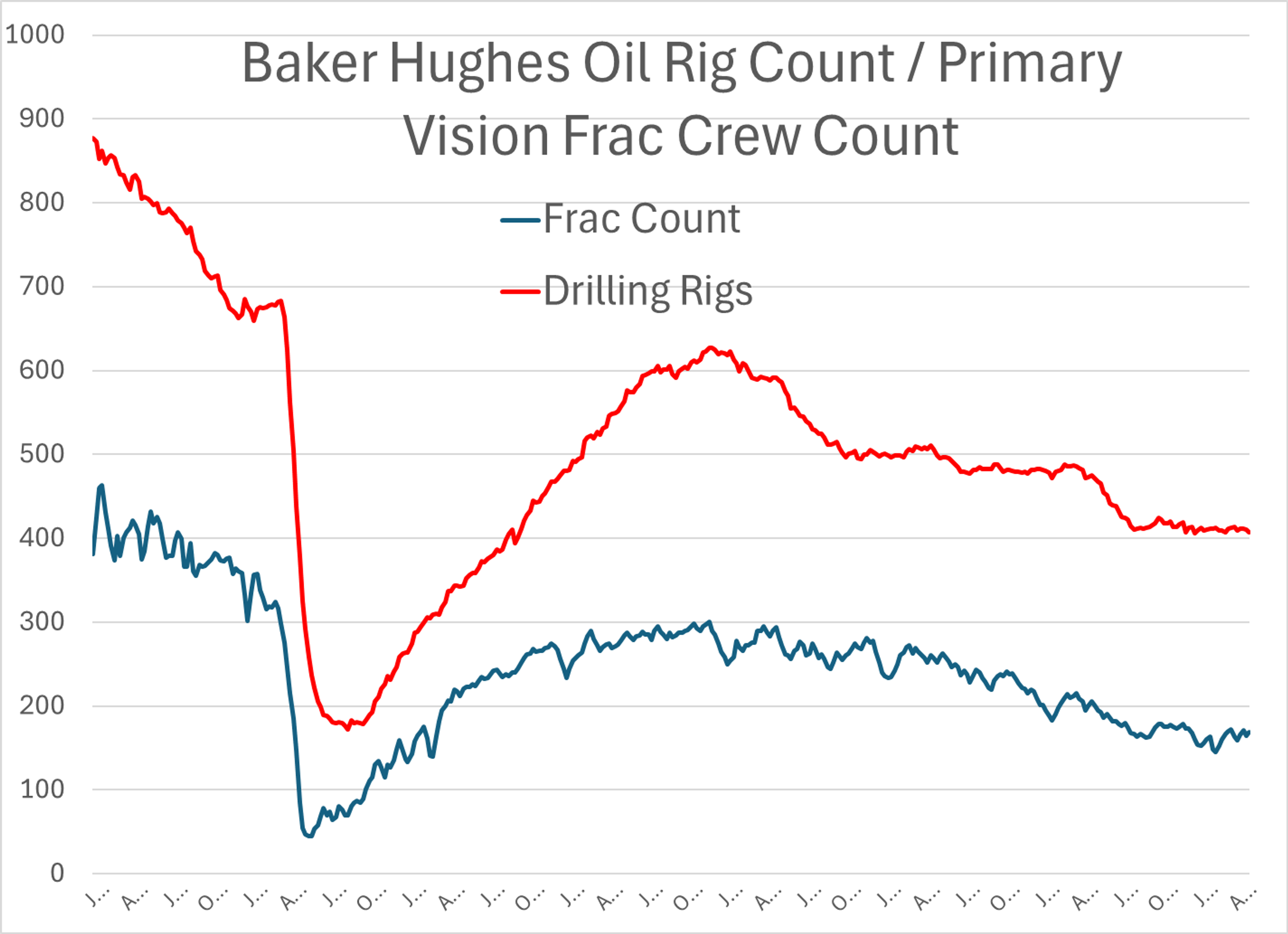
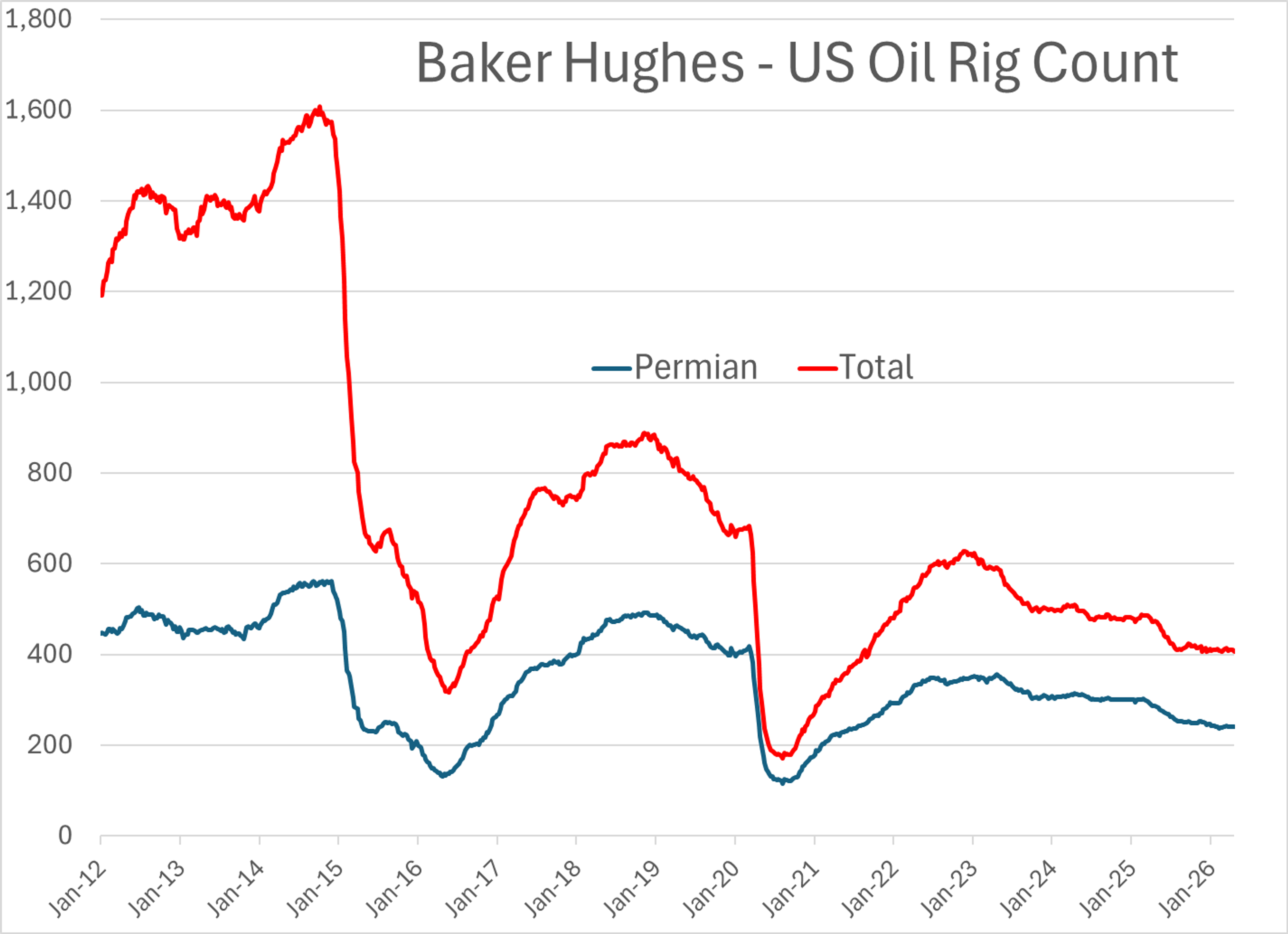
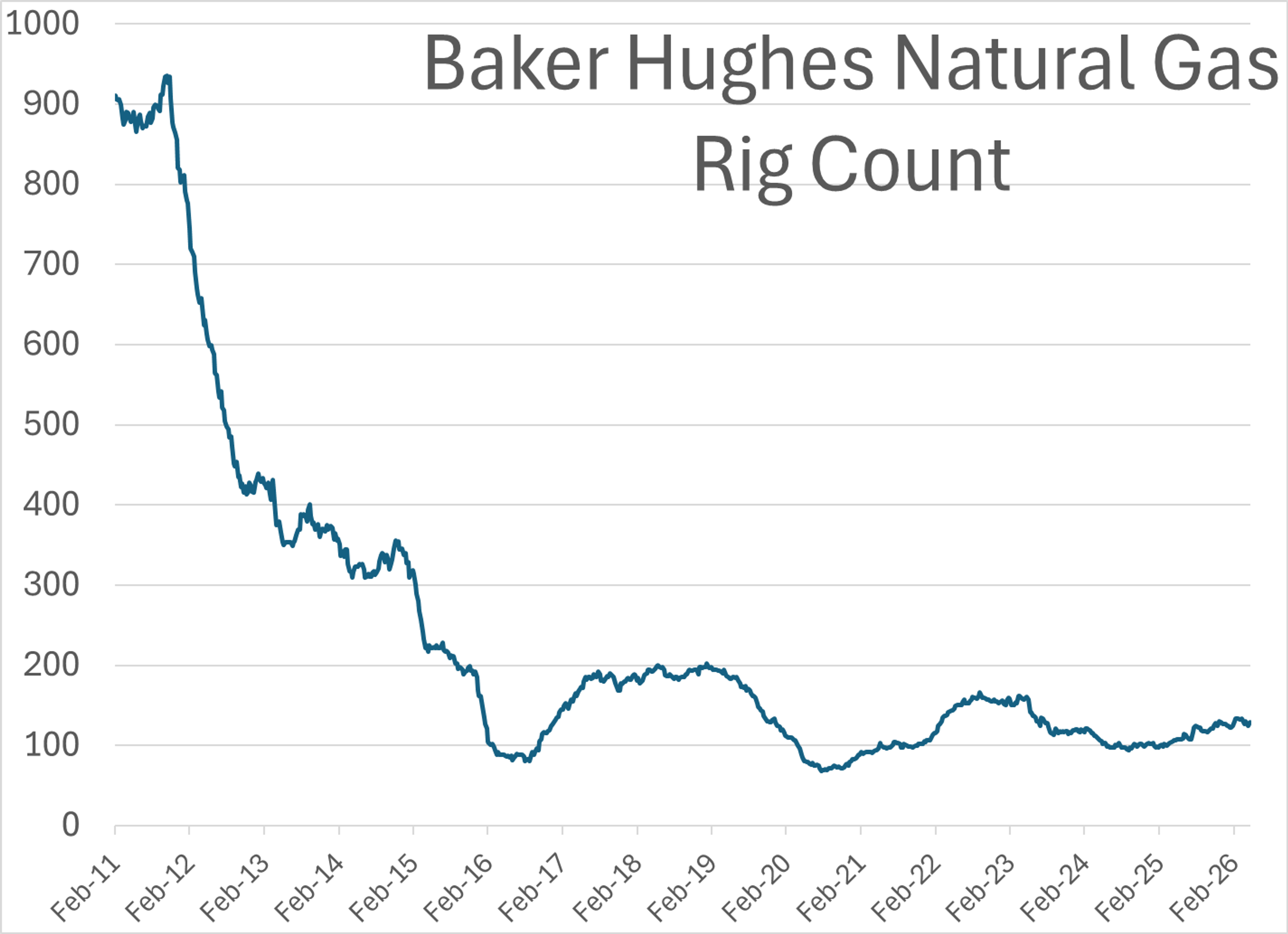
Baker Hughes reported a net decrease of 3 oil rigs active in the U.S. last week, while the natural gas rig count increased by 4. The Primary Vision count of fracking crews active in the U.S. increased by 4 on the week, but like drilling activity in general, is essentially unchanged since the war broke out.
Latest Posts
Crude Strength, Refinery Disruptions, And Export Bottlenecks Support Fuel Prices
Global Supply Risks And Strong Refining Margins Drive Energy Market Rally
Week 42 - US DOE Inventory Recap
Diesel Prices Swing Wildly Amid Tanker Attacks And Supply Concerns
Diesel's Breakout Signals Renewed Pressure Across Energy Markets
Oil Opens Soft Despite Escalating Supply Threats
Social Media
News & Views
View All
Crude Strength, Refinery Disruptions, And Export Bottlenecks Support Fuel Prices
Global Supply Risks And Strong Refining Margins Drive Energy Market Rally