Energy Markets' Yo-Yo Week: Geopolitics vs. The Delayed Impact Phenomenon

The yo-yo week continues for energy markets with a strong rally Thursday after more heavy losses Wednesday. The optimism for an off-ramp in the war with Iran seems to be fading quickly after Iran rejected the U.S. Proposal for a cease-fire, and the trickle of ships transiting the Strait of Hormuz has slowed over the past 24 hours.
Kyle Bass made an interesting point on CNBC this morning that typical tanker transit time from the Persian Gulf to China and other Asian countries is around 28 days, meaning there are still tankers on the way that shipped prior to the war starting. That delayed impact phenomenon is part of the reason we see bigger time spreads a month forward than we do for prompt values, and also why executives at the CERA week conference have been issuing strong warnings that the worst impacts on physical markets have not yet been felt.
In addition to the biggest story, the big story of the past decade before March is still creating waves. New reports suggest that recent Ukrainian drone strikes on Russian oil ports have cut export capacity by roughly 2 million barrels/day, or nearly half of their waterborne delivery capacity. Adding to the chokehold on Russian exports, Israeli strikes on a Caspian sea port have cut the lifeline between Russia and Iran for drones and other goods.
The EPA announced waivers on gasoline RVP requirements heading into the summer season which sets a federal goal of 10lb RVP nationwide, while also allowing E15 blends through the summer months. A key detail in the announcement is that states retain the right to overrule the relaxed federal standards, so states like California can continue with their more restrictive requirements if they so choose. A big question mark is whether or not Texas will agree to the waivers, as the state’s major population centers typically dismiss the 1lb ethanol RVP waiver, which creates the “TX RBOB and TX CBOB” grades through the summer months. One other key point is that while the initial waivers are set through May 20th, the EPA is making it clear they intend to extend the date of the waivers as needed, which is likely to mean there is no low RVP season for large parts of the country this year.
The billion dollar question is how much impact will this have on U.S. gasoline prices? The reality is most of the U.S. is not tight on gasoline supply, so a 10lb product (which means more butane blended into the gasoline pool for longer than usual) may reduce production costs by 2-8 cents/gallon in markets that allow the waivers, which isn’t much compared to the $1+ gains since the war broke out. Ironically (yet consistent with the law of unintended consequences with government intervention) adding more gasoline supply to markets that don’t really need it could actually backfire if refiners aren’t able to move their excess supply and need to curtail runs since much of the blending to a 10lb grade will occur downstream of the refinery gate.
Allowing E15 blends sure didn’t impress the biofuel market, with RIN values soaring to new 3 year highs north of $1.60/gallon Wednesday, despite the relaxation allowing for higher blends (and more RIN supply) through the summer months.
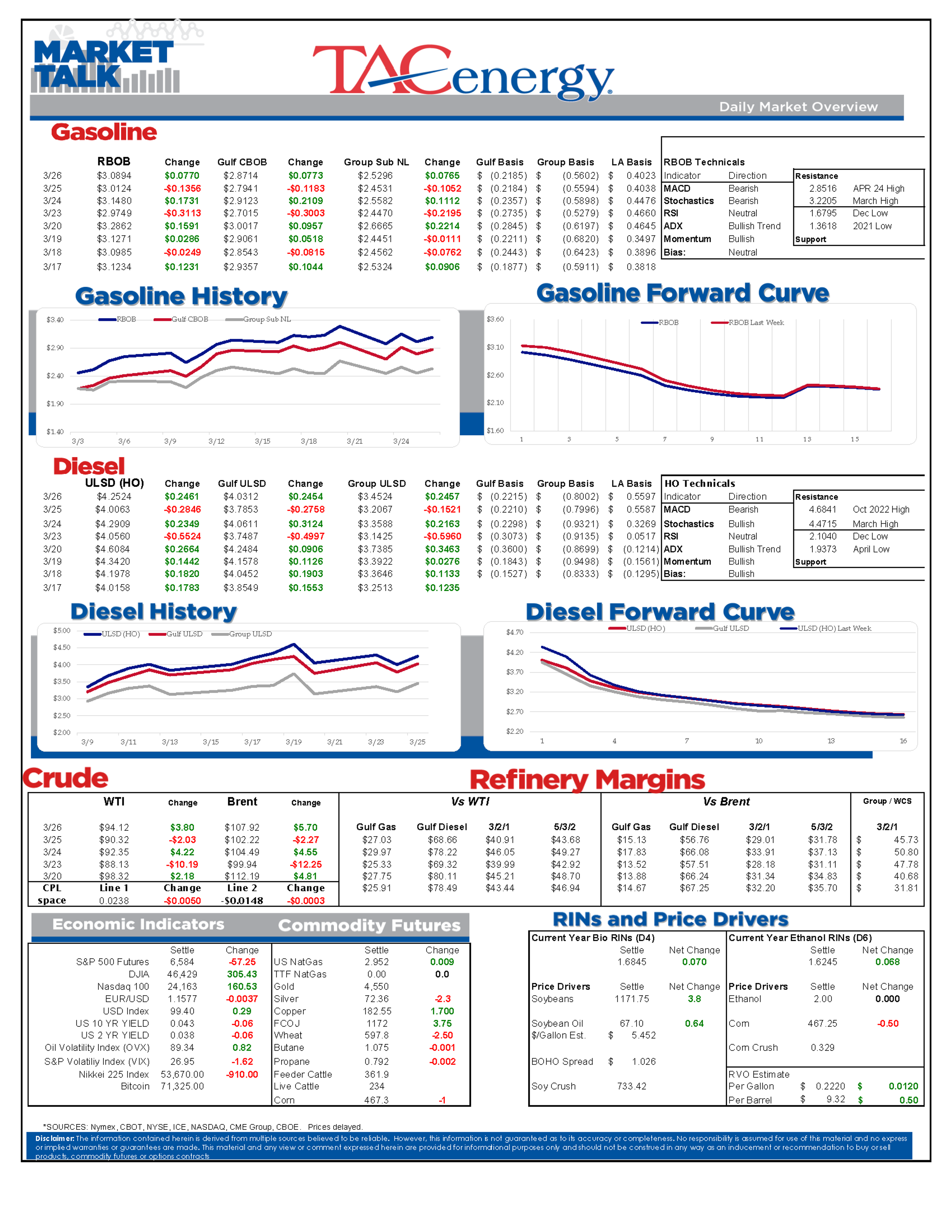
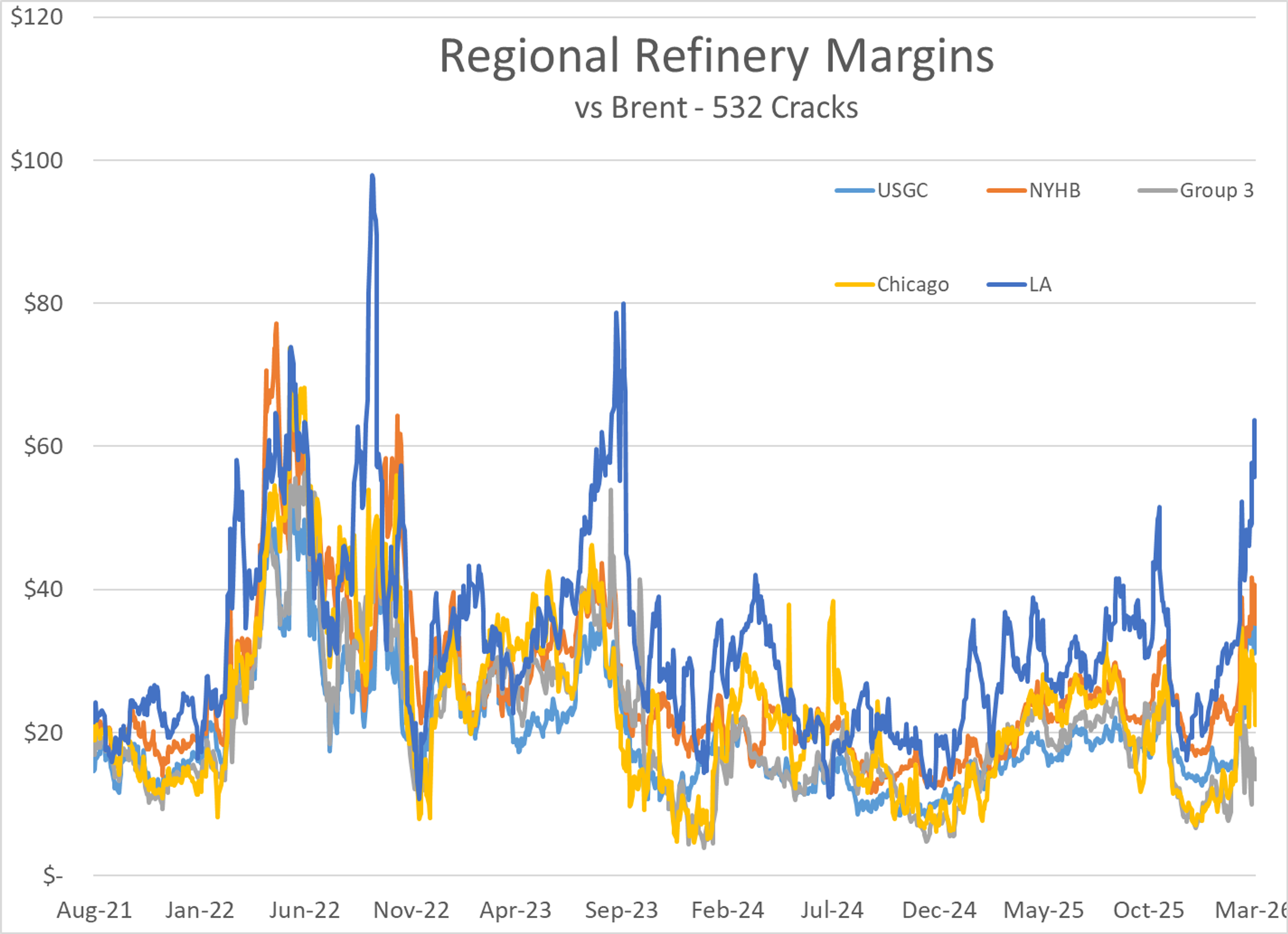
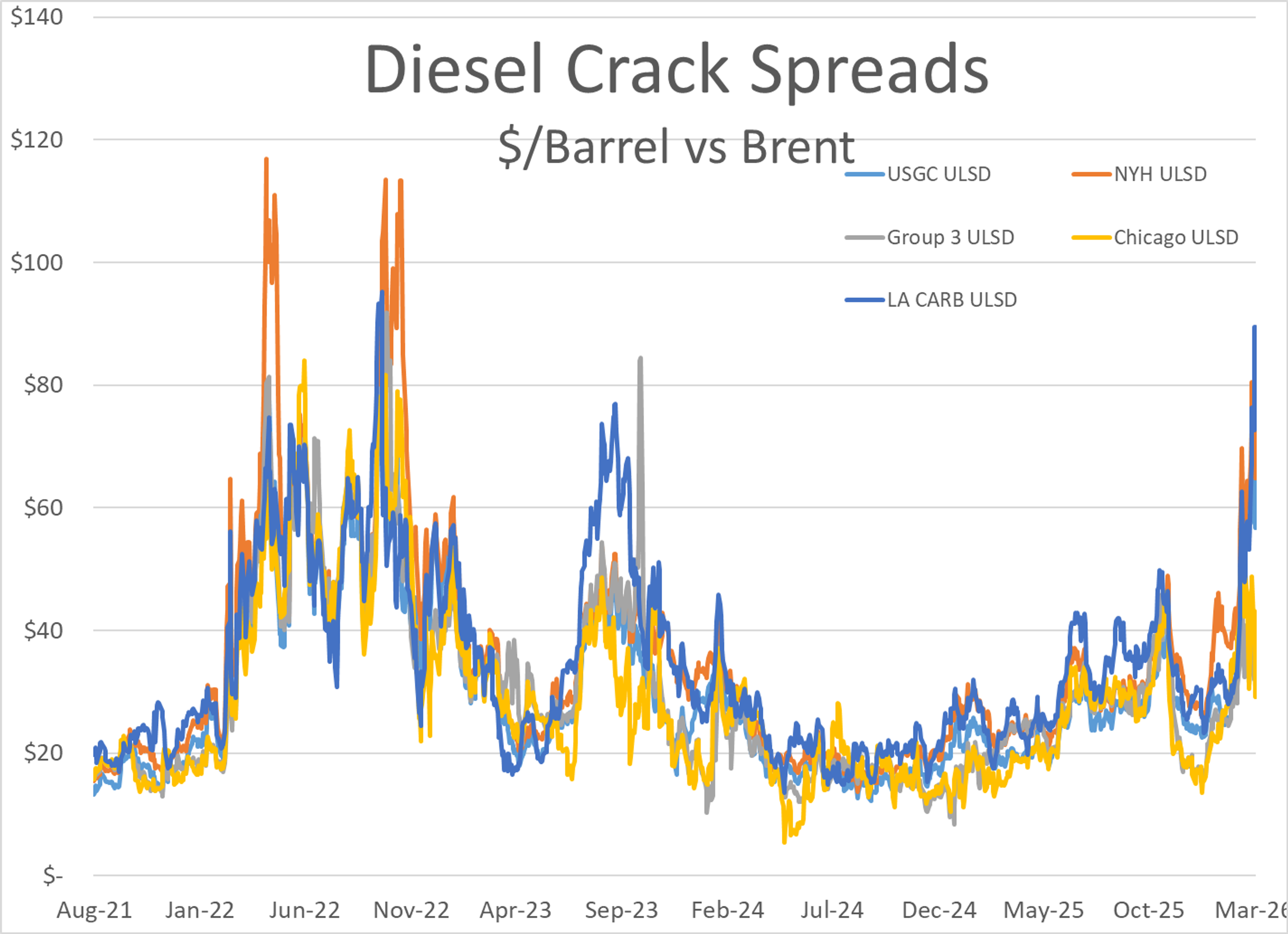
Better than expected: Reuters and Energy News Today are both reporting that Valero is already preparing to restart several units at their 430mb/day Pt. Arthur TX refinery that was completely closed following an explosion Monday. Energy News suggests that only the smaller crude unit at the facility will be able to restart now, while the larger unit will need more time due to damage done in multiple downstream units, but that’s still better than earlier predictions that the entire facility could be offline for months, particularly given the extraordinary crack spreads available for anyone who can get gasoline and diesel onto the waterborne market these days.
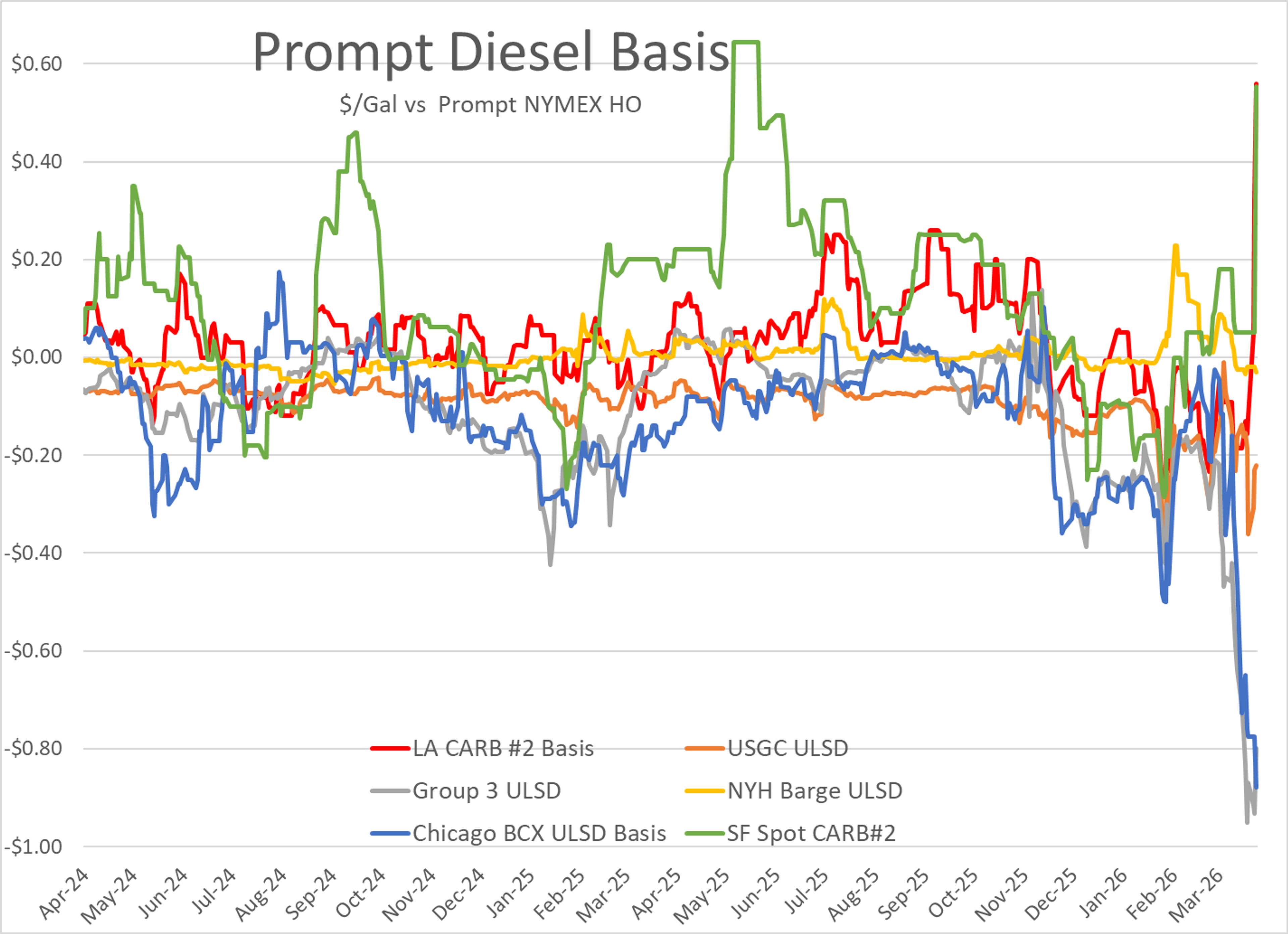
Speaking of which, California diesel prices continued their record-setting rally Wednesday, with both the San Francisco and LA markets now commanding 75 cent premiums to May futures. The reality seems to be setting in that the Atlantic basin, which had been long product supply for years, is suddenly shaping up to have some version of the hunger games play out until the Strait reopens.
Notes from the DOE’s weekly status report:
With a 5th consecutive week of builds, crude stocks less the SPR balance crept above their 5-year average for the first time this year. Imports fell but exports also dropped from year-to-date highs to their lowest value of 2026, with demand retreating as well. Ethanol stocks and output remain near all-time highs, but more of that supply is being exported which is keeping a lid on RIN generation for now.
Refinery runs increased in all PADDs except 2 as Marathon began shutting operations for planned maintenance at its Robinson, IL plant while their Catlettsburg, KY facility was able to resume planned rates. In PADD 3, Exxon Beaumont successfully restarted last week which helped contribute to a strong increase in regional runs, but the explosion at Valero Pt Arthur is set to wipe out those gains next week. Each PADD outside of 5 (which has lost 2 refineries in the past 6 months) continues to operate above their 5-year ranges.
A sharp drop in demand pushed total U.S. diesel stocks closer to their seasonal average, about 6 million barrels higher than year ago levels. PADD 1 is the only region showing a slight draw, leaving the balance below the 5-year range for the 7th week in a row. The other PADDs saw a minimum of 2% increases, and all are currently sitting above average (when factoring RD in PADD 5) with only PADD 2 inventories tracking behind this time last year.
Gas stocks drew for a 6th straight week with a bounce back in demand but are still holding above the 5-year range in total. PADD 2 shows the only build on the week, jumping ahead of last year’s high levels, while the rest of the PADDs declined. However, most remain at the higher end of their charts while PADD 5 sunk lower, around 2 million barrels below 2025 levels, which makes up the bottom band of its range for the front half of the year.
Latest Posts
Diplomacy Knocks Crude Lower, But Diesel Bulls Aren’t Done Yet
Diesel Pullback Tests Market Nerves Amid Supply Risks
Diesel Strength Offsets Gasoline Weakness As Supply Concerns Mount
Diesel Under Pressure As Traders Discount Supply Disruptions
Week 37 - US DOE Inventory Recap
Oil Pulls Back After Rally While Distillates Extend Gains
Social Media
News & Views
View All
Diplomacy Knocks Crude Lower, But Diesel Bulls Aren’t Done Yet
Diesel Pullback Tests Market Nerves Amid Supply Risks