Missiles, Mandates, And A Midwest Basis Blowout

It’s been another roller coaster 24 hours for energy markets with 20 cent losses in diesel and 11 cents for gasoline yesterday morning turning into gains by the afternoon after the missiles started flying again, then double digit gains overnight were erased this morning after the U.S. President said that despite those missiles flying, the cease fire is still on.
Iran meanwhile said this morning that the U.S. has “crossed the point of no return” suggesting the violence will continue, and following through on those threats with more attacks on the UAE Friday.
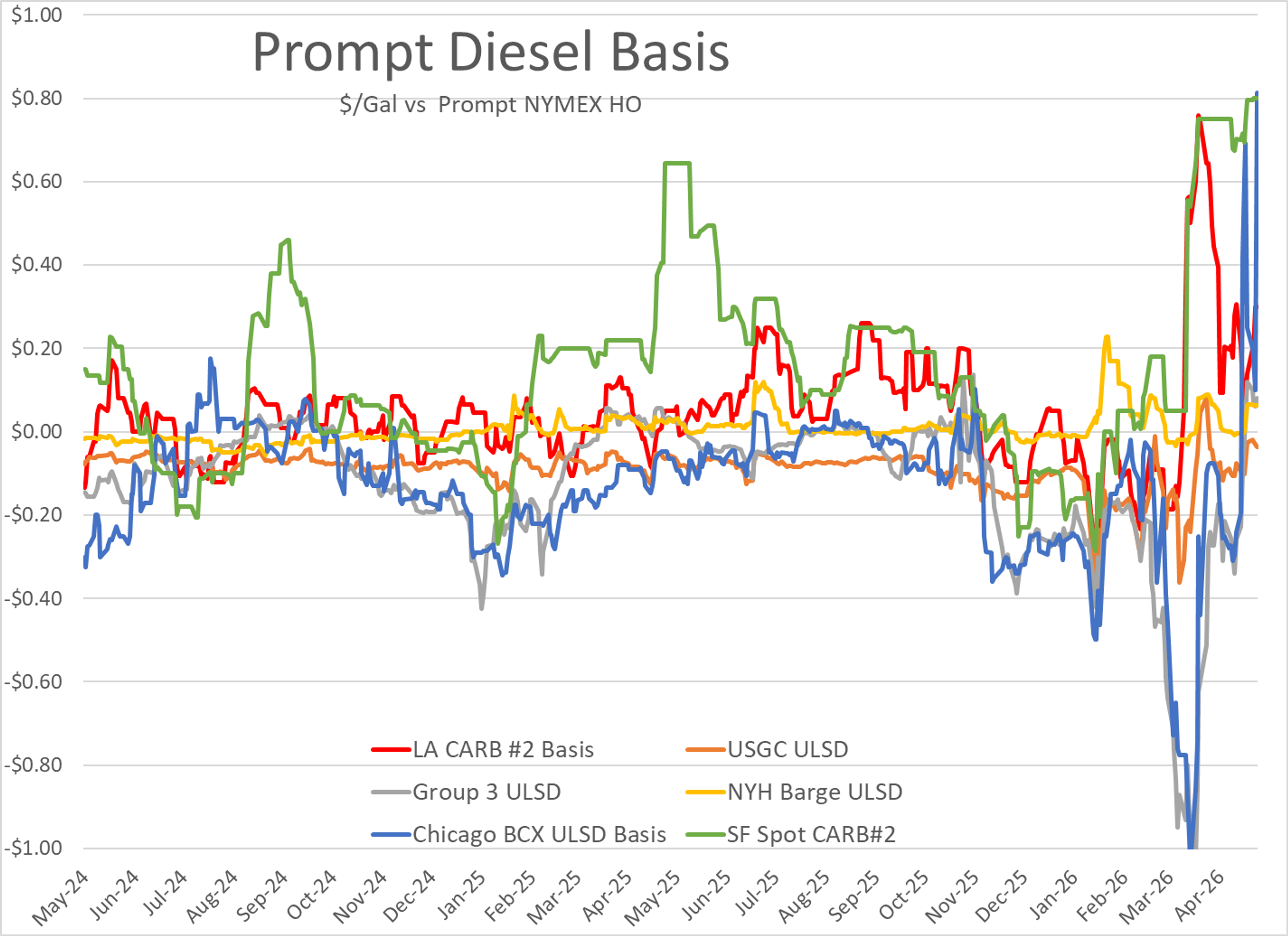
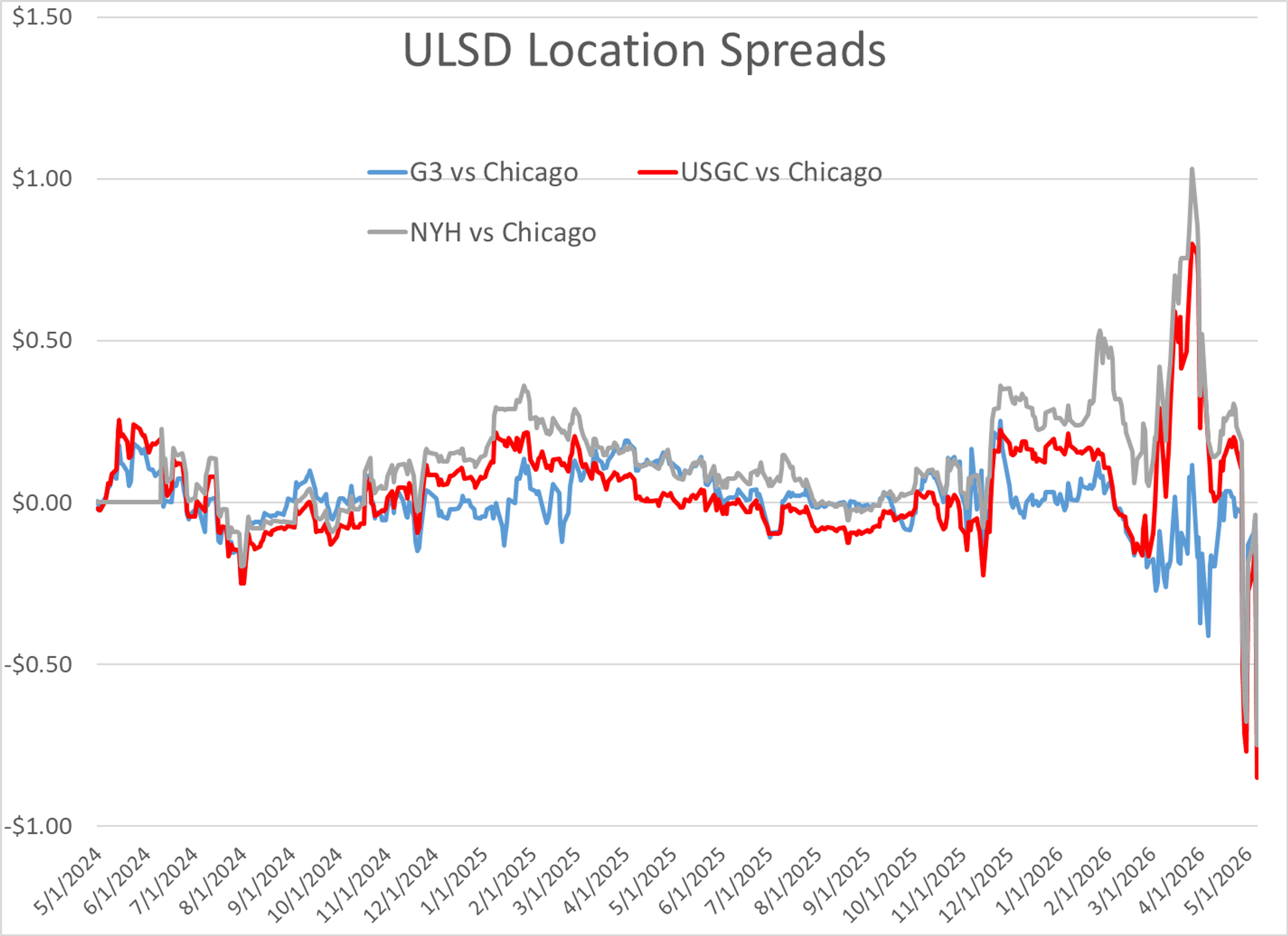
Speaking of rollercoasters, Chicago diesel basis took another ride Thursday with a huge rally that saw trades for various pipeline origin points ranging from 70 cents to $1/gallon premiums to June futures. Not every pipeline originating from the Chicago region is equal though with 30-50 cent spreads depending on the origin points, which means only those able to quickly move barrels via truck are likely to be able to take advantage of this window unless the latest issue(s) that caused the Thursday buying spree last a lot longer than the spike we saw at the end of April.
While the diesel differentials have been the most dramatic this week, they’re by no means the only dislocated markets as many states still have not joined the EPA’s RFG and RVP waivers meaning states like Indiana, Kentucky and Wisconsin are all able to sell a 9lb CBOB product (10lb RVP after ethanol blending) while states like Illinois to 7.4lb RBOB requirements. There’s a similar phenomenon on the East Coast with a few states joining the federal efforts to expand the gasoline pool this summer, while the largest population states still have not got on board.
Coincidentally PBF is starting 4 weeks of planned work at its 180mb/day Delaware City refinery that’s right in the middle of this state by state dislocation in which 9lb CBOB can be sold into PA and DE, but not into NJ and MD.
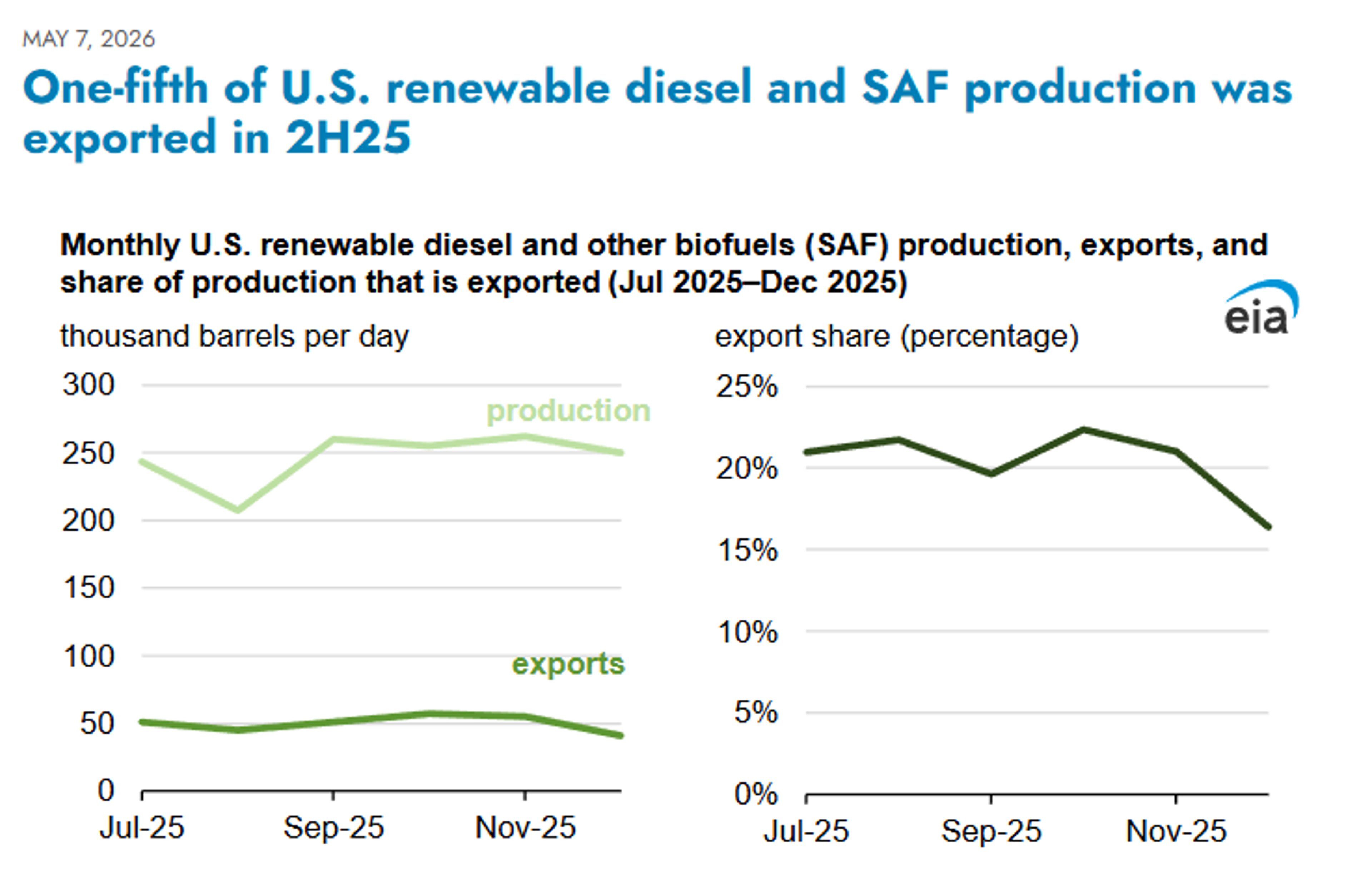
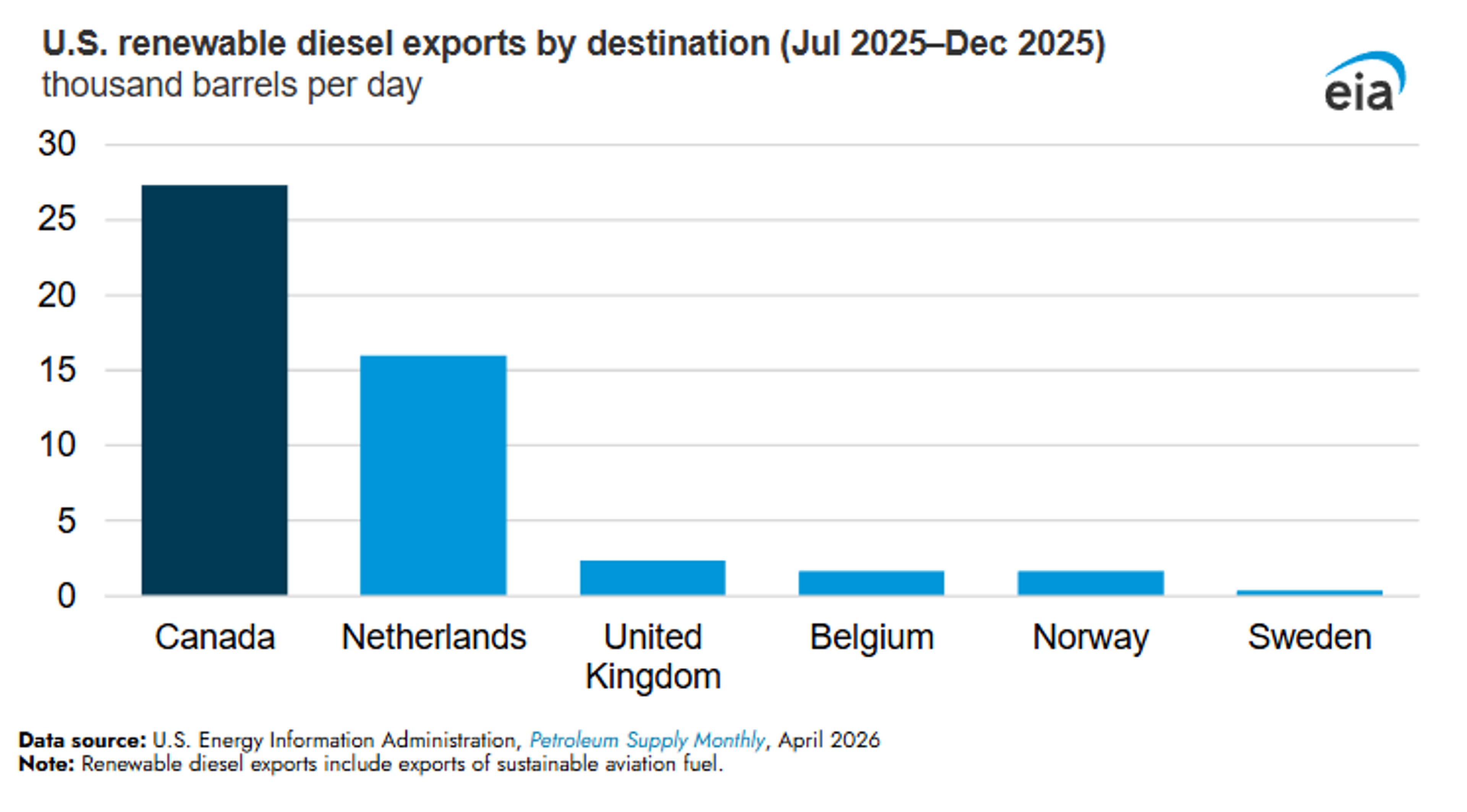
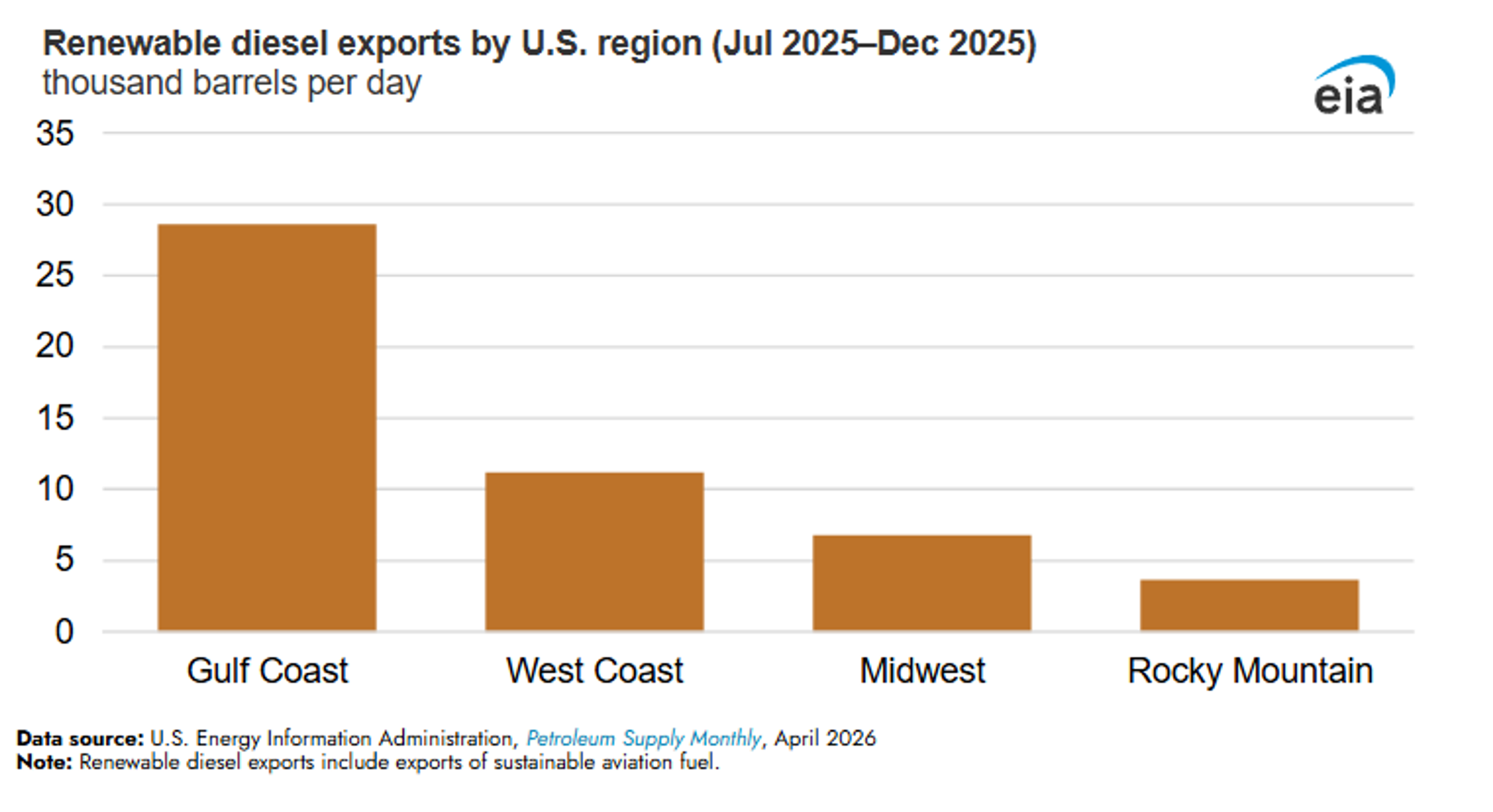
The EIA took a closer look at renewable diesel exports from the U.S., which accounted for nearly 20% of all RD and SAF production in the back half of last year. Exports dropped in the first two months of 2026 along with overall production as several facilities shuttered, and others waited on the release of the EPA’s Renewable Fuel obligations for the year, but anecdotal evidence in the market suggests those exports have ramped up and are a contributor to stronger RIN values over the past few months. Also worth noting, the EIA’s note admitted that the agency still has flaws in its data collection beyond only seeing monthly data for these fuels instead of weekly. In the current reporting, the EIA assumes all exports are RD since its form doesn’t have a way to classify “other biofuels” like SAF, renewable naphtha, gasoline and other byproducts. Canada takes nearly half of all U.S. RD exports as their national Clean Fuel program continues to provide more incentive for those barrels than the vast majority of U.S. states.

Latest Posts
Diesel Strength Offsets Gasoline Weakness As Supply Concerns Mount
Diesel Under Pressure As Traders Discount Supply Disruptions
Week 37 - US DOE Inventory Recap
Oil Pulls Back After Rally While Distillates Extend Gains
Refinery Disruptions And Strait Closures Fuel Diesel Rally
Oil And Diesel Rally On Escalating Infrastructure Attacks
Social Media
News & Views
View All
Diesel Strength Offsets Gasoline Weakness As Supply Concerns Mount
Diesel Under Pressure As Traders Discount Supply Disruptions