Energy Markets Pull Back As Strait Of Hormuz Tensions Test Supply Fears

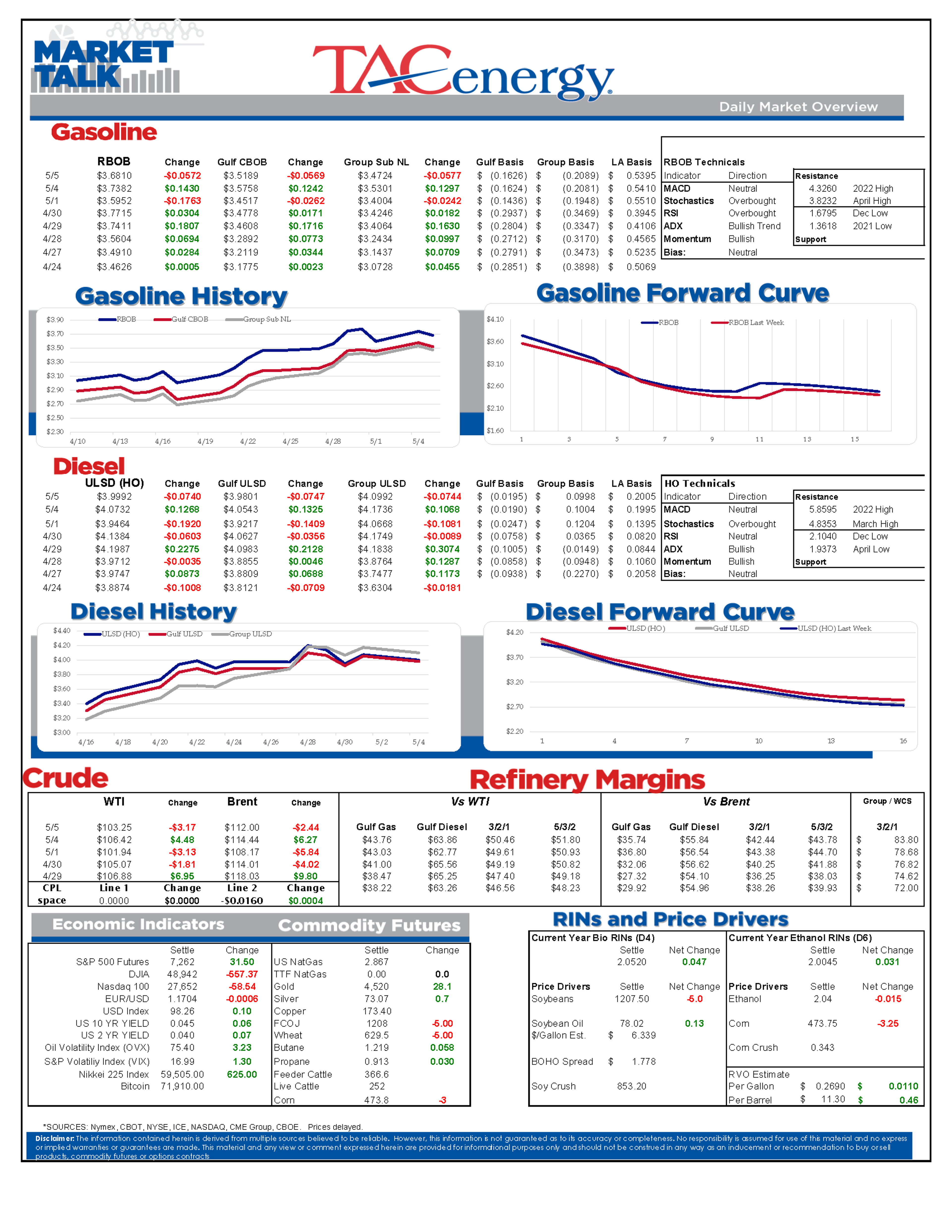
Energy markets are seeing a wave of selling to start Tuesday’s session, giving back roughly half of the gains we saw in refined products Monday after violence broke out in and around the Strait of Hormuz.
Yesterday brought news of multiple tankers being attacked, along with multiple missile and drones launched against the UAE by Iranian forces, one of which caused a fire at the Fujairah oil terminal which is used to bypass the strait. U.S. Naval forces reportedly shot down numerous drones as it attempted to repel the Iranian attacks and sunk 6 small boats in its efforts to re-open a section of the strait dubbed “Project Freedom”.
While the effectiveness of the U.S. efforts to resume shipping remains unclear, the fact that the U.S. Navy is finally actively engaged in the strait may be a signal to the market that we’re seeing the beginning of the end of the supply nightmare, even though the ripple effects of the conflict are still likely to be felt for years to come.
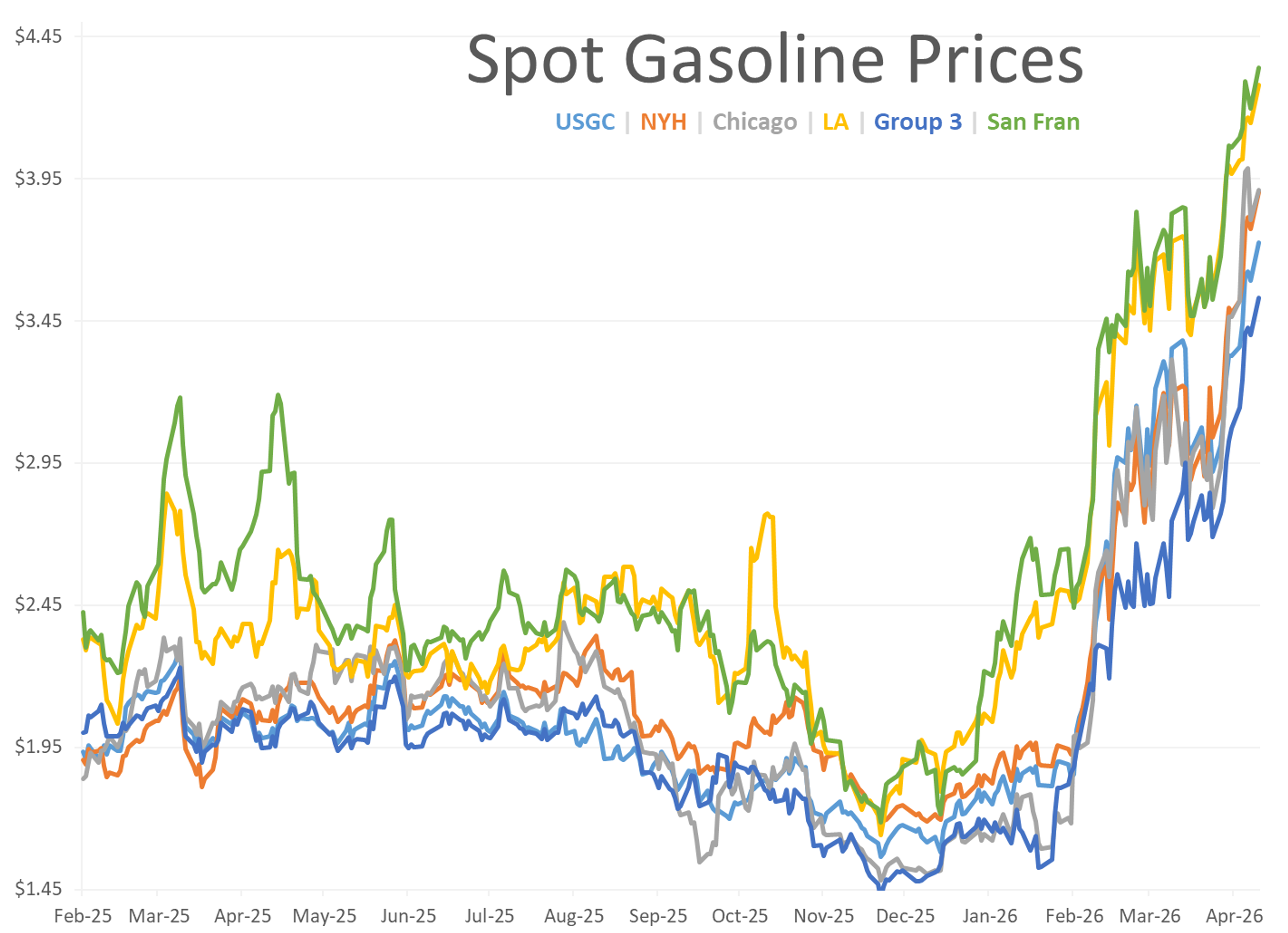
Monday’s rally pushed wholesale gasoline prices to fresh 4-year highs in most U.S. spot markets, which will keep retail prices moving higher despite so many effort by the EPA and the administration to try and limit the damage done at the pump. So far the EPA’s E-15 and boutique fuel waivers have had minimal impact on supply as most retailers aren’t equipped (or don’t want) E-15, and most states have not made a move to officially join the EPA’s waiver offers.
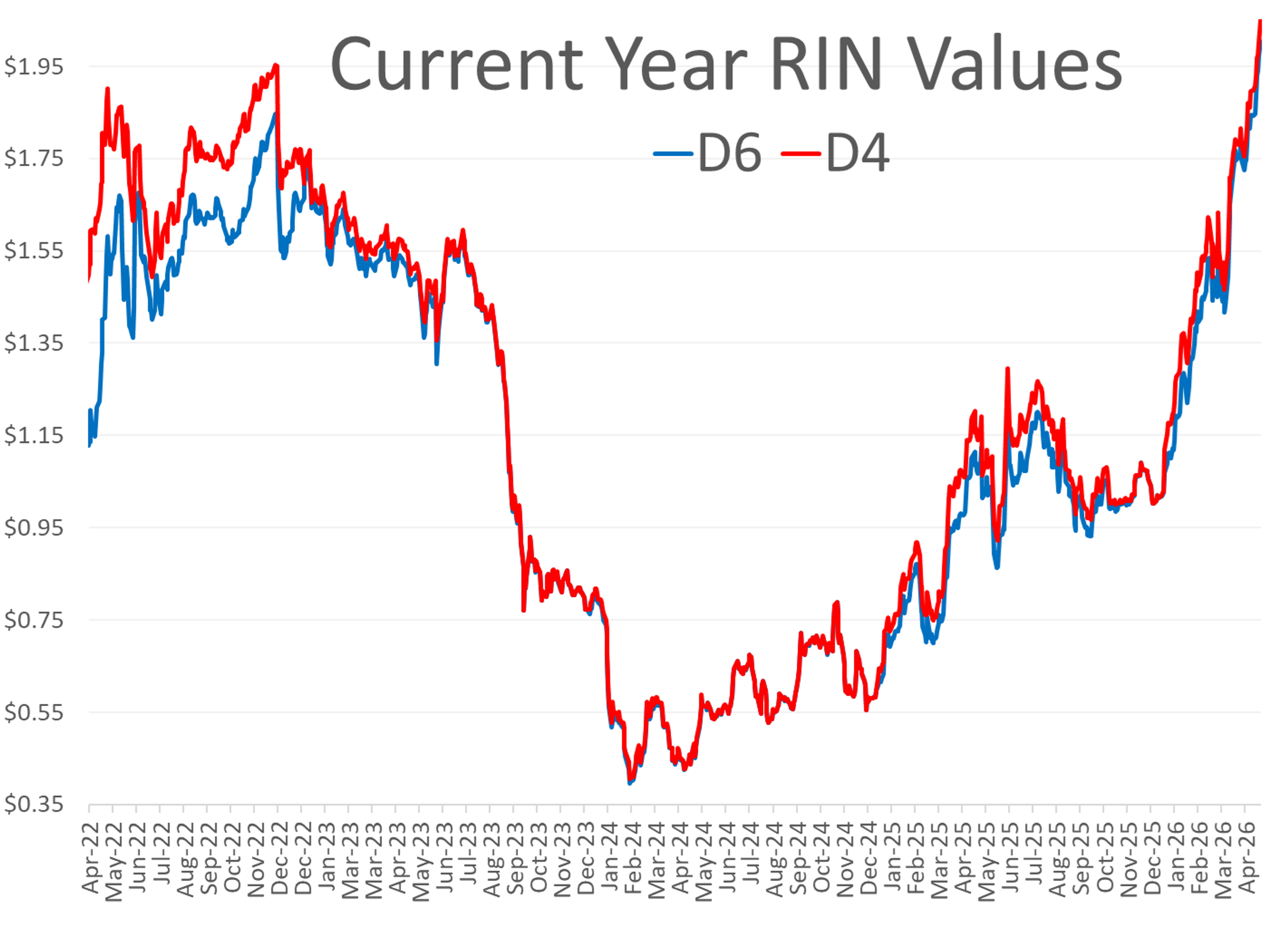
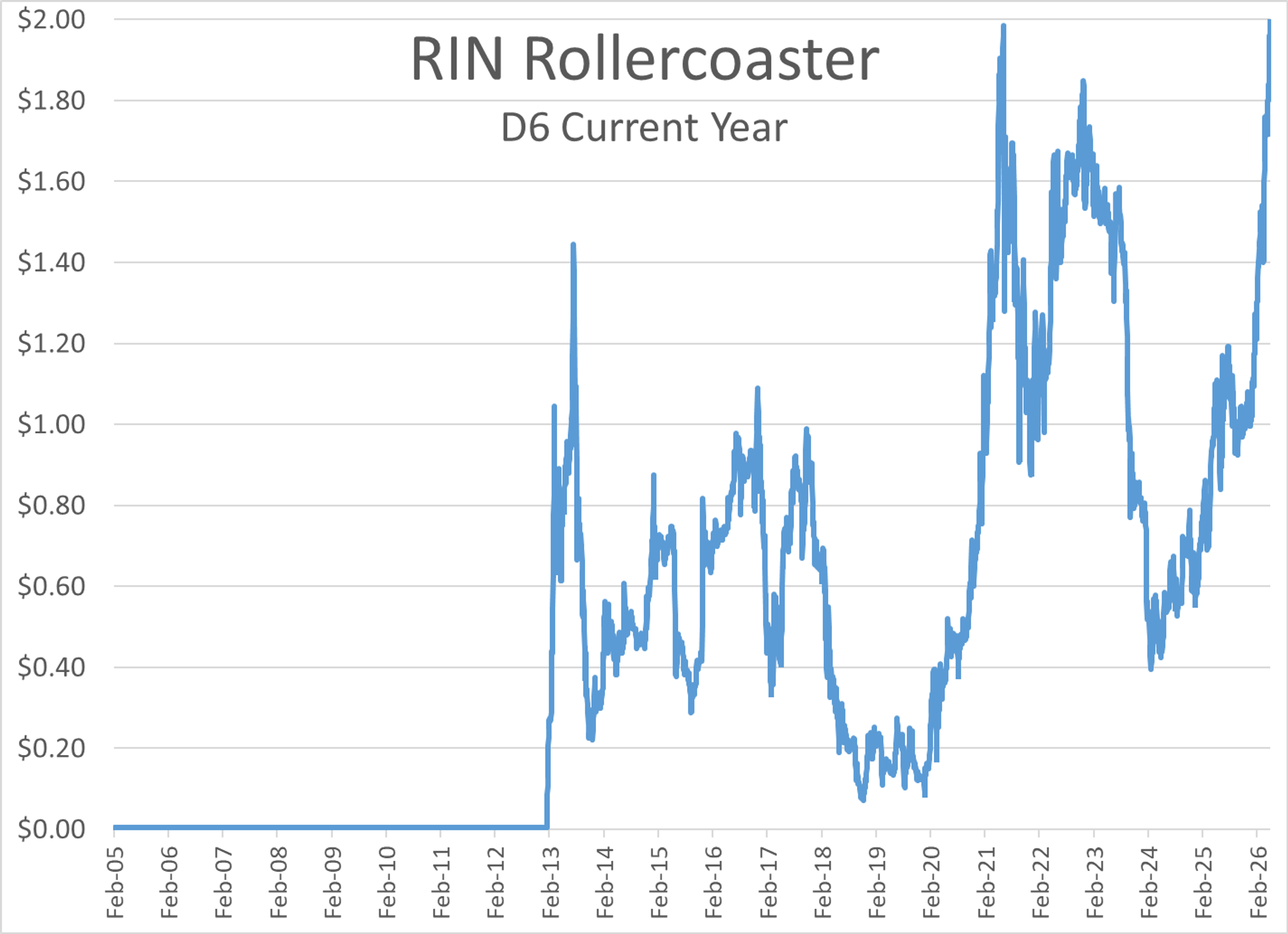
RIN values continued their relentless climb higher Monday, setting all time records for D6 and D4 contracts north of $2/RIN. Scott Irwin provided an excellent analysis of why prices continue to rally last week highlighting the record obligation set by the EPA, and the less notable pull from exported volumes of biofuels that reduce the pool of RINs available to meet those obligations. It’s worth noting that in order to make up for the projected shortfall in RINs, prices in the U.S. may need to continue pushing higher to keep those exports at home, or to draw in imports that were much more common before the loss of the $1/gallon BTD (the new PTC doesn’t apply to imports). For suppliers in California already struggling to move their RD at discounts of 50 cents or more compared to traditional diesel (plus their environmental fees) the question becomes where would those imports actually go?
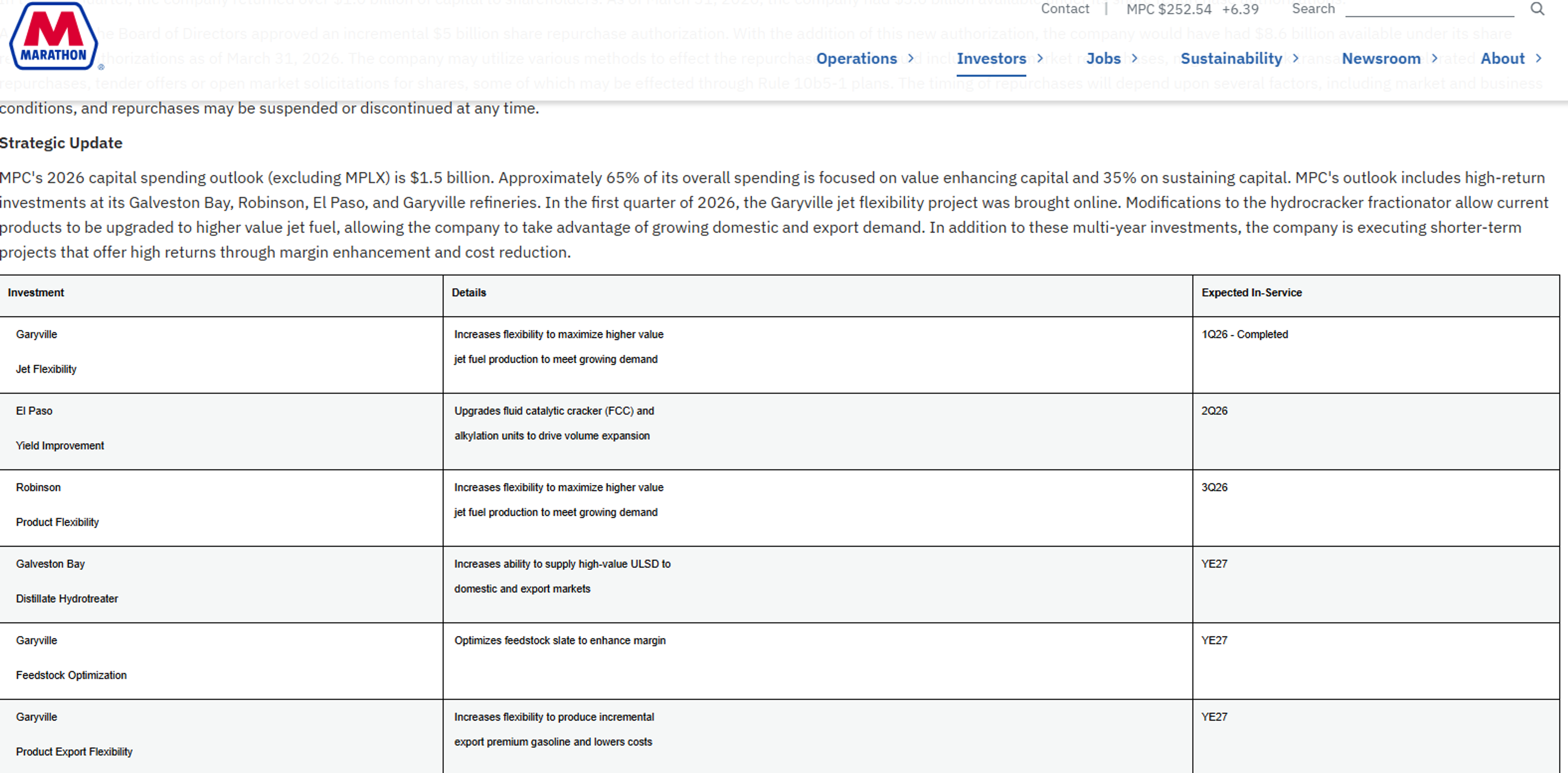
Marathon reported refinery earnings of $1.38 billion, nearly 3X what they were in Q1 of last year, and its renewable diesel segment went from a $42 million loser to a $38 million winner in Q1 of this year. The company highlighted two of its expansion projects at Garyville LA and Robinson IL that will provide more jet fuel in each market later this year, along with an FCC project in El Paso that will allow them to ship more gasoline to growing markets in the SW.
Separate from the stellar Q1 earnings report, Marathon reported unplanned emergency flaring at the Carson section of its 365mb/day LA-area refinery overnight. The filing with the AQMD did not specify a cause. Spot gasoline prices in the region are already trading at large premiums to futures as California settles in to its new import-dependent state and CARB has so far ignored the EPA’s offer to loosen gasoline specs in May, so any disruption to production at the largest refinery on the West Coast is likely to be felt immediately in spot markets.
Latest Posts
Diesel Under Pressure As Traders Discount Supply Disruptions
Week 37 - US DOE Inventory Recap
Oil Pulls Back After Rally While Distillates Extend Gains
Refinery Disruptions And Strait Closures Fuel Diesel Rally
Oil And Diesel Rally On Escalating Infrastructure Attacks
Energy Markets Pause After Historic Rally As Supply Risks Persist
Social Media
News & Views
View All
Diesel Under Pressure As Traders Discount Supply Disruptions
Week 37 - US DOE Inventory Recap