Energy Markets Whipsaw As Inventories Tighten And Supply Risks Persist

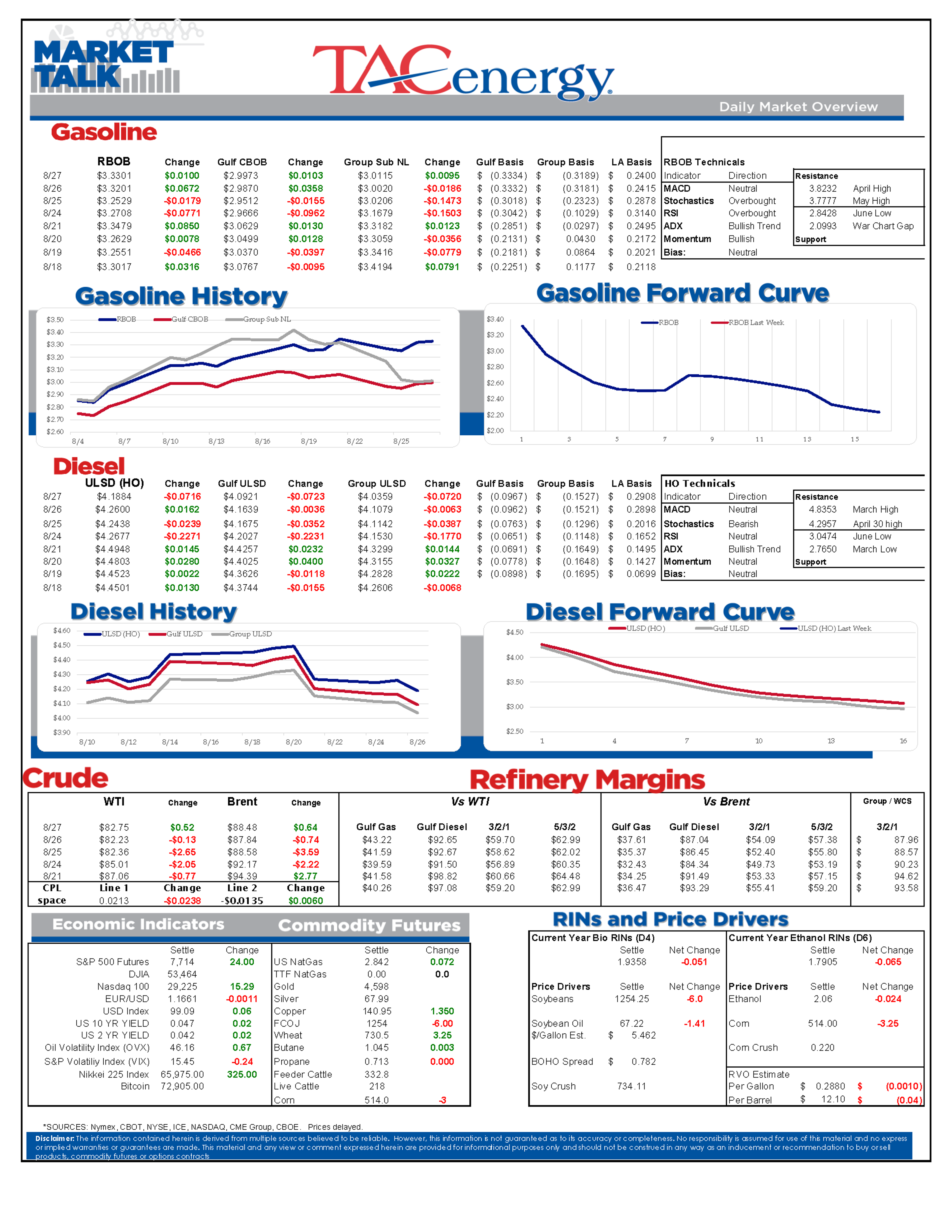
The choppy action continues in energy markets Thursday with RBOB and WTI futures both bouncing back and forth across the break-even line in early trading, while diesel futures face another round of selling, after bouncing 24 cents off of their lows Wednesday.
While headlines continue to muddy the waters, sketchy reports that Iranian ships had blocked a tanker from transiting through the southern Hormuz rout threw cold water on the idea that the discussions between Oman and Iran were bearing any real fruit, helping prices recover from a heavy wave of selling Tuesday into Wednesday. The DOE report helped spur on the bounce as more product inventory draws offered a reminder that even though U.S. refiners are running all out, and the EPA is handing out fuel waivers like they’re candy, domestic stockpiles remain at low levels.
Both Magellan (ONEOK) and Explorer pipelines have issued updated pipeline schedules this week to adjust to the EPA’s shift in timing on allowing winter-grade gasoline specs to reach the market starting September 1, which is 2-4 weeks ahead of schedule depending on the state, and other states and pipelines expected to adjust to the shift in the coming days.
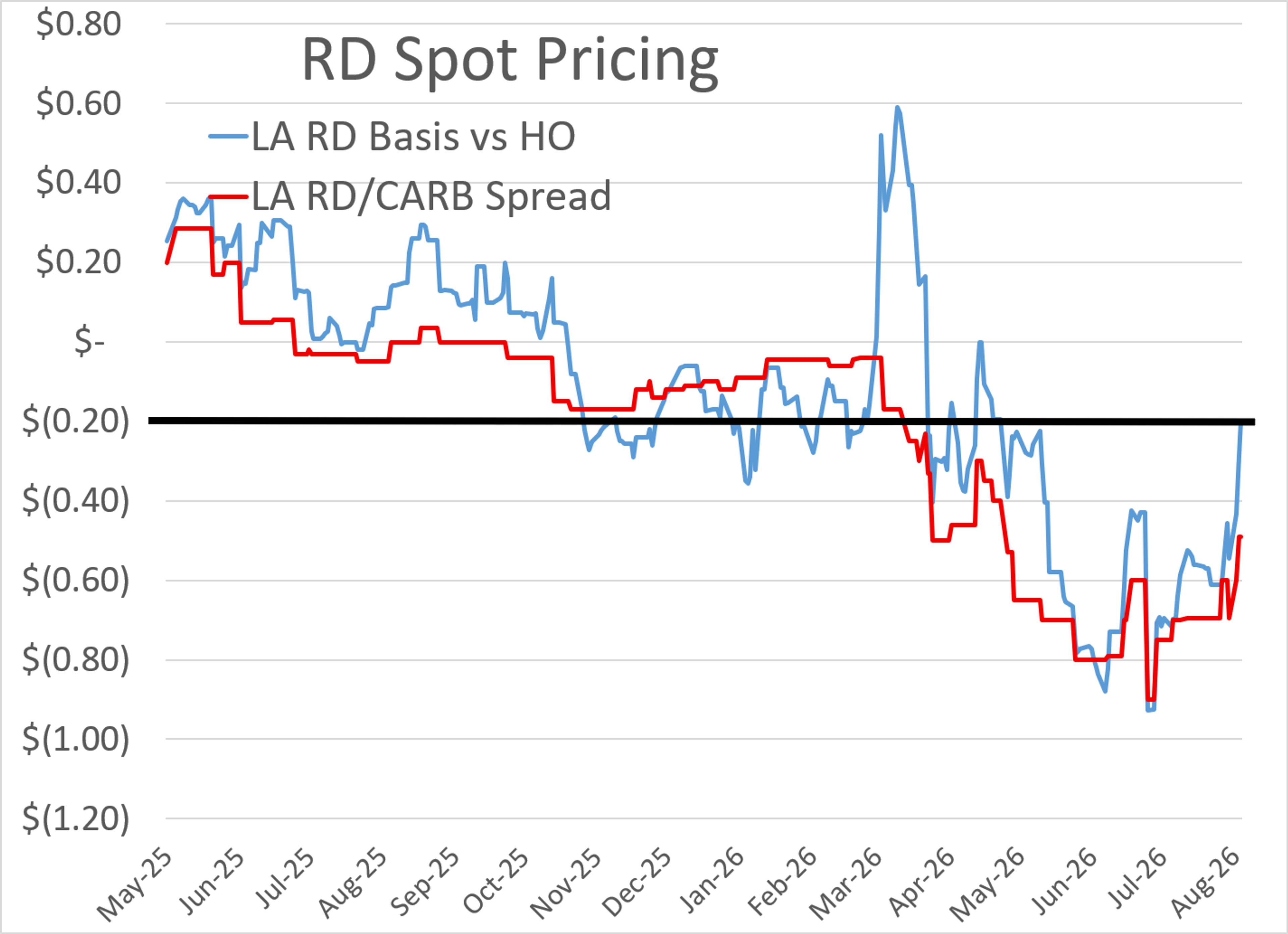
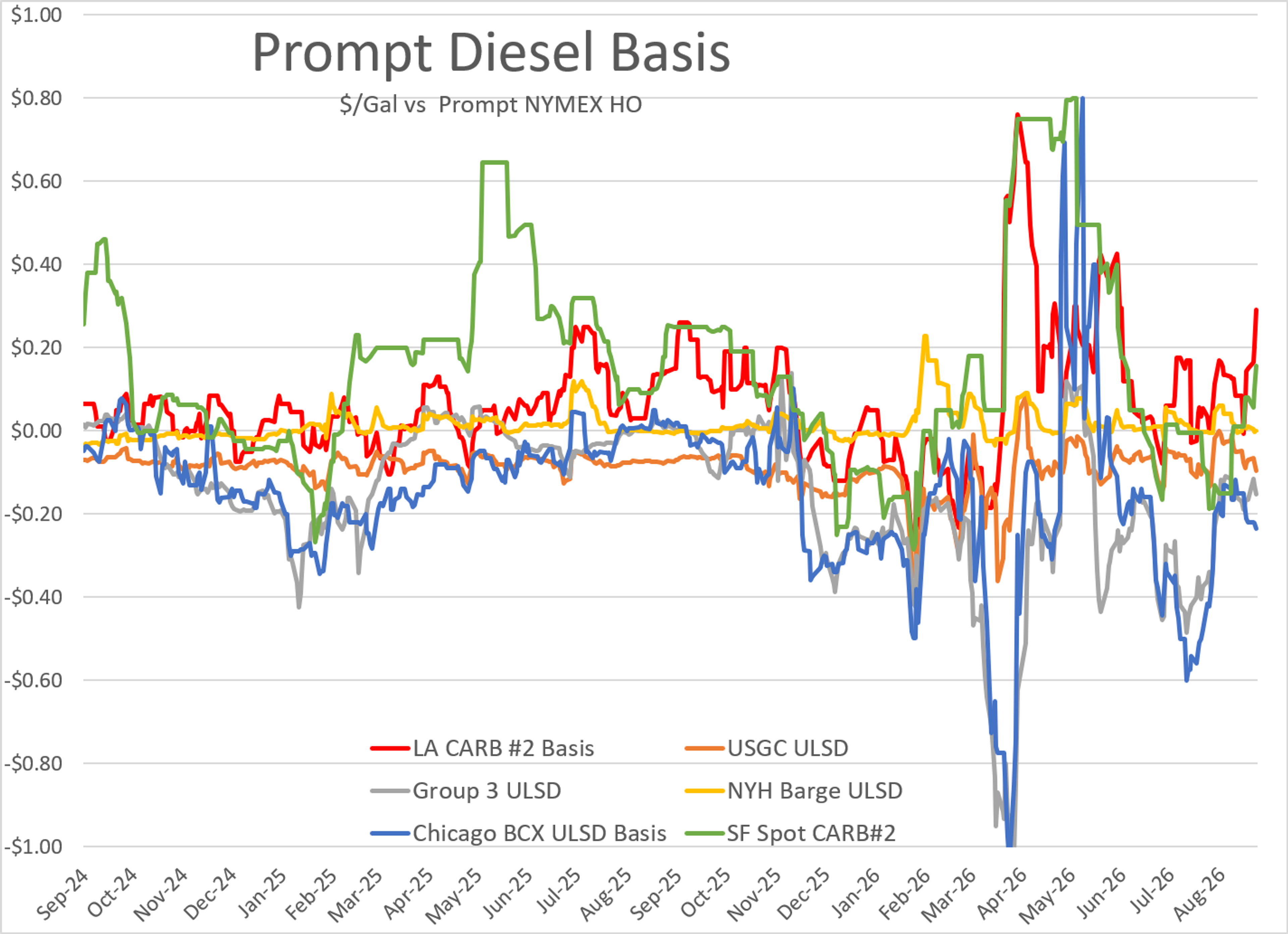
The West Coast is seeing another round of stronger differentials for both gasoline and distillates this week. On the gasoline side, the annual basis spike caused by the reluctance of shippers to hold any extra 6lb RVP product ahead of the fall transition has been accentuated by the steep backwardation in futures, and uncertainty of whether or not California will make a last-minute waiver to try and alleviate another price squeeze. On the diesel side, the recent drop in RIN values, reports of production challenges, Panama Canal restrictions and rumors of Jones Act wavier requests being rejected have all contributed to a rally in RD differentials, on top of stronger CARB Diesel diffs, even though PADD 5 inventories (including RD) remain relatively high compared to most of the country.
Reminder to set your parking brake: A parked, unoccupied Semi-Truck rolled into the Enbridge Line 5 pipeline Tuesday, rupturing the line and spilling natural gas liquids. While the spill has been contained, and this won’t directly impact refined product flows in the region, it does add to the controversy of that line, and others that cross between Canada and the U.S..
While oil and refined products are still exempt from the latest U.S./Canada trade spat due to their coverage under the USMCA, there have been calls by some for Canada to leverage the fact that they supply more than 65% of all U.S. oil imports and the U.S. refinery network would crumble without them. Alberta’s premier rejected that notion in an interview and explained why the energy weapon is truly a double edged sword. While the Canadian government isn’t currently planning on cutting U.S. crude oil imports, fall maintenance at Canadian oil sands facilities is expected to cut around 300mb/day of production, which will reduce flows to Mid Continent refiners.
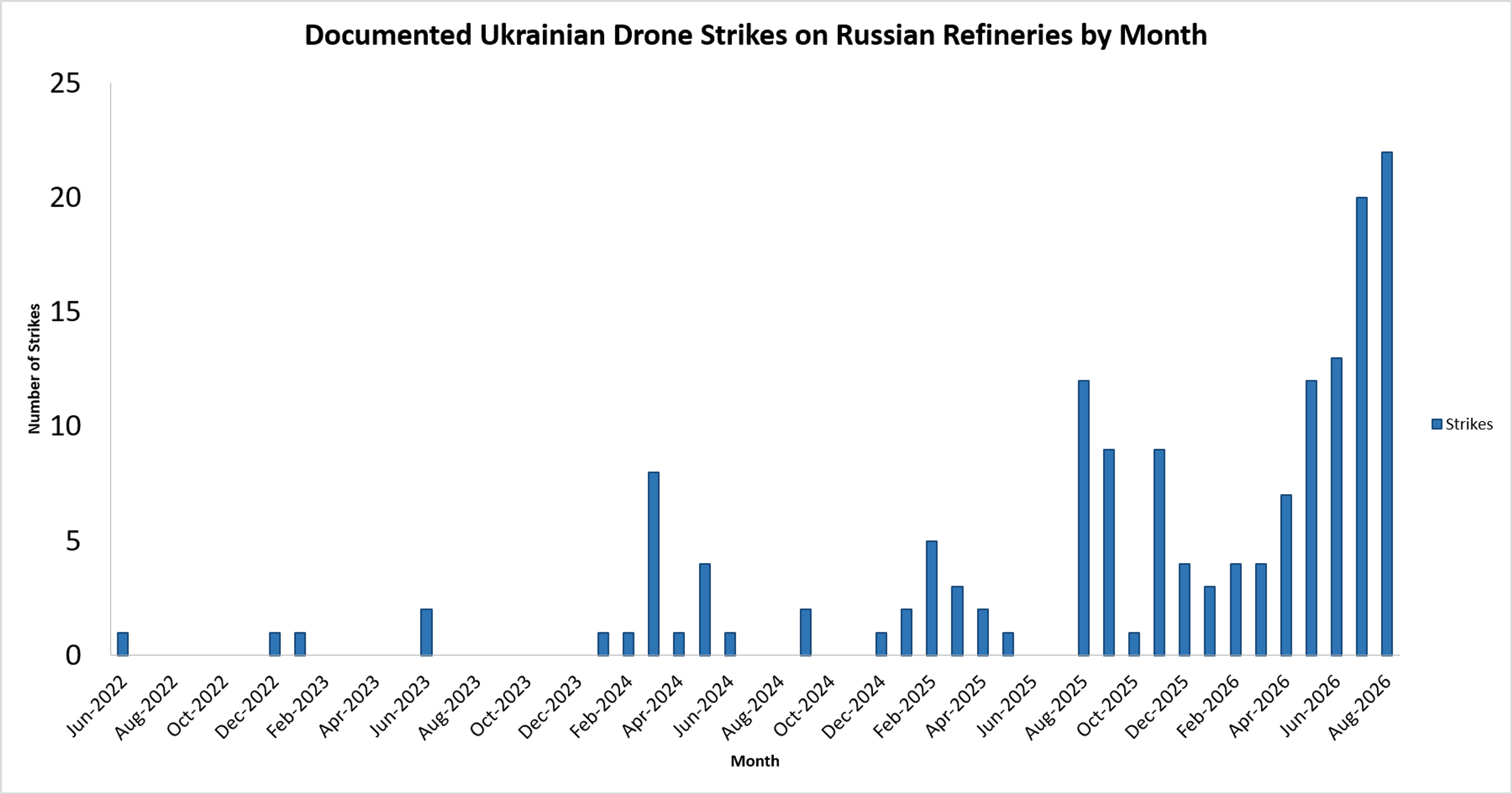
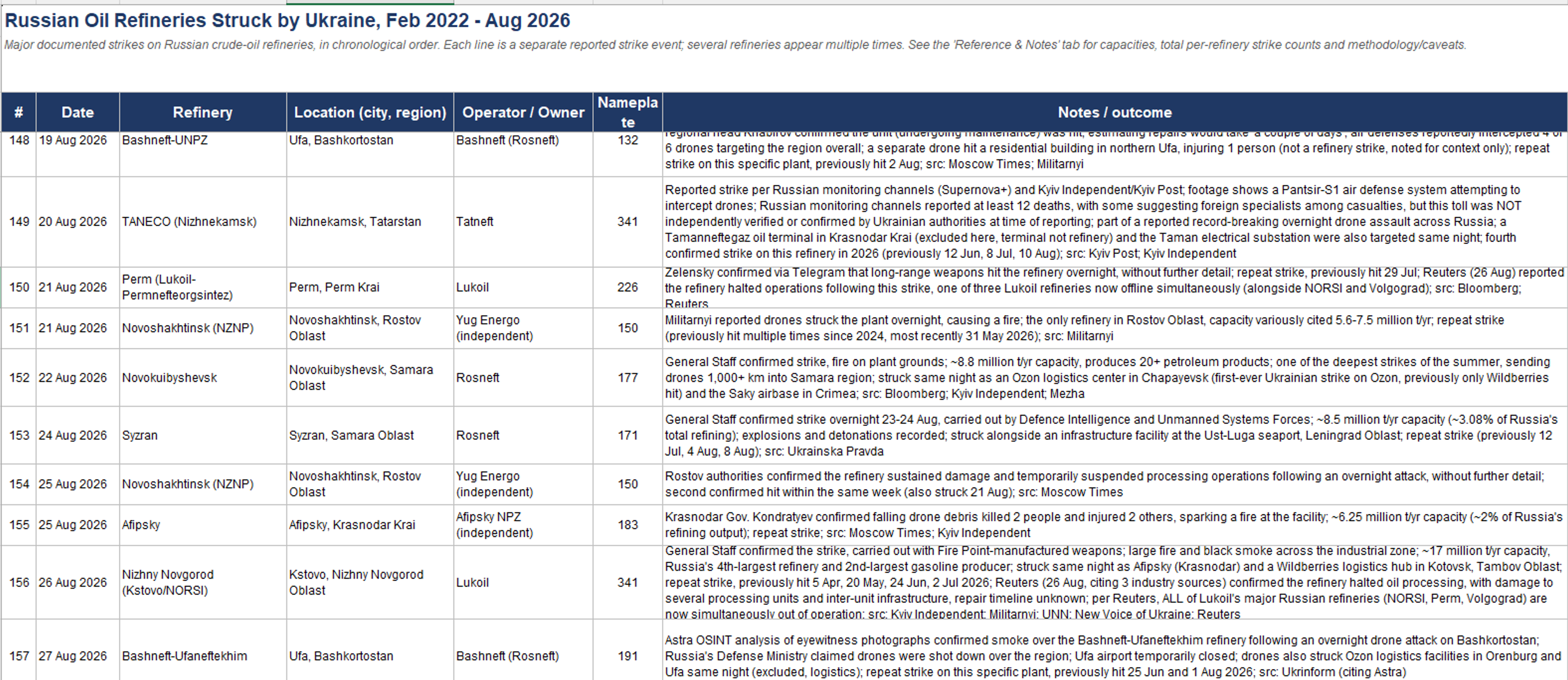
Ukraine’s drones hit the 191mb/day Bashneft refinery in Ufa overnight, the 3rd time that facility has been hit in the past month, and extending the record setting pace of attacks on Russian infrastructure. A Reuters article Wednesday highlighted that all of Lukoil’s major refineries are currently offline, taking the country’s 2nd largest gasoline producer out of the market, and forcing one of the world’s largest fuel exporters to import more fuel to try and keep its economy moving. This phenomenon has been a lifeline to several European refiners that would have faced closure this year, and has pushed numerous other refineries in the Atlantic basin to record profitability.
Human Analysis of the DOE’s weekly status report below. Charts and AI analysis are attached.
Commercial crude stocks were just north of flat last week even though most metrics point towards a draw. The SPR has now drawn down to within 20 million barrels of the first weekly data point recorded in August 1982. Total U.S. crude including both stock balances slipped for the second week in a row to hold at 43-year lows.
Refinery run increases across all PADDs except 3 were negated by its decline for a small net decrease in total. PADD 3 saw a few upsets at TX refineries but is still running at seasonal highs. PADD 2 climbed to another new all-time high at 4,356 Mb/day. PADD 1 has held above average the past three weeks while PADD 4 hit a fresh seasonal high. PADD 5 is low compared against the previous 5 years but is running in line with where this year started out with two less refineries in the mix.
Diesel stocks drew with exports kicking back up above their 5-year range. PADD level changes were mixed with PADD 1 dropping to a fresh 2026 low. The others are still running well below average levels regardless of last week’s movement outside of PADD 4 where the small increase bumps stocks to the high end of the seasonal range following a 5-week stretch of running below. In total, U.S. diesel stocks are about 15% below their 5-year average.
Gasoline stocks drew with increased demand despite a big jump in imports, although they remain below the 5-year range. The largest change was in PADD 3 where stocks are closely mirroring 2024’s lower seasonal levels, well behind year-ago inventories. Stocks remain low in the other PADDs as well, setting another new 2026 floor for the total U.S. at a seasonal level not seen since 2012.
Jet stocks declined on the week, also with an increase in demand. Exports and production slowed but remain well ahead of previous years. Every PADD outside of 4 is holding above average inventories with PADD 2 hitting a 26-year seasonal high. Total jet stocks are now within the 5-year range, behind 2024’s highs but well ahead of the 5-year average.
Latest Posts
Volatility Returns As Traders Weigh Storm Risk And Global Supply Threats
Crude, Diesel, And Storm Risks: Key Drivers Behind Today's Rally
Refinery Outages, Storm Risks, And Export Constraints Lift Distillates
Week 40 - US DOE Inventory Recap
Diesel Leads Energy Markets Lower Despite Mounting Geopolitical Risks
Energy Markets Mixed As Diesel Rallies And Supply Concerns Persist
Social Media
News & Views
View All
Volatility Returns As Traders Weigh Storm Risk And Global Supply Threats
Crude, Diesel, And Storm Risks: Key Drivers Behind Today's Rally