Energy Markets Take A Breather As Global Disruption Is Rewriting US Energy Flows

Energy markets are taking a breather as we wind down another wild week and the U.S. government scrambles to try and mitigate the fallout from the shutdown of the world’s most economically vital waterway. U.S. and Israeli intelligence suggest the Iranian regime is not close to being toppled so the likelihood of this event having lingering impacts on global supply chains stretching far beyond oil are growing by the day.
Here are a handful of the items that have happened or been discussed to try and ease concerns over the shock to global supply chains:
-SPR Release – announced by DOE Wednesday. 172 million barrels to be released over “approximately” 120 days, start date TBD. That offsets less than 10% of the lost exports from the Strait.
-Russian Sanctions Waiver – Announced by the U.S. Treasury Thursday, good for 30 days, applicable to oil already on vessels. This is likely the biggest reason prices are moving lower today.
-Jones Act Waiver – Reported to be coming soon, still not official. This will help ease bottlenecks, but it will take time and most U.S. markets aren’t really struggling with supply, they’re struggling to keep up with prices set on a global marketplace.
-“New 500mb/day refinery using US Shale crude” announced, referring to a project that was scoped at 160mb/day by multiple companies who ultimately gave up on the idea, in the town of
Brownsville TX that doesn’t yet have any direct pipeline access to the Permian, and hasn’t broken ground. Check back on that one in 2030.
-Treasury Department selling oil contracts? Rumors are swirling that the U.S. Treasury intervened in the markets Monday, selling swaps to cool prices that were up nearly 30% Sunday night, which was crashing equity markets in Asia. We’ll see in today’s CFTC report if that volume shows up (unless of course it’s suppressed for national security reasons) while the CME’s chairman gave a harsh rebuke of that type of action Thursday.
Don’t be surprised if the EPA offers RVP waivers (or relaxes other restrictions) to try and ease gasoline prices as we move through the spring transition and closer to mid-term elections.
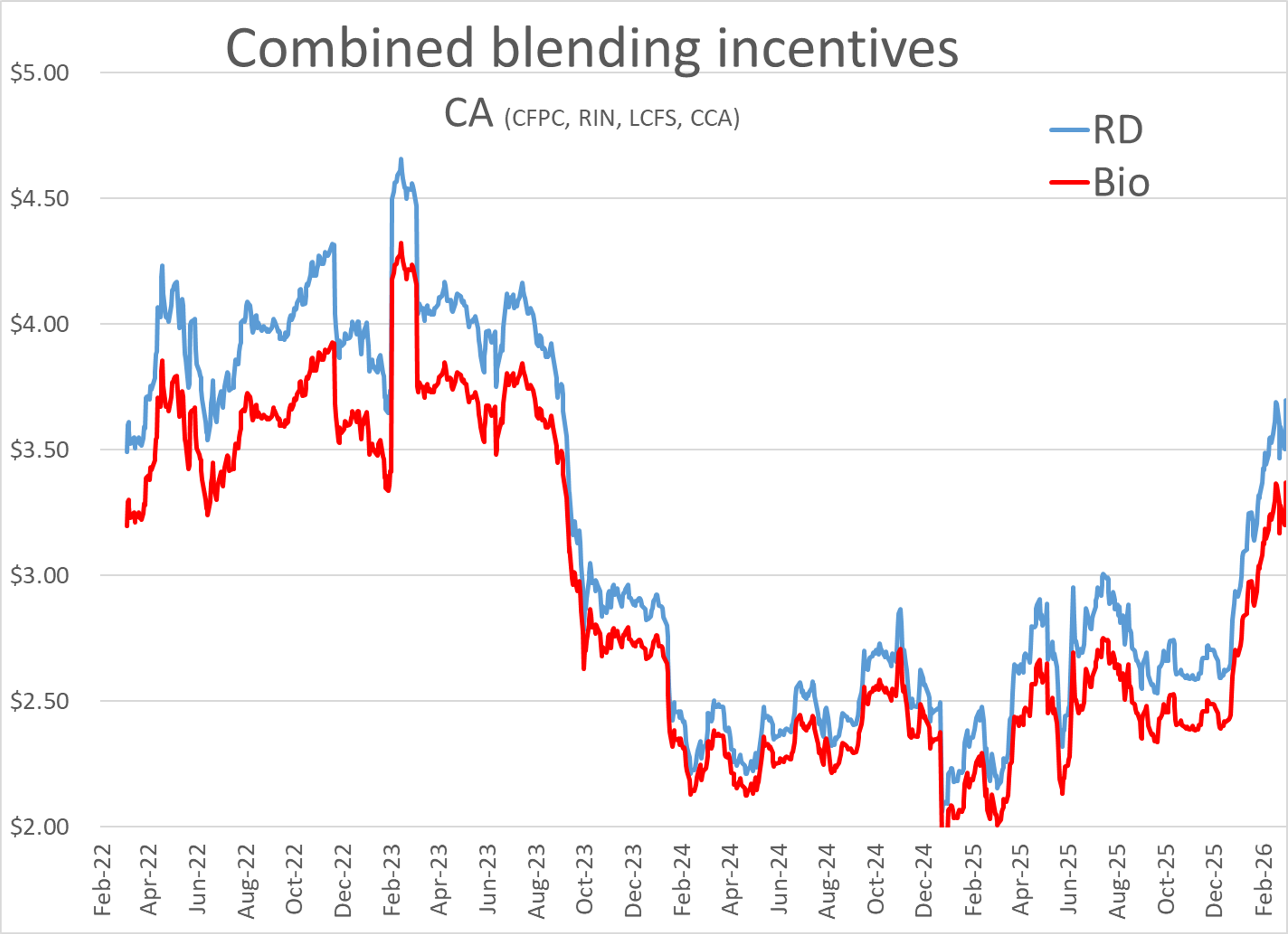
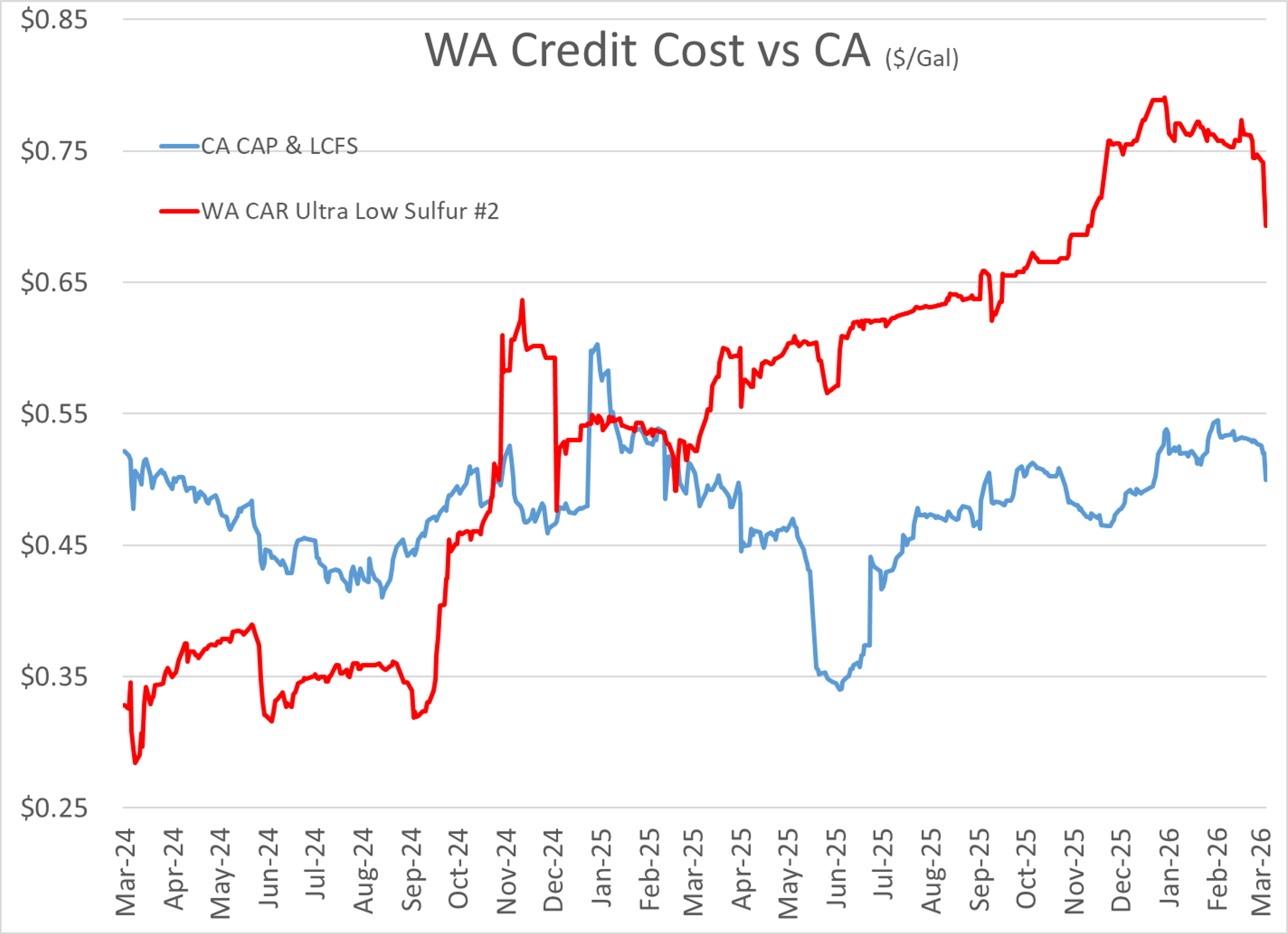
I thought they were going to attack Cuba next? The federal government is once again suing California’s Air Resources Board (CARB) over its CO2 standards and EV mandates. Environmental Credit values in both California and Washington have both already been under selling pressure in the past week as high diesel prices and high RINs combine to offer the best incentives for domestic producers in at least 3 years, and the latest attack on the programs that require those credits sent prices dropping sharply Thursday, similar to what we saw a year ago after the Executive Order that tried to ban states from having their own environmental programs.
Renewable fuel producers who survived a year on life support after the expiration of the $1/gallon federal tax credit were already a big winner from recent events, and stand to gain even more if reports that the U.S. may temporarily waive the Jones Act as they can cut something like 25 cents/gallon off the cost of shipping RD from refineries on the Gulf Coast, to the West Coast where those products are worth nearly $1/gallon more due to the environmental programs.
Florida’s fuel supply would also benefit greatly from a Jones Act waiver as there would be more vessels available to deliver to the “Supply Island” that always struggles this time of year due to the combination of increased demand from spring breakers, and supply challenges caused by fog and the limited number of Jones Act vessels. That said, finding ships isn’t like turning on a light switch, particularly now, so those impacts may not come until the revelers are back in school.
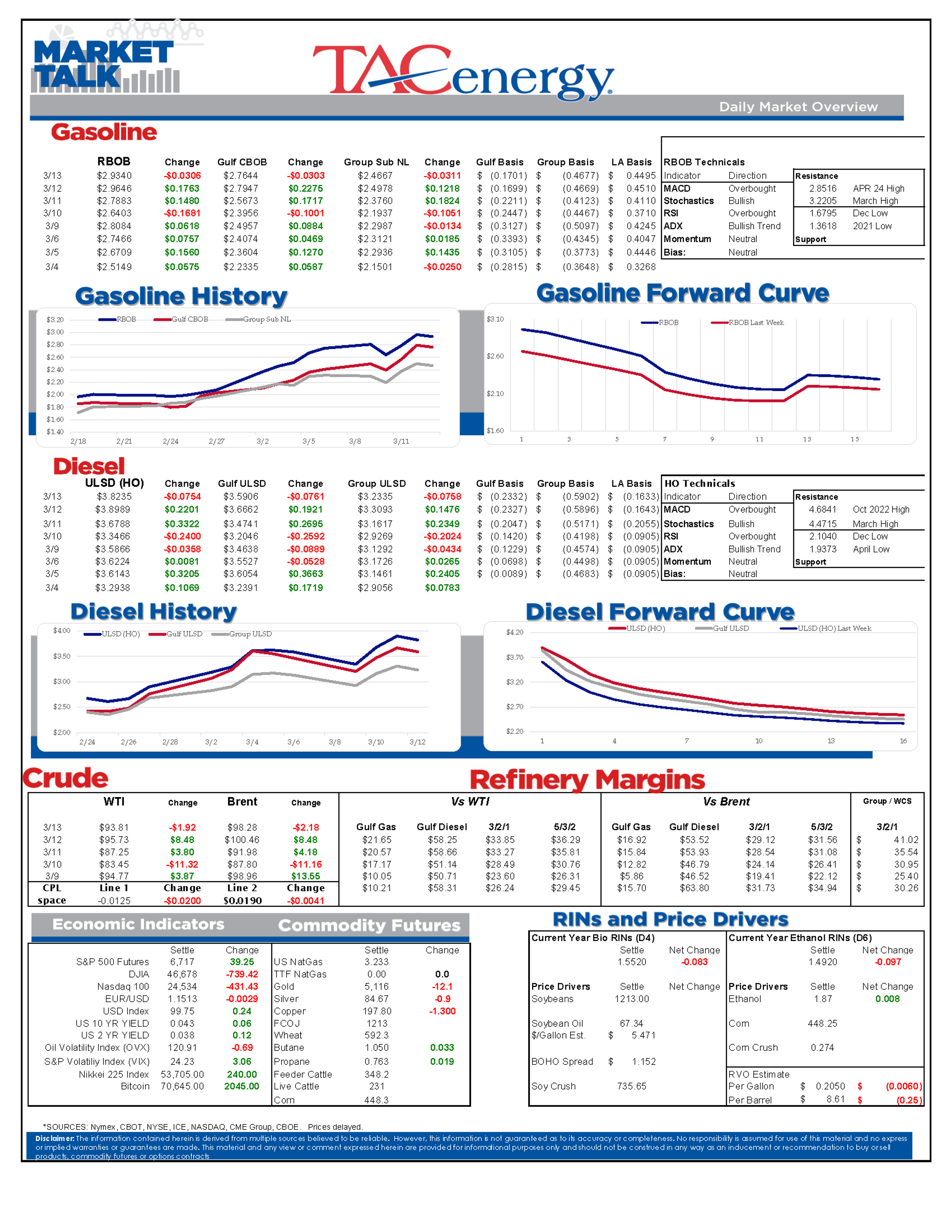
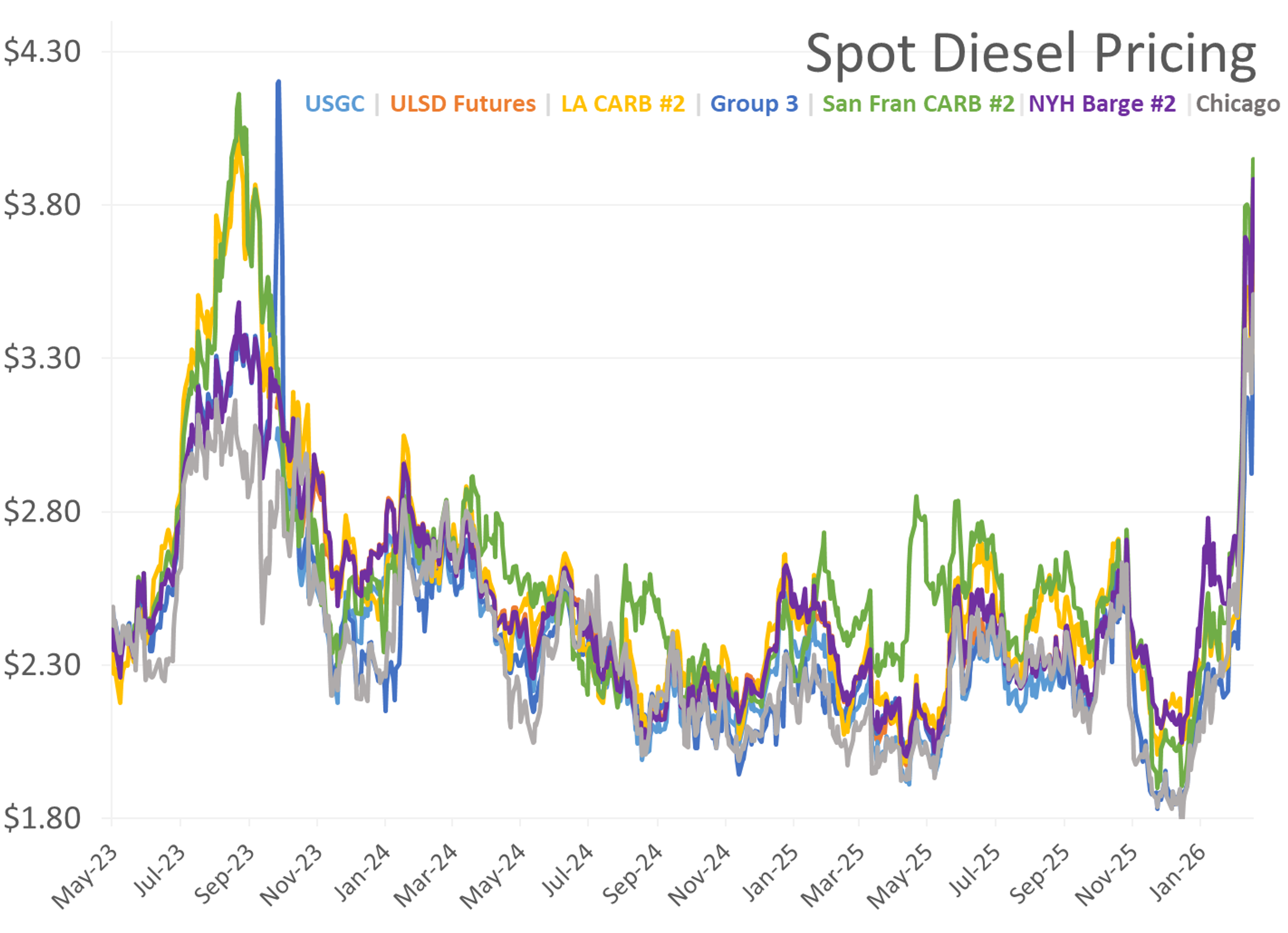
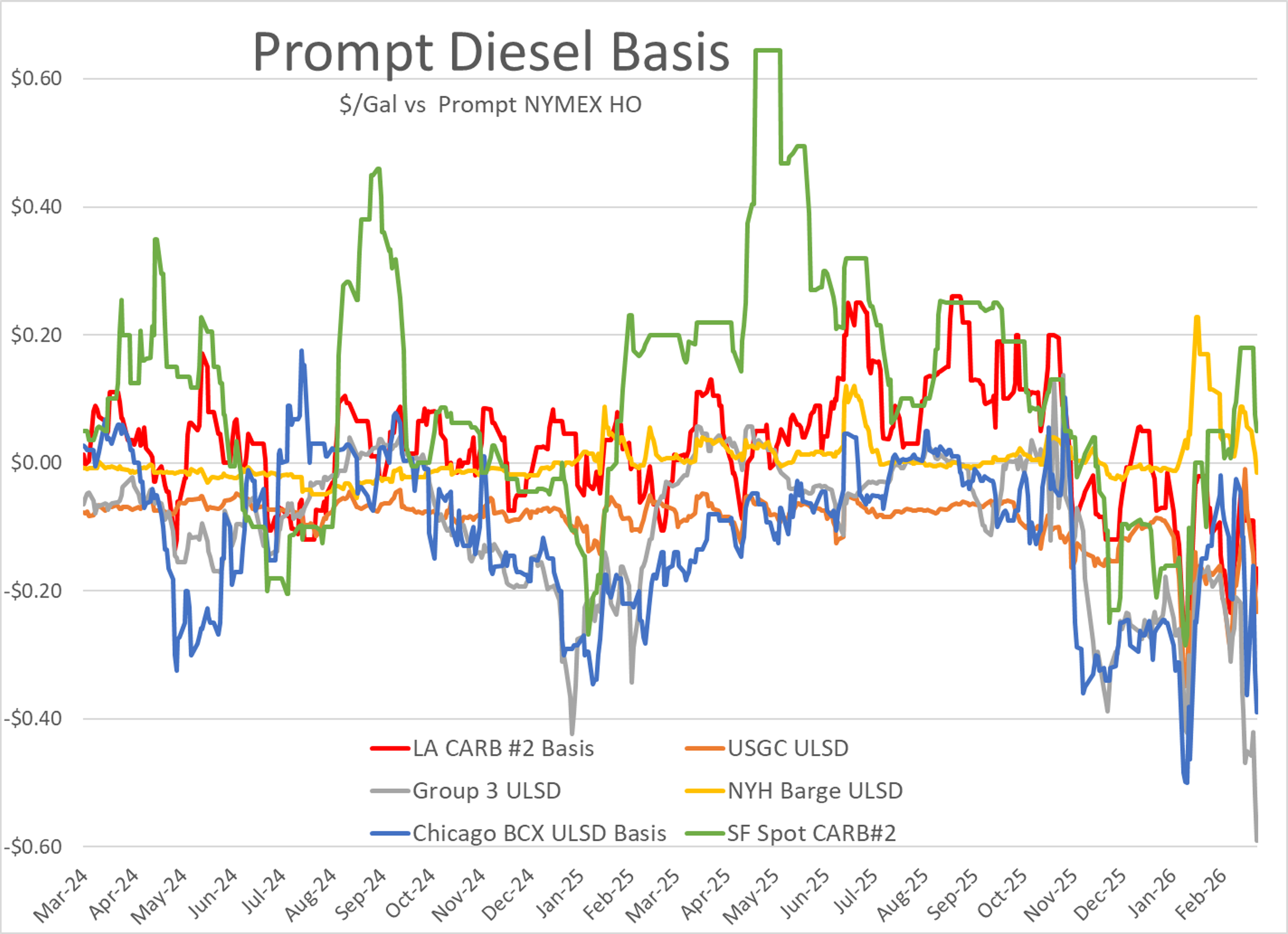
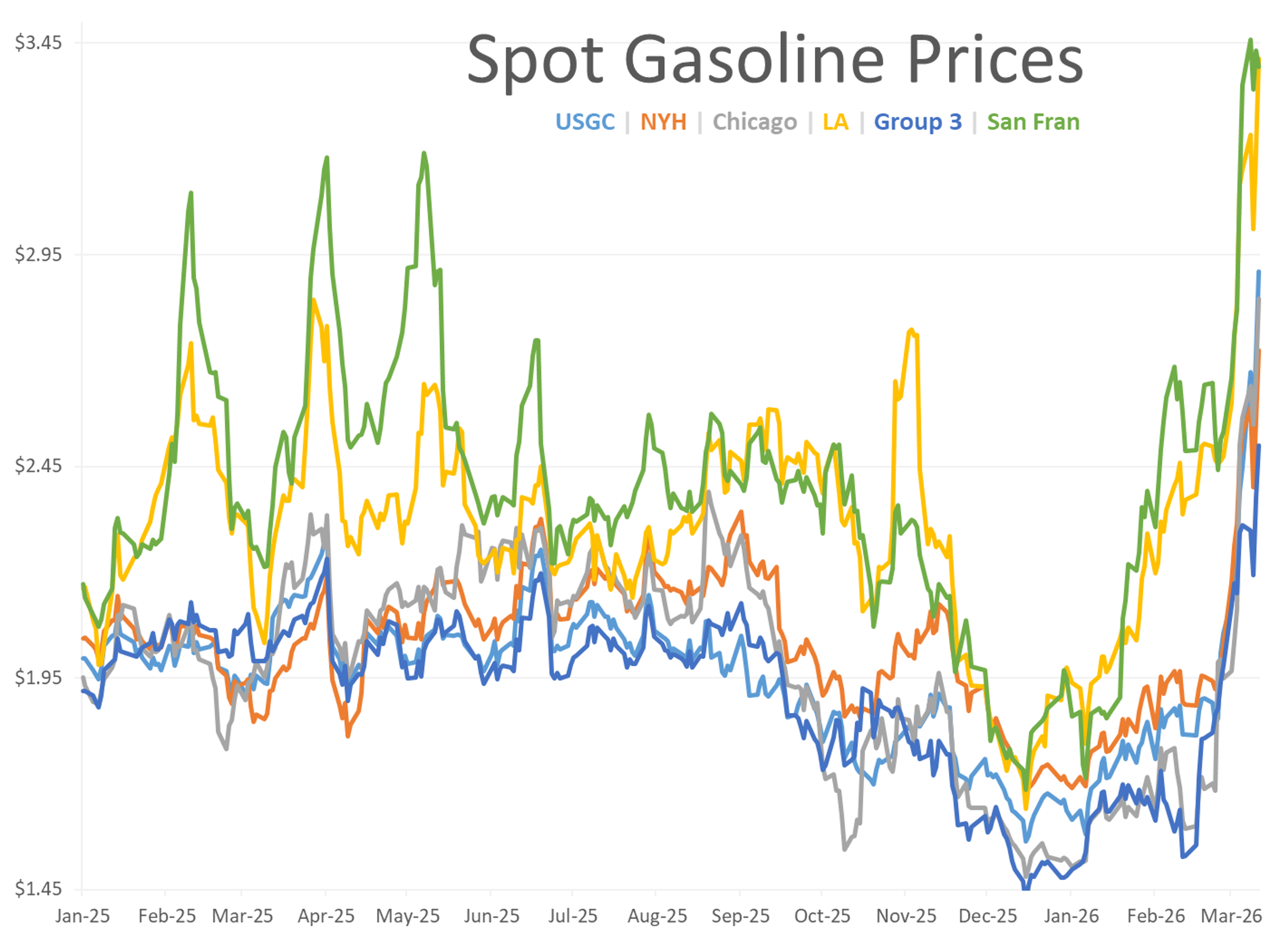
Look out below: The tightness of diesel supplies is so far largely contained to the East Coast, which has to compete with Europe for incremental barrels, whose largest importers in the Middle East are currently out of business. That phenomenon is obviously pushing futures outright prices and time spreads to lofty levels, and markets from the middle of the country to southern California are reacting with sharply negative basis values. As is typical, the Group 3 and Chicago markets are faring the worst due to their lack of export capability with Group 3 discounts approaching 60 cents/gallon, while Chicago is closing in on 50 cents. Less typical is that the phenomenon has spilled over to the USGC which is seeing 15 cent discounts, and even the LA spot market is close to a 20 cent discount for CARB #2, while Renewable Diesel is trading at heavy discounts to CARB (+environmental fees).
Latest Posts
Crude Strength, Refinery Disruptions, And Export Bottlenecks Support Fuel Prices
Global Supply Risks And Strong Refining Margins Drive Energy Market Rally
Week 42 - US DOE Inventory Recap
Diesel Prices Swing Wildly Amid Tanker Attacks And Supply Concerns
Diesel's Breakout Signals Renewed Pressure Across Energy Markets
Oil Opens Soft Despite Escalating Supply Threats
Social Media
News & Views
View All
Crude Strength, Refinery Disruptions, And Export Bottlenecks Support Fuel Prices
Global Supply Risks And Strong Refining Margins Drive Energy Market Rally