Energy Markets Rally For A 2nd Day Amid Escalating Global Disruptions

Energy markets are rallying for a 2nd straight day as traders seem to be having a similar reaction to the Iranian “present” that my 6 year-old did last Christmas when he opened a package containing clothing not toys.
Iran’s “significant prize” that helped tank the market earlier this week was revealed Thursday as “8 boats of oil” that later became 10 “big boats”. Meanwhile, 130 big boats used to transit the strait every day. Not surprisingly, the optimism for an end to the biggest supply shock ever quickly faded, and most of the losses from earlier this week have been erased.
Port Trouble: Kuwait said 2 of its export facilities were struck by Iranian drone and missile attacks Friday, proving again that although Iran’s capacity to attack is diminished, it’s still very much alive and it only takes one to wreck your day. The attacks also send a clear message that Iran’s IRGC isn’t giving up the fight even though their naval commander who pushed for the Strait’s closure was killed Thursday.
Ukraine meanwhile continues its drone attacks on 2 of Russia’s Baltic export facilities with fresh strikes overnight on Primorsk and Ust Luga, which account for nearly 2 million barrels/day of Russia’s oil exports. Ukraine also struck a shadow fleet tanker hauling Russian oil near the Bosphorus strait Thursday as it continues to widen its strikes.
As if military attacks weren’t enough: A category 3 typhoon (which would be called a hurricane if it happened in the Atlantic) which made landfall in Australia this week has damaged 3 LNG export facilities, at exactly the wrong time. Ordinarily Australia is the world’s 3rd largest LNG exporter, but in March it’s been the 2nd largest as Qatar’s operations have been shut in by the war.
A map published by JP Morgan’s research arm, using KPLER data highlights how the sequential supply shocks from the loss of Hormuz barrels are just starting to be felt, and shows how several Asian nations in particular will be the first to truly feel the squeeze, and this was all calculated before the loss of Australian LNG happened. The U.S. remains relatively insulated from the fallout thanks to the huge increases in oil and natural gas production in the past 2 decades, but the global dominoes will keep pressure on coastal supply points as domestic consumers will have to outbid competition from countries desperate to find supply.
Slow your roll: Colonial and Explorer pipelines notified shippers Thursday that they would not be changing their RVP schedules despite the EPA’s waiver announcement Wednesday, citing the need for both guidance from states and an extension of the timeline before they can change their plans. Those notices are another harsh reminder of how slow the supply chain moves with 3 months needed every year to flip from winter to summer grades, making a 3 week waiver unable to move the needle to help lower prices. That’s not to say the waivers will have no impact however. Arizona officials quickly adopted a waiver of the Maricopa county “CBG” boutique fuel grade, which will allow Kinder Morgan to continue shipping 8lb RVP gasoline into the Phoenix metro rather than transitioning to the hard-to-produce 5.7lb RVP that frequently creates shortages in the summer months.
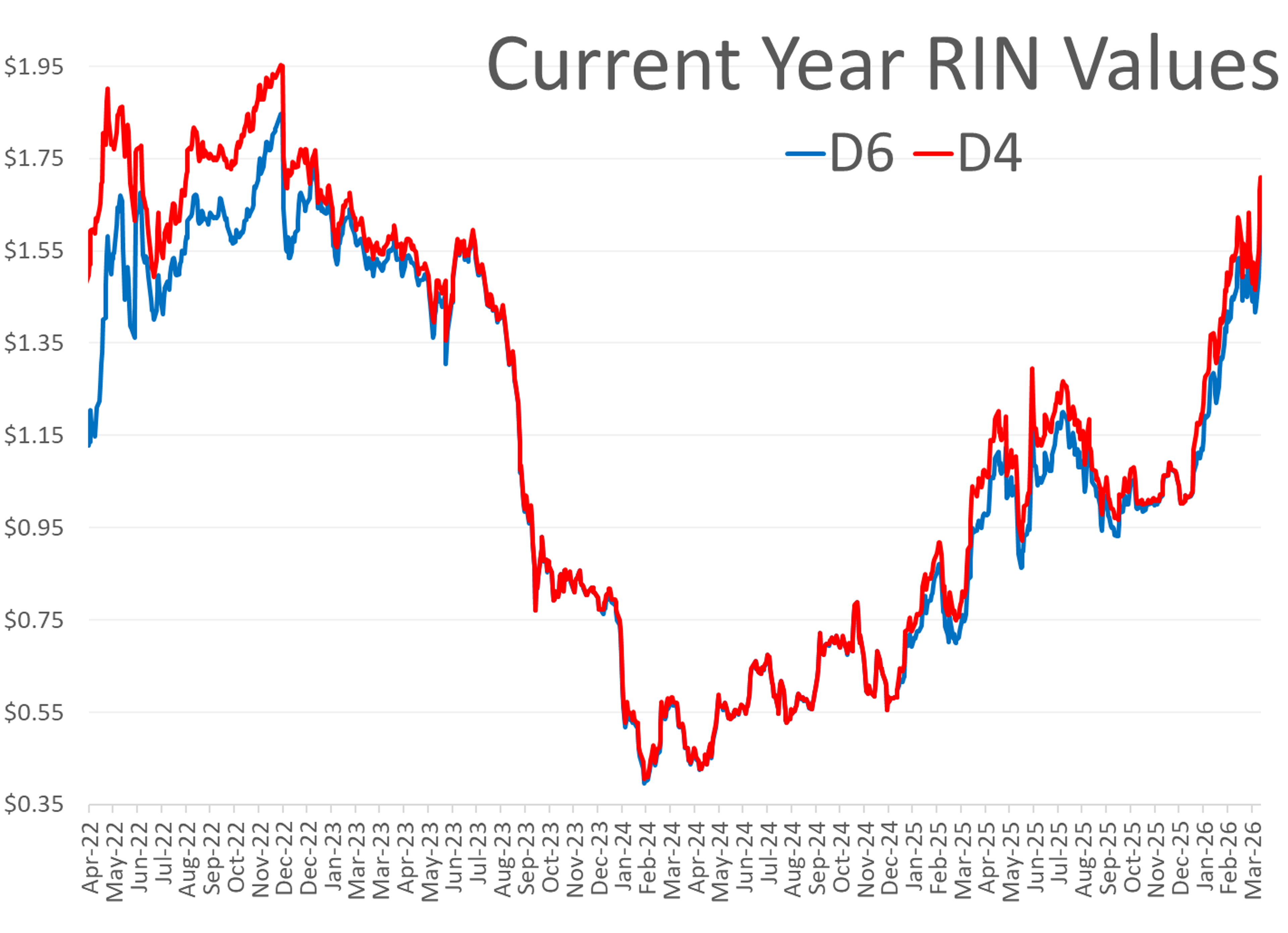
The EPA is expected to announce the final RFS rules for 2026 and 2027 as part of a program today intended to show support for American farmers. RIN values have already rallied to 3 year highs ahead of that announcement. Meanwhile, the U.S. Treasury is also easing sanctions on Belarus to try and ease Potash supply problems as fertilizer supply becomes a major problem for farmers due to both the Ukraine and Iran wars.
Latest Posts
Diesel Rally Resumes Amid Growing Debate Over US Export Limits
Week 38 - US DOE Inventory Recap
Refinery Economics Clash With Calls For A Diesel Export Ban
Diplomacy Knocks Crude Lower, But Diesel Bulls Aren’t Done Yet
Diesel Pullback Tests Market Nerves Amid Supply Risks
Diesel Strength Offsets Gasoline Weakness As Supply Concerns Mount
Social Media
News & Views
View All
Diesel Rally Resumes Amid Growing Debate Over US Export Limits
Week 38 - US DOE Inventory Recap