Energy Markets Pull Back After Multi-Month Highs

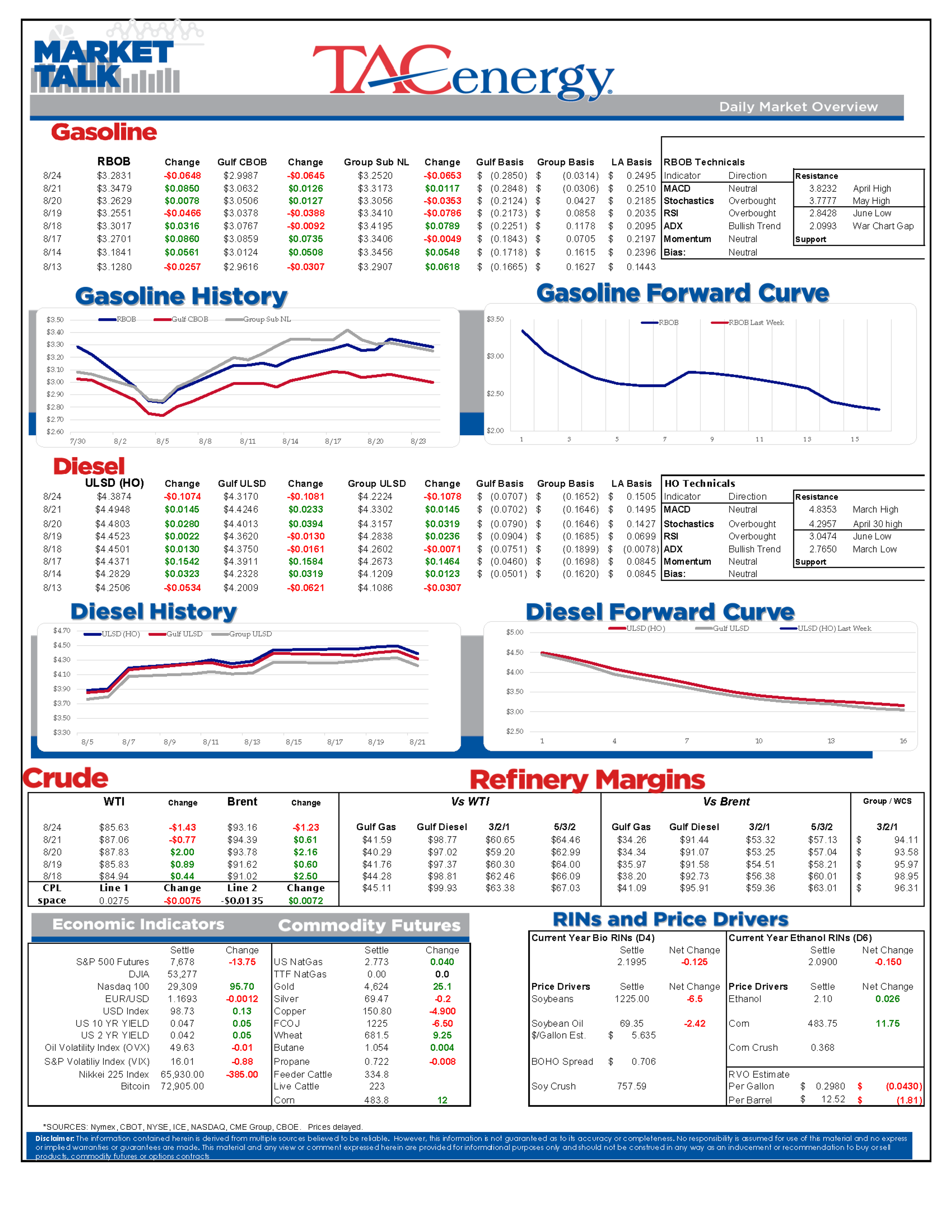
Refined products are leading the energy complex in a wave of selling to start the week, pulling back after reaching multi-month highs last week. ULSD futures are leading the slide down around 11 cents on the day, while RBOB gasoline futures are down 8 cents in the September contract and 6 for October, while oil futures are down a more modest $1.25/barrel.
If you’re looking for a reason for today’s selloff, beyond the fact that prices were overbought after a furious August rally, you could point to the growing signs that the U.S. is sneaking more ships through Hormuz than previously believed, or that China is ramping up its refinery run rates, which should soon lead to more desperately needed diesel exports which could mark the end of the record setting run in crack spreads.
The EPA last week extended the waivers on RFG, RVP and Butane blending that have been running since the spring, but also moved up the winter volatility limits to September 1, ending the summer restrictions 2 weeks early as the government continues to stretch to find ways to limit the damage done by high gasoline prices. Friday marked the first day of 11.5lb RVP RBOB trading on the USGC, pushing values sharply lower even though futures had a strong rally on the day. There’s also a temporary mismatch in cycle timing so Gulf Coast CBOB is a 9lb spec, and notably more expensive than the 11.5lb RBOB, which will last through the end of the month as the last A2 (9lb CBOB) scheduling deadline on Colonial is set for 8/31. Starting 9/1, both RBOB and CBOB will be trading an 11.5lb spec.
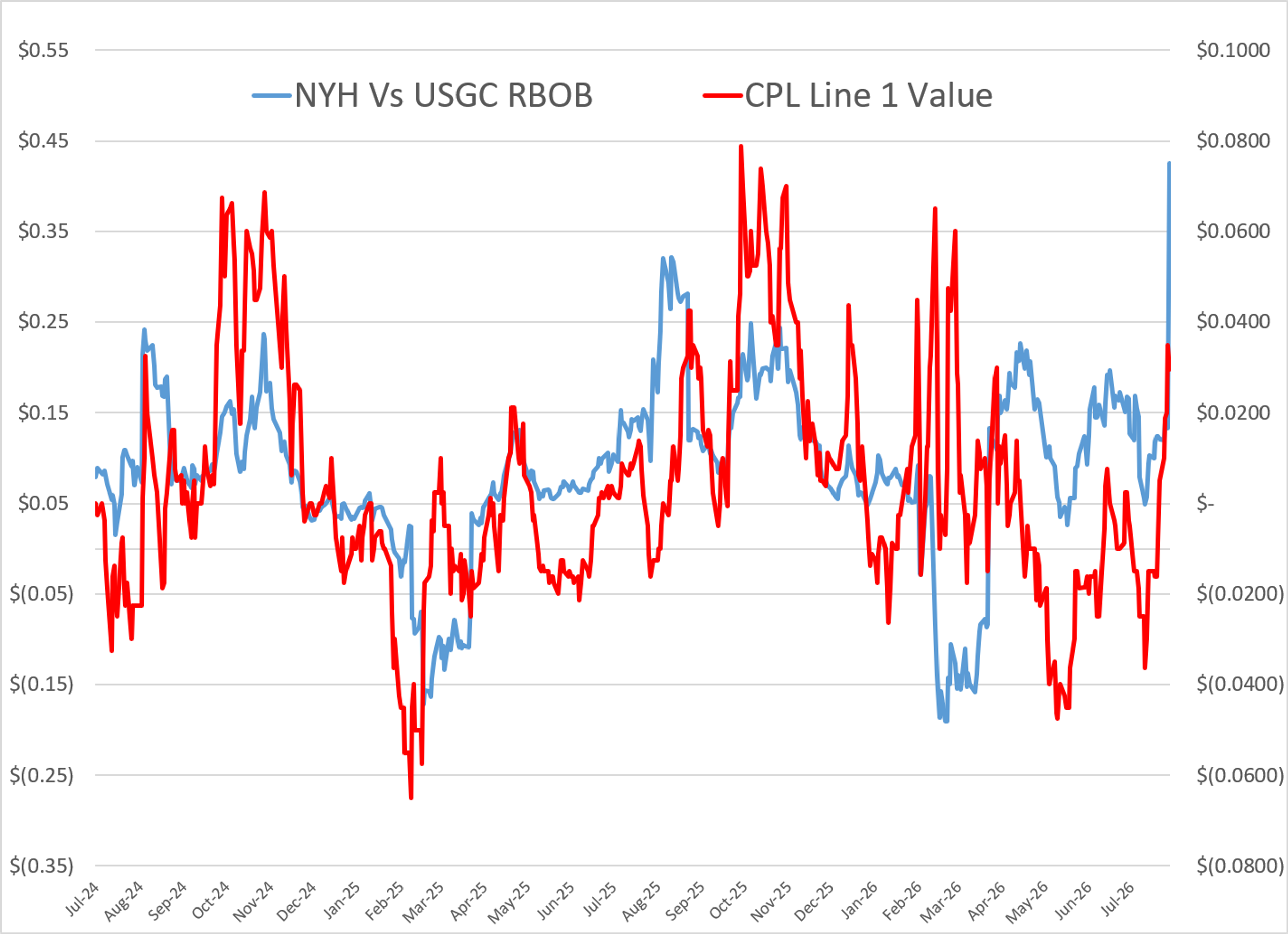
Colonial linespace values have jumped as USGC refinery prepare to push winter-grade barrels north and New York Harbor barrels continue to command a premium amidst steep backwardation.
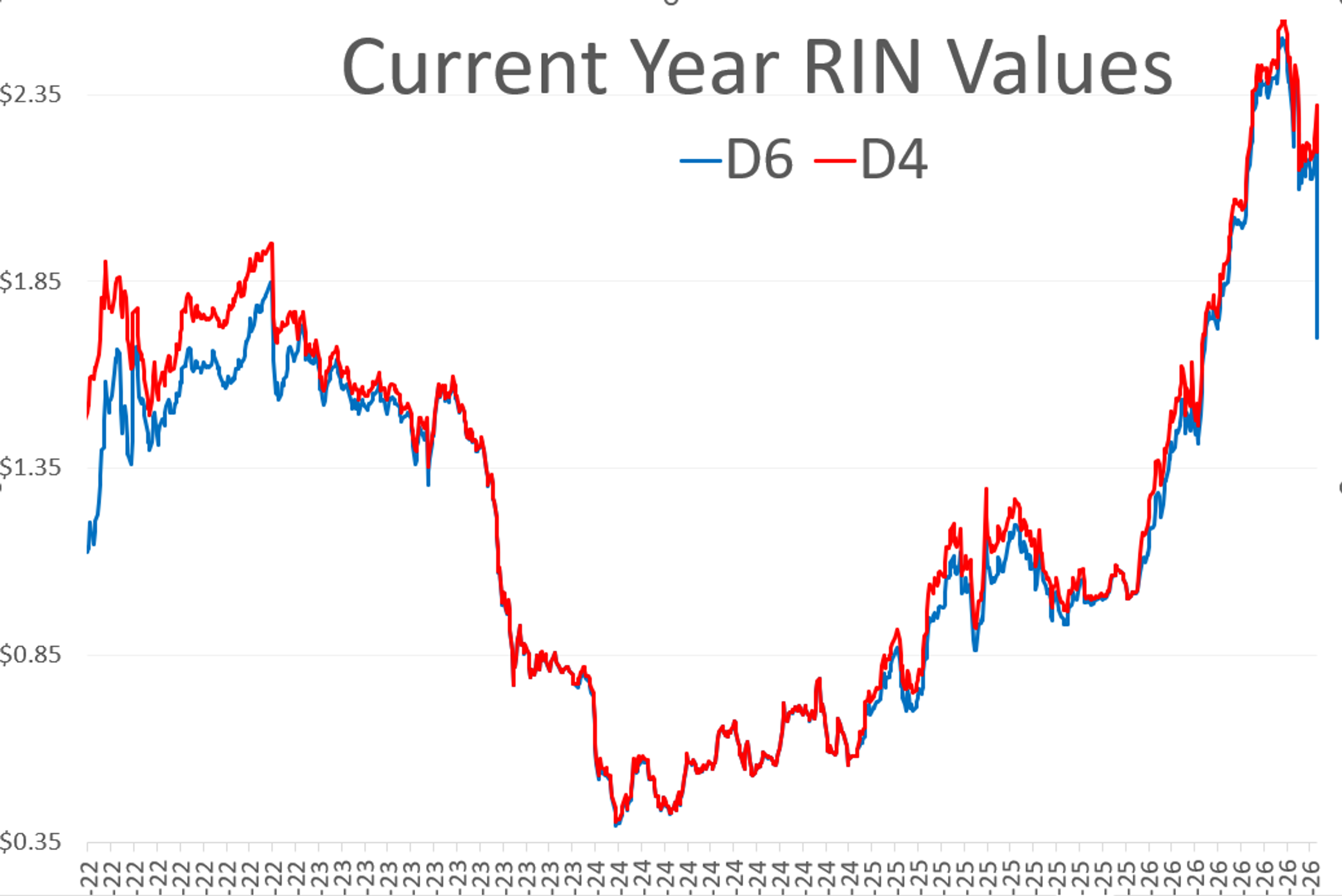
RIN values had their biggest daily selloff in more than 2 years Friday, after the EPA announced it would issue its ruling on 2025 Small Refinery exemptions by the end of August, and that it was pushing back the deadline for 2025 compliance to an unspecified date in the future. While no actual details were given on the amount of exemptions, or the new deadline, rumors quickly swirled that the administration may be using this lever to relax restrictions on refiners after the Energy Secretary met with them a week ago to ask what could be done to increase production. The selling has continued this morning, with D6 values trading at $1.70/RIN, down from $2.26 at the start of Friday’s session.
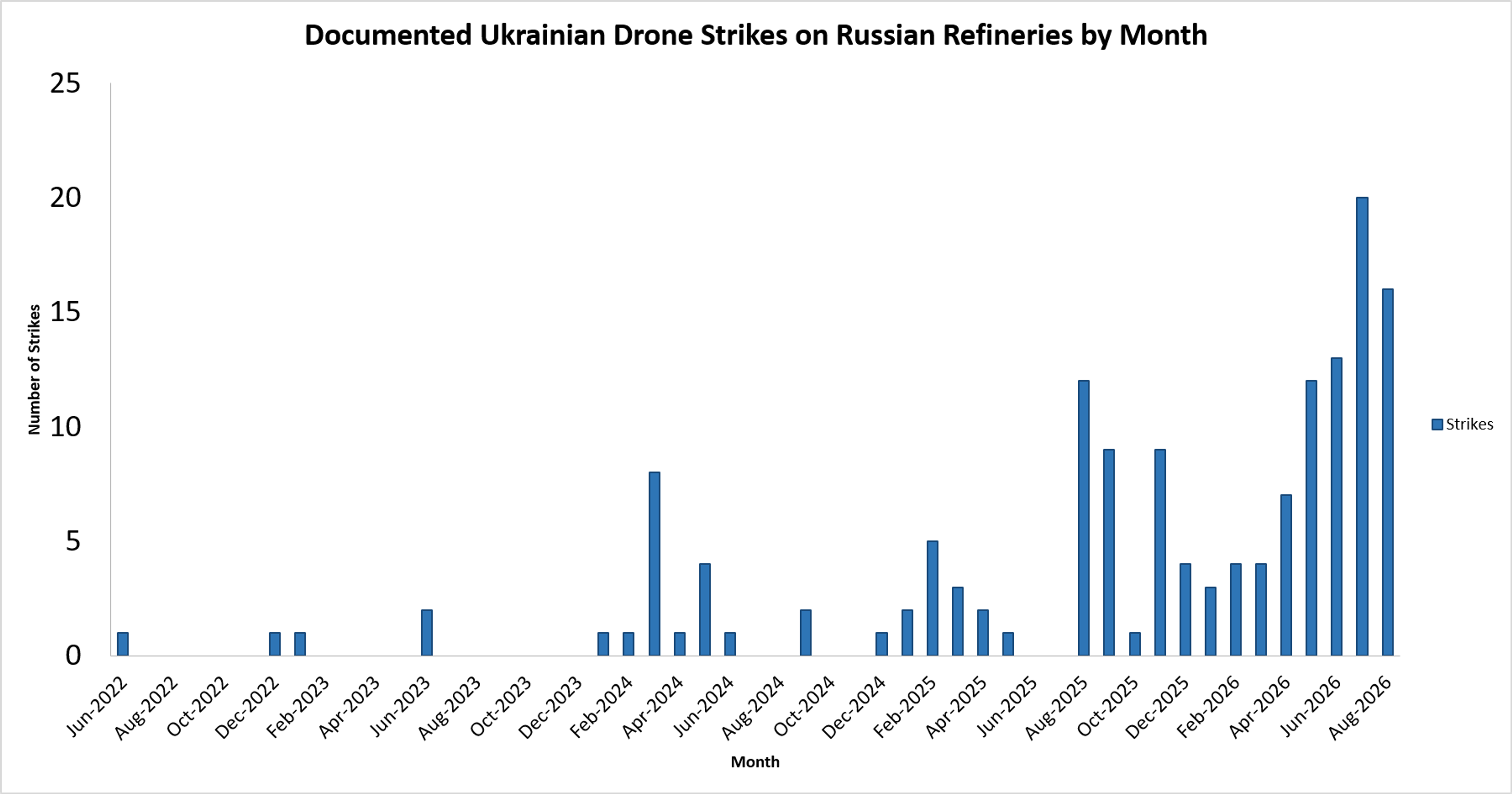
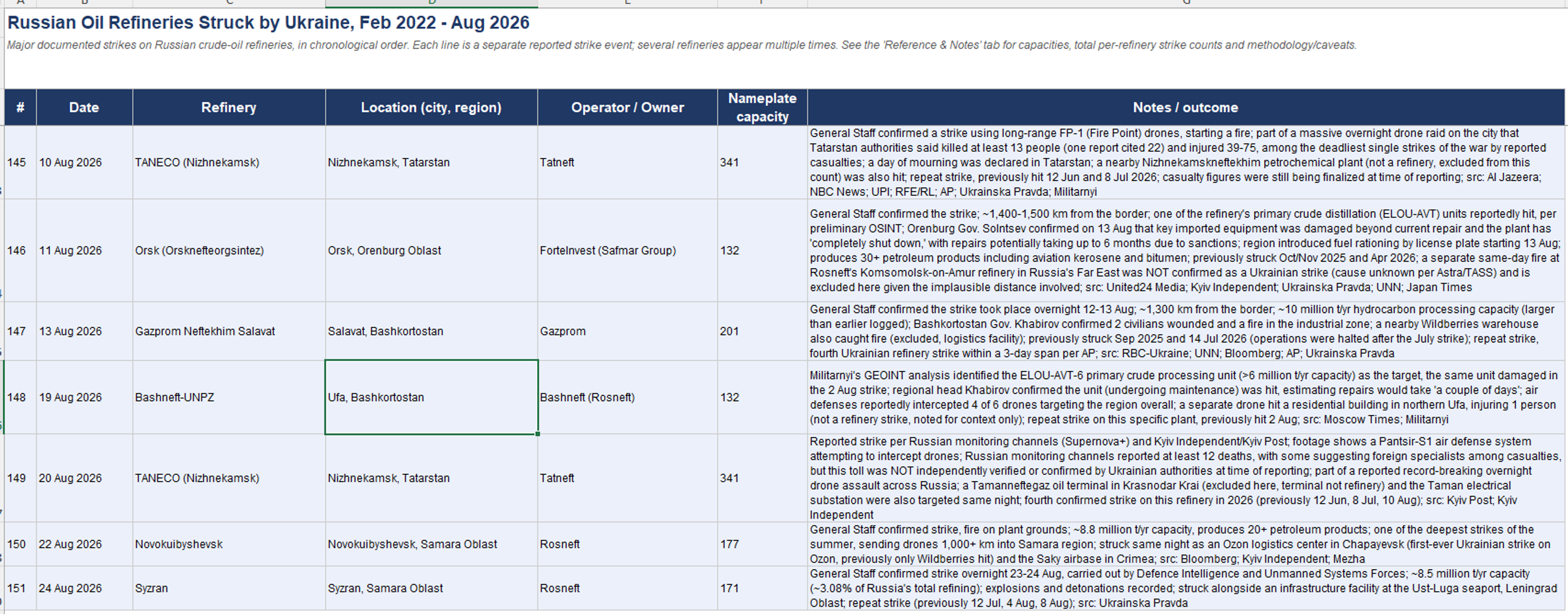
Ukraine’s drones hit 2 more Russian refineries over the weekend, along with a host of other targets. This brings the August strike count to 16, leaving 7 days to break the record of 20 strikes in a month set in July. Like the U.S., Russian officials are lowering their fuel standards to try and get more supply and limit the fallout of their shortages. The fuel shortages in Russia are already spreading to neighboring countries, sparking the latest round of “petrol panic” that will no doubt further complicate the issue. While both the Russian and U.S. governments are trying to get creative to deal with fuel issues, and the U.S. has already asked Ukraine to limit the targets to its drone strikes, it would not be shocking if a deal like “Patriot missiles in exchange for not targeting energy assets” is proposed.
The NHC is tracking 2 storm systems this morning in the Atlantic basin, both of which are given 50% odds of being named in the coming week. The first system is currently east of Bermuda, and won’t threaten the U.S. coastline. The 2nd is a wave moving off the coast of West Africa, and it will take a week or more to know its final path, but there are some long range models that suggest there is a chance (albeit with low odds currently) it could end up threatening either the Gulf or East coasts of the U.S..
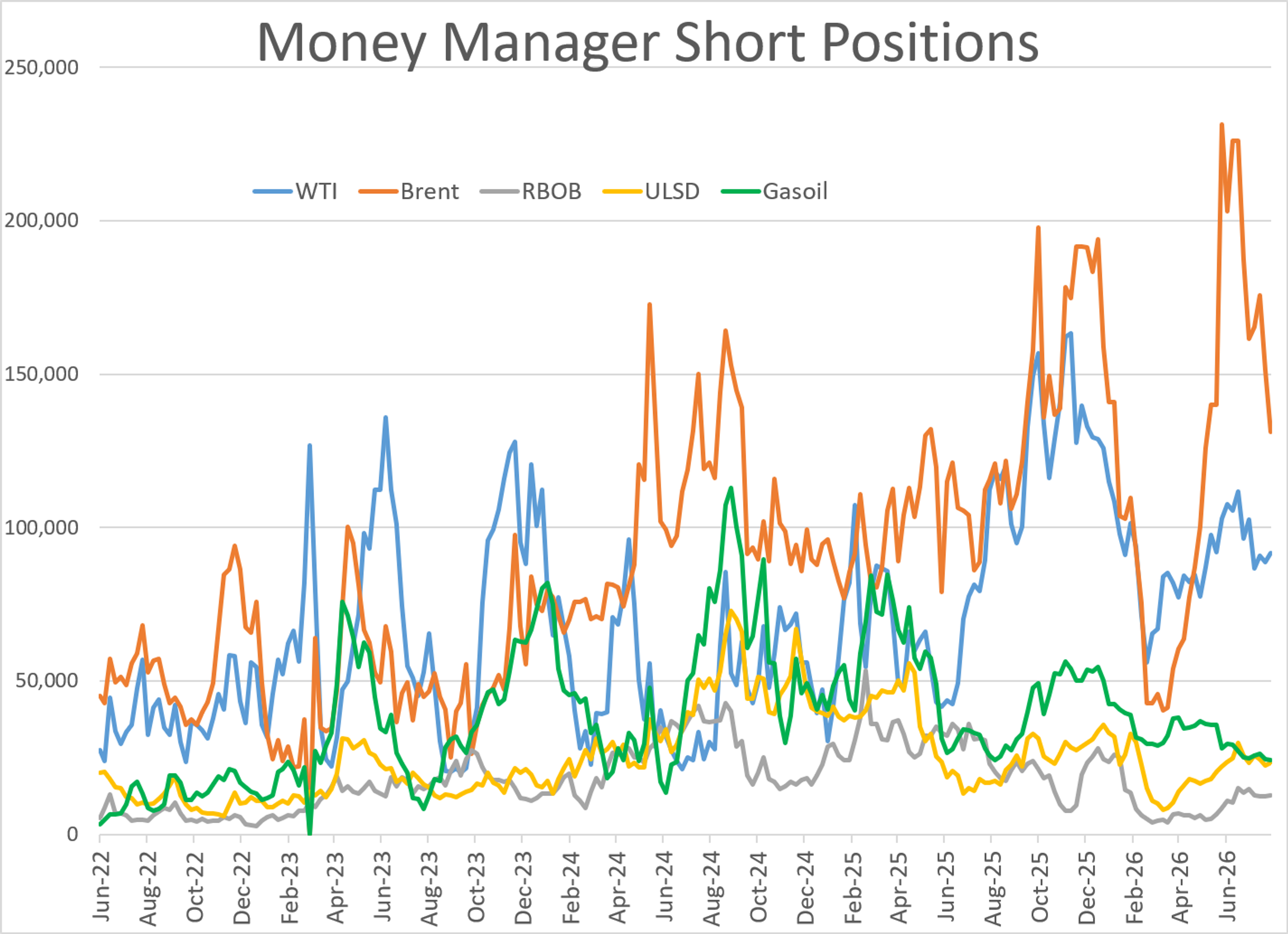
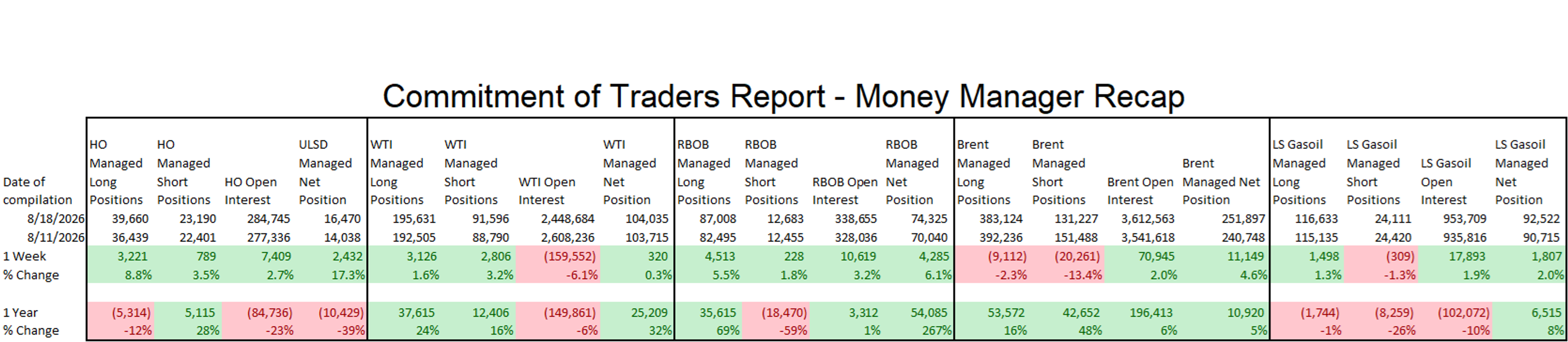
Back on the Bandwagon? Money managers continued to add to their net length in petroleum contracts last week, betting on more higher prices to come as values were reaching multi-month highs. The biggest position move once again came from short covering in Brent crude contracts, as the large speculators who were burned by the biggest bets in history on lower oil prices coming into the year, and burned again as they broke the record for bets on lower prices in June continue to liquidate those losers.
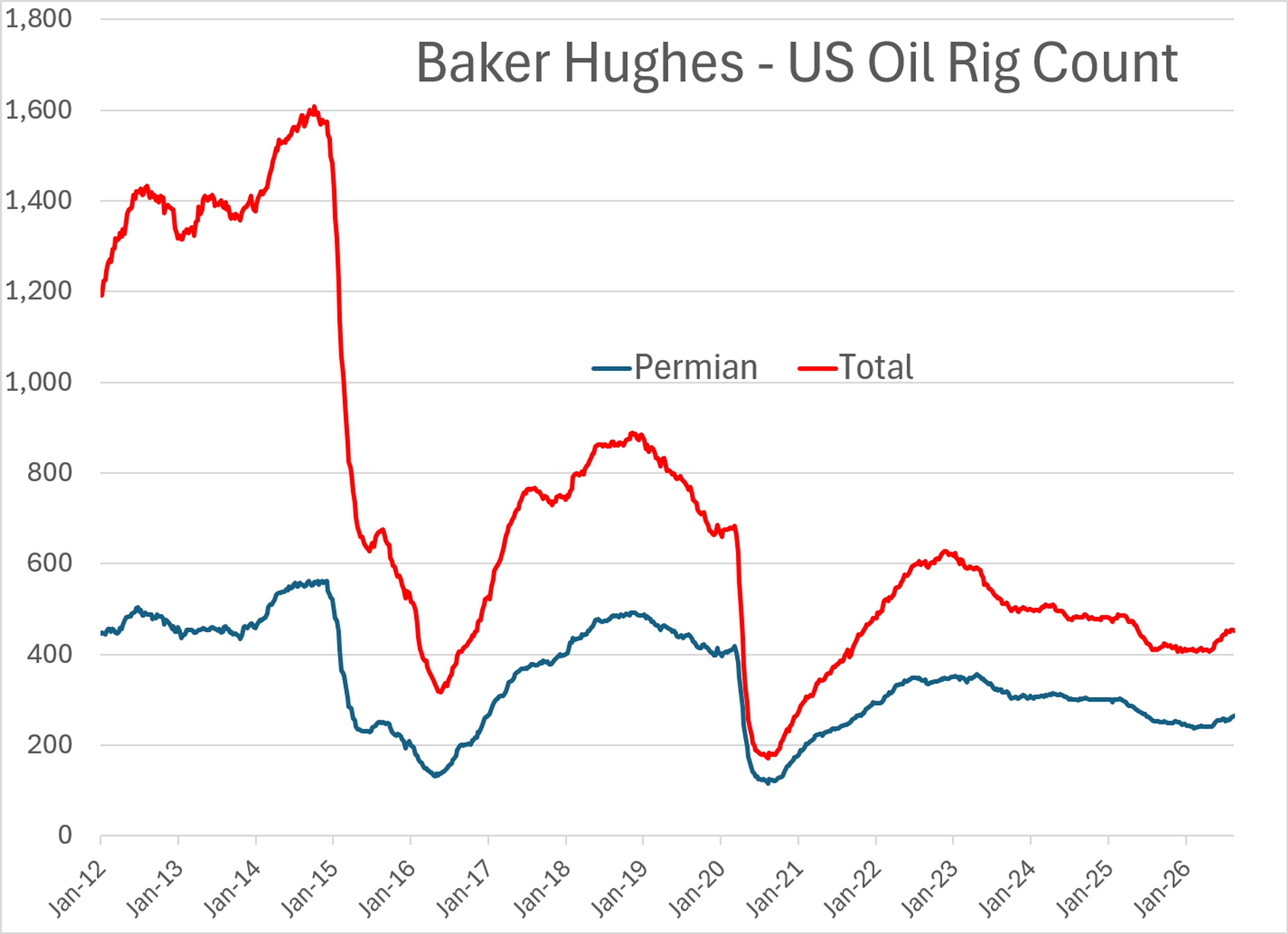
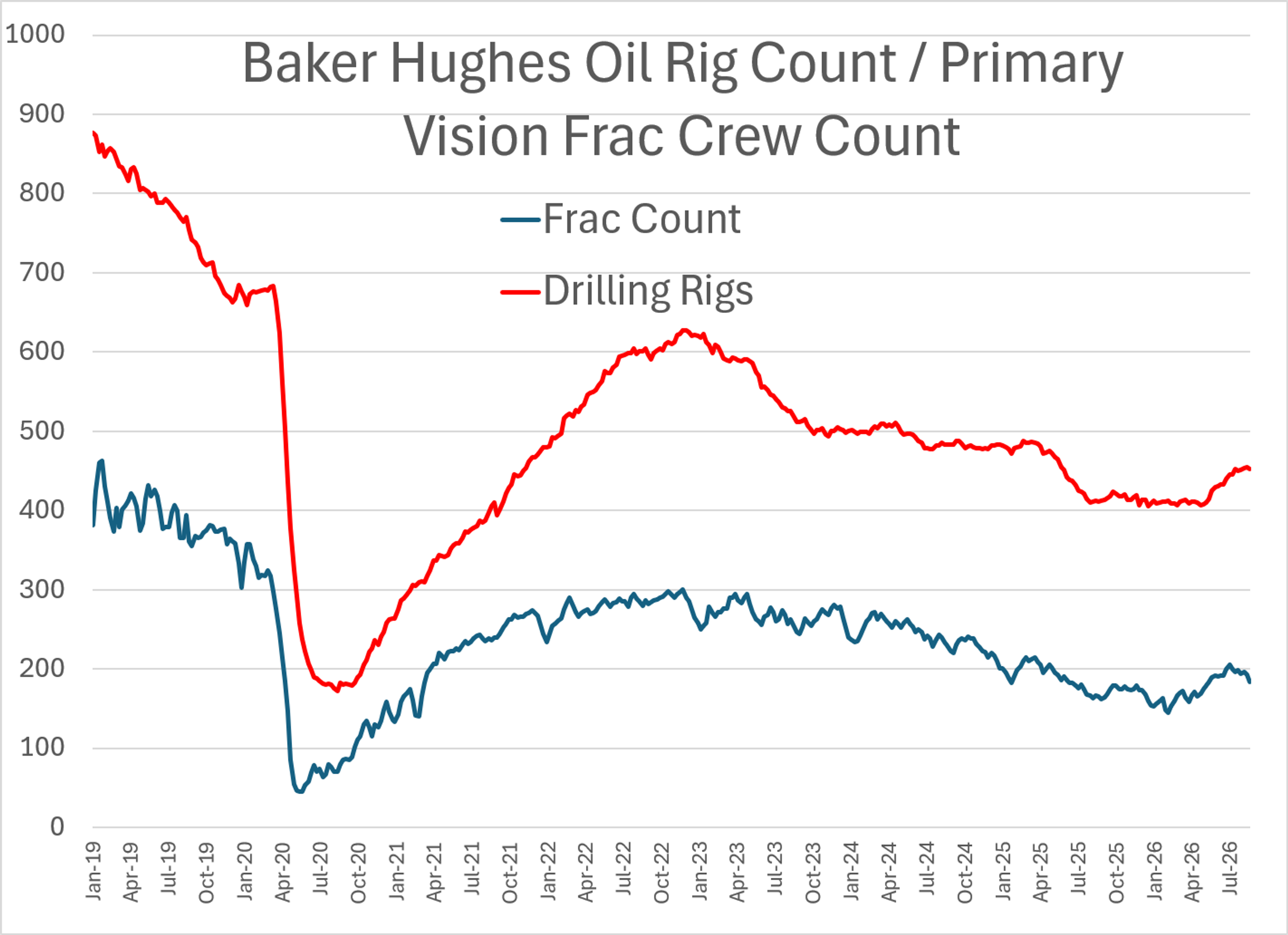
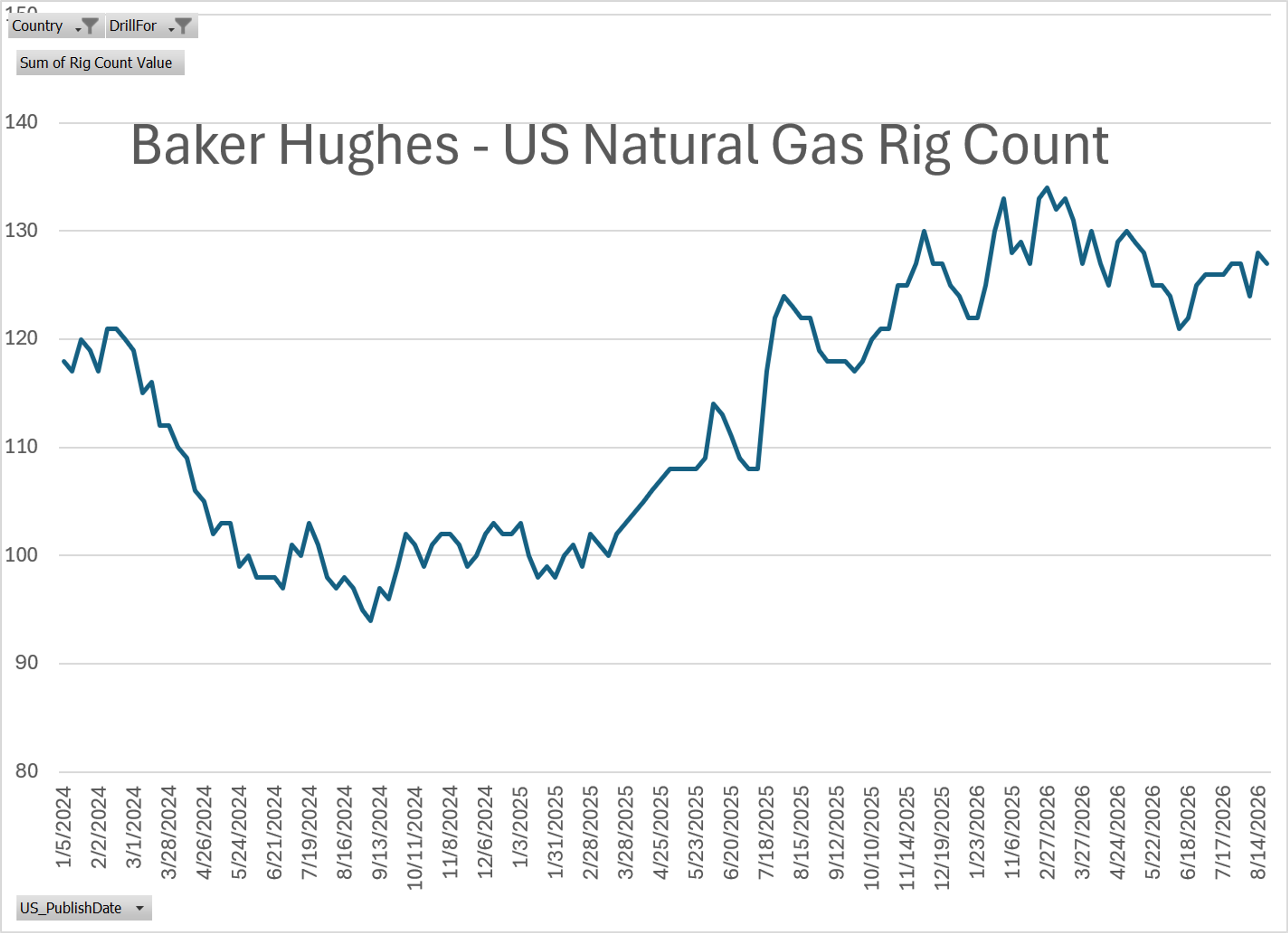
Baker Hughes reported a decline of 3 oil rigs and 1 natural gas rig active in the U.S. last week. While the total U.S. Oil rig count pulled back from the 15 month high reached the previous week, activity in the Permian continued to increase, with 2 more rigs active in that basin, bringing it to a fresh 1 year high of 265 active rigs. The Primary Vision count of fracking crews active in the U.S. dropped by 9 last week.
Latest Posts
Crude, Diesel, And Storm Risks: Key Drivers Behind Today's Rally
Refinery Outages, Storm Risks, And Export Constraints Lift Distillates
Week 40 - US DOE Inventory Recap
Diesel Leads Energy Markets Lower Despite Mounting Geopolitical Risks
Energy Markets Mixed As Diesel Rallies And Supply Concerns Persist
Supply Disruptions Persist As Markets Focus Elsewhere
Social Media
News & Views
View All
Crude, Diesel, And Storm Risks: Key Drivers Behind Today's Rally
Refinery Outages, Storm Risks, And Export Constraints Lift Distillates