Energy Markets Ease For Second Session Despite Fragile Middle East Ceasefire

Energy markets are seeing healthy selling for a 2nd straight session as the violence around Iran and neighboring shipping routes has paused for the past 2 days. While no new agreement has been reached, both (or more accurately all) sides of the conflict seem to be willing to back off on the tit for tat attacks that had raged for 2 straight weeks.
Although the missiles and drones have stopped flying temporarily, that doesn’t mean that oil tanker and other shipments are moving much with KPLER and others reporting that transits through Hormuz are down sharply from where they were in early July, and other reports suggesting the Saudis are taking the long way around to avoid the newest Houthi threats near the Bab El Mandeb Strait.
There is also some doubt about whether or not the violence is actually ending, as Saudi Arabia and their long-time-foes in Yemen both launched new attacks on land over the weekend and fresh attacks from Israel on its neighbors are a reminder that they’re not completely sitting this out either.
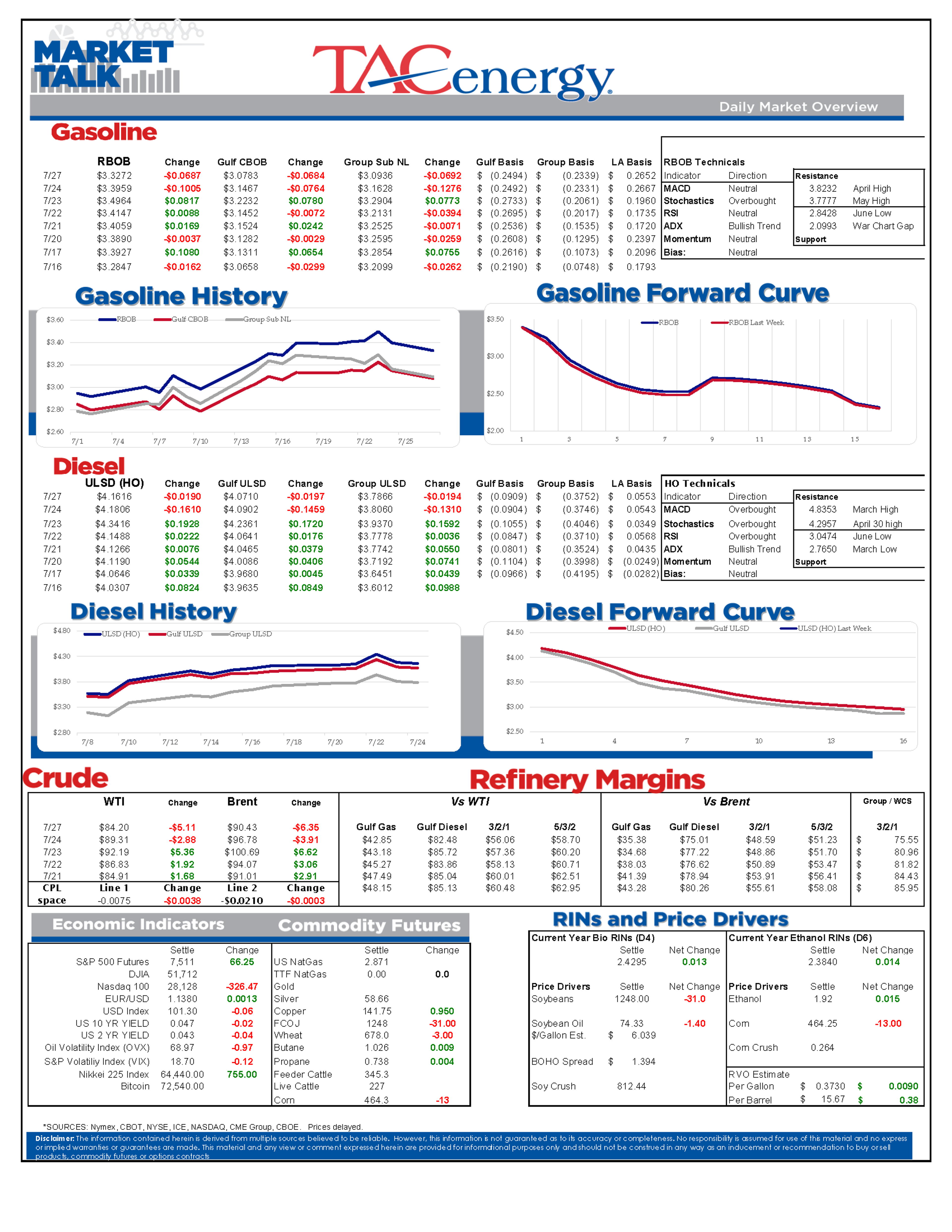
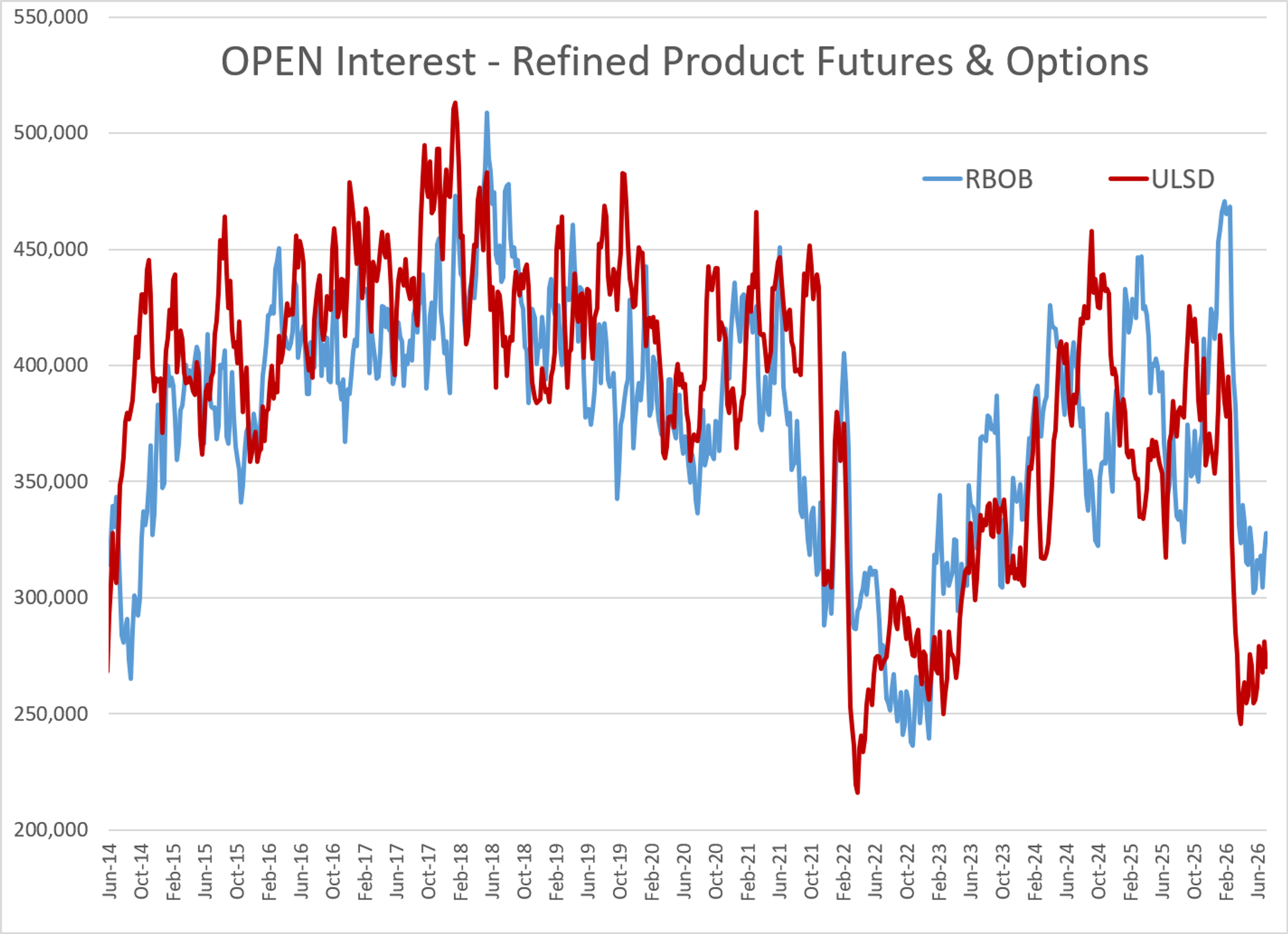
That doubt seems to be creeping back into the market this morning with ULSD futures down only 2 cents as we approach 8am central time, after trading down more than 16 cents overnight. The bounce follows reports that Iran is once again claiming it will call the shots, which obviously won’t sit well with the U.S. President, and certainly doesn’t imply we’re close to a deal. RBOB gasoline futures are seeing losses of around 7 cents/gallon at the moment, after trading down more than 15 cents at their lows. Oil prices are still seeing heavier losses compared to products with WTI and Brent both down more than $5/barrel, , but both contracts have already bounced more than $2 off their overnight lows.
The 265mb/day P66 Sweeny TX refinery reported a coker unit upset during a lighting storm from Tropical Storm Bertha last Friday, but that seems to be the only noteworthy upset caused by the storm. A subsequent filing over the weekend shows that work to stabilize and restart the unit is ongoing, and is expected to last until this afternoon.
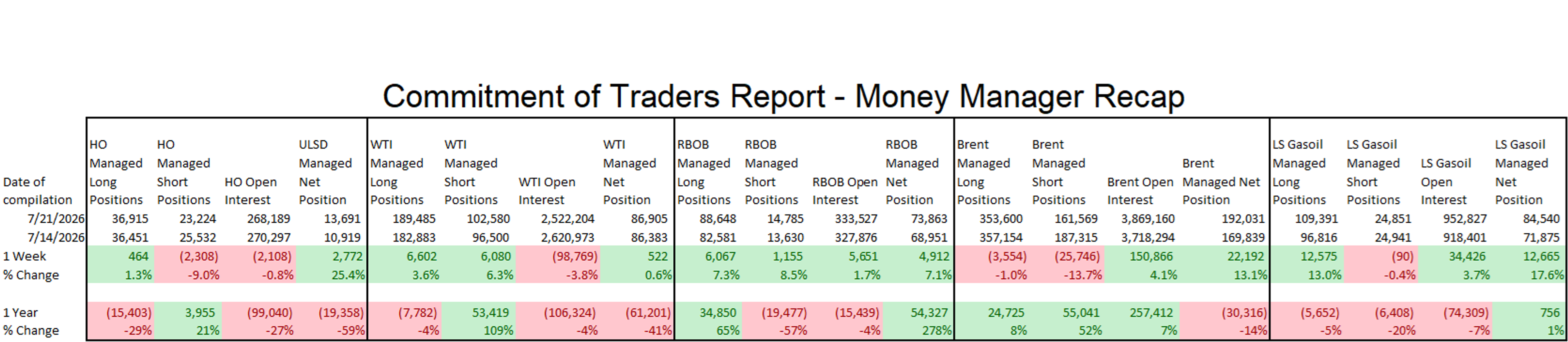
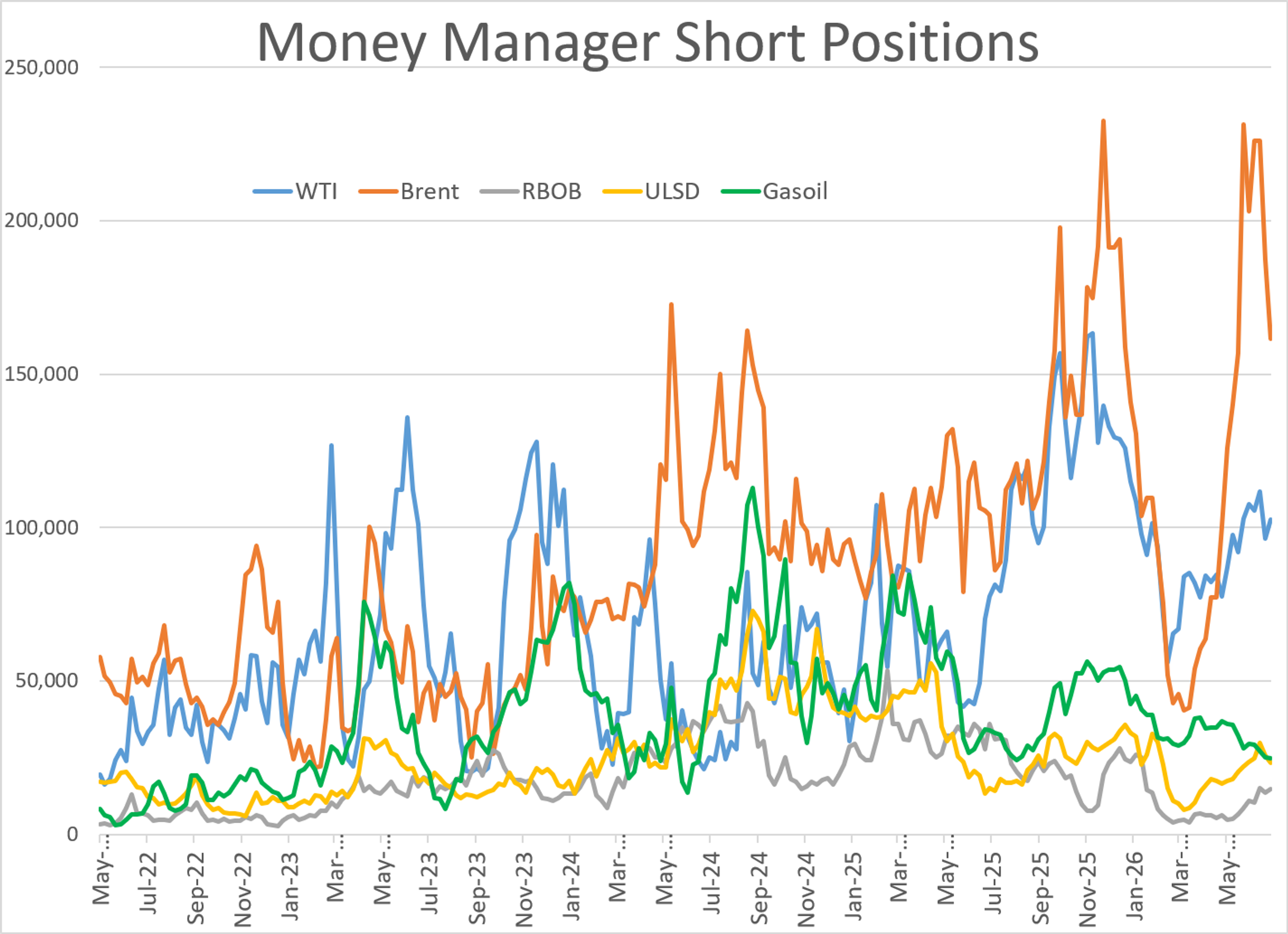
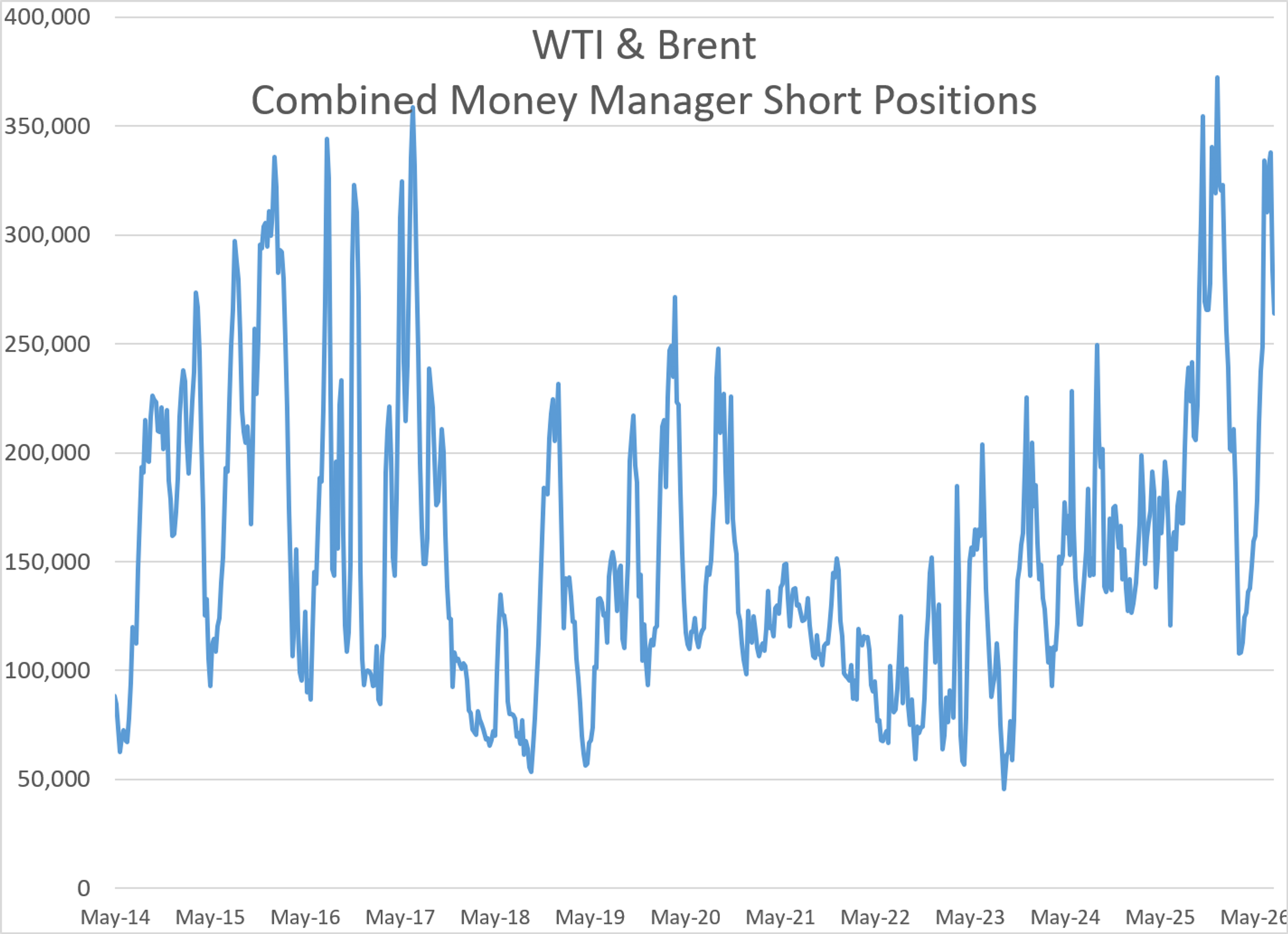
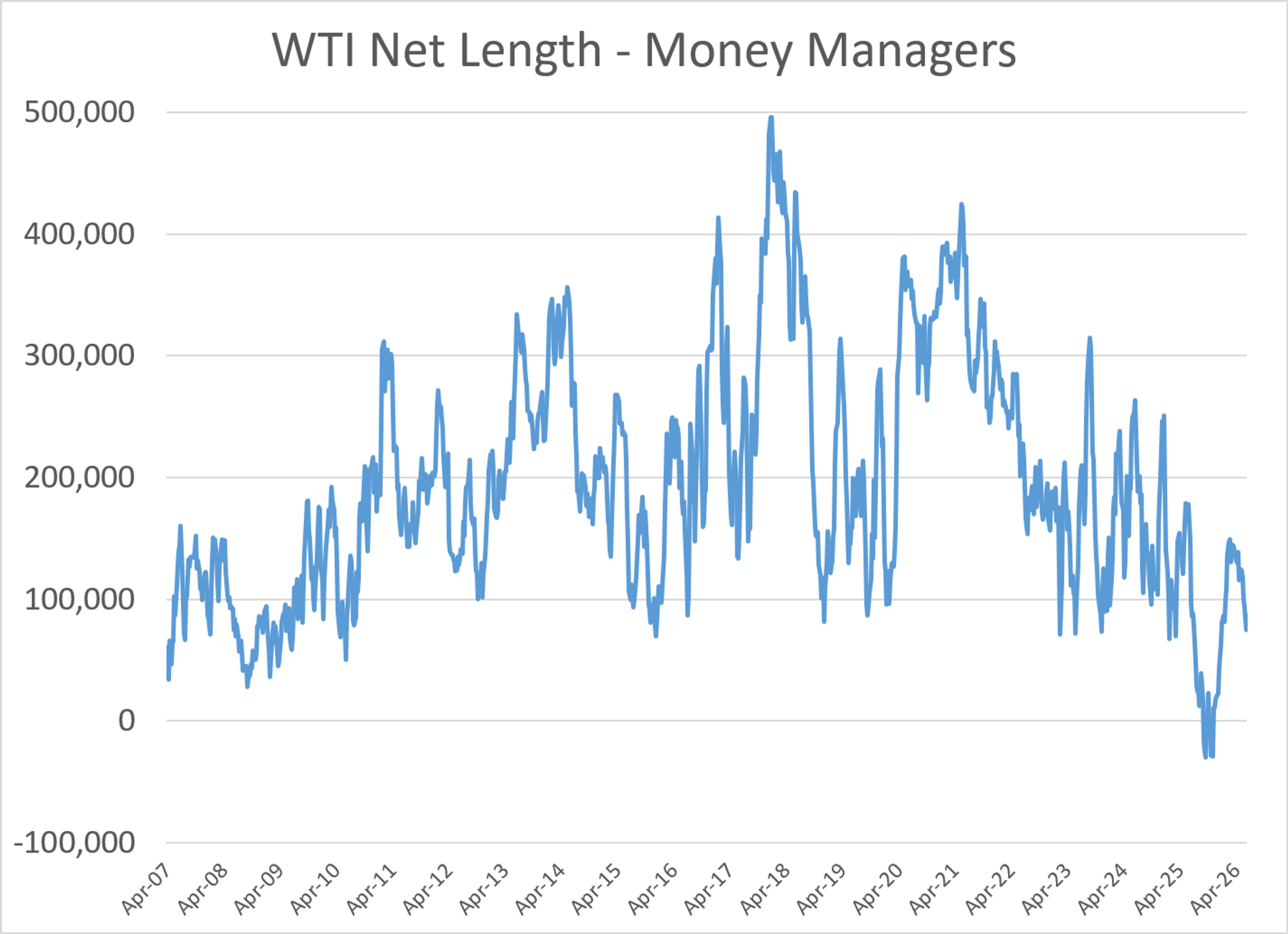
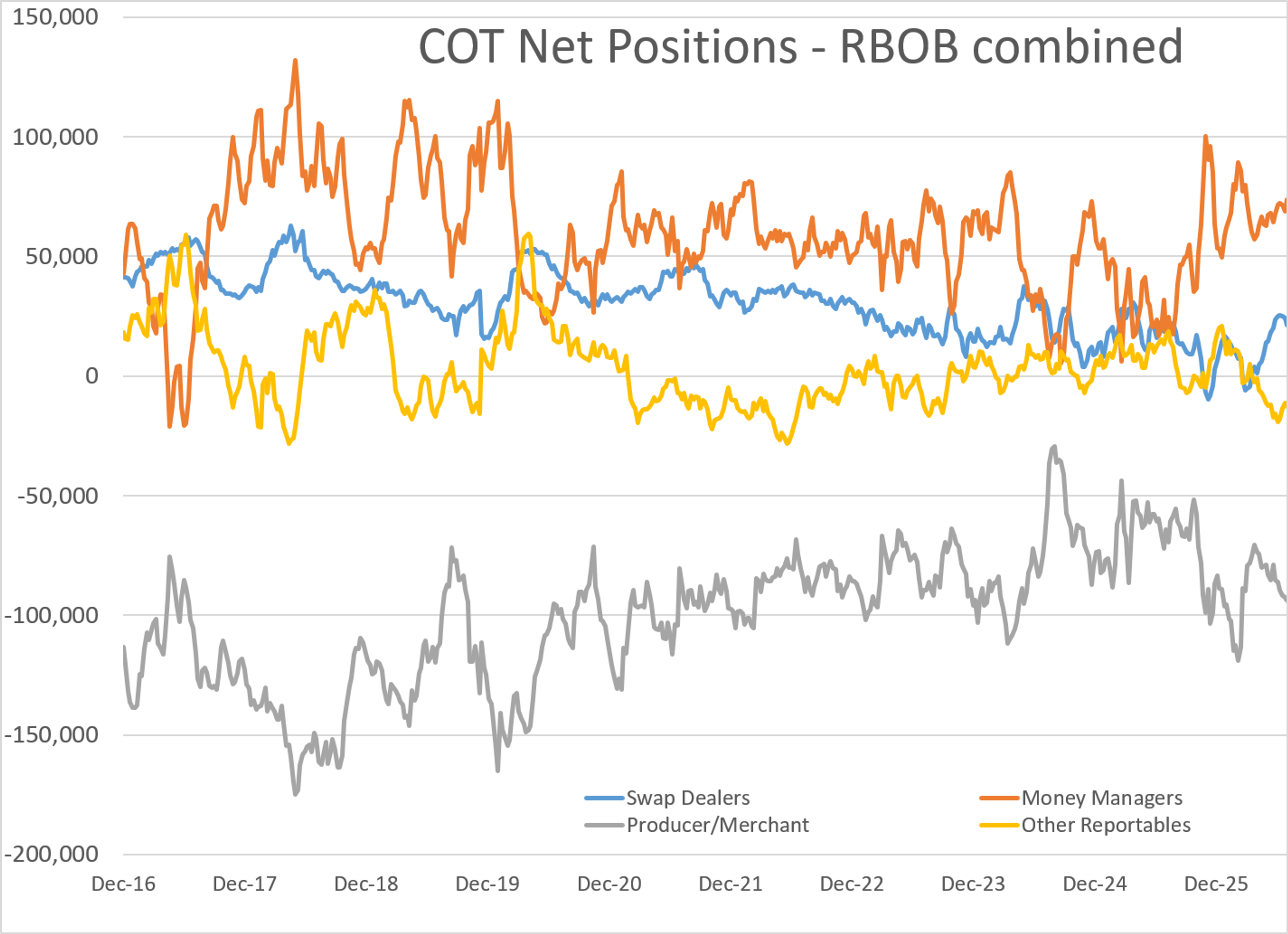
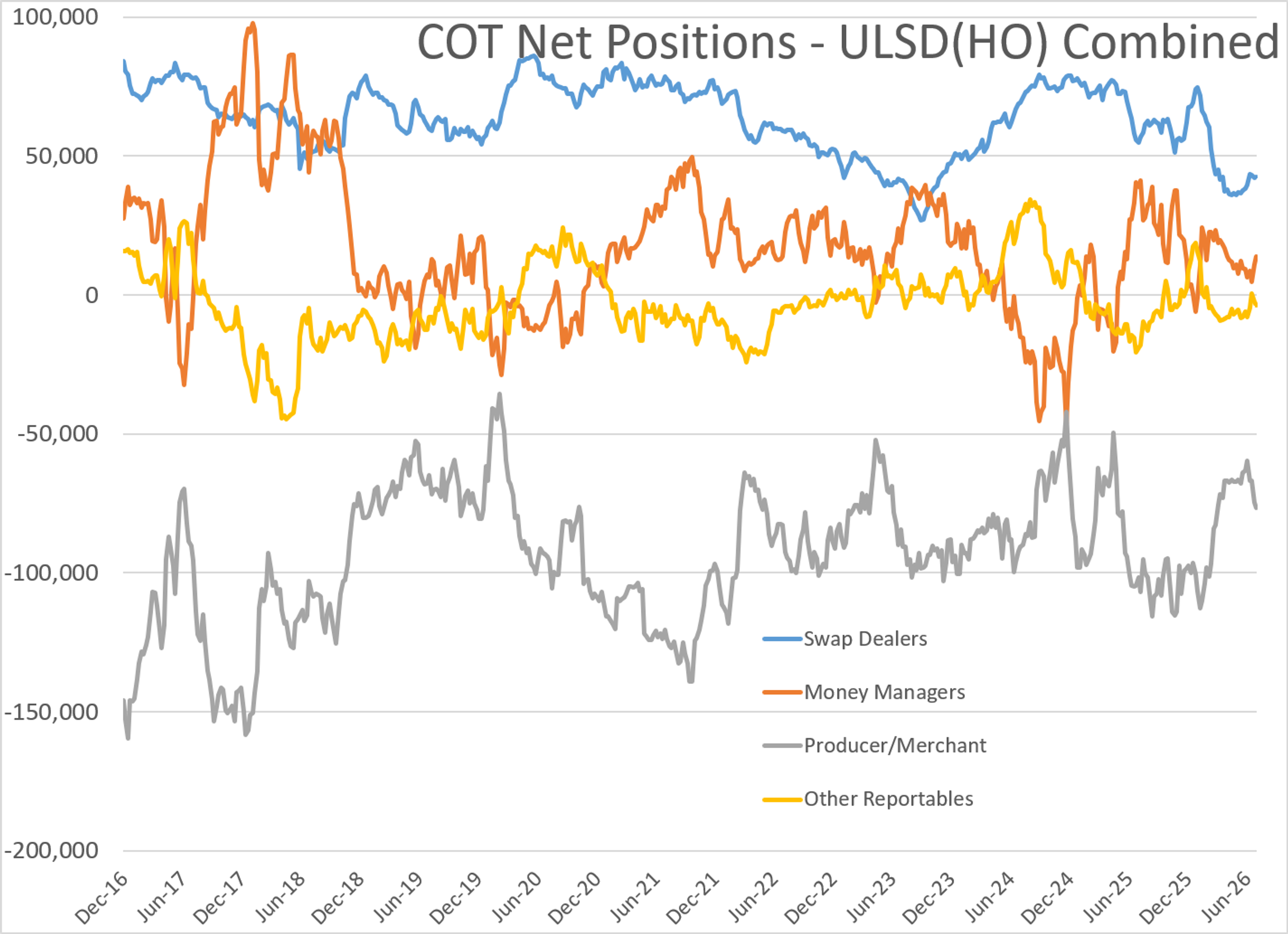
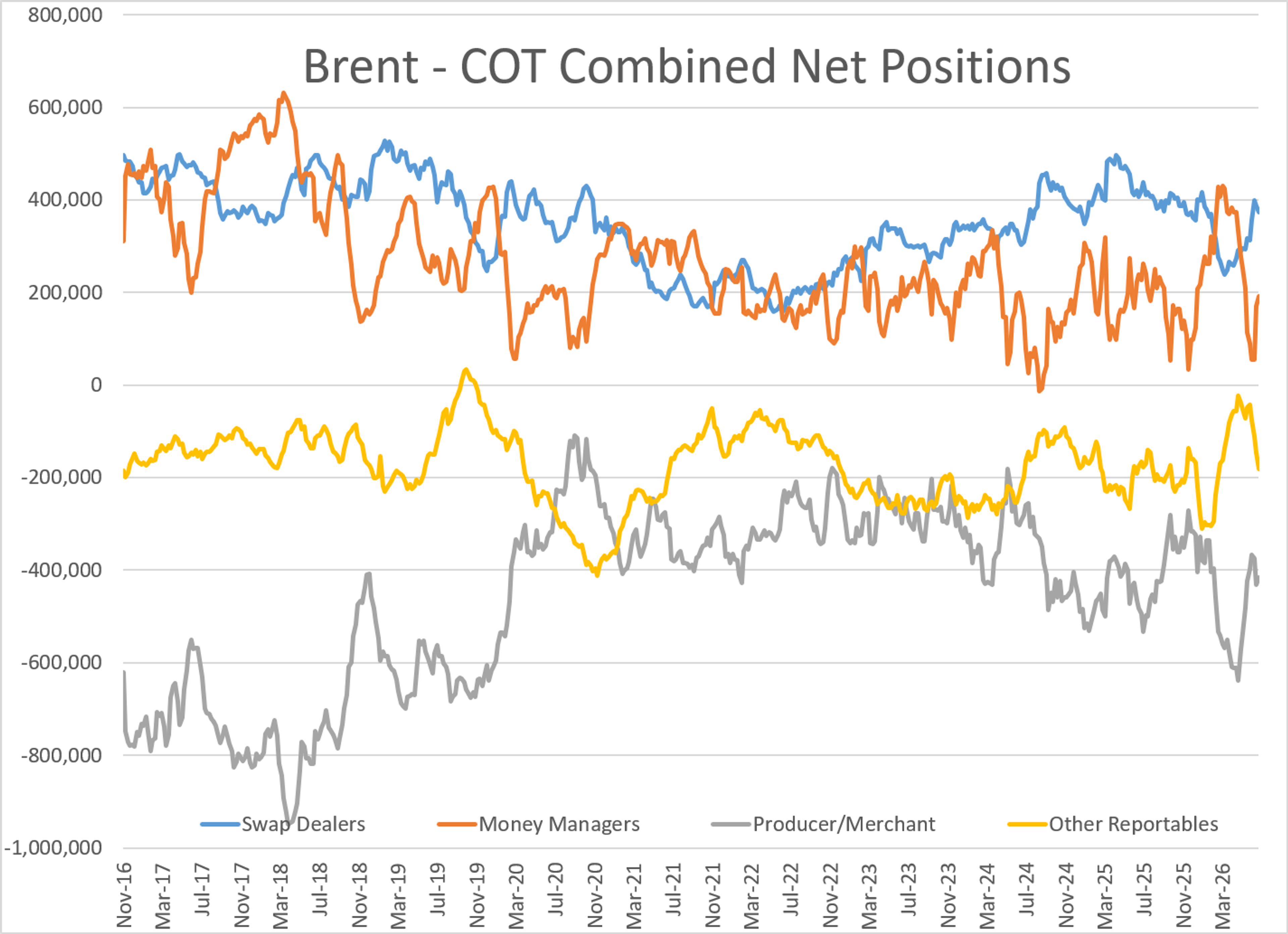
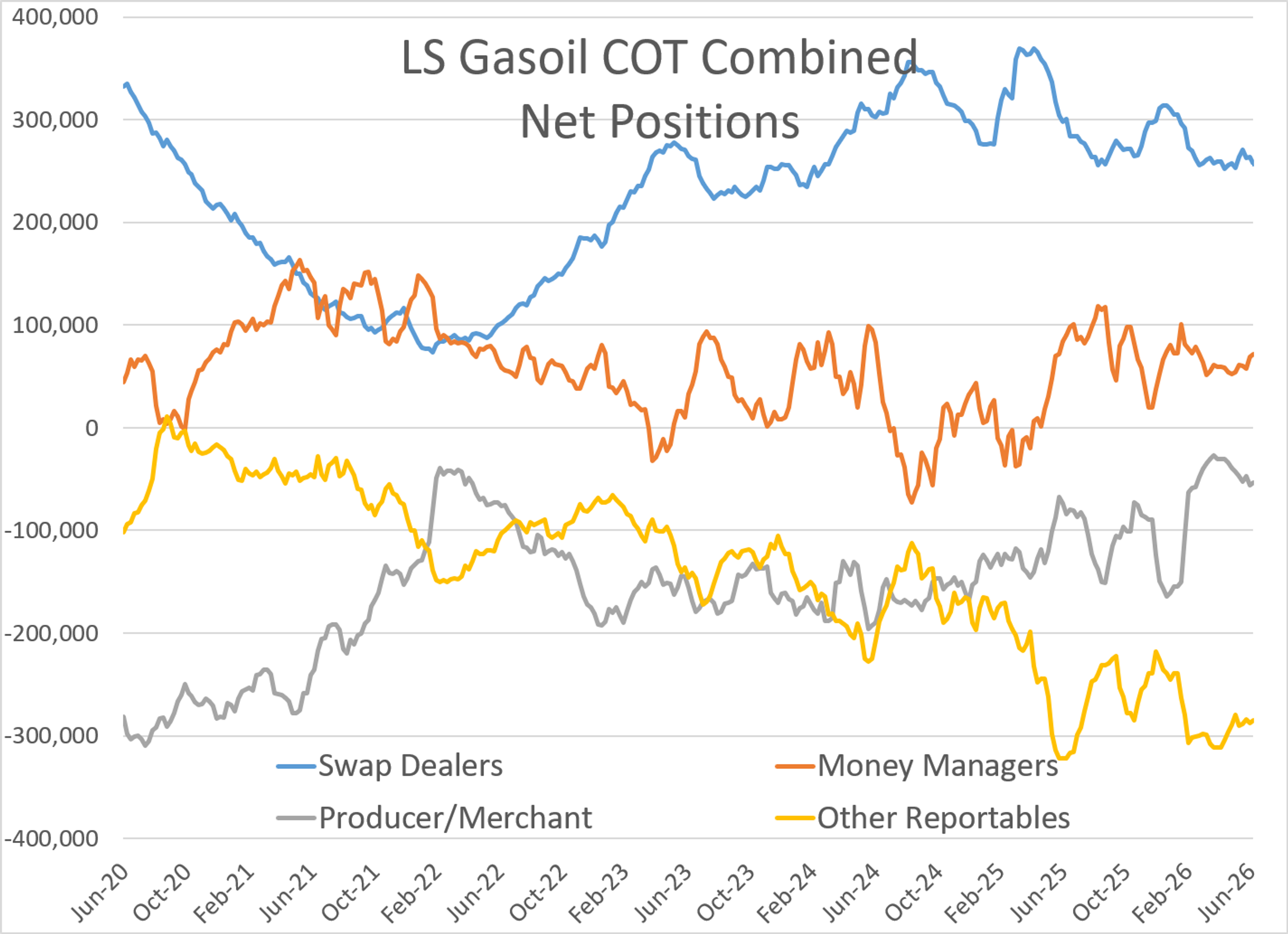
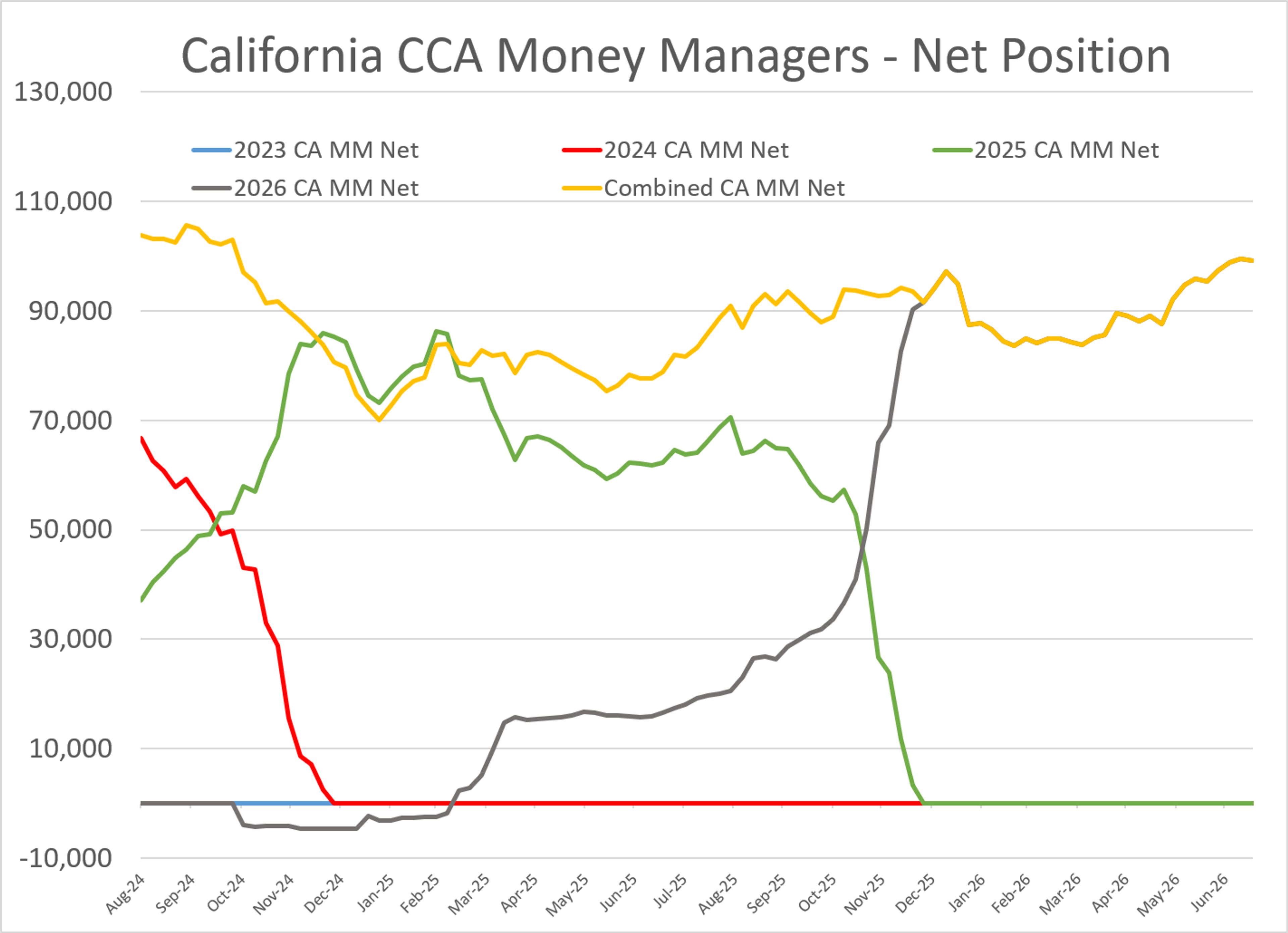
Jump back on the bandwagon. Money managers were adding to their net length across the board in Energy contracts, as the resumption in fighting two weeks ago had large speculators rethinking the bets they’d made on lower prices while the strait was temporarily (and partially) re-opened. Short covering in Brent crude oil positions that had seen speculative bets on lower prices race back towards record high levels during the cease-fire is a major theme, but some new short positions in WTI suggest not everyone was buying the return of $90+ crude.
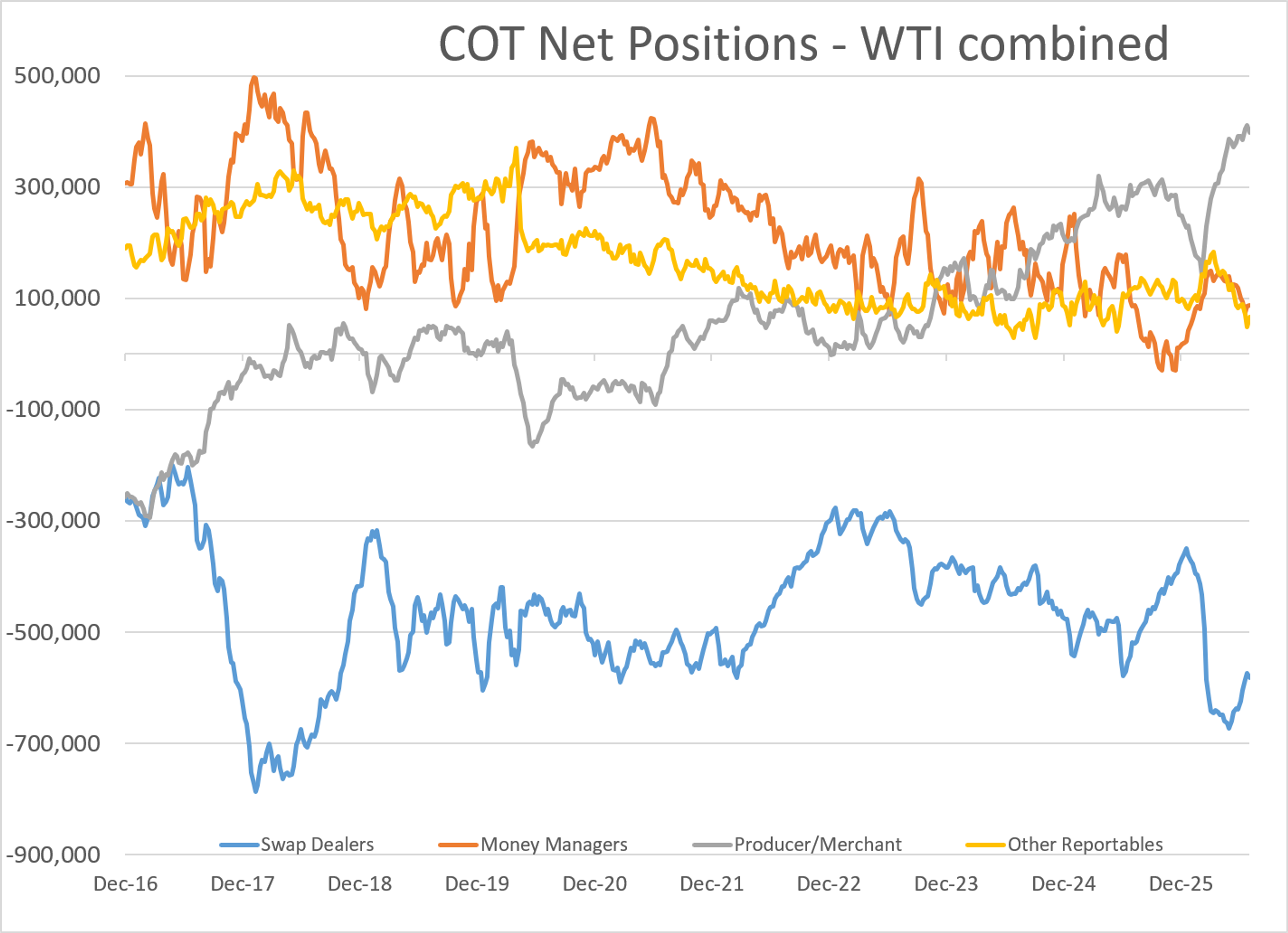
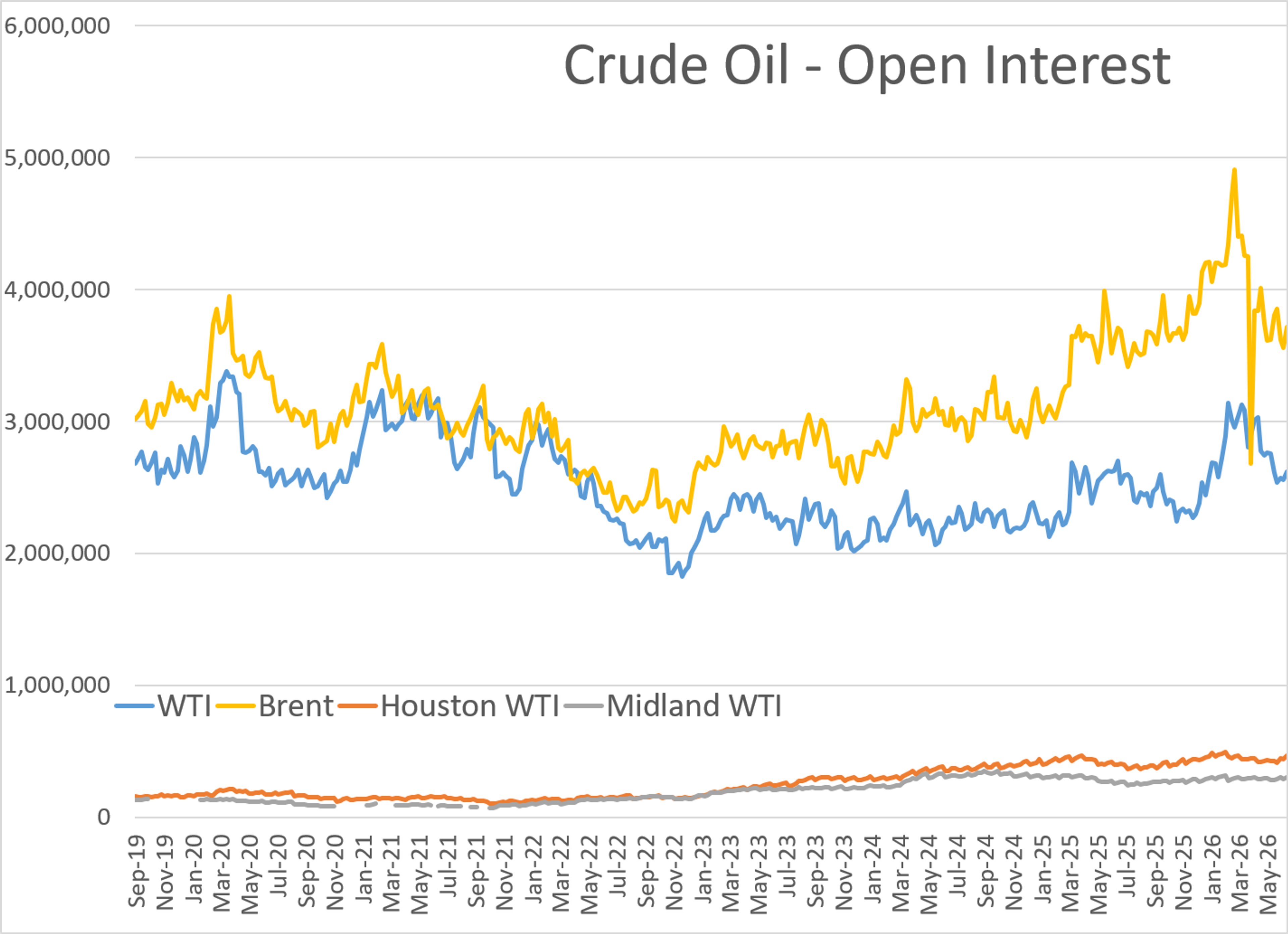
While money manager positions typically get most of the attention in the COT report weekly (since they provide the majority of the “hot” money that can create short term swings as it flows in or out of the market, vs industry positions that are relatively stable) it is worth highlighting that WTI has a record level of long positions held by the producer/merchant trade category. The reasoning behind this phenomenon is a bit murky, but doesn’t appear to be driven so much by refiners selling crack spreads (buying crude, selling products) to lock in the current lofty levels. The timing of the growth in PM length coincides with increased length in “swap dealer” short positions, suggesting this phenomenon is driven by physical players locking in the WTI/Brent spread as they take advantage of the SPR releases and tight markets elsewhere in the world to profit from shipping WTI-linked barrels overseas, which shows up in the record pace of US crude exports this year.
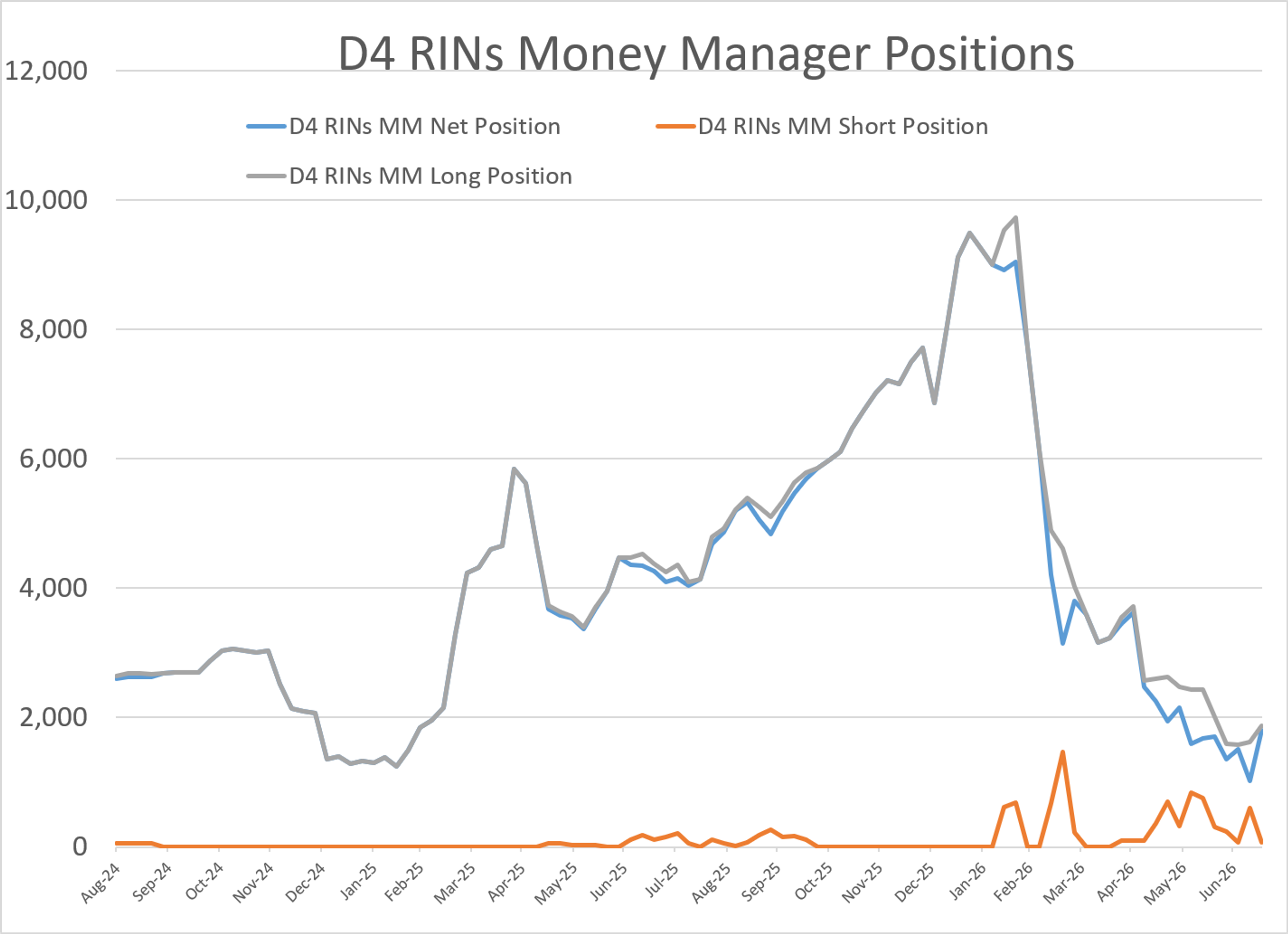
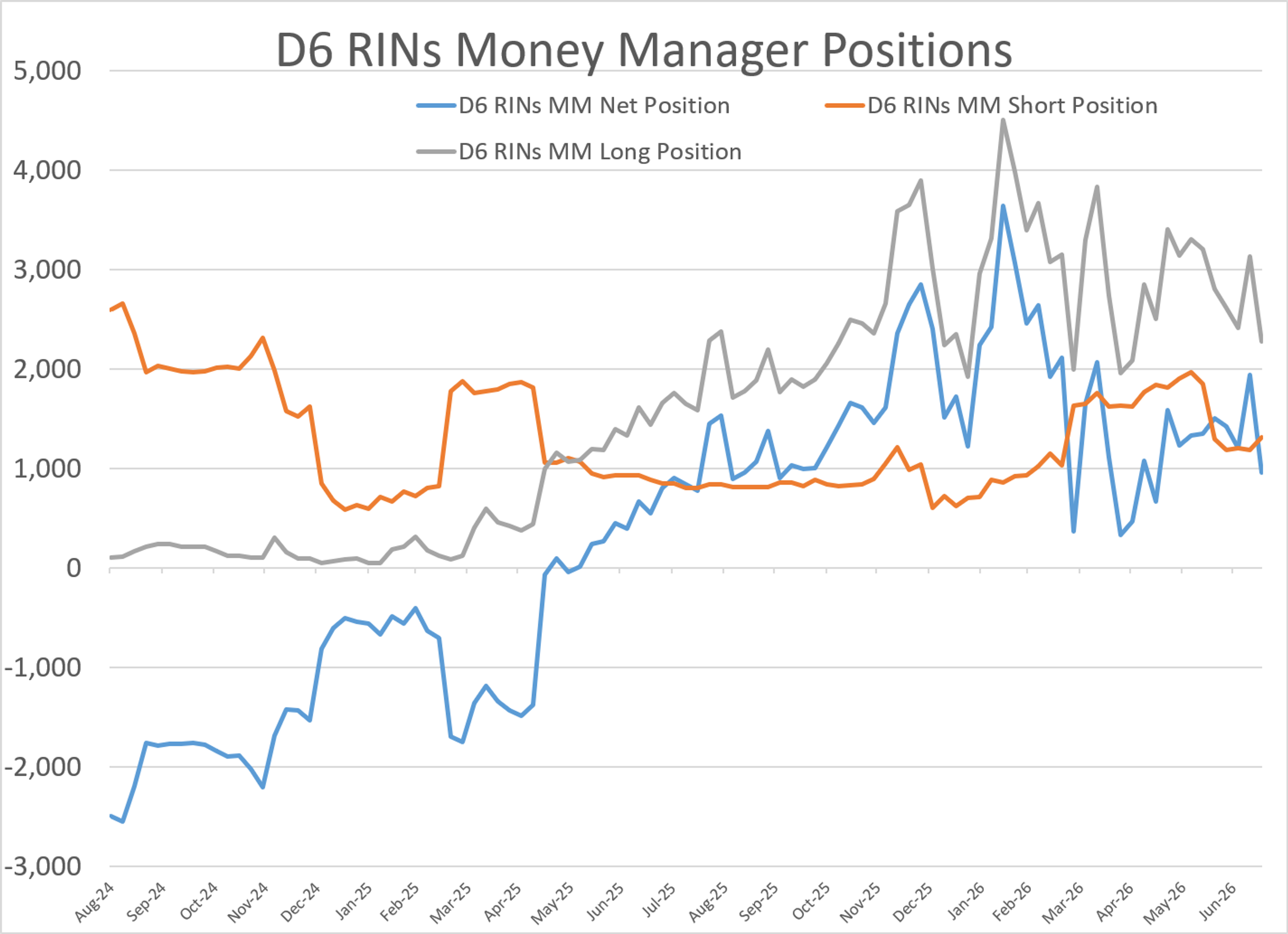
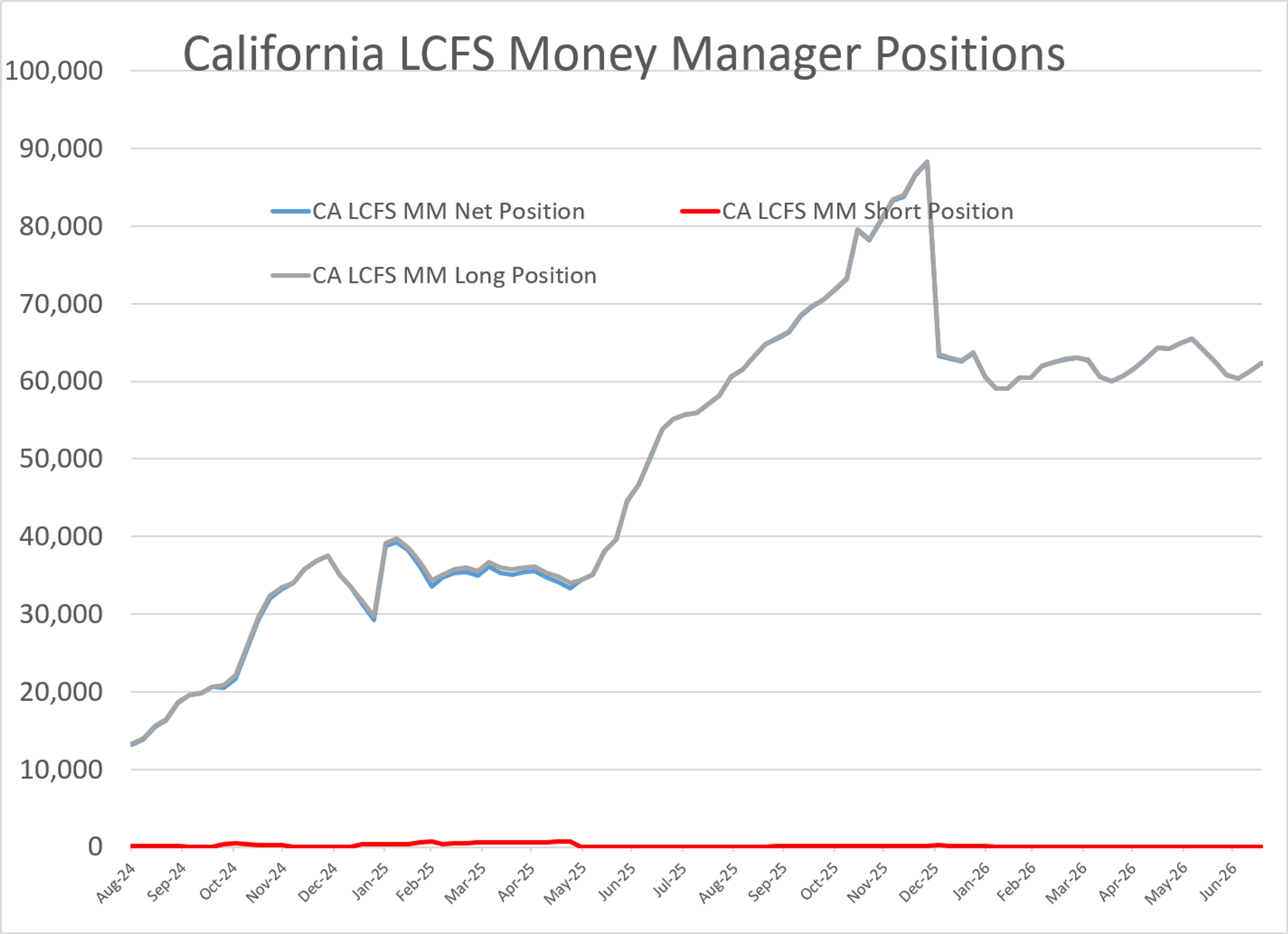
Despite the big swings in RIN values last week, money managers did not seem to be jumping back on the credit bandwagon with only minimal moves in both D6 and D4 RIN holdings.
Argus reported that the CFTC delayed the CME’s intended implementation of a 24/7 WTI crude futures contract by another 30 days, giving the industry more time to comment on the idea.
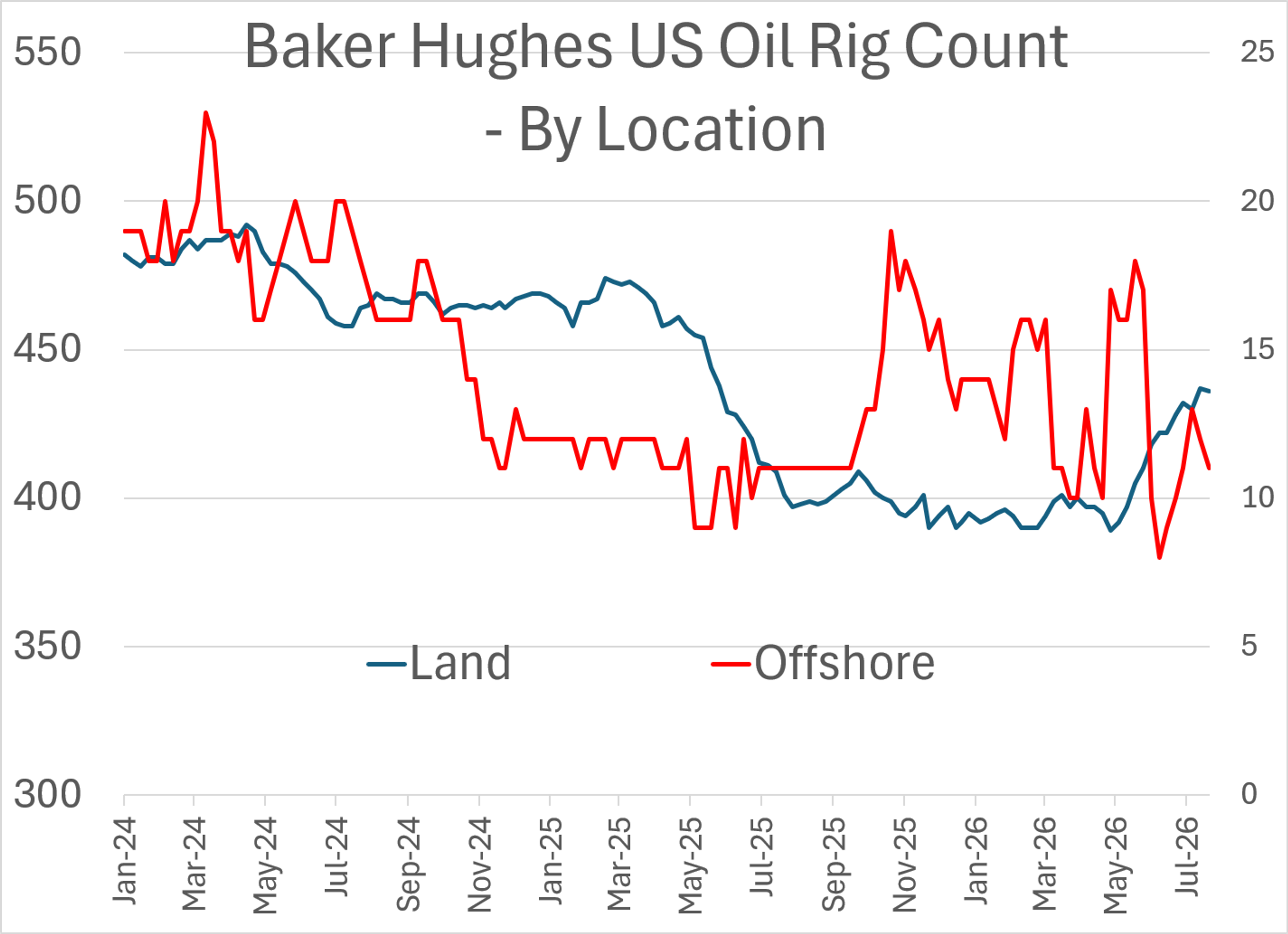
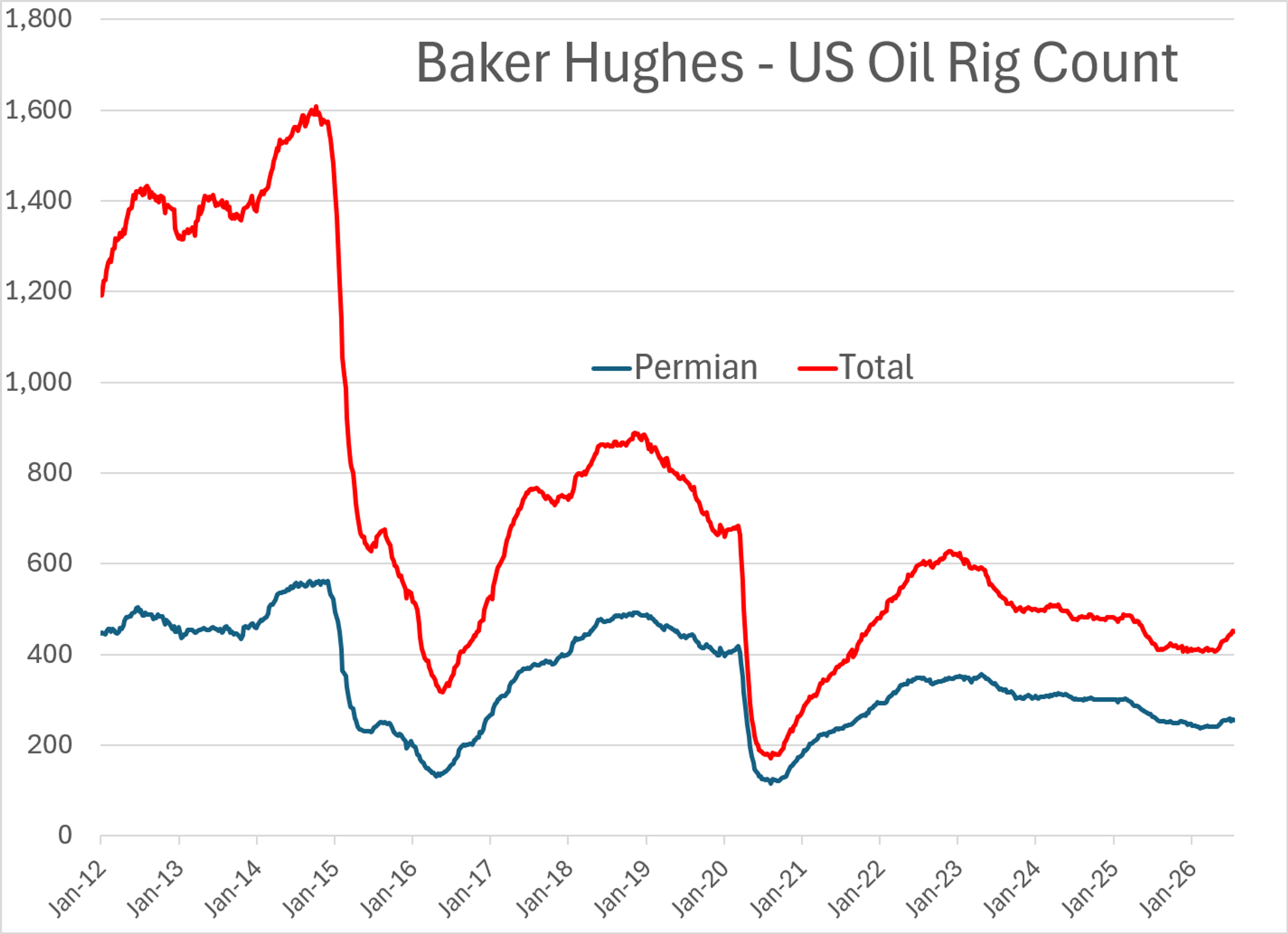
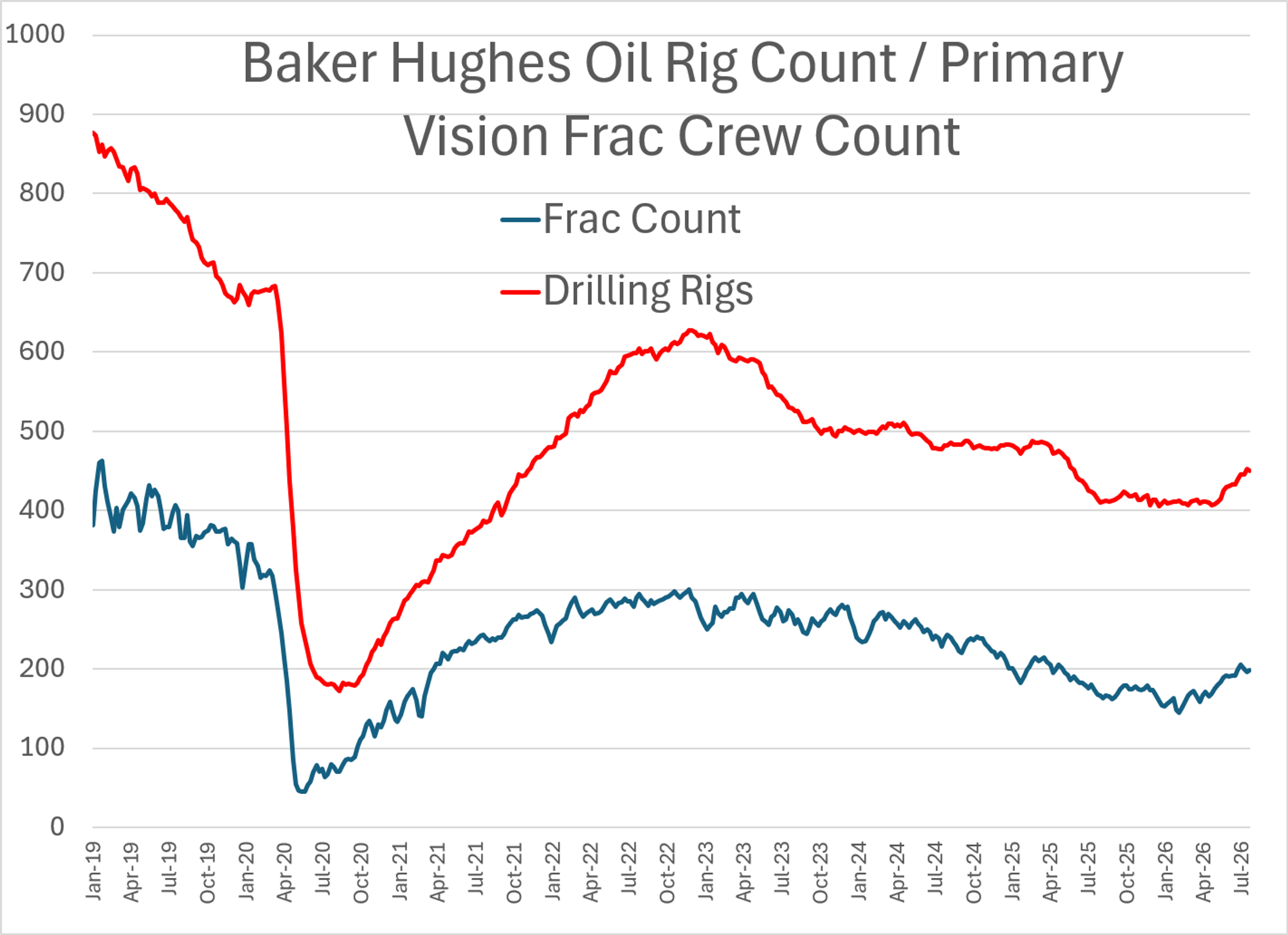
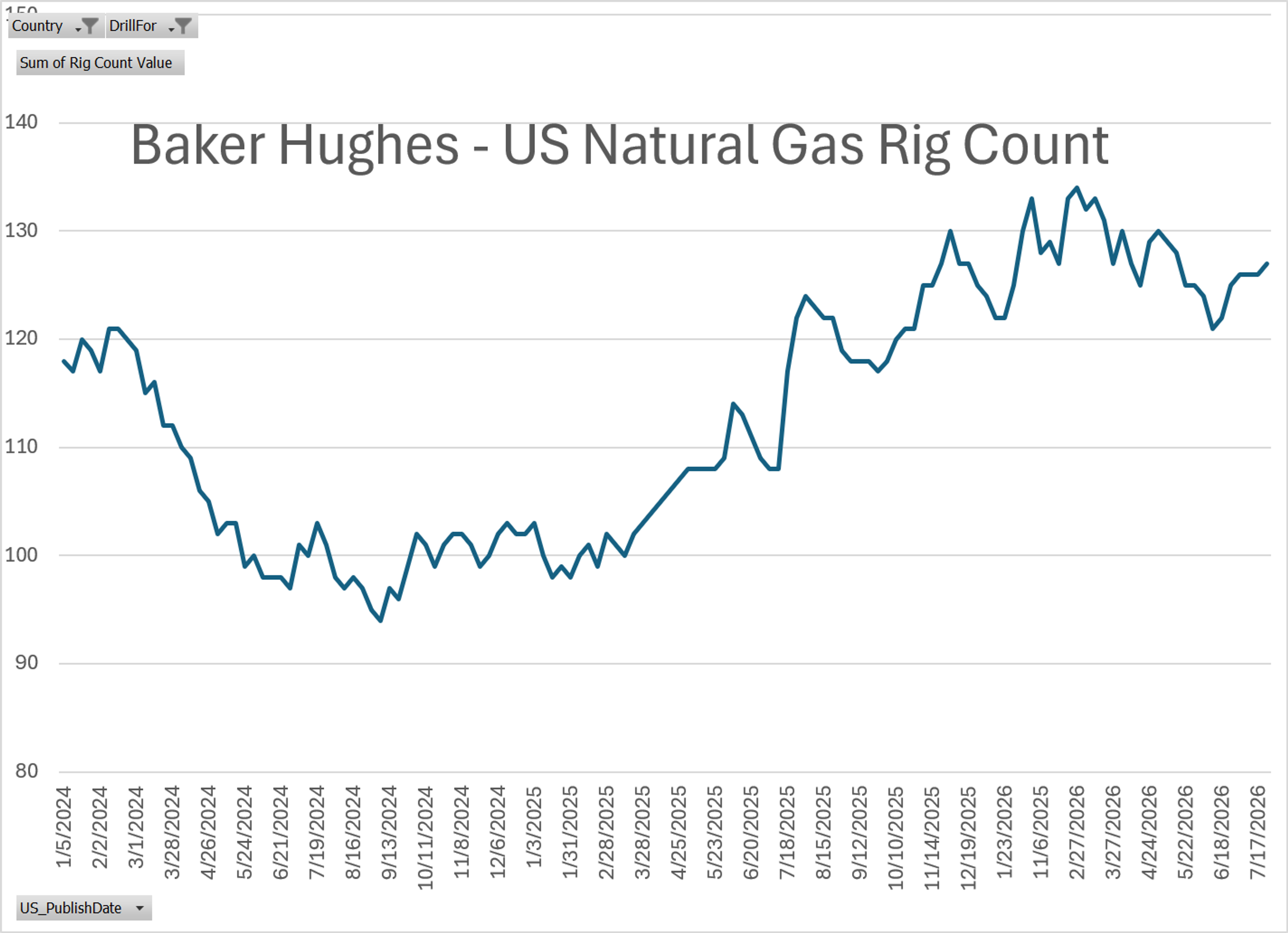
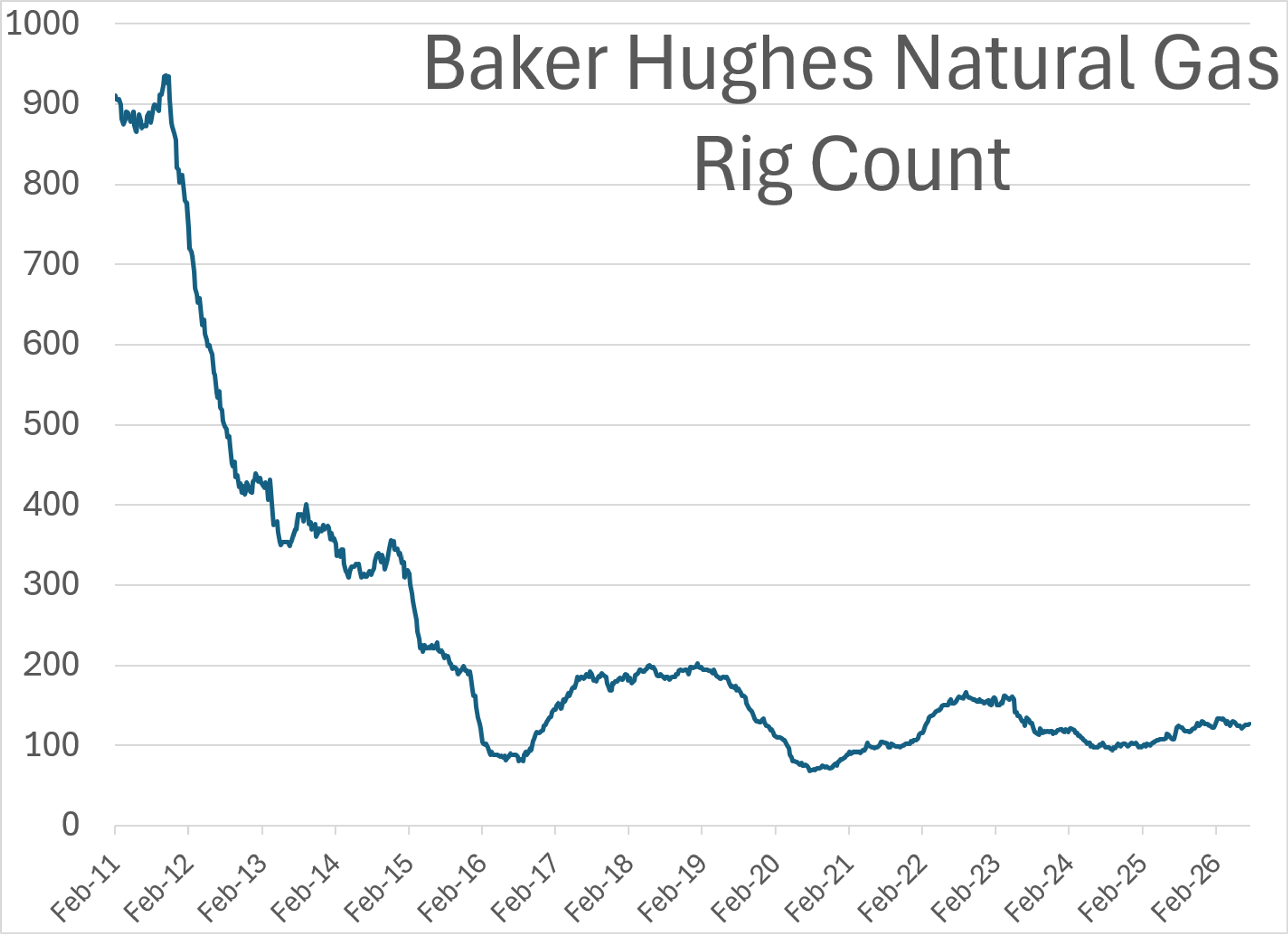
Baker Hughes reported a decrease of 2 oil rigs active in the U.S. last week, while the natural gas rig count increased by 1. The Primary Vision count of active fracking crews in the U.S. increased by 2 on the week.
Latest Posts
Crude Strength, Refinery Disruptions, And Export Bottlenecks Support Fuel Prices
Global Supply Risks And Strong Refining Margins Drive Energy Market Rally
Week 42 - US DOE Inventory Recap
Diesel Prices Swing Wildly Amid Tanker Attacks And Supply Concerns
Diesel's Breakout Signals Renewed Pressure Across Energy Markets
Oil Opens Soft Despite Escalating Supply Threats
Social Media
News & Views
View All
Crude Strength, Refinery Disruptions, And Export Bottlenecks Support Fuel Prices
Global Supply Risks And Strong Refining Margins Drive Energy Market Rally