Diesel Supply Tightens, Refinery Outages Continue And Futures Run Toward $5

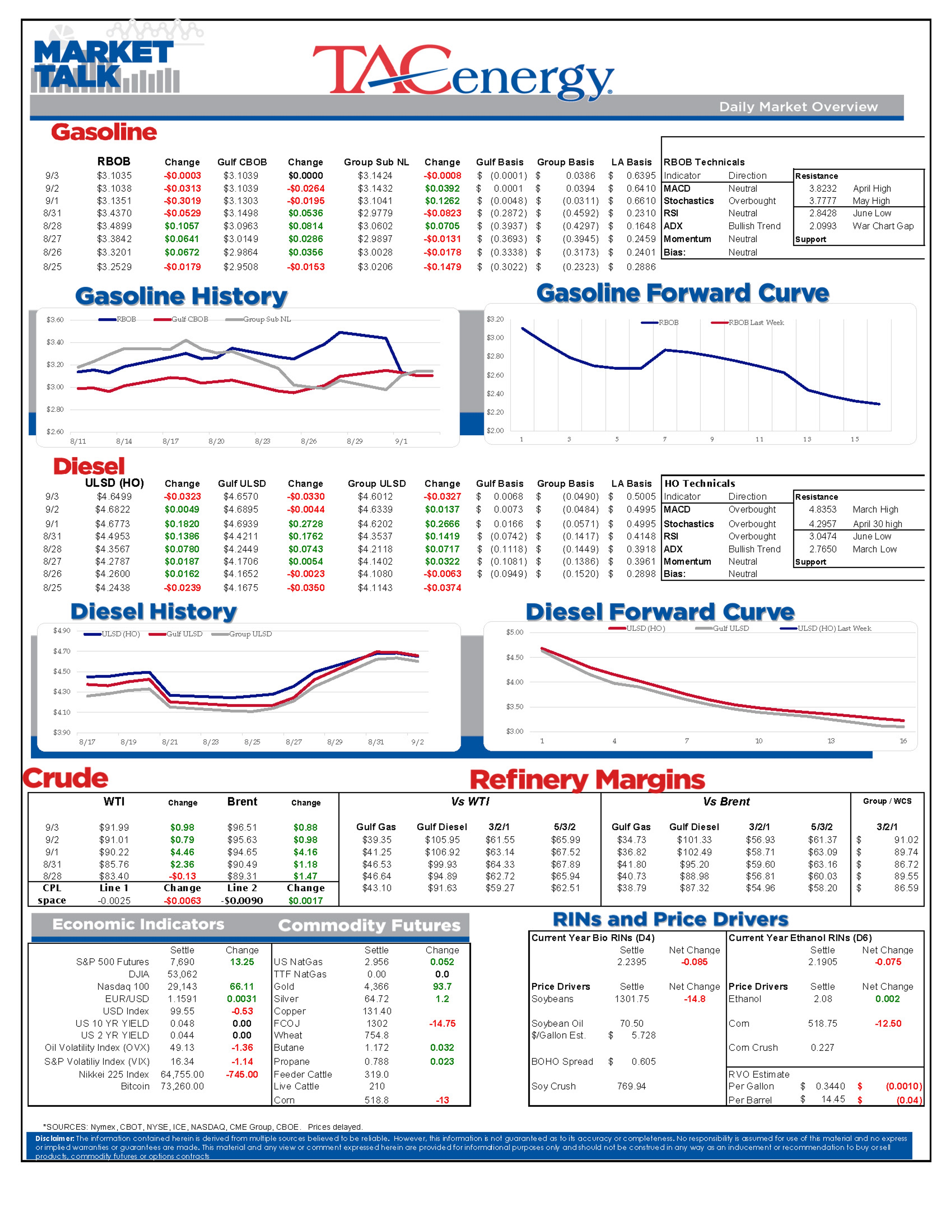
It’s a mixed start for energy markets Thursday, with crude oil futures holding modest gains, while ULSD futures are ticking modestly lower to start the day and RBOB gasoline futures are hovering near breakeven.
Iran has apparently launched new missiles and attacks at Kuwait this morning, ending a 1-day lull in the most recent violent flare-up in the region. Shipping through the Strait of Hormuz continues at a very low rate for ships using transponders, while it remains unclear how many ships still use the shadow routes guided by the US military, and whether any of those tankers have actually been hit by mines. Meanwhile, it’s been a relatively quiet start to September for refinery attacks, with nothing new yet reported in Russia or the Middle East. The fact that it’s news to go 2.5 whole days without a refinery being attacked tells you what an unusual time it is for fuel suppliers.
While ULSD futures are catching their breath after reaching their 3rd highest settlement ever earlier this week, there is little standing in their way on the charts to prevent a run towards the $5 mark. Perhaps the only real notable resistance on the charts comes from the intraday high of $4.8353 back on March 23 before prices dropped more than 80 cents later that day. Given the ongoing physical tightness and rash of refinery issues globally, it would not be surprising at all to see diesel futures make an attempt at the $5 mark in September.
Motiva had 6 different units knocked offline at its 630mb/day Pt Arthur refinery as TS Edouard passed Tuesday, according to a filing yesterday with the TCEQ. None of the plant’s crude distillation units were highlighted in that report, but they will likely be forced to slow until those downstream units are brought back online.
Valero meanwhile confirmed 7 different units at its 380mb/day Pt Arthur refinery were shut down due to power outages related to the storm, with 1 crude unit, 2 cokers and 3 hydrotreating & cracking units listed in the filing. Energy News today reported on these shutdowns prior to the TCEQ report being issued, and subsequently has said Valero is already preparing those units for restart, which suggests they may have avoided long-term damage from the sudden shutdowns. So far, there have been no reports that the adjacent Diamond Green Renewable Diesel refinery (the largest RD facility in the country) was directly impacted by the storm.
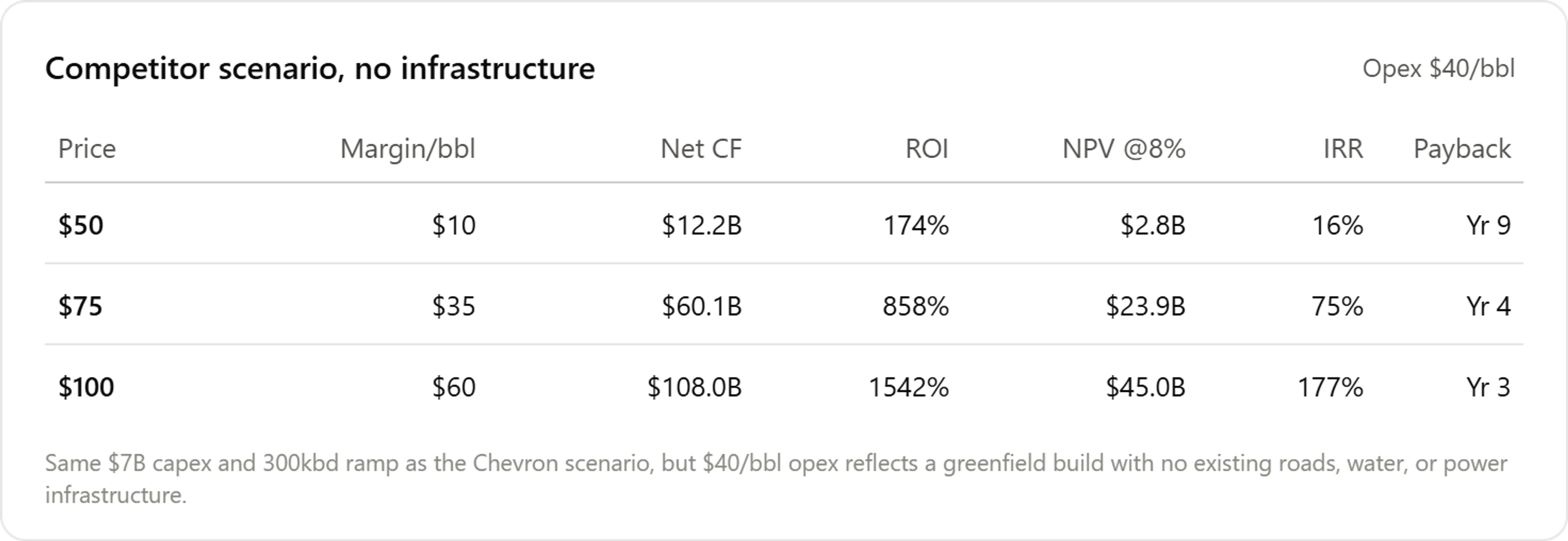
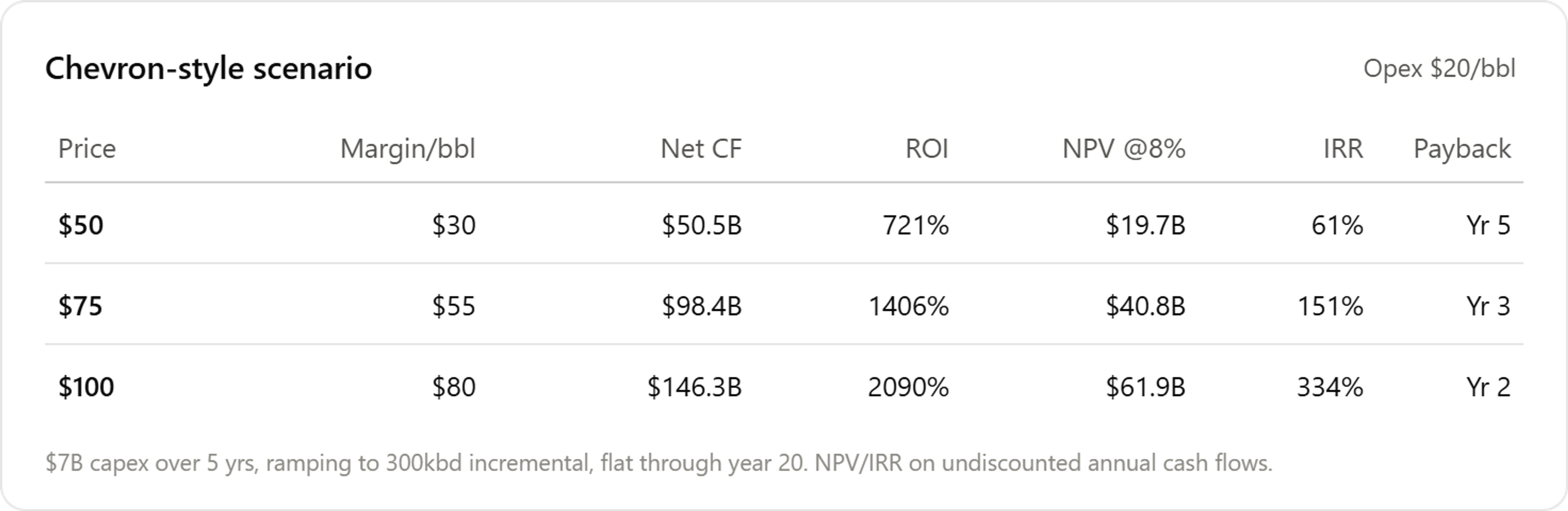
We did a quick analysis of the estimated returns on Chevron’s announced investment in Venezuela that will add approximately 300mb/day of production in the next 5 years. There are many assumptions in this analysis, not least of which is that the Venezuelan government doesn’t nationalize the industry again.
The key detail with Chevron vs the others racing to try and get more Venezuelan crude produced is the Operating Expenses for Chevron were estimated by its CEO at just $20/barrel because they already have most of the infrastructure in place to get at that oil. For others that will need to build their own infrastructure in the coming years, the returns will look much different. See tables below for the comparisons.
Citgo has announced it’s moving forward with a $310 million investment at its 480mb/day Lake Charles, LA refinery to expand the facility’s capabilities to process light oil into gasoline components starting in 2029. The investment decision comes at a time when competitors like Exxon are moving away from gasoline production in favor of base stocks for petrochemical use, projecting the long term outlook for mogas to be on the decline. Meanwhile, uncertainties surrounding the pending sale of Citgo to Amber Energy remain, with the US government’s ever-changing relationship with Venezuela continuing to confuse the situation.
A Reuters article this morning highlights the ongoing lockout of union employees at BP’s 430mb/day Whiting IN refinery, which has been operating with management and contractors running the facility since March. The implication of the article, and the apparent reality at the negotiating table, is that the record profits being realized by oil producers and refiners are giving them more leverage, not less, and anyone who thinks these companies may soften their stance because they’re making so much money likely hasn’t negotiated with them before. Given the company’s checkered past in terms of safety, the key detail of this lockout long-term seems to be whether or not the plant can prove that innovation has made union labor obsolete in terms of being able to safely operate a plant of this size and complexity.
Calumet offered the first glimpse at the financial impact of the Small Refinery Waivers for 2025 announced this week. The company reported its liability for RINs will drop by around $170 million based on the waivers. RIN prices had dropped more than 50 cents the week before the announcement as rumors swirled that the EPA was going to grant many more waivers than normal, but then rallied back by more than 50 cents after traders saw the actual news that those waivers were going to be reallocated over the following 2 years. RIN values have pulled back in the past two days, dropping from around $2.25 late Monday to $2.11 this morning for D6 RINs.
Human analysis of the DOE’s weekly status report below. Charts and AI analysis are attached.
Crude stocks drew down, with exports outpacing imports, refinery runs picking up, and a large negative adjustment to the balance. Commercial stocks are sitting above average despite the decline, but the SPR balance continues to dwindle and hold total US crude inventories at 40+year lows.
Refinery runs picked up in PADDs 2 & 3, offsetting declines elsewhere for an overall increase to an 8-year seasonal high. PADD 2 continues to increase throughput, setting another new all-time high and operating at 103.5%. PADD 3 recovered from last week’s decline to stay at seasonal highs and all PADDs except 5 are running at above-average rates.
Diesel stocks increased overall with demand sliding to a fresh seasonal low. A surge in PADD 3 inventories from below the range to average levels helped offset the decline in PADD 1. PADD 1B stayed flat but at a seasonal low while sub-PADDs 1A & C both fell to all-time lows sending the total PADD 1 region down to its new all-time low at 19.3 million barrels. June renewable diesel data released showing an overall decline with each PADD falling except 4 which climbed to an all-time high of 345,000 barrels. The decline in PADD 5 combined with lower traditional diesel stocks drops total diesel back below average for the region.
Total gasoline stocks fell with imports dropping to a 33-year seasonal low while exports increased and tepid demand hanging below average for the past 7 weeks. The largest decline came out of PADD 3 to send balances back below their 5-year range. Every other region is well below average with the larger PADDs 1-3 all sitting under 5-year ranges. Total US gas stocks dropped to another fresh low for the year, about 12 million barrels below the 5-year average. Demand for gasoline has remained lackluster as the summer driving season comes to a close, with elevated prices clearly having some effect on US consumers, even though we’re far more insulated from the wars’ fallout than much of the world.
Jet stocks increased on the net of import/export flows and slower demand while production continues at seasonal highs. All PADDs except 3 increased with PADDs 2 & 5 hitting seasonal highs. PADD 4 remains the only region holding slightly below average inventories, leaving total US jet fuel stocks near the higher end of its 5-year range.
Latest Posts
Bullish Diesel Fundamentals Overshadow Weakness In Gasoline Markets
Week 41 - US DOE Inventory Recap
Energy Markets Juggle Supply Risks, Inflation Pressures, And Geopolitical Conflict
Crude Climbs For A Fifth Day While Global Fuel Supplies Remain Under Pressure
Refining Margins, Tanker Attacks, And OPEC Growth Shape Energy Outlook
Oil Rises As Political Chaos And Supply Risks Shake Markets
Social Media
News & Views
View All
Bullish Diesel Fundamentals Overshadow Weakness In Gasoline Markets
Week 41 - US DOE Inventory Recap