Energy Market Volatility Continues As Extreme Backwardation Meets Broken Logistics

Beware of Greeks bearing gifts.
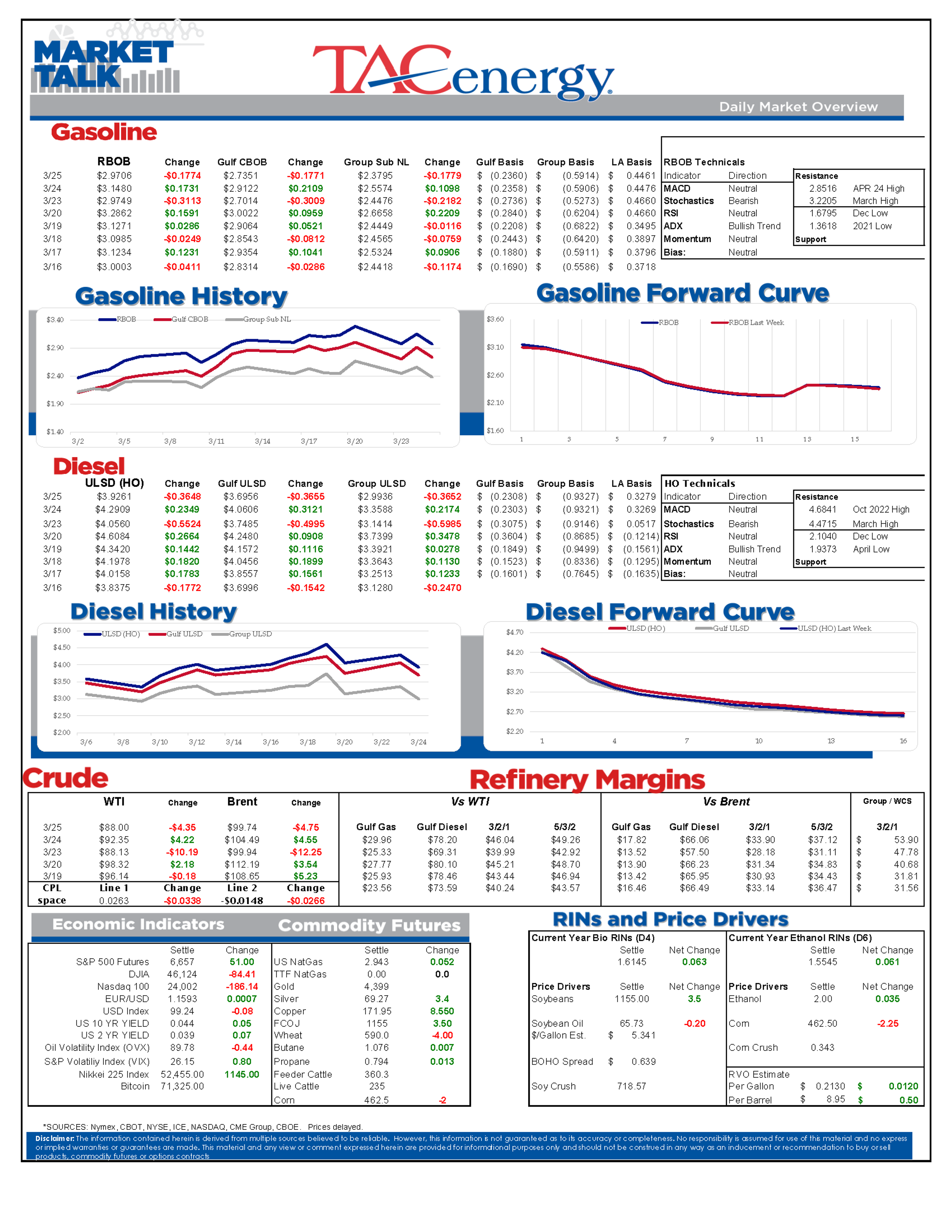
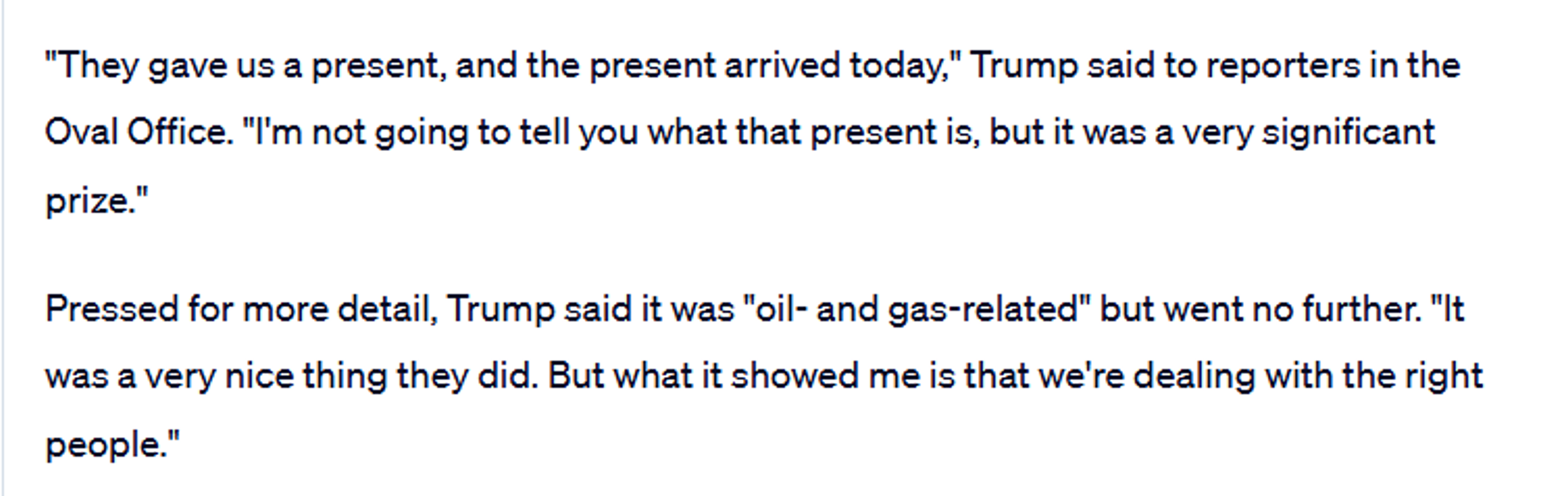
Energy markets are seeing another sharp selloff Wednesday, which started late in Tuesday’s session following a statement from the U.S. President that Iran’s “new leaders” had given him an oil and gas related present, which he referred to as a “significant prize”.
While some Iranian officials are saying the U.S. is negotiating with itself, there are more signs that Iran is loosening its grip on ships transiting the Strait of Hormuz, with the country’s UN representatives stating Tuesday that “Non Hostile” ships will be allowed to pass, provided they comply with security regulations, which may explain why several ships have been diverting closer to Iran’s coast for apparent inspection.
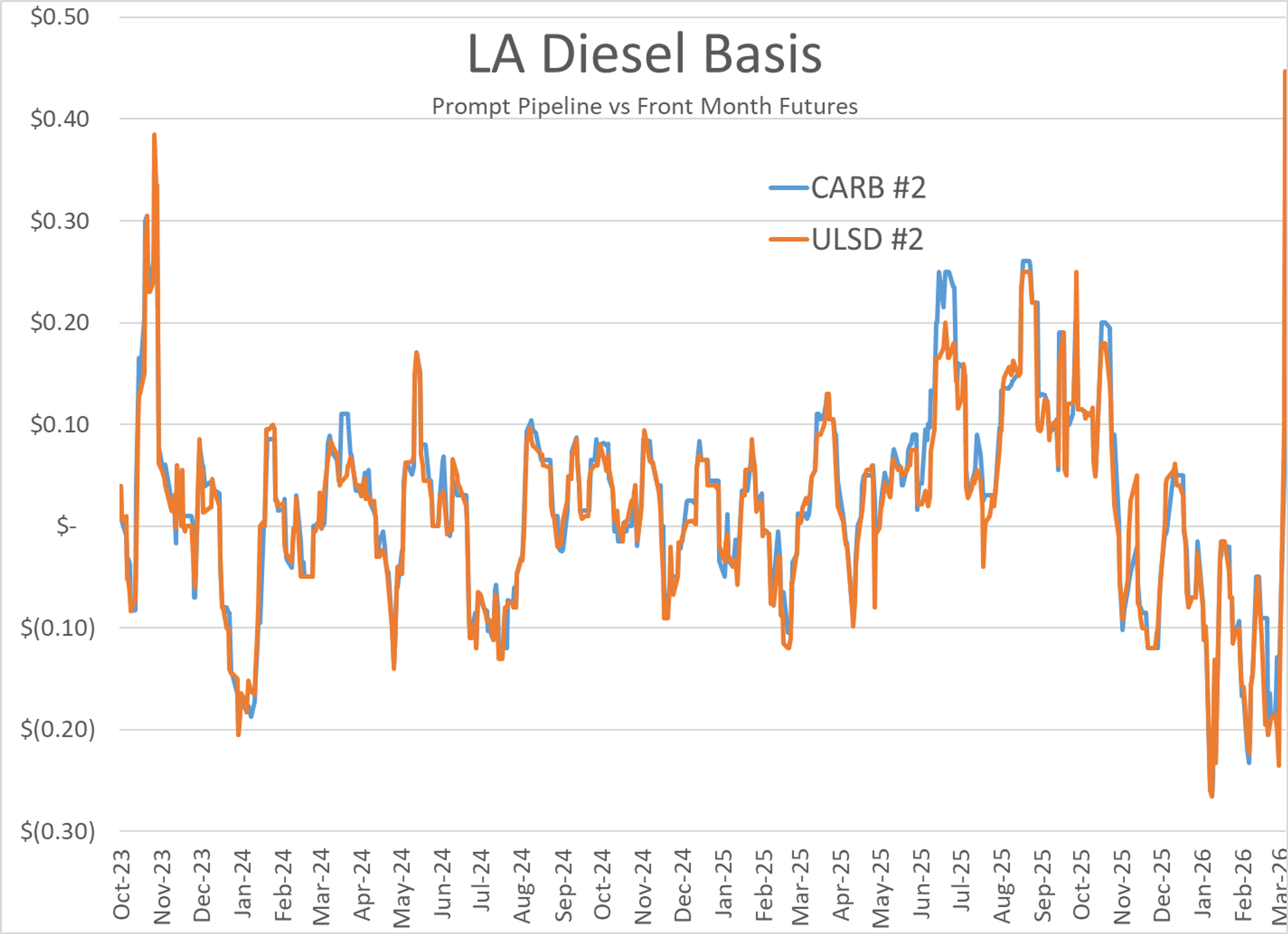
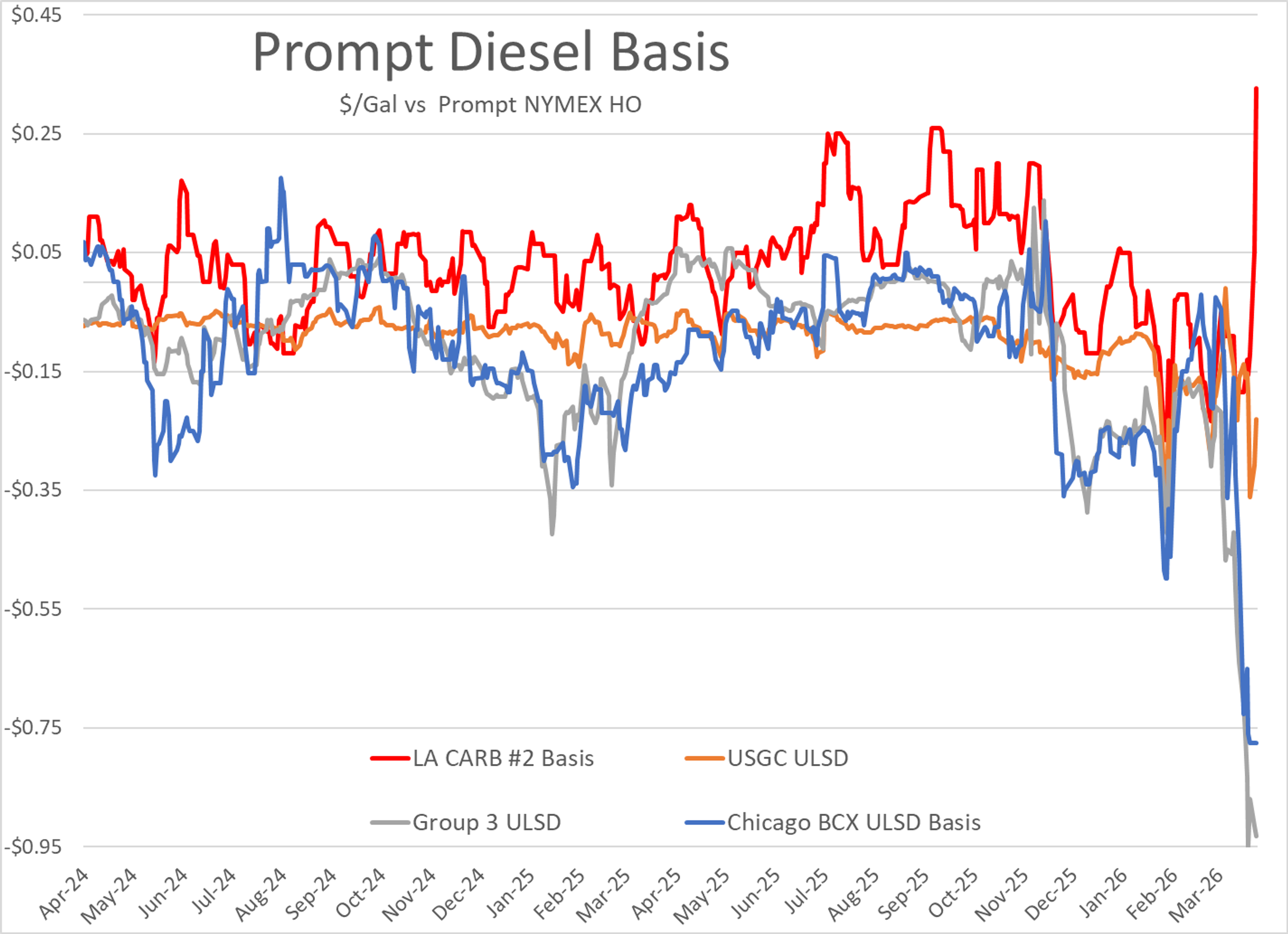
Maybe they got tired of buying jet fuel in Singapore: Somebody apparently paid 75 cents over May futures for a piece of ULSD #2 (EPA, not CARB grade) on Tuesday, marking a 65 cent increase from late last week. Normally, huge premiums for prompt barrels would suggest a major supply disruption in the region, but in this case it seems to be more a combination of the extreme backwardation in the futures curve combined with competition from bidders in the Atlantic basin desperate to replace supply as Asian refiners start hoarding due to the lack of flow through the Strait of Hormuz.
The opposite extreme continues in the Midwest where Group 3 diesel continues to trade at 90+ cent discounts to futures while Chicago ULSD was going for around 75 cent discount before it rolled to April cycles. For those who play the rail car arbitrage game, the window to ship from the Midwest to either the East or West coasts the window has rarely ever been this wide, although the rail logistics are often a hurdle to execute successfully.
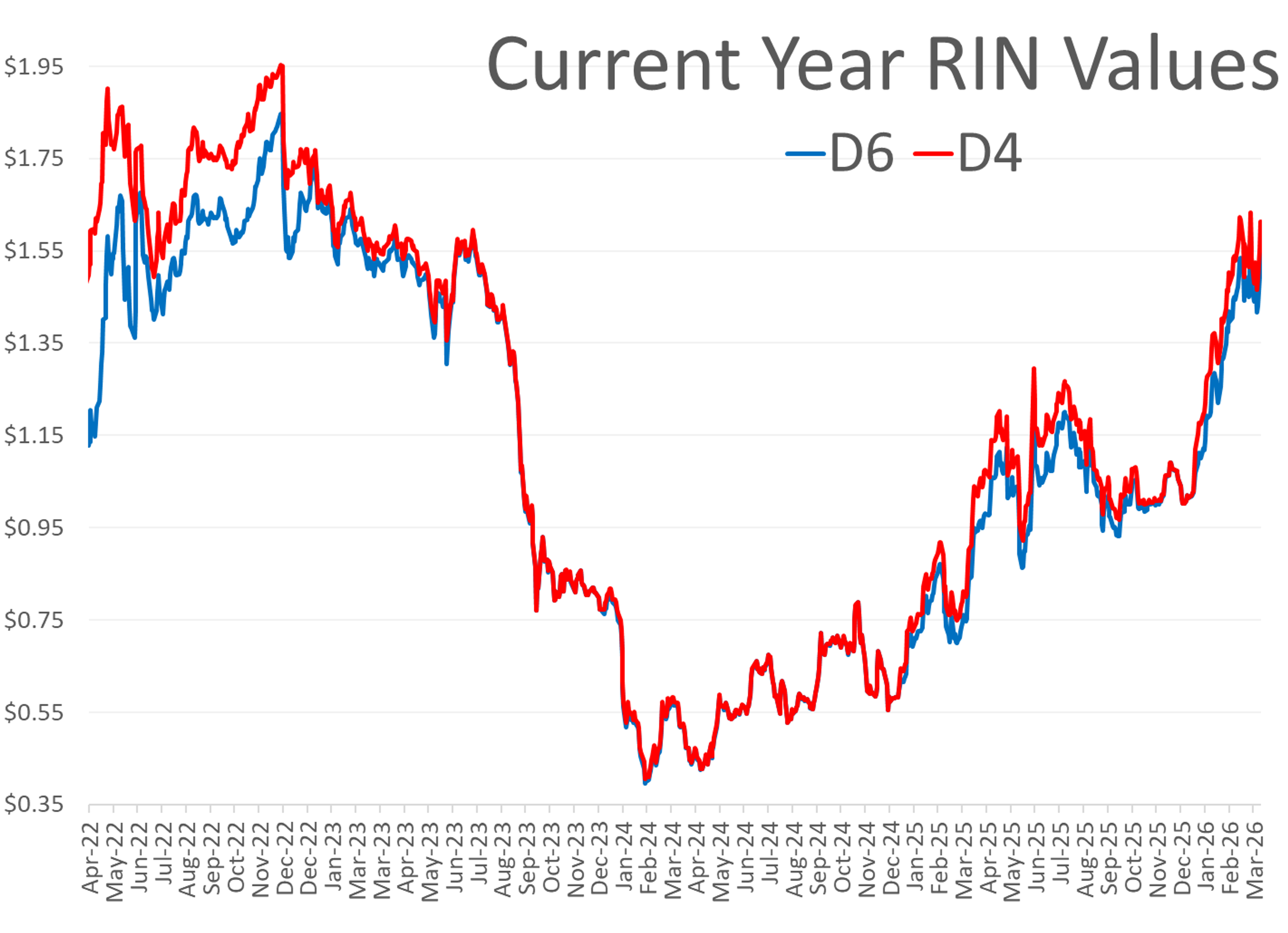
Speaking of which, domestic producers of RD and Bio have a new lease on life after a brutal couple of years that knocked several companies out of business. In addition to the spike in diesel prices, RIN values continue to add to their bottom line with another big rally Tuesday pushing values close to 3 year highs following another rumor report that the EPA would be issuing their final ruling this week, which really isn’t that news since they’ve already stated the rule will be released by the end of March. In fact the rally may have had more to do with the lackluster RIN generation data released by the EPA last week.
That same writer also sent out a note Tuesday evening citing more unnamed sources that the EPA will also be issuing RVP waivers to east the spike in gasoline prices. No details have been provided yet, but those waivers are in the EPA’s emergency playbook thanks to recommendations from the National Petroleum Council more than a decade ago.
That hurts: Early damage reports from Energy News Today and others surrounding Monday’s explosion at Valero’s largest refinery, the 430mb/day Pt Arthur facility suggest the entire refinery will have to stay offline for an extended period for repairs, and that the hydrotreating unit at the center of the blast will likely need even longer. Early guesses are that the facility may be offline completely for 3 months.
Flint Hills reported a leak in a cooling tower at its Corpus Christi refinery Wednesday, with the source of that leak still under investigation. It’s unclear from the company’s TCEQ filing whether or not production units were forced to slow as a result of that leak.

Latest Posts
Diplomacy Knocks Crude Lower, But Diesel Bulls Aren’t Done Yet
Diesel Pullback Tests Market Nerves Amid Supply Risks
Diesel Strength Offsets Gasoline Weakness As Supply Concerns Mount
Diesel Under Pressure As Traders Discount Supply Disruptions
Week 37 - US DOE Inventory Recap
Oil Pulls Back After Rally While Distillates Extend Gains
Social Media
News & Views
View All
Diplomacy Knocks Crude Lower, But Diesel Bulls Aren’t Done Yet
Diesel Pullback Tests Market Nerves Amid Supply Risks