Diesel Jumps As Tensions Rise And East Coast Demand Stays Hot

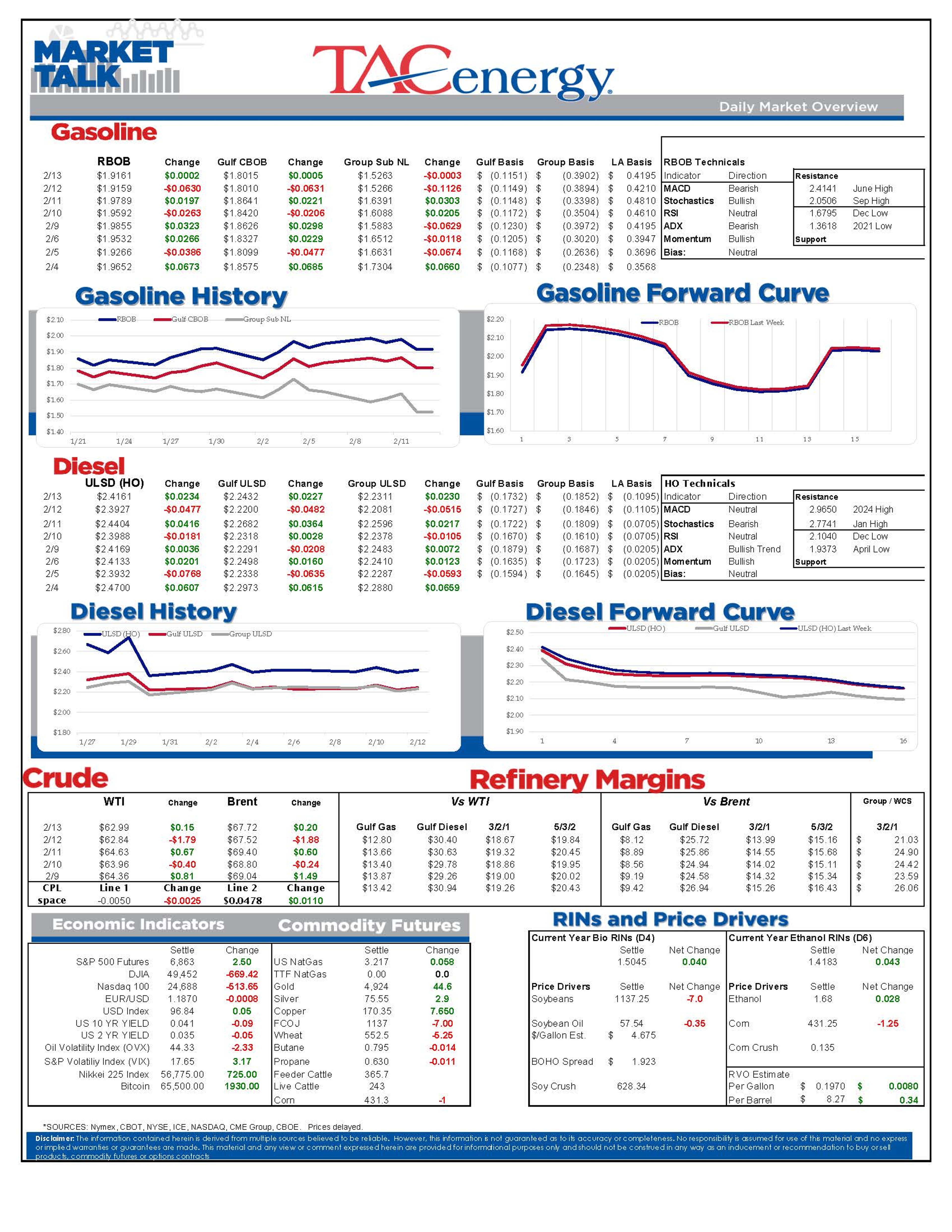
It’s a mixed start again for refined product futures this morning with prompt month HO leading most of the complex higher, trading 2 cents above yesterday’s settlement. RBOB futures are drifting lower, trading just ~20 points lower to start the day.
While the easing of Iran tensions are being cited for the weekly drop WTI is poised for, news that the US is sending its largest (or second largest?) warship to Iran broke just a few hours ago. Iran is the sixth largest oil producers in the world, but so far none of its energy infrastructure has been targeted kinetically in the US’s campaign for a regime change, opting instead to apply economic pressure on Tehran via sanctions.
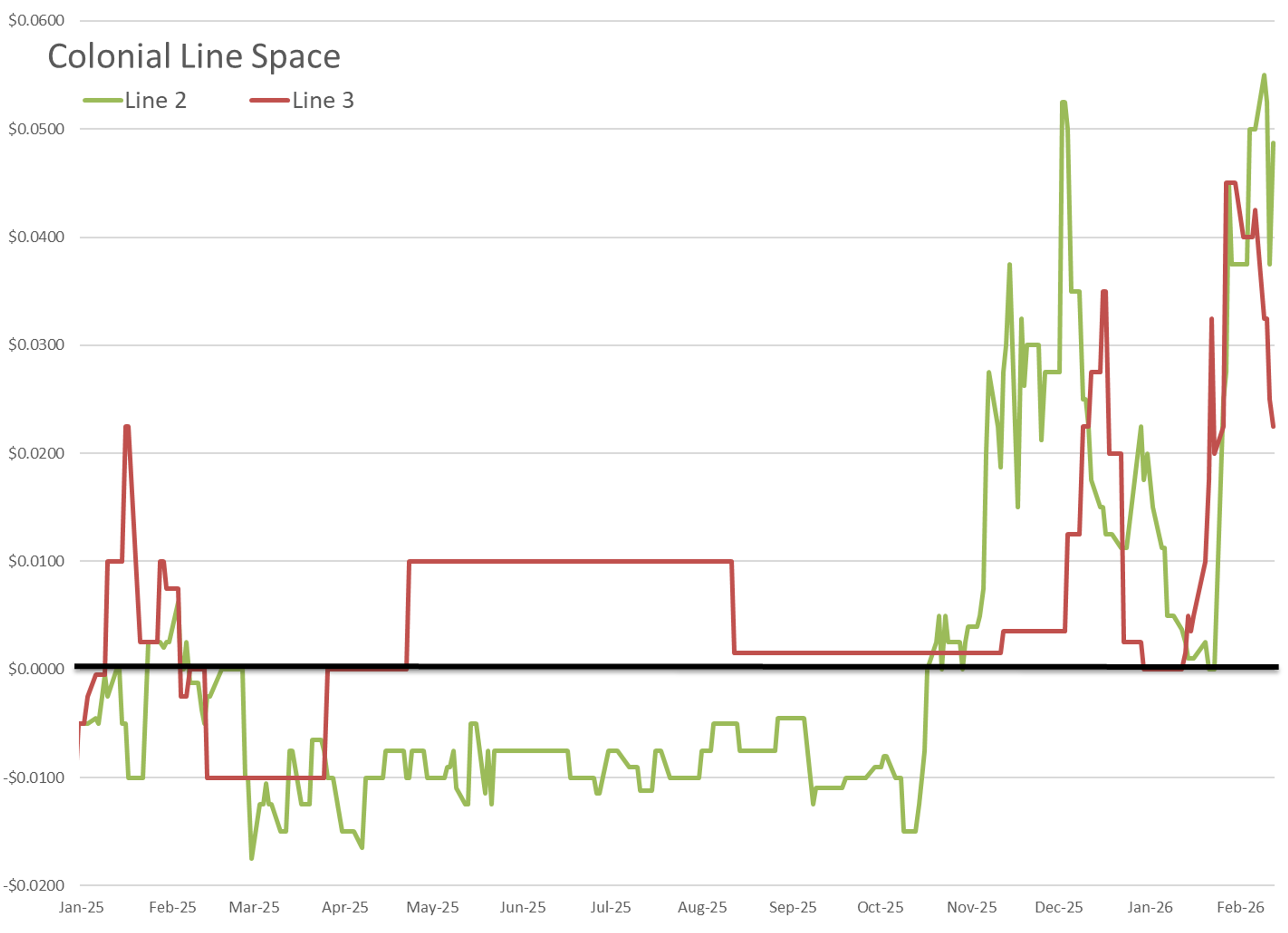
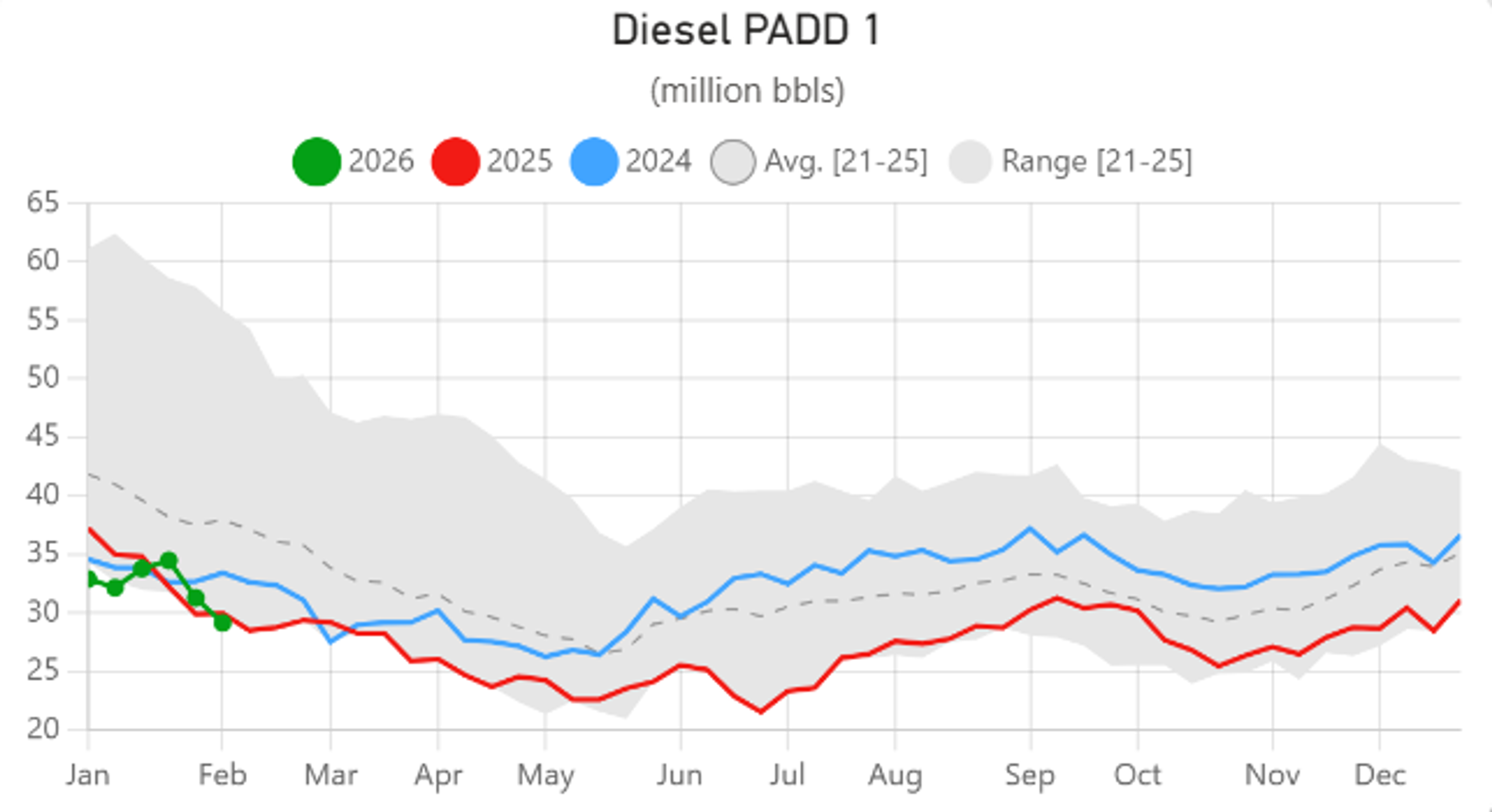
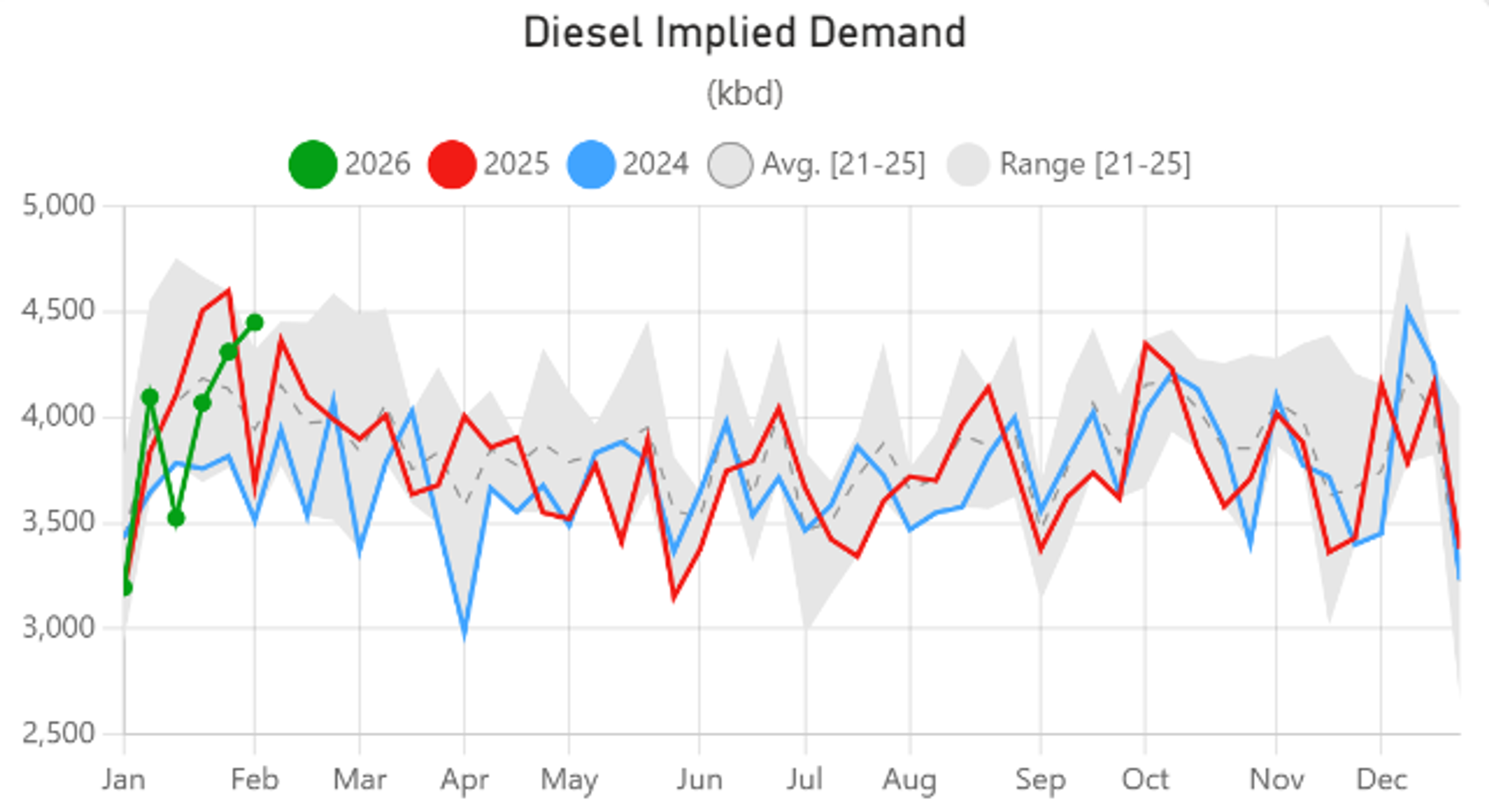
Linespace premiums on Colonial’s Line 2 (from Houston to Greensboro) and Line 3 (Greensboro to the New York area) still remain in positive territory as shippers race to replace the diesel burned as a heating fuel over the past couple weeks. Natural gas curtailment along the East Coast this month forced energy providers to turn to their backup fuel (diesel/heating oil) in order to keep the lights on during this winter’s cold snap. The effect is not only evident in the PADD 1 charts published by the DOE Wednesday, but could also be seen setting a new 5-year seasonal high on the national demand charts.
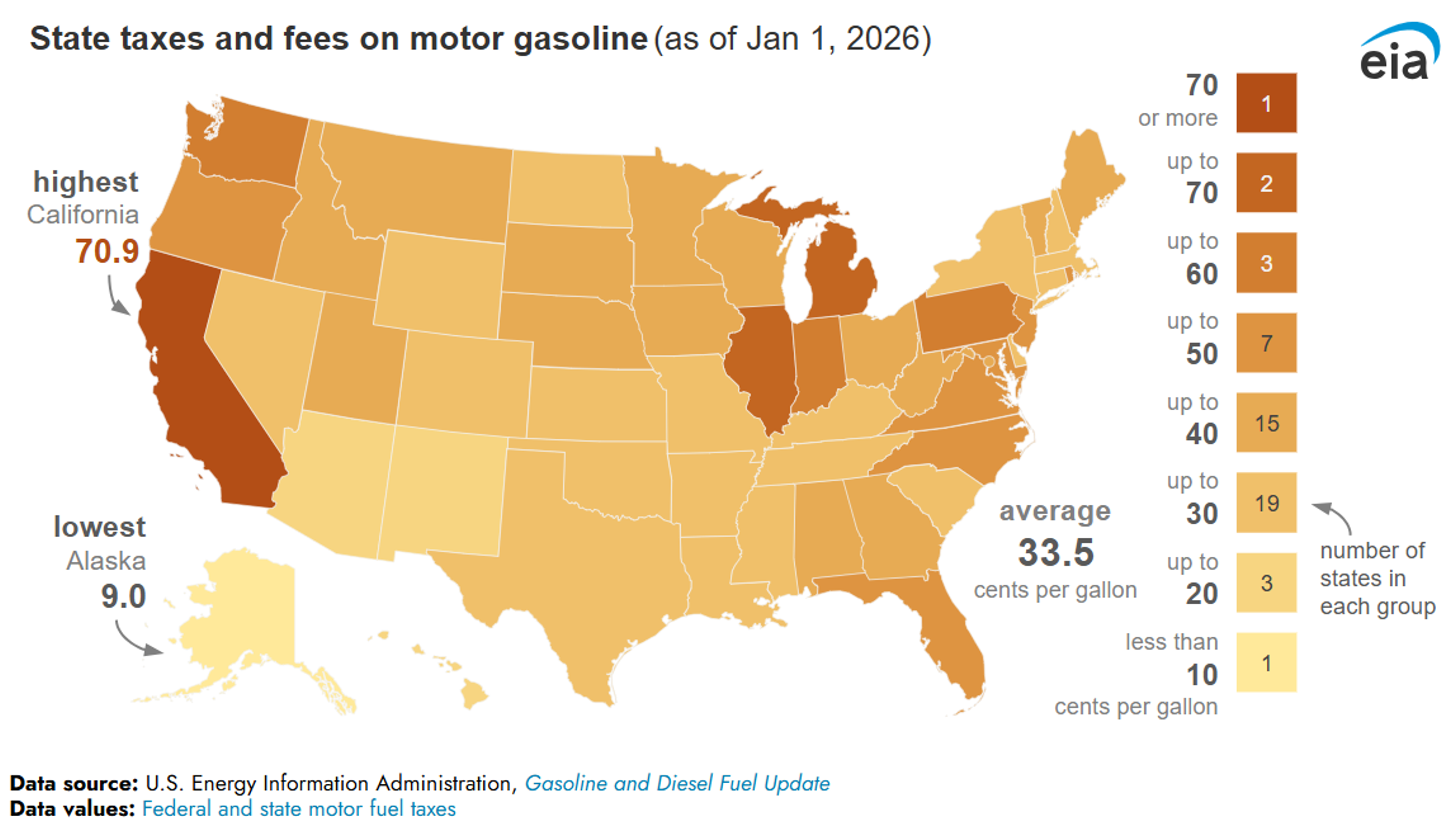
The EIA published a snapshot of the nation’s gasoline taxes by state yesterday, noting almost half of them raising their fees, while 7 dropped them. Feeling pressure at the pump? At least you don’t live in California (unless you do).
Latest Posts
Storms, Drones And A Walked-Back Export Ban: Why This Week's Selloff Might Not Last
Diesel Rally Resumes Amid Growing Debate Over US Export Limits
Week 38 - US DOE Inventory Recap
Refinery Economics Clash With Calls For A Diesel Export Ban
Diplomacy Knocks Crude Lower, But Diesel Bulls Aren’t Done Yet
Diesel Pullback Tests Market Nerves Amid Supply Risks
Social Media
News & Views
View All
Storms, Drones And A Walked-Back Export Ban: Why This Week's Selloff Might Not Last
Diesel Rally Resumes Amid Growing Debate Over US Export Limits