Yesterday The Department Of Energy Reported An Across-The-Board Build In Energy Inventories Last Week

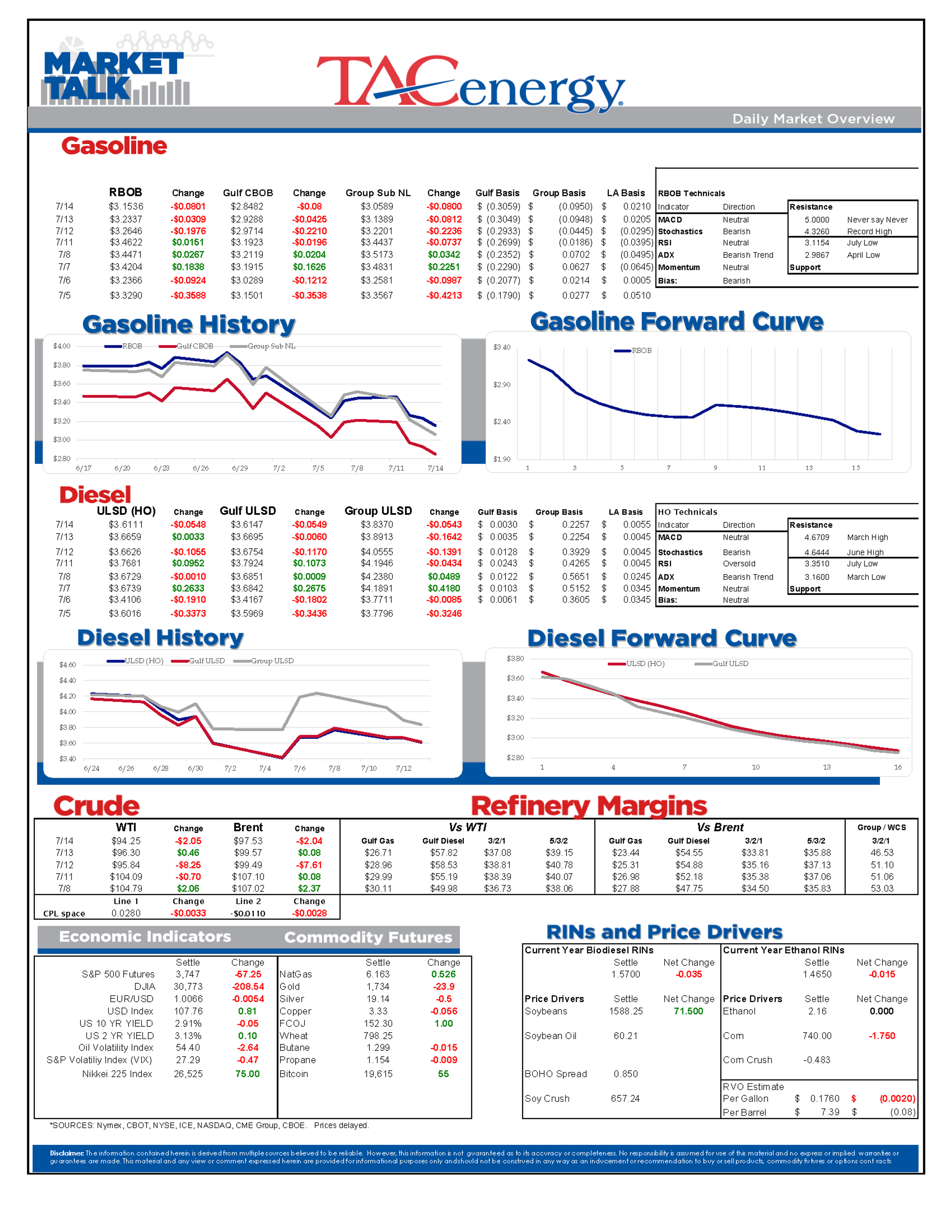
Yesterday the Department of Energy reported an across-the-board build in energy inventories last week, spurring on bearish sentiment that’s carried over this morning. Despite another increase in refinery utilization, which is nearing 95% of the nation’s current refining capacity, crude oil stockpiles increased 3 ¼ million barrels last week. National gasoline and diesel inventories also saw sizable builds, each adding 5.8 and 2.7 million barrels, respectively.
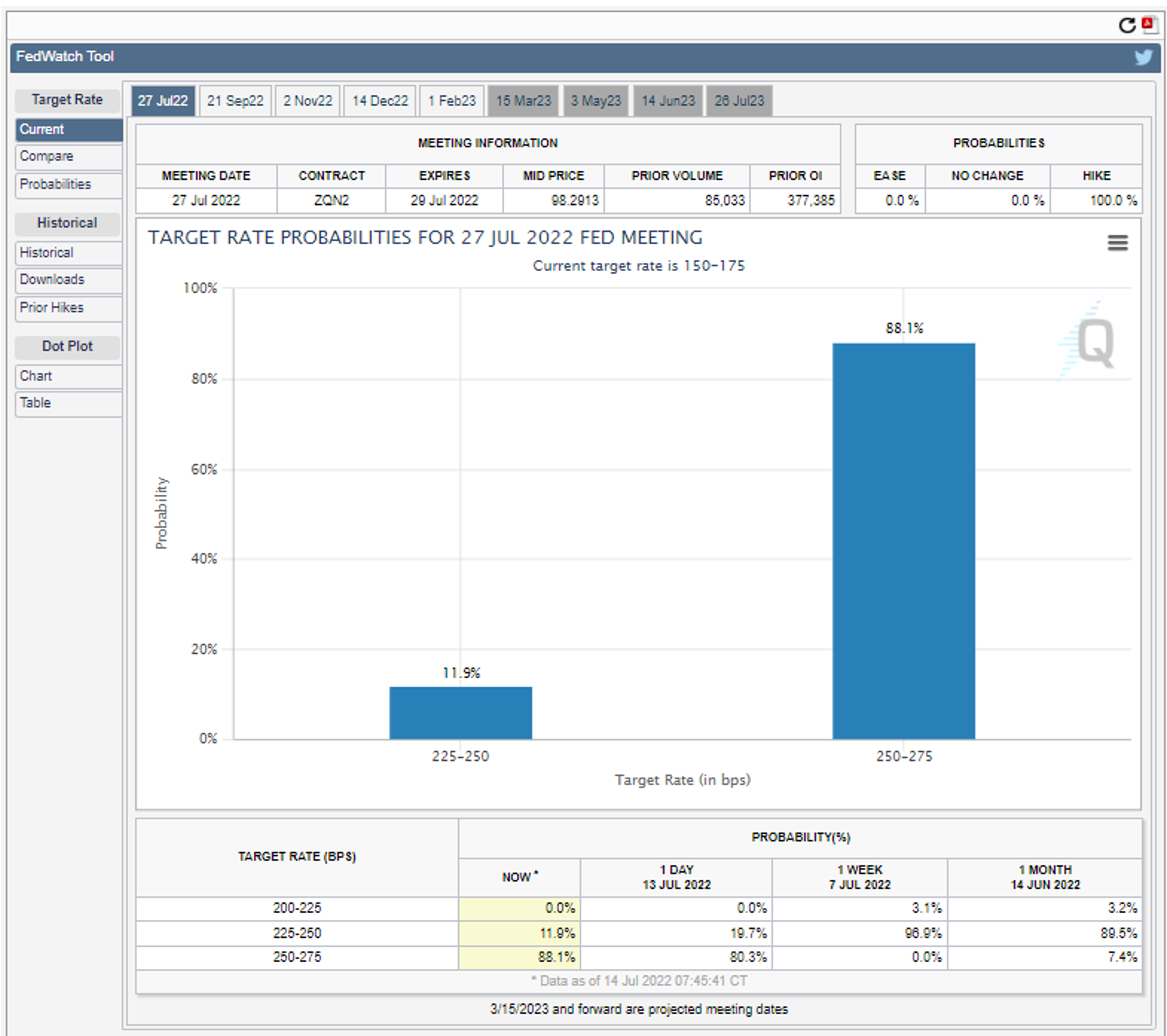
Despite the bearish DOE report, it’s the rise of inflation and the anticipated reaction by the Fed that is taking credit for the recent selloff. The CME Group’s FedWatch tool puts the probability of July’s target interest rate at 2.5-2.75%, which would be a fully percentage point over June’s target rate.
The US President is visiting the crown prince of Saudi Arabia this week on the pretext of discussing the global oil situation. While everyone seems to have an opinion on the meaning behind the meeting, the most anyone can say about its impact on the oil market is it might result in a “token increase in oil production” by the Kingdom.
The prompt month WTI futures contract is down below $95 this morning and is hovering around its 200-day moving average. Some believe it is decision time for the American crude oil benchmark. Breaking the ~$93 level leaves very little technical resistance to keep prices from dropping to $70, but a failure to breach that level leaves the door open for crude prices to jump back above $100 in short order.
Latest Posts
Cheap Crude Keeps Refiners Running Despite Weak Fuel Economics
Markets Keep Selling While Global Energy Risks Keep Growing
Refinery Strikes And Supply Threats Shift Market Sentiment
Week 45 - US DOE Inventory Recap
Refinery Outages And Global Conflict Keep Energy Markets On Alert
Veterans Day Trading Sees Energy Complex Bounce On Geopolitical Tensions
Social Media
News & Views
View All
Cheap Crude Keeps Refiners Running Despite Weak Fuel Economics
Markets Keep Selling While Global Energy Risks Keep Growing