Volatility Returns As Energy Markets Grapple With Strait Of Hormuz Shutdown

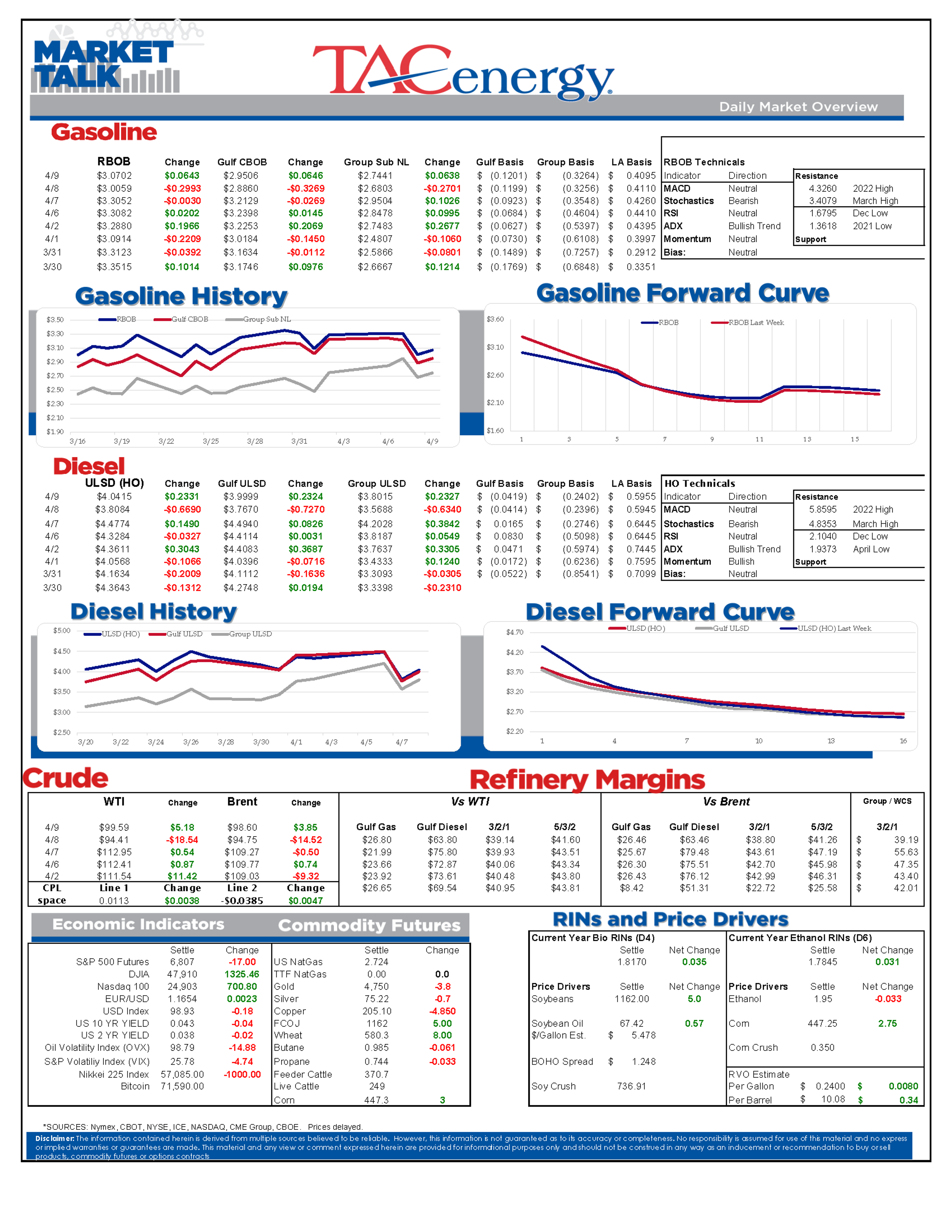
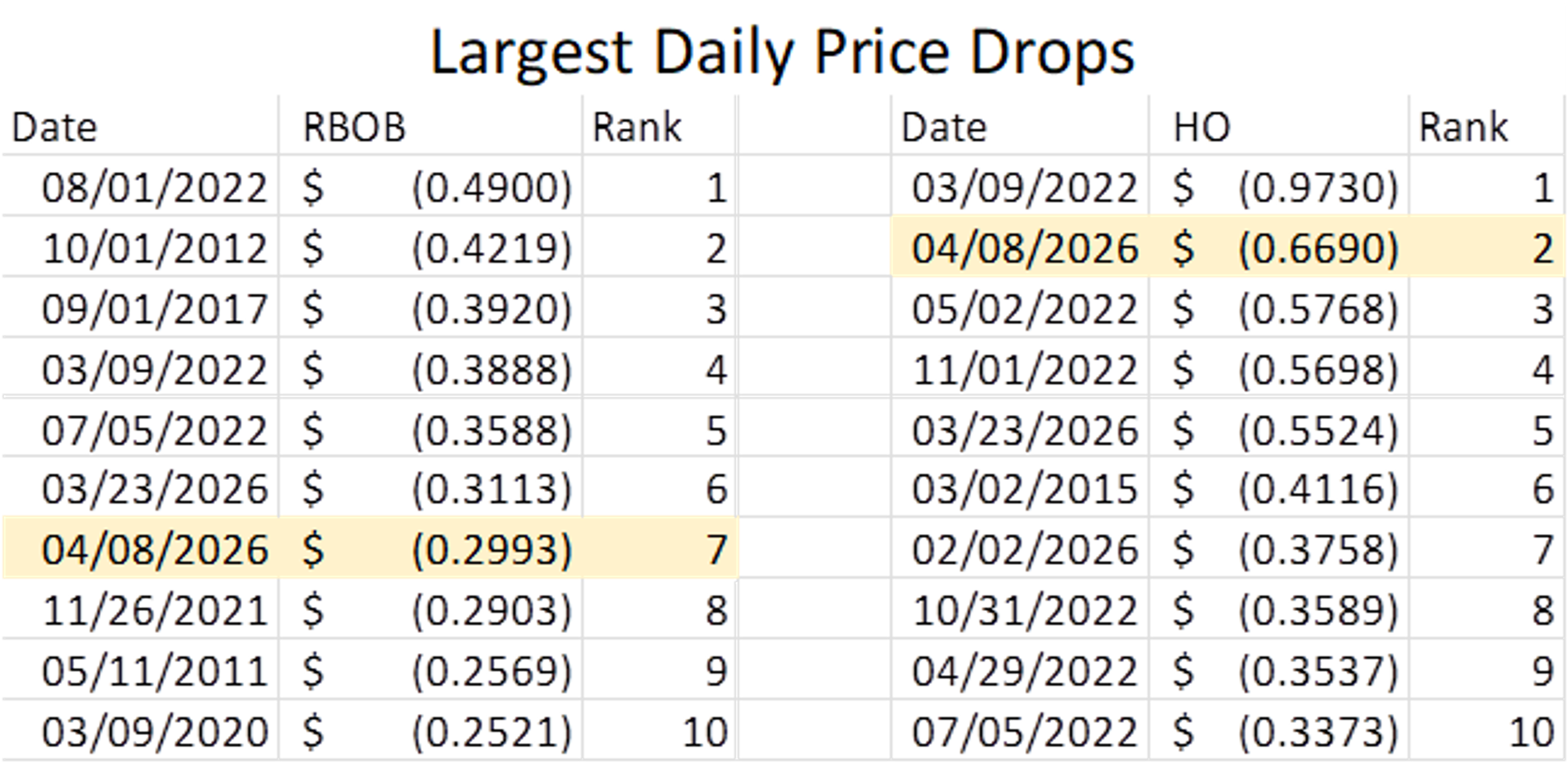
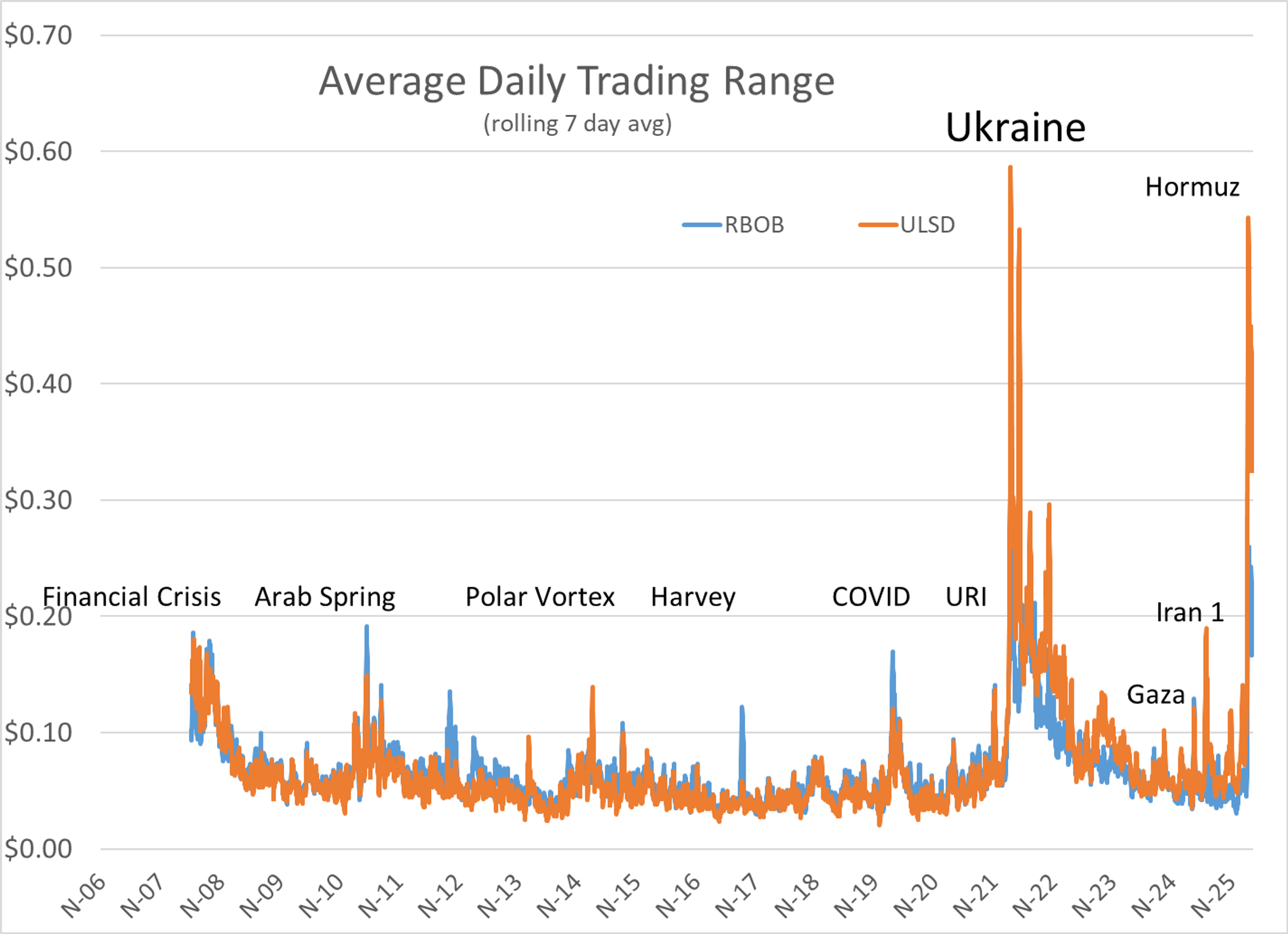
Energy markets are rebounding Thursday as the Strait of Hormuz remains effectively shut despite so much optimism for an end to the crisis Wednesday. ULSD futures are up around 20 cents/gallon this morning following a decline of $.6690 yesterday, which was the 2nd biggest drop in the history of that contract. RBOB futures continue to play 2nd fiddle in the volatility category, with 6 cent gains so far today, following a $.2993 drop that ranks as the 7th largest on record.
Meanwhile, Ukraine continues to flex its expanding capabilities on both Offense and Defense, attacking more Russian export facilities this week, while also offering drone protection services to gulf nations desperate to keep their oil flowing.
Speaking of which, just before the buzzer sounded on the increasingly fragile “cease fire” Iranian drones struck Saudi Arabia’s East/West pipeline that has been maxing out shipments since the strait’s closure. That news was shrugged off during Wednesday’s euphoria but threatens to further complicate the extreme supply shortages being felt in other parts of the world.
If you like data more than conjecture, see the notes below from the DOE’s weekly status report. Charts are attached.
U.S. Crude oil inventories built for a 7th straight week on lower refinery runs and an increased adjustment factor, despite heavier export activity. The U.S. SPR showed a small decline for the first time in 3 years as the first barrels from the pledged releases started to occur. U.S. Crude output continues to slowly decrease as drilling activity slowed to start the year but remains above last year’s record-setting pace.
Lower refinery runs were primarily driven by PADD 3’s loss as Valero Port Arthur which has reportedly only restored around 1/3 of their 425mb/day facility as of last week, following the March 23rd explosion that took the refinery offline. Total U.S. run rates are still almost 3.3 million barrels per week over the high end of the 5-year range and have only dipped into the seasonal range once back in February this year, which shows that despite 2 refinery closures in the past 6 months and a major facility knocked offline in March, domestic facilities are still up to the challenge of supplying domestic buyers, and many abroad. The flip side of that coin however is it appears that several facilities are delaying scheduled maintenance to continue running while margins are holding near record highs, and eventually that maintenance may stack up like we saw in 2023.
Diesel stocks slid with another export increase as demand moved to a seasonal high. Declines continued throughout the middle of the country while PADDs 1 & 5 saw builds. All PADDs except 3 & 4 are at below average levels but the 3mm barrel draw in PADD 3 brings inventories within 250,000 barrels of the seasonal average, the closest they’ve been since August last year with a 3rd straight week of sharply increasing exports helping to draw down local stocks.
Gasoline stocks also declined with a drop in production that was somewhat tempered by soft demand. Declines in PADD 1B & C dropped PADD 1 inventories, for the 4th straight week, to a couple million barrels below year ago levels but stayed ahead of their 5-year average. The recent chaos in Florida supplies shows up clearly in the PADD 1 C chart with current gasoline inventories some 15% below the low end of their seasonal range. That phenomenon is another harsh example of how a fuel “island” like Florida is currently stuck competing against the highest bidders in the entire Atlantic basin, during the peak spring break demand. PADD 2 had the most significant drop but is still at the high end of the chart while PADD 3 climbed to another seasonal high along with PADD 4, despite its slight draw. PADD 5 broke a six-week slide with back-to-back weekly increases, almost entirely driven by imports surging over the two-week period to a level not seen in almost 7 years. Gas exports increased but the swing in exports of ethanol was much more pronounced as productions levels continued at 5-year highs.
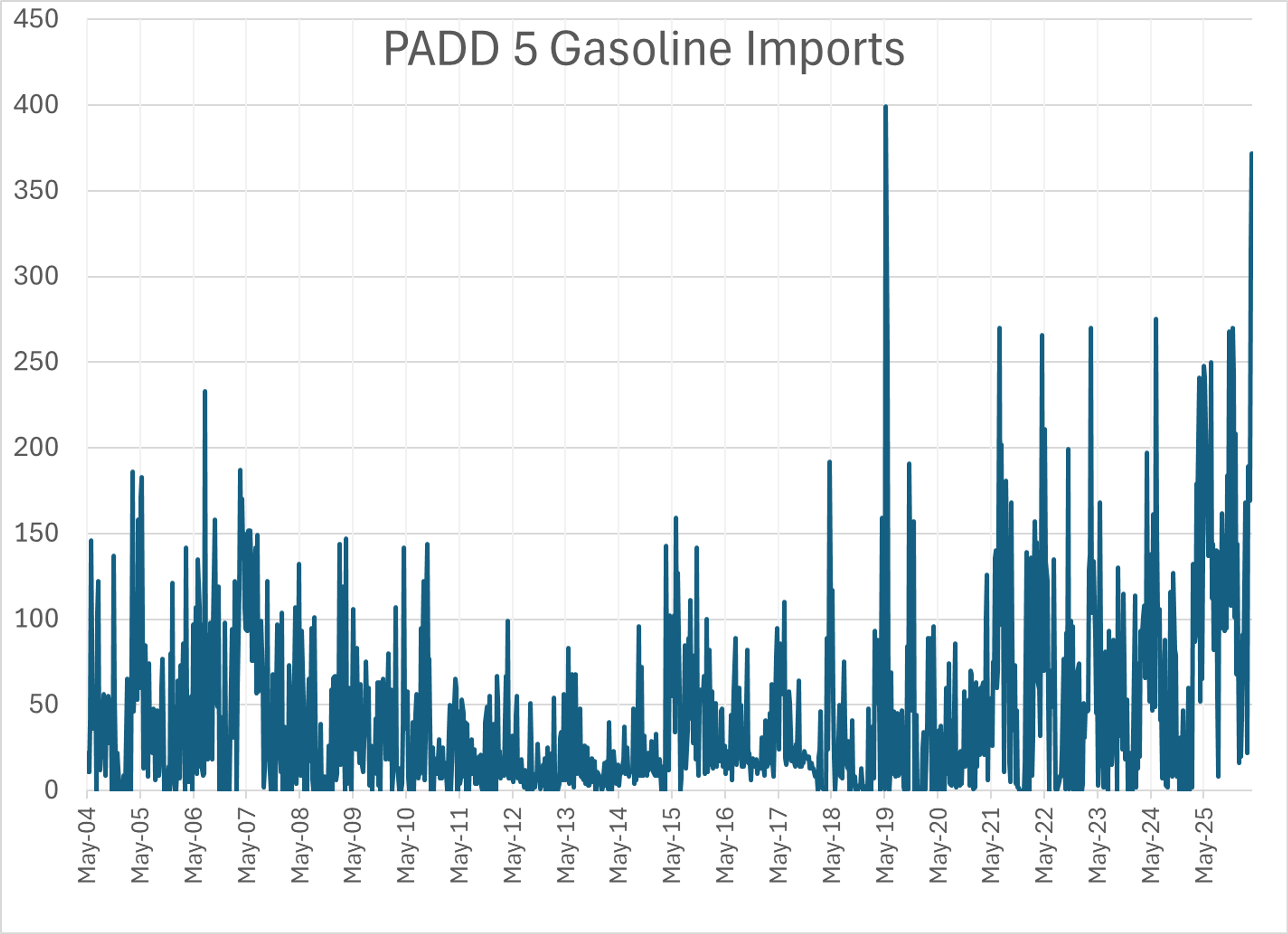
Speaking of fuel islands: PADD 5 saw another big lift in gasoline imports with 372mb/day delivered during the past week, which is the 2nd highest total in 22 years of data published by the EIA. The spike in imports suggests that California should be able to handle the shutdown of the P66 Wilmington and Valero Benicia refineries, provided of course that the other refiners in the Pacific basin aren’t restricting exports due to shortages at home caused by the Strait of Hormuz shutting down. Its worth highlighting that those imports were probably scheduled prior to the war breaking out, so it seems likely we’ll see a big reduction in West Coast imports in the weeks ahead.
Latest Posts
Diesel Leads Energy Markets Lower Despite Mounting Geopolitical Risks
Energy Markets Mixed As Diesel Rallies And Supply Concerns Persist
Supply Disruptions Persist As Markets Focus Elsewhere
Geopolitics, Diesel Shortages, And Refinery Cuts Shape Energy Markets
Geopolitics, Diesel Shortages, And Refinery Cuts Shape Energy Markets
Week 39 - US DOE Inventory Recap
Social Media
News & Views
View All
Diesel Leads Energy Markets Lower Despite Mounting Geopolitical Risks
Energy Markets Mixed As Diesel Rallies And Supply Concerns Persist