Veterans Day Trading Sees Energy Complex Bounce On Geopolitical Tensions

Veteran’s day trading has most energy contracts pushing higher, following through on a healthy bounce off technical support levels after reaching multi-month lows Tuesday morning.
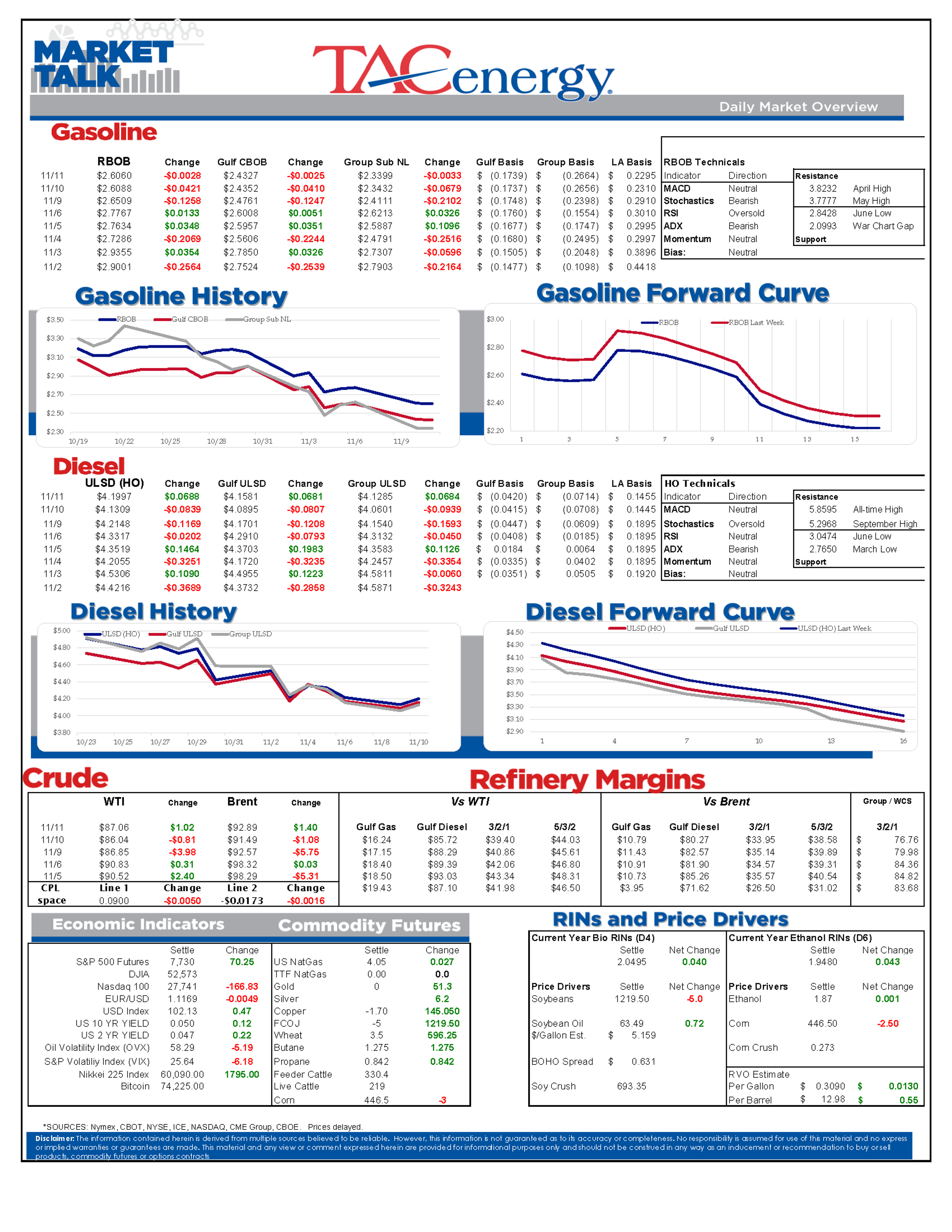
ULSD futures bounced almost 25 cents off of Tuesday’s low of $3.9947 which could make a strong case for the weekly trendline holding after the big sell-off to start November, but it’s hard to get too excited when 25 cent swings have become somewhat pedestrian this year.
Ukraine’s drones didn’t hit a Russian refinery for a 2nd straight day, but did hit one of Russia’s largest oil export facilities on the Baltic Sea. The Ust-Luga facility handles around 750mb/day of petroleum products. Ukraine’s President noted progress in the U.S.-mediated peace talks, but it’s clear a real agreement to end the war is still a long way off as those talks enter day 2.
The UKMTO reported two more incidents with tankers near Hormuz Tuesday, one a confirmed attack by an unknown projectile, while the 2nd was listed as “suspicious activity” with unknown status at the time of the report. Both events happened off the Omani coast, near the alternate route the U.S. has been assisting tankers to bypass Iranian restrictions in recent months. The IRGC meanwhile made another claim that a tanker hit a mine while trying to take an unauthorized route through the strait.
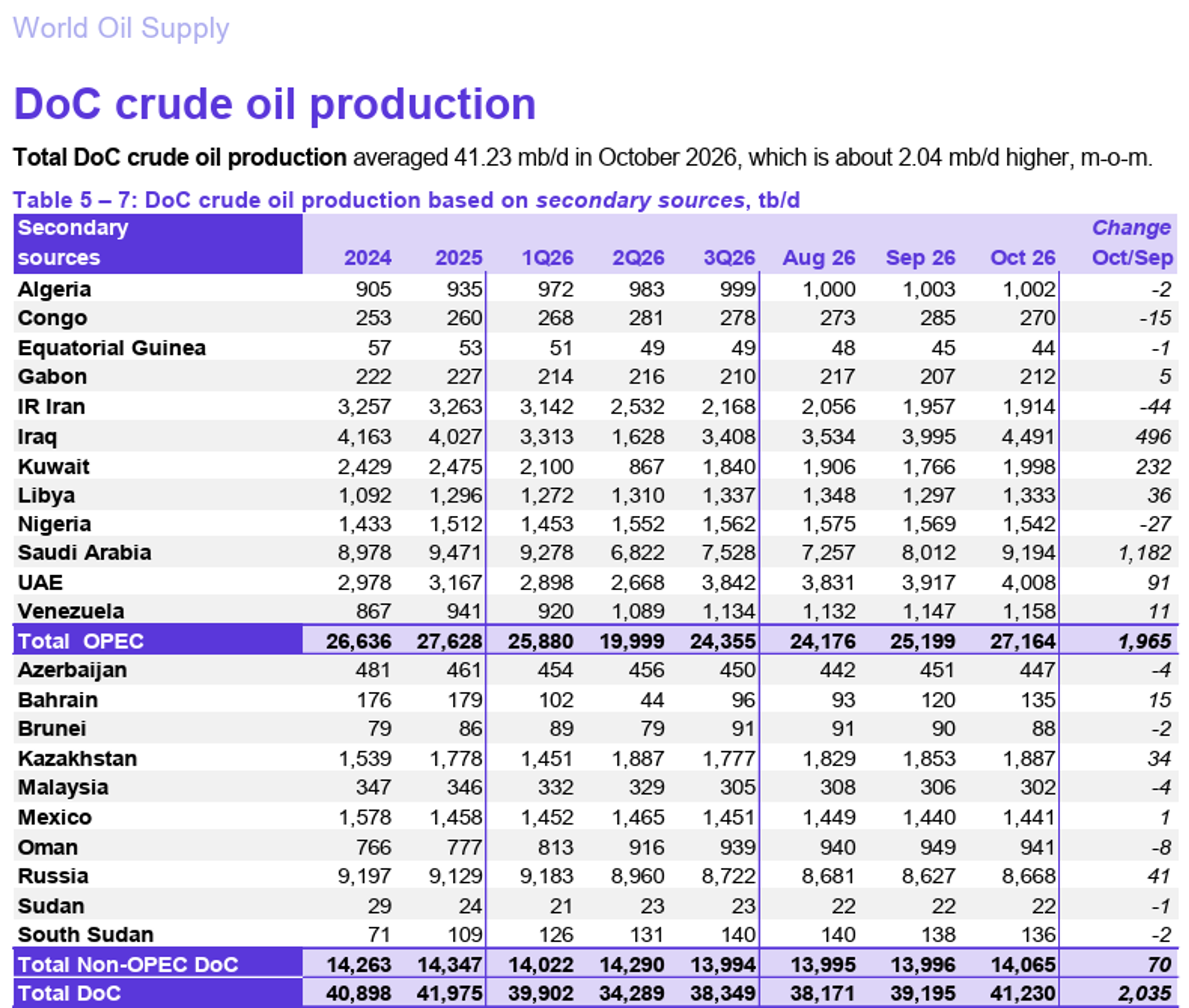
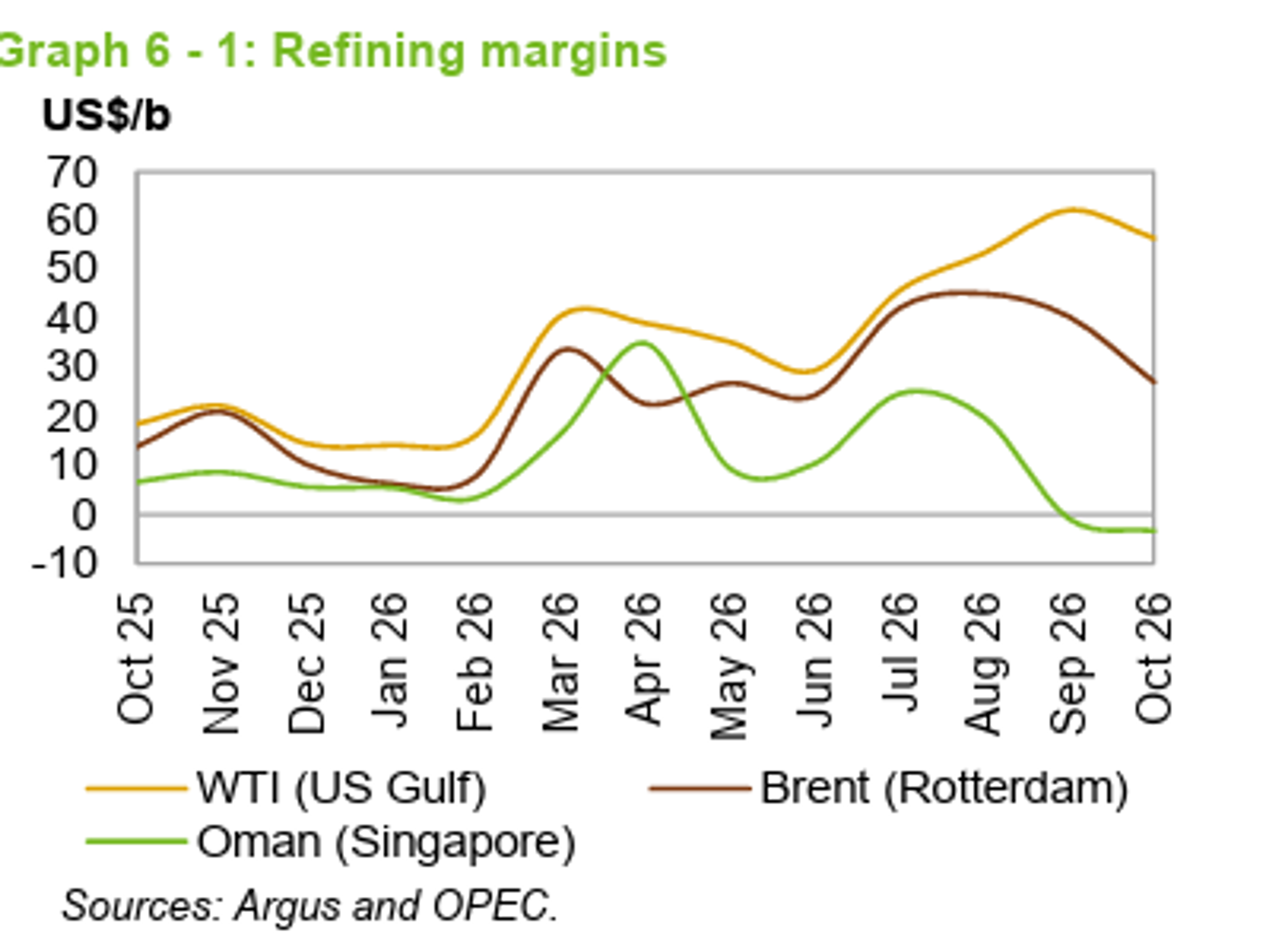
OPEC’s monthly oil market report held global supply & demand relatively steady compared to October, while the cartel’s output continues to recover from the impact of the war. In total, the OPEC & Friends output increased by nearly 2 million barrels/day during October, with Saudi Arabia making up more than half of the increases, with significant improvement from Iraq and Kuwait as the Hormuz shuttle system continues to gather momentum. The UAE’s lack of reporting since it left the cartel adds to the mystery of how much oil is actually moving in the region but the cartel’s own projections suggest they’re still around 2.5 million barrels/day below their targeted output. Freight rates for tankers continues to be a major story with rates 10X what they were prior to the war, creating plenty of challenges for refiners in many parts of the world. That phenomenon helps explain why U.S. refiners are enjoying record profits, while Asian refiners dependent on middle eastern grades are seeing margins at or below break even.
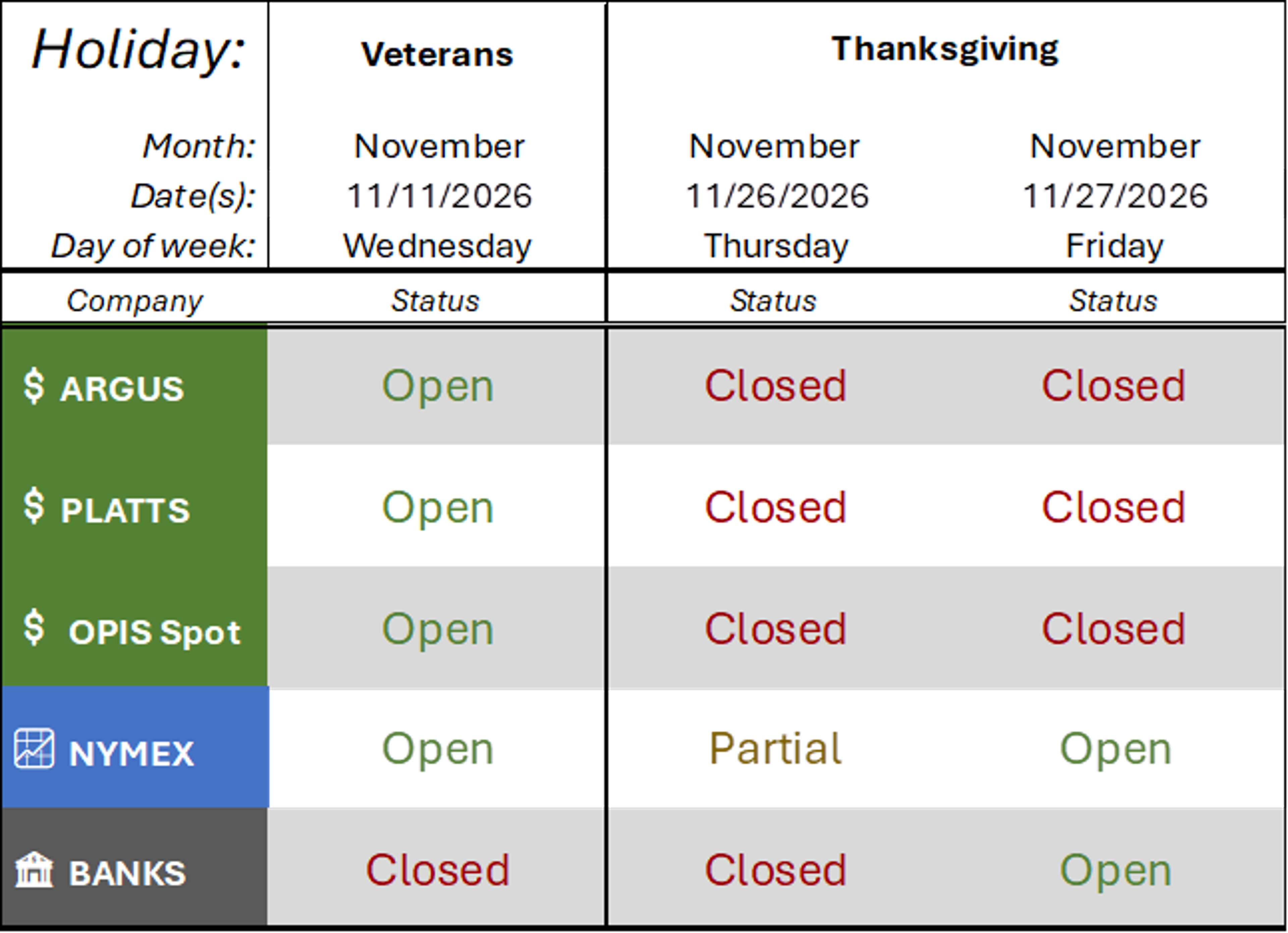
The EIA’s weekly report will not be released today due to the Veteran’s Day holiday, and will be out tomorrow at noon. The API’s weekly estimate showed a large build in commercial crude stocks of 9 million barrels, while SPR inventories hit a fresh 44 year low. Diesel inventories were said to build by 1.5 million barrels last week, while gasoline stocks were essentially unchanged with just a 4 thousand barrel increase estimated nationwide.
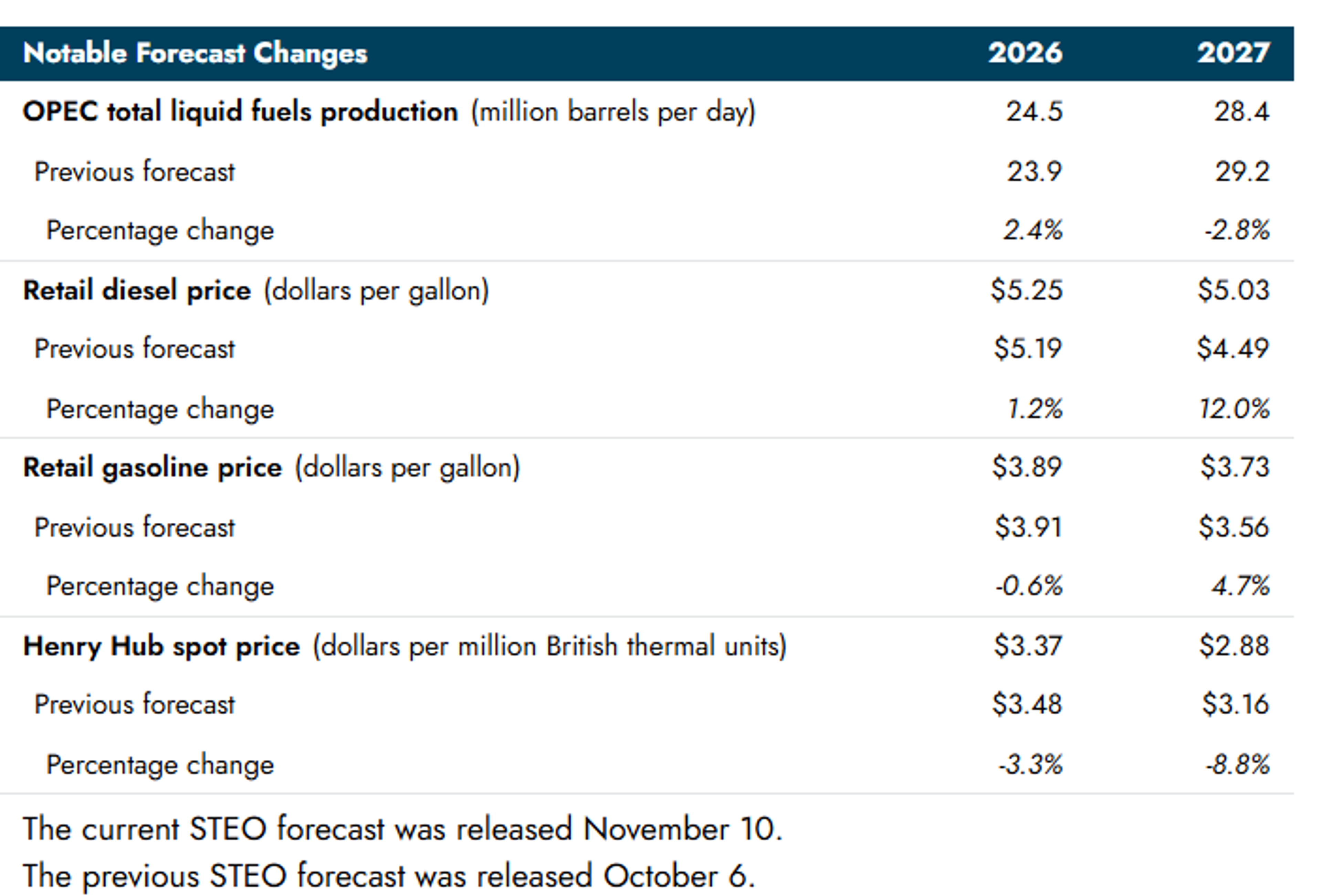
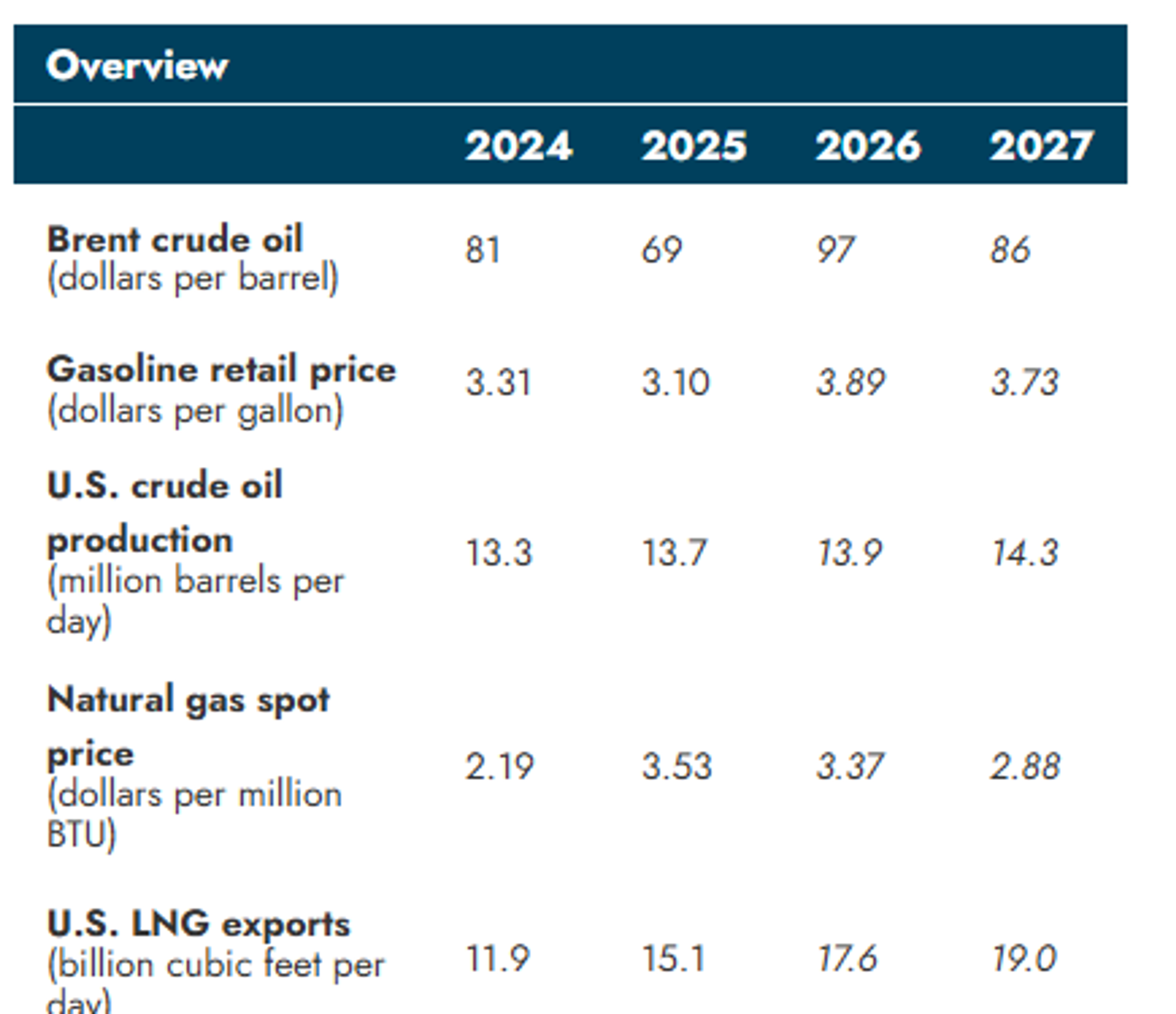
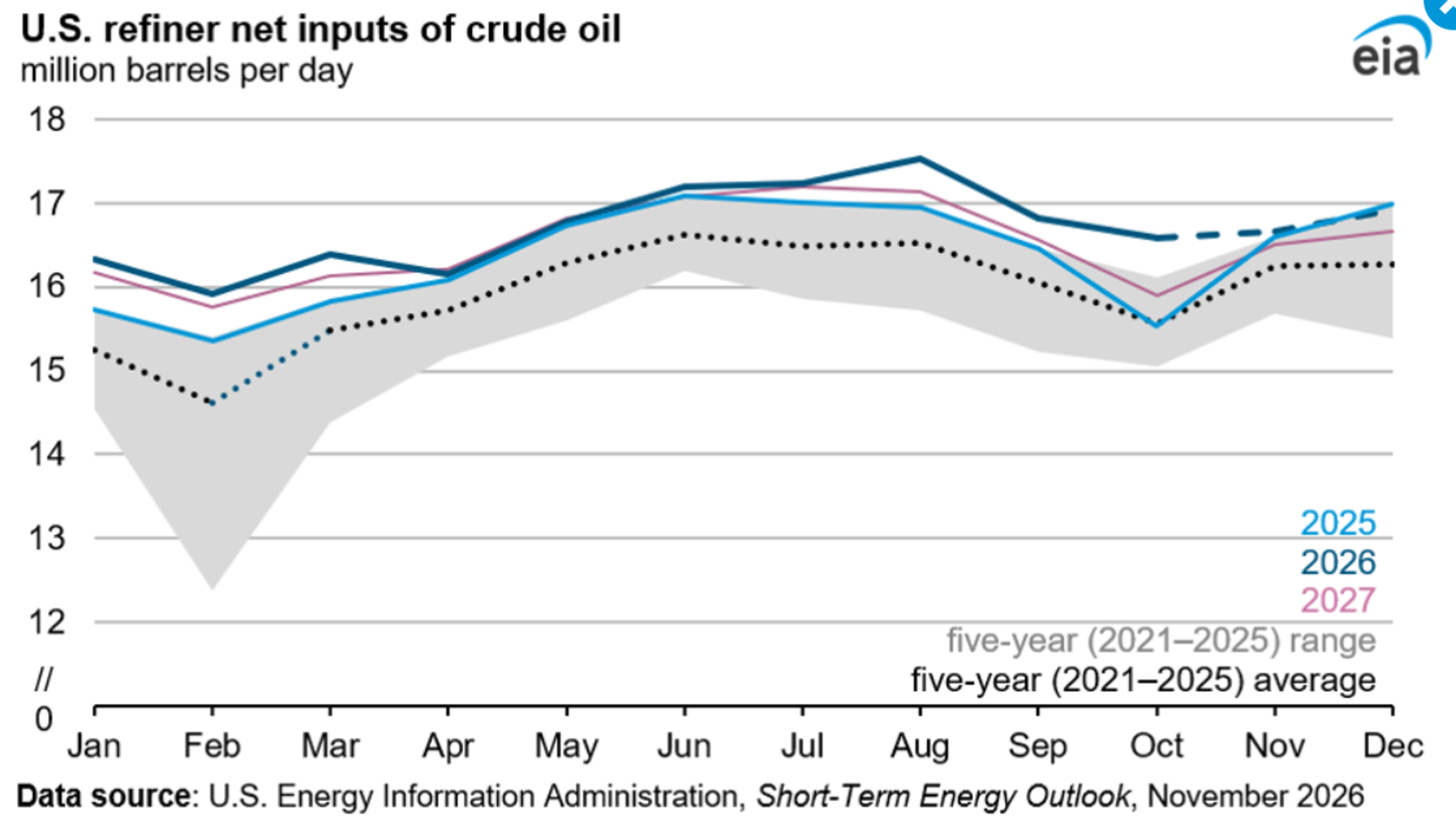
The EIA continues to raise its price forecasts for gasoline and diesel fuel in its latest Short Term Energy Outlook, as the war(s) impact on global supplies goes on for much longer than the agency predicted earlier in the year. The report highlighted the high run rates reached by U.S. refiners this year, but predicts December refinery runs will be lower than 2025 as maintenance starts to catch up after so many deferments, and the loss of capacity from the two California refiners this year. Meanwhile, Valero’s purchase and planned restart of the Lyondell Houston Refinery isn’t expected to hit until late next year.
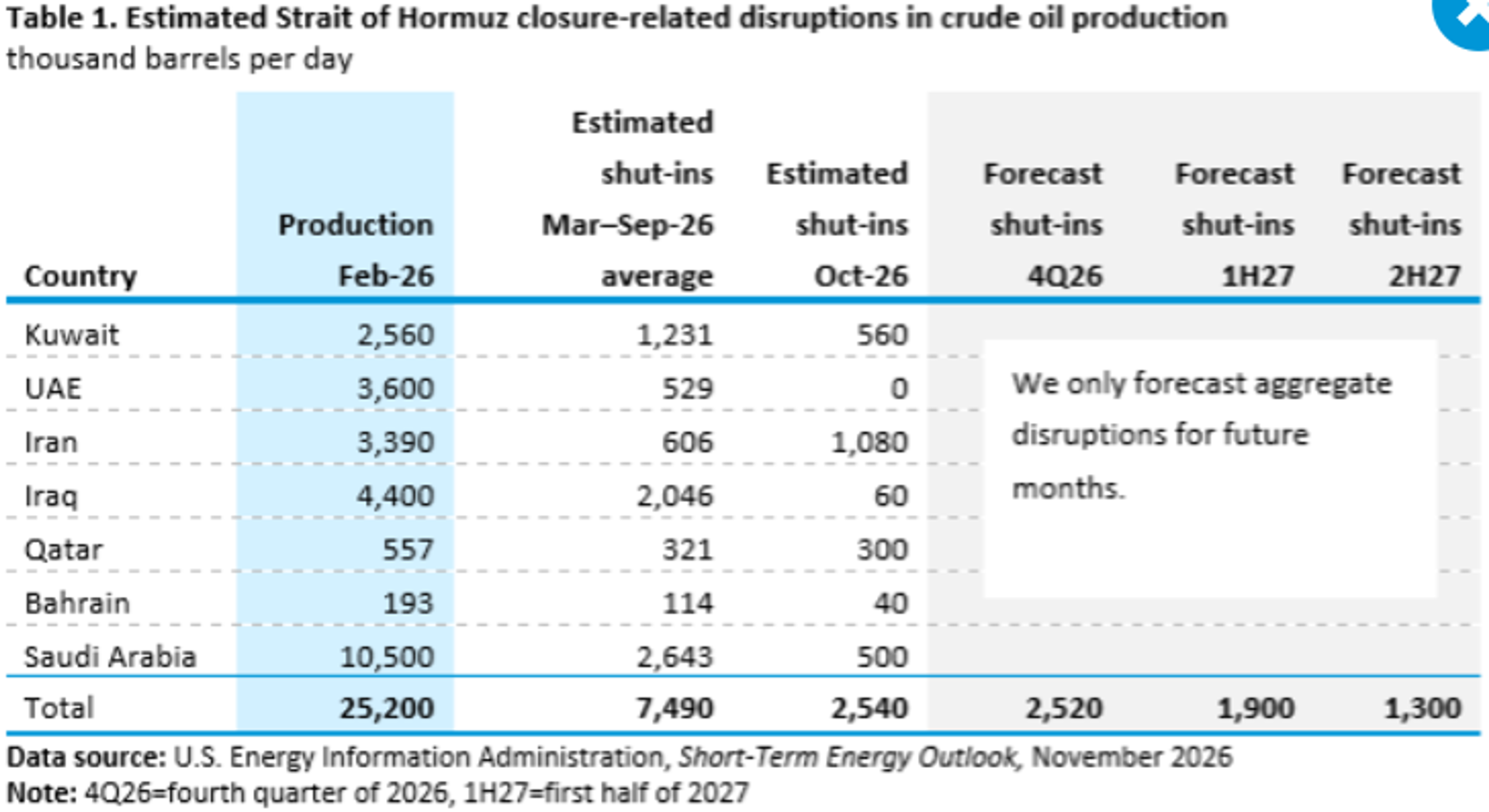
The EIA’s forecasters are guessing that around 2 million barrels/day of oil production will stay offline in the first half of 2027 due to Hormuz-related disruptions, and notes that of the 2.5 million barrels shut in during October, more than 1 million was from Iran – which is a stat many leave out of their analysis when saying crude exports from the region are back to “prewar” levels. U.S. Crude production is set to continue increasing to fresh record highs next year, but will only make up for around 20% of the lost output from the Middle East. The UAE is expected to be the biggest needle-mover next year as it’s exit from OPEC is predicted to allow production to increase by around a million barrels/day.
Accuweather’s forecasters have declared the Atlantic Hurricane season has ended, 3 weeks ahead of its official closing date, as the impacts of the “super El Nino” continue to inhibit storm activity on this side of the world, while encouraging it on the other. There is a storm heading for the North Eastern U.S. this week, with “Nor’easter” potential, but forecasts suggest minimal coastal impacts from this system while some significant snow could be seen inland.
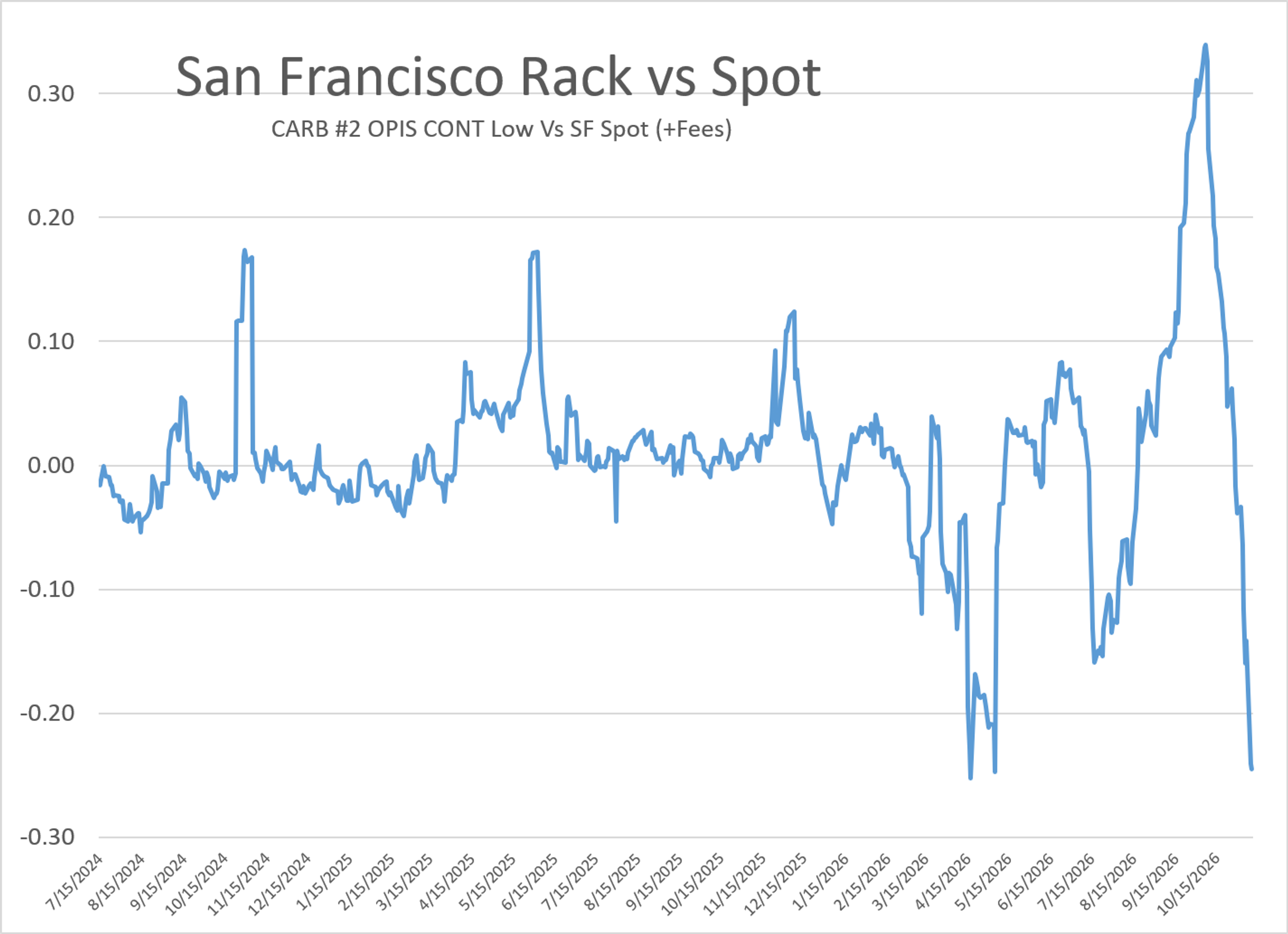
Marathon reported a 2nd Level 1 flaring event at its 48mb/day Renewable refinery in Martinez CA Tuesday, but the highly illiquid SF Spot market didn’t trade during the day so it’s hard to say if those upsets are impacting production. Rack prices in the bay area for diesel are trading at heavy discounts to the CARB diesel spot market similar to what we saw back in April when the SF Spot market didn’t have a single bid or offer for weeks.
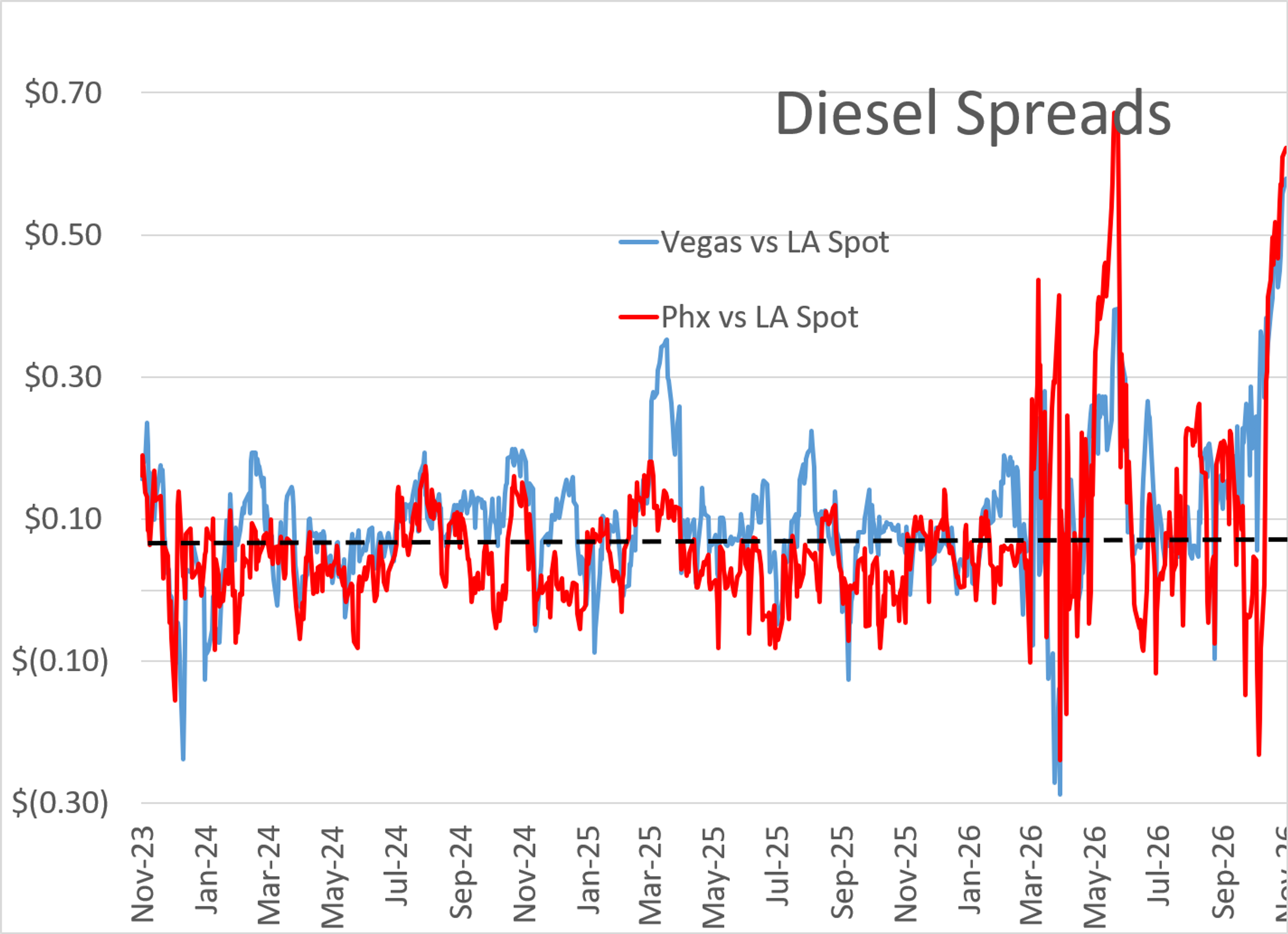
We’re seeing the opposite phenomenon in some SW markets with Phoenix and Las Vegas both showing huge premiums to LA spot values as several shippers have been forced to the sidelines by the extreme backwardation in diesel values, and tighter markets in W. Texas and NM mean fewer barrels heading to AZ from the East. See charts below for reference.

Latest Posts
Technical Trapdoor Opens Beneath Energy Markets As Diesel Leads Sharp Selloff
Refinery Strikes, Shipping Attacks, And A Market Looking The Other Way
Distillates Take The Lead As Refiners Adapt To Global Supply Challenges
Oil Rebounds, Refinery Issues Mount, Diesel Stocks Tighten
Week 44 - US DOE Inventory Recap
Markets, Midterms, And Missiles: Navigating Energy's Biggest Risks
Social Media
News & Views
View All
Technical Trapdoor Opens Beneath Energy Markets As Diesel Leads Sharp Selloff
Refinery Strikes, Shipping Attacks, And A Market Looking The Other Way