Sanctions, Tanker Threats, And Supply Shifts Reshape Global Fuel Trade

It’s a mixed bag to start Wednesday’s trading with oil prices trying to lead the energy complex with modest gains of around 70 cents/barrel, while RBOB prices cling to penny gains and ULSD futures are trading lower by around the same amount. Dwindling prospects for a peace deal in Ukraine are getting the headline credit for the bounce in oil prices while sanction drama and seasonal patterns both keep trading interesting in refined products.
While ULSD prices started and ended Tuesday’s session trading lower, there was a brief spike into positive territory mid-morning after Russia’s President threatened to attack ships in the Black Sea in retaliation for Ukraine’s attacks on Russia’s shadow tanker fleet of old unregistered ships meant to bypass sanctions.
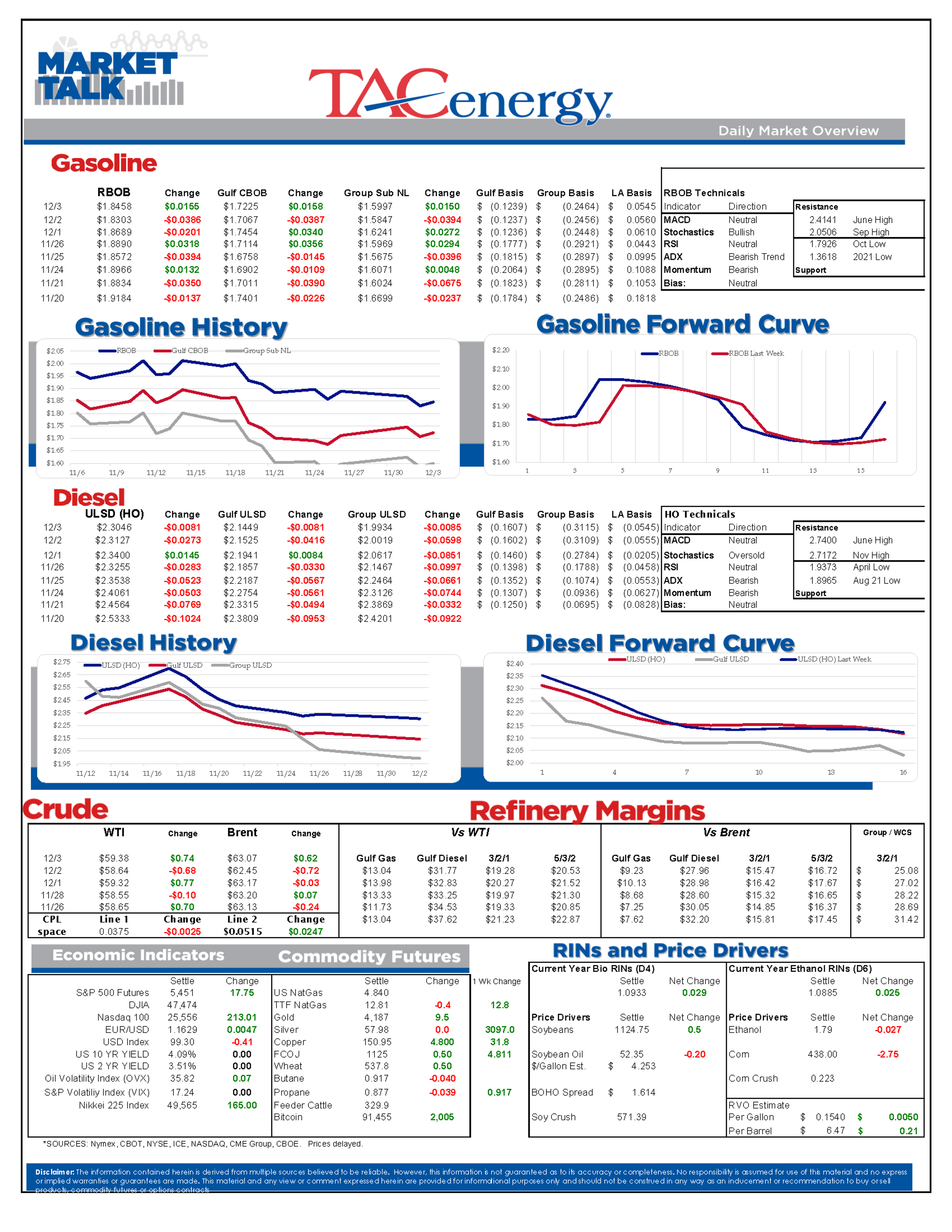
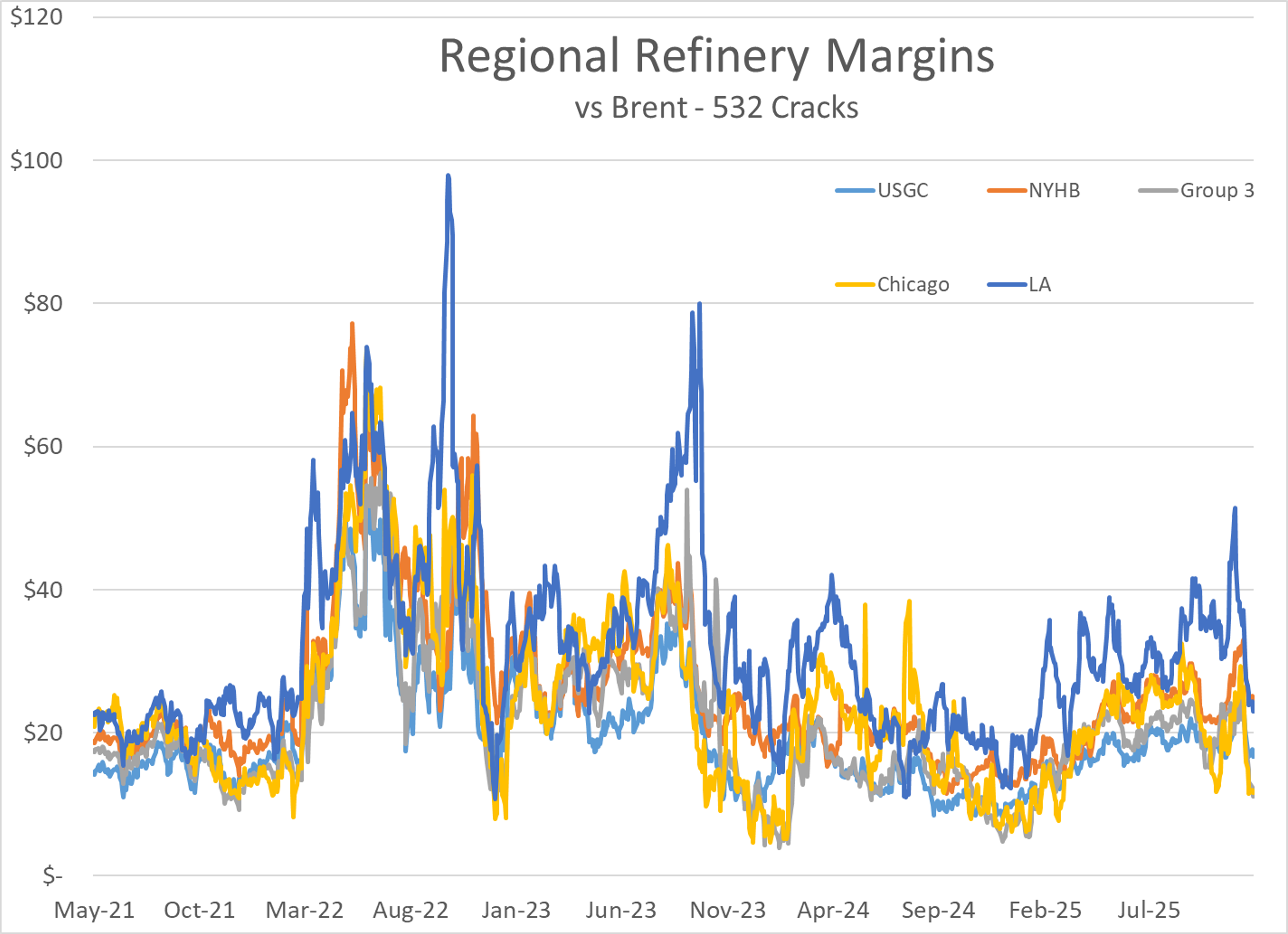
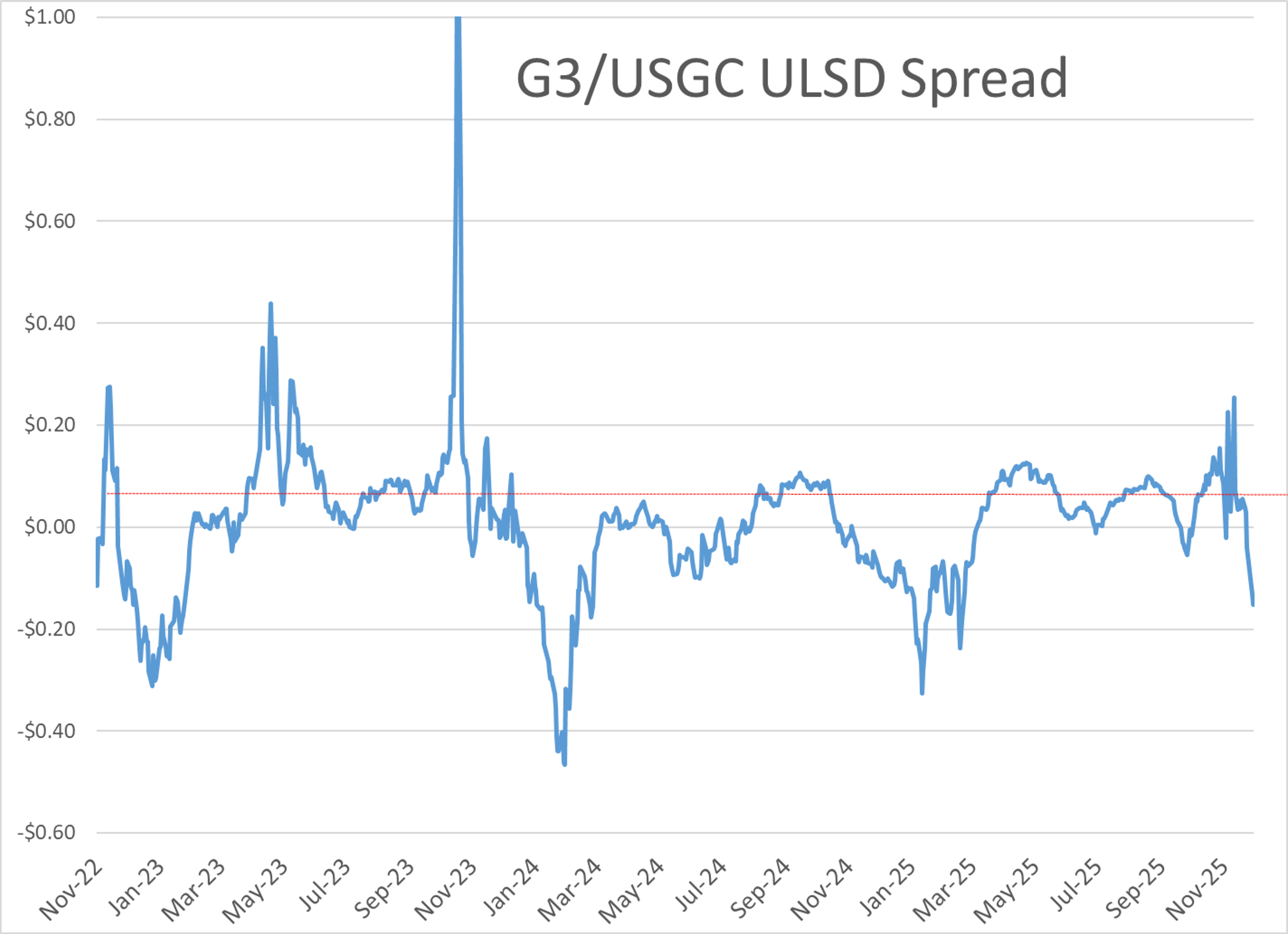
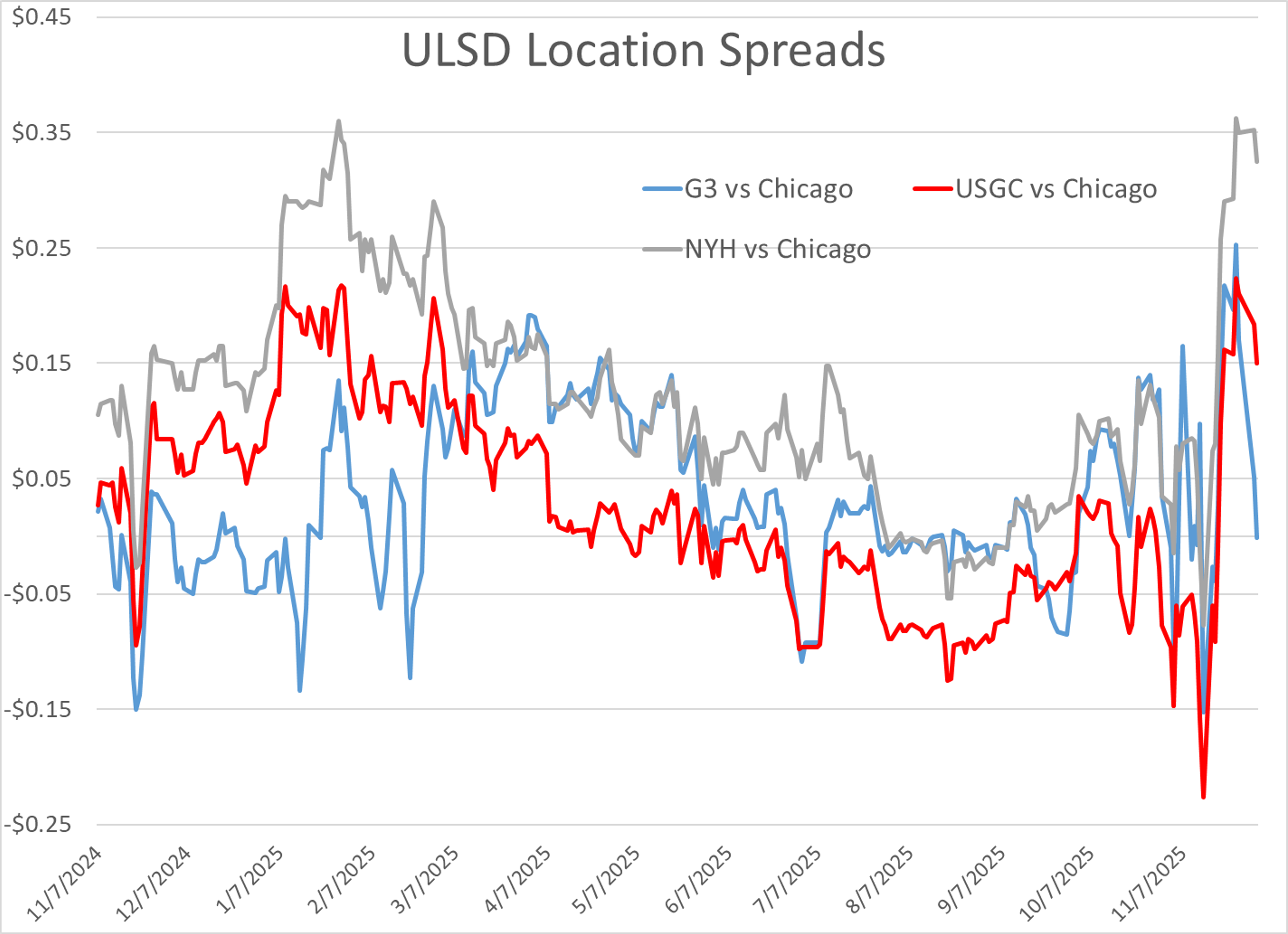
Basis values in most U.S. regions outside of the East Coast are weakening as we enter the winter demand doldrums while refiners have recently been enjoying their best margins in 2 years, encouraging them run at high rates even though their local market may not need the extra fuel. The most dramatic discounts come in the Midwest, with Group 3 and Chicago ULSD both trading at discounts of 30 cents or more, pushing outright values below $2/gallon.
This phenomenon is opening up arbitrage windows to long haul fuel from origin points in the middle of the country towards those fed by refineries on the coast. A cold snap sweeping the upper Midwest with below-average temperatures is also creating significant demand for #1 diesel (which reduces #2 demand) but could create some extra demand for heating fuels depending on how electricity generators can keep up with the spike in furnace use. So far, the East Coast seems to be avoiding the worst of the cold but given the tight supplies in the region that will be a concern for the next couple of months.
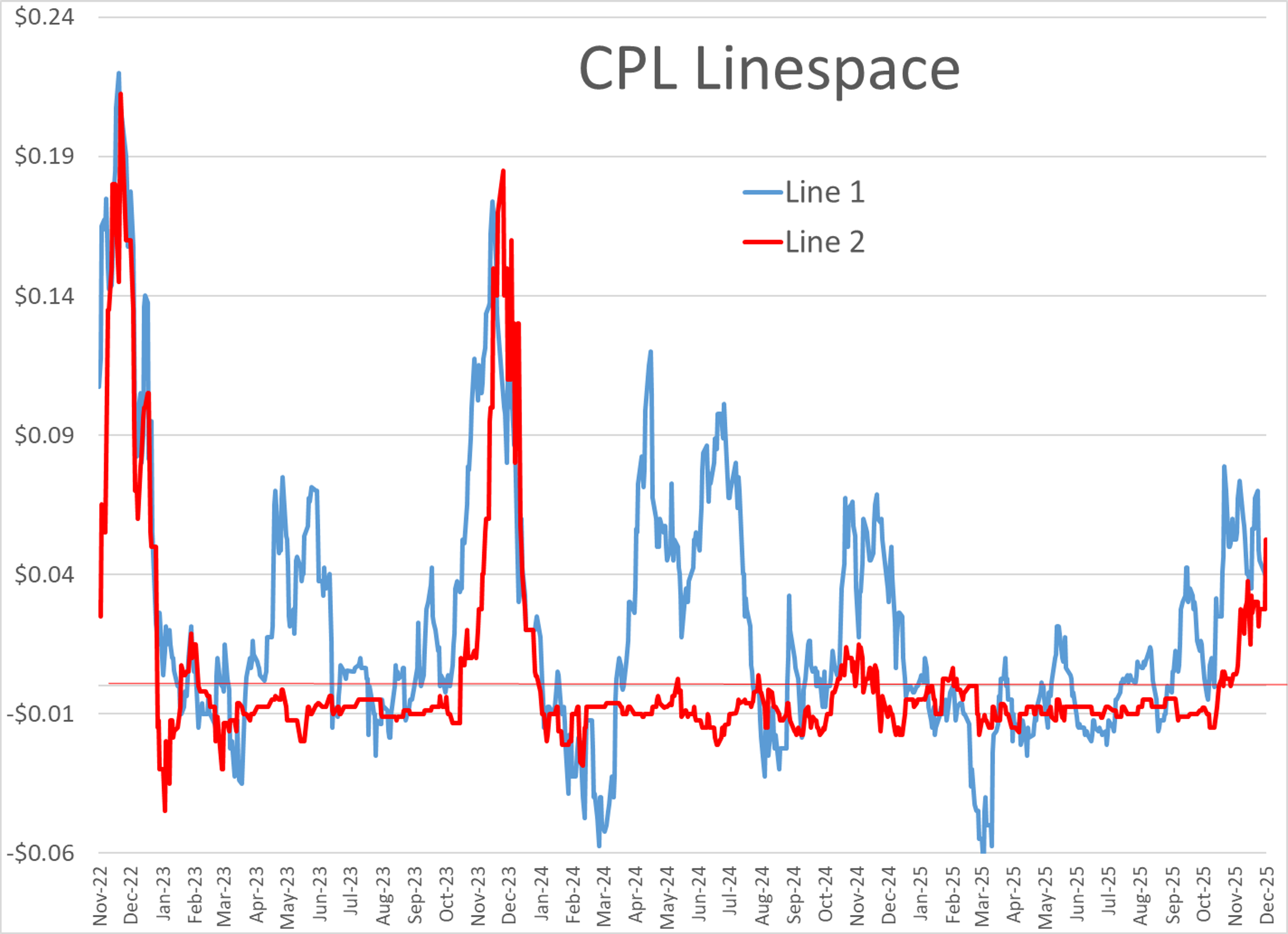
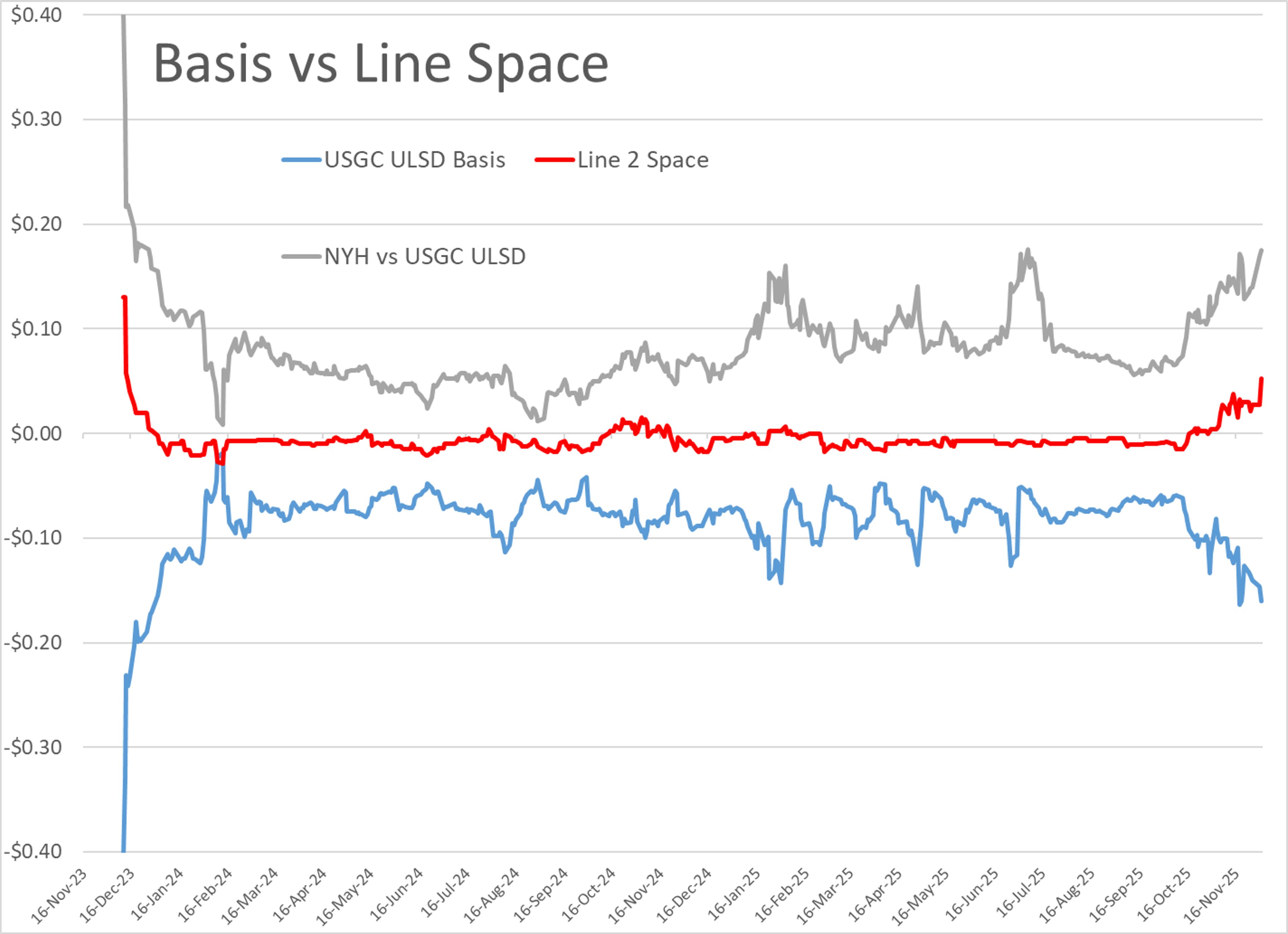
The softness in the middle of the country is also backing up barrels into the core production areas along the Gulf Coast. The corresponding weakness in USGC basis values while the East Coast remains relatively strong has pushed up line space values for Colonial’s main diesel line (line 2) to 2 year highs north of a nickel/gallon.
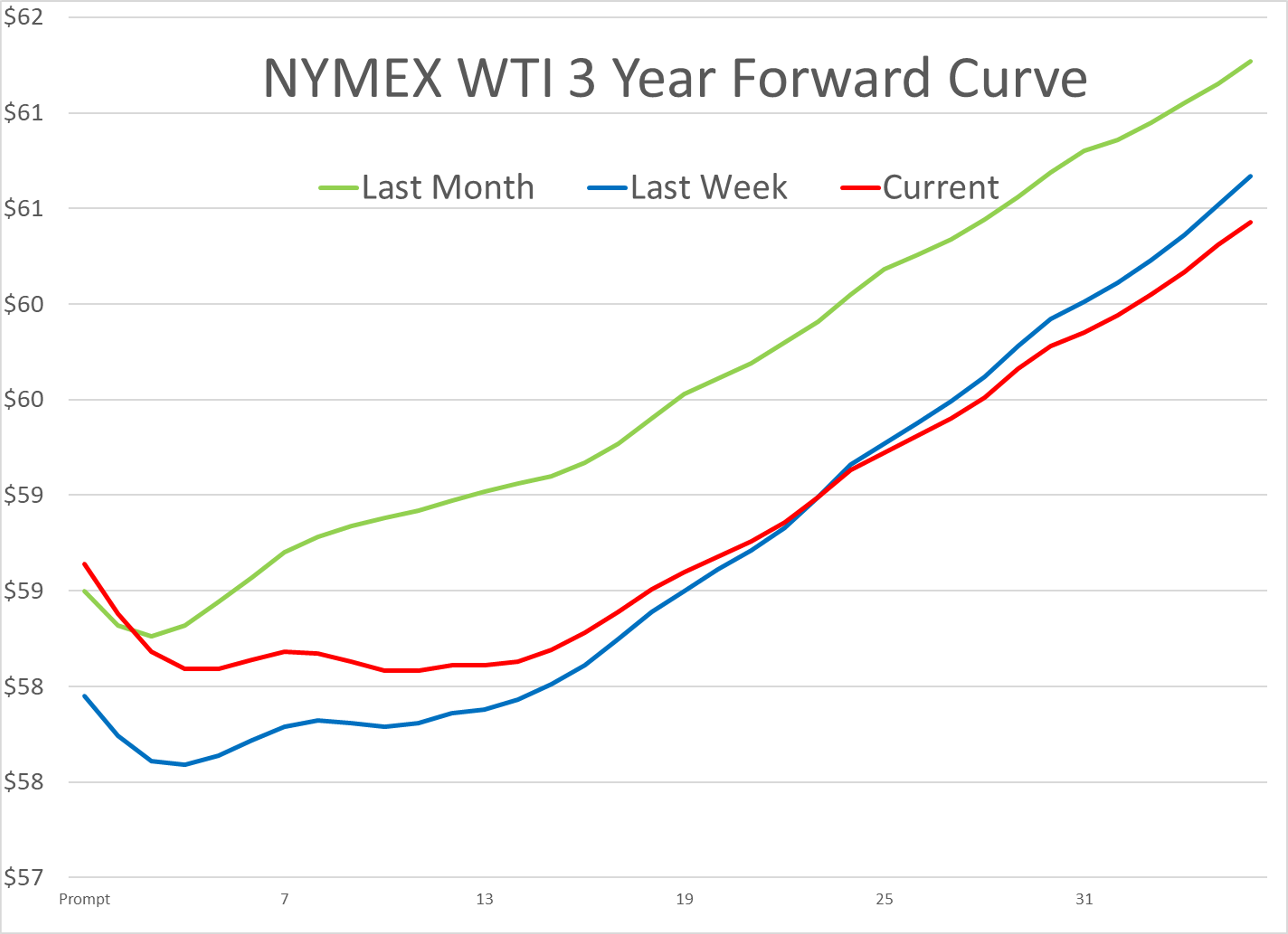
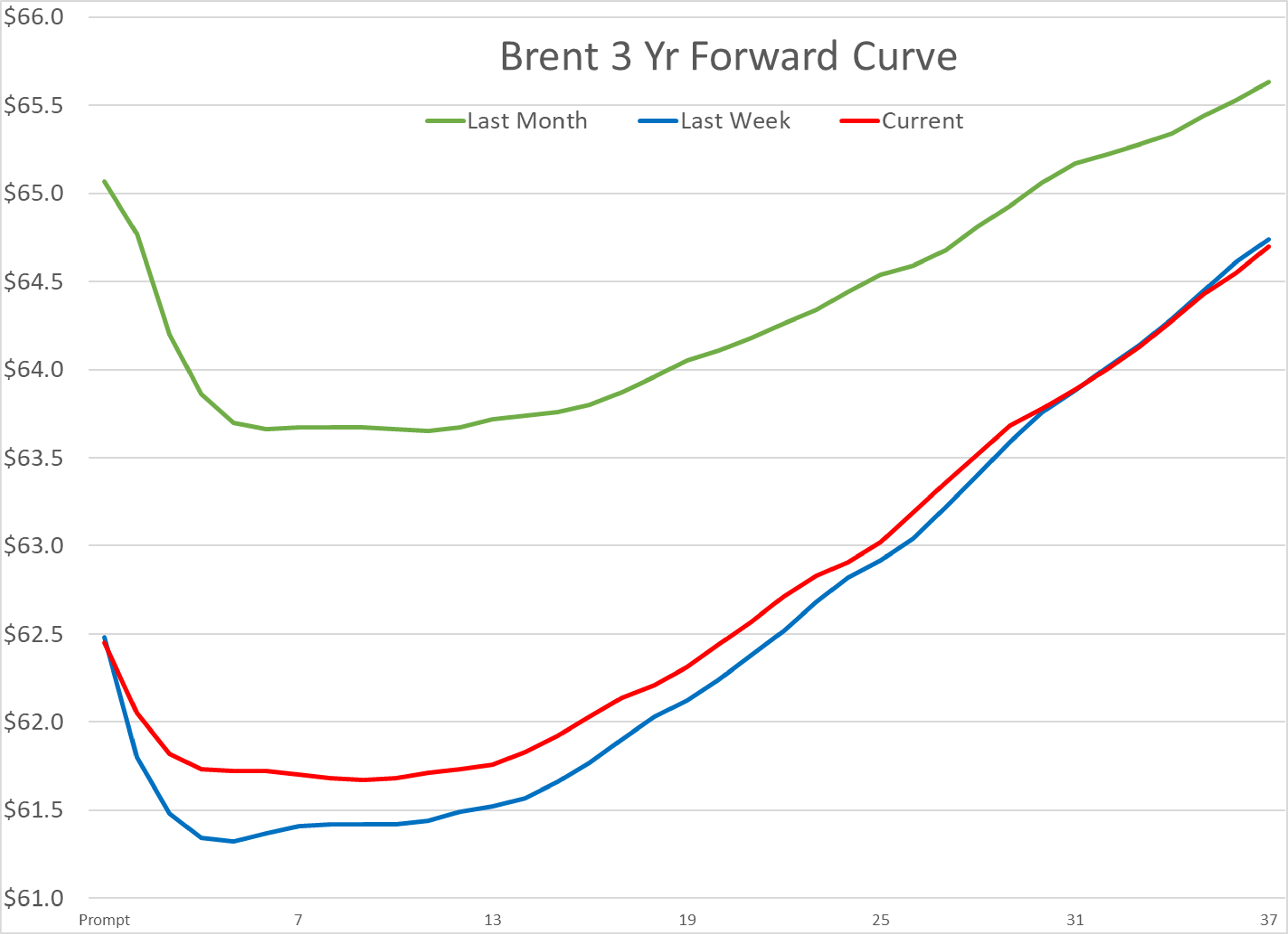
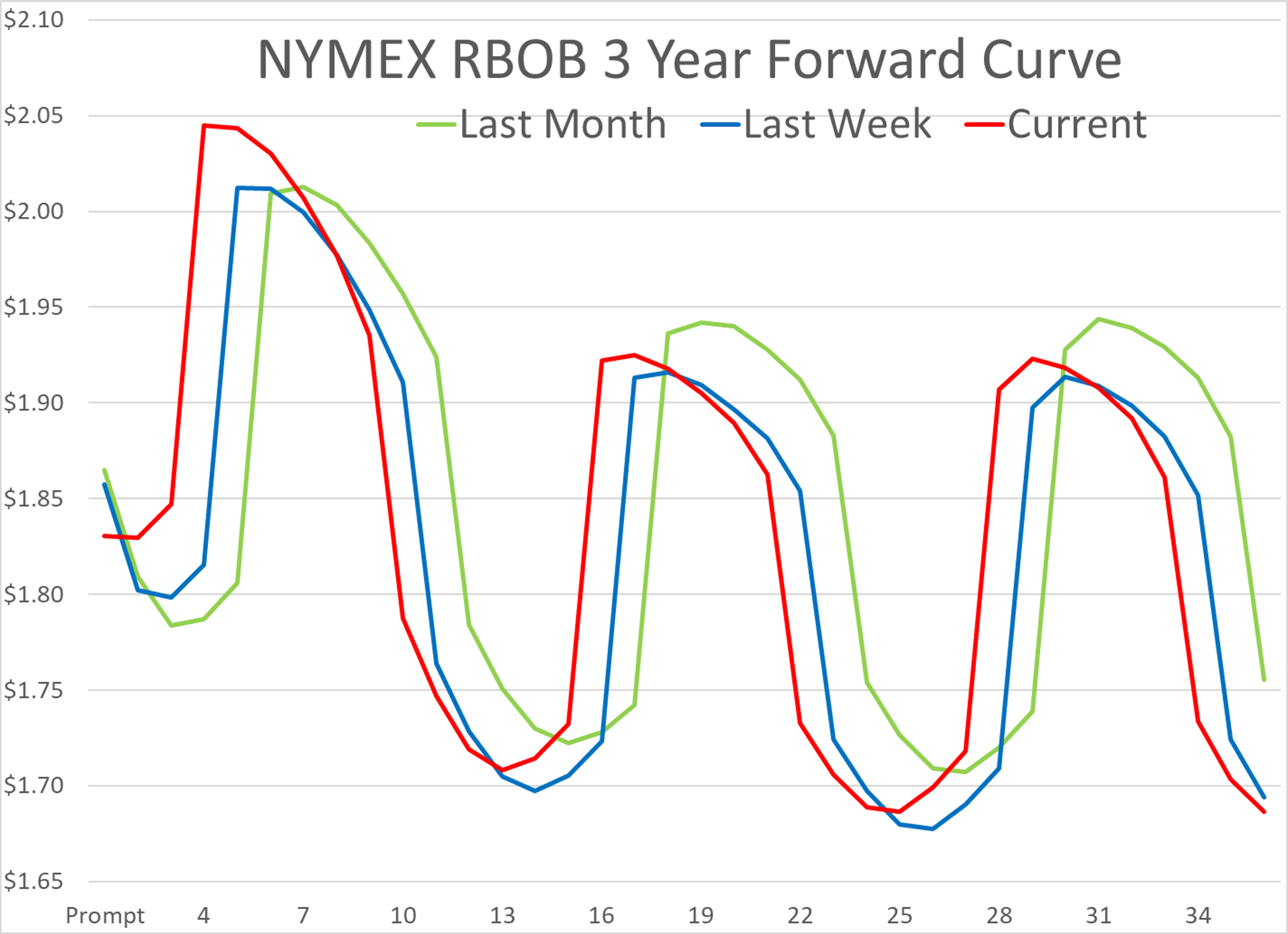
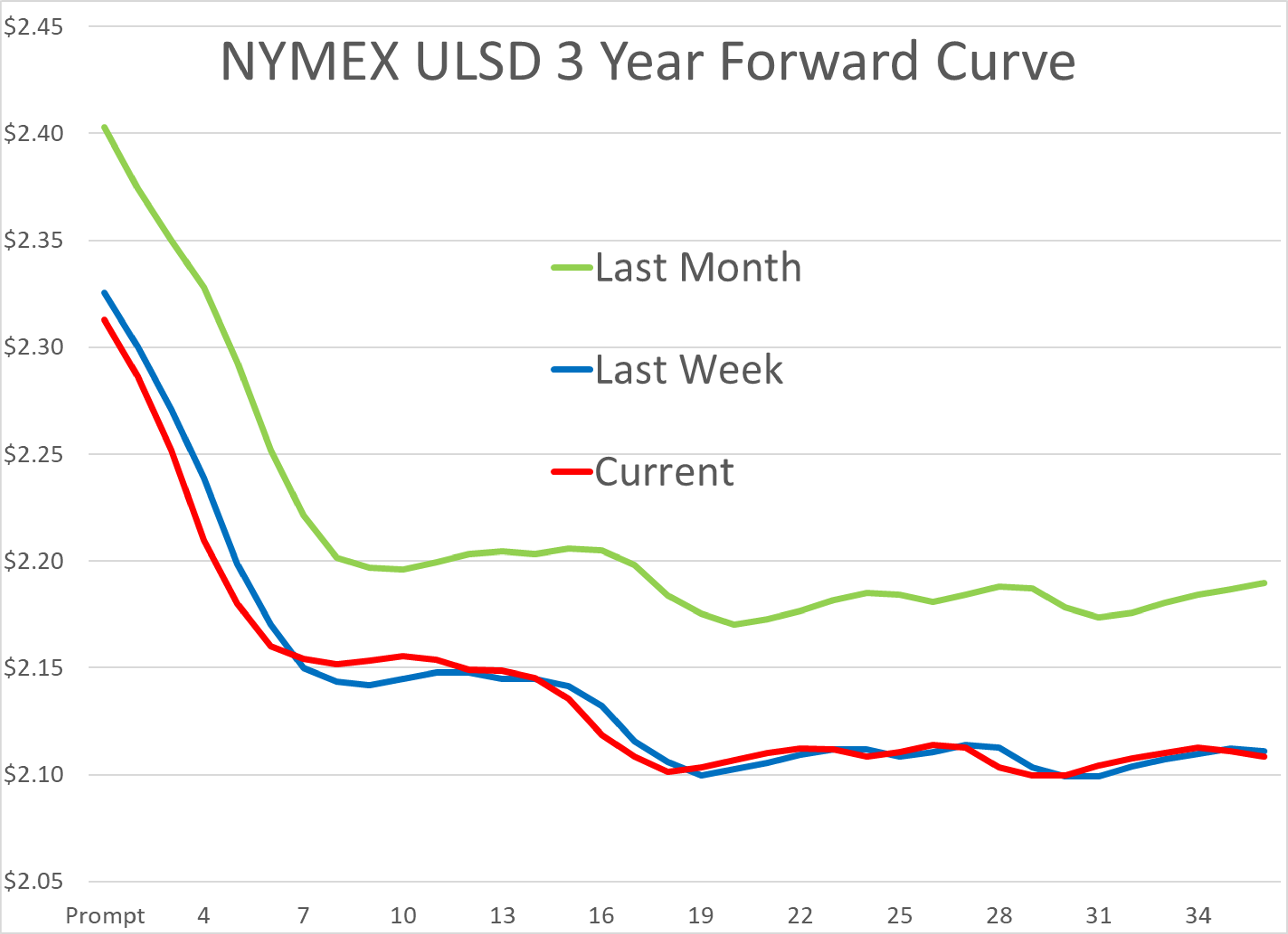
The forward curve charts below that there are drastically different views of the fuel markets today vs 6 months from now and 3 years forward. For WTI and Brent crude we see a modest backwardation for the next 6 months, then 6 months of steady values before a healthy contango for years 2027 and 2028. That suggests there’s a short-term squeeze as traders and exchanges navigate recent sanctions and exploding tankers, but ultimately the market is pricing in excess supply starting at some point next year. In reality, it appears that much of that excess may already be sitting on ships currently, but due to the sanctions on Russia and Iran, and to a lesser extent Venezuela, those barrels are having a problem finding a home.
For diesel the backwardation is more severe over the next 6-7 months as Europe faces another winter of uncertainty due to numerous refinery closures due to weak economics over the past couple of years, Ukraine’s attacks on Russia’s refining network, potential sabotage in October at facilities in Hungary and Romania, and a few others struggling to operate with recent sanctions. Prices level out after the winter and then see another dip around 18 months out from now as new refineries in Asia are set to come online.
There’s been a race buy international companies to buy Lukoil’s non-Russian assets in what would likely be a discounted price to bypass the sanctions. Gunvor was blocked from a $22 billion buyout by the U.S. Treasury in November, calling the company the “Kremlin’s puppet”. Since then, the company’s CEO has announced plans to step down and sell his stake in the company to employees.
The November ADP employment report came in with a negative 32,000 jobs estimated for the month in the latest sign of a slowing job market in the US. It’s worth noting that the ADP estimates show the job losses are concentrated on the East Coast with the 3 segments touching the Atlantic combining to drop by 177,000 jobs for the months while all other regions measured showed modest growth. The Federal employment report that will combine October and November data is due out on December 16th due to the government shutdown.
Flint Hills reported a brief flaring event at its 270mb/day Corpus Christi West refinery Tuesday in a catalyst regeneration unit. The cause of the event was unknown at the time of the report, but it appears to not have impacted other operating units.


Latest Posts
Crude Climbs For A Fifth Day While Global Fuel Supplies Remain Under Pressure
Refining Margins, Tanker Attacks, And OPEC Growth Shape Energy Outlook
Oil Rises As Political Chaos And Supply Risks Shake Markets
Volatility Returns As Traders Weigh Storm Risk And Global Supply Threats
Crude, Diesel, And Storm Risks: Key Drivers Behind Today's Rally
Refinery Outages, Storm Risks, And Export Constraints Lift Distillates
Social Media
News & Views
View All
Crude Climbs For A Fifth Day While Global Fuel Supplies Remain Under Pressure
Refining Margins, Tanker Attacks, And OPEC Growth Shape Energy Outlook