Quiet Markets, Loud Headlines: Tracking The Next Wave Of Energy Disruptions

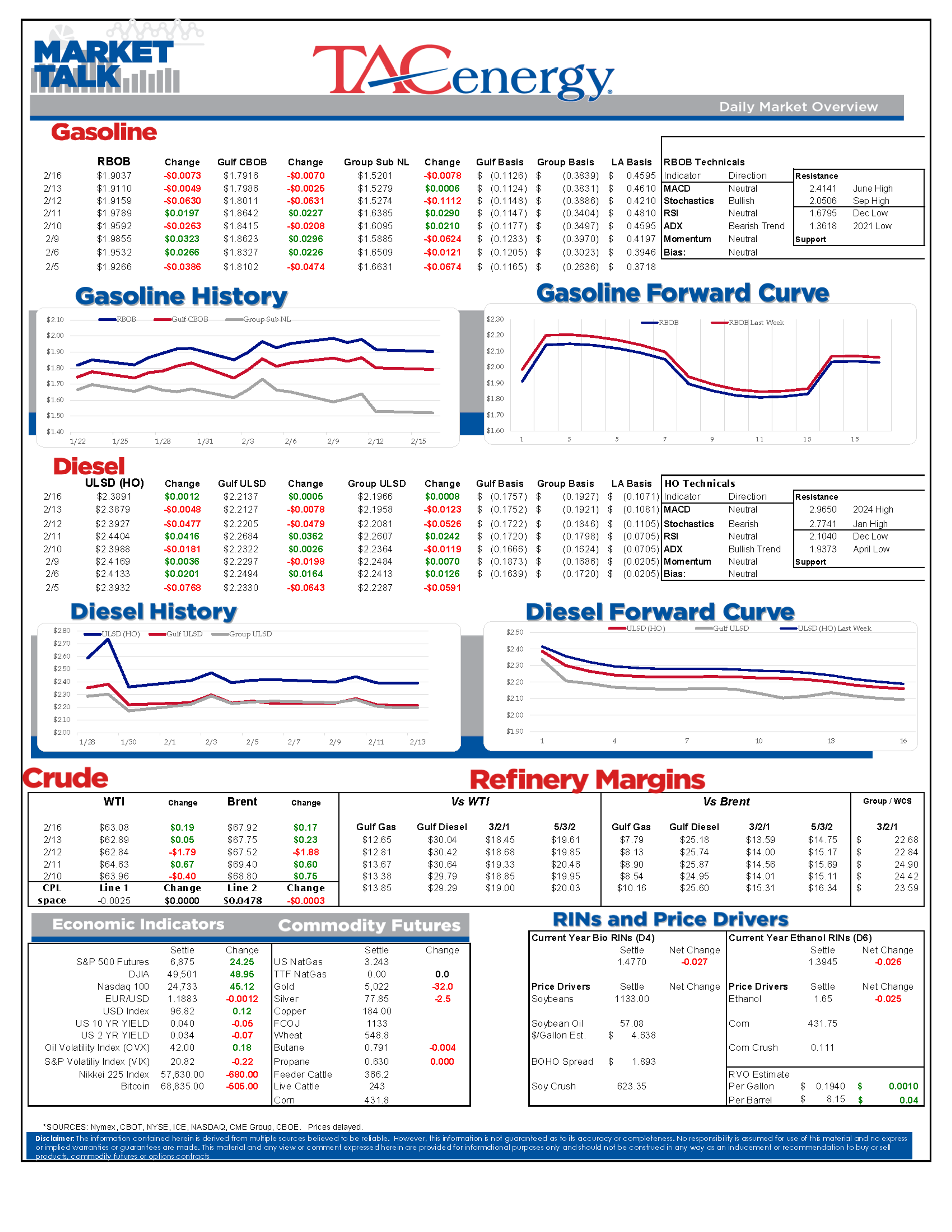
It’s a quiet start for futures markets on the Federal Holiday known as Washington’s Birthday, while spot markets across the U.S. are not being assessed so most industry participants are taking a day off. There will not be a settlement for NYMEX futures contracts today so unless there are some wild swings this morning, most rack prices will hold through tomorrow.
The U.S. and Iran continue to negotiate, with suggestions that Iran is signaling more flexibility in discussions giving some optimism that another war may be avoided even though a 2nd U.S. aircraft carrier moved into the region last week.
OPEC & Friends are set to meet again March 1, and reports over the weekend suggest they’ll be laying the groundwork to resume output increases after pausing the past few months.
The U.S. seized another tanker in the Indian Ocean this weekend, one it had been following from Venezuela since January 3rd, as the campaign to increase pressure on Shadow Fleet ships continues. Ukraine has stepped up its attacks on Russian energy infrastructure, with an 80mb/day port on the Black Sea hit by drones over the weekend after more refinery strikes last week.
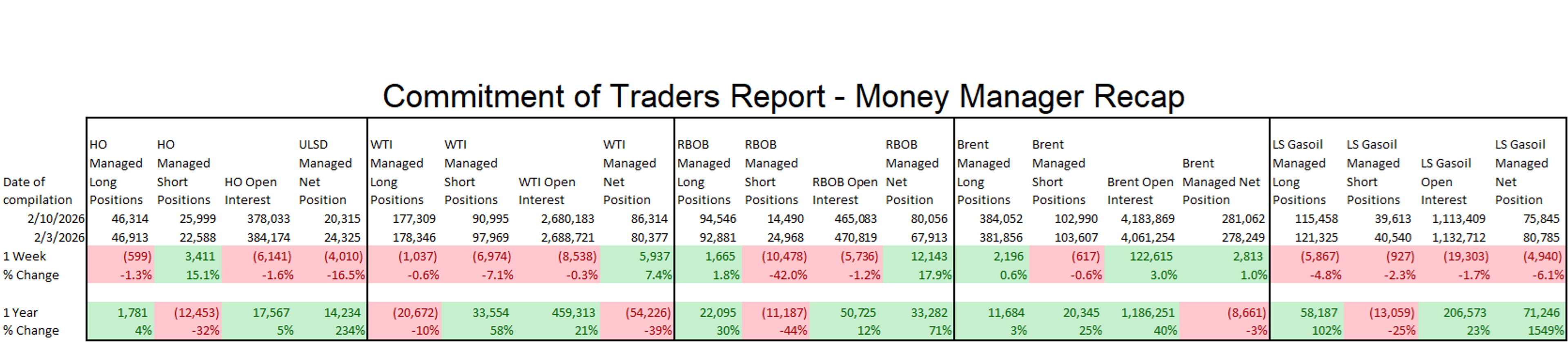
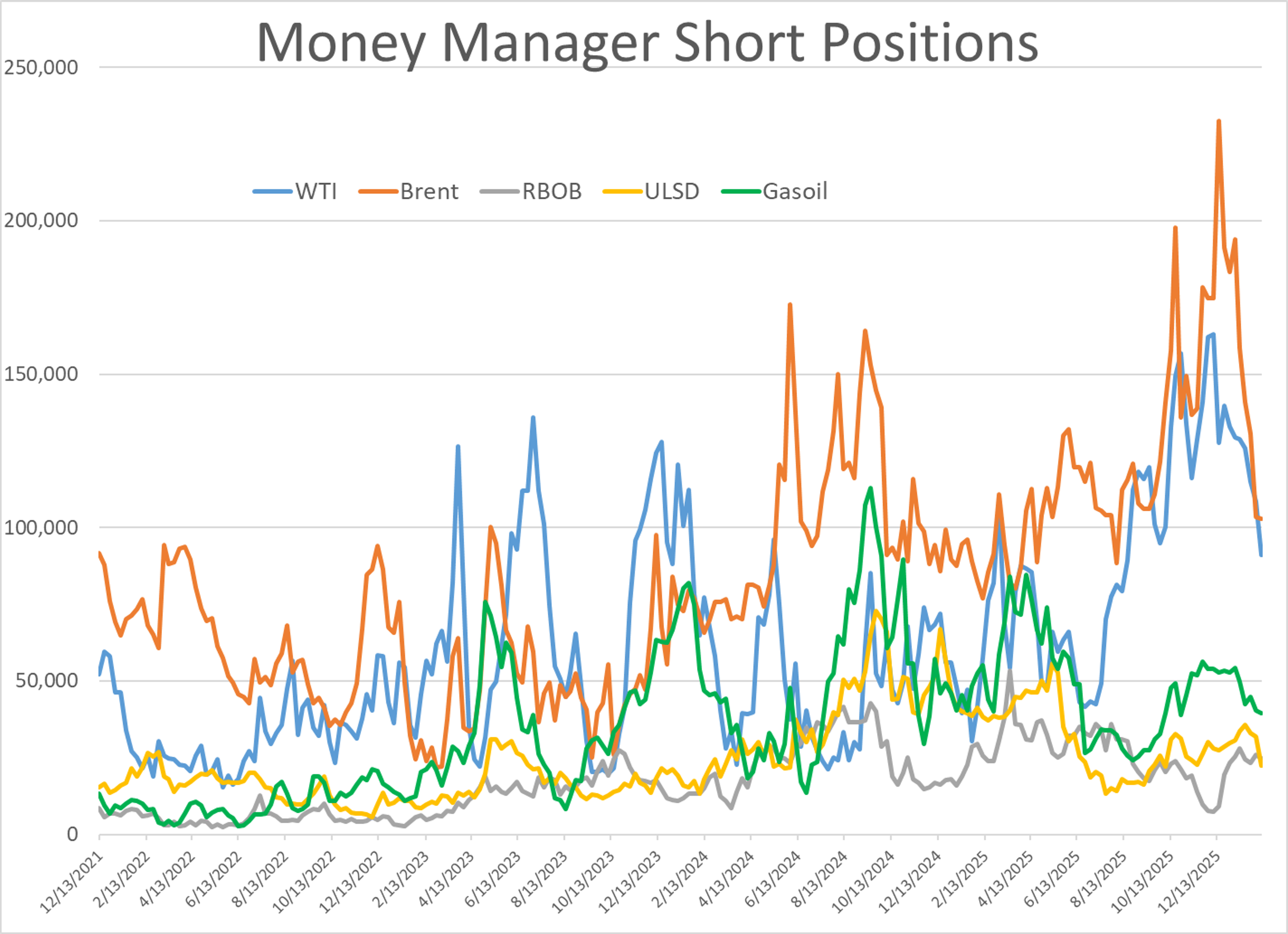
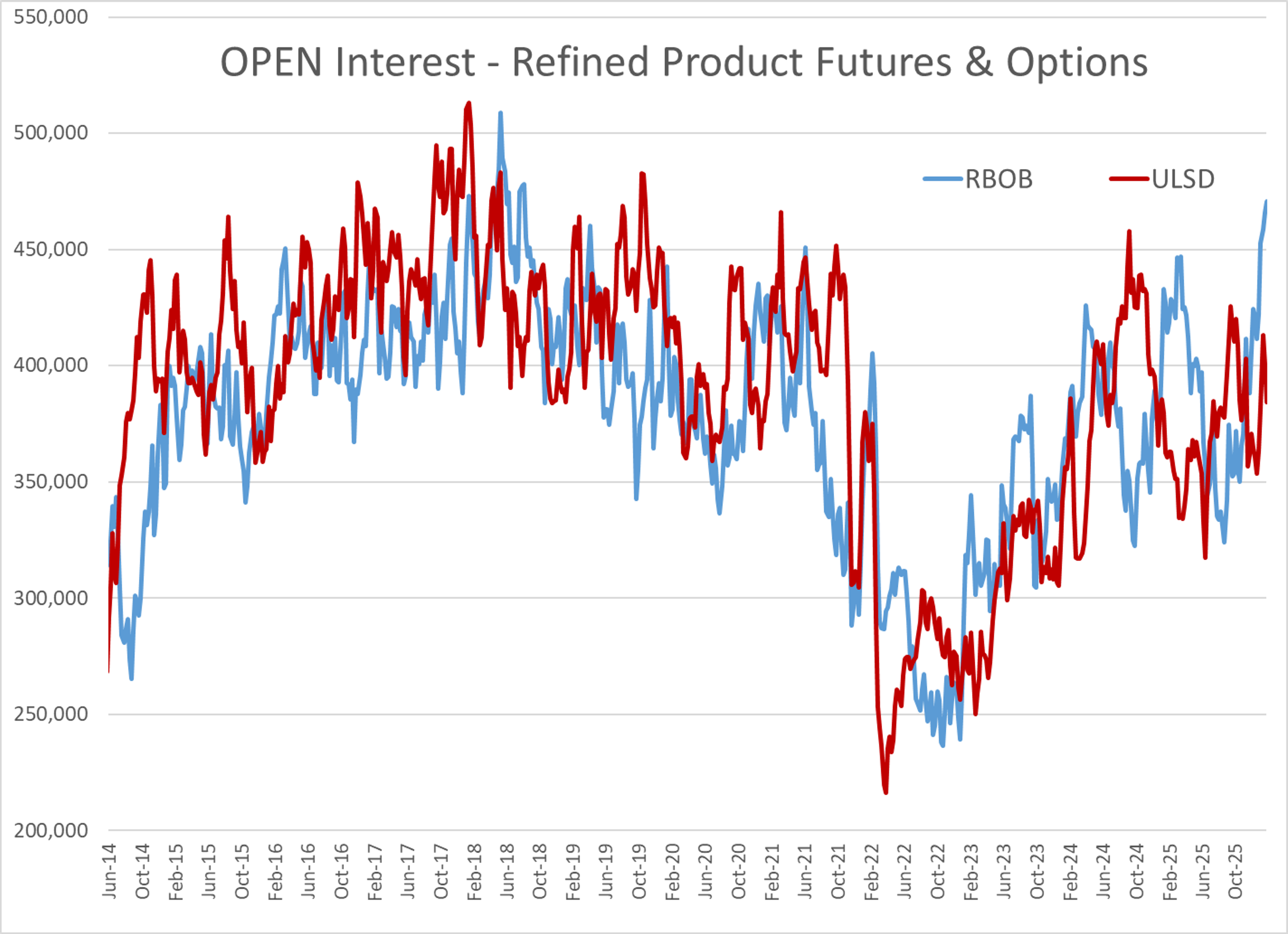
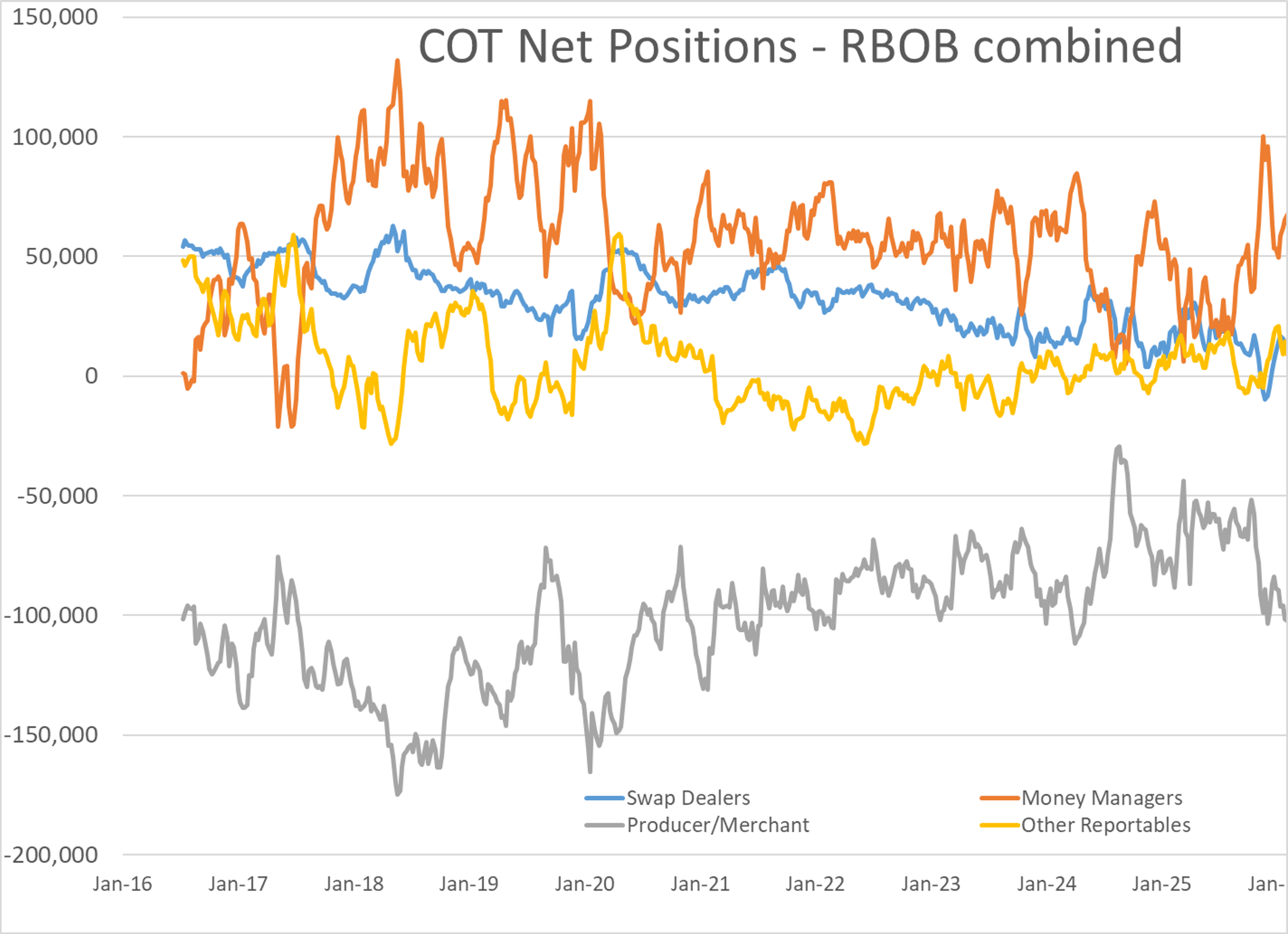
Money managers had mixed behavior last week, reducing their bets on higher diesel prices as the worst of the winter-storm impacts seemed to pass, while making minor additions to crude oil contracts and a healthy increase to bets on higher gasoline prices. Short covering continued to be a theme across most contracts, although the pace of covering slowed. The open interest in RBOB gasoline contracts surged to its highest level since COVID began last week, with market bettors appearing to be either deciding the closure of 2 California refineries may have some impact on a futures contract based in the East Coast, or perhaps growing bored with online betting options now that the football has wrapped up and crypto prices have come under heavy pressure.
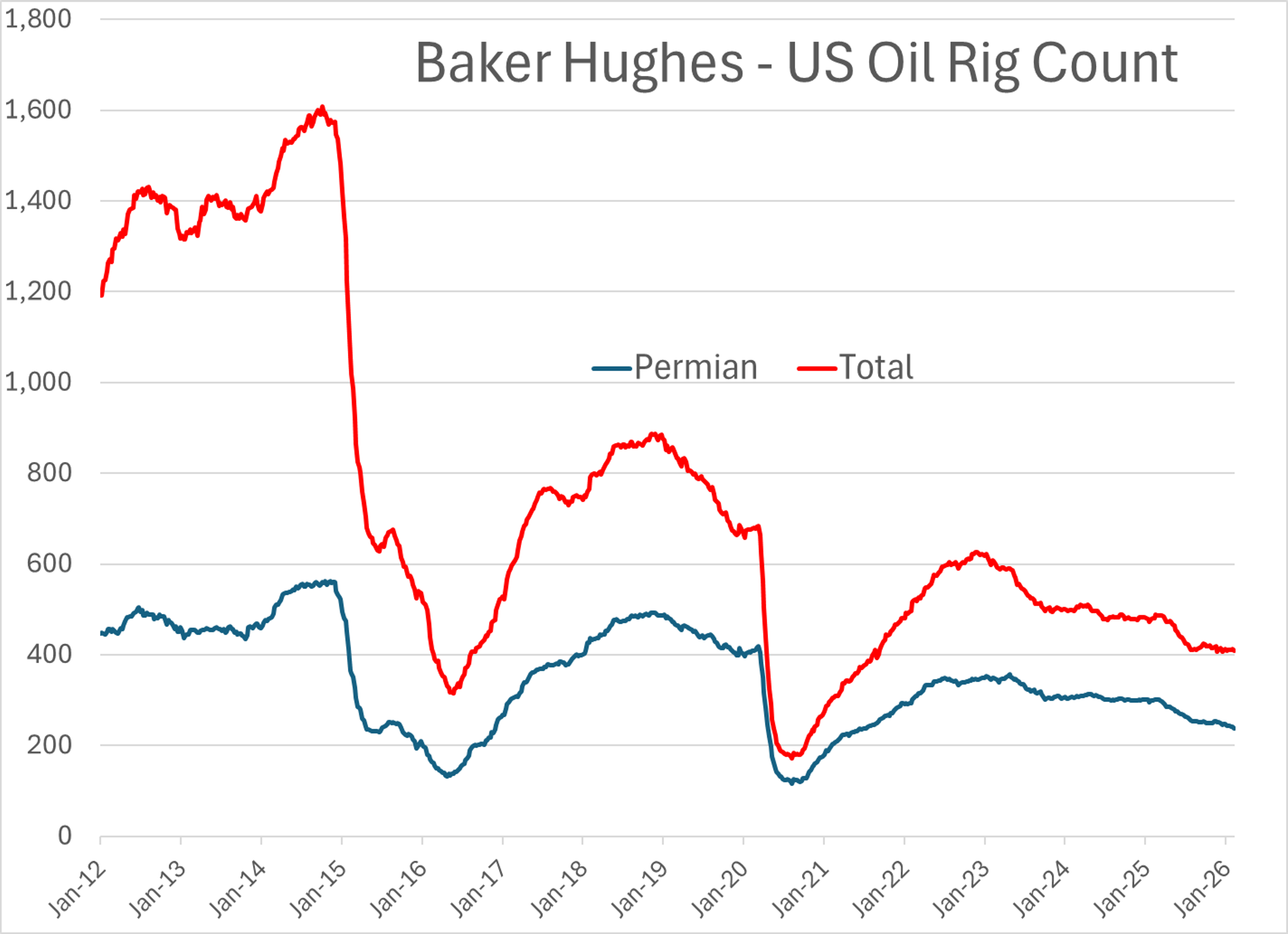
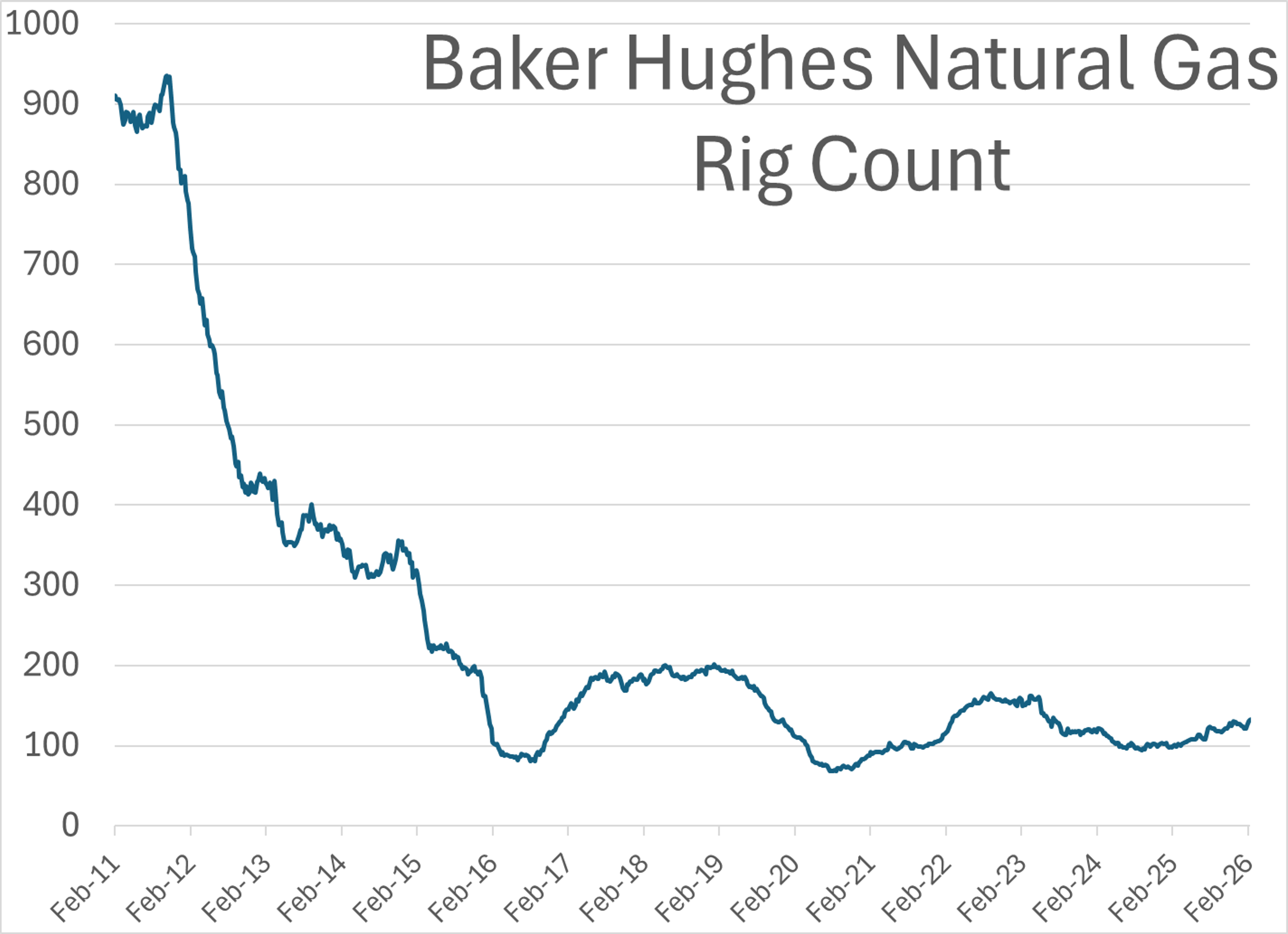
Baker Hughes reported a net decrease of 3 oil rigs active in the US last week, with the Permian basin rig count dropping by the same amount to reach a fresh 4.5 year low of 238 oil rigs, compared to the national total of 409. Natural gas rigs meanwhile continued to increase with 3 more put to work last week, pushing the total U.S. count to a 2.5 year high at 133.
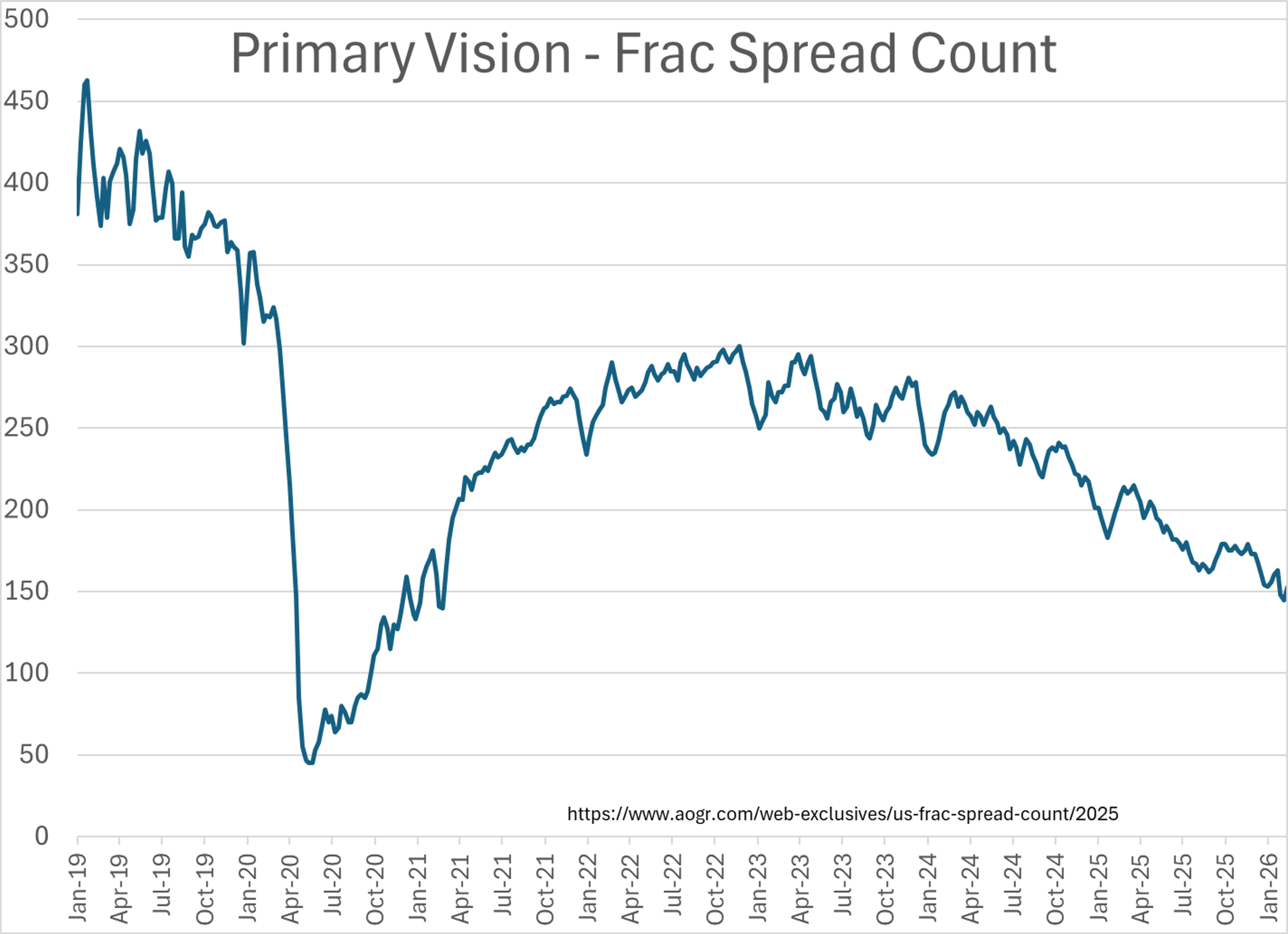
The Primary Vision count of Fracking crews active in the U.S. increased by 8 last week as winter-storm shutdowns eased. A WSJ article last week highlighted how U.S. producers are taking their fracking skills abroad as domestic production rates appear to have peaked.
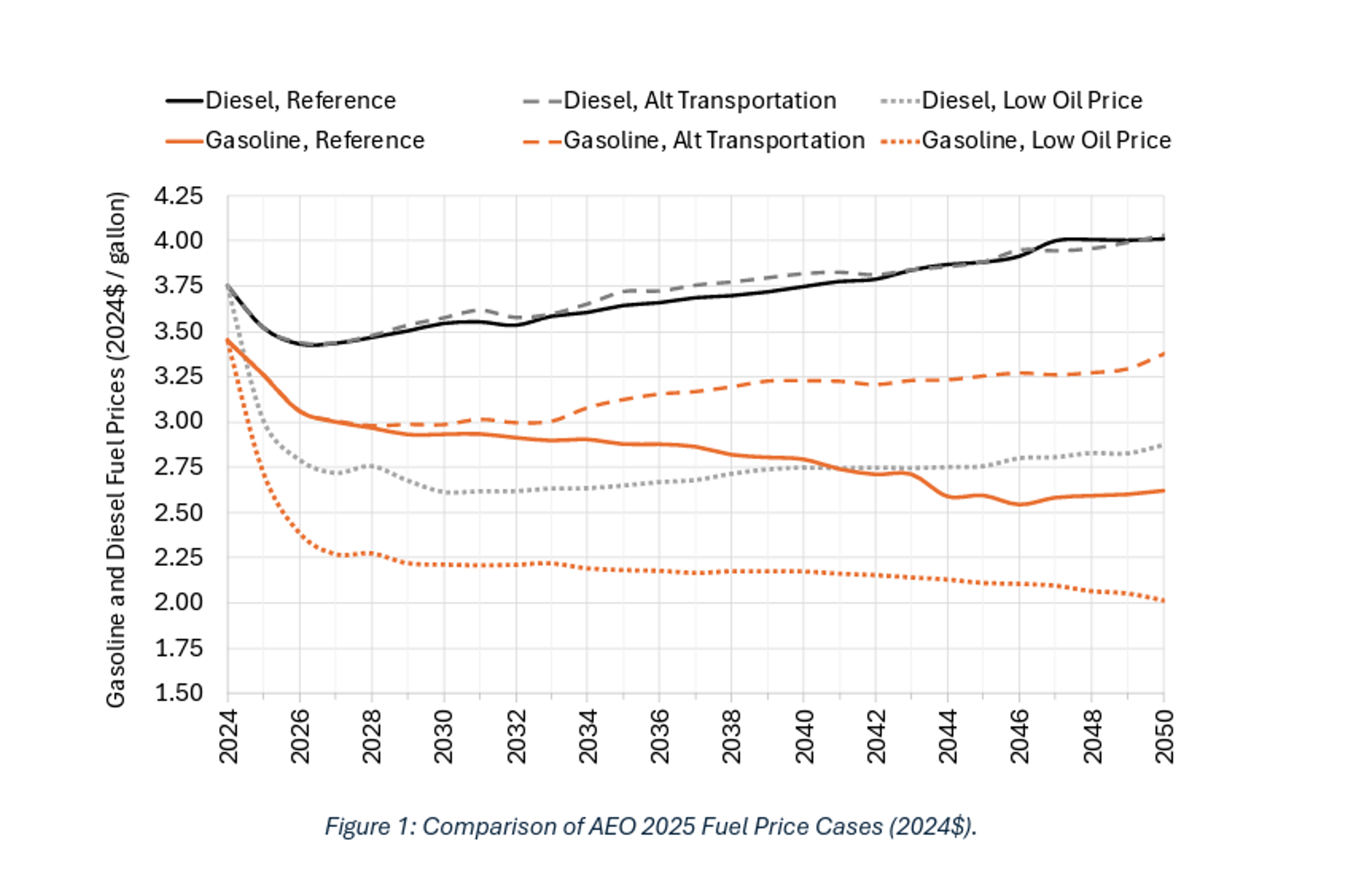
Major environmental news from the EPA last week which finalized its telegraphed plans to rescind the 2009 Greenhouse Gas Endangerment Finding, which was the basis of emissions regulations for the past 15 years. The EPA published a timeline of 60 years’ worth of environmental regulations, and a “Fact Sheet” describing the potential long-term impacts, including a projection that gasoline prices will be 75 cents/gallon higher in 2050 than they would be without this change that will try to repeal emissions standards IF it makes it through the gauntlet of legal challenges that have already begun.
Refinery workers at the 440mb/day BP Whiting IN refinery started picketing this weekend as the facility and the USW have not come to terms on a labor agreement, although the national negotiations were successful a week ago.
Cuba’s fuel crisis seems to be going from bad to worse after a fire broke out at one of the country’s primary refineries over the weekend. For perspective, that facility only processes roughly 40mb/day of oil, less than 1/3 of an average U.S. refinery’s capacity and less than 10% of the BP Whiting facility that’s facing the strike currently.

Latest Posts
Supply Disruptions Persist As Markets Focus Elsewhere
Geopolitics, Diesel Shortages, And Refinery Cuts Shape Energy Markets
Geopolitics, Diesel Shortages, And Refinery Cuts Shape Energy Markets
Week 39 - US DOE Inventory Recap
Volatility Returns As Diesel Surges And Global Supply Chains Tighten
Governors Take Action As Energy Markets Navigate Volatility
Social Media
News & Views
View All
Supply Disruptions Persist As Markets Focus Elsewhere
Geopolitics, Diesel Shortages, And Refinery Cuts Shape Energy Markets