Energy Markets Split As Labor Deals, Sanctions, And Speculation Reshape The Week

Energy markets are conflicted to start the week with ULSD futures trying to lead the complex lower, while RBOB gasoline contracts cling to small gains.
While the U.S. and Iran are continuing nuclear negotiations, the U.S. treasury didn’t stop its pressure campaign with new sanctions targeting the shadow fleet of ships bypassing sanctions to continue exporting oil announced late last week.
Marathon and the USW came to terms on a 4-year national agreement covering roughly 30,000 refinery workers Friday, alleviating concerns about a potential nationwide strike. BP’s 440mb/day Whiting refinery may not be out of the labor woods yet however as the local union is claiming the oil major has no intention of honoring terms of the national agreement. Workers at the facility had already voted to strike last week
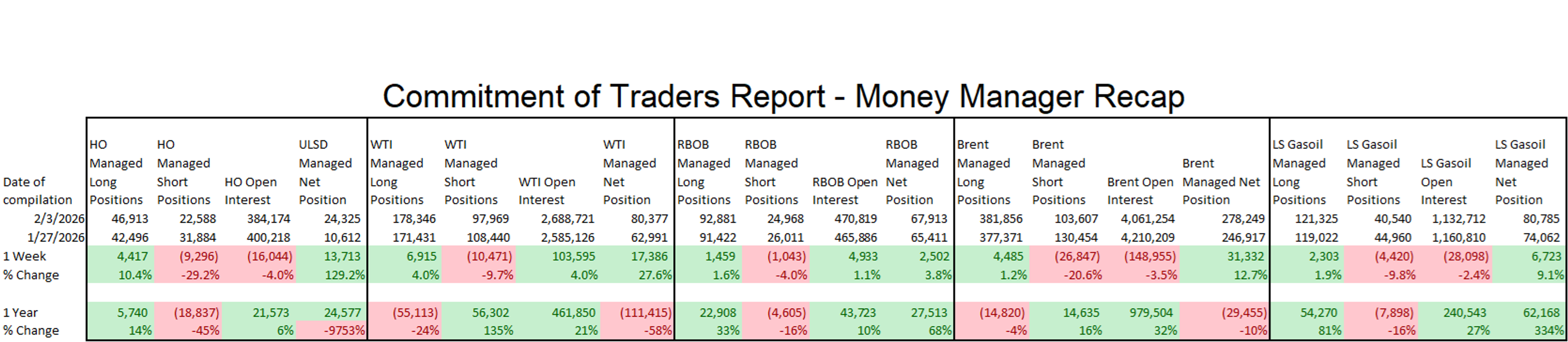
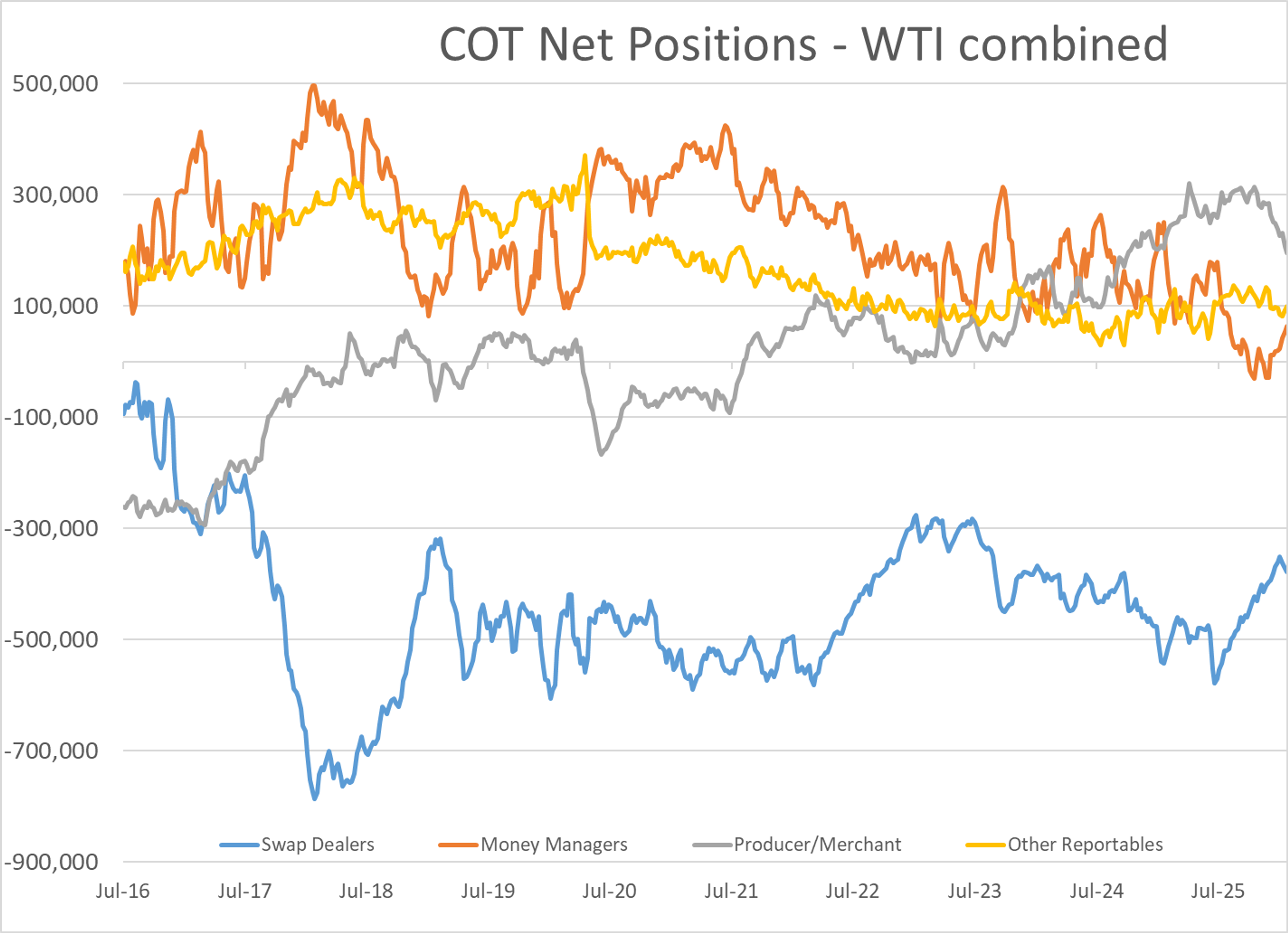
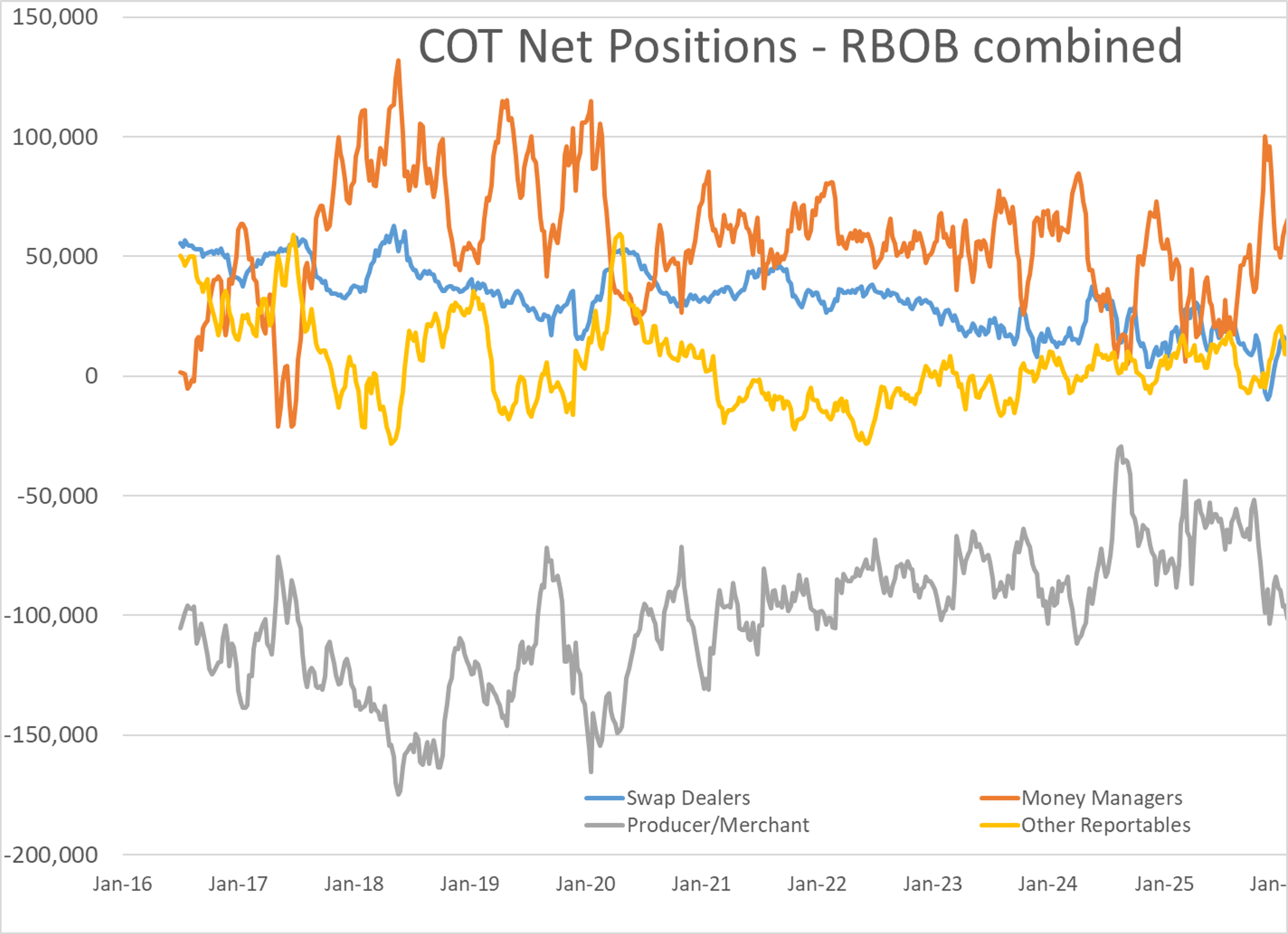
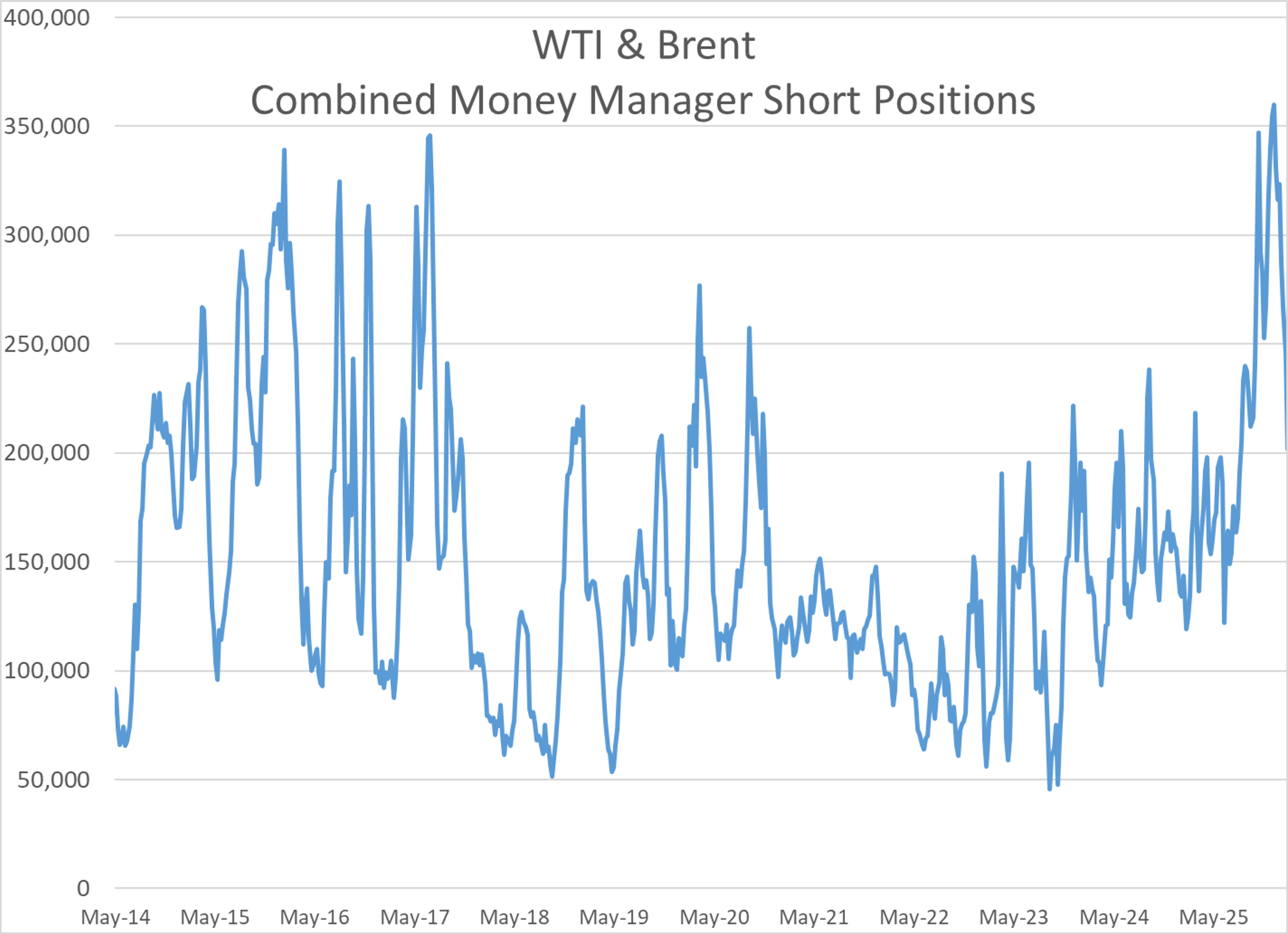
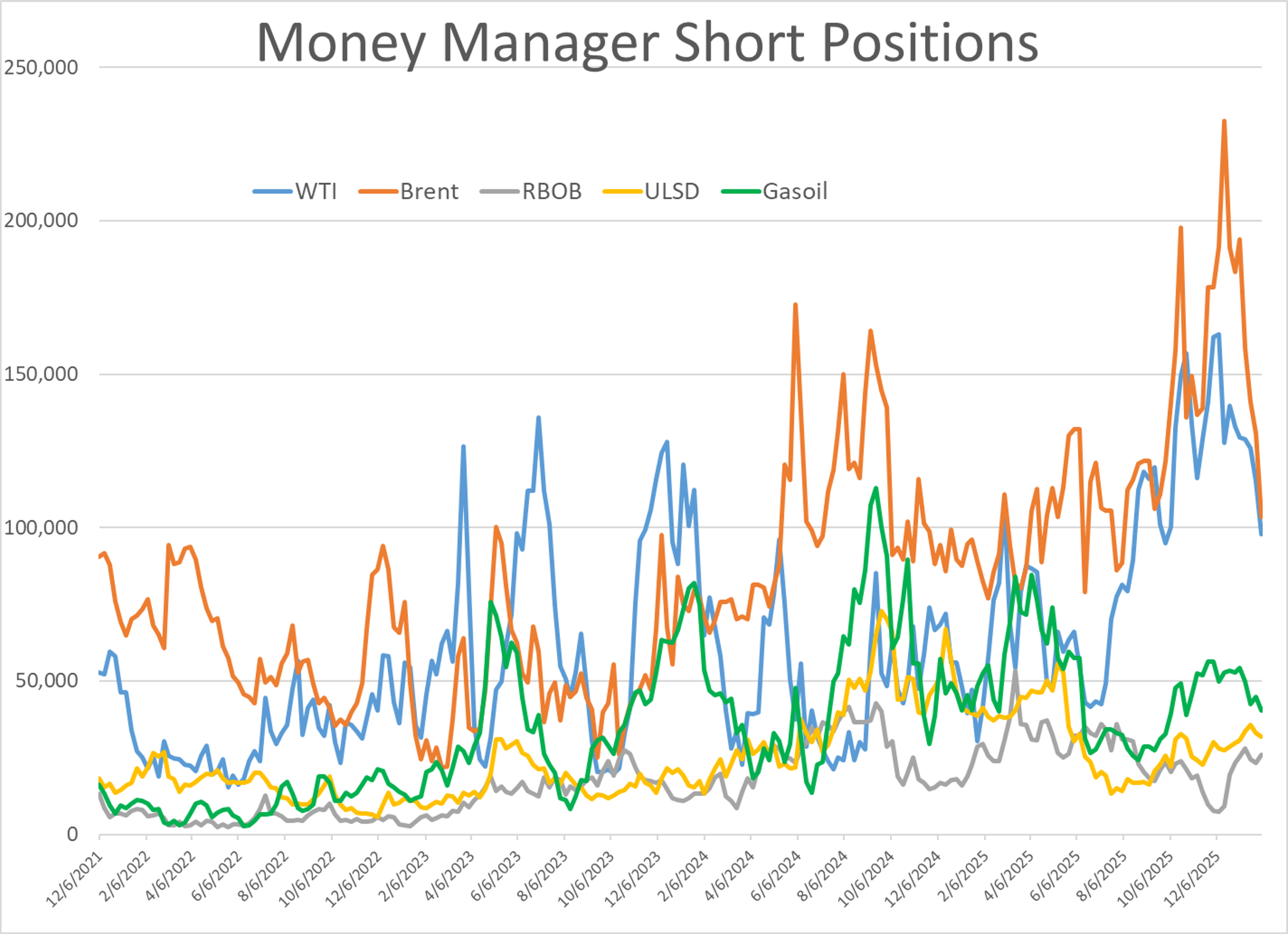
Maybe they should stick to DraftKings: After amassing the largest cumulative short position in oil contracts ever (betting on lower prices when prices were already at 4 year lows) money managers continue have seen heavy short covering to start the year as prices have rallied. Last week saw another 37,000 shot positions covered between Brent and WTI while more than 50,000 shorts were covered across the petroleum complex.
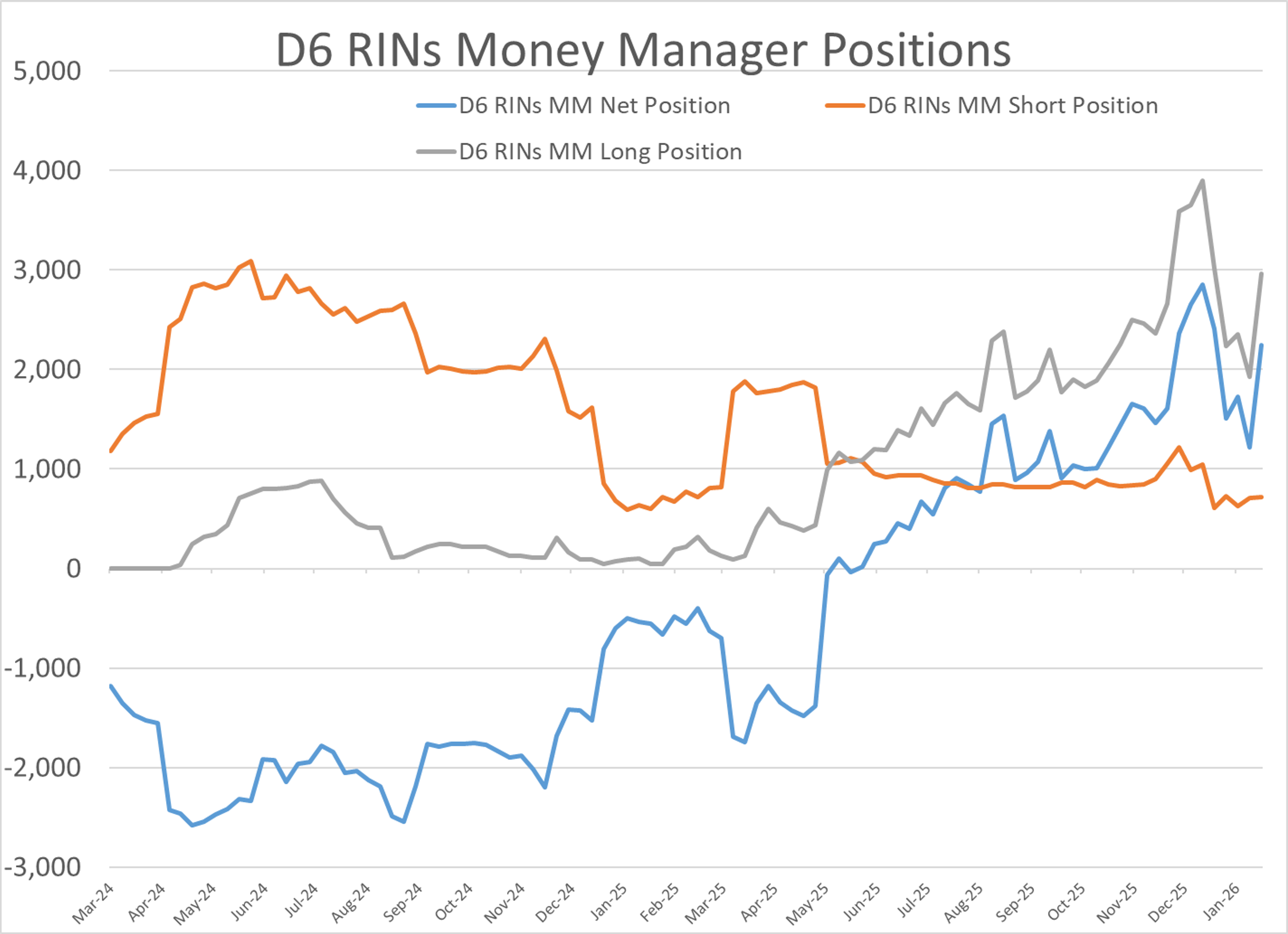
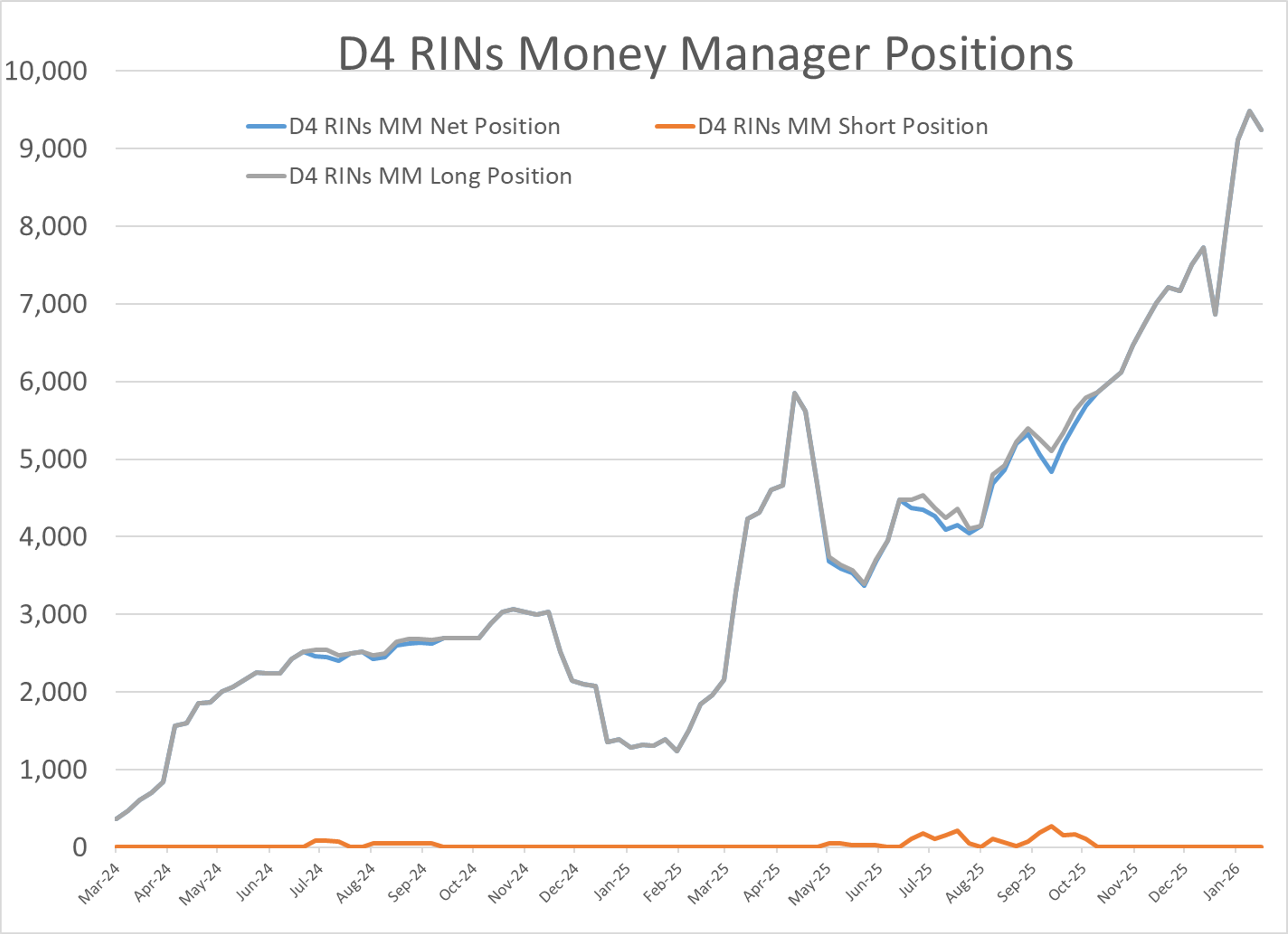
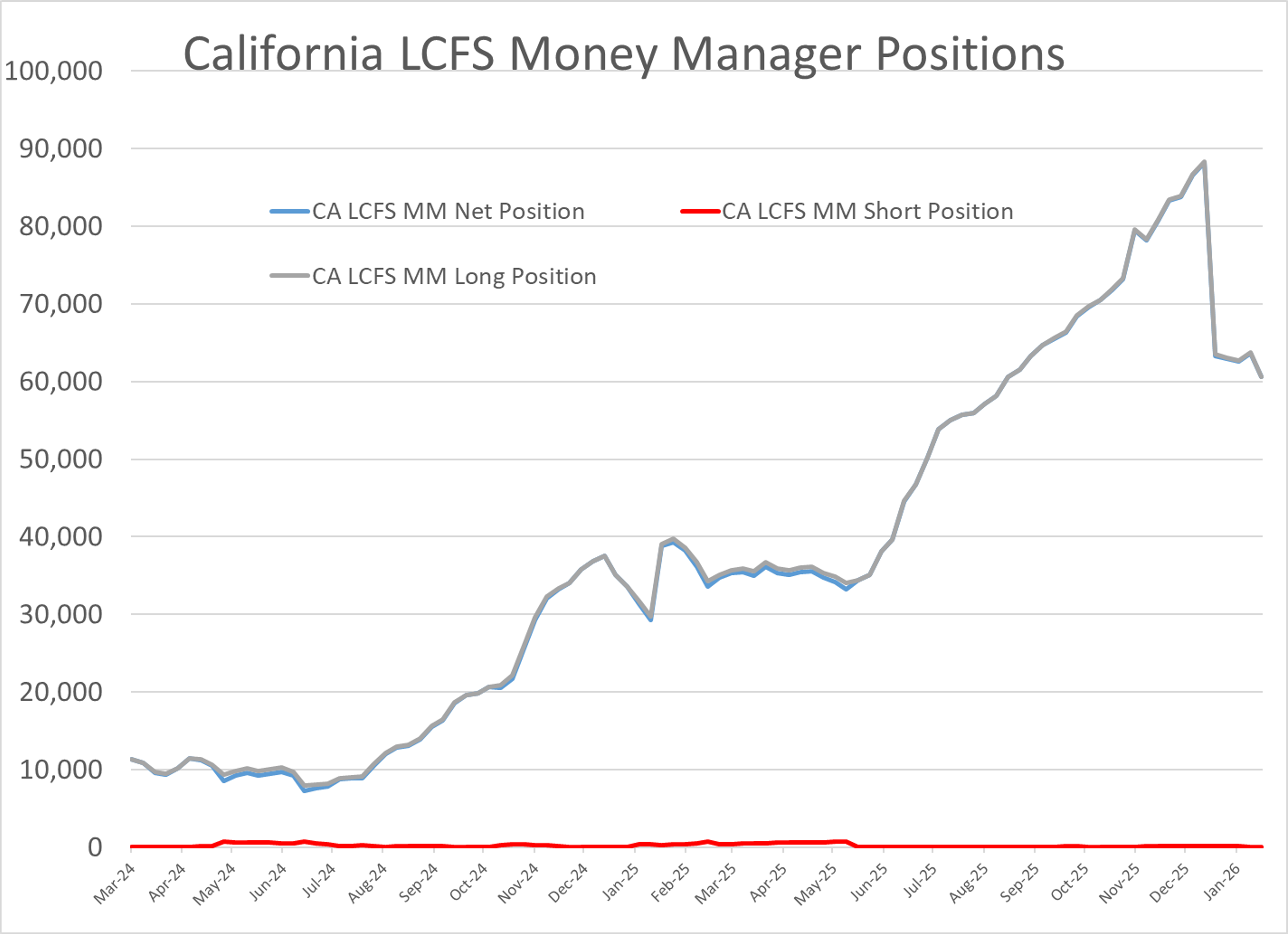
Money managers were reducing their long positions in most environmental contracts last week with D4 RINs and LCFS credits seeing outflows even as prices hit multi-month highs. D6 RINs were an exception as the large speculators started buying once again after a few weeks of reducing their positions and missing out on the rally.
Valero is undergoing maintenance to try and restart an FCC unit at its 200mb/day Mckee TX refinery after an upset Friday.
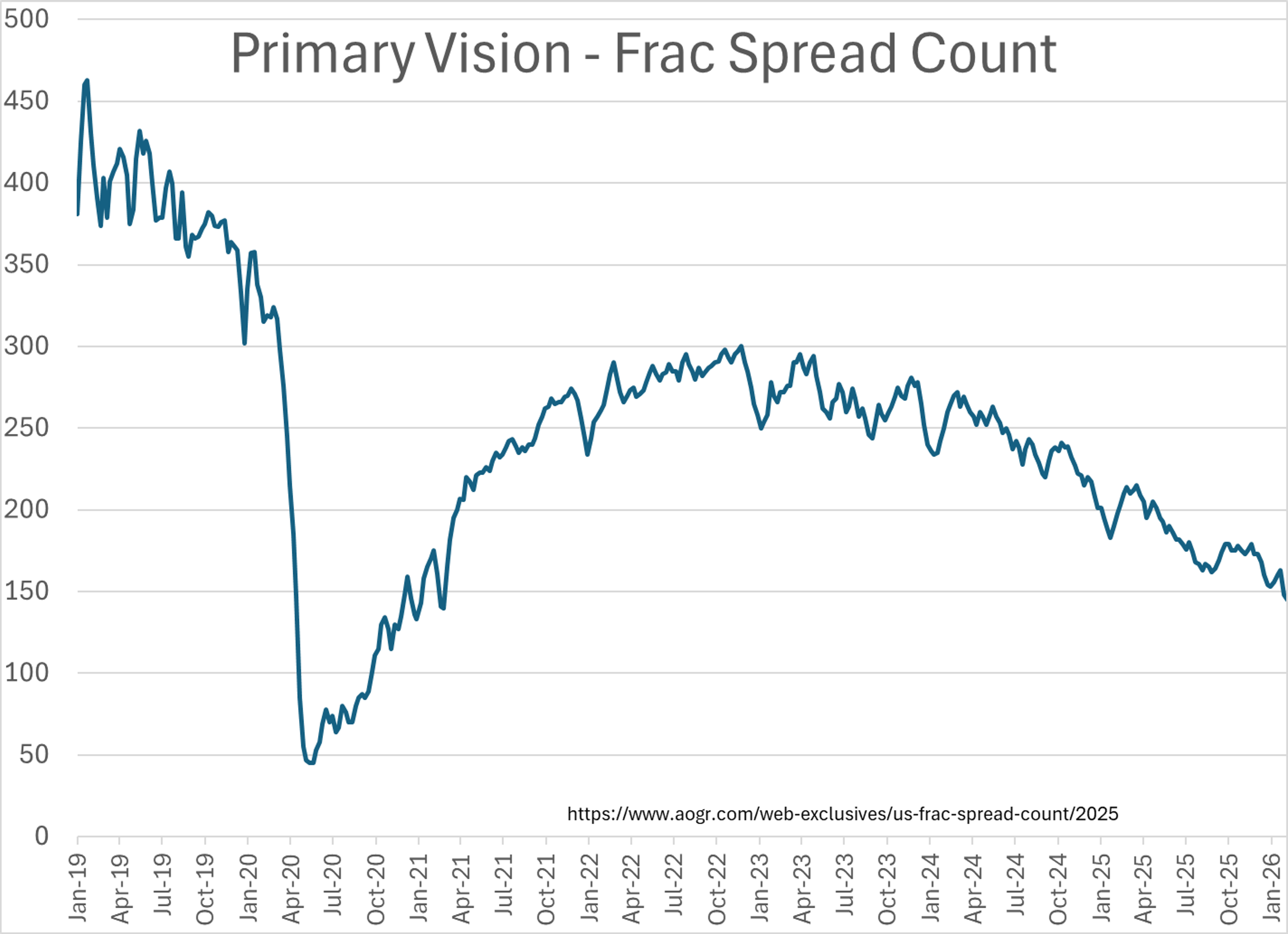
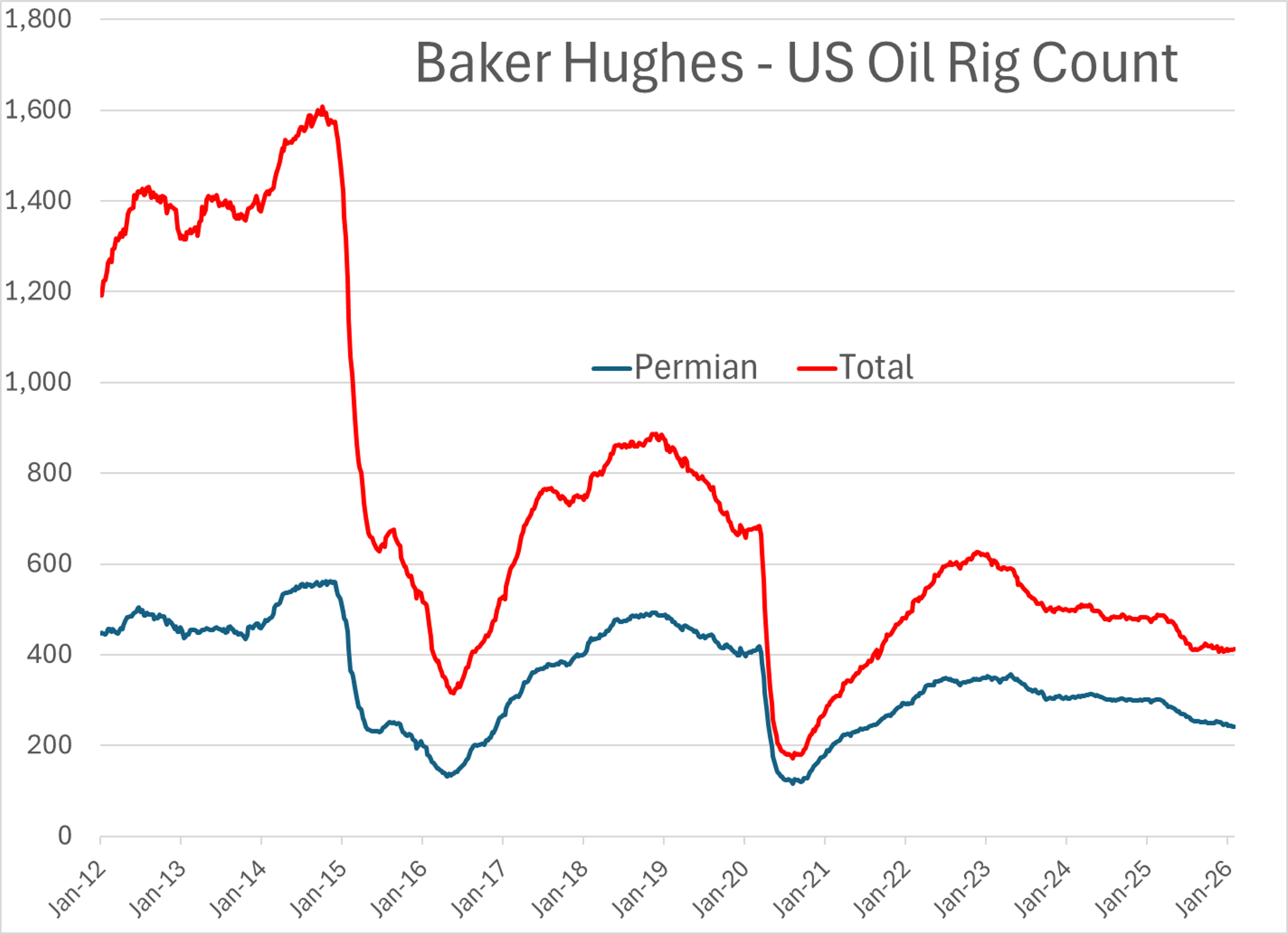
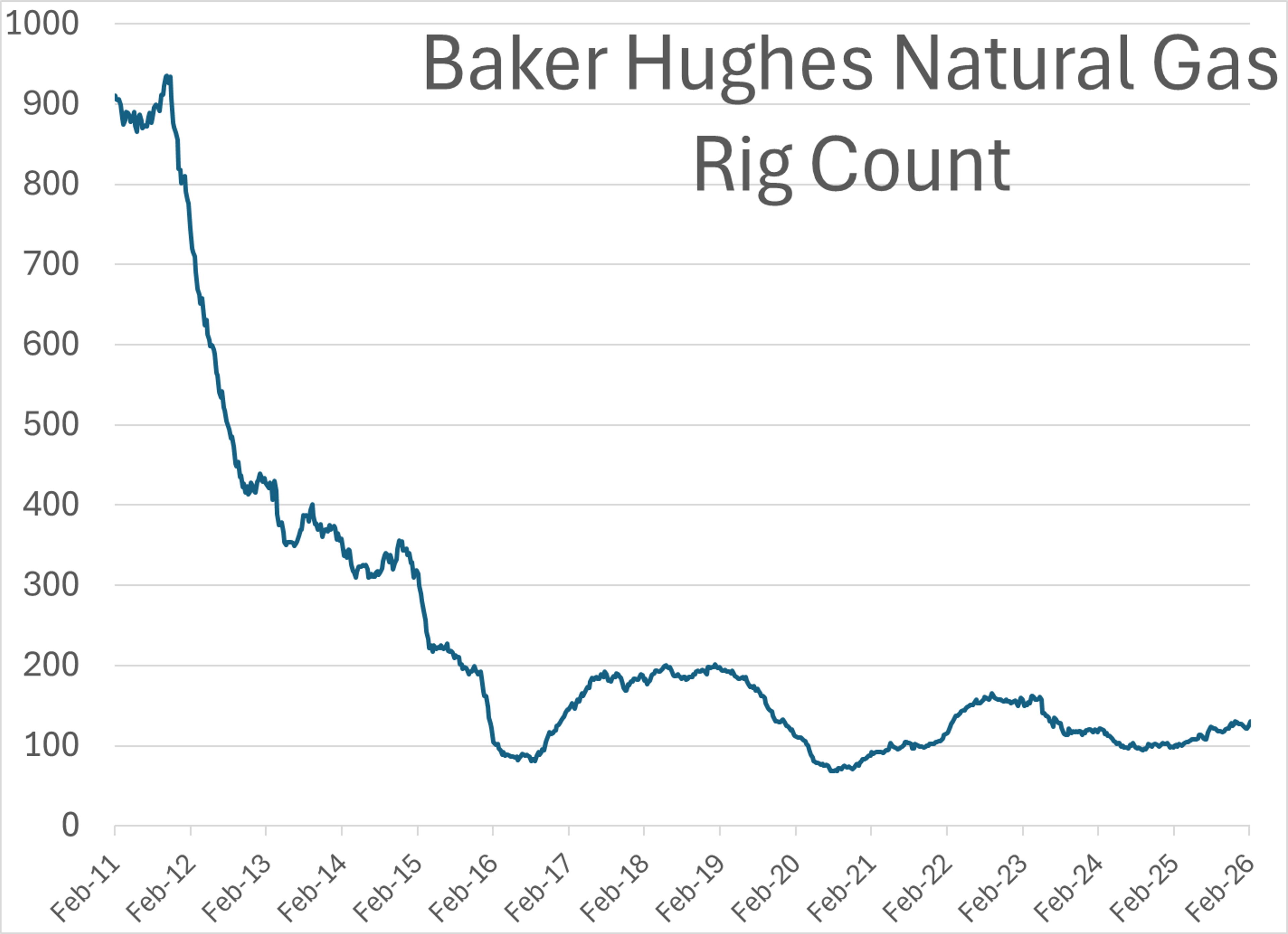
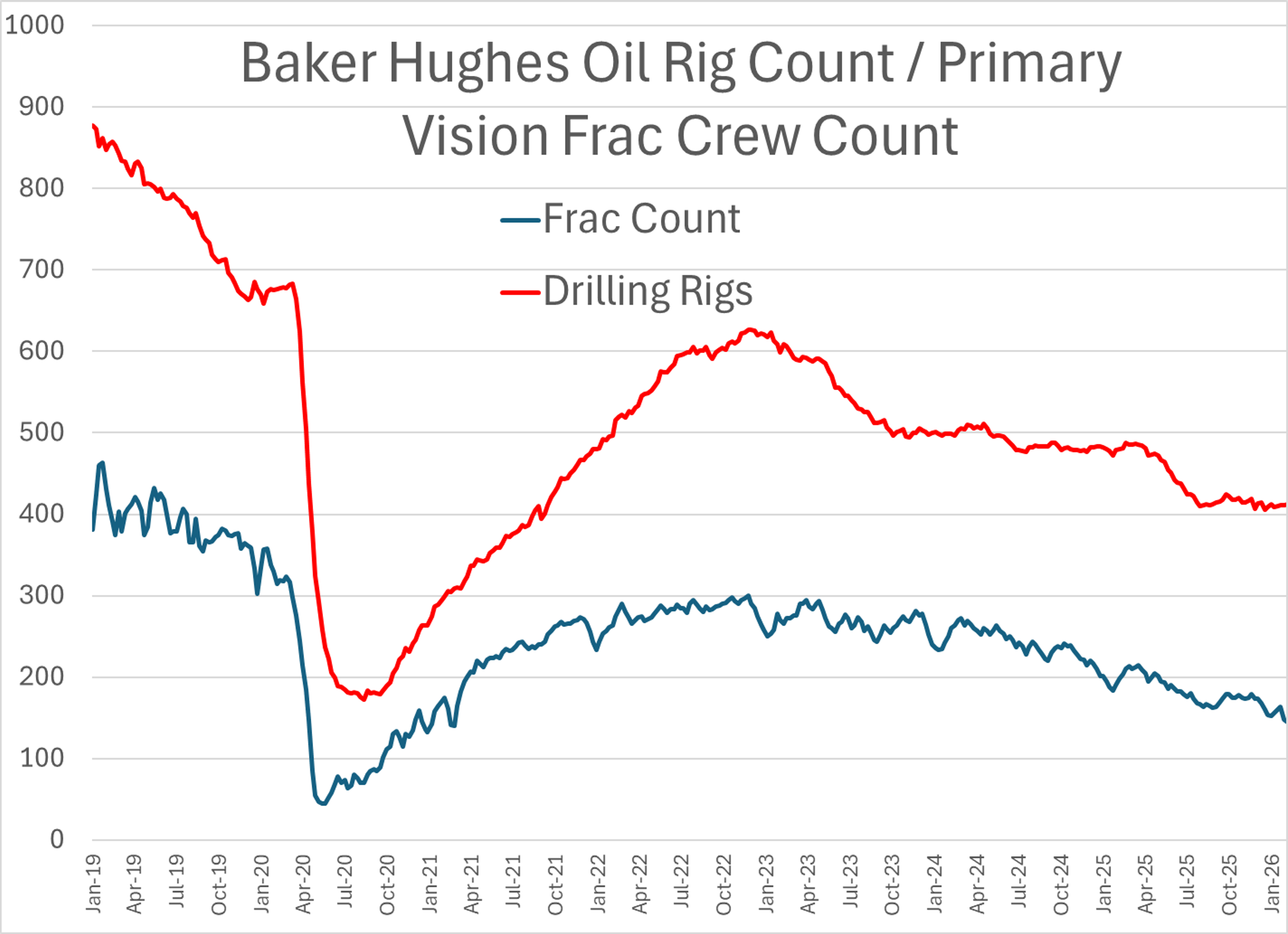
Baker Hughes reported a net increase of 1 oil rig active in the U.S. last week, while the natural gas rig count climbed by 5, tying a 2.5 year high at 130 rigs. The Primary Vision count of fracking crews active in the U.S. dropped by 3 on the week, with the U.S. total touching a 5 year low at 145. While oil production is obviously tempered by the relatively low price environment, the count of active fracking crews is still expected by many in the industry to bounce back following the cold snap.
The Dallas Fed’s 2026 Texas Economic Outlook offers an in depth look at factors that had the state’s economy under pressure in 2025, and forecasts a tick higher in the coming year.
Slower migration is still hurting jobs growth, residential construction is still under pressure from high insurance and property taxes, and the energy industry continues to see slower activity. On the flip side, the demand for building data centers surpasses all other construction, which will drive more growth in the coming year, and the state’s diverse energy mix will keep electricity prices low compared to others. See the FED’s presentation attached.
Latest Posts
Storms, Drones And A Walked-Back Export Ban: Why This Week's Selloff Might Not Last
Diesel Rally Resumes Amid Growing Debate Over US Export Limits
Week 38 - US DOE Inventory Recap
Refinery Economics Clash With Calls For A Diesel Export Ban
Diplomacy Knocks Crude Lower, But Diesel Bulls Aren’t Done Yet
Diesel Pullback Tests Market Nerves Amid Supply Risks
Social Media
News & Views
View All
Storms, Drones And A Walked-Back Export Ban: Why This Week's Selloff Might Not Last
Diesel Rally Resumes Amid Growing Debate Over US Export Limits