Diesel Leads The Downturn As Winter Storms And Iran Talks Jolt Markets

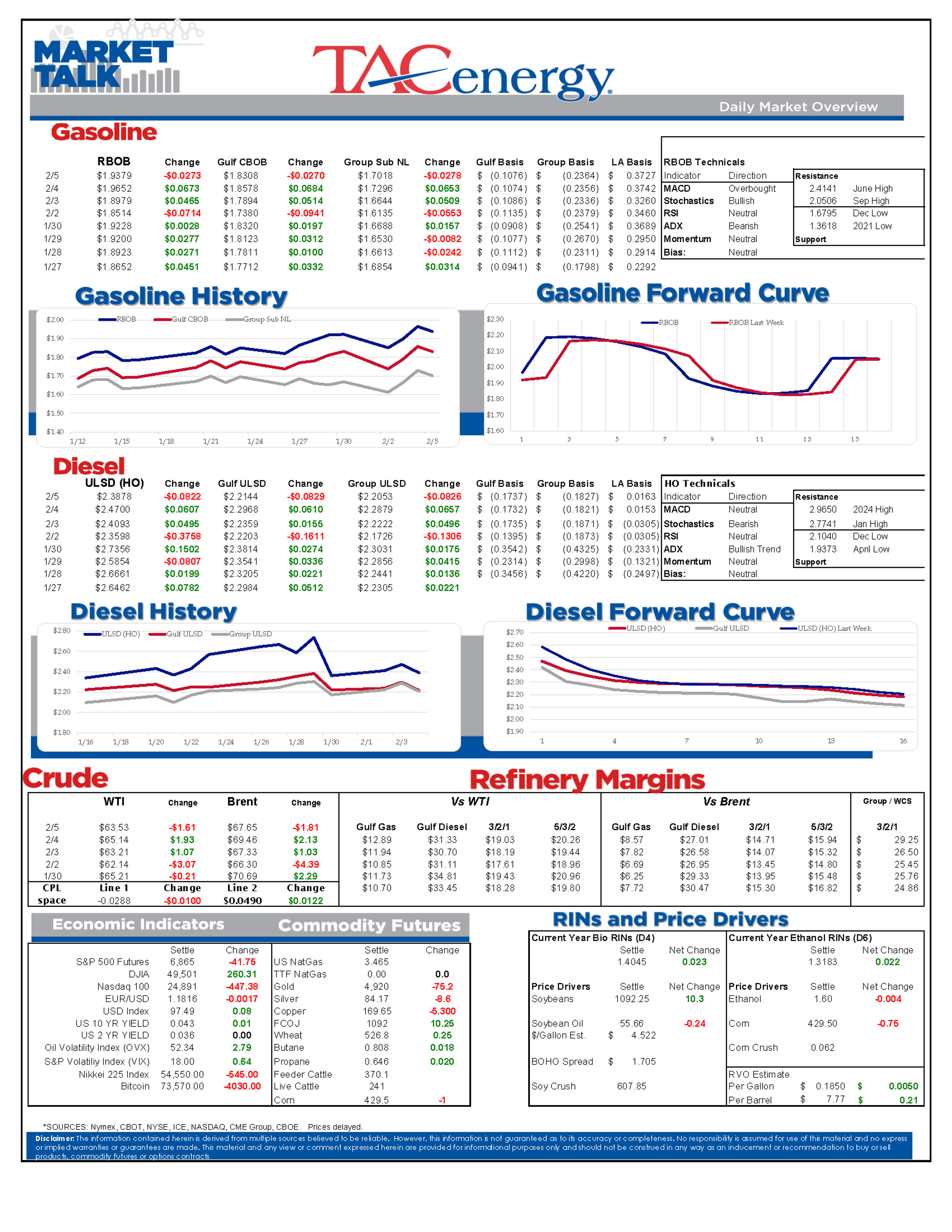
Energy futures are sliding back into the red Thursday after 2 days of strong gains as weather and war stories continue to drive more volatility into the market. Diesel prices continue to lead the swings in petroleum markets, although the 8 cent drop this morning seems to be contradicting another winter storm that’s about to hit the NE, and be followed by the coldest temperatures of the year so far in several states.
The Axios effect: The calm start was shattered Wednesday following an Axios report that the U.S. and Iran had called off planned negotiations set for Friday because they couldn’t agree on the choice of venue. RBOB futures rallied from 2 cent gains following the DOE report to 6 cent gains after the Iran news broke. ULSD futures saw an even larger bounce, turning 2 cent losses into nickel gains. This morning we’re seeing the opposite pattern after an updated version of that Axios report saying U.S. negotiators have reconsidered their stance following heavy lobbying from Arab nations and plan to meet tomorrow at the new location in Oman.
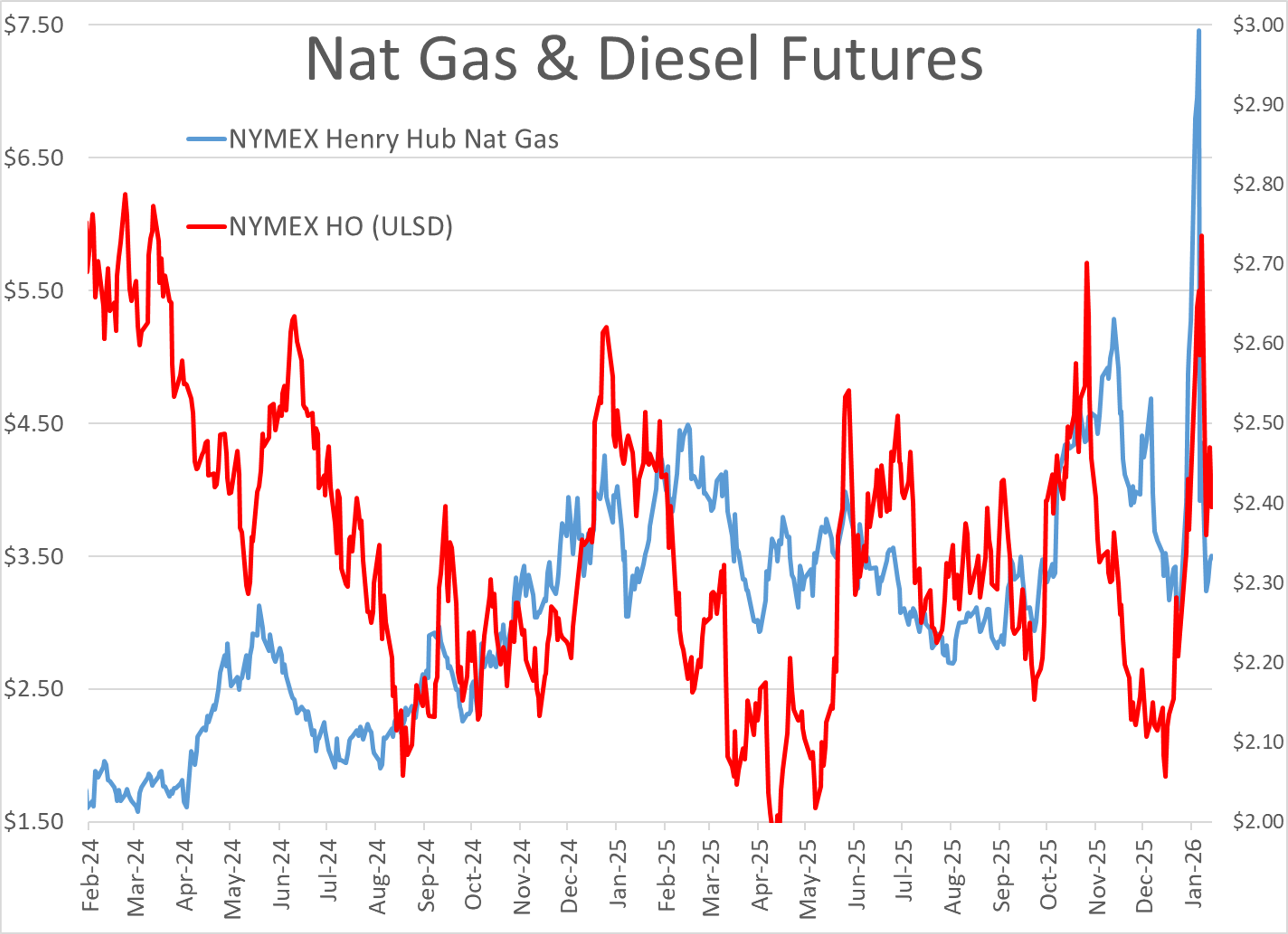
Unlike the pattern for much of the past two weeks, today’s big drop in diesel prices is not being led by a move in Natural Gas futures, which are actually ticking modestly higher on the day. NYH diesel basis values continued to climb Wednesday, with prompt barrels trading north of a 26 cent premium to futures, up another 4 cents from Tuesday, and providing a counterindication to the big slide in futures this morning. There are 2 very cold days predicted this weekend, with negative temperatures for inland portions of the NE and single digits predicted for the coast, after this next blast, temperatures are set to get back to more tolerable levels in the following 2 weeks which may be another reason for ULSD futures giving back a big chunk of their gains from the past 2 sessions.
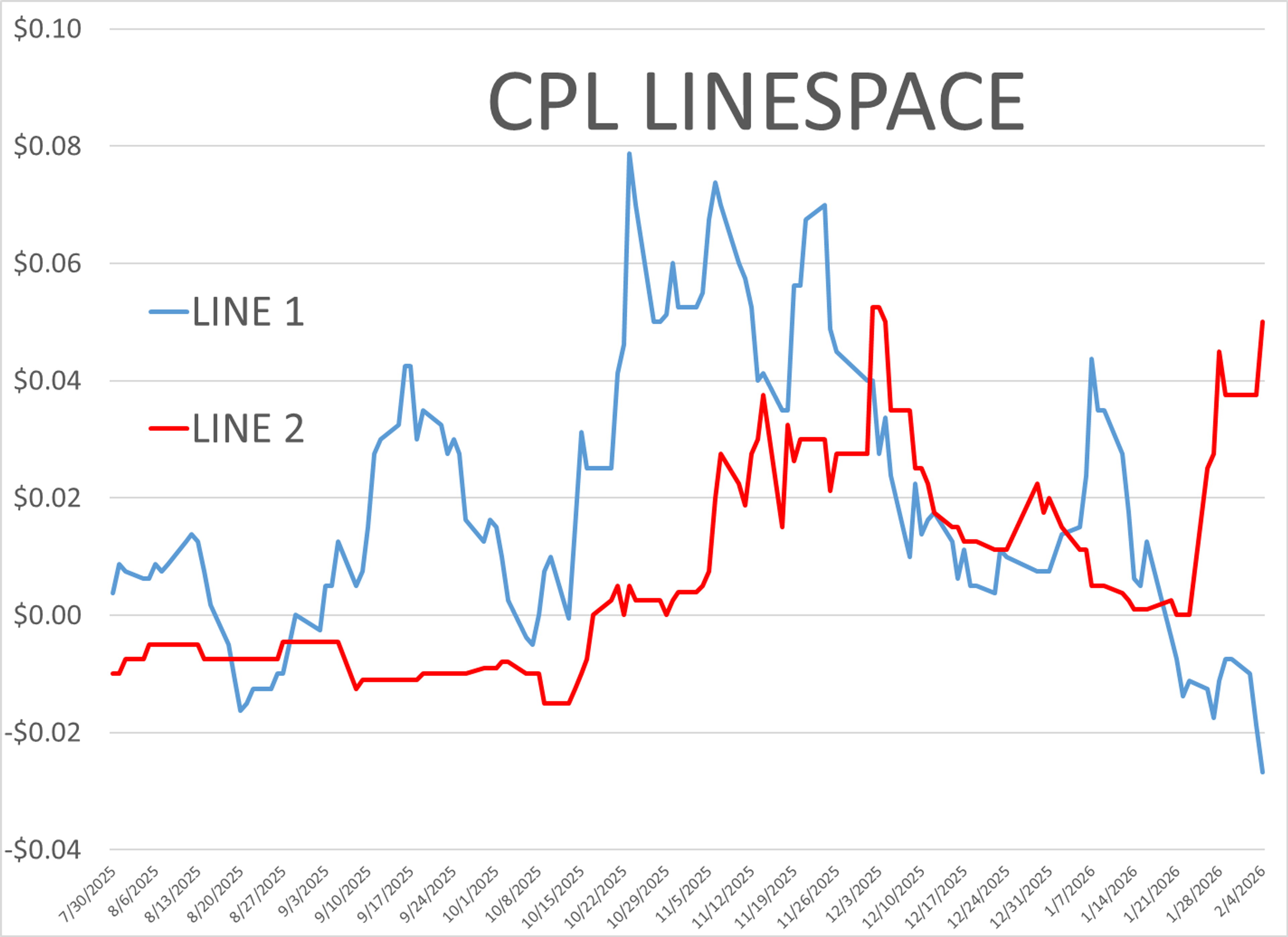
Values for shipping gasoline and diesel along Colonial’s mainlines are moving in opposite directions as shipper scramble to resupply diesel in markets where heavy burns have been needed to supplement the power grid, opening up a 30 cent arbitrage between New York and neighboring markets, pushing Line 2 (diesel) premiums to a 2-year high around 5 cents/gallon. On the flip side, gasoline demand has plummeted in states hardest hit by the winter storms, causing numerous terminal requests to lift more gallons to avoid containment issues that could back up the pipelines, so shippers are actually paying 2 cents/gallon to have someone else use their Line 1 space.
Coincidentally, Colonial issued new rules on its Capacity Allocation and Nomination Integrity programs Wednesday. The new rules highlighted on the company’s website include increasing the minimum threshold for fees to 98% of nominated volume from 95% and doubling the cost for those who don’t hit the threshold. The new rules also tighten up the timing on scheduling changes and attach fees to those who try to make last minute adjustments.
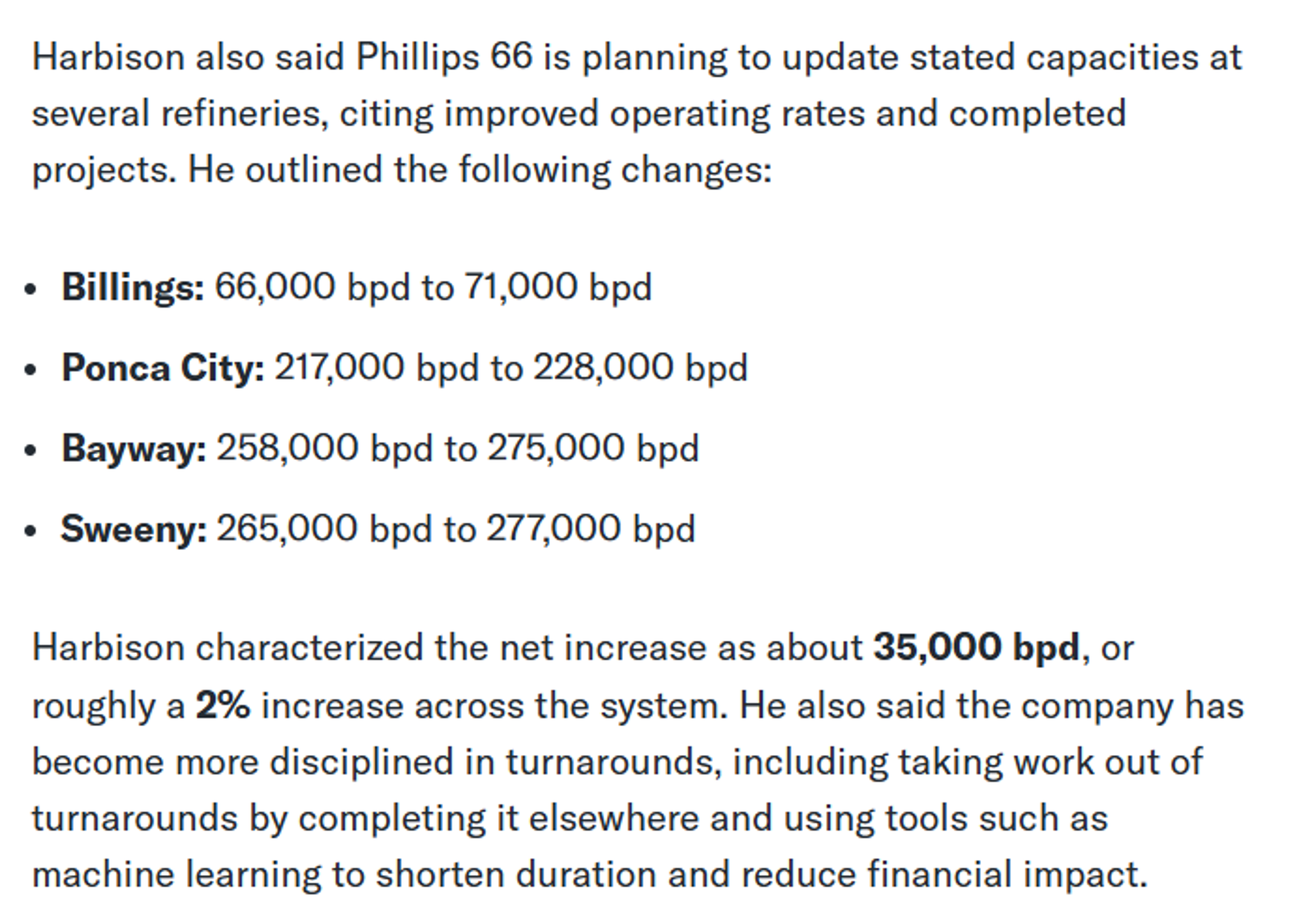
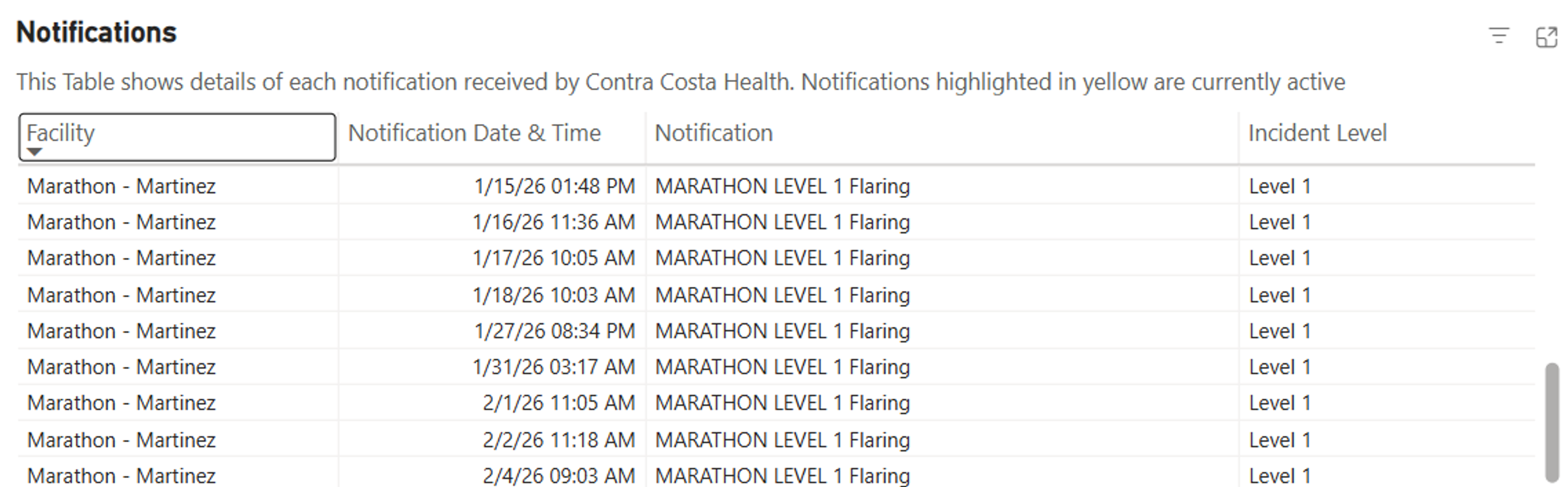
Among the strong Q4 earning reports from U.S. Refineries, both Marathon and P66 discussed their plans to expand capacity at their remaining plants. Meanwhile, P66 issued notice that it would be laying off 277 employees from its recently shuttered LA-area refinery, while Marathon continues to slog through a turnaround at its converted RD facility in Martinez CA with near-daily flaring alerts to county regulators.
Notes from the DOE’s weekly status report. See charts attached.
Import/export flows and refinery runs were wiped out by demand, production, and adjustment changes leaving crude balances down almost 3.5 million barrels on the week, a significantly smaller drop than the 11 million barrels estimated by the API. Oil production slowed significantly as expected due to weather-related shut ins, dropping below the past two years seasonally, but is still at the high end of the 5-year range and should return to normal levels next week.
Refinery run rates pulled back quite a bit in PADDs 1 & 2, also dropping below the previous two years’ seasonal levels. The combined 326 kbd displaced by those two PADDs was partially offset by an increase in PADD 3. Despite the large declines and typical dwindling of run rates through January, total U.S. run throughput is still 452 kbd above the 5-year seasonal range.
Diesel stocks collectively drew 5.5 million barrels across every PADD except 5 as exports and demand both saw unseasonable spikes last week. All PADDs are now running below average outside of the Gulf Coast, where they’re still ~5 million barrels above. The slide dropped total U.S. stocks from just above to about 3 million barrels below the 5-year average, in line with 2024 levels.
Gasoline stocks showed a slight build despite PADDs 2-5 all declining on the week. PADD 1 hit a 5-year seasonal high on its 9th consecutive week of increases. PADD 5 slipped to a seasonal 5-year low while the other three PADDs are still comfortably above average, holding total U.S. inventories about 10 million barrels above their 5-year average. Post-storm demand fell back below average but slowed production ate up most of the positive impact from the drop in demand. Ethanol output hit almost a 2-year low as exports shot back up substantially, although stock levels continue to hold above average for the time being.
Latest Posts
Diesel Strength Offsets Gasoline Weakness As Supply Concerns Mount
Diesel Under Pressure As Traders Discount Supply Disruptions
Week 37 - US DOE Inventory Recap
Oil Pulls Back After Rally While Distillates Extend Gains
Refinery Disruptions And Strait Closures Fuel Diesel Rally
Oil And Diesel Rally On Escalating Infrastructure Attacks
Social Media
News & Views
View All
Diesel Strength Offsets Gasoline Weakness As Supply Concerns Mount
Diesel Under Pressure As Traders Discount Supply Disruptions