Energy Prices Surge Amid Middle East Tensions And Domestic Supply Disruptions

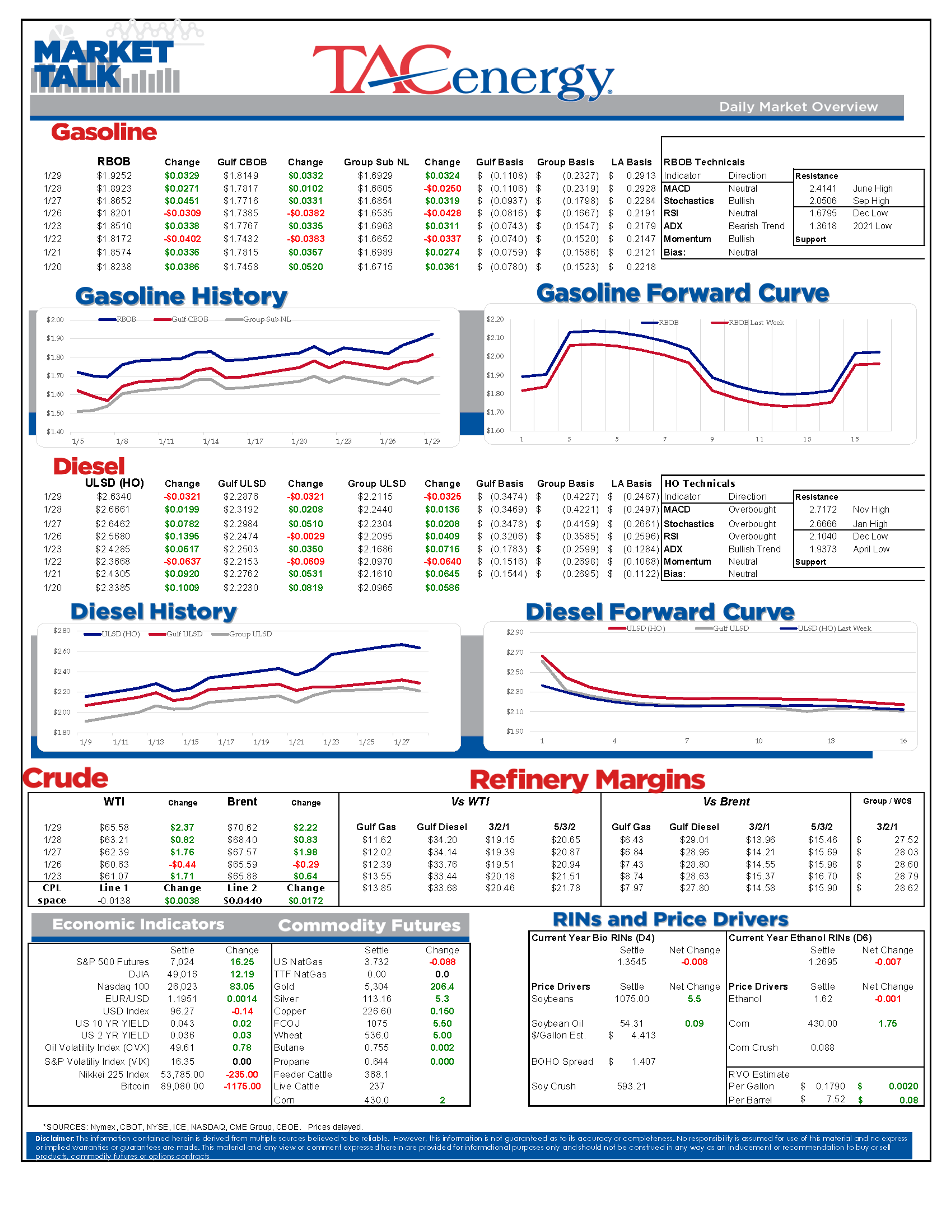
Most energy contracts are rallying again Thursday as tensions continue to build between the U.S. & Iran.
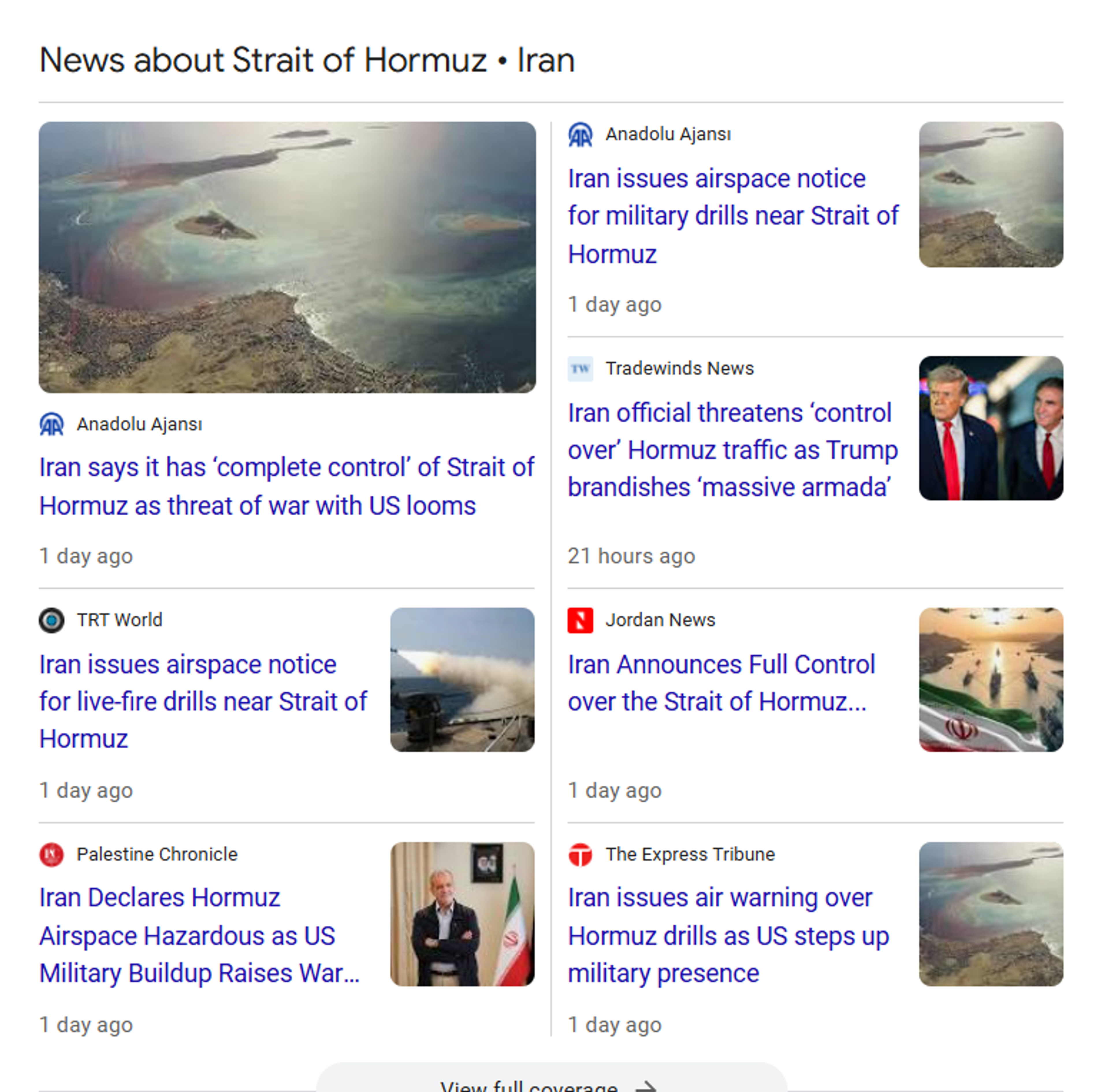
Sketchy reports from not-so-well-known news outlets such as the Anadolu Ajansi, Jordan News and the Palestine Chronicle say Iran claims to have “Complete Control” over the Strait of Hormuz, while other outlets highlight air-space warnings being put in place. So far there are no actual reports of disruptions to naval traffic through the world’s most important oil supply bottleneck, but the threats certainly have the market on edge.
See this note from the BBC for a quick read on 7 potential outcomes should the U.S. and Iran once again come to blows.
The exception to the rally this morning comes from the February ULSD contract which is trading down 3 cents in its penultimate day of trading as the supply squeeze across the east coast seems to be easing for now. But just as most states are getting back to something resembling normalcy, the largest snowstorm in decades is set to hit the Carolinas this weekend, with blizzard conditions expected in several spots across the mid-Atlantic.
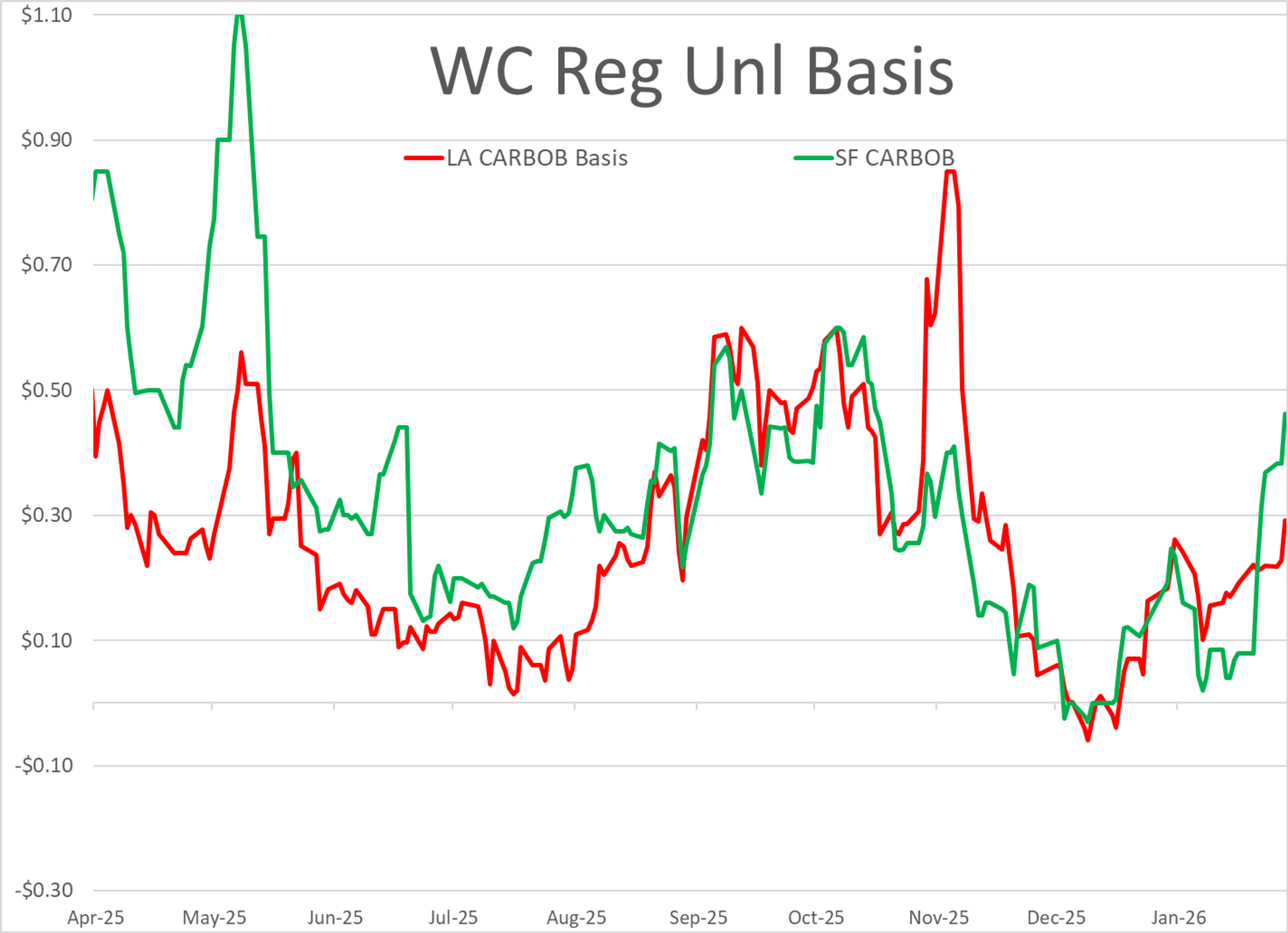
The San Francisco spot market saw a jump in values Wednesday following multiple flaring reports from the 157mb/day PBF Martinez refinery, which is coming up on the 1 year anniversary of the fire that has drastically reduced operating rates. That facility already missed its target for restart late last year and now appears to be having more issues restarting units. In addition, Valero appears to be confirming that it’s moved up its timetable for shutting down its Benecia plant.
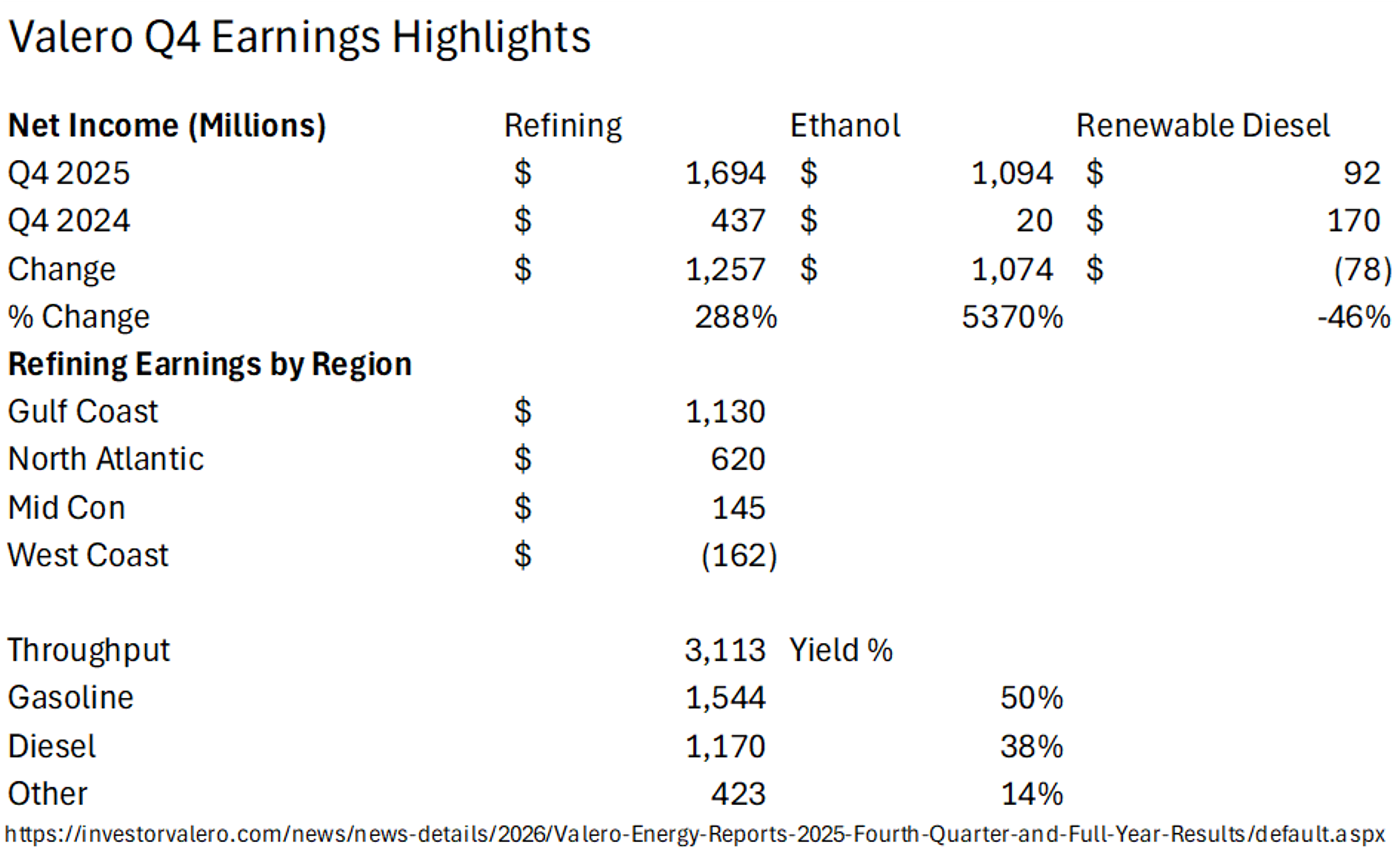
Valero kicked off the Q4 earnings reports for the refining industry with strong results that apparently surprised Wall Street but should not have surprised anyone that saw the spike in diesel prices during the quarter. The company reported operating income from its refining Segment of $1.7 billion for the quarter, more than 4 times what it made in Q4 of 2024. The report highlighted the starkly different results depending on where they’re operating however with its Gulf Coast operations generating more than $1.1 billion for the quarter while the oversupplied Mid Con saw $145 million in earnings, and the West Coast earnings were negative $162 million for the quarter, which helps explain why they’ll be shuttering their Benecia refinery starting next week.
The company’s renewable diesel segment saw its earnings cut nearly in half from a year earlier, which is likely in large part due to the loss of the $1/gallon BTC, but unlike many of its competitors, Valero’s JV is still generating positive operating income with its renewable production.
Valero also reported a big jump in ethanol earnings, almost all of which is due to a tax credit of $79 million after the company received IRS approval for cellulosic ethanol production from 2020-2024.
Notes from the DOE weekly status report:
Crude imports fell while exports rose last week, but the draw on inventories was limited by lowered refinery runs and a big positive swing in the adjustment to crude balances. The decline in refinery throughput is attributed to the 450 thousand barrel per day drop in PADD 3, with much smaller changes elsewhere. As with most regions, PADD 3’s run rates are still well ahead of their 5-year average, but it’s unclear whether that reading includes Exxon’s Baytown shut down. Five weeks of planned maintenance at that facility began Monday and a weather related shut down to other operating units was reported over the weekend which would not have happened in time for this report. The only region not seeing refinery runs above their seasonal range is PADD 5 which saw the 130mb/day P66 Wilmington refinery close last October and is set to see the 170mb/day Valero Benecia refinery begin shutting down for good next week. In addition, PBF is still struggling to bring its 157mb/day Martinez refinery back online after a fire almost a year ago, with 2 more flaring incidents reported to local officials Wednesday.
Diesel stocks were little changed last week outside of PADD 1, resulting in a small overall build, as the net positive of import/export flows was offset by a comeback in demand. PADD 1 inventories are still below average but pulled ahead of the past two years with last week’s increase, both of which make up the lower end of the range for the front half of the year. The total U.S. picture looks similar to PADD 1’s, but at a little over a million barrels above the seasonal average as PADD 3 continues to hold steady at ~6 million barrels over its 5-year average. The weekly demand estimate saw a strong increase ahead of the storm.
Gasoline stocks also posted a minimal build in total but saw much larger changes at the PADD level. PADDs 1 & 2 added over a million barrels each along with a slight increase in PADD 4, all of which are above average, well above for the latter two. PADDs 3 & 5 both shed over a million barrels. The West Coast slid to the bottom end of its seasonal range, on par with year-ago levels, while the Gulf Coast sits almost 2 million barrels above the high end of its range despite the draw, keeping total US gas inventories at a 5.5 year high. Production picked up everywhere except PADD 3 as demand spiked ahead of the Winter Storm.
Latest Posts
Energy Markets Retreat On Diplomatic Optimism As Supply Risks Evolve
Mixed Start To October's Final Trading Week As Crude Retreats
Crude Strength, Refinery Disruptions, And Export Bottlenecks Support Fuel Prices
Global Supply Risks And Strong Refining Margins Drive Energy Market Rally
Week 42 - US DOE Inventory Recap
Diesel Prices Swing Wildly Amid Tanker Attacks And Supply Concerns
Social Media
News & Views
View All
Energy Markets Retreat On Diplomatic Optimism As Supply Risks Evolve
Mixed Start To October's Final Trading Week As Crude Retreats