Oil Prices Slide as War Fears Fade and Supply Fears Grow

Energy markets are moving lower to start Thursday’s session, as a pause in the saber rattling between the U.S. and Iran allows the market to digest some bearish outlooks coming from the IEA and EIA, which both contrast sharply with OPEC’s prediction for a more balanced market.
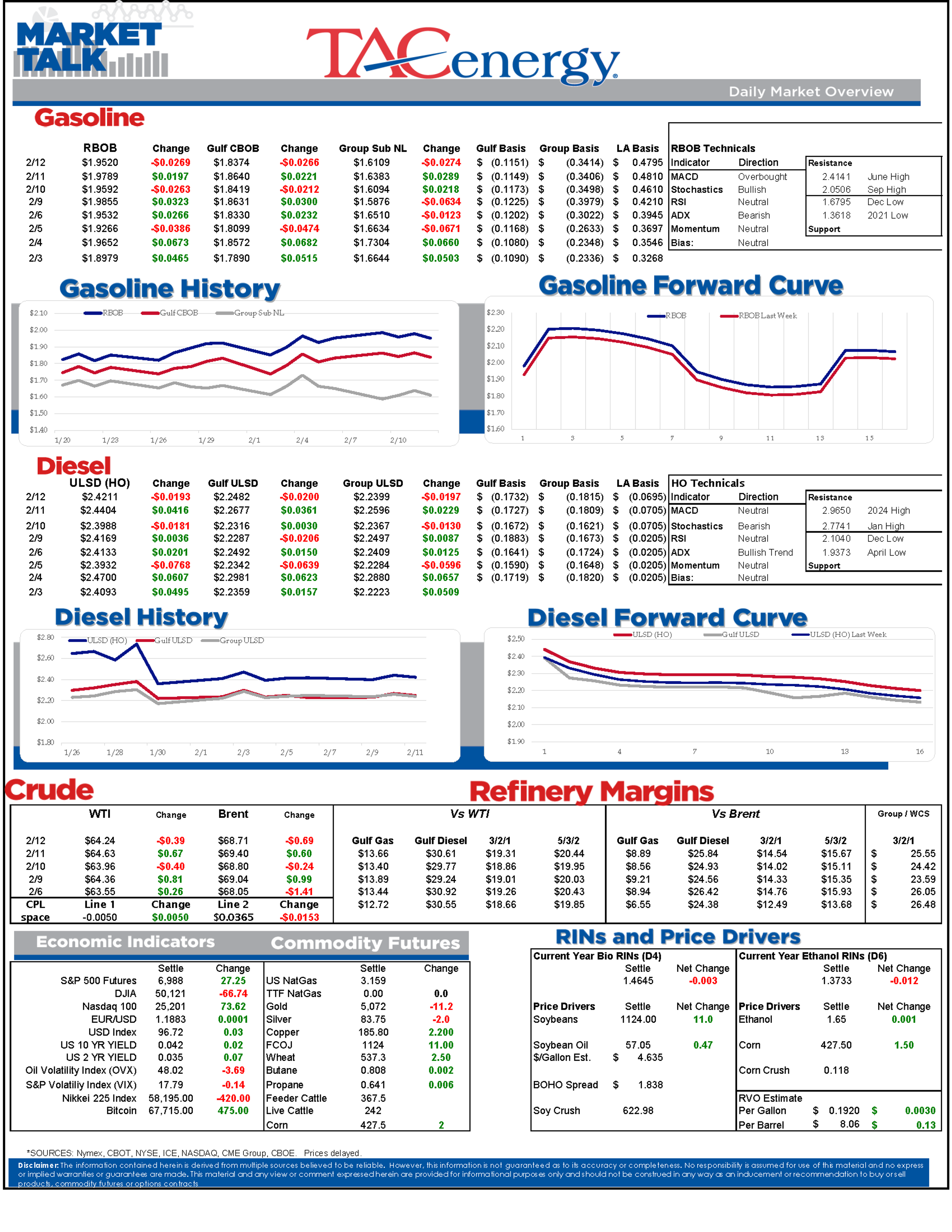
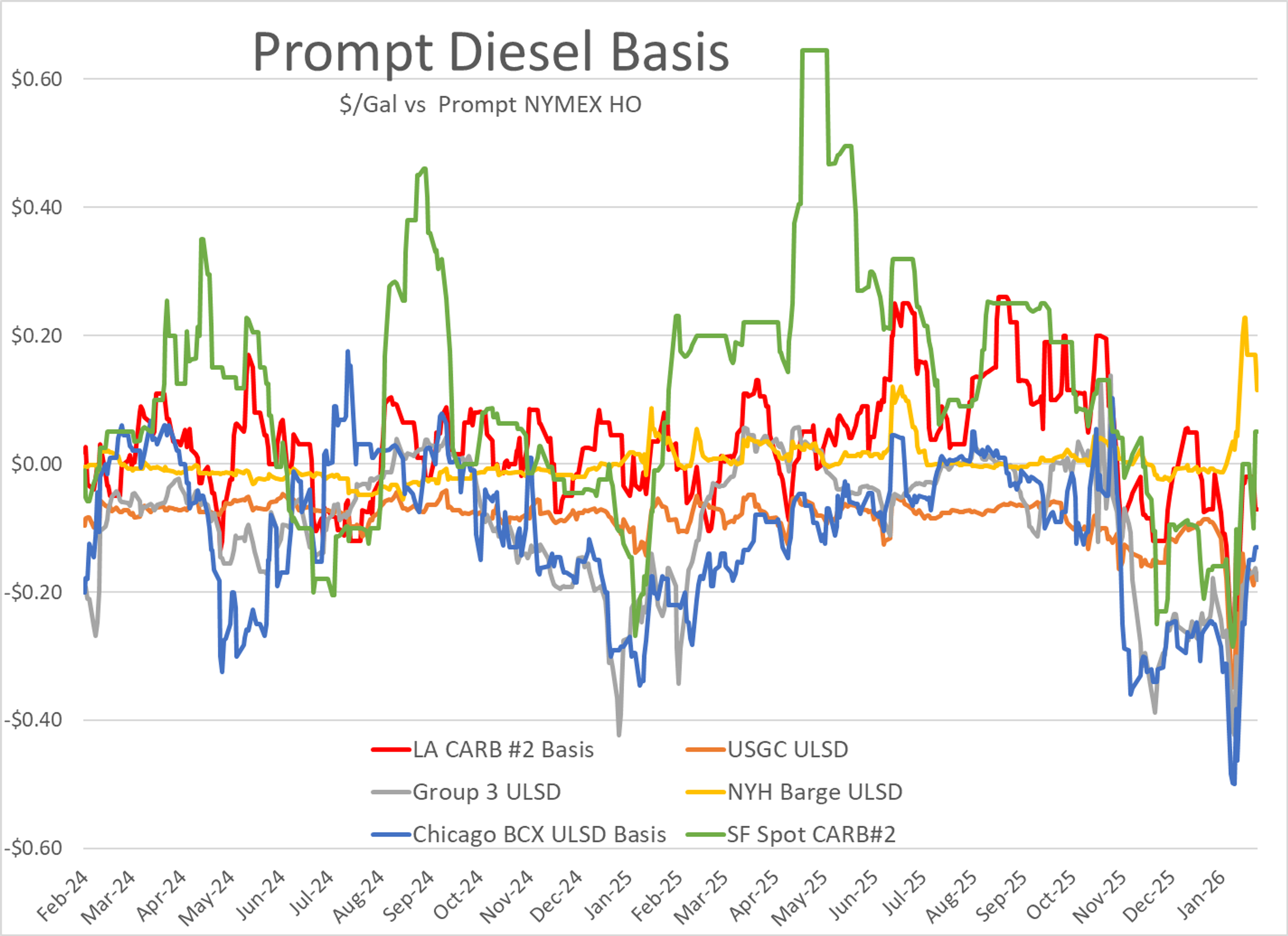
Getting back to normal? NYH Spot diesel basis had a big slide Monday, wiping out 7 cents of its remaining premium to futures as temperatures get back to normal levels and the electric grid in the North East stops relying on diesel supplements. Fuel terminals in the region aren’t yet healed up however, with diesel outages still noted across New England and upstate New York as ships work through the ice-related backlog and spike in demand
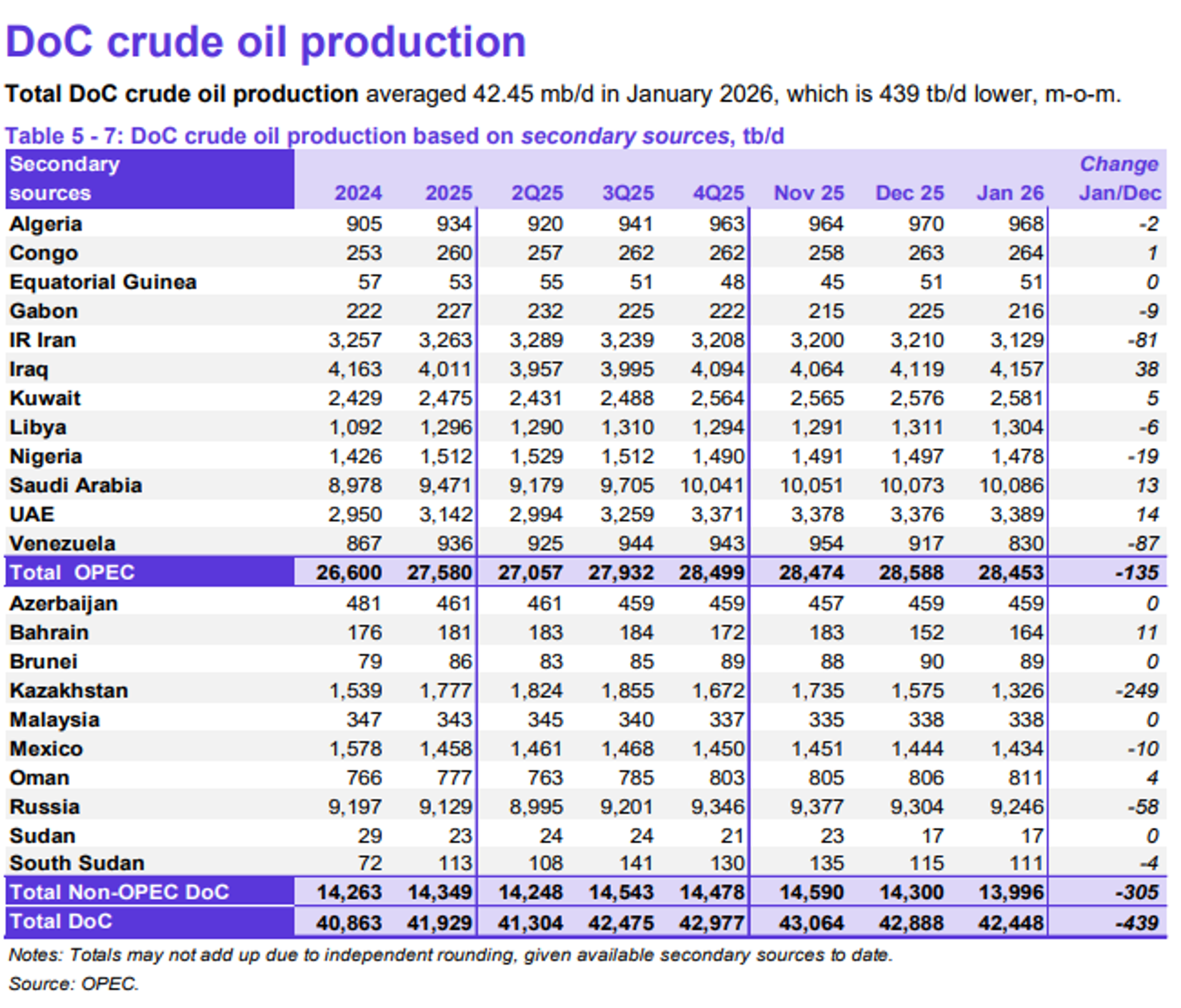
OPEC held its outlook for global supply & demand balances steady in its latest monthly oil market report, noting resilient economic growth around the world. The cartel’s oil output declined by 439mb/day in January with reductions from Iran and Venezuela hitting the traditional OPEC members, while Kazakhstan’s output dropped 250b/day leading the other group sharply lower along with lower Russian volumes.
The IEA also highlighted the drop is Kazakh, Russian and Venezuelan flows in its monthly report, which contributed to an estimated drop of 1.2 million barrels/day of oil output globally, along with weather upsets in North America. That pullback didn’t change the agency’s calls that the world faces an excess of oil supply this year that they predict will outpace demand by more than 1 million barrels/day. The report also noted that global refinery runs dropped in January after reaching an all-time high of 86.3mb/day in December with the start of annual maintenance and lower margins both contributing to the pullback.
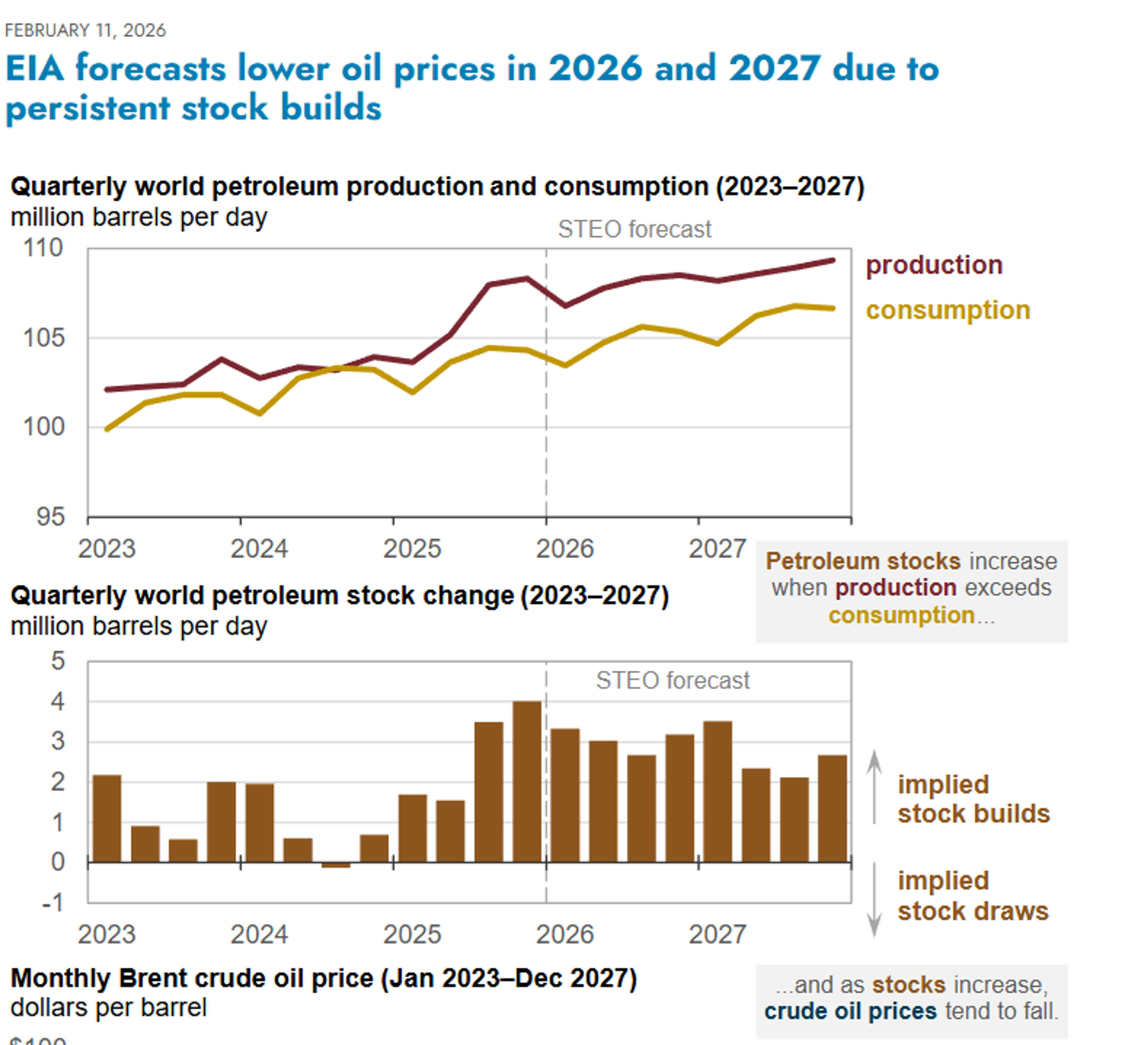
The EIA echoed the IEA’s bearish sentiment, highlighting its forecast for global supply outstripping demand for the next 2 years and predicting that will push crude oil values to around the $50 mark.
Notes from the DOE’s weekly status report. See charts attached.
Crude built by 8.5 million barrels on increased imports and lowered exports, while output jumped back up following last week’s blip. Despite the increase, stocks are still below average across the country but just ahead of year-ago levels. Refinery runs picked up in PADDs 1 & 2 but were offset by the decline in PADD 3 for a small net decrease in total. Those PADDs are still running at the high end or above their ranges, along with PADD 4. PADD 5 is closer to its 5-year average but running ahead of ’24 and ’25 levels, seasonally.
Diesel stocks drew on further increased demand despite a big drop in exports. Weather driven demand has ramped up each of the past 3 weeks to reach a seasonal 5-year high in a week we typically see declines. As expected, PADDs 1 & 2 account for the drop in inventories, as those two regions took the brunt of winter storms and a big portion still burns diesel to heat homes. Those two PADDs dropped to the bottom end of their seasonal ranges while PADD 4 increased to join 3 at above average levels. PADD 5 is about 750mb below its 5-year average, tracking just ahead of year-ago levels. However, the EIA’s latest RD stats showed increased PADD 5 stocks, which pushes inventories up above average when combined with traditional diesel.
Gasoline built everywhere but PADD 3 despite an uptick in demand. Stock levels remain well above average across the country outside of PADD 5, where they’re about a million barrels below after last week’s increase. PADDs 1-4 are riding the high end of their 5-year ranges while PADD 3 stays about 2mb above, pushing total US stocks to a 5-year high.
Latest Posts
Storms, Drones And A Walked-Back Export Ban: Why This Week's Selloff Might Not Last
Diesel Rally Resumes Amid Growing Debate Over US Export Limits
Week 38 - US DOE Inventory Recap
Refinery Economics Clash With Calls For A Diesel Export Ban
Diplomacy Knocks Crude Lower, But Diesel Bulls Aren’t Done Yet
Diesel Pullback Tests Market Nerves Amid Supply Risks
Social Media
News & Views
View All
Storms, Drones And A Walked-Back Export Ban: Why This Week's Selloff Might Not Last
Diesel Rally Resumes Amid Growing Debate Over US Export Limits