Oil And Fuel Futures Reverse Course Amid Supply Risks And Demand Concerns

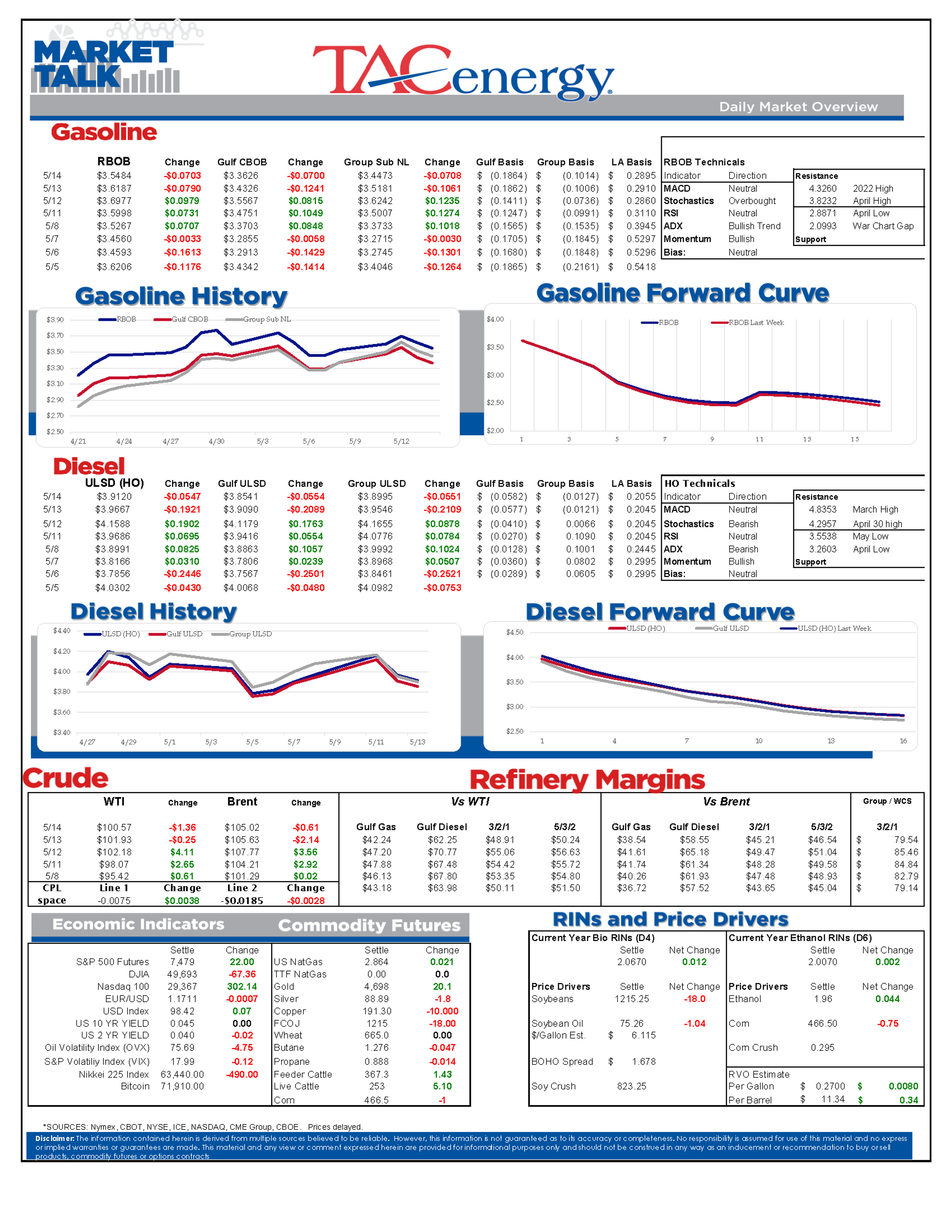
Energy futures are seeing a wave of selling for a 2nd straight day, erasing the healthy gains they made in the first two days of the week. RBOB gasoline futures were trading within 3 points ($.0003) of where they ended last week, they just needed to rally 17 cents in 2 days, then fall 17 cents the next two to get there.
While futures are acting less concerned about ongoing supply disruptions, tensions in and around the strait continue to boil over with reports this morning that a ship anchored off the UAE was seized and is now heading towards Iranian waters. This comes a day after reports that members of Iran’s Revolutionary Guards had been detained while trying to infiltrate a Kuwaiti island. All of this is happening just days after new reports that the UAE, Saudi Arabia and Kuwait had been quietly joining in on attacks against Iran (and its proxies in Iraq) prior to the April Ceasefire.
Perhaps the most notable detail so far about the summit in Beijing was a harsh warning from China that clashes and conflict with the U.S. are possible over Taiwan, although both sides pledged closer ties between the world’s two biggest economies, which also happen to have the two most advanced militaries.
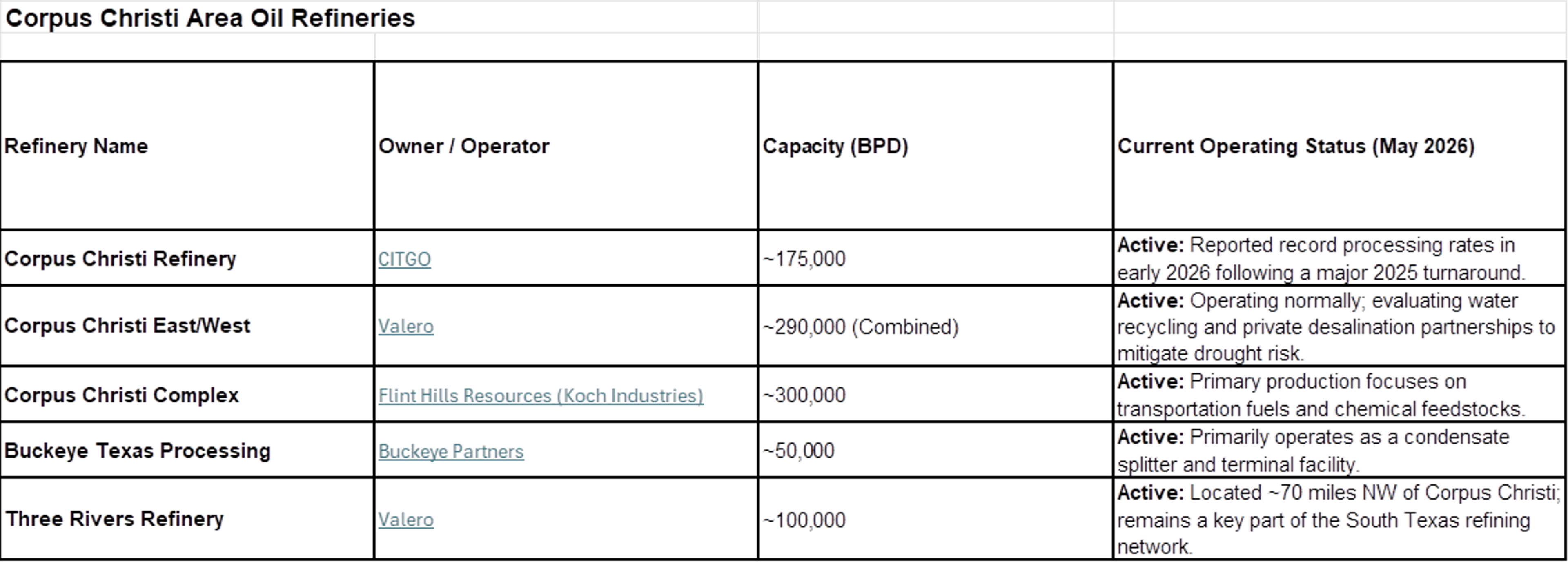
The lack of water in Corpus Christi continues to be a major concern with the CEO of the local water utility saying refiners could have their fresh water cut off if an emergency is declared during a city council meeting this week. In an effort to avoid that extreme situation, utility officials are proposing a 25% curtailment for all users. Citgo, Valero and Flint Hills all operate refining complexes in Corpus, with a combined capacity of around 775mb/day, and are the primary supply options for the San Antonio, Austin and DFW metro areas, so any curtailments that force run cuts could immediately impact local supplies. Those facilities took a direct hit from Hurricane Harvey in 2017, but now may be hoping for tropical systems in the area to help alleviate the drought this summer.
Tik Tok must have been down. PBF issued a statement on Facebook Wednesday that its Chalmette LA refinery was operating at planned rates after last Friday’s explosion and fire in a reformer unit, while its SBR RD output was not affected by that event.
Pemex reported a brief upset at its 340mb/day Deer Park TX refinery Wednesday caused by high levels in a knock out pot, but that flaring does not appear to have caused any other operating units to be reduced.
Notes from the EIA’s weekly status report.
Total crude stocks dipped below year-ago levels for the first time this year with the largest of the SPR releases hitting last week. Commercial crude alone drew 4 million barrels to slip below average after a 7-week run above. Imports increased but are still hovering around yearly lows and were outweighed by a larger increase in exports, which continue at record highs. Crude oil production saw its first meaningful increase since before the conflict with Iran broke out and has moved closer to the all-time high set near the end of last year.
Refinery runs also picked back up significantly in all PADDs except 1 with several facilities returning from maintenance, planned or unplanned, despite a few ongoing upsets across the country. PADD 1 is still operating at a seasonal high (despite its small drop on the week) along with PADD 3, while PADD 2’s increase held rates above average and helps explain the huge correction in basis differentials this week. PADD 4 jumped back within 20mb/day of its 5-year average after hitting a seasonal low last week and PADD 5 continues to operate at some of its lowest rates of the year, despite the increase. However, the total utilization rate moved back to the high end of its chart, reflecting the similar move in aggregate U.S. throughput.
Diesel stocks posted a small build with a drop off in export activity, although they’re still well above the 5-year range, while demand remains tepid. PADD 1 took the bulk of last week’s import increase and posted the largest build, while stocks in the middle of the country fell to the low end of their charts. PADD 5 remains at seasonal lows as non-renewable/biofuel production in the region sank to an all-time low. Total U.S. inventories are about 10 million barrels below the 5-year average. If you’re wondering why prices have dropped so much in the past 24 hours despite these tight inventories, you’re certainly not alone, but the 2nd straight week of implied demand below 3.5 million barrels/day (which is below the low end of the 5 year seasonal range) estimated by the EIA and a surge in imports – primarily in PADD 1 – may help explain why futures are suddenly out of favor.
Gas stocks shed another 4 million barrels with imports going from their highest levels of the year to the lowest week over week, while exports shot up to a seasonal high. Outside of the negligible increase in PADD 5, the other PADDs declined and are all holding below average storage levels. This marks a 13th straight week of draws, down to a fresh seasonal 5-year low for U.S. gas supplies, even though production has held at or above average to keep up with higher demand outside the country.
While other parts of the world are struggling with a lack of Jet Fuel, U.S. stockpiles are holding well above their seasonal range, in spite of record-high exports as domestic refiners have been able to maximize jet yields to take advantage of the lofty premiums for that product.
Latest Posts
Storms, Drones And A Walked-Back Export Ban: Why This Week's Selloff Might Not Last
Diesel Rally Resumes Amid Growing Debate Over US Export Limits
Week 38 - US DOE Inventory Recap
Refinery Economics Clash With Calls For A Diesel Export Ban
Diplomacy Knocks Crude Lower, But Diesel Bulls Aren’t Done Yet
Diesel Pullback Tests Market Nerves Amid Supply Risks
Social Media
News & Views
View All
Storms, Drones And A Walked-Back Export Ban: Why This Week's Selloff Might Not Last
Diesel Rally Resumes Amid Growing Debate Over US Export Limits