Fuel Markets Pull Back Amid Hormuz Standoff And Tight Diesel Supplies

Energy markets are ticking modestly into the red this morning, after setting new highs overnight. The stalemate continues around Hormuz, with the two sides of the conflict seemingly unable to agree on anything, including whether or not Iran launched more missiles at the UAE Tuesday.
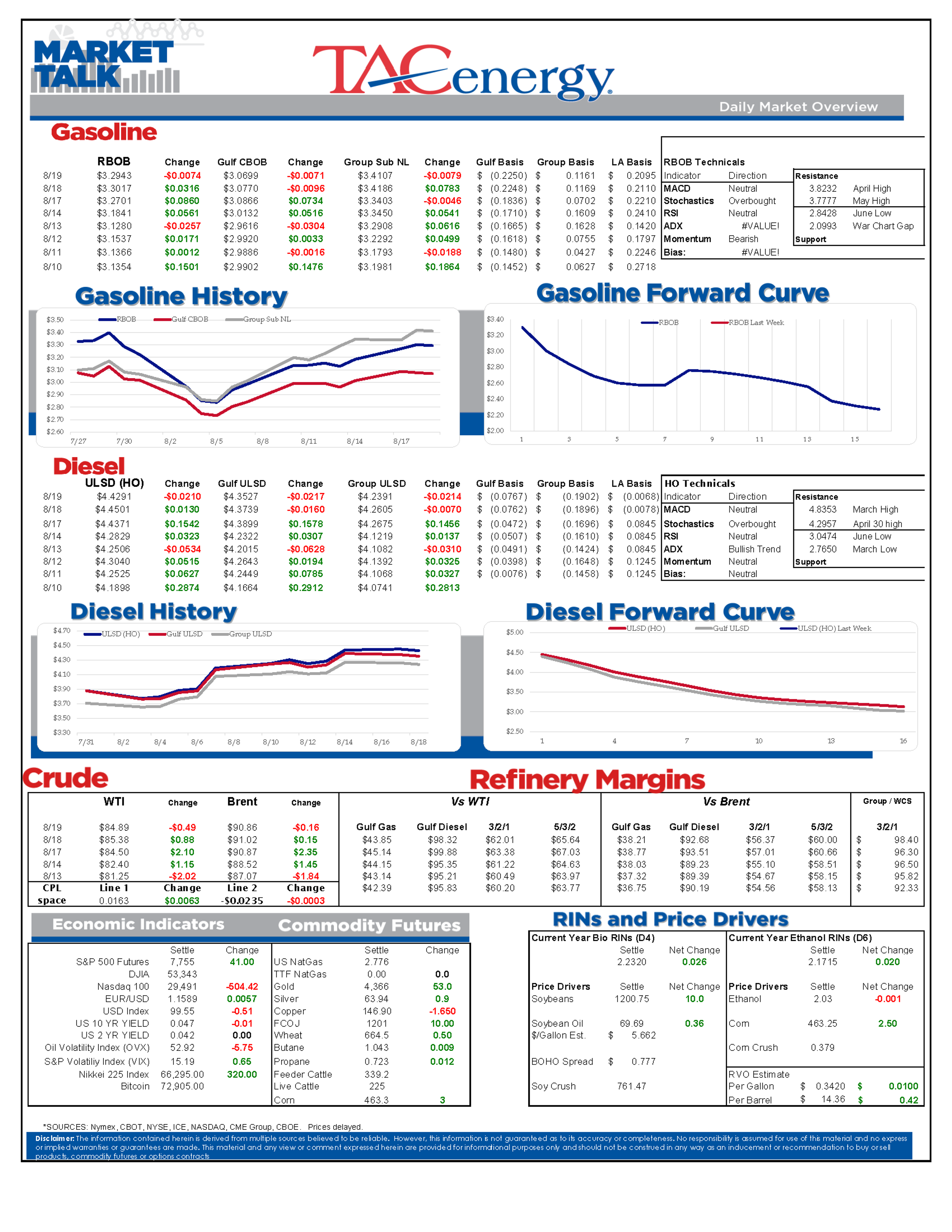
NYMEX futures abruptly sold off around 7:30 central time this morning, with ULSD futures leading the slide, trading down a nickel for the day after trading up more than 7 cents overnight and reaching a 4 month high overnight. It’s not immediately clear what sparked the sell-off, but so far there do not appear to be headlines of progress in diplomacy or action by the administration to try and stop the ongoing rally in fuel prices, so it could just be a bout of volatility after a furious 2 week rally that pushed front month values up more than 85 cents/gallon.
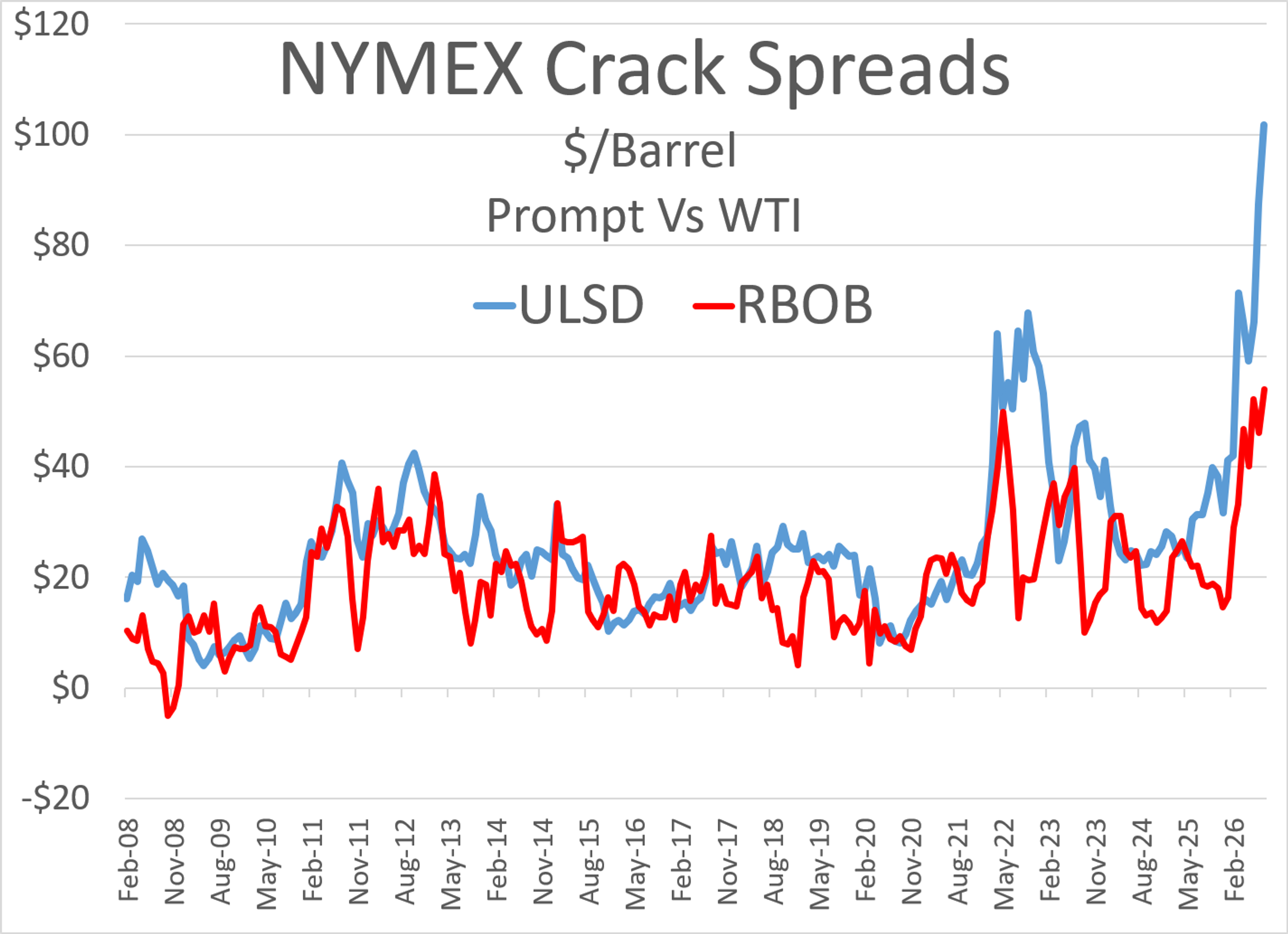
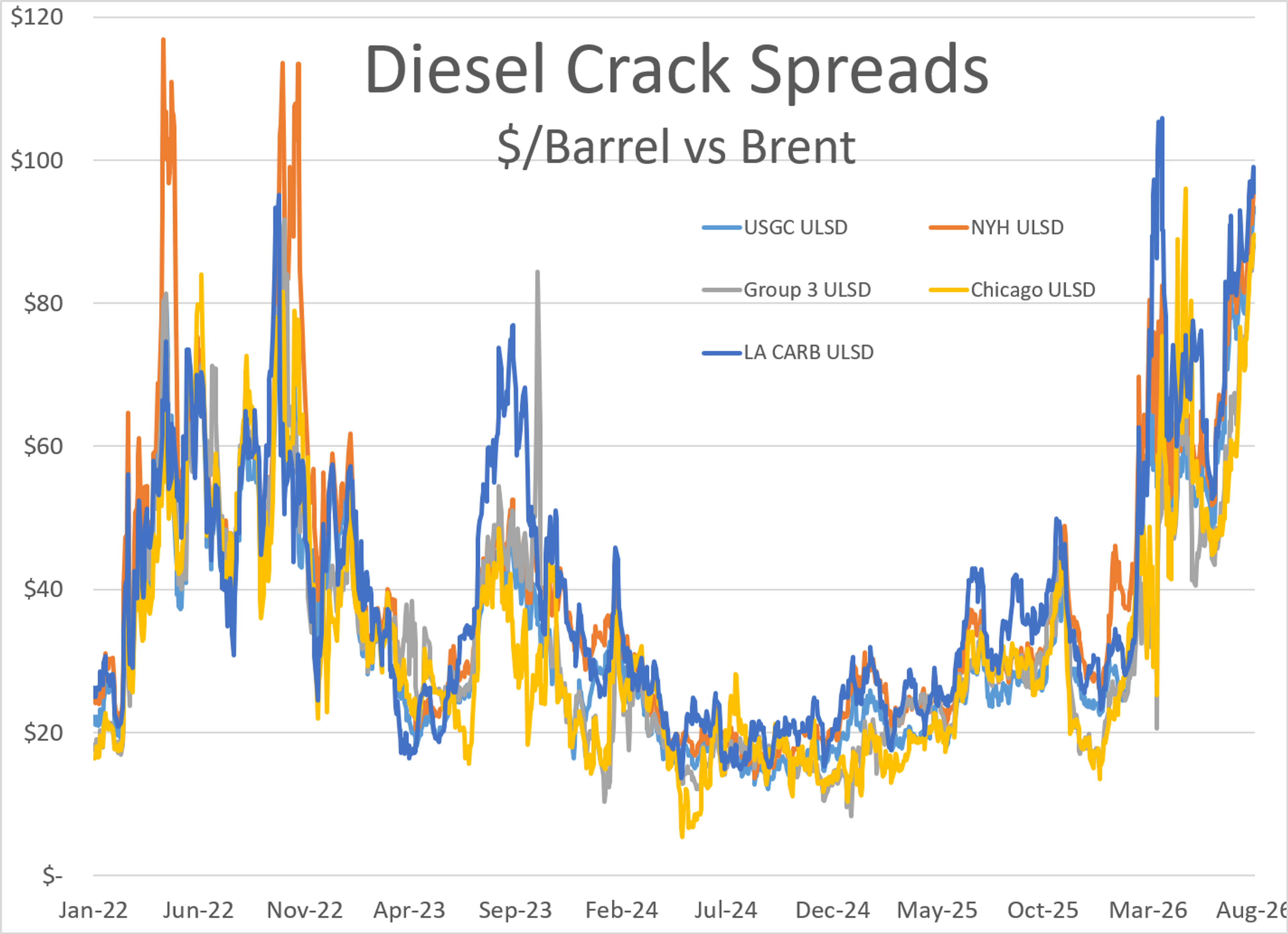
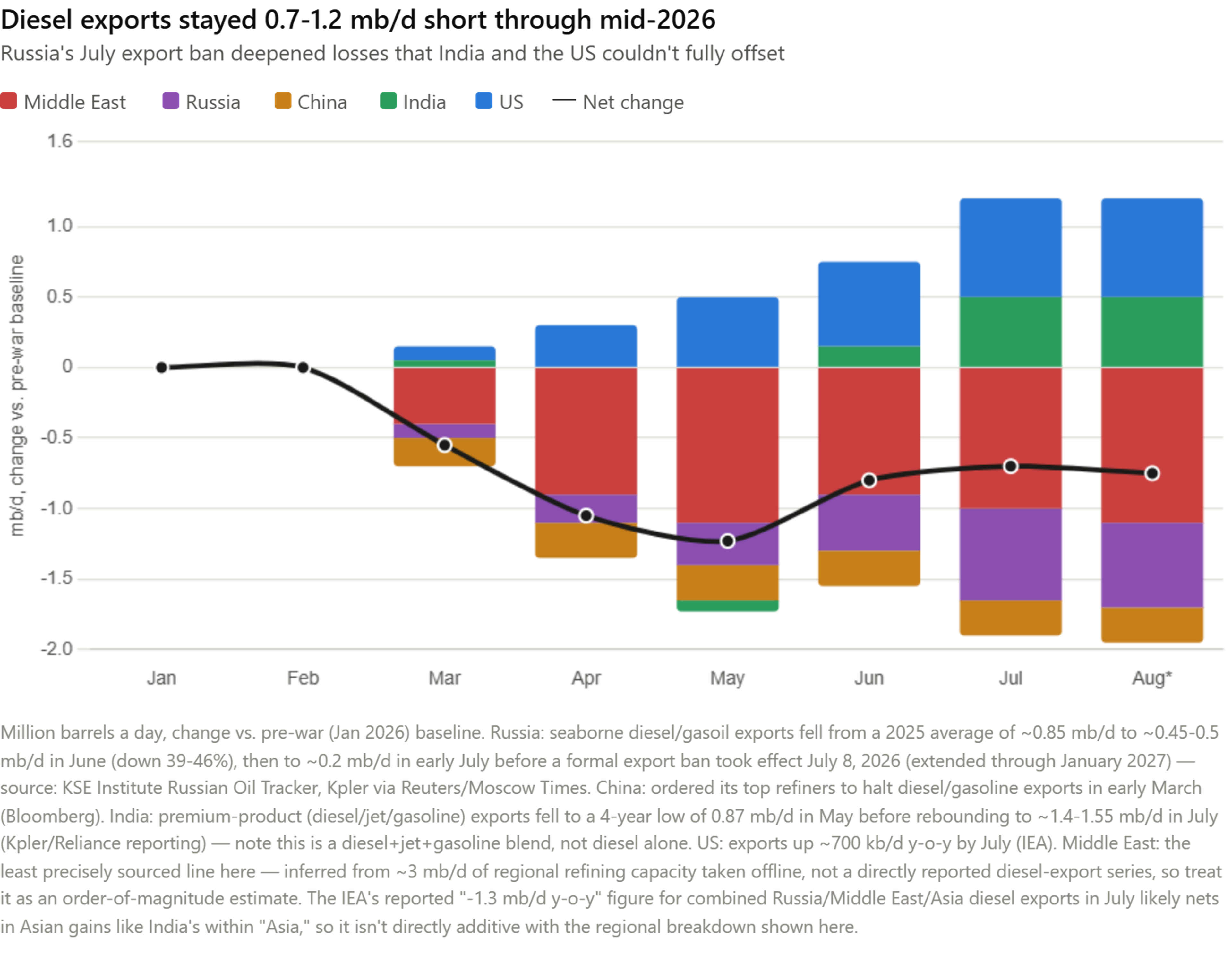
ULSD futures reached their highest levels since April 7th overnight, which was the day a 2 week ceasefire was announced that ultimately pushed prices down more than $1.25/gallon in just 10 days. For comparison, WTI closed at its highest level of the year that same day, at $112.95/barrel, compared to a high trade of $86.31 this morning. That disparity between diesel and crude has grown to record levels this week, with ULSD/WTI crack spreads reaching an all-time high north of $104/barrel overnight.
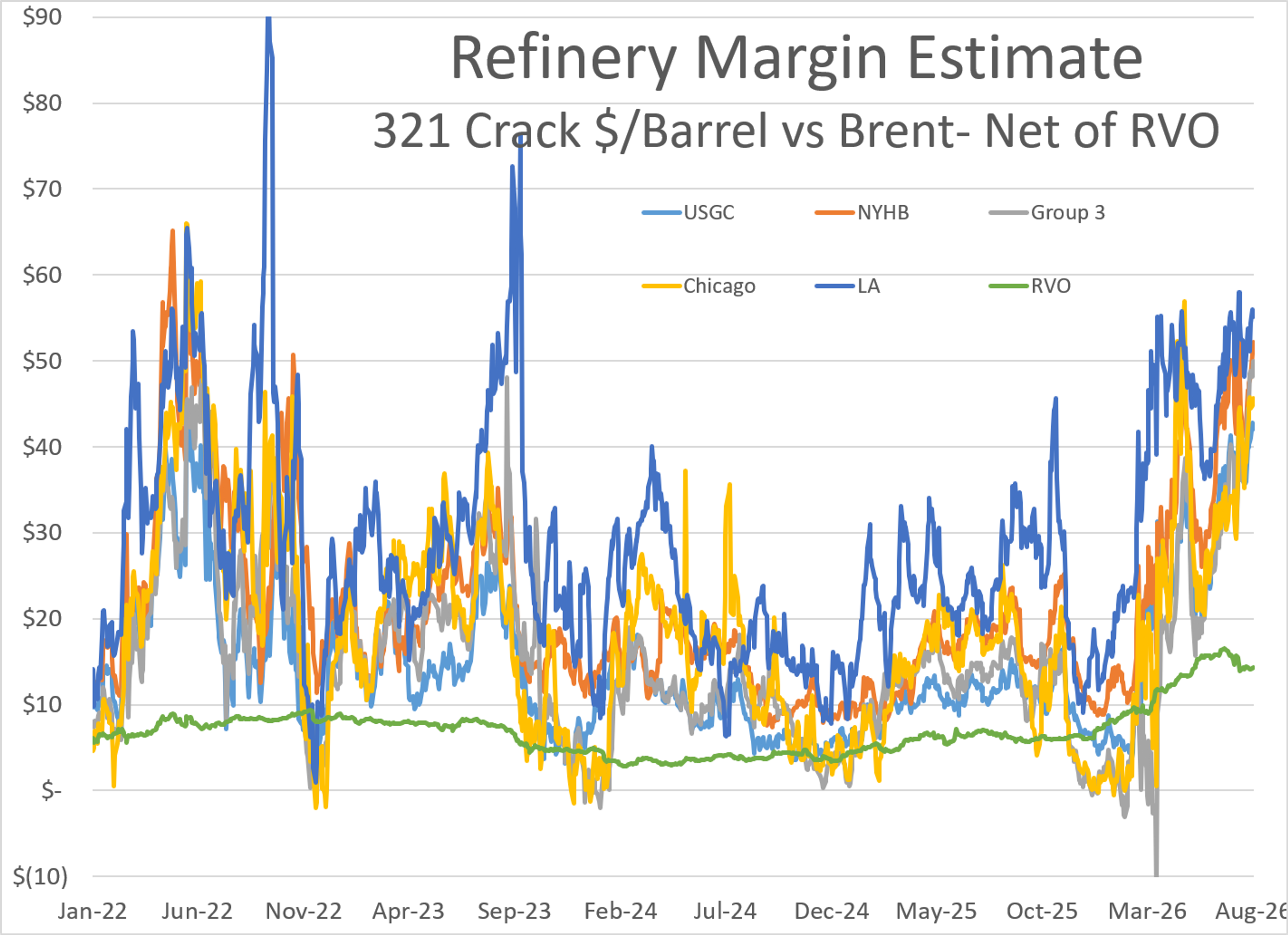
While gasoline cracks aren’t close to setting all-time highs, they are healthy enough to push 321 ratio spreads for several U.S. cash markets close to record levels. That said, when netting out the costs of the Renewable Fuel Standard (RVO) which is holding north of $14/barrel today, compared to $8/barrel in 2022, the average margin for a U.S. refiner is still lower than the peak during the first few months of the Ukraine war. One notable difference however is that the strength in cracks has already lasted longer than what we saw in 2022, and with numerous refineries damaged by attacks from the Middle East to Russia, and no signs of peace on the horizon, they may well stay at high levels for months to come.
The API estimated that diesel inventories in the U.S. kept dropping last week with a 2.8 million barrel draw reported yesterday afternoon, while gasoline stocks increased by 1.07 million barrels. The API’s weekly report also showed a small decline in commercial crude stocks of 328,000 barrels last week, on top of another 5.3 million barrels removed from the SPR, bringing those levels to a fresh 43 year low. The DOE’s weekly update is due out at its normal time this morning.
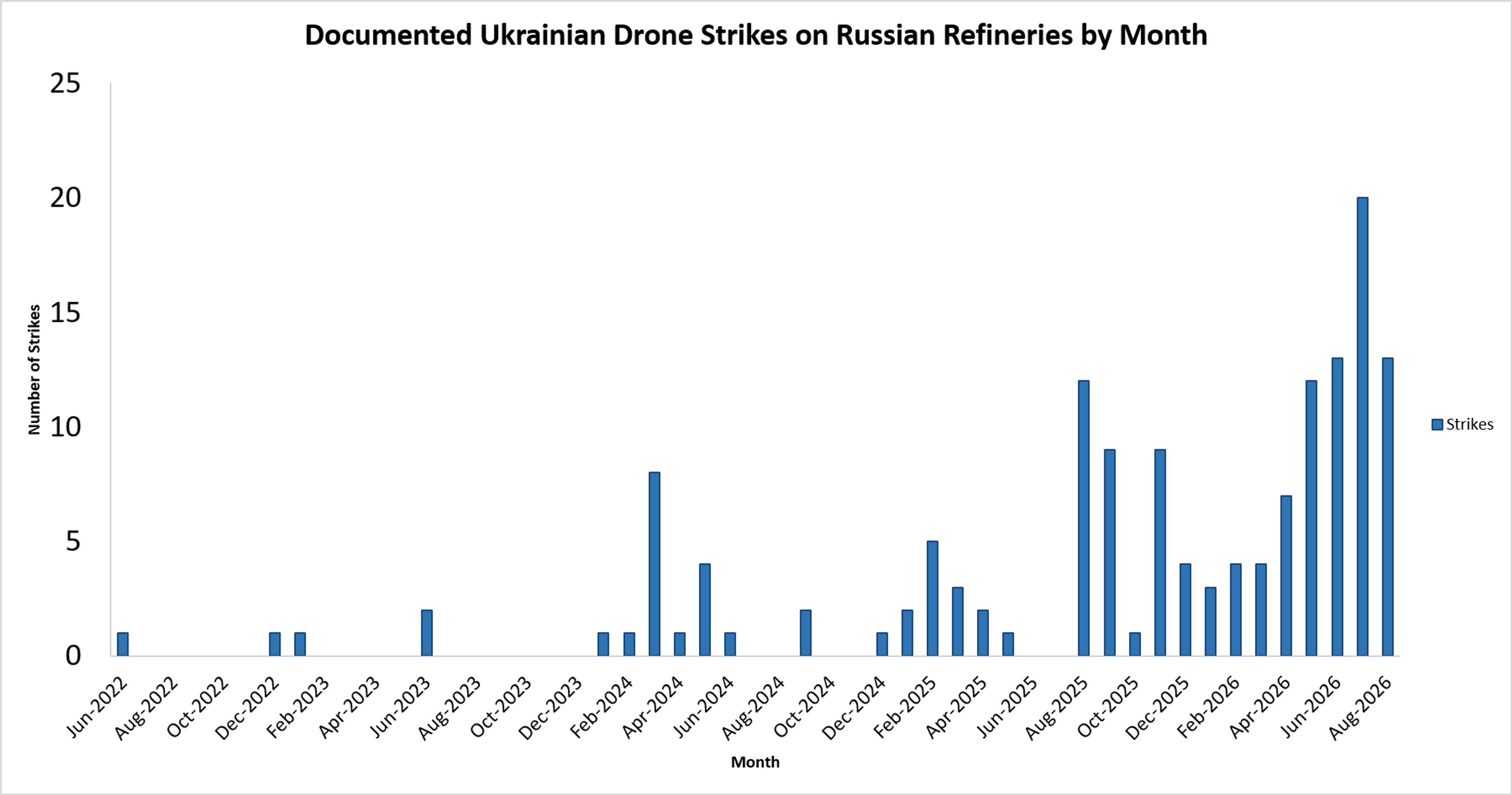
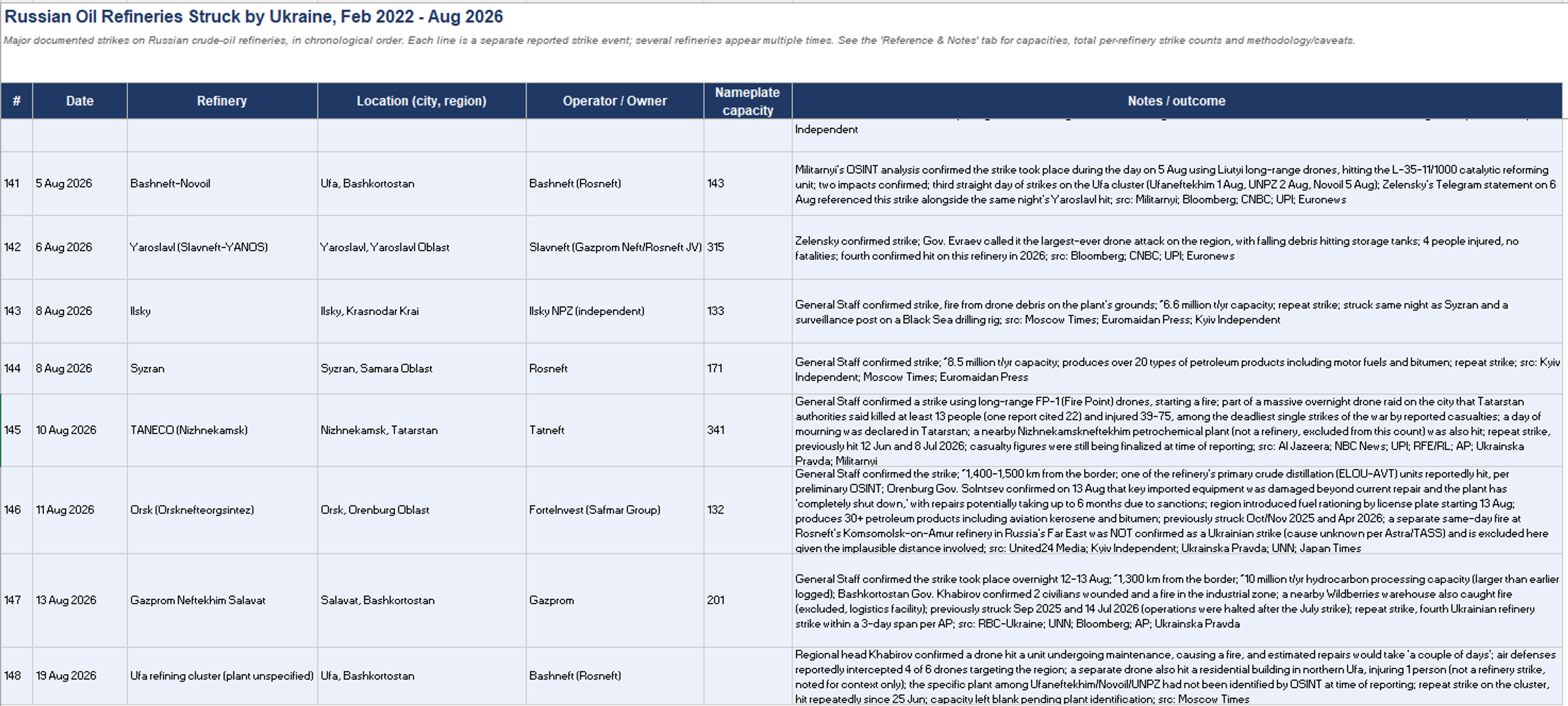
Break’s over: After a 5 day pause, Ukraine’s drones hit another Russian refinery overnight, with the Ufa refining cluster that was struck two weeks ago once again coming under attack. It’s still unclear which of the 3 refineries in the area was hit, but initial reports suggest that a unit undergoing repairs from the previous strikes was hit again.
There were 4 refinery hiccups in TX reported to the TCEQ in the past 24 hours.
Marathon reported an upset in an Alkylation unit at its 630mb/day Galveston bay facility.
Citgo had an upset in an FCC unit at its 167mb/day Corpus Christi plant
Flint Hills also reported an upset in an FCC at its 350mb/day Corpus Christi facility
P66 reported another upset at its often troubled 149mb/day Borger TX refinery, although the type of unit impacted wasn’t specified.
Latest Posts
Supply Disruptions Persist As Markets Focus Elsewhere
Geopolitics, Diesel Shortages, And Refinery Cuts Shape Energy Markets
Geopolitics, Diesel Shortages, And Refinery Cuts Shape Energy Markets
Week 39 - US DOE Inventory Recap
Volatility Returns As Diesel Surges And Global Supply Chains Tighten
Governors Take Action As Energy Markets Navigate Volatility
Social Media
News & Views
View All
Supply Disruptions Persist As Markets Focus Elsewhere
Geopolitics, Diesel Shortages, And Refinery Cuts Shape Energy Markets