Fuel Futures Diverge While Global Tensions Rattle Energy Markets

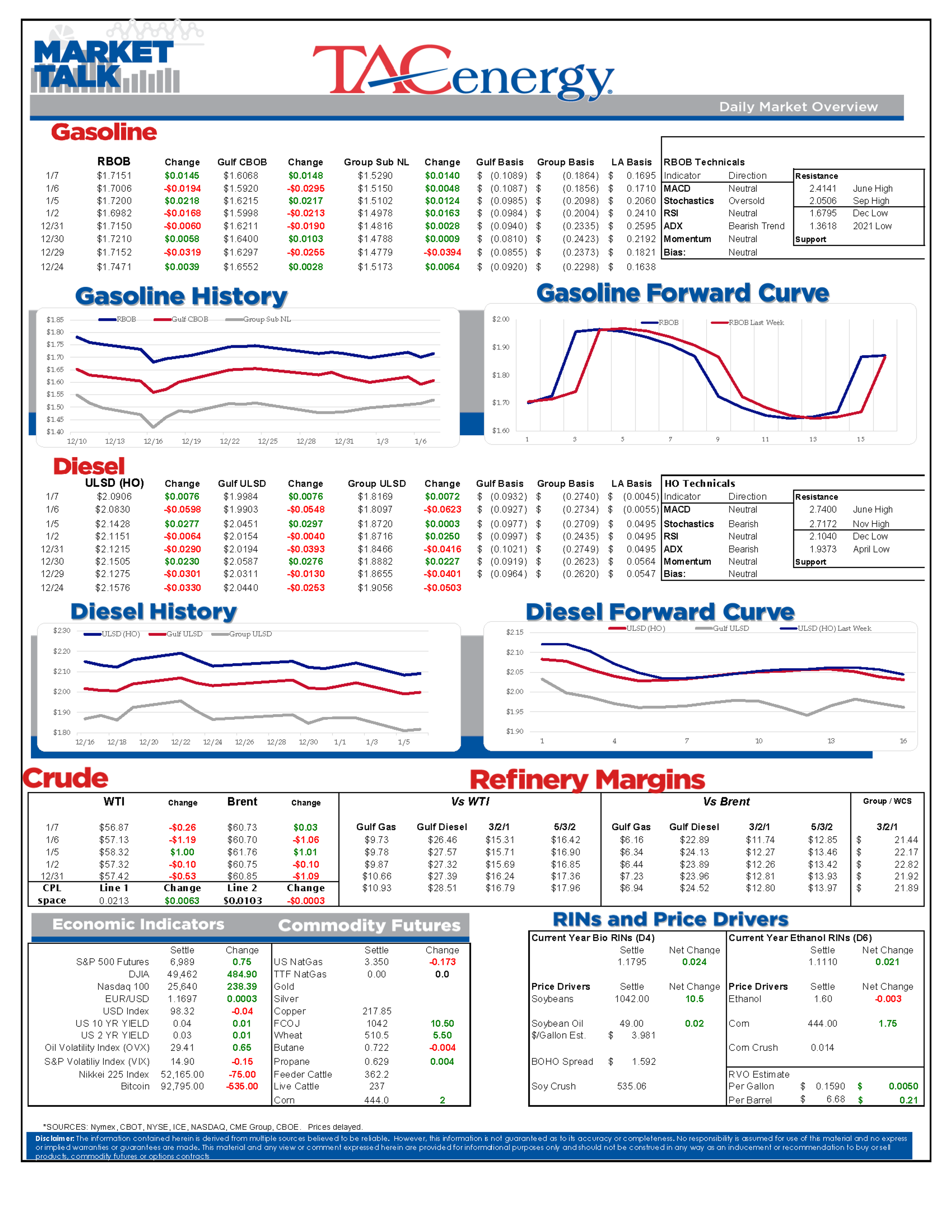
It’s another mixed start for energy markets Wednesday as markets try to decipher bluster from reality in the Venezuela saga. RBOB gasoline futures are leading the move higher up around $.0170, ULSD futures are up around 75 points, while WTI prices are holding modestly in the red.
A social media post from the U.S. President Tuesday suggested that Venezuela would be “turning over” 30- 50 million barrels of oil to the U.S.. The market reacted with a wave of selling immediately following the post last night, but soon recovered those losses as the details (this will take 18 months) and lack of details sunk in. The unusual range of 30-50 suggests a high level of uncertainty on the actual quantity to some, while others might enjoy the trip down meme-ory lane.
Other reports suggest the U.S. is demanding that the Vens stop their trade with Russia and China, Iran and Cuba before the U.S. will “allow” them to pump more oil. There appears to be truth that the U.S. blockade of sanctioned ships is causing production to be shut in due to a lack of storage, but it remains unclear if there are enough U.S.-authorized ships available to get things moving again. A Bloomberg report Tuesday suggests Chevron has chartered 11 ships to try and increase the amount of oil it’s moving out of Venezuelan ports as the only current authorized exporter.
Meanwhile, U.S. military forces reportedly seized the oil tanker they’ve been pursuing for more than a week that Russia attempted to lay claim to. The vessel is apparently now in U.S. control despite being escorted by a Russian submarine in the North Atlantic, which will add another layer of tension to negotiations between Washington and Moscow. No word yet if the crew of that submarine attempted to defect.
Ukraine’s attacks on Russian energy infrastructure continue, with multiple fuel depots hit by drones in the past 24 hours in addition to the 300mb/day Yaroslav refinery. The impact of those attacks is still hotly debated, with some suggesting that up to 20% of Russian refining capacity is offline, while Russian sources suggest the number is closer to 3%. Yesterday, Bloomberg reported that Russian diesel exports reached a 4 month high in December, while the country’s ban on gasoline exports continues through February.
The API reported more builds in refined products last week, estimating a build of 4.4 million barrels of gasoline and 4.9 million barrels of diesel as the year-end demand collapse reached its peak. Oil stocks were said to increase by 1.7 million barrels on the week. The DOE’s weekly report is due out at its normal time this morning.
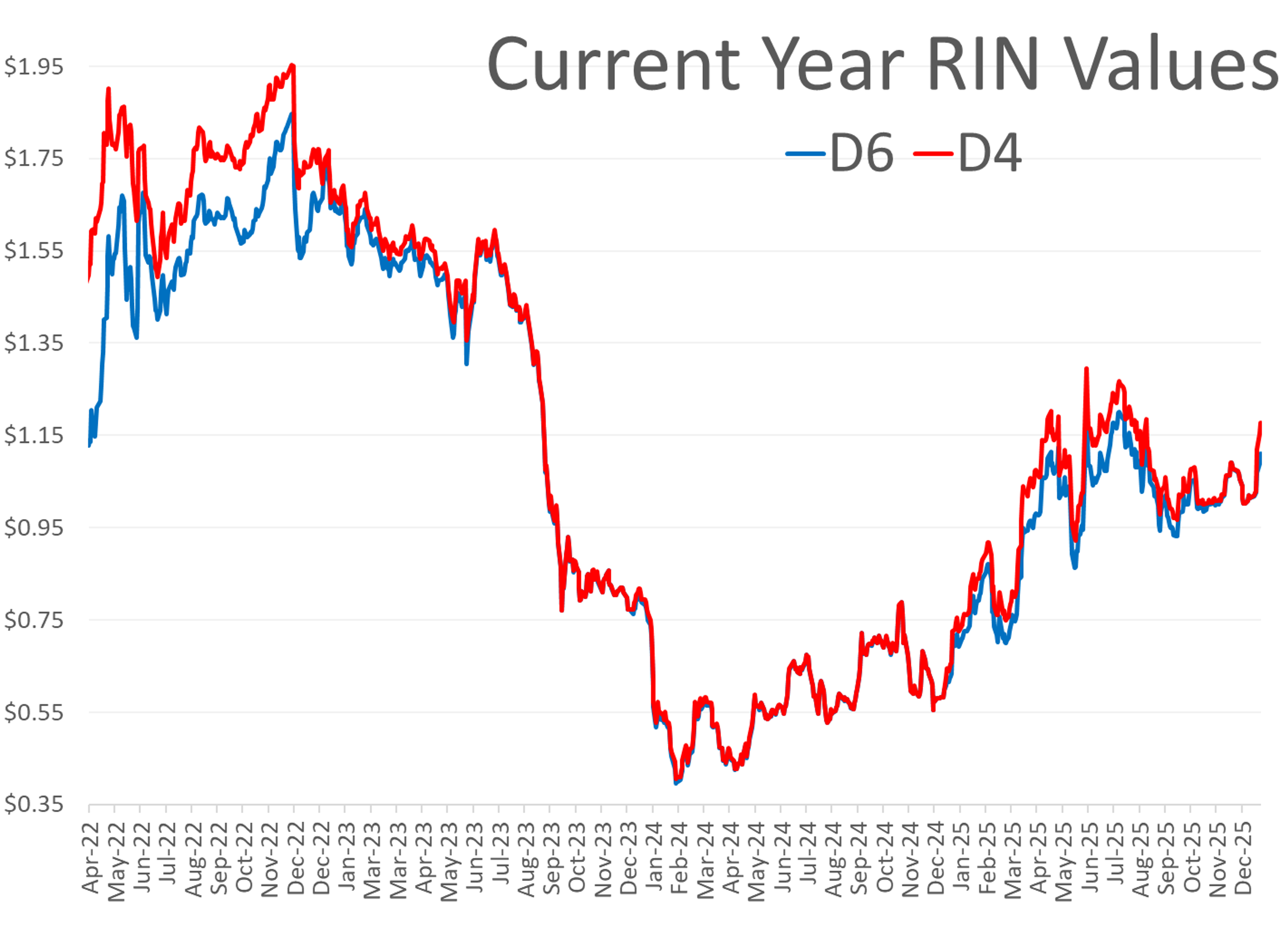
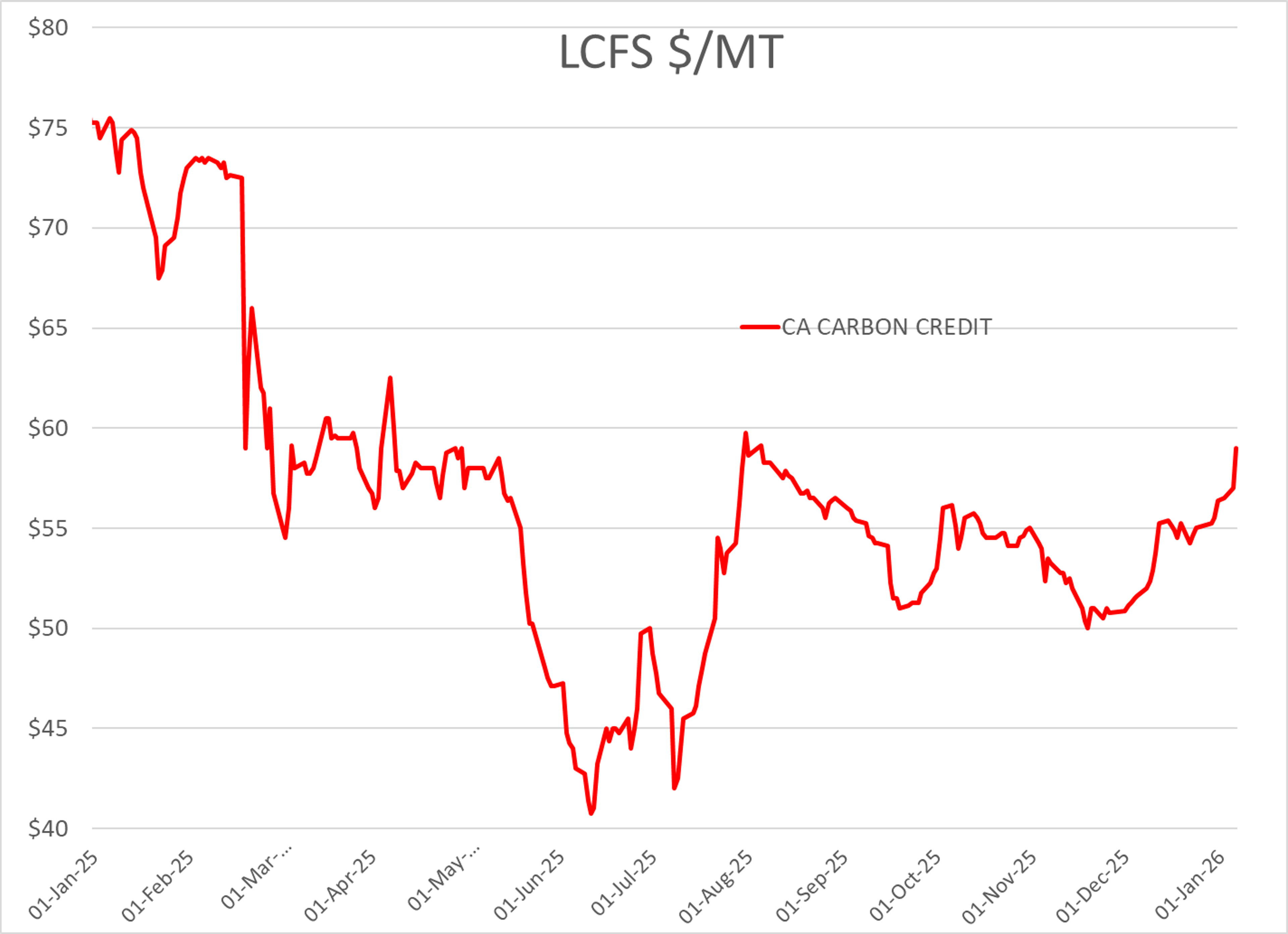
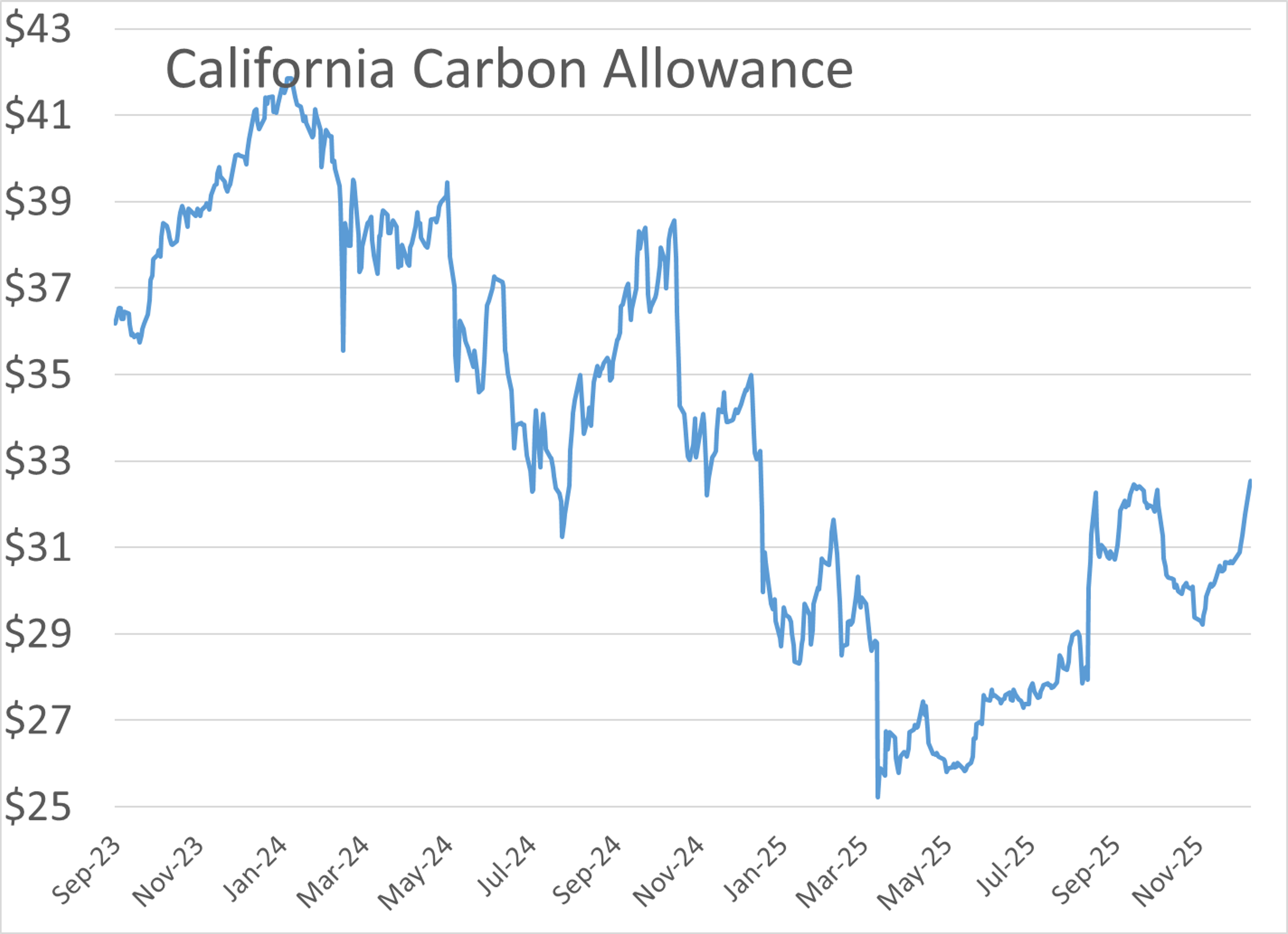
While the price action in product futures has been mixed to start the new year, credit values have been steadily rallying, with Federal and State credits both reaching multi-month highs as tighter standards in 2026 on several programs seem to be driving buying interest.
2026 vintage RINs are trading north of $1.11 for D6 and $1.18 for D4 credits as traders bet that the still-not-finalized rules for this year will inhibit production of bio-mass-based diesel products, while ethanol exports (which don’t generate a U.S. RIN) reach a record high.
California’s LCFS and CCA credits are also reaching their highest levels since August as the tighter annual targets for the LCFS program and the drop in imported fuels related to the changes in RIN and CFPC program credits are expected to begin drawing down the record high credit bank.
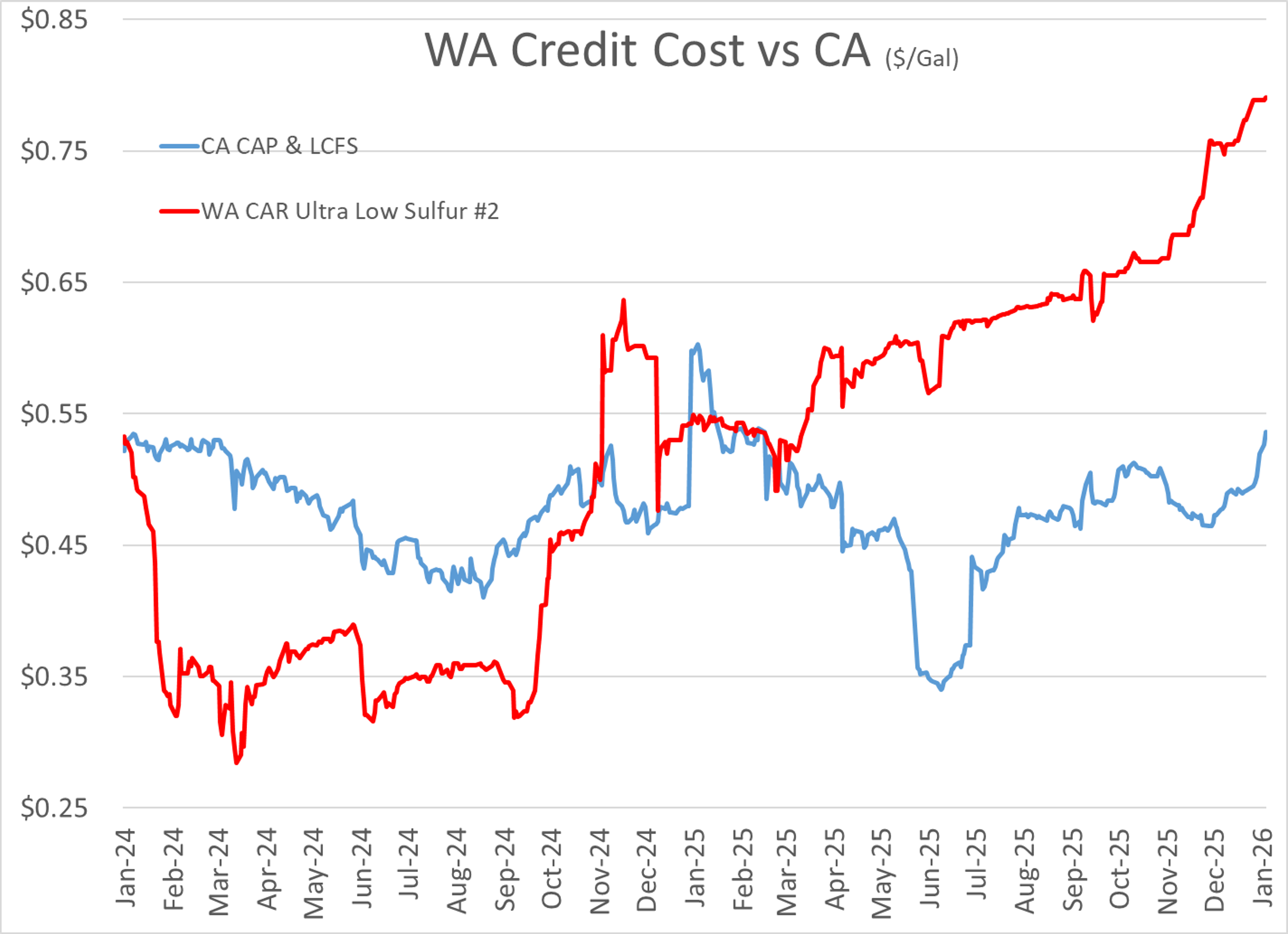
Washington state credits take the cake however, with the combined cost of the Clean Fuels and Cap & Trade programs pushing north of $.80/gallon for diesel and $.70/gallon for unblended gasoline, which is sure to make California regulators jealous as they’re only costing consumers around 55 cents/gallon with their programs.
Meanwhile, a class action lawsuit has been filed against several refiners in California over last year’s LCFS SNAFU when the CARB’s proposed rule change was delayed by the state’s legal department. What’s not surprising is that the lawsuit is going after the “deep pockets” in the industry, although the defense will no doubt point to the fact that the primary pricing agency in the state published the incorrect (higher) values for months even after CARB announced the delayed rule change, and refused to issue a correction that would have saved consumers millions.
Latest Posts
Crude, Diesel, And Storm Risks: Key Drivers Behind Today's Rally
Refinery Outages, Storm Risks, And Export Constraints Lift Distillates
Week 40 - US DOE Inventory Recap
Diesel Leads Energy Markets Lower Despite Mounting Geopolitical Risks
Energy Markets Mixed As Diesel Rallies And Supply Concerns Persist
Supply Disruptions Persist As Markets Focus Elsewhere
Social Media
News & Views
View All
Crude, Diesel, And Storm Risks: Key Drivers Behind Today's Rally
Refinery Outages, Storm Risks, And Export Constraints Lift Distillates